


Text this colour links to Pages. Text this colour links to Family Trees. Text this colour are links that are disabled for Guests.
Place the mouse over images to see a larger image. Click on paintings to see the painter's Biography Page. Mouse over links for a preview. Move the mouse off the painting or link to close the popup.
All About History Books
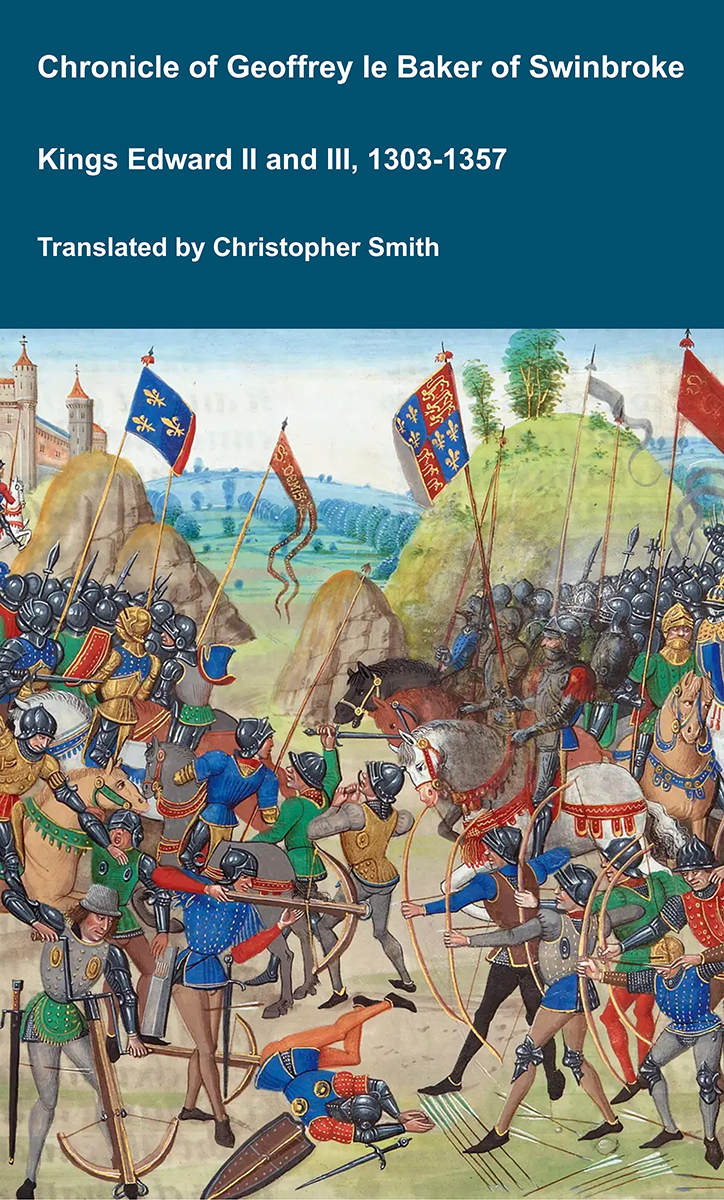
The Chronicle of Geoffrey le Baker of Swinbroke. Baker was a secular clerk from Swinbroke, now Swinbrook, an Oxfordshire village two miles east of Burford. His Chronicle describes the events of the period 1303-1356: Gaveston, Bannockburn, Boroughbridge, the murder of King Edward II, the Scottish Wars, Sluys, Crécy, the Black Death, Winchelsea and Poitiers. To quote Herbert Bruce 'it possesses a vigorous and characteristic style, and its value for particular events between 1303 and 1356 has been recognised by its editor and by subsequent writers'. The book provides remarkable detail about the events it describes. Baker's text has been augmented with hundreds of notes, including extracts from other contemporary chronicles, such as the Annales Londonienses, Annales Paulini, Murimuth, Lanercost, Avesbury, Guisborough and Froissart to enrich the reader's understanding. The translation takes as its source the 'Chronicon Galfridi le Baker de Swynebroke' published in 1889, edited by Edward Maunde Thompson. Available at Amazon in eBook and Paperback.
Weymouth, Dorset is in Dorset.
In 1401 Henry Russell was born to Stephen Russell (age 41) in Weymouth, Dorset.
In April 1432 John Russell was born to Henry Russell (age 31) in Weymouth, Dorset.
In October 1463 Henry Russell (age 62) died in Weymouth, Dorset.
On 14th April 1471 Margaret of Anjou Queen Consort England (age 41) lands at Weymouth, Dorset with John Wenlock 1st Baron Wenlock (age 71).
On 17th June 1644 William Sydenham (age 29) was appointed Governor of Weymouth by Robert Devereux 3rd Earl Essex (age 53).
Around July 1800 Captain Thomas Garth was born to General Thomas Garth (age 56) and Princess Sophia Hanover (age 22) in Weymouth, Dorset. Speculated rather than certain. Historians disagree. He a grandson of King George III of Great Britain and Ireland.


Burdon Hotel, Weymouth, Dorset, South-West England, British Isles
On 4th October 1864 Robert George Cecil Fane (age 68) died at the Burdon Hotel, Weymouth.
Melcombe Regis, Weymouth, Dorset, South-West England, British Isles
All About History Books
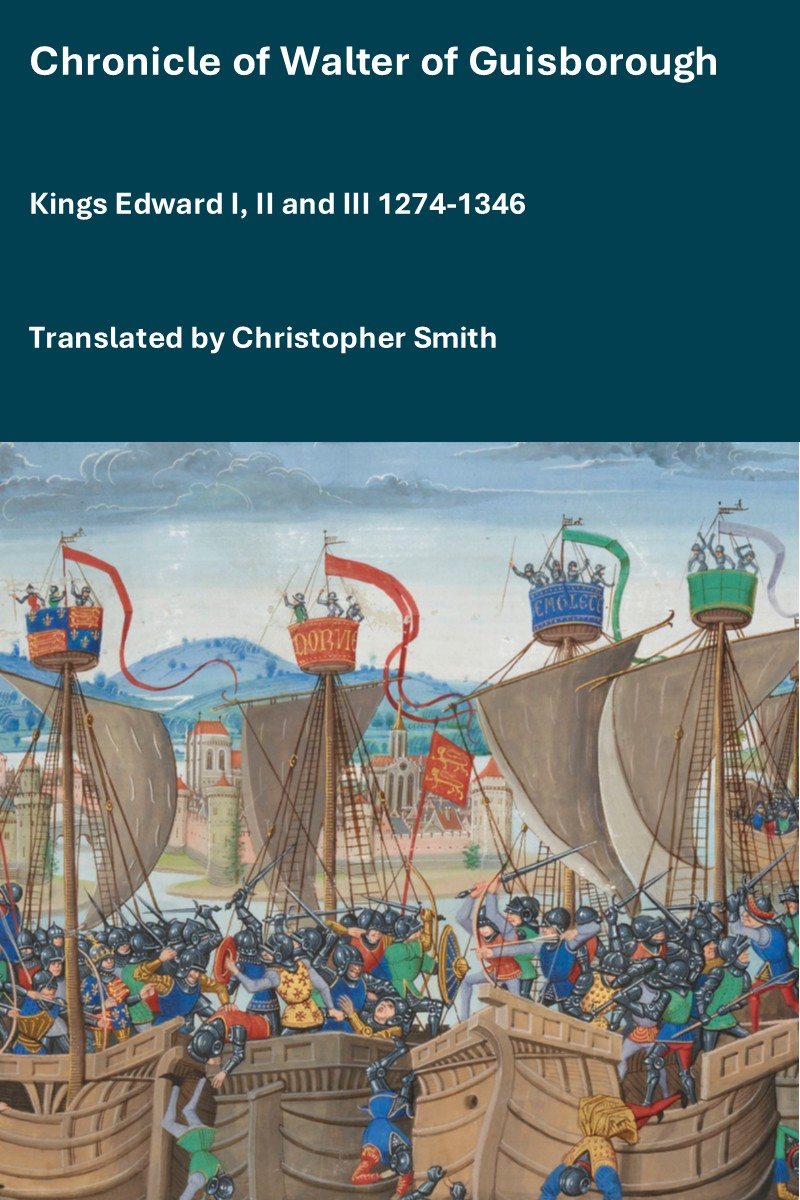
The Chronicle of Walter of Guisborough, a canon regular of the Augustinian Guisborough Priory, Yorkshire, formerly known as The Chronicle of Walter of Hemingburgh, describes the period from 1066 to 1346. Before 1274 the Chronicle is based on other works. Thereafter, the Chronicle is original, and a remarkable source for the events of the time. This book provides a translation of the Chronicle from that date. The Latin source for our translation is the 1849 work edited by Hans Claude Hamilton. Hamilton, in his preface, says: "In the present work we behold perhaps one of the finest samples of our early chronicles, both as regards the value of the events recorded, and the correctness with which they are detailed; Nor will the pleasing style of composition be lightly passed over by those capable of seeing reflected from it the tokens of a vigorous and cultivated mind, and a favourable specimen of the learning and taste of the age in which it was framed." Available at Amazon in eBook and Paperback.
Eulogium Historiam. In the year of our Lord 1348, around the Feast of the Translation of Saint Thomas the Martyr [7th July], a cruel plague, detestable to all future ages, arrived from overseas in the southern inlet of England, at the port called Melcombe in Dorset. Spreading throughout the southern region, it ravaged Dorset, Devon, and Somerset, miserably killing an uncountable number of people. It is believed to have been just as cruel among the pagans (non-Christians) as among the Christians. Then, reaching Bristol, it left very few survivors, and as it passed into the northern regions, there was hardly a city, town, village, or even house left untouched, sparing none without killing the greater part or even the whole of their inhabitants. It is said that one fifth of the men, women, and children in all of England were buried as a result. There was such a scarcity of people that barely enough of the living remained to care for the sick or bury the dead. The women who survived mostly remained sterile for several years, and if any did conceive, they often died in childbirth, perishing together with their babies. In some places, due to the lack of burial space, bishops consecrated new cemeteries. At that time, the price of food and livestock fell dramatically: a quarter of wheat was sold for 12 pence, a quarter of barley for 9 pence, a quarter of beans for 8 pence, a quarter of oats for 6 pence, a large ox for 40 pence, a good horse for 6 shillings (that had formerly cost 40 shillings), a good cow for 2 shillings, or even 18 pence. And even at these prices, buyers were rarely found. This plague reigned in England for two years and more, before the land was finally cleansed.
Anno Domini MCCCXLVIII circa festum Translationis Sancti Thoma Martyris crudelis pestilentia cunctis futuris swculis detestanda de partibus transmarinis in Australem sinum Anglie ad portum quæ dicitur Melcumbe in Dorsetia applicuit, que Australem plagam circumquaque perlustrans in partibus Dorsetiæ, Deuonæ, et Somersetiæ, innumerabilem populum miserabiliter occidit. Creditur tamen fuisse adeo crudelis inter Paganos sicut inter Christianos. Deinde Bristolliam veniens, paucis admodum relictis, versus partes Aquilonares transiens nec civitatem nec villam nec capham nec etiam nisi raro domum relinquens quin majorem partem vel totum interfecit, ita quod quinta pars hominum et mulierum ac infantum in tota Anglia sepulturæ traditur Unde tanta fuit hominum penuria quod vix vivi sufficiebant ad infirmos custodiendos et mortuos sepeliendos. Mulieres quidem que superfuerunt pro majori parte per plures annos steriles remanserunt; si que earum conces perint, partum edendo fere cum fœtu interierunt. In quibusdam locis ob defectum cœmeteriorum episcopi nova loca dedicaverunt. Illo enim in tempore vendebatur quarterium frumenti pro XII denariis, quarterium ordei pro IX denariis, quarterium fabarumn pro VIII denariis, quarterium avenarum pro VI denariis, unus magnus bos pro XL denariis, bonus equus pro VI solidis, qui quandoque valuit XL solidos, hona vacca pro IL solidis, et pro XVIII denariis, et in toto isto pretio non sunt emptores nisi raro inventi. Et regnavit ista pestilentia in Anglia per binos annos et ultra antequam mundata est.
 Become a Member via our Buy Me a Coffee page to read complete text.
Chronicle of Geoffrey le Baker of Swinbroke. In the year of Christ 1349, the 23rd year of the king's reign, a widespread plague arising from the East, from the lands of the Indians1 and Turks, infected the central regions of the inhabited world. It ravaged the Saracens, Turks, Syrians, and Palestinians, and finally the Greeks, with such slaughter that many, driven by terror, considered it wise to receive the faith and sacraments of Christ, hearing that death had struck Christians on this side of the Greek sea neither as frequently nor as suddenly as it did among them. At last, this cruel plague rolled onward to the transalpine regions, and from there to the western lands of Gaul and the Germanic peoples, and in the seventh year after its outbreak, it reached England. First, it struck the seaports of Dorset, nearly depopulating the region, and then swept through Devon and Somerset as far as Bristol with such ferocity that the people of Gloucester refused to let those from Bristol enter their area, fearing that even the breath of the living among the dying was contagious.
Anno Christi MCCCXLIX, regni regis anno XXIIJ, ab oriente Indorum et Turcorum repens pestilencia generalis, medium nostri habitabilis inficiens, Saracenos, Turkos, Siriacos, Palestinos, et demum Grecos depopulavit tanta strage, quod terrore compulsi fidem atque sacramenta Christ! recipere consult! diiudicabant, audientes quod Christianos cis mare Grecum mors non terruit crebrius aut magis repente consueto. Tandem ad partes transalpinas et abhinc ad Gallias hesperias et Teutonicas seva clades successive devoluta, anno septimo sue incoacionis ad Angliam devenit. Primo quidem portus maris in Dorsetia et rursus patriam suis incolis fere privavit, et abhinc Devonian! ac Somersetiam usque Bristolliam ita desevit, quod Glovernienses illis de Bristollia ad suas partes denegarunt accessus, quolibet putante anelitus vivencium inter sic morientes fuisse infectivos.
Note 1. Stow, Annales, 384: "There began amongst the East Indians and Tartarians a certaine pestilence, which at length waxed so general, infecting the middle region of the ayre so greatly, that it destroyed the Saracens, Turks, Syrians, Palestinians, and the Grecians with a woonderfull or rather incredible death, in so much that those peoples, being exceedingly dismaid with the terrour therof, consulted amongst themselves and thought it good to receive the Christian faith and Sacraments, for they had intelligence that the Christians which dwelt on this side the Greekish sea were not so greatly (more then common custome was) troubled with sicknesse and mortalitie. At length this terrible slaughter passed over into those countries which are on this side the Alpes, and from thence to the partes of Fraunce which are called Hesperia, and so by order along into Germany and Dutchland. And the seventh yeere after it began, it came into England and first began in the townes and ports joyning on the sea coasts, in Dorsetshire, where, even as in other countries, it made the country quite void of inhabitants, so that there were almost none left alive. From thence it passed into Devonshire and Somersetshire, even unto Bristow, and raged in such sort that the Glocestershire men would not suffer the Bristow men to have any accesse unto them or into their countrey by any meanes. But at length it came to Glocester, yea even to Oxford, and London, and finally it spred over all England, and so wasted and spoyled the people that scarce the tenth person of all sorts was left alive."
The Black Death, so called from the dark blotches which appeared on the skin, owing to the infiltration of the blood into the disorganized tissues, was the Levant or oriental plague. This fearful outbreak is said to have had its origin in central China, in 1333. It reached Europe in 1347, and appeared at Avignon at the beginning of 1348. Thence it spread northwards through France and Germany, and reached England in August of that year. It is said to have extended even to Iceland and Greenland. After making the circuit of Europe it visited Russia in 1351, and seems to have been finally stopped at the Caucasus. Baker's account of its progress in England has formed the chief basis of all later notices, through the medium of Stow's Annales. According to Professor Thorold Rogers, from one-third to one-half the population of the country perished. See Hecker, Epidemics of the Middle Ages (Sydenham Society), 1846; Rogers, History of Agriculture and Prices in England, i. 292 sqq.; also, with regard to the extent of its ravages, see papers by Mr. Seebohm and Professor Rogers in The Fortnightly Review, ii. 149, 268, iii. 191; and The Black Death in East Anglia, by Dr. Jessopp, in The Nineteenth Century, xvi. 915, xvii. 599.
It will be observed that Baker dates its appearance at Bristol on the festival of the Assumption of the Virgin (15th August 1348); its first entry into the country on the Dorsetshire coast is placed by Avesbury, 406, at the beginning of the month: "The pestilence, which first began in lands occupied by the Saracens, grew so powerful that, sparing no realm, it spread from one region to another of all the kingdoms stretching northward from that land, reaching even Scotland, and in each place, struck down the greater part of the population with the blows of sudden death. It began in England in the region of Dorset, around the Feast of Saint Peter in Chains [1st August] in the year of our Lord 1348, and at once moved rapidly from place to place, suddenly killing many who had been well in the morning before noon."
According to the Eulogium Historiarum (Rolls Series), iii. 213, it was imported at Melcombe: "In the year of our Lord 1348, around the Feast of the Translation of Saint Thomas the Martyr [7th July], a cruel plague, detestable to all future ages, arrived from overseas in the southern inlet of England, at the port called Melcombe in Dorset. Spreading throughout the southern region, it ravaged Dorset, Devon, and Somerset, miserably killing an uncountable number of people. It is believed to have been just as cruel among the pagans (non-Christians) as among the Christians. Then, reaching Bristol, it left very few survivors, and as it passed into the northern regions, there was hardly a city, town, village, or even house left untouched, sparing none without killing the greater part or even the whole of their inhabitants. It is said that one fifth of the men, women, and children in all of England were buried as a result. There was such a scarcity of people that barely enough of the living remained to care for the sick or bury the dead. The women who survived mostly remained sterile for several years, and if any did conceive, they often died in childbirth, perishing together with their babies."
Baker states that London was attacked about Michaelmas; Avesbury, about All Saints. The progress of the epidemic into the Eastern counties was remarkably slow, for it does not seem to have made its mark in Norfolk until about the end of March, 1349.
Knyghton, 2599-2600 gives very interesting particulars of the social effects of the plague, particularly in regard to labour: "Then the grievous plague penetrated the coast through Southampton, and reached Bristol, where nearly the entire population of the town perished, overtaken by sudden death. Few who took to their beds survived longer than three days, or even two days, or just half a day. After that, the cruel death spread everywhere, following the course of the sun. At Leicester, in the small parish of St. Leonard, more than 380 people died. In the parish of Holy Cross, more than 400. In St. Margaret's parish, 700. And so it was in each parish: people died in great numbers. Then the Bishop of Lincoln sent word throughout his diocese, and gave general authority to all priests, both regular (monastic) and secular, to hear confessions and to absolve all persons with full and complete episcopal authority, except in the case of debt, in which case, if the person had the means while living, he must make restitution himself; or, if not, others must fulfill it from his goods after death. Likewise, the Pope granted full remission of all sins to any person in danger of death, to be absolved once, and extended this privilege until the following Easter. He also allowed each person to choose their confessor freely. In that same year, there was a great plague among sheep throughout the kingdom. In one pasture alone, more than 5,000 sheep died, and their bodies rotted so badly that neither beast nor bird would touch them. Prices for everything fell because of the fear of death, and few people cared about wealth or possessions. One could buy: a horse that had once cost 40 shillings for half a mark (6s. 8d.), a fat ox for 4 shillings, a cow for 12 pence, a young heifer for 6 pence, a fat sheep for 4 pence, a ewe for 3 pence, a lamb for 2 pence, a large pig for 5 pence, a stone of wool for 9 pence. Sheep and oxen wandered through the fields and crops without a herdsman, and perished by the thousands, dying in ditches and hedgerows across the land due to lack of care, because there was such a shortage of servants and laborers that no one knew what to do. No one could recall a mortality so harsh and severe since the time of Vortigern, King of the Britons, in whose day, as Bede writes in the Ecclesiastical History of the English People, the living were not sufficient to bury the dead. In the following autumn, it was impossible to hire a reaper for less than 8 pence per day plus food, or a mower for less than 12 pence per day plus food. Because of this, many crops were lost in the fields, for lack of workers to gather them. However, during the plague year, as said above, there was such abundance of every kind of grain that no one cared much for it."
Become a Member via our Buy Me a Coffee page to read complete text.
In 1675 James Thornhill was born in Melcombe Regis, Weymouth.