


Text this colour links to Pages. Text this colour links to Family Trees. Text this colour are links that are disabled for Guests.
Place the mouse over images to see a larger image. Click on paintings to see the painter's Biography Page. Mouse over links for a preview. Move the mouse off the painting or link to close the popup.
All About History Books
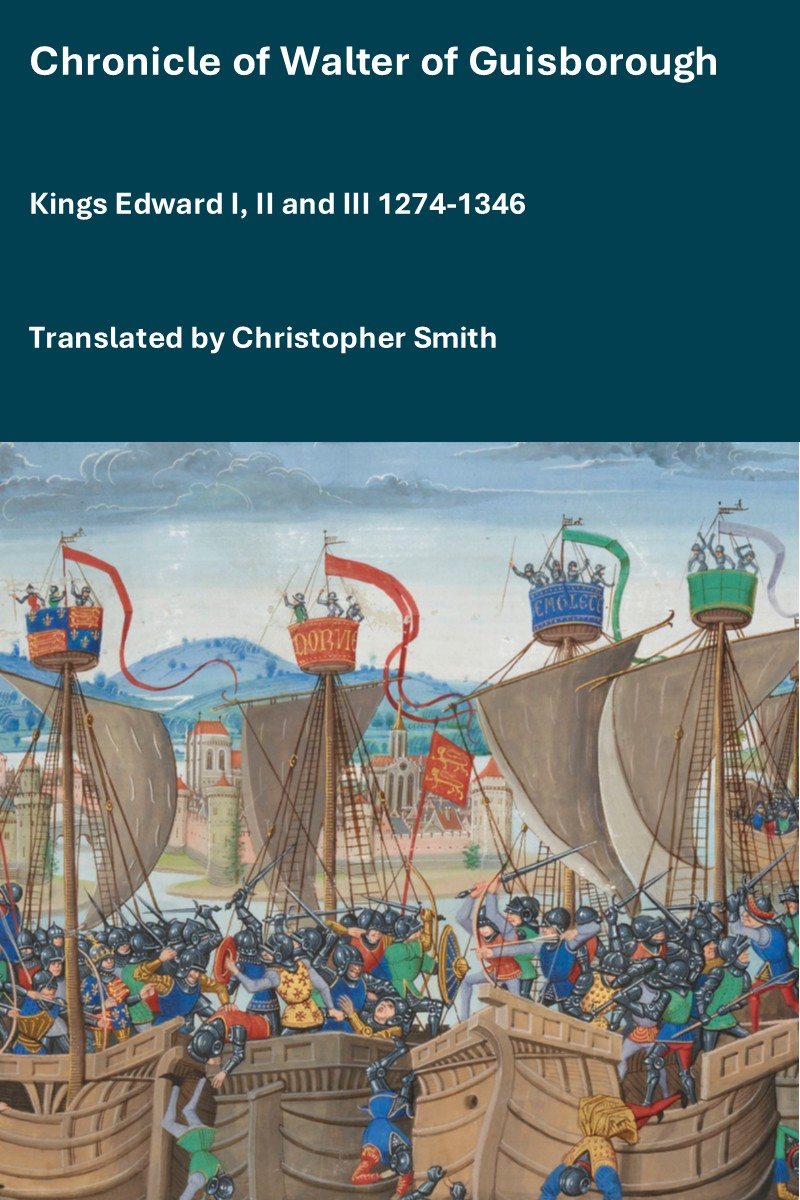
The Chronicle of Walter of Guisborough, a canon regular of the Augustinian Guisborough Priory, Yorkshire, formerly known as The Chronicle of Walter of Hemingburgh, describes the period from 1066 to 1346. Before 1274 the Chronicle is based on other works. Thereafter, the Chronicle is original, and a remarkable source for the events of the time. This book provides a translation of the Chronicle from that date. The Latin source for our translation is the 1849 work edited by Hans Claude Hamilton. Hamilton, in his preface, says: "In the present work we behold perhaps one of the finest samples of our early chronicles, both as regards the value of the events recorded, and the correctness with which they are detailed; Nor will the pleasing style of composition be lightly passed over by those capable of seeing reflected from it the tokens of a vigorous and cultivated mind, and a favourable specimen of the learning and taste of the age in which it was framed." Available at Amazon in eBook and Paperback.
River Great Ouse is in The Wash.
The River Great Ouse rises near Syresham, Northamptonshire [Map] from where it flows past Biddlesden, Buckinghamshire [Map], Brackley, Northamptonshire [Map], Westbury, Buckinghamshire [Map], Radclive, Buckinghamshire [Map], through the centre of Buckingham, Buckinghamshire [Map], Buckingham, Buckinghamshire [Map] after which it is joined by Padbury Brook.
The River Great Ouse continues past Thornton, Buckinghamshire [Map], Passenham, Northamptonshire [Map], Stony Stratford, Buckinghamshire [Map], around Newport Pagnell, Buckinghamshire [Map], past Gayhurst, Buckinghamshire [Map], Olney, Buckinghamshire [Map], Newton Blossomville, Buckinghamshire [Map], crossing into Bedfordshirem, past Harrold, Bedfordshire [Map], Sharnbrook, Bedfordshire [Map], Milton Ernest, Bedfordshire [Map], through the centre of Bedford, Bedfordshire [Map], under Great Barford Bridge, Bedfordshire [Map], past Tempsford, Bedfordshire [Map], Eaton Socon, Bedfordshire [Map], through St Neots, Bedfordshire [Map], past Offord D'Arcy, Bedfordshire [Map] and Offord Cluny, Bedfordshire [Map], through Godmanchester [Map] and Huntingdon [Map], under St Ives Bridge [Map], Earith [Map] after which it is separates into two.
Thereafter one section is canalised heading north-east to Downham Market, Norfolk [Map].
The other natural section flows past Little Thetford [Map], through Ely [Map], Littleport [Map], past to Downham Market, Norfolk [Map] where it joins the canalised section.
Thereafter to King's Lynn, Norfolk [Map] after which it joins the The Wash.
Around 1425. Great Barford Bridge, Bedfordshire [Map] is an early fifteenth century bridge with seventeen arches, originally built from limestone and sandstone that spans the River Great Ouse.
The Little rises near Rickenhall, Suffolk [Map] from where it flows past Cracken Corner, Suffolk [Map]. It also appears to rises near and Redgrave And Lopham Fen [Map]; it isn't clear which is the source of the Little. Thereafter it flows past Blo' Norton, Norfolk [Map], Knettishall, Suffolk [Map], Rushford, Norfolk [Map], Barham, Suffolk [Map], Thetford, Norfolk [Map], where it is joined by the River Thet.
After Thetford the Little Ouse flows past Santon Downham, Suffolk [Map], through Brandon, Suffolk [Map], past Hockwold cum Wilton, Norfolk [Map] to Brandon Creek, Norfolk [Map] where it joins the River Great Ouse.
The River Thet rises near Buckenham Castle, Norfolk [Map] from where it flows past Wilby, Norfolk [Map], North End, Norfolk [Map], Snetterton, Norfolk [Map], Larling, Norfolk [Map], East Harling, Norfolk [Map], Bridgeham, Norfolk [Map], Brettenham, Norfolk [Map], Kilverstone, Norfolk [Map] to Thetford, Norfolk [Map] were it joins the Little.
Padbury Brook rises near Fritwell, Oxfordshire [Map] from where it flows past Ardley, Oxfordshire [Map], Stoke Lyne, Oxfordshire [Map], Fringford, Oxfordshire [Map], Godington, Oxfordshire [Map], Twyford, Buckinghamshire [Map], under Padbury [Map] and the medieval Thornbrough [Map] bridges, after which it joins the River Great Ouse.
The River Lark rises near Stonecross Green, Suffolk [Map] from where it flows past Pinford End, Suffolk [Map], Sicklesmere, Suffolk [Map], through Bury St Edmunds, Suffolk [Map], past Fornham All Saints, Suffolk [Map], Flempton, Suffolk [Map], Icklingham, Suffolk [Map], Barton Mills, Suffolk [Map], Mildenhall, Suffolk [Map], Isleham [Map] and Prickwillow [Map] after which it joins the River Great Ouse.
The River Wissey rises near Bradenham, Norfolk [Map] from where it flows past Holme Hale, Norfolk [Map], North Pickenham, Norfolk [Map], South Pickenham, Norfolk [Map], Great CressIngham, Norfolk [Map], Bodney, Norfolk [Map], Ickburgh, Norfolk [Map], Colverston, Norfolk [Map], Little London, Norfolk [Map], Northwolkd, Norfolk [Map], Stoke Ferry, Norfolk [Map], Wissington, Norfolk [Map] to Hilgay, Norfolk [Map] after which it joins the River Great Ouse.