


Text this colour links to Pages. Text this colour links to Family Trees. Text this colour are links that are disabled for Guests.
Place the mouse over images to see a larger image. Click on paintings to see the painter's Biography Page. Mouse over links for a preview. Move the mouse off the painting or link to close the popup.
All About History Books
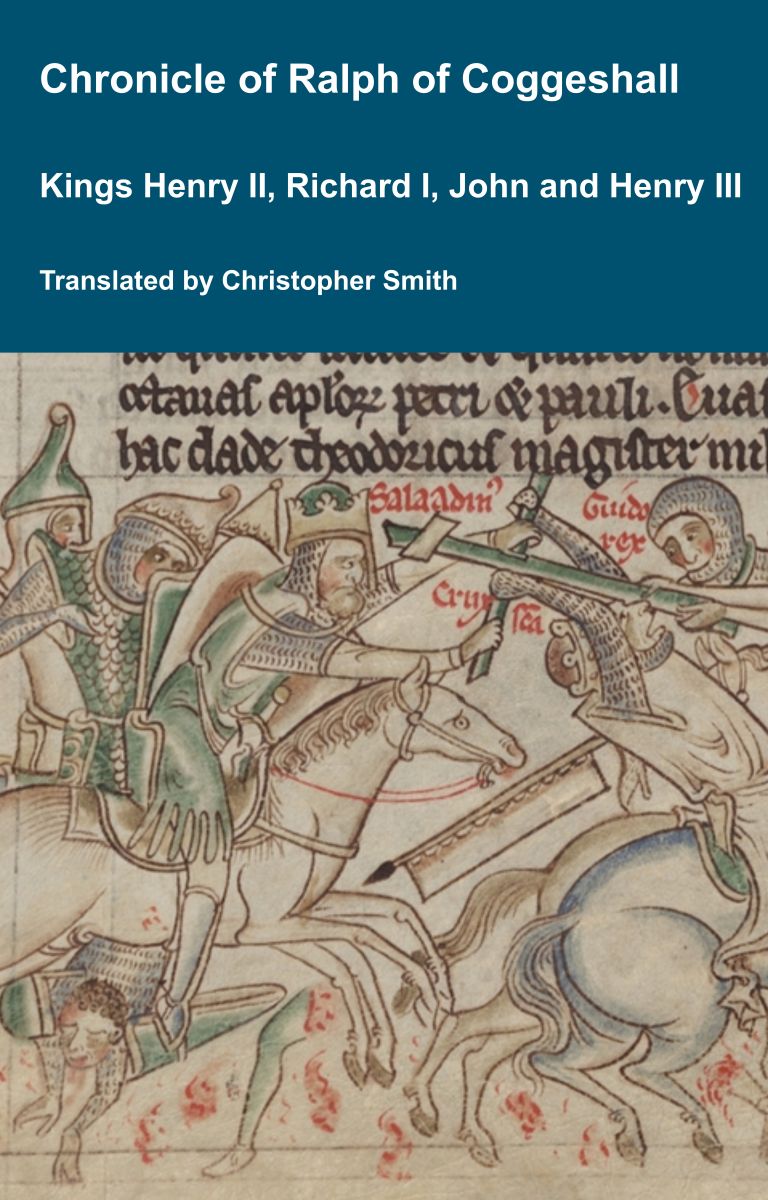
The Chronicle of Abbot Ralph of Coggeshall describes the reigns of Kings Henry II, Richard I, John and Henry III, providing a wealth of information about their lives and the events of the time. Ralph's work is detailed, comprehensive and objective. We have augmented Ralph's text with extracts from other contemporary chroniclers to enrich the reader's experience. Available at Amazon in eBook and Paperback.
Aeneid Book 2 Paragraph 57
Aeneid Book 2 Paragraph 57 is in Virgil.
Roman Books, Virgil, Aeneid Book 2 Paragraph 57
'Cuncta equidem tibi, rex, fuerit quodcumque, fatebor vera,' inquit; 'neque me Argolica de gente negabo; hoc primum; nec, si miserum fortuna Sinonem finxit, vanum etiam mendacemque improba finget.'
"O king, I'll tell you the whole truth, whatever happens, and indeed I'll not deny that I'm of Argive birth: this first of all: if Fortune has made me wretched, she'll not also wrongly make me false and a liar."
Fando aliquod si forte tuas pervenit ad auris Belidae nomen Palamedis et incluta fama gloria, quem falsa sub proditione Pelasgi insontem infando indicio, quia bella vetabat demiscere neci, nunc cassum lumine lugent.
If by any chance some mention of Palamedes's name has reached your ears, son of Belus, and talk of his glorious fame, he whom the Pelasgians, on false charges of treason, by atrocious perjury, because he opposed the war, sent innocent to his death, and who they mourn, now he's taken from the light.
Illi me comitem et consanguinitate propinquum pauper in arma pater primis huc misit ab annis.
Well my father, being poor, sent me here to the war when I was young, as his friend, as we were blood relatives.
Dum stabat regno incolumis regumque vigebat conciliis, et nos aliquod nomenque decusque gessimus.
While Palamades was safe in power, and prospered in the kings' council, I also had some name and respect.
Invidia postquam pellacis Ulixi (haud ignota loquor) superis concessit ab oris, adflictus vitam in tenebris luctuque trahebam et casum insontis mecum indignabar amici.
But when he passed from this world above, through the jealousy of plausible Ulysses (the tale's not unknown) I was ruined, and spent my life in obscurity and grief, inwardly angry at the fate of my innocent friend.
Roman Books, Virgil, Aeneid Book 2 Paragraph 57, Aeneid Book 2 Lines 387-391
Atque hic successu exsultans animisque Coroebus,
“O socii, qua prima” inquit “fortuna salutis
monstrat iter, quoque ostendit se dextra, sequamur
mutemus clipeos, Danaumque insignia nobis
aptemus: dolus an virtus, quis in hoste requirat?
And here Coroebus, exulting in success and with spirited mind, says,
'O comrades, wherever the first fortune of safety points out the way,
and wherever the right hand shows itself, let us follow.
Let us change our shields, and let us take the insignia of the Greeks:
who would seek for trickery or courage in an enemy?'
 Become a Member via our Buy Me a Coffee page to read complete text.
Roman Books, Virgil, Aeneid Book 2 Paragraph 57, Aeneid Book 8
Aeneid Book 8 Lines 306-336
Exim se cuncti divinis rebus ad urbem
perfectis referunt. Ibat rex obsitus aevo
et comitem Aenean iuxta natumque tenebat
ingrediens varioque viam sermone levabat.
miratur facilisque oculos fert omnia circum
Aeneas capiturque locis et singula laetus
exquiritque auditque virum monimenta priorum.
Tum rex Euandrus, Romanae conditor arcis:
"Haec nemora indigenae fauni nymphaeque tenebant
gensque virum truncis et duro robore nata,
quis neque mos neque cultus erat, nec iungere tauros
aut componere opes norant aut parcere parto,
sed rami atque asper victu venatus alebat.
Primus ab aetherio venit Saturnus Olympo,
arma Iovis fugiens et regnis exsul ademptis.
Is genus indocile ac dispersum montibus altis
composuit legesque dedit Latiumque vocari
maluit, his quoniam latuisset tutis in oris.
Aurea quae perhibent illo sub rege fuere
saecula. Sic placida populos in pace regebat,
deterior donec paulatim ac decolor aetas
et belli rabies et amor successit habendi.
Tum manus Ausonia et gentes venere Sicanae,
saepius et nomen posuit Saturnia tellus;
tum reges asperque immani corpore Thybris,
a quo post Itali fluvium cognomine Thybrim
diximus, amisit verum vetus Albula nomen;
me pulsum patria pelagique extrema sequentem
Fortuna omnipotens et ineluctabile fatum
his posuere locis matrisque egere tremenda
Carmentis nymphae monita et deus auctor Apollo.
Become a Member via our Buy Me a Coffee page to read complete text.
Theodore C. Williams, 1910
Such worship o'er, all take the homeward way
back to the town. The hospitable King,
though bowed with weight of years, kept at his side
Aeneas and his son, and as they fared,
with various discourse beguiled the way.
Aeneas scanned with quick-admiring eyes
the region wide, and lingered with delight
now here, now there, inquiring eagerly
of each proud monument of heroes gone.
Then King Evander, he who builded first
On Palatine, spoke thus: "These groves erewhile
their native nymphs and fauns enjoyed, with men
from trees engendered and stout heart of oak.
Nor laws nor arts they knew; nor how to tame
burls to the yoke, nor fill great barns with store
and hoard the gathered grain; but rudely fared
on wild fruits and such food as hunters find.
Then Saturn from Olympian realms came down,
in flight from Jove's dread arms, his sceptre lost,
and he an exiled King. That savage race
he gathered from the mountain slopes; and gave
wise laws and statutes; so that latent land
was Latium, 'hid land', where he hid so long.
The golden centuries by legends told
were under that good King, whose equal sway
untroubled peace to all his peoples gave.
But after slow decline arrived an age
degenerate and of a darker hue,
prone to insensate war and greed of gain.
Then came Sicanian and Ausonian tribes,
and oft the land of Saturn lost its name.
New chieftains rose, and Thybris, giant King
and violent, from whom th' Italians named
the flooding Tiber, which was called no more
the Albula, its true and ancient style.
Myself, in exile from my fatherland
sailing uncharted seas, was guided here
by all-disposing Chance and iron laws
of Destiny. With prophecy severe
Carmentis, my nymph-mother, thrust me on,
warned by Apollo's word."
Become a Member via our Buy Me a Coffee page to read complete text.
The rites perform'd, the cheerful train retire.
Betwixt young Pallas and his aged sire,
The Trojan pass'd, the city to survey,
And pleasing talk beguil'd the tedious way.
The stranger cast around his curious eyes,
New objects viewing still, with new surprise;
With greedy joy enquires of various things,
And acts and monuments of ancient kings.
Then thus the founder of the Roman tow'rs:
"These woods were first the seat of sylvan pow'rs,
Of Nymphs and Fauns, and salvage men, who took
Their birth from trunks of trees and stubborn oak.
Nor laws they knew, nor manners, nor the care
Of lab'ring oxen, or the shining share,
Nor arts of gain, nor what they gain'd to spare.
Their exercise the chase; the running flood
Supplied their thirst, the trees supplied their food.
Then Saturn came, who fled the pow'r of Jove,
Robb'd of his realms, and banish'd from above.
The men, dispers'd on hills, to towns he brought,
And laws ordain'd, and civil customs taught,
And Latium call'd the land where safe he lay
From his unduteous son, and his usurping sway.
With his mild empire, peace and plenty came;
And hence the golden times deriv'd their name.
A more degenerate and discolor'd age
Succeeded this, with avarice and rage.
Th' Ausonians then, and bold Sicanians came;
And Saturn's empire often chang'd the name.
Then kings, gigantic Tybris, and the rest,
With arbitrary sway the land oppress'd:
For Tiber's flood was Albula before,
Till, from the tyrant's fate, his name it bore.
I last arriv'd, driv'n from my native home
By fortune's pow'r, and fate's resistless doom.
Long toss'd on seas, I sought this happy land,
Warn'd by my mother nymph, and call'd by Heav'n's command."
Become a Member via our Buy Me a Coffee page to read complete text.
Roman Books, Aeneid Book 2 Paragraph 57, Virgils Aeneid Book 8 Lines 310-312
310 miratur facilisque oculos fert omnia circum Aeneas, capiturque locis et singula laetus exquiritque auditque virum monumenta priorum.
Admiring, Aeneas turned his ready eyes all around, seized by the sights, he joyfully took in each and every one of the legacies of the men of old.
The Antiquities of Cornwall by William Borlase. Observations On The Antiquities Historical And Monumental , Of The County Of Cornwall Consisting Of Several Essays On The First Inhabitants, Druid-Superstition, Customs, And Remains Of The Most Remote Antiquity, In Britain, And The British Isles: Exemplify'd And Prov'd By Monuments Now Extant In Cornwall And The Scilly Islands, Faithfully Drawn On The Spot, And Engrav'd According To Their Scales Annex'd. With A Summary Of The Religious, Civil, And Military State Of Cornwall Before The Norman Conquest; Illustrated By The Plans And Elevations Of Fcveral Ancient Caftles, An Eastern View Of The Monastery And Site Of St. Michael'S Mount: And A Vocabulary Of The Cornu-British Language. By William Borlase, A. M. F.R.S. Rector Of Ludgvan. Miratur , Facilesque Oculos Fert Omnia Circum. Ænas Capiturque Locis , Et Singula Lætus Exquiritque, Auditque Virûm Monumenta Priorum. Virg. Mdccliv.