Chronicle of a Bourgeois of Valenciennes
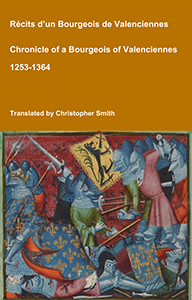
Récits d’un bourgeois de Valenciennes aka The Chronicle of a Bourgeois of Valenciennes is a vivid 14th-century vernacular chronicle written by an anonymous urban chronicler from Valenciennes in the County of Hainaut. It survives in a manuscript that describes local and regional history from about 1253 to 1366, blending chronology, narrative episodes, and eyewitness-style accounts of political, military, and social events in medieval France, Flanders, and the Low Countries. The work begins with a chronological framework of events affecting Valenciennes and its region under rulers such as King Philip VI of France and the shifting allegiances of local nobility. It includes accounts of conflicts, sieges, diplomatic manoeuvres, and the impact of broader struggles like the Hundred Years’ War on urban life in Hainaut. Written from the perspective of a burgher (bourgeois) rather than a monastery or royal court, the chronicle offers a rare lay viewpoint on high politics and warfare, reflecting how merchants, townspeople, and civic institutions experienced the turbulence of the 13th and 14th centuries. Its narrative style combines straightforward reporting of events with moral and civic observations, making it a valuable source for readers interested in medieval urban society, regional politics, and the lived experience of war and governance in pre-modern Europe.
Available at Amazon in eBook and Paperback format.
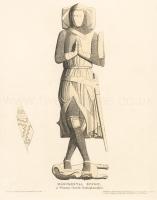
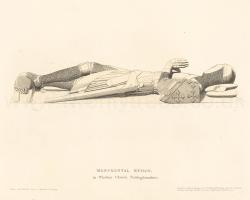
Effigy of Sir Richard de Whatton is in Monumental Effigies of Great Britain.
THE Lords of Whatton had their residence in a strong castellated mansion on the banks of the river Smite, in the vale of Belvoir: traces of the earthworks on which it was erected remain to this day. Sir William de Whatton, said to be of Flemish extraction, nourished here in the reign of Henry I who made him a Knight. Richard de Whatton, the subject of this effigy, was the second son of John de Whatton, by his wife Ela, daughter of John Lord Bisset, Baron of Combe Bisset. He flourished in the reign of Henry III. In the 14th and 15th of Edward the Second; Richard de Whatton was summoned to attend King Edward II to aid him against Thomas Plantagenet, Earl of Lancaster, and the Barons his confederates. He valiantly adventured his life in the royal cause; and on the Earl of Lancaster being beheaded at Pontefract [Map], all his castles, lands, and tenements, and all those of the other rebels within the County of Northumberland and Episcopate of Durham, were committed to the custody of this Richard de Whatton, to have and to hold during the royal pleasure, he accounting for the receipts to the King's Exchequera. This instrument is dated at Pontefract 23d March. The effigy of Richard de Whatton is in the North aisle of Whatton Church. On his shield has been sculptured the arms of Whatton, which were, Argent, a bend Sable charged with three bezantsb between six crosslets Gules. An inscription on the monument runs thus:
PRIEZ PVR L'ALME DE SIRE RICHARD WHATTON, CHIVALER.
Note a. See the deed at length in the Gentleman's Magazine, vol. XCV. i. p. 39.
Note b. Johnde Whatton charged his paternal coat with the bezants, having married into the family of Bisset, who bore. Azure, nine bezants, 4,3, and 2.