

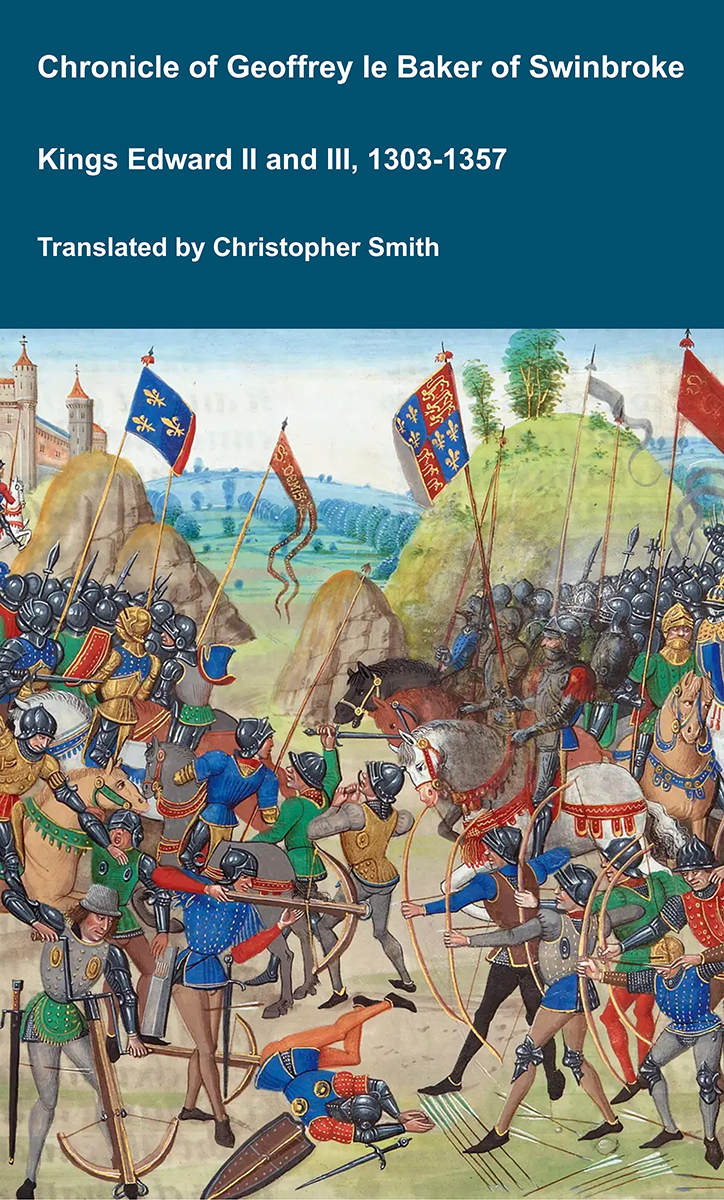
Chronicle of Geoffrey le Baker of Swinbroke
Baker was a secular clerk from Swinbroke, now Swinbrook, an Oxfordshire village two miles east of Burford. His Chronicle describes the events of the period 1303-1356: Gaveston, Bannockburn, Boroughbridge, the murder of King Edward II, the Scottish Wars, Sluys, Crécy, the Black Death, Winchelsea and Poitiers. To quote Herbert Bruce 'it possesses a vigorous and characteristic style, and its value for particular events between 1303 and 1356 has been recognised by its editor and by subsequent writers'. The book provides remarkable detail about the events it describes. Baker's text has been augmented with hundreds of notes, including extracts from other contemporary chronicles, such as the Annales Londonienses, Annales Paulini, Murimuth, Lanercost, Avesbury, Guisborough and Froissart to enrich the reader's understanding. The translation takes as its source the 'Chronicon Galfridi le Baker de Swynebroke' published in 1889, edited by Edward Maunde Thompson.
Available at Amazon in eBook and Paperback format.
Hall's Chronicle 1471 is in Hall's Chronicle.
The common people saied, that the kyng was not so iocound nor so ioyous for the destruction of therle, but he was more sorrowful and dolorous, for the death of the Marques, whom both he knewe and it appered to other, to be inwardly his faithful frend: For whose onely sake he caused both their bodies, to bee with their auncestors, solempjily enterred at the Priory of Bissam.
In the meane season, quene Margaret hauyng knowledge, that all thynges in Englande, were now altered and brought into trouble and broyle, by reason of kyng Edwardes late returneinto therealme: gathered together no small compaignie, of hardy and valiaunt souldiours, determined with all haste and diligence, with prince Edwarde her soonne, to saile into Englande, but yet once again (suche was her destinie) beyng letted for lacke of prosperous wynd and encombered with to muche rigorous tempeste, a daie after the faire, as the common proverbe saieth, landed at the Port of Weymouth, in Dorset shire.
When she had passed the sea and taken lande, it was to her declared, how that kyng Edward had gotten again the garland, and that kyng Henry her husband, was desolately left post a lone, and taken prisoner, how the Erie of W'arwicke and his brother were bothe slain and ded, and all their armie destroyed, scatered or taken, and in conclusion that her parte had susteined, the moste bitter plague and scorge, consideryng bothe the chaucc and the tyme that in many yeres before, had been red or sene. When she haide all these miserable chaunces and misfortunes, so sodainly one in anothers necke, to have taken their effect, she like a woman all dismaied for feare, fell to the ground, her harte was perced withsorowe, her speache was in maner passed, all her spirites were tormented with Malencholy. The calamitie and misery of her time, she detested and abhorred, her vnstable and contrariant fortune, she stedfastly blamed and accused, her peinfull labor, her care of mynde, turned into infelicitie she muche lamented and bewailed the evill fate and destenie of her husband, whiclie eminently before her iyes, she sawe to approche she accused, reproved, and reviled, and in conclusion, her senses were so vexed, and she so afflicted, and caste into suche an agony, that she preferred death before life, rather desiryng soner to die, then lenger to Hue, and perauenture for this cause, that her interior iye sawe priuily, and gaue to her a secret monicion of the greate calamities and aduersities, which then did hang over her hed, and were likely incontinent to fall and succede whiche other persones, neither loked for nor regarded.
This Quene Margarete might well consider and thynke, that these evill aduentures, chaunced to her for the moste parte, for the vnworthy death of Humfrey Duke of Gloucester, vncle to her husbande: Of the whiche, mischaunce, although she wer not the very occasion and prouoker, yet she greatly offended in that she concented thereto, and did not satie his life, when she rulyng all other, might conveniently have staled and letted it. For surely he beyng a liue, and hauyng the moderacio and governaunce of the common wealth, kyng Henry had ucucr vvauered in so many hasardes, and ieoperdies of his life as he did. I would desire of God, that all men would in egall balance, ponder & indifferently consider the causes, of these misfortunes and evill chaunces, the whiche beyng elcuate in aucthoritie, dooe mete and measure, Justice and iniury, right and wrong, by high power, blynd aucthoritie, and vnbridlcd will.
But nowe to the purpose, when Queue Margarete saue, that to bid battaill was to no purpose, and in maner, in dispaire, of the wealth of her self and her sonne: she with the Prince and her compaignie, departed to a Sainctuary there by, called Beauliew [Map] in Hamsbire (where was a monastery of Monkes, of the ordre of Cisterciens) and registered herself and hers, as persones there priueleged. When it was known that she was landed, Edmond Duke of Somerset, with lord Ihon his brother Thomas Courtney erle of Deiionshire, the which before ever toke the contrary part, whose sodain chaungyng, shortly turned to his awne confusion, Jasper Erie of Penbroke, Ihon Lorde Wenlocke (a man made onely bv kyng Edward) and Ihon Longstrother, Prior of sainct Ihones in England, came in great hast to Beauliew, and presented theimselfes to the Quene: Although that she wer almost drouned in sorowe, and plunged in pein, yet when she sawe and beheld, these noble and princely personages, to resort vnto her presence, she was somewhat comforted, and greatly reuiued
When the Quene knew that kynge Edwarde was come so nere to her, she taried not long at Bathe, but remoued in greate haste to Brystow: and sent out certayn horsemen to espye, whether she might sauely passe over the llyuer Severne by Gloucester into Wales, whether she determined first to go to augment her armye, and then without any delay with spere and shelde, coragiously to set on her euemyes, where soever they would ahyde. They that were sent, retorned to her again, declaryng that the towne of Gloucester was vnder the obeisaunce of Rychard, duke of Gloucester the kynges brother, and that although they had sollicited the lord Beauchampe of Powike, which lay there in the Castell, and had the rule of the Towne, and the townesmen fyrst by rewardes after by menacing, either to take their part, or peasably to suffer her to passe over their bridge, they were there with all, neither once moued, nor once would speake cofortably to the messengers. Whe she hard these newes, she shortly departed from Bristow with her army, to a proper towne on severne syde, called Tewkesburye, leuing Gloucester vnassauted, lest peradveture she might their sped her tyme with much losse & littel gayne, but in her passage towarde Tewkesbury, the lord Beauchape toke from her rereward, more ordinance then she might have wel spared, which did to her no small preiudice.
When the Quene was come to Tewkesbury, and knewe that kynge Edward folowed her with hys horsemen at the very backe, she was sore abashed, and woderfullv amased and determined in her selfc, to flye into Wales to lasper erle of Pembroke: But the duke of Somerset, willyng in no wyse to flye backward for doughtes that he casted might chaunce by the way, determined there to tarye, to take such fortune as God should sende, beyn«e in his awne rnynde, and so fixed in a fayre parke, adioynynge to the towne, he pytched his felde agaynst the will and consent of many other Capitaynes which would that he should have drawen a syde, for a whyle tyl therle of Penbroke with hys armye were with hym associate but his will serued for his reason, and so the chauncefolowed. The duke of Somerset entending to abide the battayle lyke a pollitique warrior, trenched his campe rounde about of suche an altitude, and so strongly, that his enemyes by no meanes facilye, could make any entrie, and farther perceyuyng that his parte coulde never escape without battayle, determined there to se ye final entle of his good or yl chaunce, wherfore he marshalled his host in this manner : he and the lord Ihon of Somerset his brother led the forward : The middelward was governed by the Prince vnder the coduyte of the lord of sainct Ihons, & lord Wenlocke (whome kyng Edward had highly before preferred & promoted to the degre of a baron) The rereward was put in the rule of the erle of Deuonshyre.