

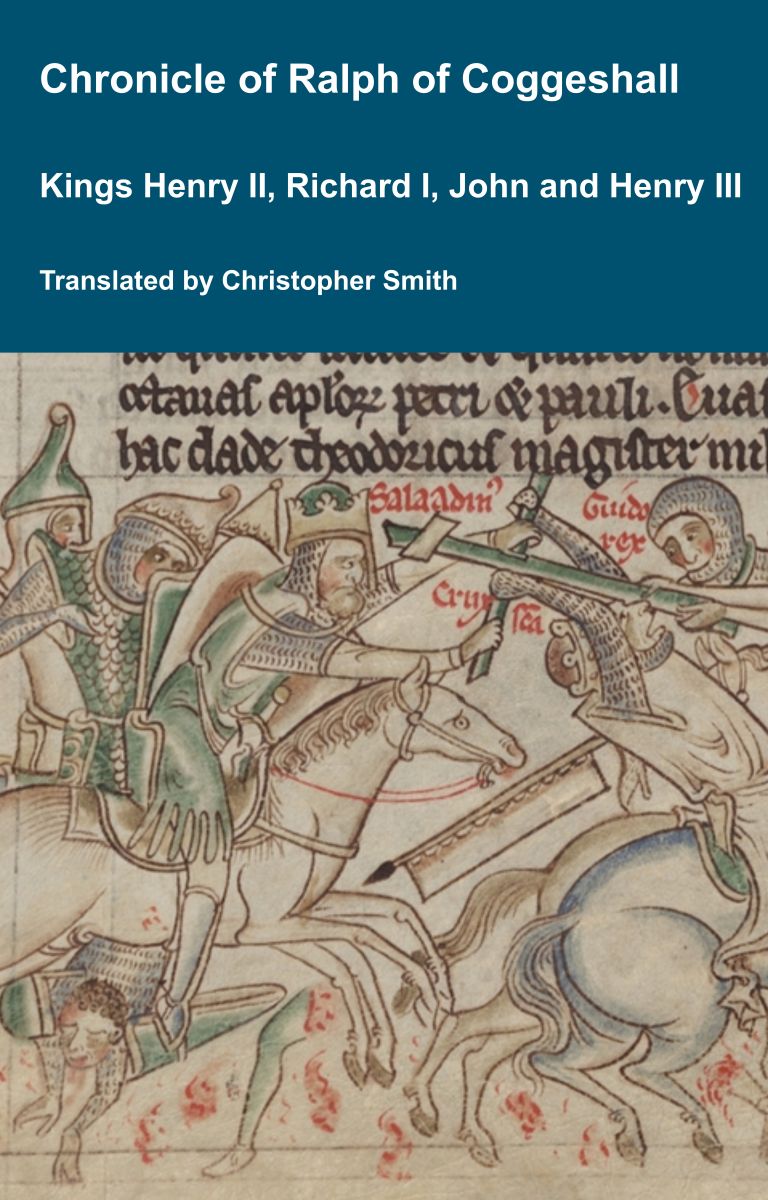
Chronicle of Abbot Ralph of Coggeshall
The Chronicle of Abbot Ralph of Coggeshall (Chronicon Anglicanum) is an indispensable medieval history that brings to life centuries of English and European affairs through the eyes of a learned Cistercian monk. Ralph of Coggeshall, abbot of the Abbey of Coggeshall in Essex in the early 13th century, continued and expanded his community’s chronicle, documenting events from the Norman Conquest of 1066 into the tumultuous reign of King Henry III. Blending eyewitness testimony, careful compilation, and the monastic commitment to record-keeping, this chronicle offers a rare narrative of political intrigue, royal power struggles, and social upheaval in England and beyond. Ralph’s work captures the reigns of pivotal figures such as Richard I and King John, providing invaluable insights into their characters, decisions, and the forces that shaped medieval rule. More than a simple annal, Chronicon Anglicanum conveys the texture of medieval life and governance, making it a rich source for scholars and readers fascinated by English history, monastic authorship, and the shaping of the medieval world.
Available at Amazon in eBook and Paperback format.
 John Evelyn's Diary October 1647
 Dover, Kent
 Wotton, Surrey
 Hampton Court Palace, Richmond
 Thames Ditton, Surrey
 Sayes Court, Deptford
John Evelyn's Diary 1647 is in John Evelyn's Diary 1640s.
28th January 1647. I changed my lodging in the Place de Monsieur de Metz, near the Abbey of St. Germains; and thence, on the 12th of February, to another in Rue Columbier, where I had a very fair apartment, which cost me four pistoles per month. The 18th, I frequented a course of Chemistry, the famous Monsieur Le Febure operating upon most of the nobler processes. March 3d, Monsieur Mercure began to teach me on the lute, though to small perfection.
1st May 1647. In May, I fell sick, and had very weak eyes; for which I was four times let bleed.
22nd May 1647. My valet (Herbert) robbed me of clothes and plate, to the value of three score pounds; but, through the diligence of Sir Richard Browne [aged 42], his Majesty's Resident at the Court of France, and with whose lady and family I had contracted a great friendship (and particularly set my affections on a daughter), I recovered most of them, obtaining of the Judge, with no small difficulty, that the process against the thief should not concern his life, being his first offense.
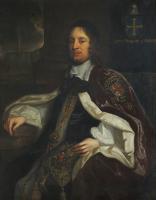
10th June 1647. We concluded about my marriage, in order to which I went to St. Germains, where his Majesty [aged 17], then Prince of Wales, had his court, to desire of Dr. Earle [aged 46], then one of his chaplains (since Dean of Westminster Abbey, Clerk of the Closet, and Bishop of Salisbury), that he would accompany me to Paris, which he did; and, on Thursday, 27th of June 1647, he married us in Sir Richard Browne's [aged 42] chapel, between the hours of eleven and twelve, some few select friends being present. And this being Corpus Christi feast, was solemnly observed in this country; the streets were sumptuously hung with tapestry, and strewed with flowers.

4th October 1647. I sealed and declared my will, and that morning went from Paris, taking my journey through Rouen, Dieppe, Ville-dieu, and St. Vallerie, where I stayed one day with Mr. Waller [aged 41], with whom I had some affairs, and for which cause I took this circle to Calais, where I arrived on the 11th, and that night embarking in a packet boat, was by one o'clock got safe to Dover, Kent [Map]; for which I heartily put up my thanks to God who had conducted me safe to my own country, and been merciful to me through so many aberrations. Hence, taking post, I arrived at London the next day at evening, being the 2d of October, new style.
5th October 1647. I came to Wotton, Surrey [Map], the place of my birth, to my brother [aged 30], and on the 10th to Hampton Court [Map] where I had the honor to kiss his Majesty's [aged 46] hand, and give him an account of several things I had in charge, he being now in the power of those execrable villains who not long after murdered him. I lay at my cousin, Sergeant Hatton's at Thames Ditton, Surrey [Map], whence, on the 13th, I went to London.
14th October 1647. To Sayes Court, Deptford [Map], at Deptford, in Kent (since my house), where I found Mr. Pretyman, my wife's [aged 12] uncle, who had charge of it and the estate about it, during my father-in-law's residence in France. On the 15th, I again occupied my own chambers in the Middle Temple.
9th November 1647. My sister opened to me her marriage with Mr. Glanville [aged 29].


