

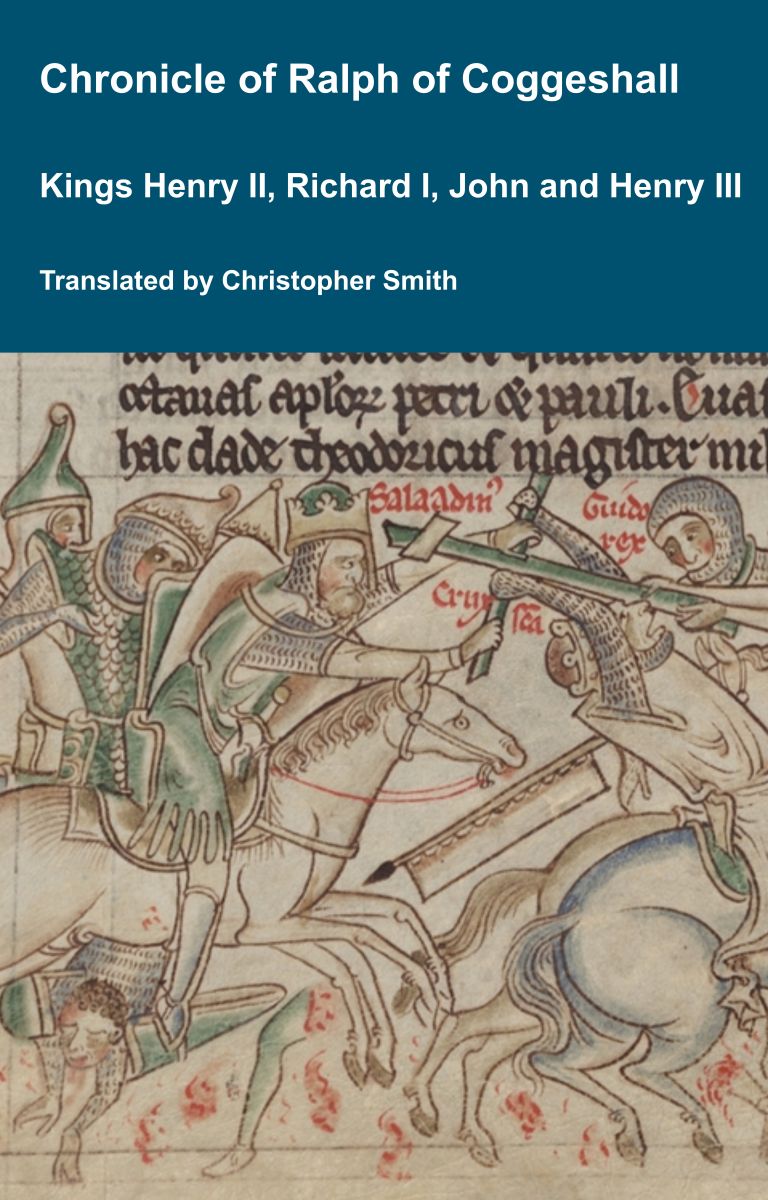
Chronicle of Abbot Ralph of Coggeshall
The Chronicle of Abbot Ralph of Coggeshall (Chronicon Anglicanum) is an indispensable medieval history that brings to life centuries of English and European affairs through the eyes of a learned Cistercian monk. Ralph of Coggeshall, abbot of the Abbey of Coggeshall in Essex in the early 13th century, continued and expanded his community’s chronicle, documenting events from the Norman Conquest of 1066 into the tumultuous reign of King Henry III. Blending eyewitness testimony, careful compilation, and the monastic commitment to record-keeping, this chronicle offers a rare narrative of political intrigue, royal power struggles, and social upheaval in England and beyond. Ralph’s work captures the reigns of pivotal figures such as Richard I and King John, providing invaluable insights into their characters, decisions, and the forces that shaped medieval rule. More than a simple annal, Chronicon Anglicanum conveys the texture of medieval life and governance, making it a rich source for scholars and readers fascinated by English history, monastic authorship, and the shaping of the medieval world.
Available at Amazon in eBook and Paperback format.
Memorials of Charlotte Williams-Wynn is in Victorian Books.
1st November 1854. London, November 1, 1854. We landed at Dover on the 13th, and since then have had so much business and anxiety that I have really lived only upon the newspapers. On our arrival we were met by the news of the death of my cousin, Arthur Williams-Wynn, in that fearful battle. For two others we are also in mourning, though they were not such near relations. My poor Uncle, Sir Henry (age 71), has been quite overwhelmed by his loss - his favourite son, and the one whom he trusted was coming home to many and live with him! Every alleviation that the case admitted of they have. The poor (?) boy had a presentiment he should fall, and wrote the day before to take leave of his father and sister, expressing his last wishes. The next evening he was found surrounded by his brother-officers close to the Russian gun, lying sword in hand, the ball having passed through his forehead. He evidently had died instantaneously, and for this exemption from suffering we are most thankful, for the thought of the long agony that the wounded went through is a horrible one. In truth, one never realised before what war is; you all know it well, and our fathers knew it! I do not think, if I had a dozen brothers there, that I could feel more anxiety. The mourning is sadly general, hardly a family that has not suffered remotely, and London looks very melancholy from the quantity of black worn in the streets, although this proceeds from the ravages which the cholera made rather than from those of the war. We are all busy sending out chaplains and nurses, and surgeons and comforts, to the sick and wounded - but to me it is just as bad to read, as I did to-day in the Times, that the air is tainted with the number of Russians who have fallen, as if they were our soldiers. It is the fact that such scenes are going on that burdens one's spirit!