


Text this colour is a link for Members only. Support us by becoming a Member for only £3 a month by joining our 'Buy Me A Coffee page'; Membership gives you access to all content and removes ads.
Text this colour links to Pages. Text this colour links to Family Trees. Place the mouse over images to see a larger image. Click on paintings to see the painter's Biography Page. Mouse over links for a preview. Move the mouse off the painting or link to close the popup.
Psalm 51 is in Book of Psalms.
NIV.
1. Have mercy on me, O God, according to your unfailing love; according to your great compassion blot out my transgressions.
2. Wash away all my iniquity and cleanse me from my sin.
3. For I know my transgressions, and my sin is always before me.
4. Against you, you only, have I sinned and done what is evil in your sight; so you are right in your verdict and justified when you judge.
5. Surely I was sinful at birth, sinful from the time my mother conceived me.
6. Yet you desired faithfulness even in the womb; you taught me wisdom in that secret place.
7. Cleanse me with hyssop, and I will be clean; wash me, and I will be whiter than snow.
8. Let me hear joy and gladness; let the bones you have crushed rejoice.
9. Hide your face from my sins and blot out all my iniquity.
10. Create in me a pure heart, O God, and renew a steadfast spirit within me.
All About History Books
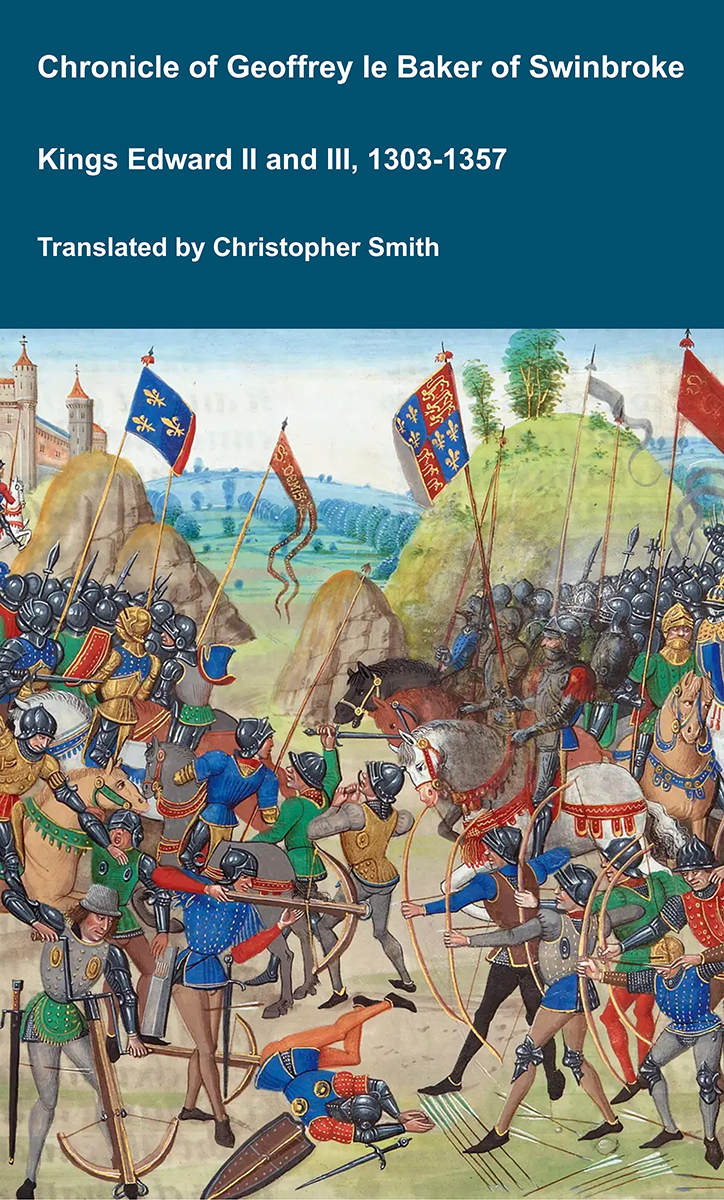
The Chronicle of Geoffrey le Baker of Swinbroke. Baker was a secular clerk from Swinbroke, now Swinbrook, an Oxfordshire village two miles east of Burford. His Chronicle describes the events of the period 1303-1356: Gaveston, Bannockburn, Boroughbridge, the murder of King Edward II, the Scottish Wars, Sluys, Crécy, the Black Death, Winchelsea and Poitiers. To quote Herbert Bruce 'it possesses a vigorous and characteristic style, and its value for particular events between 1303 and 1356 has been recognised by its editor and by subsequent writers'. The book provides remarkable detail about the events it describes. Baker's text has been augmented with hundreds of notes, including extracts from other contemporary chronicles, such as the Annales Londonienses, Annales Paulini, Murimuth, Lanercost, Avesbury, Guisborough and Froissart to enrich the reader's understanding. The translation takes as its source the 'Chronicon Galfridi le Baker de Swynebroke' published in 1889, edited by Edward Maunde Thompson. Available at Amazon in eBook and Paperback.
11. Do not cast me from your presence or take your Holy Spirit from me.
12. Restore to me the joy of your salvation and grant me a willing spirit, to sustain me.
13. Then I will teach transgressors your ways, so that sinners will turn back to you.
14. Deliver me from the guilt of bloodshed, O God, you who are God my Savior, and my tongue will sing of your righteousness.
15. Open my lips, Lord, and my mouth will declare your praise.
16. You do not delight in sacrifice, or I would bring it; you do not take pleasure in burnt offerings.
17. My sacrifice, O God, is[b] a broken spirit; a broken and contrite heart you, God, will not despise.
18. May it please you to prosper Zion, to build up the walls of Jerusalem.
19. Then you will delight in the sacrifices of the righteous, in burnt offerings offered whole; then bulls will be offered on your altar.
Archaeologia Volume 13 Appendix. The Ende of the Lady Jane Dudley, Doughter to the Duke of Suffolke upon the Scaffolde, at the houre of her death, being the 12 day of February.
Fyrst, whan she was mounted on the scaffolde, she sayd to the people standinge thereabout, Good people, I com hether to die, and by a lawe I am condemned to the same. The facte, indede, against the queenes highnes was unlawful, and the consenting thereunto by me, but touching the procurement and desyre therof by me, or on my halfe, I doo wash my handes thereof in innoceneie, before God and the face of you good christian people this day, and therwith she wrong her handes in which she had her booke. Then she fayd, I pray you all good christian people to here me wytnes that I dye a true christian woman, and that I looke to be saved by none other mene but only by the mercy of God, in the merites of the bloud of his onlye sonne Jesus Christe, and I consede when I dyd know the word of God, I neglected the same and loved myselfe and the world, and therefore this plage or punyshment is happely and worthely happened unto me for my sinnes. And yet I thanke God of his goodnes that he hath thus geven me a tyme and respet to repent. And now good people while I am alyve I pray you to assyst me with your prayers. And then die knelyng downe, she turned to Fecknam, saying, Shall I say this Psalm? and he said yea. Then she said the Psalm of Misereri Mei Deus in English in mod; devout maner to thende. Then she stode up and gave her mayde Mistres Tylney her gloves and handkercher, and her booke to Maistre Thomas Brydges, the lyvetenantes brother. Forthwith she untyed her gowne. The hangman went to her to have helped her of therwith, then she desyred him to let her alone, turning towardes her two gentlewomen, who helped her of therwith, and also her Frose paste and neckecher, geving to her a fayre handkercher to knytte about her eyes. Then the hangman kneled downe, and adeed her forgevenes, whome she forgave most willingly. Then he willed her to stand upon the strawe, which doing she sawe the blocke. Then she sayd I pray the dispatche me quickly. Than she kneeled downe saying, Wil you take it of before I lay me dowme? And the hangman answered her, No, madame. She tyed the kercher about her eyes. Than feeling for the blocke, saide, What shal I do, where is it? One of the standers by guyding her therunto, she layde her head downe upon the block, and stretched forth her body, and sayd, Lorde, into thy handes I commende my spirite.
And so she ended."
 Become a Member via our 'Buy Me a Coffee' page to read complete text.

Foxe's Book of Martyrs. 4th February 1555. Now when the time came, that he [John Rogers (age 50)], being delivered to the sheriffs, should be brought out of Newgate [Map] to Smithfield [Map], the place of his execution, first came to him Master Woodroofe, one of the aforesaid sheriffs, and calling Master Rogers unto him, asked him if he would revoke his abominable doctrine, and his evil opinion of the sacrament of the altar. Master Rogers answered and said, "That which I have preached I will seal with my blood." "Then," quoth Master Woodroofe, "thou art a heretic." "That shall be known," quoth Rogers, "at the day of judgment." "Well," quoth Master Woodroofe, "I will never pray for thee." "But I will pray for you," quoth Master Rogers: and so was brought the same day, which was Monday the fourth of February, by the sheriffs towards Smithfield, saying the psalm Miserere by the way, all the people wonderfully rejoicing at his constancy, with great praises and thanks to God for the same. And there, in the presence of Master Rochester, comptroller of the queen's household, Sir Richard Southwell (age 52), both the sheriffs, and a wonderful number of people, the fire was put unto him; and when it had taken hold both upon his legs and shoulders, he, as one feeling no smart, washed his hands in the flame, as though it had been in cold water. And, after lifting up his hands unto heaven, not removing the same until such time as the devouring fire had consumed them - most mildly this happy martyr yielded up his spirit into the hands of his heavenly Father. A little before his burning at the stake, his pardon was brought, if he would have recanted, but he utterly refused. He was the first protomartyr of all the blessed company that suffered in Queen Mary's time, that gave the first adventure upon the fire. His wife and children, being eleven in number, and ten able to go, and one sucking on her breast, met him by the way as he went towards Smithfield. This sorrowful sight of his own flesh and blood could nothing move him; but that he constantly and cheerfully took his death, with wonderful patience, in the defence and quarrel of Christ's gospel.
On 27th February 1540 Roger Lupton (age 84) died. He was buried in the chapel that bears his name Lupton's Chapel Eton College [Map]. His tomb has a monumental brass with him wearing the mantle of a Canon of Windsor with the inscription in Latin "Miserere mei Deus secundum magnam misericordiam tuam" being the first part of the first verse of Psalm 51.