

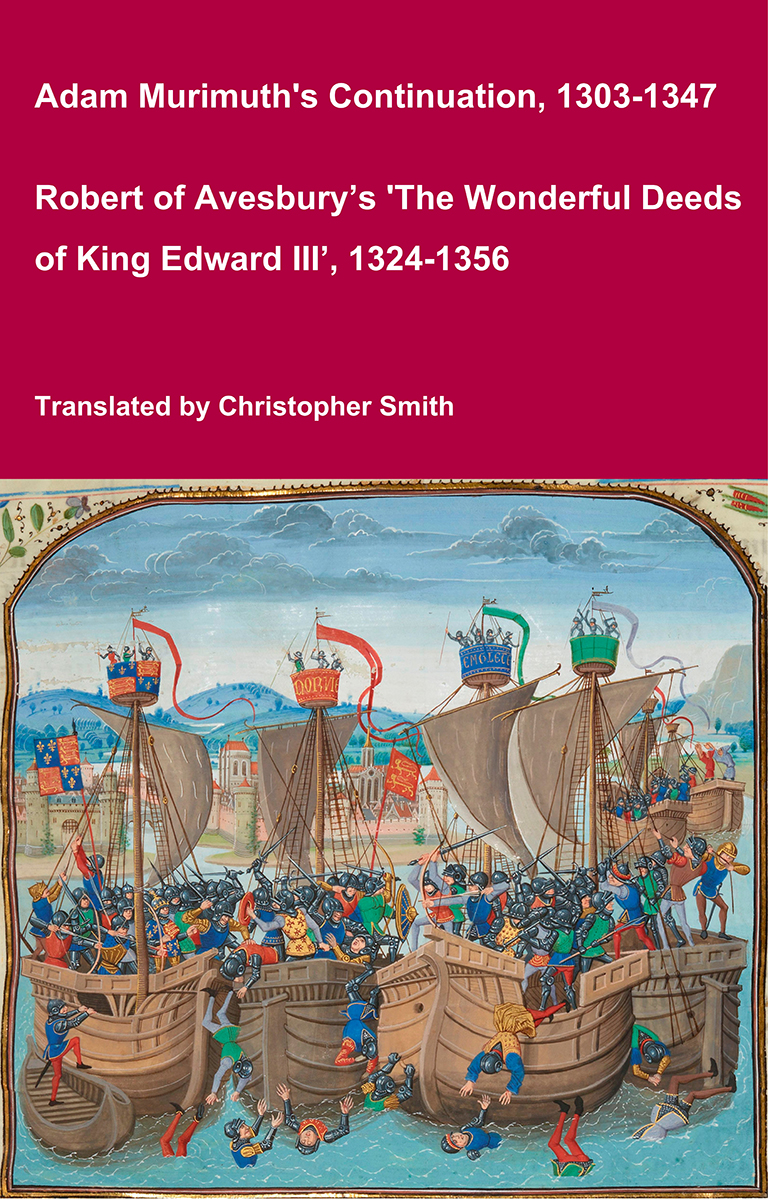
Adam Murimuth's Continuation and Robert of Avesbury’s 'The Wonderful Deeds of King Edward III'
This volume brings together two of the most important contemporary chronicles for the reign of Edward III and the opening phases of the Hundred Years’ War. Written in Latin by English clerical observers, these texts provide a vivid and authoritative window into the political, diplomatic, and military history of fourteenth-century England and its continental ambitions. Adam Murimuth Continuatio's Chronicarum continues an earlier chronicle into the mid-fourteenth century, offering concise but valuable notices on royal policy, foreign relations, and ecclesiastical affairs. Its annalistic structure makes it especially useful for establishing chronology and tracing the development of events year by year. Complementing it, Robert of Avesbury’s De gestis mirabilibus regis Edwardi tertii is a rich documentary chronicle preserving letters, treaties, and official records alongside narrative passages. It is an indispensable source for understanding Edward III’s claim to the French crown, the conduct of war, and the mechanisms of medieval diplomacy. Together, these works offer scholars, students, and enthusiasts a reliable and unembellished account of a transformative period in English and European history. Essential for anyone interested in medieval chronicles, the Hundred Years’ War, or the reign of Edward III.
Available at Amazon in eBook and Paperback format.
Satires by Juvenal is in Juvenal.
curandum in primis ne magna iniuria fiat
fortibus et miseris. tollas licet omne quod usquam est
auri atque argenti, scutum gladiumque relinques.
[et iaculum et galeam; spoliatis arma supersunt.]
Above all, care must be taken not to inflict great injury on the brave and the wretched.
You may take away all that exists of gold and silver, leaving behind the shield and sword.
[And the javelin and helmet; for the disarmed, weapons remain.]
cum plenus fluctu medius foret alveus et iam,
alternum puppis latus evertentibus undis,
arbori incertae, nullam prudentia cani
rectoris cum ferret opem, decidere iactu
coepit cum ventis, imitatus castora, qui se
eunuchum ipse facit cupiens evadere damno
testiculi; adeo medicatum intellegit inguen.
When the riverbed was full in the midst of the waves and now, with the waves overturning the sides of the boat alternately, with an uncertain tree [mast]—no wisdom guiding the helmsman when he brought help—it began to fall with the winds, imitating the beaver, which makes itself a eunuch wishing to escape the harm of the testicles; so much does it understand the medicine applied to the groin."