

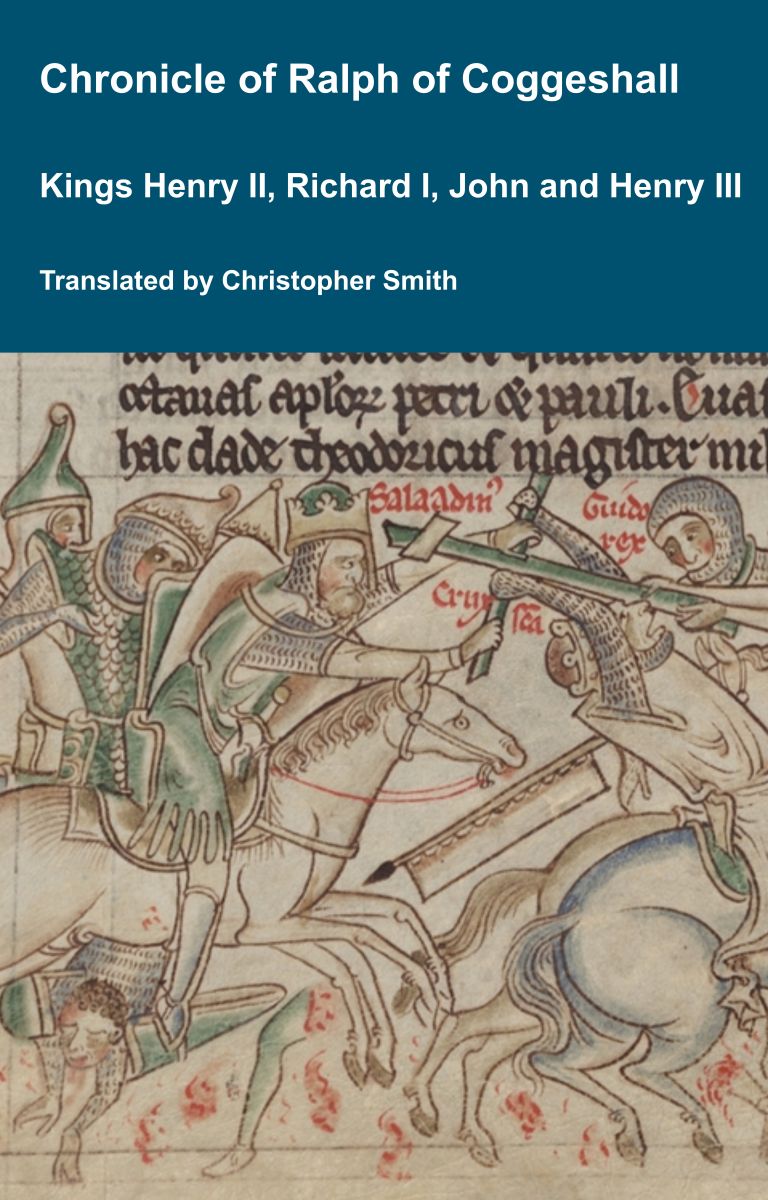
Chronicle of Abbot Ralph of Coggeshall
The Chronicle of Abbot Ralph of Coggeshall (Chronicon Anglicanum) is an indispensable medieval history that brings to life centuries of English and European affairs through the eyes of a learned Cistercian monk. Ralph of Coggeshall, abbot of the Abbey of Coggeshall in Essex in the early 13th century, continued and expanded his community’s chronicle, documenting events from the Norman Conquest of 1066 into the tumultuous reign of King Henry III. Blending eyewitness testimony, careful compilation, and the monastic commitment to record-keeping, this chronicle offers a rare narrative of political intrigue, royal power struggles, and social upheaval in England and beyond. Ralph’s work captures the reigns of pivotal figures such as Richard I and King John, providing invaluable insights into their characters, decisions, and the forces that shaped medieval rule. More than a simple annal, Chronicon Anglicanum conveys the texture of medieval life and governance, making it a rich source for scholars and readers fascinated by English history, monastic authorship, and the shaping of the medieval world.
Available at Amazon in eBook and Paperback format.
1685 Death and Burial of Charles II
1685 Coronation James II and Mary
On 30th January 1617 Archbishop William Sancroft was born in Ufford Hall, Suffolk.
John Evelyn's Diary. 7th March 1666. Dr. Sancroft [aged 49], since Archbishop of Canterbury, preached before the King [aged 35] about the identity and immutability of God, on Psalm cii. 27.
John Evelyn's Diary. 4th July 1666. The solemn Fast-day. Dr. Meggot preached an excellent discourse before the King [aged 36] on the terrors of God's judgments. After sermon, I waited on my Lord Archbishop of Canterbury [aged 49] and Bishop of Winchester [aged 47], where the Dean of Westminster [aged 31] spoke to me about putting into my hands the disposal of fifty pounds, which the charitable people of Oxford had sent to be distributed among the sick and wounded seamen since the battle. Hence, I went to the Lord Chancellor's [aged 57] to joy him of his Royal Highness's [aged 32] second son, now born at St. James's [Map]; and to desire the use of the Star-chamber for our Commissioners to meet in, Painters' Hall, Queenhithe not being so convenient.
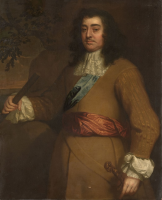



In 1667 Archbishop William Sancroft [aged 49] was appointed Archbishop of Canterbury at the express wish of King Charles II of England Scotland and Ireland [aged 36].


John Evelyn's Diary. 9th January 1684. I went crosse the Thames on the ice, now become so thick as to beare not onely streetes of boothes, in which they roasted meate, and had divers shops of wares, quite acrosse as in a towne, but coaches, carts, and horses, passed over. So I went from Westminster Stayres to Lambeth [Map], and din'd with the Archbishop [aged 66]: where I met my Lord Bruce, Sir Geo. Wheeler [aged 32], Coll. Cooke, and severall divines. After dinner and discourse with his Grace till evening prayers, Sir Geo. Wheeler and I walked over the ice from Lambeth Stayres to the horse ferry.
On 6th February 1685 King Charles II of England Scotland and Ireland [aged 54] died around midday the morning at Whitehall Palace [Map] attended by Charles Scarburgh [aged 69]. His brother James [aged 51] succeeded II King England Scotland and Ireland. Duke York merged with the Crown. Mary of Modena Queen Consort England Scotland and Ireland [aged 26] by marriage Queen Consort England Scotland and Ireland. His brother King James II of England Scotland and Ireland, William Chiffinch [aged 83], Richard Mason [aged 52] and Archbishop William Sancroft [aged 68] were present.
The time of his death reported differtently by different contemporary sources: John Evelyn's Diary 'at halfe an houre after eleven in the morning', the Anonymous Letter to Reverend Roper: 'Yesterday noon', Ambassador Barillon's Account: 'and at noon, he died without any struggle or convulsion.' and Charl;es Scarburgh's Manuscript: 'He expired on February the Sixth soon after noon'.
According to Mark Bryant's book "Private Lives: Curious Facts about the Famous and Infamous' King Charles is supposed to have said the much repested phrase: "I am sorry, gentlemen, for being such a time a-dying." This doesn't appear to come from a contemporary source. Macaulay in his 'History of England', writing much later has "He apologised to those who had stood round him all night for the trouble which he had caused. He had been, he said, a most unconscionable time dying; but he hoped that they would excuse it." Perhaps the nearest we can find in a contemporary source is the Anonymous Letter to Reverend Roper: 'and beg the pardon of the standers by, and those that were employed about him, that he gave them so much trouble: that he hoped the work was almost over...'


John Evelyn's Diary. 6th February 1685. Prayers were solemnly made in all the Churches, especialy in both ye Court Chapells, where the Chaplaines reliev'd one another every halfe quarter of an houre from the time he began to be in danger till he expir'd, according to the forme prescrib'd in the Church Offices. Those who assisted his Majesty's [aged 54] devotions were, the Abp. of Canterbury [aged 68], the Bishops of London [aged 53], Durham [aged 52], and Ely [aged 47], but more especialy Dr. Ken, the Bp. of Bath and Wells [aged 47] receiving the Holy Sacrament, but his Ma* told them he would consider of it, which he did so long 'till it was too late. Others whisper'd that the Bishops and Lords, except the Earles of Bath [aged 56] and Feversham [aged 44], being order'd to withdraw the night before, Hurlston, the 'Priest, had presumed to administer the Popish Offices. He gave his breeches and keys to ye Duke [aged 51], who was almost continually kneeling by his bed-side, and in teares. He also recommended to him the care of his natural children, all except the Duke of Monmouth [aged 35], now in Holland, and in his displeasure. He intreated the Queene [aged 46] to pardon him (not without cause); who a little before had sent a Bishop to excuse her not more frequently visiting him, in reguard of her excessive griefe, and withall, that his Ma* would forgive it if at any time she had offended him. He spake to ye Duke to be kind to the Dutchesse of Cleaveland [aged 44], and especialy Portsmouth [aged 35], and that Nelly [aged 35] might not starve.
On 23rd April 1685 King James II of England Scotland and Ireland [aged 51] was crowned II King England Scotland and Ireland by Archbishop William Sancroft [aged 68]. Mary of Modena Queen Consort England Scotland and Ireland [aged 26] crowned Queen Consort England Scotland and Ireland.
Bishop Francis Turner [aged 47] preached the sermon.
John Ashburnham 1st Baron Ashburnham [aged 29] carried the canopy being one of the Barons of the Cinque Ports at Westminster Abbey [Map].
Henry Fitzroy 1st Duke Grafton [aged 21] was appointed Constable of England.


John Evelyn's Diary. 14th November 1685. I dined at Lambeth [Map], my Lord Archbishop [aged 68] carrying me with him in his barge: there were my Lord Deputy of Ireland, the Bp. of Ely [aged 48], and St. Asaph [aged 58], Dr. Sherlock, and other divines; Sir Wm Hayward, Sir Paule Rycaut, &c.
John Evelyn's Diary. 12th May 1686. I refus'd to put the Privy Seale to Dr Walker's [aged 70] licence for printing and publishing divers Popish books, of which I complain'd both to my Lord of Canterbury [aged 69] (with whom I went to advise in the Council Chamber), and to my Lord Treasurer [aged 44] that evening at his lodgings. My Lord of Canterbury's advice was, that I should follow my owne conscience therein; Mr. Treasurer's, that if in conscience I could dispense with it, for any other hazard he believ'd there was none. Notwithstanding this 1 persisted in my refusal.


John Evelyn's Diary. 8th July 1686. I waited on the Archbishop [aged 69] at Lambeth [Map], where I dined and met the famous preacher and writer, Dr. Allix [aged 45], doubtless a most excellent and learned person. The Archbishop and he spoke Latin together, and that very readily.
John Evelyn's Diary. 14th July 1686. Was sealed at our office the constitution of certain commissioners to take upon them full power of all Ecclesiastical affairs, in as unlimited a manner, or rather greater, than the late High Commission-Court, abrogated by Parliament; for it had not only faculty to inspect and visit all Bishops' dioceses, but to change what laws and statutes they should think fit to alter among the colleges, though founded by private men; to punish, suspend, fine, etc., give oaths and call witnesses. The main drift was to suppress zealous preachers. In sum, it was the whole power of a Vicar-General-note the consequence! Of the clergy the commissioners were the Archbishop of Canterbury [Sancroft] [aged 69], Bishop of Durham [Crewe] [aged 53], and Rochester [Sprat] [aged 51]; of the Temporals, the Lord Treasurer, the Lord Chancellor [Jefferies] [aged 41] (who alone was ever to be of the quorum), the Chief justice [Herbert] [aged 38], and Lord President [Earl of Sunderland] [aged 44].


John Evelyn's Diary. 8th August 1686. Our vicar gone to dispose of his country living in Rutlandshire, having St. Dunstan in the east given him by the Archbishop of Canterbury [aged 69].
John Evelyn's Diary. 8th September 1686. Dr. Compton, Bishop of London [aged 54], was on Monday suspended, on pretense of not silencing Dr. Sharp [aged 41] [NOTE. Assumed to be the subsequent Archbishop?] at St. Giles's [Map], for something of a sermon in which he zealously reproved the doctrine of the Roman Catholics. The Bishop having consulted the civilians, they told him he could not by any law proceed against Dr. Sharp without producing witnesses, and impleaded according to form; but it was overruled by my Lord Chancellor [aged 41], and the Bishop sentenced without so much as being heard to any purpose. This was thought a very extraordinary way of proceeding, and was universally resented, and so much the rather for that two Bishops, Durham [aged 53] and Rochester [aged 51], sitting in the commission and giving their suffrages the Archbishop of Canterbury [aged 69] refused to sit among them. He was only suspended ab officio, and that was soon after taken off. He was brother to the Earl of Northampton, had once been a soldier, had traveled in Italy, but became a sober, grave, and excellent prelate.


The Deeds of the Dukes of Normandy
The Gesta Normannorum Ducum [The Deeds of the Dukes of Normandy] is a landmark medieval chronicle tracing the rise and fall of the Norman dynasty from its early roots through the pivotal events surrounding the Norman Conquest of England. Originally penned in Latin by the monk William of Jumièges shortly before 1060 and later expanded at the behest of William the Conqueror, the work chronicles the deeds, politics, battles, and leadership of the Norman dukes, especially William’s own claim to the English throne. The narrative combines earlier historical sources with firsthand information and oral testimony to present an authoritative account of Normandy’s transformation from a Viking settlement into one of medieval Europe’s most powerful realms. William’s history emphasizes the legitimacy, military prowess, and governance of the Norman line, framing their expansion, including the conquest of England, as both divinely sanctioned and noble in purpose. Later chroniclers such as Orderic Vitalis and Robert of Torigni continued the history, extending the coverage into the 12th century, providing broader context on ducal rule and its impact. Today this classic work remains a foundational source for understanding Norman identity, medieval statesmanship, and the historical forces that reshaped England and Western Europe between 800AD and 1100AD.
Available at Amazon in eBook and Paperback format.
John Evelyn's Diary. 13th September 1687. I went to Lambeth, and dined with the Archbishop [aged 70]. After dinner, I retired into the library, which I found exceedingly improved; there are also divers rare manuscripts in a room apart.
On 13th May 1688 the Archbishop of Canterbury and seven bishops were imprisoned for seditious libel: Archbishop William Sancroft [aged 71], Bishop Henry Compton [aged 56], Bishop Francis Turner [aged 50], Bishop Thomas White [aged 60], Bishop Thomas Ken [aged 50], Bishop John Lake [aged 64], Bishop Jonathan Trelawny 3rd Baronet [aged 38] and Bishop William Lloyd [aged 51]. Their crime was to not read the Declaration of Indulgence as required by King James II of England Scotland and Ireland [aged 54].


John Evelyn's Diary. 8th June 1688. This day, the Archbishop of Canterbury [aged 71], with the Bishops of Ely [aged 50], Chichester [aged 64], St. Asaph [aged 60], Bristol [aged 38], Peterborough [aged 60], and Bath and Wells [aged 50], were sent from the Privy Council prisoners to the Tower [Map], for refusing to give bail for their appearance, on their not reading the Declaration for liberty of conscience; they refused to give bail, as it would have prejudiced their peerage. The concern of the people for them was wonderful, infinite crowds on their knees begging their blessing, and praying for them, as they passed out of the barge along the Tower wharf.
John Evelyn's Diary. 13th June 1688. I went to the Tower [Map] to see the Bishops, visited the Archbishop [aged 71] and the Bishops of Ely [aged 50], St. Asaph [aged 60], and Bath and Wells [aged 50].
John Evelyn's Diary. 7th October 1688. The late imprisoned Bishops were now called to reconcile matters, and the Jesuits hard at work to foment confusion among the Protestants by their usual tricks. A letter was sent to the Archbishop of Canterbury [aged 71], informing him, from good hands, of what was contriving by them. A paper of what the Bishops advised his Majesty was published. The Bishops were enjoined to prepare a form of prayer against the feared invasion. A pardon published. Soldiers and mariners daily pressed.
John Evelyn's Diary. 26th July 1688. I went to Lambeth to visit the Archbishop [aged 71], whom I found very cheerful.
John Evelyn's Diary. 29th October 1688. There was a Council called, to which were summoned the Archbishop of Canterbury [aged 71], the Judges, the Lord Mayor, etc. The Queen Dowager [aged 49], and all the ladies and lords who were present at the Queen Consort's [aged 30] labor, were to give their testimony upon oath of the Prince of Wales's birth, recorded both at the Council Board and at the Chancery a day or two after. This procedure was censured by some as below his Majesty [aged 55] to condescend to, on the talk of the people. It was remarkable that on this occasion the Archbishop, Marquis of Halifax [aged 54], the Earls of Clarendon and Nottingham [aged 41], refused to sit at the Council table among Papists, and their bold telling his Majesty that whatever was done while such sat among them was unlawful and incurred praemunire;-at least, if what I heard be true.


John Evelyn's Diary. 1st November 1688. Dined with Lord Preston [aged 39], with other company, at Sir Stephen Fox's [aged 61]. Continual alarms of the Prince of Orange [aged 37], but no certainty. Reports of his great losses of horse in the storm, but without any assurance. A man was taken with divers papers and printed manifestoes, and carried to Newgate [Map], after examination at the Cabinet Council. There was likewise a declaration of the States for satisfaction of all public ministers at The Hague, except to the English and the French. There was in that of the Prince's an expression, as if the Lords both spiritual and temporal had invited him over, with a deduction of the causes of his enterprise. This made his Majesty [aged 55] convene my Lord of Canterbury [aged 71] and the other Bishops now in town, to give an account of what was in the manifesto, and to enjoin them to clear themselves by some public writing of this disloyal charge.


John Evelyn's Diary. 5th November 1688. The Archbishop of Canterbury [aged 71] and some few of the other Bishops and Lords in London, were sent for to Whitehall, and required to set forth their abhorrence of this invasion. They assured his Majesty [aged 55] that they had never invited any of the Prince's [aged 38] party, or were in the least privy to it, and would be ready to show all testimony of their loyalty; but, as to a public declaration, being so few, they desired that his Majesty would call the rest of their brethren and Peers, that they might consult what was fit to be done on this occasion, not thinking it right to publish anything without them, and till they had themselves seen the Prince's manifesto, in which it was pretended he was invited in by the Lords, spiritual and temporal. This did not please the King; so they departed.
John Evelyn's Diary. 18th November 1688. It was now a very hard frost. The King [aged 55] goes to Salisbury to rendezvous the army, and return to London. Lord Delamere [aged 36] appears for the Prince [aged 38] in Cheshire. The nobility meet in Yorkshire. The Archbishop of Canterbury [aged 71] and some Bishops, and such Peers as were in London, address his Majesty to call a Parliament. The King invites all foreign nations to come over. The French take all the Palatinate, and alarm the Germans more than ever.

John Evelyn's Diary. 15th January 1689. It now growing late, after some private discourse with his Grace [aged 71], I took my leave, most of the Lords being gone.
John Evelyn's Diary. 15th January 1689. I found by the Lord-Advocate [aged 53] that the Bishops of Scotland (who were indeed little worthy of that character, and had done much mischief in that Church) were now coming about to the true interest, in this conjuncture which threatened to abolish the whole hierarchy in that kingdom; and therefore the Scottish Archbishop [aged 55] and Lord-Advocate requested the Archbishop of Canterbury [aged 71] to use his best endeavors with the Prince [aged 55] to maintain the Church there in the same state, as by law at present settled.
John Evelyn's Diary. 15th January 1689. My Lord of Canterbury [aged 71] gave me great thanks for the advertisement I sent him in October, and assured me they took my counsel in that particular, and that it came very seasonably.
Adam Murimuth's Continuation and Robert of Avesbury’s 'The Wonderful Deeds of King Edward III'
This volume brings together two of the most important contemporary chronicles for the reign of Edward III and the opening phases of the Hundred Years’ War. Written in Latin by English clerical observers, these texts provide a vivid and authoritative window into the political, diplomatic, and military history of fourteenth-century England and its continental ambitions. Adam Murimuth Continuatio's Chronicarum continues an earlier chronicle into the mid-fourteenth century, offering concise but valuable notices on royal policy, foreign relations, and ecclesiastical affairs. Its annalistic structure makes it especially useful for establishing chronology and tracing the development of events year by year. Complementing it, Robert of Avesbury’s De gestis mirabilibus regis Edwardi tertii is a rich documentary chronicle preserving letters, treaties, and official records alongside narrative passages. It is an indispensable source for understanding Edward III’s claim to the French crown, the conduct of war, and the mechanisms of medieval diplomacy. Together, these works offer scholars, students, and enthusiasts a reliable and unembellished account of a transformative period in English and European history. Essential for anyone interested in medieval chronicles, the Hundred Years’ War, or the reign of Edward III.
Available at Amazon in eBook and Paperback format.
John Evelyn's Diary. 15th January 1689. I visited the Archbishop of Canterbury [aged 71], where I found the Bishops of St. Asaph [aged 61], Ely [aged 51], Bath and Wells [aged 51], Peterborough [aged 61], and Chichester [aged 65], the Earls of Aylesbury [aged 33] and Clarendon, Sir George Mackenzie [aged 53], Lord-Advocate of Scotland, and then came in a Scotch Archbishop, etc. After prayers and dinner, divers serious matters were discoursed, concerning the present state of the Public, and sorry I was to find there was as yet no accord in the judgments of those of the Lords and Commons who were to convene; some would have the Princess [aged 26] made Queen without any more dispute, others were for a Regency; there was a Tory party (then so called), who were for inviting his Majesty [aged 55] again upon conditions; and there were Republicans who would make the Prince of Orange [aged 38] like a Stadtholder. The Romanists were busy among these several parties to bring them into confusion: most for ambition or other interest, few for conscience and moderate resolutions. I found nothing of all this in this assembly of Bishops, who were pleased to admit me into their discourses; they were all for a Regency, thereby to salve their oaths, and so all public matters to proceed in his Majesty's name, by that to facilitate the calling of Parliament, according to the laws in being. Such was the result of this meeting.


John Evelyn's Diary. 29th January 1689. The votes of the House of Commons being carried up by Mr. Hampden [aged 36], their chairman, to the Lords, I got a station by the Prince's [aged 55] lodgings at the door of the lobby to the House, and heard much of the debate, which lasted very long. Lord Derby [aged 34] was in the chair (for the House was resolved into a grand committee of the whole House); after all had spoken, it came to the question, which was carried by three voices against a Regency, which 51 were for, 54 against; the minority alleging the danger of dethroning Kings, and scrupling many passages and expressions in the vote of the Commons, too long to set down particularly. Some were for sending to his Majesty with conditions: others that the King could do no wrong, and that the maladministration was chargeable on his ministers. There were not more than eight or nine bishops, and but two against the Regency; the archbishop [aged 71] was absent, and the clergy now began to change their note, both in pulpit and discourse, on their old passive obedience, so as people began to talk of the bishops being cast out of the House. In short, things tended to dissatisfaction on both sides; add to this, the morose temper of the Prince of Orange [aged 38], who showed little countenance to the noblemen and others, who expected a more gracious and cheerful reception when they made their court. The English army also was not so in order, and firm to his interest, nor so weakened but that it might give interruption. Ireland was in an ill posture as well as Scotland. Nothing was yet done toward a settlement. God of his infinite mercy compose these things, that we may be at last a Nation and a Church under some fixed and sober establishment!
John Evelyn's Diary. 21st February 1689. The Archbishop of Canterbury [aged 72] and some of the rest, on scruple of conscience and to salve the oaths they had taken, entered their protests and hung off, especially the Archbishop, who had not all this while so much as appeared out of Lambeth [Map]. This occasioned the wonder of many who observed with what zeal they contributed to the Prince's [aged 38] expedition, and all the while also rejecting any proposals of sending again to the absent King [aged 55]; that they should now raise scruples, and such as created much division among the people, greatly rejoicing the old courtiers, and especially the Papists.
John Evelyn's Diary. 26th April 1689. I heard the lawyers plead before the Lords the writ of error in the judgment of Oates [aged 39], as to the charge against him of perjury, which after debate they referred to the answer of Holloway, etc., who were his judges. I then went with the Bishop of St. Asaph [aged 61] to the Archbishop [aged 72] at Lambeth [Map], where they entered into discourse concerning the final destruction of Antichrist, both concluding that the third trumpet and vial were now pouring out. My Lord St. Asaph considered the killing of the two witnesses, to be the utter destruction of the Cevennes Protestants by the French and Duke of Savoy, and the other the Waldenses and Pyrenean Christians, who by all appearance from good history had kept the primitive faith from the very Apostles' time till now. The doubt his Grace suggested was, whether it could be made evident that the present persecution had made so great a havoc of those faithful people as of the other, and whether there were not yet some among them in being who met together, it being stated from the text, Apoc. xi., that they should both be slain together. They both much approved of Mr. Mede's way of interpretation, and that he only failed in resolving too hastily on the King of Sweden's (Gustavus Adolphus) success in Germany. They agreed that it would be good to employ some intelligent French minister to travel as far as the Pyrenees to understand the present state of the Church there, it being a country where hardly anyone travels.
John Evelyn's Diary. 7th June 1689. I visited the Archbishop of Canterbury [aged 72], and stayed with him till about seven o'clock. He read to me the Pope's excommunication of the French King [aged 50].
John Evelyn's Diary. 21st September 1689. I went to visit the Archbishop of Canterbury [aged 72] since his suspension, and was received with great kindness. A dreadful fire happened in Southwark [Map].
John Evelyn's Diary. 19th April 1691. The Archbishop of Canterbury [aged 74], and Bishops of Ely [aged 53], Bath and Wells [aged 53], Peterborough [aged 63], Gloucester [aged 69], and the rest who would not take the oaths to King William [aged 40], were now displaced; and in their rooms, Dr. Tillotson [aged 60], Dean of St. Paul's, was made Archbishop: Patrick [aged 64] removed from Chichester to Ely; Cumberland [aged 59] to Gloucester. Note. A mistake. Bishop Edward Fowler was made Bishop of Gloucester. Bishop Richard Cumberland [aged 59] was made Bishop of Peterborough.

John Evelyn's Diary. 7th May 1691. I went to visit the Archbishop of Canterbury [aged 74] [Sancroft] yet at Lambeth. I found him alone, and discoursing of the times, especially of the newly designed Bishops; he told me that by no canon or divine law they could justify the removing of the present incumbents; that Dr. Beveridge, designed Bishop of Bath and Wells, came to ask his advice; that the Archbishop told him, though he should give it, he believed he would not take it; the Doctor said he would; why then, says the Archbishop, when they come to ask, say "Nolo", and say it from the heart; there is nothing easier than to resolve yourself what is to be done in the case: the Doctor seemed to deliberate. What he will do I know not, but Bishop Ken [aged 53], who is to be put out, is exceedingly beloved in his diocese; and, if he and the rest should insist on it, and plead their interest as freeholders, it is believed there would be difficulty in their case, and it may endanger a schism and much disturbance, so as wise men think it had been better to have let them alone, than to have proceeded with this rigor to turn them out for refusing to swear against their consciences. I asked at parting, when his Grace removed; he said that he had not yet received any summons, but I found the house altogether disfurnished and his books packed up.
John Evelyn's Diary. 11th July 1691. I dined with Mr. Pepys [aged 58], where was Dr. Cumberland [aged 59], the new Bishop of Norwich [Note. Should be John Moore Bishop], Dr. Lloyd [aged 54] having been put out for not acknowledging the Government. Cumberland [Note. John Moore Bishop 1646-1707] is a very learned, excellent man. Possession was now given to Dr. Tillotson [aged 60], at Lambeth, by the Sheriff; Archbishop Sancroft was gone [aged 74], but had left his nephew to keep possession; and he refusing to deliver it up on the Queen's message [aged 29], was dispossessed by the Sheriff, and imprisoned. This stout demeanor of the few Bishops who refused to take the oaths to King William [aged 40], animated a great party to forsake the churches, so as to threaten a schism; though those who looked further into the ancient practice, found that when (as formerly) there were Bishops displaced on secular accounts, the people never refused to acknowledge the new Bishops, provided they were not heretics. The truth is, the whole clergy had till now stretched the duty of passive obedience, so that the proceedings against these Bishops gave no little occasion of exceptions; but this not amounting to heresy, there was a necessity of receiving the new Bishops, to prevent a failure of that order in the Church. I went to visit Lord Clarendon in the Tower, but he was gone into the country for air by the Queen's permission, under the care of his warden.


On 24th November 1693 Archbishop William Sancroft [aged 76] died.
John Evelyn's Diary. 22nd November 1694. Visited the Bishop of Lincoln [aged 58] [Tenison] newly come on the death of the Archbishop of Canterbury [aged 64], who a few days before had a paralytic stroke,-the same day and month that Archbishop Sancroft was put out. A very sickly time, especially the smallpox, of which divers considerable persons died. The State lottery drawing, Mr. Cock, a French refugee, and a President in the Parliament of Paris for the Reformed, drew a lot of £1,000 per annum.