

Chronicle of Abbot Ralph of Coggeshall
The Chronicle of Abbot Ralph of Coggeshall (Chronicon Anglicanum) is an indispensable medieval history that brings to life centuries of English and European affairs through the eyes of a learned Cistercian monk. Ralph of Coggeshall, abbot of the Abbey of Coggeshall in Essex in the early 13th century, continued and expanded his community’s chronicle, documenting events from the Norman Conquest of 1066 into the tumultuous reign of King Henry III. Blending eyewitness testimony, careful compilation, and the monastic commitment to record-keeping, this chronicle offers a rare narrative of political intrigue, royal power struggles, and social upheaval in England and beyond. Ralph’s work captures the reigns of pivotal figures such as Richard I and King John, providing invaluable insights into their characters, decisions, and the forces that shaped medieval rule. More than a simple annal, Chronicon Anglicanum conveys the texture of medieval life and governance, making it a rich source for scholars and readers fascinated by English history, monastic authorship, and the shaping of the medieval world.
Available at Amazon in eBook and Paperback format.
On 18th September 1643 Bishop Gilbert Burnet was born at Edinburgh.
Around 1672 Bishop Gilbert Burnet [aged 28] and Margaret Kennedy were married. She the daughter of John Kennedy 6th Earl Cassilis and Jean Hamilton Countess Cassilis.
John Evelyn's Diary. 15th November 1674. The anniversary of my baptism: I first heard that famous and excellent preacher, Dr. Burnet [aged 31], author of the "History of the Reformation" on Colossians iii. 10, with such flow of eloquence and fullness of matter, as showed him to be a person o£ extraordinary parts.

Around 1675 Mary Beale aka Cradock [aged 41]. Portrait of Bishop Gilbert Burnet [aged 31].
John Evelyn's Diary. 6th July 1679. There was now brought up to London a child, son of one Mr. Wotton, formerly amanuensis to Dr. Andrews, Bishop of Winton, who both read and perfectly understood Hebrew, Greek, Latin, Arabic, Syriac, and most of the modern languages; disputed in divinity, law, and all the sciences; was skillful in history, both ecclesiastical and profane; in politics; in a word, so universally and solidly learned at eleven years of age, that he was looked on as a miracle. Dr. Lloyd [aged 42], one of the most deeply learned divines of this nation in all sorts of literature, with Dr. Burnet [aged 35], who had severely examined him, came away astonished, and they told me they did not believe there had the like appeared in the world. He had only been instructed by his father, who being himself a learned person, confessed that his son knew all that he himself knew. But, what was more admirable than his vast memory, was his judgment and invention, he being tried with divers hard questions, which required maturity of thought and experience. He was also dexterous in chronology, antiquities, mathematics. In sum, an intellectus universalis, beyond all that we read of Picus Mirandula, and other precocious wits, and yet withal a very humble child.
John Evelyn's Diary. 14th June 1680. Came to dine with us the Countess of Clarendon, Dr. Lloyd [aged 52], Dean of Bangor (since Bishop of St. Asaph), Dr. Burnet [aged 36], author of the "History of the Reformation", and my old friend, Mr. Henshaw [aged 62]. After dinner we all went to see the Observatory, and Mr. Flamsted [aged 33], who showed us divers rare instruments, especially the great quadrant.
John Evelyn's Diary. 12th April 1681. I dined at Mr. Brisbane's, Secretary to the Admiralty, a learned and industrious person, whither came Dr. Burnet [aged 37], to thank me for some papers I had contributed toward his excellent "History of the Reformation"..
John Evelyn's Diary. 28th May 1682. At the Rolls' chapel preached the famous Dr. Burnet [aged 38] on 2 Peter 1:10, describing excellently well what was meant by election; viz, not the effect of any irreversible decree, but so called because they embraced the Gospel readily, by which they became elect, or precious to God. It would be very needless to make our calling and election sure, were they irreversible and what the rigid Presbyterians pretend. In the afternoon, to St. Lawrence's church, a new and cheerful pile.
In May 1685 [his wife] Margaret Kennedy died.

Before 1687 Pieter Borsseler [aged 52]. Portrait of Bishop Gilbert Burnet [aged 43].
In 1689 Bishop Gilbert Burnet [aged 45] was consecrated Bishop of Salisbury.
John Evelyn's Diary. 21st February 1689. Dr. Burnet [aged 45] preached at St. James's on the obligation to walk worthy of God's particular and signal deliverance of the nation and church.
John Evelyn's Diary. 11th April 1689. I saw the procession to and from the Abbey Church of Westminster [Map], with the great feast in Westminster Hall [Map], at the coronation of King William and Queen Mary. What was different from former coronations, was some alteration in the coronation oath. Dr. Burnet [aged 45], now made Bishop of Sarum, preached with great applause. The Parliament men had scaffolds and places which took up the one whole side of the Hall [Map]. When the King [aged 38] and Queen [aged 26] had dined, the ceremony of the Champion, and other services by tenure were performed. The Parliament men were feasted in the Exchequer chamber, and had each of them a gold medal given them, worth five-and-forty shillings. On the one side were the effigies of the King and Queen inclining one to the other; on the reverse was Jupiter throwing a bolt at Phäeton the words, "Ne totus absumatur": which was but dull, seeing they might have had out of the poet something as apposite. The sculpture was very mean.

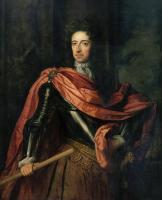


John Evelyn's Diary. 9th June 1689. Visited Dr. Burnet [aged 45], now Bishop of Sarum; got him to let Mr. Kneller [aged 42] draw his picture.
Chronicle of Abbot Ralph of Coggeshall
The Chronicle of Abbot Ralph of Coggeshall (Chronicon Anglicanum) is an indispensable medieval history that brings to life centuries of English and European affairs through the eyes of a learned Cistercian monk. Ralph of Coggeshall, abbot of the Abbey of Coggeshall in Essex in the early 13th century, continued and expanded his community’s chronicle, documenting events from the Norman Conquest of 1066 into the tumultuous reign of King Henry III. Blending eyewitness testimony, careful compilation, and the monastic commitment to record-keeping, this chronicle offers a rare narrative of political intrigue, royal power struggles, and social upheaval in England and beyond. Ralph’s work captures the reigns of pivotal figures such as Richard I and King John, providing invaluable insights into their characters, decisions, and the forces that shaped medieval rule. More than a simple annal, Chronicon Anglicanum conveys the texture of medieval life and governance, making it a rich source for scholars and readers fascinated by English history, monastic authorship, and the shaping of the medieval world.
Available at Amazon in eBook and Paperback format.
John Evelyn's Diary. 9th March 1690. Preached at Whitehall Dr. Burnet [aged 46], late Bishop of Sarum, on Heb. iv. 13, anatomically describing the texture of the eye; and that, as it received such innumerable sorts of spies through so very small a passage to the brain, and that without the least confusion or trouble, and accordingly judged and reflected on them; so God who made this sensory, did with the greatest ease and at once see all that was done through the vast universe, even to the very thought as well as action. This similitude he continued with much perspicuity and aptness; and applied it accordingly, for the admonishing us how uprightly we ought to live and behave ourselves before such an all-seeing Deity; and how we were to conceive of other his attributes, which we could have no idea of than by comparing them by what we were able to conceive of the nature and power of things, which were the objects of our senses; and therefore it was that in Scripture we attribute those actions and affections of God by the same of man, not as adequately or in any proportion like them, but as the only expedient to make some resemblance of his divine perfections; as when the Scripture says, "God will remember the sins of the penitent no more:" not as if God could forget anything, but as intimating he would pass by such penitents and receive them to mercy.

John Evelyn's Diary. 6th January 1692. At the funeral of Mr. Boyle, at St. Martin's [Map], Dr. Burnet [aged 48], Bishop of Salisbury, preached on Eccles. II 26. He concluded with an eulogy due to the deceased, who made God and religion the scope of all his excellent talents in the knowledge of nature, and who had arrived to so high a degree in it, accompanied with such zeal and extraordinary piety, which he showed in the whole course of his life, particularly in his exemplary charity on all occasions,-that he gave £1,000 yearly to the distressed refugees of France and Ireland; was at the charge of translating the Scriptures into the Irish and Indian tongues, and was now promoting a Turkish translation, as he had formerly done of Grotius "on the Truth of the Christian Religion" into Arabic, which he caused to be dispersed in the eastern countries; that he had settled a fund for preachers who should preach expressly against Atheists, Libertines, Socinians, and Jews; that he had in his will given £8,000 to charitable uses; but that his private charities were extraordinary. He dilated on his learning in Hebrew and Greek, his reading of the fathers, and solid knowledge in theology, once deliberating about taking Holy Orders, and that at the time of restoration of King Charles II, when he might have made a great figure in the nation as to secular honor and titles, his fear of not being able to discharge so weighty a duty as the first, made him decline that, and his humility the other. He spoke of his civility to strangers, the great good which he did by his experience in medicine and chemistry, and to what noble ends he applied himself to his darling studies; the works, both pious and useful, which he published; the exact life he led, and the happy end he made. Something was touched of his sister, the Lady Ranelagh, who died but a few days before him. And truly all this was but his due, without any grain of flattery.
John Evelyn's Diary. 4th February 1693. Unheard of stories of the universal increase of witches in New England; men, women, and children, devoting themselves to the devil, so as to threaten the subversion of the government. At the same time there was a conspiracy among the negroes in Barbadoes to murder all their masters, discovered by overhearing a discourse of two of the slaves, and so preventing the execution of the design. Hitherto an exceedingly mild winter. France in the utmost misery and poverty for want of corn and subsistence, while the ambitious King is intent to pursue his conquests on the rest of his neighbours both by sea and land. Our Admiral, Russell [aged 40], laid aside for not pursuing the advantage he had obtained over the French in the past summer; three others chosen in his place. Dr. Burnet [aged 49], Bishop of Salisbury's book burned by the hangman for an expression of the King's title by conquest, on a complaint of Joseph How, a member of Parliament, little better than a madman.


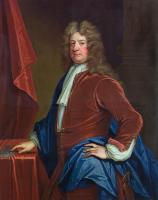
John Evelyn's Diary. 2nd December 1697. Thanksgiving Day for the Peace, the King [aged 47] and a great Court at Whitehall [Map]. The Bishop of Salisbury [aged 54] preached, or rather made a florid panegyric, on 2 Chron. ix. 7, 8. The evening concluded with fireworks and illuminations of great expense.
John Evelyn's Diary. 25th March 1700. Dr. Burnet [aged 56] preached to-day before the Lord Mayor and a very great congregation, on Proverbs xxvii. 5, 6, "Open rebuke is better than secret love; the wounds of a friend are better than the kisses of an enemy". He made a very pathetic discourse concerning the necessity and advantage of friendly correction.

On 17th March 1715 Bishop Gilbert Burnet [aged 71] died. Salisbury Cathedral [Map].