

The History of William Marshal was commissioned by his son shortly after William’s death in 1219 to celebrate the Marshal’s remarkable life; it is an authentic, contemporary voice. The manuscript was discovered in 1861 by French historian Paul Meyer. Meyer published the manuscript in its original Anglo-French in 1891 in two books. This book is a line by line translation of the first of Meyer’s books; lines 1-10152. Book 1 of the History begins in 1139 and ends in 1194. It describes the events of the Anarchy, the role of William’s father John, John’s marriages, William’s childhood, his role as a hostage at the siege of Newbury, his injury and imprisonment in Poitou where he met Eleanor of Aquitaine and his life as a knight errant. It continues with the accusation against him of an improper relationship with Margaret, wife of Henry the Young King, his exile, and return, the death of Henry the Young King, the rebellion of Richard, the future King Richard I, war with France, the death of King Henry II, and the capture of King Richard, and the rebellion of John, the future King John. It ends with the release of King Richard and the death of John Marshal.
Available at Amazon in eBook and Paperback format.
On 15th July 1631, possibly 1632, Bishop Richard Cumberland was born.
Samuel Pepys' Diary. 5th February 1660. This afternoon at church I saw Dick Cumberland [aged 28] newly come out of the country from his living, but did not speak to him.
Samuel Pepys' Diary. 13th February 1660. Monday. To my office till noon, thence home to dinner, my mouth being very bad of the cancer and my left leg beginning to be sore again. After dinner to see Mrs. Jem, and in the way met with Catan on foot in the street and talked with her a little, so home and took my wife to my father's [aged 59]. In my way I went to Playford's [aged 37], and for two books that I had and 6s. 6d. to boot I had my great book of songs which he sells always for 4s. At my father's I staid a while, while my mother sent her maid Bess to Cheapside for some herbs to make a water for my mouth. Then I went to see Mr. Cumberland [aged 28], and after a little stay with him I returned, and took my wife home, where after supper to bed. This day Monk [aged 51] was invited to White Hall to dinner by my Lords; not seeming willing, he would not come. I went to Mr. Fage from my father's, who had been this afternoon with Monk, who do promise to live and die with the City, and for the honour of the City; and indeed the City is very open-handed to the soldiers, that they are most of them drunk all day, and have money given them. He did give me something for my mouth which I did use this night.

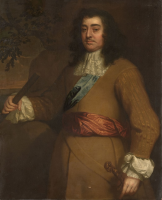
Samuel Pepys' Diary. 18th March 1667. A little before noon comes my old good friend, Mr. Richard Cumberland [aged 35], to see me, being newly come to town, whom I have not seen almost, if not quite, these seven years. In his plain country-parson's dress. I could not spend much time with him, but prayed him come with his brother, who was with him, to dine with me to-day; which he did do and I had a great deal of his good company; and a most excellent person he is as any I know, and one that I am sorry should be lost and buried in a little country town, and would be glad to remove him thence; and the truth is, if he would accept of my sister's fortune, I should give £100 more with him than to a man able to settle her four times as much as, I fear, he is able to do; and I will think of it, and a way how to move it, he having in discourse said he was not against marrying, nor yet engaged. I shewed him my closet, and did give him some very good musique, Mr. Caesar being here upon his lute.
Samuel Pepys' Diary. 9th January 1668. After dinner to the office again, where busy till night, very busy, and among other things wrote to my father about lending Anthony Joyce the money he desires; and I declare that I would do it as part of Pall's [aged 27] portion, and that Pall should have the use of the money till she be married, but I do propose to him to think of Mr. Cumberland [aged 36] rather than this Jackson that he is upon; and I confess I have a mighty mind to have a relation so able a man, and honest, and so old an acquaintance as Mr. Cumberland. I shall hear his answer by the next [post]. At night home and to cards with my wife and girle, and to supper late, and so to bed.
Samuel Pepys' Diary. 7th February 1668. So there parted, my mind pretty well satisfied with this plain fellow for my sister [aged 27], though I shall, I see, have no pleasure nor content in him, as if he had been a man of reading and parts, like Cumberland [aged 36], and to the Swan [Map], and there sent for a bit of meat and eat and drank, and so to White Hall to the Duke of York's [aged 34] chamber, where I find him and my fellows at their usual meeting, discoursing about securing the Medway this year, which is to shut the door after the horse is stole. However, it is good.
In 1691 Bishop Richard Cumberland [aged 59] was appointed Bishop of Peterborough.
John Evelyn's Diary. 19th April 1691. The Archbishop of Canterbury [aged 74], and Bishops of Ely [aged 53], Bath and Wells [aged 53], Peterborough [aged 63], Gloucester [aged 69], and the rest who would not take the oaths to King William [aged 40], were now displaced; and in their rooms, Dr. Tillotson [aged 60], Dean of St. Paul's, was made Archbishop: Patrick [aged 64] removed from Chichester to Ely; Cumberland [aged 59] to Gloucester. Note. A mistake. Bishop Edward Fowler was made Bishop of Gloucester. Bishop Richard Cumberland [aged 59] was made Bishop of Peterborough.


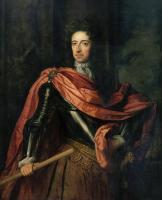

John Evelyn's Diary. 11th July 1691. I dined with Mr. Pepys [aged 58], where was Dr. Cumberland [aged 59], the new Bishop of Norwich [Note. Should be John Moore Bishop], Dr. Lloyd [aged 54] having been put out for not acknowledging the Government. Cumberland [Note. John Moore Bishop 1646-1707] is a very learned, excellent man. Possession was now given to Dr. Tillotson [aged 60], at Lambeth, by the Sheriff; Archbishop Sancroft was gone [aged 74], but had left his nephew to keep possession; and he refusing to deliver it up on the Queen's message [aged 29], was dispossessed by the Sheriff, and imprisoned. This stout demeanor of the few Bishops who refused to take the oaths to King William [aged 40], animated a great party to forsake the churches, so as to threaten a schism; though those who looked further into the ancient practice, found that when (as formerly) there were Bishops displaced on secular accounts, the people never refused to acknowledge the new Bishops, provided they were not heretics. The truth is, the whole clergy had till now stretched the duty of passive obedience, so that the proceedings against these Bishops gave no little occasion of exceptions; but this not amounting to heresy, there was a necessity of receiving the new Bishops, to prevent a failure of that order in the Church. I went to visit Lord Clarendon in the Tower, but he was gone into the country for air by the Queen's permission, under the care of his warden.


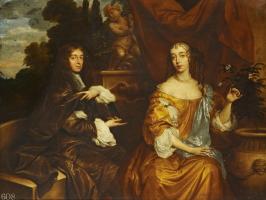
William of Worcester's Chronicle of England
William of Worcester, born around 1415, and died around 1482 was secretary to John Fastolf, the renowned soldier of the Hundred Years War, during which time he collected documents, letters, and wrote a record of events. Following their return to England in 1440 William was witness to major events. Twice in his chronicle he uses the first person: 1. when writing about the murder of Thomas, 7th Baron Scales, in 1460, he writes '… and I saw him lying naked in the cemetery near the porch of the church of St. Mary Overie in Southwark …' and 2. describing King Edward IV's entry into London in 1461 he writes '… proclaimed that all the people themselves were to recognize and acknowledge Edward as king. I was present and heard this, and immediately went down with them into the city'. William’s Chronicle is rich in detail. It is the source of much information about the Wars of the Roses, including the term 'Diabolical Marriage' to describe the marriage of Queen Elizabeth Woodville’s brother John’s marriage to Katherine, Dowager Duchess of Norfolk, he aged twenty, she sixty-five or more, and the story about a paper crown being placed in mockery on the severed head of Richard, 3rd Duke of York.
Available at Amazon in eBook and Paperback format.
On 9th October 1718 Bishop Richard Cumberland [aged 87] died.