

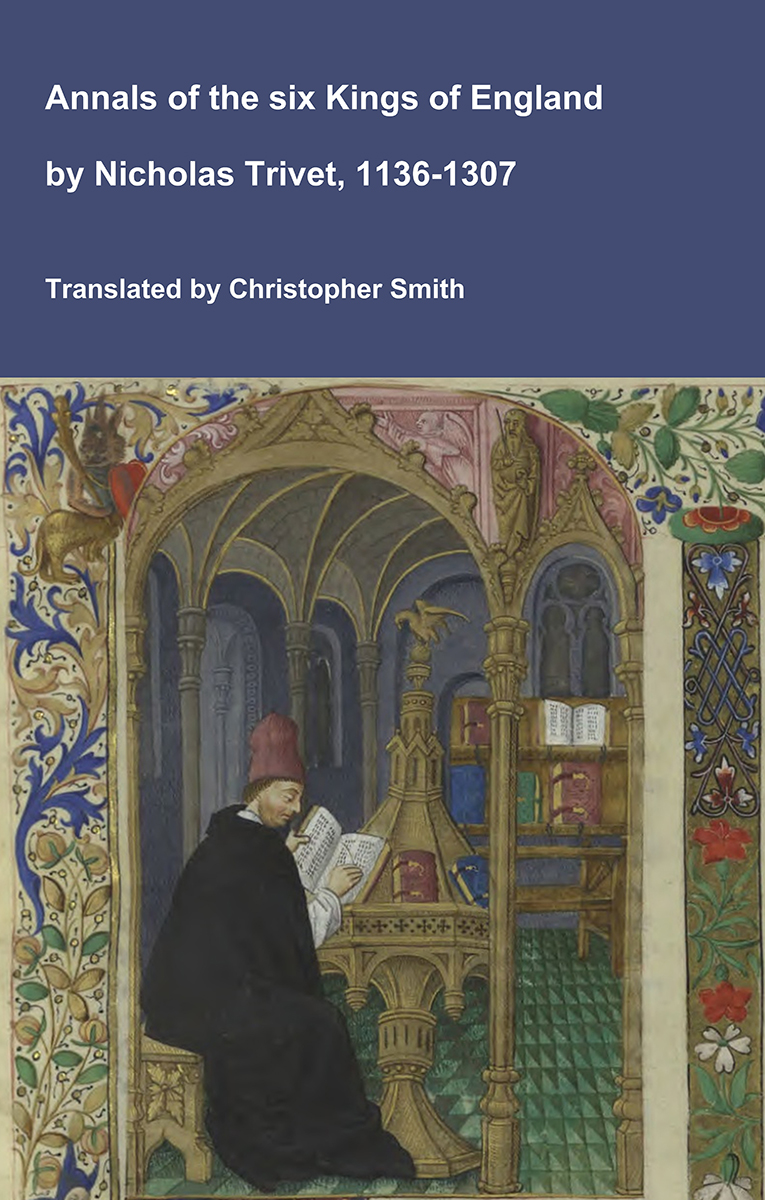
Annals of the six Kings of England by Nicholas Trivet
Translation of the Annals of the Six Kings of England by that traces the rise and rule of the Angevin aka Plantagenet dynasty from the mid-12th to early 14th century. Written by the Dominican scholar Nicholas Trivet, the work offers a vivid account of English history from the reign of King Stephen through to the death of King Edward I, blending political narrative with moral reflection. Covering the reigns of six monarchs—from Stephen to Edward I—the chronicle explores royal authority, rebellion, war, and the shifting balance between crown, church, and nobility. Trivet provides detailed insight into defining moments such as baronial conflicts, Anglo-French rivalry, and the consolidation of royal power under Edward I, whose reign he describes with particular immediacy. The Annals combines careful year-by-year reporting with thoughtful interpretation, presenting history not merely as a sequence of events but as a moral and political lesson. Ideal for readers interested in medieval history, kingship, and the origins of the English state, this chronicle remains a valuable and accessible window into the turbulent world of the Plantagenet kings.
Available at Amazon in eBook and Paperback format.
On 20th December 1652 Bishop Samuel Bradford was born to [his father] William Bradford of London in St. Anne's, Blackfriars.
On 21st April 1718 Bishop Samuel Bradford [age 65] was elected Bishop of Rochester.
On 1st June 1718 Bishop Samuel Bradford [age 65] was consecrated Bishop of Rochester.
In 1723 Bishop Samuel Bradford [age 70] was translated to Bishop of Rochester.
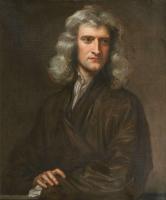
On 28th March 1727 Isaac Newton [deceased] was buried in Scientist's Corner, Westminster Abbey [Map]; the first scientist to be buried there. The service was performed by the Bishop of Rochester [age 74].
Before the funeral his body lay in state in the Jerusalem Chamber, Cheyneygates, Westminster Abbey [Map]. His coffin was followed by most of the Fellows of the Royal Society.
The Pall Bearers were the Lord Chancellor Peter King 1st Baron King [age 58], James Graham 1st Duke Montrose [age 44], Robert Ker 2nd Duke Roxburghe [age 18], Thomas Herbert 8th Earl Pembroke 5th Earl Montgomery [age 71], Talbot Yelverton 1st Earl of Sussex [age 36] and Thomas Parker 1st Earl Macclesfield [age 60].
The Chief Mourner was Michael Newton 4th Baronet [age 32]; his third cousin.
Voltaire observed, "He was buried like a king who had done well by his subjects.".
The inscription on his John Michael Rysbrack [age 32] monument reads "Here is buried Isaac Newton, Knight, who by a strength of mind almost divine, and mathematical principles peculiarly his own, explored the course and figures of the planets, the paths of comets, the tides of the sea, the dissimilarities in rays of light, and, what no other scholar has previously imagined, the properties of the colours thus produced. Diligent, sagacious and faithful, in his expositions of nature, antiquity and the holy Scriptures, he vindicated by his philosophy the majesty of God mighty and good, and expressed the simplicity of the Gospel in his manners. Mortals rejoice that there has existed such and so great an ornament of the human race! He was born on 25th December 1642, and died on 20th March 1726."


On 17th May 1731 Bishop Samuel Bradford [age 78] died in the Deanery, Westminster Abbey [Map]. He was buried in Westminster Abbey [Map].