

Abbot John Whethamstede’s Chronicle of the Abbey of St Albans
Abbot John Whethamstede's Register aka Chronicle of his second term at the Abbey of St Albans, 1451-1461, is a remarkable text that describes his first-hand experience of the beginning of the Wars of the Roses including the First and Second Battles of St Albans, 1455 and 1461, respectively, their cause, and their consequences, not least on the Abbey itself. His text also includes Loveday, Blore Heath, Northampton, the Act of Accord, Wakefield, and Towton, and ends with the Coronation of King Edward IV. In addition to the events of the Wars of the Roses, Abbot John, or his scribes who wrote the Chronicle, include details in the life of the Abbey such as charters, letters, land exchanges, visits by legates, and disputes, which provide a rich insight into the day-to-day life of the Abbey, and the challenges faced by its Abbot.
Available at Amazon in eBook and Paperback format.
Paternal Family Tree: Montagu
Bishop Simon Montagu was born to [his father] William Montagu 2nd Baron Montagu and [his mother] Elizabeth Montfort Baroness Furnivall Baroness Montagu.
In or before 1301 [his father] William Montagu 2nd Baron Montagu [aged 25] and [his mother] Elizabeth Montfort Baroness Furnivall Baroness Montagu [aged 25] were married.
In 1316 [his grandfather] Simon Montagu 1st Baron Montagu [aged 66] died. His son [his father] William [aged 41] succeeded 2nd Baron Montagu. [his mother] Elizabeth Montfort Baroness Furnivall Baroness Montagu [aged 41] by marriage Baroness Montagu.
On 18th October 1319 [his father] William Montagu 2nd Baron Montagu [aged 44] died at Gascony [Map]. His son [his brother] William [aged 18] succeeded 3rd Baron Montagu.
Around 1320 [his brother] William Montagu 1st Earl Salisbury [aged 19] and [his sister-in-law] Catherine Grandison Countess of Salisbury [aged 16] were married. She by marriage Baroness Montagu.
Before 8th June 1322 Thomas Furnival 1st Baron Furnivall [aged 62] and [his mother] Elizabeth Montfort Baroness Furnivall Baroness Montagu [aged 47] were married. She by marriage Baroness Furnivall.
In 1333 Bishop Simon Montagu was appointed Bishop of Worcester.
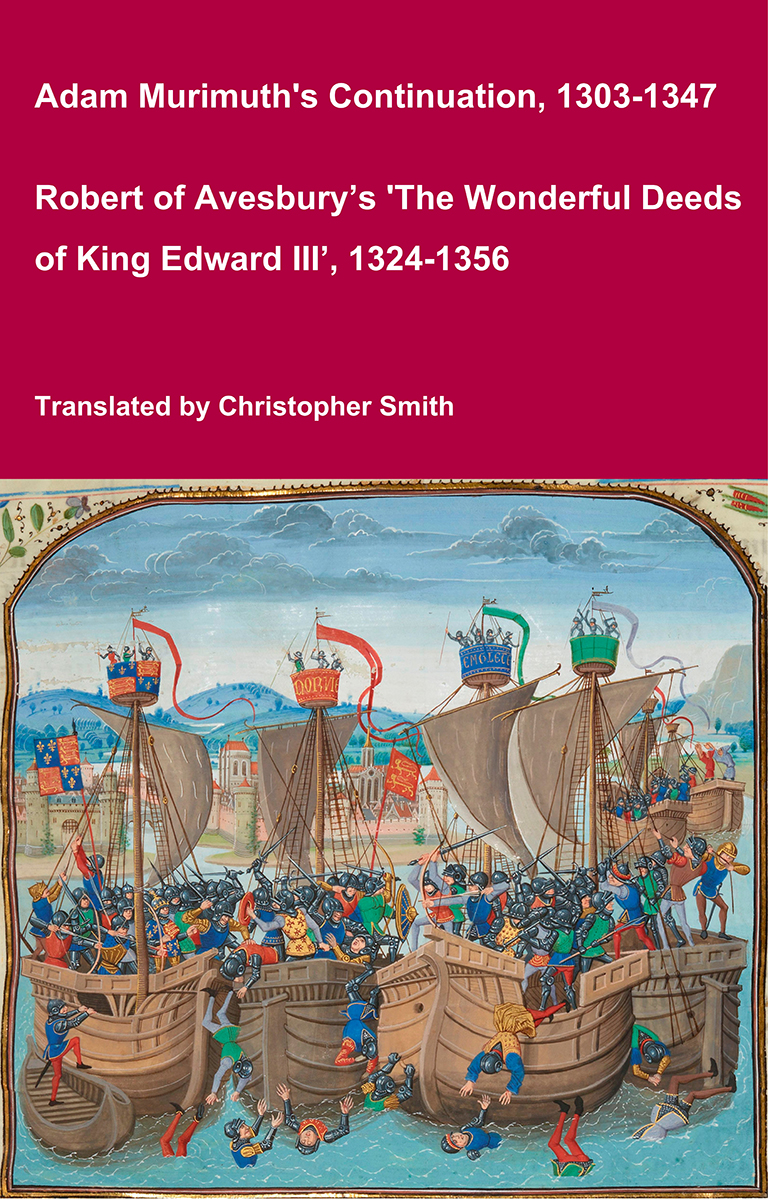 Adam Murimuth Continuation. In the same year, on the first day of December [1333], the pope transferred Master Adam Orleton from the church of Worcester to the church of Winchester at the request of the king of France. This transfer displeased the king of England, who alleged that Orleton had recently been his envoy to the king of France and had pleased the French king more than the king of England, and that he had pursued his own interests rather than the king's business. It was also said that the king of France had written to the pope on his behalf to have him transferred to Winchester. The king of England was all the more offended because he himself had written to the pope on behalf of another candidate, namely Lord Simon Montagu, for the same bishopric. He believed that his own requests for bishoprics and dignities in England ought to be heard more readily than those of the king of France. Therefore, the king retained the temporalities of the bishopric of Winchester in his own hands until the Friday after the feast of the Exaltation of the Holy Cross [16th September]. On that day the archbishop and the other bishops asked on Orleton's behalf in a parliament at London, and after the matter had been considered the king ordered the temporalities to be restored to him.
Eodem anno, primo die Decembris, transtulit papa magistrum Adam de Orltone de ecclesia Wygorniensi ad ecclesiam Wyntoniensem, ad preces regis Franciæ. Cujus translationem dominus rex Angliæ non habebat acceptam, imponens sibi quod tune ipse fuit nuncius ipsius regis Angliæ ad regem Franciæ, et quod ipse plus placuit regi Franciæ quam regi Angliæ, nec ejus negotia sed sua propria procuravit, et quod idem rex Franciæ scripsit papæ pro ipso ad Wyntoniensem ecclesiam transferendo. Item, ex eo rex Angliæ fuit eo magis offensus quod ipse pro alio, scilicet pro domino Simone de Monte acuto, domino papæ sçripsit pro episcopatu eodem; sibique vigum fuerat quod preces suæ pro episcopatibus et dignitatibus in Anglia citius audiri deberent quam preces regis Franciæ supradicti, Ideoque retinuit dominus rex temporalia episcopatus Wyntoniensis in manibus suis usque ad diem Veneris proximum post Exaltationem sanctæ Crucis; quo die archiepiscopus et ceteri episcopi in parliamento Londoniis rogaverunt pro ipso, ita quod, causa cognita, mandavit sua temporalia sibi reddi.
In 1337 Bishop Simon Montagu was appointed Bishop of Ely.
Before 29th August 1338 [his brother] Edward Montagu 1st Baron Montagu and [his sister-in-law] Alice Plantagenet [aged 14] were married. She the daughter of Thomas of Brotherton 1st Earl Norfolk [deceased] and Alice Hales Countess Norfolk.
On 20th June 1345 Bishop Simon Montagu died.
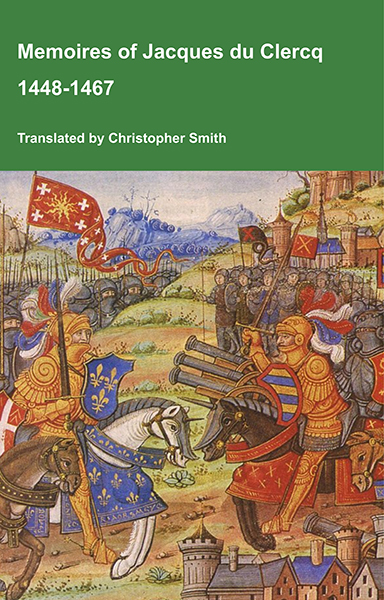
This is a translation of the 'Memoires of Jacques du Clercq', published in 1823 in two volumes, edited by Frederic, Baron de Reissenberg. In his introduction Reissenberg writes: 'Jacques du Clercq tells us that he was born in 1424, and that he was a licentiate in law and a counsellor to Philip the Good, Duke of Burgundy, in the castellany of Douai, Lille, and Orchies. It appears that he established his residence at Arras. In 1446, he married the daughter of Baldwin de la Lacherie, a gentleman who lived in Lille. We read in the fifth book of his Memoirs that his father, also named Jacques du Clercq, had married a lady of the Le Camelin family, from Compiègne. His ancestors, always attached to the counts of Flanders, had constantly served them, whether in their councils or in their armies.' The Memoires cover a period of nineteen years beginning in in 1448, ending in in 1467. It appears that the author had intended to extend the Memoirs beyond that date; no doubt illness or death prevented him from carrying out this plan. As Reissenberg writes the 'merit of this work lies in the simplicity of its narrative, in its tone of good faith, and in a certain air of frankness which naturally wins the reader’s confidence.' Du Clercq ranges from events of national and international importance, including events of the Wars of the Roses in England, to simple, everyday local events such as marriages, robberies, murders, trials and deaths, including that of his own father in Book 5; one of his last entries.
Available at Amazon in eBook and Paperback format.
Adam Murimuth Continuation. Item, in this year, on the twentieth day of the month of June [1345], the lord Simon Montagu, bishop of Ely, a young and vigorous man, suddenly died. And on the feast of the Translation of Saint Thomas the Martyr [7th July] following, the chapter of Ely elected their prior as bishop and pastor; but, fearing the customary reservation, which many had experienced, he pursued the matter of his election only half-heartedly. Afterwards, on the twenty-ninth day of July, apostolic letters were sent to the archbishop, informing him that the pope had provided brother Thomas of Lisle, his penitentiary, an Englishman of the Order of Preachers, to the bishopric and church of Ely, forbidding him to attempt anything to the prejudice of that provision. And after the Nativity of the Blessed Virgin Mary, the same Thomas, bishop of Ely, came into England; to whom the archbishop granted the spiritual jurisdiction of the diocese of Ely. And soon afterwards the temporalities were delivered to him by the king, through the efforts of the king's secretaries, not without the intervention of promises and gifts.
Item, hoc anno, XX die mensis Junii, subito obiit dominus Simon de Monte acuto, episcopus Eliensis, juvenis et fortis. Et in festo Translationis sancti Thomæ martyris sequente capitulum Eliense priorem suum in episcopum et pastorem elegit, qui, timens reservationem consuetam pluribus procuratam, electionis suæ negotium fuit tepide prosecutus. Postea vero, XXIX die Julii, venerunt literæ apostolicæ archiepiscopo directæ, significantes eidem quod papa providit fratri Thomæ de Insula, pœnitentiario suo, de ordine Predicatorum Anglico, de episcopatu et ecclesia Elyensi, inhibens sibi ne quid in dictæ provisionis præjudicium attemptaret. Et post Nativitatem beatæ Mariæ venit in Angliam idem Thomas, episcopus Eliensis, cui archiepiscopus jurisdictionem spiritualem Elyensis diœceseos liberavit; et cito postea fuerunt sibi temporalia liberata per regem, procurantibus secretariis regis, non absque promissionum et munerum interventu.
Kings Franks: Great x 17 Grand Son of Charles "Charlemagne aka Great" King of the Franks King Lombardy Holy Roman Emperor
Kings France: Great x 10 Grand Son of Hugh I King of the Franks
Kings Duke Aquitaine: Great x 14 Grand Son of Ranulf I Duke Aquitaine
Great x 1 Grandfather: William Montagu 
GrandFather: Simon Montagu 1st Baron Montagu
Father: William Montagu 2nd Baron Montagu
GrandMother: Hawise St Amand
Great x 4 Grandfather: Thurstan Montfort
Great x 3 Grandfather: Henry Montfort
Great x 2 Grandfather: Thurstan Montfort
Great x 1 Grandfather: Peter Montfort
Great x 4 Grandfather: Walter Cantilupe 
Great x 3 Grandfather: William Cantilupe Baron
Great x 2 Grandmother: Mabel Cantilupe
GrandFather: Peter Montfort
Great x 4 Grandfather: Liulf Audley 
Great x 3 Grandfather: Adam Audley
Great x 4 Grandmother: Mabella Stanley 
Great x 2 Grandfather: Henry Audley
Great x 3 Grandmother: Emma Fitzorm
Great x 1 Grandmother: Alice Audley
Great x 3 Grandfather: Ralph Mainwaring
Great x 2 Grandmother: Bertrade Mainwaring
Mother: Elizabeth Montfort Baroness Furnivall Baroness Montagu