

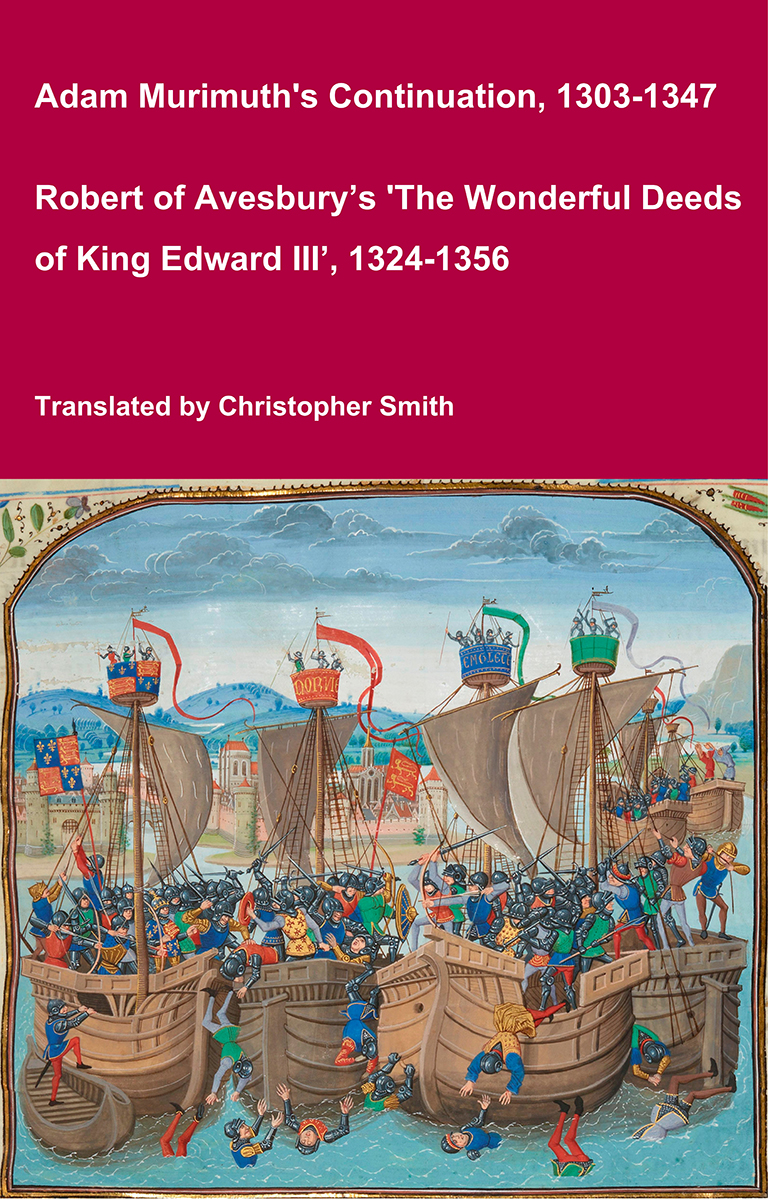
Adam Murimuth's Continuation and Robert of Avesbury’s 'The Wonderful Deeds of King Edward III'
This volume brings together two of the most important contemporary chronicles for the reign of Edward III and the opening phases of the Hundred Years’ War. Written in Latin by English clerical observers, these texts provide a vivid and authoritative window into the political, diplomatic, and military history of fourteenth-century England and its continental ambitions. Adam Murimuth Continuatio's Chronicarum continues an earlier chronicle into the mid-fourteenth century, offering concise but valuable notices on royal policy, foreign relations, and ecclesiastical affairs. Its annalistic structure makes it especially useful for establishing chronology and tracing the development of events year by year. Complementing it, Robert of Avesbury’s De gestis mirabilibus regis Edwardi tertii is a rich documentary chronicle preserving letters, treaties, and official records alongside narrative passages. It is an indispensable source for understanding Edward III’s claim to the French crown, the conduct of war, and the mechanisms of medieval diplomacy. Together, these works offer scholars, students, and enthusiasts a reliable and unembellished account of a transformative period in English and European history. Essential for anyone interested in medieval chronicles, the Hundred Years’ War, or the reign of Edward III.
Available at Amazon in eBook and Paperback format.
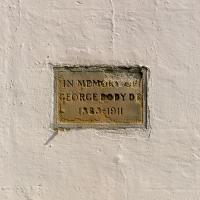
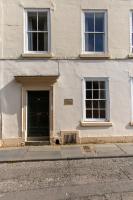
Memorial to George Body on nineteen South Bailey, Durham.
Before 7th January 1840 [his father] Josiah Body and [his mother] Mary Snell were married.
On 7th January 1840 George Body was born to [his father] Josiah Body and [his mother] Mary Snell at Cheriton Fitzpayne, Devon.
In 1859 George Body (age 18) matriculated St John's College, Cambridge University [Map] being awarded BA in 1862, MA in 1876, MA ad eundem in 1884 and DD in 1885.

1860 to 1870. Samuel Alexander Walker (age 18). Photograph of George Body (age 19).
In 1863 George Body (age 22) was ordained Deacon. In 1864 he was ordained Priest. Thereafter he was appointed to the curacies of St James's Church, Wednesbury, and Christ Church, Wolverhampton.
On 25th September 1864 George Body (age 24) and Louisa Lewis were married. They had three sons and four daughters.
In 1883 George Body (age 42) was appointed 'canon-missioner' of Durham by Bishop Joseph Barber Lightfoot (age 54), and for twenty-eight years carried on fruitful mission work among the Durham miners.

1889. Samuel Alexander Walker (age 47). Photograph of George Body (age 48).
Chronicle of a Bourgeois of Valenciennes
Récits d’un bourgeois de Valenciennes aka The Chronicle of a Bourgeois of Valenciennes is a vivid 14th-century vernacular chronicle written by an anonymous urban chronicler from Valenciennes in the County of Hainaut. It survives in a manuscript that describes local and regional history from about 1253 to 1366, blending chronology, narrative episodes, and eyewitness-style accounts of political, military, and social events in medieval France, Flanders, and the Low Countries. The work begins with a chronological framework of events affecting Valenciennes and its region under rulers such as King Philip VI of France and the shifting allegiances of local nobility. It includes accounts of conflicts, sieges, diplomatic manoeuvres, and the impact of broader struggles like the Hundred Years’ War on urban life in Hainaut. Written from the perspective of a burgher (bourgeois) rather than a monastery or royal court, the chronicle offers a rare lay viewpoint on high politics and warfare, reflecting how merchants, townspeople, and civic institutions experienced the turbulence of the 13th and 14th centuries. Its narrative style combines straightforward reporting of events with moral and civic observations, making it a valuable source for readers interested in medieval urban society, regional politics, and the lived experience of war and governance in pre-modern Europe.
Available at Amazon in eBook and Paperback format.
On 5th June 1911 George Body (age 71) died.