


Text this colour is a link for Members only. Support us by becoming a Member for only £3 a month by joining our 'Buy Me A Coffee page'; Membership gives you access to all content and removes ads.
Text this colour links to Pages. Text this colour links to Family Trees. Place the mouse over images to see a larger image. Click on paintings to see the painter's Biography Page. Mouse over links for a preview. Move the mouse off the painting or link to close the popup.
Paternal Family Tree: Egerton
In 1551 John "Black Sir John" Egerton was born to John Egerton (age 21).
Around 1574 [his son] Philip Egerton was born to John "Black Sir John" Egerton (age 23) and [his future wife] Margaret Stanley.
In 1575 [his daughter] Frances Egerton was born to John "Black Sir John" Egerton (age 24) and [his future wife] Margaret Stanley.
In 1583 John "Black Sir John" Egerton (age 32) and Margaret Stanley were married.
In 1584 [his daughter] Katherine Egerton was born to John "Black Sir John" Egerton (age 33) and [his wife] Margaret Stanley.
Before 1587 John "Black Sir John" Egerton (age 35) was appointed Justice of the Peace Cheshire.
In 1590 [his father] John Egerton (age 60) died.
All About History Books
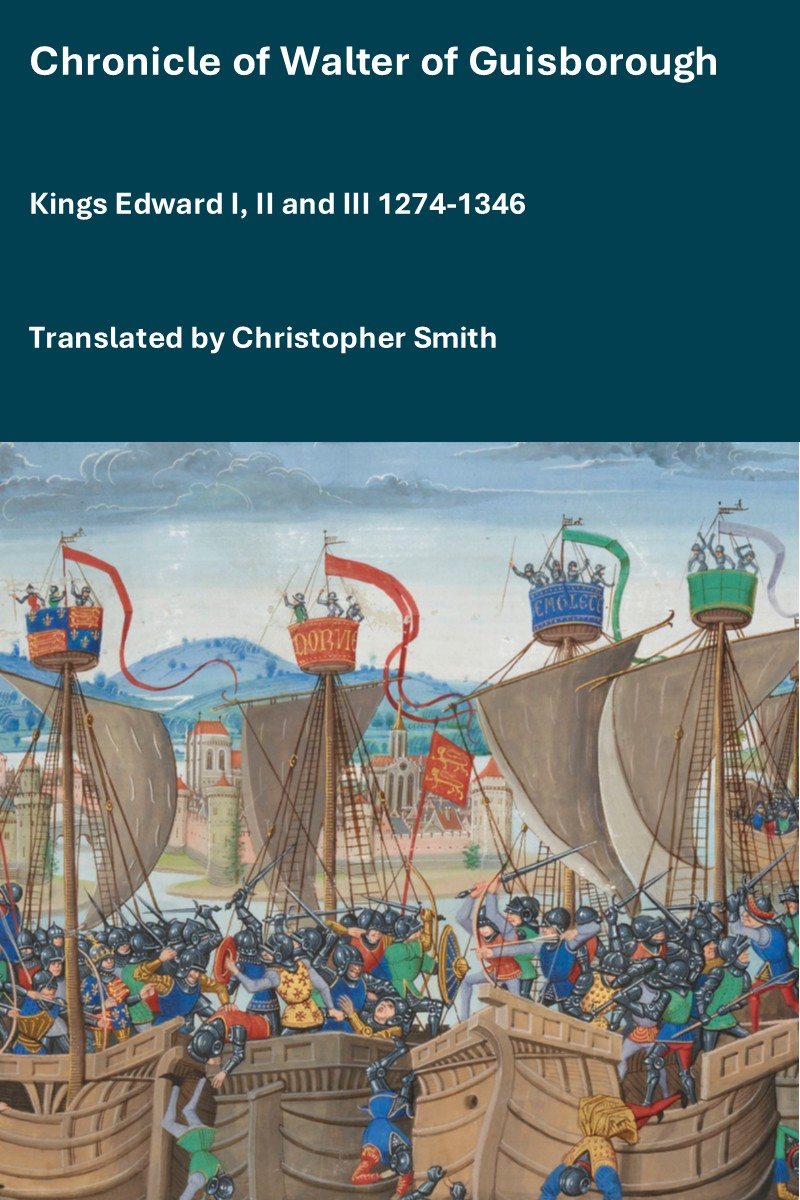
The Chronicle of Walter of Guisborough, a canon regular of the Augustinian Guisborough Priory, Yorkshire, formerly known as The Chronicle of Walter of Hemingburgh, describes the period from 1066 to 1346. Before 1274 the Chronicle is based on other works. Thereafter, the Chronicle is original, and a remarkable source for the events of the time. This book provides a translation of the Chronicle from that date. The Latin source for our translation is the 1849 work edited by Hans Claude Hamilton. Hamilton, in his preface, says: "In the present work we behold perhaps one of the finest samples of our early chronicles, both as regards the value of the events recorded, and the correctness with which they are detailed; Nor will the pleasing style of composition be lightly passed over by those capable of seeing reflected from it the tokens of a vigorous and cultivated mind, and a favourable specimen of the learning and taste of the age in which it was framed." Available at Amazon in eBook and Paperback.
In 1594 [his son] Roland Egerton 1st Baronet was born to John "Black Sir John" Egerton (age 43) and [his wife] Margaret Stanley.
In 1596 [his wife] Margaret Stanley died.
Before 1601 John "Black Sir John" Egerton (age 49) was elected MP Staffordshire.
In 1607 John "Black Sir John" Egerton (age 56) was elected MP Staffordshire.
In 1609 [his son] Roland Egerton 1st Baronet (age 15) and [his daughter-in-law] Bridget Grey Lady Egerton and Oulton were married.
On 21st April 1610 [his son] John Egerton was killed in a duel by Edward Morgan (age 34) at Highgate.
History of Parliament: "The elder Morgan was engaged in an unspecified legal battle with Sir John Egerton (age 59), and the duel was the culmination of a quarrel that had lasted at least four years. In June 1606 the younger Morgan had attempted to stab Egerton and his son John in church. Two years later, in August 1608, he had challenged the Egertons to meet him ‘in any place of Christendom', describing Sir John as ‘a filthy black knight' and his whole family as ‘vipers'. These provocations were initially ignored, but when Morgan refused to return a hawk belonging to the Egertons which had landed on his property and abused the falconer with ‘reproachful speeches', John Egerton had issued his own challenge, only to be forbidden from taking the field by his father.36 John would not let the matter rest, however, and on 19 Apr. 1610, after encountering Morgan at Prince Henry's Court, he again challenged Morgan, who not only accepted but described John's father as ‘the greatest oppressor this day in England'."
Letters of John Chamberlain Volume 1 199. [2nd May 1610] The Lord Treasurer (age 46) hath sent over his secretarie Kirkham to take order to furnish the Lord Cranbourne (age 19) with all necessaries to follow the French king in this journy, and more of our court gallants talke of taking the same course yf the viage hold. Indeed yt were fitter they had some place abrode to vent theyre superfluous valour then to brabble so much as they do here at home: for in one weeke we had three or fowre great quarrells, the first twixt the earles of Southampton (age 36) and Mongomerie (age 25) that fell out at tennis, where the racketts flew about theyre cares, but the matter was taken up and compounded by the King without further bloudshed, but the matter was not so easilie ended twixt younge [his son] Egerton eldest1 sonne to Sir John (age 59), and one Morgan (age 34) a lawiers sonne of goode state: the first beeing left dead in the feild, and the other sort hurt, and yet cannot be bailed nor dispensed withall but that he lies still by yt in Newgate. The Lord Norris (age 30) likewise went into the feild with Peregrin Willoughby (age 26) upon an old reckening, and hurt him daungerously in the shoulder.
Note 1. McClure has this as 'James' rather than 'John'. He was a younger son.
In 1614 during the Addled Parliament Charles Thynne (age 46) was elected MP Lymington. John "Black Sir John" Egerton (age 63) was elected MP Lichfield. Mervyn Tuchet 2nd Earl Castlehaven (age 21) was elected MP Dorset. Richard Edgecumbe (age 44) was elected MP Bodmin.
On 28th April 1614 John "Black Sir John" Egerton (age 63) died.
[his daughter] Mary Egerton was born to John "Black Sir John" Egerton and Margaret Stanley.
[his daughter] Margaret Egerton was born to John "Black Sir John" Egerton and Margaret Stanley.
All About History Books
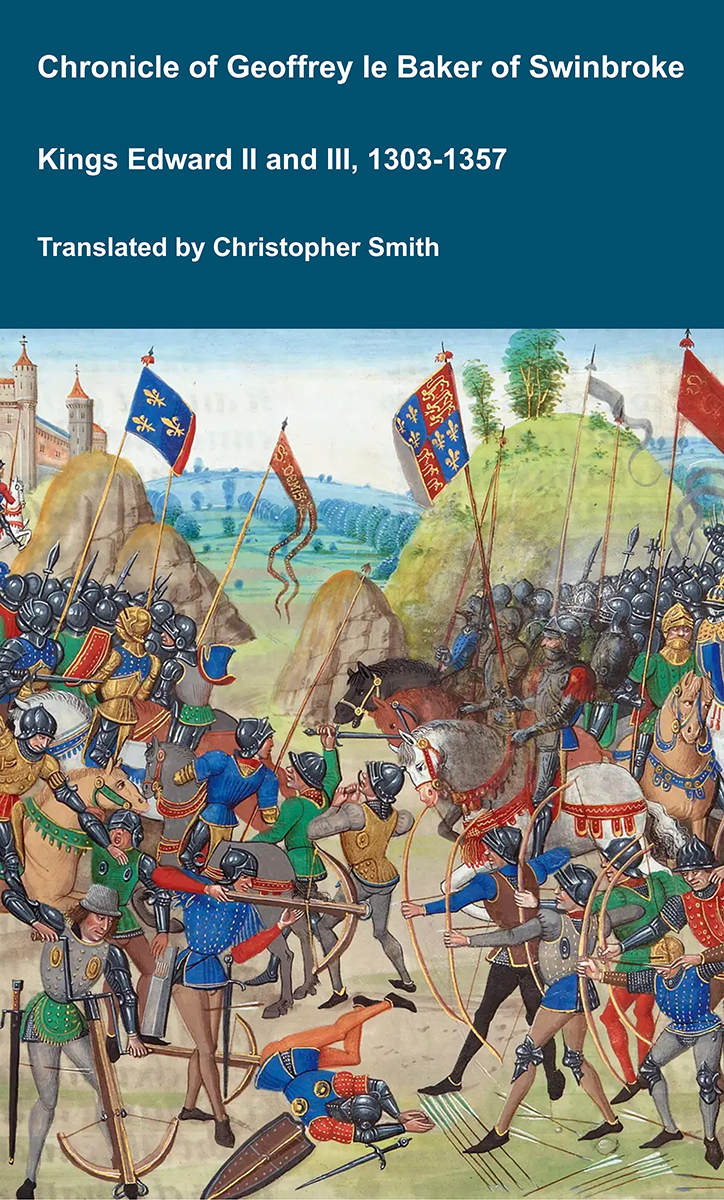
The Chronicle of Geoffrey le Baker of Swinbroke. Baker was a secular clerk from Swinbroke, now Swinbrook, an Oxfordshire village two miles east of Burford. His Chronicle describes the events of the period 1303-1356: Gaveston, Bannockburn, Boroughbridge, the murder of King Edward II, the Scottish Wars, Sluys, Crécy, the Black Death, Winchelsea and Poitiers. To quote Herbert Bruce 'it possesses a vigorous and characteristic style, and its value for particular events between 1303 and 1356 has been recognised by its editor and by subsequent writers'. The book provides remarkable detail about the events it describes. Baker's text has been augmented with hundreds of notes, including extracts from other contemporary chronicles, such as the Annales Londonienses, Annales Paulini, Murimuth, Lanercost, Avesbury, Guisborough and Froissart to enrich the reader's understanding. The translation takes as its source the 'Chronicon Galfridi le Baker de Swynebroke' published in 1889, edited by Edward Maunde Thompson. Available at Amazon in eBook and Paperback.
[his son] Richard Egerton was born to John "Black Sir John" Egerton and Margaret Stanley.
[his son] John Egerton was born to John "Black Sir John" Egerton and Margaret Stanley.
[his son] Peter Egerton was born to John "Black Sir John" Egerton and Margaret Stanley.
Great x 4 Grandfather: John Egerton
Great x 3 Grandfather: Philip Egerton
Great x 2 Grandfather: John Egerton
Great x 1 Grandfather: Philip Egerton
GrandFather: Philip Egerton of Oulton
Father: John Egerton