

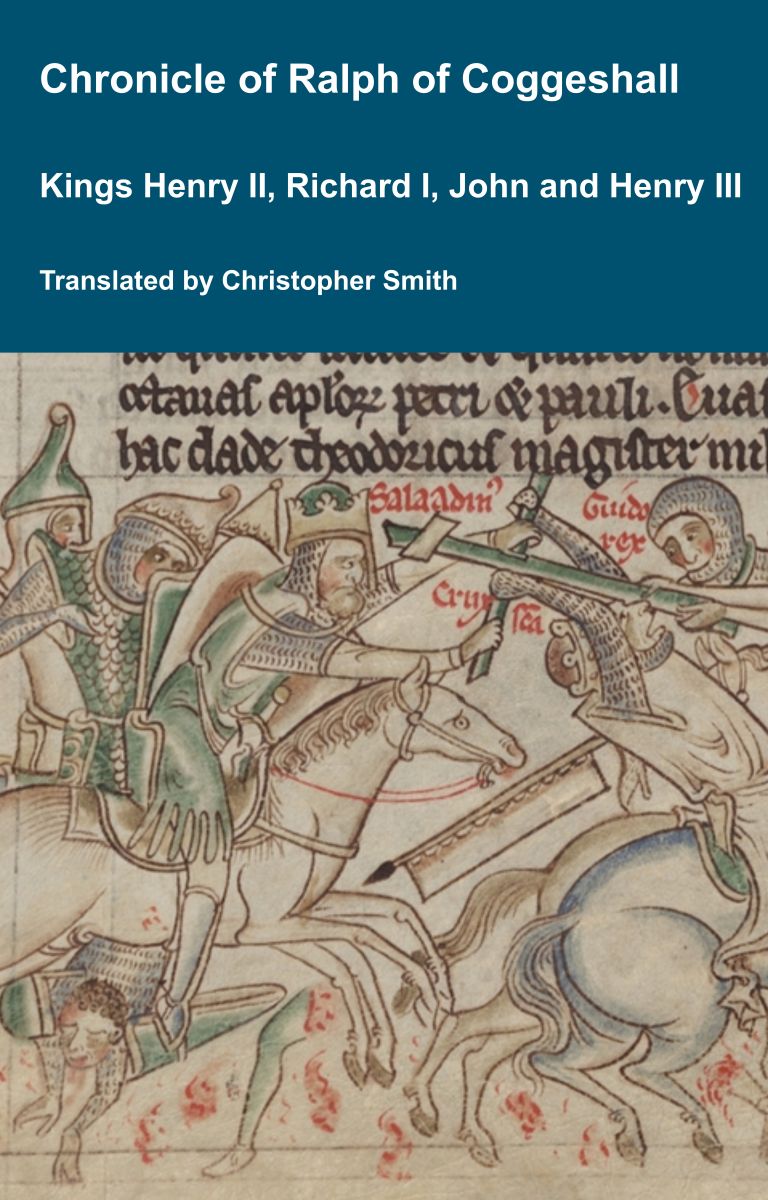
Chronicle of Abbot Ralph of Coggeshall
The Chronicle of Abbot Ralph of Coggeshall (Chronicon Anglicanum) is an indispensable medieval history that brings to life centuries of English and European affairs through the eyes of a learned Cistercian monk. Ralph of Coggeshall, abbot of the Abbey of Coggeshall in Essex in the early 13th century, continued and expanded his community’s chronicle, documenting events from the Norman Conquest of 1066 into the tumultuous reign of King Henry III. Blending eyewitness testimony, careful compilation, and the monastic commitment to record-keeping, this chronicle offers a rare narrative of political intrigue, royal power struggles, and social upheaval in England and beyond. Ralph’s work captures the reigns of pivotal figures such as Richard I and King John, providing invaluable insights into their characters, decisions, and the forces that shaped medieval rule. More than a simple annal, Chronicon Anglicanum conveys the texture of medieval life and governance, making it a rich source for scholars and readers fascinated by English history, monastic authorship, and the shaping of the medieval world.
Available at Amazon in eBook and Paperback format.
John Buckler is in Painters.
On 30th November 1770 John Buckler was born at Calbourne, Isle of Wight.
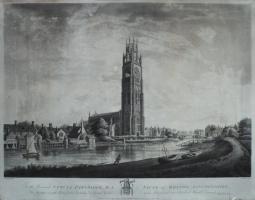
1798. John Buckler (age 27). To the Reverend Samuel Partridge, M.A. Vicar of Boston, Lincolnshire

1801. John Buckler (age 30). Winchester Cathedral [Map].

1803. John Buckler (age 32). St. Mary's Church [Map], Sherborn, Dorsetshire.
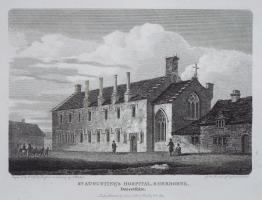
1803. John Buckler (age 32). St Augustine's Hospital, Sherborn.


1808. John Buckler (age 37). South East View of the Cathedral Church of Winchester [Map].
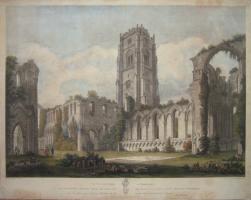
1809. John Buckler (age 38). Fountains Abbey, North Yorkshire [Map].
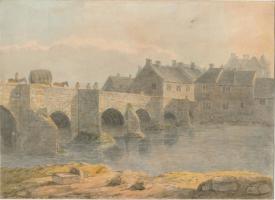
1809. John Buckler (age 38). Burton-upon-Trent Bridge.
Chronicle of Walter of Guisborough
A canon regular of the Augustinian Guisborough Priory, Yorkshire, formerly known as The Chronicle of Walter of Hemingburgh, describes the period from 1066 to 1346. Before 1274 the Chronicle is based on other works. Thereafter, the Chronicle is original, and a remarkable source for the events of the time. This book provides a translation of the Chronicle from that date. The Latin source for our translation is the 1849 work edited by Hans Claude Hamilton. Hamilton, in his preface, says: 'In the present work we behold perhaps one of the finest samples of our early chronicles, both as regards the value of the events recorded, and the correctness with which they are detailed; Nor will the pleasing style of composition be lightly passed over by those capable of seeing reflected from it the tokens of a vigorous and cultivated mind, and a favourable specimen of the learning and taste of the age in which it was framed.'
Available at Amazon in eBook and Paperback format.

Around 1814. John Buckler (age 43). Eton College [Map].
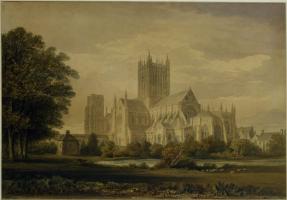
1821. John Buckler (age 50). Wells Cathedral [Map].
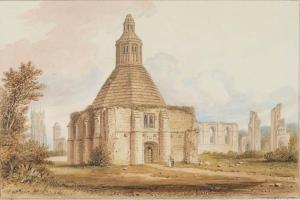
1825. John Buckler (age 54). Abbots Kitchen, Glastonbury Abbey.

1850. John Buckler (age 79). Ely Cathedral [Map].
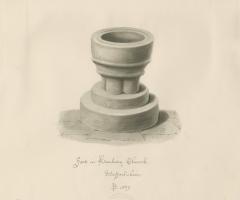
Before 1851. John Buckler (age 80). Font in St Werburgh's Church, Hanbury [Map] showing a round bowl resting on a cluster of stunted pillars, upon round steps.
On 6th December 1851 John Buckler (age 81) died
Archaeologia Volume 29 Section III. The task of completing Mr. Stothard's design has been recently adopted by Mr. George Hollis (the son-in-law of Mr. John Buckler, F.S.A.), and his son Mr. Thomas Hollis: and among the objects of their earliest attention have been the royal effigies just named. In the course of making his drawings from the monument of Richard the Second, Mr. Thomas Hollis discovered that the robes of the effigies, and the platform or bed upon which they are placed, are ornamented with various patterns, punctured upon the metal, which had become so entirely concealed by the accumulated dirt of centuries that they were at length forgotten and unknown.