

Chronicle of Walter of Guisborough
A canon regular of the Augustinian Guisborough Priory, Yorkshire, formerly known as The Chronicle of Walter of Hemingburgh, describes the period from 1066 to 1346. Before 1274 the Chronicle is based on other works. Thereafter, the Chronicle is original, and a remarkable source for the events of the time. This book provides a translation of the Chronicle from that date. The Latin source for our translation is the 1849 work edited by Hans Claude Hamilton. Hamilton, in his preface, says: 'In the present work we behold perhaps one of the finest samples of our early chronicles, both as regards the value of the events recorded, and the correctness with which they are detailed; Nor will the pleasing style of composition be lightly passed over by those capable of seeing reflected from it the tokens of a vigorous and cultivated mind, and a favourable specimen of the learning and taste of the age in which it was framed.'
Available at Amazon in eBook and Paperback format.
John Constable is in Painters.

On 11th June 1776 John Constable was born to [his father] Golding Constable and [his mother] Ann Constable nee Watts.

1810. Ramsay Richard Reinagle [aged 33]. Portrait of John Constable [aged 33].

1816. John Constable [aged 39]. Portrait of the artist's wife Maria Bicknell around the time of their marriage.
Maria Bicknell: In October 1816 John Constable and she were married by Bishop John Fisher at St Martin in the Fields Church [Map]. They had seven children. On 23rd November 1828 she died.
In October 1816 John Constable [aged 40] and Maria Bicknell were married by Bishop John Fisher [aged 68] at St Martin in the Fields Church [Map]. They had seven children.

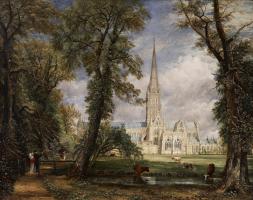
1825. John Constable [aged 48]. "Salisbury Cathedral [Map] from the Bishop's Grounds".
1825. John Constable [aged 48]. "The Cornfield". As a gesture of appreciation for John Fisher [aged 77], the Bishop of Salisbury, who commissioned this painting, Constable included the Bishop and his wife in the bottom left corner.
On 23rd November 1828 [his wife] Maria Bicknell died.

1829. John Constable [aged 52]. "Hadleigh Castle [Map]".
1831. John Constable [aged 54]. "Salisbury Cathedral [Map] from the Meadows".
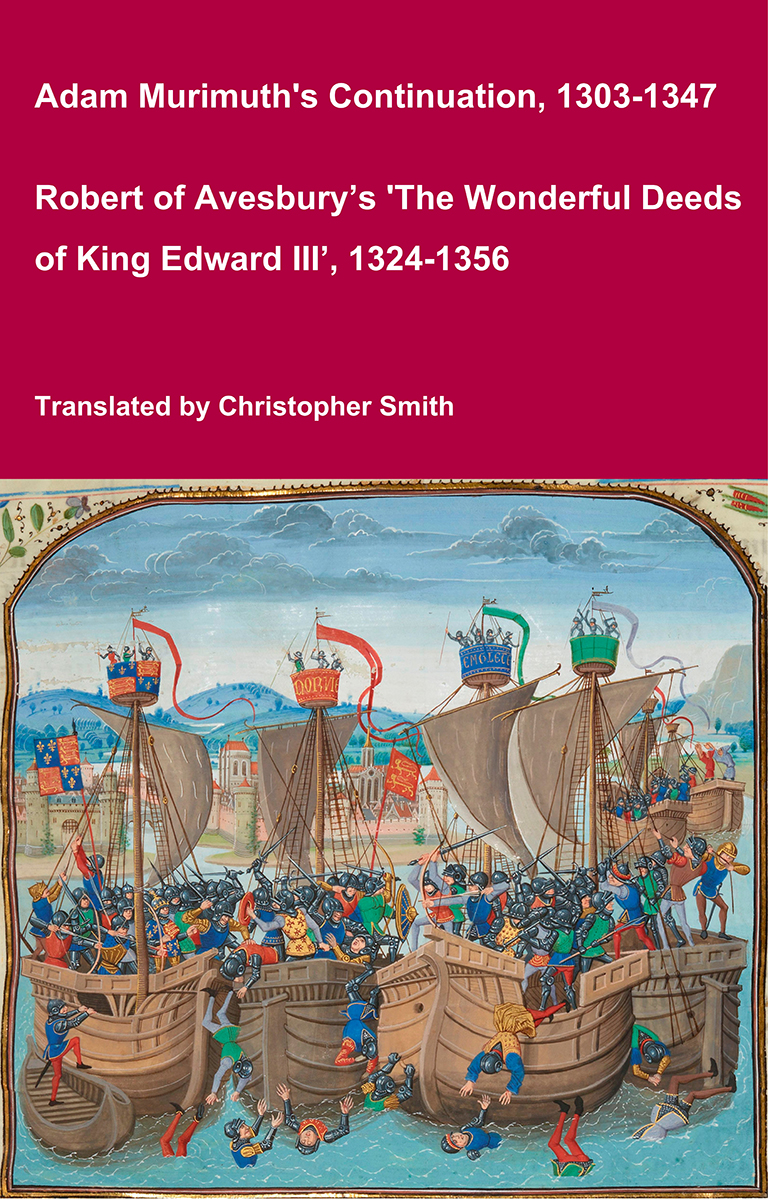
Adam Murimuth's Continuation and Robert of Avesbury’s 'The Wonderful Deeds of King Edward III'
This volume brings together two of the most important contemporary chronicles for the reign of Edward III and the opening phases of the Hundred Years’ War. Written in Latin by English clerical observers, these texts provide a vivid and authoritative window into the political, diplomatic, and military history of fourteenth-century England and its continental ambitions. Adam Murimuth Continuatio's Chronicarum continues an earlier chronicle into the mid-fourteenth century, offering concise but valuable notices on royal policy, foreign relations, and ecclesiastical affairs. Its annalistic structure makes it especially useful for establishing chronology and tracing the development of events year by year. Complementing it, Robert of Avesbury’s De gestis mirabilibus regis Edwardi tertii is a rich documentary chronicle preserving letters, treaties, and official records alongside narrative passages. It is an indispensable source for understanding Edward III’s claim to the French crown, the conduct of war, and the mechanisms of medieval diplomacy. Together, these works offer scholars, students, and enthusiasts a reliable and unembellished account of a transformative period in English and European history. Essential for anyone interested in medieval chronicles, the Hundred Years’ War, or the reign of Edward III.
Available at Amazon in eBook and Paperback format.

1835. John Constable [aged 58]. Stonehenge. When he exhibited it in 1836, Constable appended a text to the title: "The mysterious monument of Stonehenge, standing remote on a bare and boundless heath, as much unconnected with the events of past ages as it is with the uses of the present, carries you back beyond all historical records into the obscurity of a totally unknown period."
On 31st March 1837 John Constable [aged 60] died.