Chronicle of Geoffrey le Baker of Swinbroke
Baker was a secular clerk from Swinbroke, now Swinbrook, an Oxfordshire village two miles east of Burford. His Chronicle describes the events of the period 1303-1356: Gaveston, Bannockburn, Boroughbridge, the murder of King Edward II, the Scottish Wars, Sluys, Crécy, the Black Death, Winchelsea and Poitiers. To quote Herbert Bruce 'it possesses a vigorous and characteristic style, and its value for particular events between 1303 and 1356 has been recognised by its editor and by subsequent writers'. The book provides remarkable detail about the events it describes. Baker's text has been augmented with hundreds of notes, including extracts from other contemporary chronicles, such as the Annales Londonienses, Annales Paulini, Murimuth, Lanercost, Avesbury, Guisborough and Froissart to enrich the reader's understanding. The translation takes as its source the 'Chronicon Galfridi le Baker de Swynebroke' published in 1889, edited by Edward Maunde Thompson.
Available at Amazon in eBook and Paperback format.
In 1818 [his father] John James Ruskin [aged 33] and [his mother] Margaret Cock [aged 37] were married.
On 8th February 1819 John Ruskin was born to [his father] John James Ruskin [aged 34] and [his mother] Margaret Cock [aged 38] at 54 Hunter Street, Brunswick Square.
John Thomas Ruskin: In 1809 Bowerswell House, Kinnoul [Map] was rented to John Thomas Ruskin, grandfather of John Ruskin.


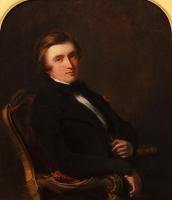
1843. William Powell Frith [aged 23]. Portrait of John Ruskin [aged 23].
On 10th April 1848 John Ruskin [aged 29] and Effie Gray [aged 19] were married at Bowerswell House, Kinnoul [Map]; her childhood home.
On 20th June 1850 Effie Gray [aged 22], wife of John Ruskin [aged 31], was presented to Queen Victoria of the United Kingdom [aged 31].
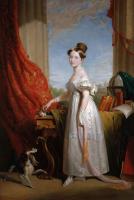


1851. Thomas Richmond [aged 49]. Portrait of John Ruskin [aged 31].

1852 to 1853. John Everett Millais 1st Baronet [aged 22]. Portrait of John Ruskin [aged 32].
On 7th March 1854 [his wife] Effie Gray [aged 25] wrote to her father: "... To go back to the day of my marriage I went as you know away to the Highlands. I had never been told the duties of married persons to each other and knew little or nothing about their relations in the closest union on earth. For days John [John Ruskin [aged 35]] talked about this relation to me but avowed no intention of making me his Wife. He alleged various reasons, hatred to children, religious motives, a desire to preserve my beauty, and finally this last year told me his true reason (and this to me is as villainous as all the rest) that he had imagined women were quite different to what he saw I was, and that the reason he did not make me his Wife was because he was disgusted with my person ... then he said he would marry me when I was twenty five. This last year we spoke about it, he then said as I professed quite a dislike to him that it would be SINFUL to enter into such a connection, as if I was not very wicked I was at least insane and the responsibility that I might have children was too great, as I was quite unfit to bring them ..."
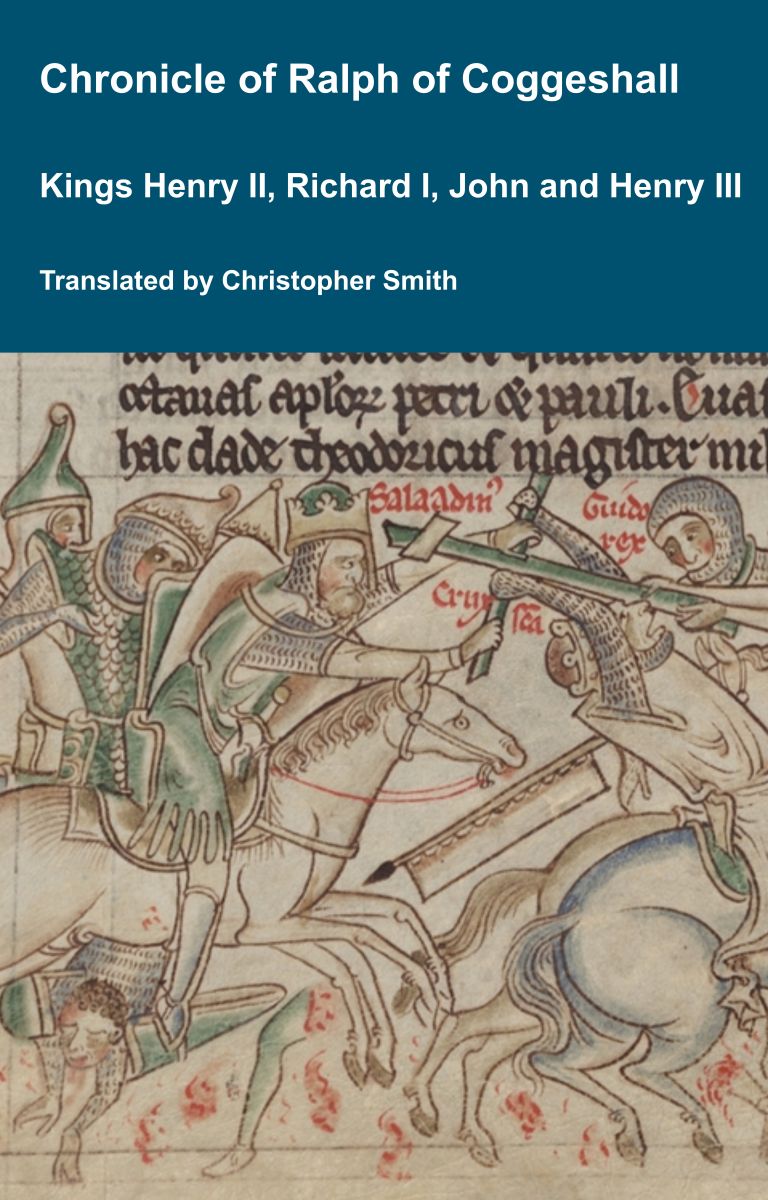
Chronicle of Abbot Ralph of Coggeshall
The Chronicle of Abbot Ralph of Coggeshall (Chronicon Anglicanum) is an indispensable medieval history that brings to life centuries of English and European affairs through the eyes of a learned Cistercian monk. Ralph of Coggeshall, abbot of the Abbey of Coggeshall in Essex in the early 13th century, continued and expanded his community’s chronicle, documenting events from the Norman Conquest of 1066 into the tumultuous reign of King Henry III. Blending eyewitness testimony, careful compilation, and the monastic commitment to record-keeping, this chronicle offers a rare narrative of political intrigue, royal power struggles, and social upheaval in England and beyond. Ralph’s work captures the reigns of pivotal figures such as Richard I and King John, providing invaluable insights into their characters, decisions, and the forces that shaped medieval rule. More than a simple annal, Chronicon Anglicanum conveys the texture of medieval life and governance, making it a rich source for scholars and readers fascinated by English history, monastic authorship, and the shaping of the medieval world.
Available at Amazon in eBook and Paperback format.
The Diary of George Price Boyce 1854. 21st April 1854. Ruskin [aged 35] and his father called. They admired Rossetti's [aged 25] drawings much, especially the Dante and Beatrice one. They praised also the Welsh sunset study I have promised Dante Rossetti, the study of the twisted birch tree, and Ruskin commended the portrait of Miss Nicholl in hat and feather. On my expressing my liking for after sunset and twilight effects, he said I must not be led away by them, as on account of the little light requisite for them, they were easier of realisation than sun-light effects. He was very friendly and pleasant and encouraging in manner, and showed no conceit, grandeur, or patronising mien. A most delightful feeling seemed to exist between himself and father. He said he would be glad to call again and see my drawings.
On 15th July 1854 the marriage of John Ruskin [aged 35] and Effie Gray [aged 26] annulled by the Commissary Court of Surrey on the grounds of John Ruskin being "incapable of consummating the same [marriage] by reason of incurable impotency".
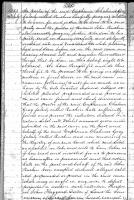
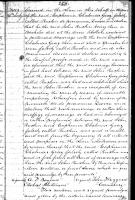
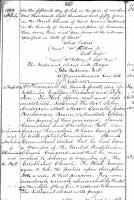
On 30th July 1854 the Session Kinnoull Parish Church [Map] agreed that the "proper steps be taken to notice in the Sessions Records of Kinnoul that the following entry of marriage on Page 64 of the Records of Proclamations viz John Ruskin [aged 35] of Denmark Hill London and [his former wife] Euphemia Chalmers Gray [aged 26] in this Parish were proclaimed and married on the 10 day of April 1848 by the Revd John Edward Touch Minister of Kinnoul" had been declared null and void by the Commissary Court of Surrey" in a suit promoted by the said Euphemia Chalmers Gray".
The Diary of George Price Boyce 1854. 9th December 1854. Dec. 9. To Architectural Museum, Cannon Row. Ruskin [aged 35] gave an excellent lecture on colour to a crowded audience. After the lecture I spoke to him and he immediately asked when he might come and see my drawings, I said in about a fortnight. He said, "Not before? Pray don't go and botch them in the studio." Hoped I was a confirmed Pre-Raphaelite, etc.
In April 1855 John Ruskin [aged 36] proposed to Dante Gabriel Rossetti [aged 26] that he do a series of seven pictures illustrating the Purgatorio of which Rossetti executed two: Dante's Vision of Rachel and Leah and Dante's Vision of Matilda Gathering Flowers.


On 3rd July 1855 John Everett Millais 1st Baronet [aged 26] and [his former wife] Euphemia "Effie" Gray Lady Millais [aged 27] were married at Bowerswell House, Kinnoul [Map]; see Life and Letters of Millais. They spent their two-week honeymoon in Argyleshire, Bute and Arran - see Life and Letters of Millais.


The Diary of George Price Boyce 1855-1857. 27th June 1857. To P.R.B. Exhibition in Russell Place .... I found my little "Sunset" sketch in North Wales mounted in a preposterously wide gilt flat, whereas I had left it in my room mounted on white paper. A lot of the foreground is covered by the mount which completely spoils the sketch and looks ridiculously pretentious besides. Saw (at Hogarth's) a rather clever caricature-etching founded on Millais' "Dream of the Past" picture, to which the outlines were pretty strictly kept to. Millais [aged 28] himself is the old Knight, Rossetti [aged 29] the girl in front, Holman Hunt [aged 30] the child behind. Ruskin [aged 38] the ass on which they are riding and which is by far the best thing in the etching in every respect.
The Diary of George Price Boyce 1855-1857. 30th June 1857. Wm. Rossetti [aged 27] told me that Roughskin [aged 38] had married his wife [Euphemia "Effie" Gray Lady Millais [aged 29]] when she was very ill ....


The Diary of George Price Boyce 1855-1857. 19th November 1857. Adjourned to Millais' [aged 28] house, just taken, No. 16 York Terrace, at about 4, and not finding him in waited and had a long and very pleasant chat with his wife [Euphemia "Effie" Gray Lady Millais [aged 29]], who has a lovely and passionate face, and whose manner is particularly engaging and ladylike withal. At her request, and afterwards backed by Millais, stayed to dinner, after which she left and I had a long chat on divers subjects with him. He spoke about Ruskin [aged 38], whom he thinks desperately ill off, and of the portrait he painted of him in Scotland, which he thought the finest thing in the way of portraiture he had yet done, and said he wanted it for the exhibition (R.A). He seemed astonished when I told him I had seen it in Ruskin's bedroom?
The Diary of George Price Boyce 1855-1857. 21st December 1857. Ruskin [aged 38] came and stayed an hour. He seemed a good deal taken with several of my Giornico drawings and one of the Venice tomb drawings, and said I should apply myself earnestly to drawing with the point, should put more detail in my drawings; give distinction to distant parts by quantity of mysterious detail. He said he should come again.
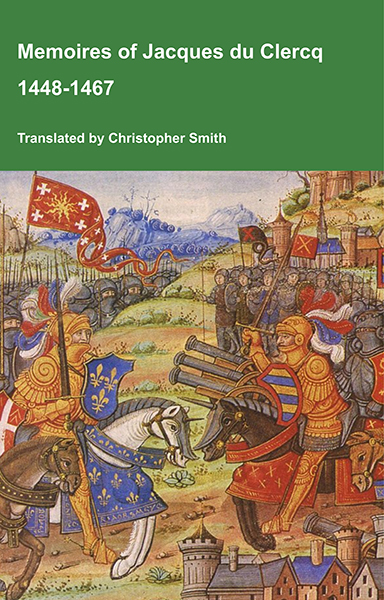
This is a translation of the 'Memoires of Jacques du Clercq', published in 1823 in two volumes, edited by Frederic, Baron de Reissenberg. In his introduction Reissenberg writes: 'Jacques du Clercq tells us that he was born in 1424, and that he was a licentiate in law and a counsellor to Philip the Good, Duke of Burgundy, in the castellany of Douai, Lille, and Orchies. It appears that he established his residence at Arras. In 1446, he married the daughter of Baldwin de la Lacherie, a gentleman who lived in Lille. We read in the fifth book of his Memoirs that his father, also named Jacques du Clercq, had married a lady of the Le Camelin family, from Compiègne. His ancestors, always attached to the counts of Flanders, had constantly served them, whether in their councils or in their armies.' The Memoires cover a period of nineteen years beginning in in 1448, ending in in 1467. It appears that the author had intended to extend the Memoirs beyond that date; no doubt illness or death prevented him from carrying out this plan. As Reissenberg writes the 'merit of this work lies in the simplicity of its narrative, in its tone of good faith, and in a certain air of frankness which naturally wins the reader’s confidence.' Du Clercq ranges from events of national and international importance, including events of the Wars of the Roses in England, to simple, everyday local events such as marriages, robberies, murders, trials and deaths, including that of his own father in Book 5; one of his last entries.
Available at Amazon in eBook and Paperback format.
On 21st October 1861 Philip Burne-Jones 2nd Baronet was born to Edward Coley Burne-Jones 1st Baronet [aged 28] and Georgiana Macdonald Lady Burne-Jones [aged 21]. He was baptised at Manchester Cathedral [Map] with his godfathers, by proxy, being John Ruskin [aged 42] and Dante Gabriel Rossetti [aged 33]. See Memorials of Edward Burne-Jones.
On 3rd March 1864 [his father] John James Ruskin [aged 79] died. He was buried in the churchyard of St John the Evangelist Church, Shirley.
In 1871 [his mother] Margaret Cock [aged 90] died.
In 1878 James Anderson Rose [aged 58] represented James Abbott McNeill Whistler [aged 43] in his libel trial against John Ruskin [aged 58] for having described his painting Nocturne in Black and Gold: The Falling Rocket as "flinging a pot of paint in the public's face". Whistler won the case and was awarded one farthing, the smallest coin, to Whistler. The court costs were divided between the two. Ruskin's were paid for by a public subscription organised by the Fine Art Society. Whistler was declared bankrupt.


In 1882 Francesca Alexander [aged 44] met John Ruskin [aged 62], who was deeply impressed by her compilation of Tuscan songs. Ruskin purchased the manuscript that she had entitled Roadside Songs of Tuscany and had illustrated with drawings done in a fine and highly personal style. He also bought a second manuscript and published it in 1883 as The Story of Ida, attributing it to "Francesca."

1894. Frederick Hollyer [aged 55]. Photograph of John Ruskin [aged 74].
On 23rd December 1897 [his former wife] Euphemia "Effie" Gray Lady Millais [aged 69] died at Bowerswell House, Kinnoul [Map]. She was buried at Kinnoull Parish Church [Map] next to her son George Millais.
On 20th January 1900 John Ruskin [aged 80] died.