

The History of William Marshal was commissioned by his son shortly after William’s death in 1219 to celebrate the Marshal’s remarkable life; it is an authentic, contemporary voice. The manuscript was discovered in 1861 by French historian Paul Meyer. Meyer published the manuscript in its original Anglo-French in 1891 in two books. This book is a line by line translation of the first of Meyer’s books; lines 1-10152. Book 1 of the History begins in 1139 and ends in 1194. It describes the events of the Anarchy, the role of William’s father John, John’s marriages, William’s childhood, his role as a hostage at the siege of Newbury, his injury and imprisonment in Poitou where he met Eleanor of Aquitaine and his life as a knight errant. It continues with the accusation against him of an improper relationship with Margaret, wife of Henry the Young King, his exile, and return, the death of Henry the Young King, the rebellion of Richard, the future King Richard I, war with France, the death of King Henry II, and the capture of King Richard, and the rebellion of John, the future King John. It ends with the release of King Richard and the death of John Marshal.
Available at Amazon in eBook and Paperback format.
Paternal Family Tree: Lucas
In 1618 [her future husband] William Cavendish 1st Duke Newcastle upon Tyne [aged 25] and Elizabeth Bassett Countess Newcastle upon Tyne [aged 26] were married.


In 1623 Margaret Lucas Duchess Newcastle upon Tyne was born to [her father] Thomas Lucas [aged 64].
On 25th September 1625 [her father] Thomas Lucas [aged 66] died.
On 7th March 1628 [her future husband] William Cavendish 1st Duke Newcastle upon Tyne [aged 35] was created 1st Earl Newcastle upon Tyne. Elizabeth Bassett Countess Newcastle upon Tyne [aged 36] by marriage Countess Newcastle upon Tyne.
On 17th December 1628 [her brother] John Lucas 1st Baron Lucas Shenfield [aged 22] and [her sister-in-law] Mary Neville [aged 17] were married.
On 18th April 1629 Catherine Ogle 8th Baroness Ogle [aged 59] died at Bothal, Northumberland [Map]. Her son [her future husband] William [aged 36] succeeded 9th Baron Ogle.
In 1645 William Cavendish 1st Duke Newcastle upon Tyne [aged 52] and Margaret Lucas Duchess Newcastle upon Tyne [aged 22] were married. The difference in their ages was 30 years. They were fourth cousins. He a great x 4 grandson of King Edward IV of England.
On 4th December 1649 John Egerton 1st Earl Bridgewater [aged 70] died. Monument at HR9JMi1fSt Peter and St Paul Church, Little Gaddesden. His son John [aged 26] succeeded 2nd Earl Bridgewater, 3rd Viscount Brackley, 3rd Baron Ellesmere. [her step-daughter] Elizabeth Cavendish Countess Bridgewater [aged 22] by marriage Countess Bridgewater.
The monument has three panels. Panel 1 a dedication to Elizabeth Cavendish Countess Bridgewater, Panel 2 a dedication to Frances Stanley Countess Bridgewater.
The third panel has an inscription to the Earl: "Here rests (till the last trump awakens his dust), the Right Honourable and truly noble Sir John Egerton, knt. one of the honourable Order of the Bath, Earle of Bridgewater, Viscount Brackley; and Baron of Elesmere, &c. He was son to that renowned patriot Sir Thomas Egerton, Baron of Elesmere, Viscount Brackley, and Lord Chancellor of England, and was sole heire both of his estate and virtues. He married the Right Honourable the Lady Frances Stanley, second daughter and one of the co-heires of Ferdinando, Earle of Derby, &c. a wife worthy such a husband, by whom he was blessed with a numerous and virtuous offspring, foure sonnes and eleven daughters. Three of his sonnes died before him, viz. James Viscount Brackley, his eldest, and Charles Viscount Brackley, his second sonne, who both died in their infancy; and Mr. Thomas Egerton, his fourth son, who lies here interred, dying unmarried in the 23d yeare of his age; and three of his daughters, viz. the Lady Cecila Egerton, Mrs. Alice Egerton, and the Lady Ann Egerton. His third and only surviving sonne and heire, John Viscount Brackley, he saw happily married to the Right Honourable the Lady Elizabeth Cavendyshe second daughter to the Right Honourable William Marquesse of Newcastle, &c. Seven of his daughters he likewise saw well and honourably married, viz. the Lady Frances, the Lady Arabella, the Lady Elizabeth, the Lady Mary, the Lady Penelope, the Lady Katharine, the Lady Magdalene; and left only his eleventh daughter, the Lady Alice Egerton, unmarried. He was endued with incomparable parts, both natural and acquired, so that both Art and Nature did seem to strive which should contribute most towards the making him a most accomplished gentleman; he had an active body, and a vigorous soule; his deportment was gracefull, his discourse excellent whether extemporary or premeditate, serious or jocular; so that he seldome spake, but he did either instruct or delight those that heard him; he was a profound scholar, an able statesman, and a good Christian; he was a dutiful! son to his mother the Church of England in her persecution, as well as in her greatest splendor; a loyall subject to his Sovereigne in those worst of times, when it was accounted treason not to be a traitor. As he lived 70 years a patterne of virtue; so he died an example of patience and piety, the fourth of December, in the year of our Lord 1649. Proverb x. 7. The memory of the Just is blessed."
Elizabeth Cavendish Countess Bridgewater: In 1627 she was born to William Cavendish 1st Duke Newcastle upon Tyne and Elizabeth Bassett Countess Newcastle upon Tyne. In 1641 John Egerton 2nd Earl Bridgewater and she were married. She the daughter of William Cavendish 1st Duke Newcastle upon Tyne and Elizabeth Bassett Countess Newcastle upon Tyne. He the son of John Egerton 1st Earl Bridgewater and Frances Stanley Countess Bridgewater. They were fourth cousins. He a great x 4 grandson of King Henry VII of England and Ireland. She a great x 5 granddaughter of King Edward IV of England. On 14th June 1663 Elizabeth Cavendish Countess Bridgewater died. She is commemorated on the Great Monument at St Peter and St Paul Church, Little Gaddesden on which is the inscription: "To the sacred memory of the late transcendently vertuous Lady, now glorious Saint, the Right Honourable Elizabeth Countesse of Bridgewater. She was second daughter to the Right Honourable William Marquesse of Newcastte, &c. and wife to the Right Honourable John Earle of Bridgewater, &c. and whose family she hath enriched with a hopeful issue, six sonnes, viz. John Viscount Brackley her eldest, Sir William Egerton second sonne, both Knights of the honourable Order of the Bath, Mr. Thomas Egerton her third, Mr. Charles Egerton her fourth, Mr. Henry Egerton her fifth, Mr. Steward Egerton her sixth sonne, and three daughters, viz. Mrs. Frances Egerton her eldest, the Lady Elizabeth Egerton her second, and the Lady Katherine Egerton her third daughter; of all which children, three, viz. Mr. Henry Egerton her fifth sonne, Mrs. Frances Egerton, her eldest, and the Lady Katherine Egerton her third daughter, lye here interred, dying in their infancy; the rest are still the living pictures of their deceased mother, and the only remaining comforts of their disconsolate father. She was a Lady in whom all the accomplishments both of body and mind did concurre to make her the glory of the present, and example of future ages. Her beauty was so unparallelled, that it is as much beyond the art of the most elegant pen, as it surpassed the skill of several of the most exquisite pencills (that attempted it) to describe, and not to disparage it. She had a winning and attractive behaviour, a charming discourse, a most obliging conversation: she was so courteous and affable to all persons, that she gained their love; yet, not so familiar to expose herselfe to contempt: she was of a noble and generous soule), yet, of so meeke and humble a disposition, that never any woman, of her quality, was greater in the world's opinion, and lesse in her owne: the rich at her table daily tasted her hospitality; the poore at her gate her charity: her devotion was most exemplary, if not inimitable; witnesse (besides several other occasional! meditations and prayers, full of all the holy transports and raptures of a sanctifyed soule), her divine meditations upon every partictular chapter in the Bible, written with her owne hand, and never (till since her death), seene by any eye but her owne, and her then dear but now sorrowful husband, to the admiration both, of her eminent piety in composing and of her modesty in concealing them. She was a most affectionate and observant wife to her husband, a most tender and indulgent mother to her children, a most kind and bountifull mistresse to her family. In a word, she was so superlatively good, that language is too narrow to expresse her deserved character: 11er death was as religious as her life was vertuous. On the 14th day of June, in the yeare of our Lord 1663; of her own age the 37th, she exchanged her earthly coronet for an heavenly crowne. Prov. xxxi; 28, 29. Her children rise up and call her blessed, her husband also, and he praiseth her. Many daughters have done virtuously, but thou excellest them all."


 Become a Member via our Buy Me a Coffee page to read more.
In 1652 [her step-son] Henry Cavendish 2nd Duke Newcastle upon Tyne [aged 21] and Frances Pierrepont Duchess Newcastle upon Tyne [aged 21] were married. He the son of [her husband] William Cavendish 1st Duke Newcastle upon Tyne [aged 59] and Elizabeth Bassett Countess Newcastle upon Tyne. They were second cousin once removed. He a great x 5 grandson of King Edward IV of England.

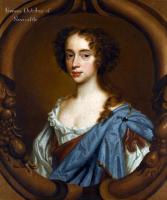
Henrici Quinti, Angliæ Regis, Gesta, is a first-hand account of the Agincourt Campaign, and subsequent events to his death in 1422. The author of the first part was a Chaplain in King Henry's retinue who was present from King Henry's departure at Southampton in 1415, at the siege of Harfleur, the battle of Agincourt, and the celebrations on King Henry's return to London. The second part, by another writer, relates the events that took place including the negotiations at Troye, Henry's marriage and his death in 1422.
Available at Amazon in eBook and Paperback format.
Before 14th July 1657 Charles Cheyne 1st Viscount Newhaven [aged 31] and [her step-daughter] Jane Cavendish [aged 35] were married. She the daughter of [her husband] William Cavendish 1st Duke Newcastle upon Tyne [aged 64] and Elizabeth Bassett Countess Newcastle upon Tyne.
In June 1659 [her step-son] Charles Cavendish [aged 33] died.
On 14th June 1663 [her step-daughter] Elizabeth Cavendish Countess Bridgewater [aged 36] died. She is commemorated on the Great Monument at St Peter and St Paul Church, Little Gaddesden on which is the inscription: "To the sacred memory of the late transcendently vertuous Lady, now glorious Saint, the Right Honourable Elizabeth Countesse of Bridgewater. She was second daughter to the Right Honourable William Marquesse of Newcastte, &c. and wife to the Right Honourable John Earle of Bridgewater, &c. and whose family she hath enriched with a hopeful issue, six sonnes, viz. John Viscount Brackley her eldest, Sir William Egerton second sonne, both Knights of the honourable Order of the Bath, Mr. Thomas Egerton her third, Mr. Charles Egerton her fourth, Mr. Henry Egerton her fifth, Mr. Steward Egerton her sixth sonne, and three daughters, viz. Mrs. Frances Egerton her eldest, the Lady Elizabeth Egerton her second, and the Lady Katherine Egerton her third daughter; of all which children, three, viz. Mr. Henry Egerton her fifth sonne, Mrs. Frances Egerton, her eldest, and the Lady Katherine Egerton her third daughter, lye here interred, dying in their infancy; the rest are still the living pictures of their deceased mother, and the only remaining comforts of their disconsolate father. She was a Lady in whom all the accomplishments both of body and mind did concurre to make her the glory of the present, and example of future ages. Her beauty was so unparallelled, that it is as much beyond the art of the most elegant pen, as it surpassed the skill of several of the most exquisite pencills (that attempted it) to describe, and not to disparage it. She had a winning and attractive behaviour, a charming discourse, a most obliging conversation: she was so courteous and affable to all persons, that she gained their love; yet, not so familiar to expose herselfe to contempt: she was of a noble and generous soule), yet, of so meeke and humble a disposition, that never any woman, of her quality, was greater in the world's opinion, and lesse in her owne: the rich at her table daily tasted her hospitality; the poore at her gate her charity: her devotion was most exemplary, if not inimitable; witnesse (besides several other occasional! meditations and prayers, full of all the holy transports and raptures of a sanctifyed soule), her divine meditations upon every partictular chapter in the Bible, written with her owne hand, and never (till since her death), seene by any eye but her owne, and her then dear but now sorrowful husband, to the admiration both, of her eminent piety in composing and of her modesty in concealing them. She was a most affectionate and observant wife to her husband, a most tender and indulgent mother to her children, a most kind and bountifull mistresse to her family. In a word, she was so superlatively good, that language is too narrow to expresse her deserved character: 11er death was as religious as her life was vertuous. On the 14th day of June, in the yeare of our Lord 1663; of her own age the 37th, she exchanged her earthly coronet for an heavenly crowne. Prov. xxxi; 28, 29. Her children rise up and call her blessed, her husband also, and he praiseth her. Many daughters have done virtuously, but thou excellest them all."
Become a Member via our Buy Me a Coffee page to read more.
In 1665 [her husband] William Cavendish 1st Duke Newcastle upon Tyne [aged 72] was created 1st Duke Newcastle upon Tyne by King Charles II of England Scotland and Ireland [aged 34]. Margaret Lucas Duchess Newcastle upon Tyne [aged 42] by marriage Duchess Newcastle upon Tyne.
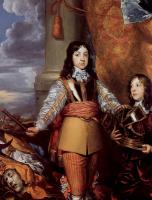


Samuel Pepys' Diary. 30th March 1667. At noon home to dinner, and thence with my wife's knowledge and leave did by coach go see the silly play of my Lady Newcastle's [aged 44], called "The Humourous Lovers"; the most silly thing that ever come upon a stage. I was sick to see it, but yet would not but have seen it, that I might the better understand her. Here I spied Knipp and Betty, of the King's house, and sent Knipp oranges, but, having little money about me, did not offer to carry them abroad, which otherwise I had, I fear, been tempted to. So with Sir W. Pen [aged 45] home (he being at the play also), a most summer evening, and to my office, where, among other things, a most extraordinary letter to the Duke of York [aged 33] touching the want of money and the sad state of the King's service thereby, and so to supper and to bed.
Samuel Pepys' Diary. 11th April 1667. After dinner I to the office, where busy till evening, and then with Balty [aged 27] to Sir G. Carteret's [aged 57] office, and there with Mr. Fenn despatched the business of Balty's £1500 he received for the contingencies of the fleete, whereof he received about £253 in pieces of eight at a goldsmith's there hard by, which did puzzle me and him to tell; for I could not tell the difference by sight, only by bigness, and that is not always discernible, between a whole and half-piece and quarterpiece. Having received this money I home with Balty and it, and then abroad by coach with my wife and set her down at her father's, and I to White Hall, thinking there to have seen the Duchess of Newcastle's [aged 44] coming this night to Court, to make a visit to the Queene [aged 57], the King [aged 36] having been with her yesterday, to make her a visit since her coming to town. The whole story of this lady is a romance, and all she do is romantick. Her footmen in velvet coats, and herself in an antique dress, as they say; and was the other day at her own play, "The Humourous Lovers"; the most ridiculous thing that ever was wrote, but yet she and her Lord mightily pleased with it; and she, at the end, made her respects to the players from her box, and did give them thanks. There is as much expectation of her coming to Court, that so people may come to see her, as if it were the Queen of Sheba; but I lost my labour, for she did not come this night.


John Evelyn's Diary. 18th April 1667. I went to make court to the [her husband] Duke [aged 74] and Duchess [aged 44] of Newcastle, at their house in Clerkenwell, being newly come out of the north. They received me with great kindness, and I was much pleased with the extraordinary fanciful habit, garb, and discourse of the Duchess.
John Evelyn's Diary. 25th April 1667. Visited again the [her husband] Duke of Newcastle [aged 74], with whom I had been acquainted long before in France, where the Duchess [aged 44] had obligation to my wife's [aged 32] mother for her marriage there; she was sister to [her brother] Lord Lucas [aged 60], and maid of honor then to the Queen-Mother [aged 57]; married in our chapel at Paris. My wife being with me, the Duke and Duchess both would needs bring her to the very Court.
Samuel Pepys' Diary. 26th April 1667. This done Sir W. Batten [aged 66] and I back again to London, and in the way met my Lady Newcastle [aged 44] going with her coaches and footmen all in velvet: herself, whom I never saw before, as I have heard her often described, for all the town-talk is now-a-days of her extravagancies, with her velvetcap, her hair about her ears; many black patches, because of pimples about her mouth; naked-necked, without any thing about it, and a black just-au-corps. She seemed to me a very comely woman: but I hope to see more of her on Mayday. My mind is mightily of late upon a coach.
John Evelyn's Diary. 27th April 1667. I had a great deal of discourse with his Majesty [aged 36] at dinner. In the afternoon, I went again with my wife [aged 32] to the Duchess of Newcastle [aged 44], who received her in a kind of transport, suitable to her extravagant humor and dress, which was very singular.
Abbot John Whethamstede’s Chronicle of the Abbey of St Albans
Abbot John Whethamstede's Register aka Chronicle of his second term at the Abbey of St Albans, 1451-1461, is a remarkable text that describes his first-hand experience of the beginning of the Wars of the Roses including the First and Second Battles of St Albans, 1455 and 1461, respectively, their cause, and their consequences, not least on the Abbey itself. His text also includes Loveday, Blore Heath, Northampton, the Act of Accord, Wakefield, and Towton, and ends with the Coronation of King Edward IV. In addition to the events of the Wars of the Roses, Abbot John, or his scribes who wrote the Chronicle, include details in the life of the Abbey such as charters, letters, land exchanges, visits by legates, and disputes, which provide a rich insight into the day-to-day life of the Abbey, and the challenges faced by its Abbot.
Available at Amazon in eBook and Paperback format.
Samuel Pepys' Diary. 1st May 1667. Thence Sir W. Pen [aged 46] and I in his coach, Tiburne way, into the Park, where a horrid dust, and number of coaches, without pleasure or order. That which we, and almost all went for, was to see my Lady Newcastle [aged 44]; which we could not, she being followed and crowded upon by coaches all the way she went, that nobody could come near her; only I could see she was in a large black coach, adorned with silver instead of gold, and so white curtains, and every thing black and white, and herself in her cap, but other parts I could not make [out]. But that which I did see, and wonder at with reason, was to find Pegg Pen [aged 16] in a new coach, with only her husband's [aged 26] pretty sister [aged 18] with her, both patched and very fine, and in much the finest coach in the park, and I think that ever I did see one or other, for neatness and richness in gold, and everything that is noble. My Baroness Castlemayne [aged 26], the King [aged 36], my Lord St. Albans [aged 62], nor Mr. Jermyn, have so neat a coach, that ever I saw.


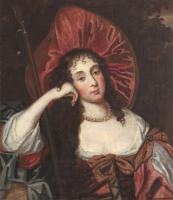


Samuel Pepys' Diary. 1st May 1667. And, Lord! to have them have this, and nothing else that is correspondent, is to me one of the most ridiculous sights that ever I did see, though her present dress was well enough; but to live in the condition they do at home, and be abroad in this coach, astonishes me. When we had spent half an hour in the Park, we went out again, weary of the dust, and despairing of seeing my Lady Newcastle [aged 44]; and so back the same way, and to St. James's, thinking to have met my Lady Newcastle before she got home, but we staying by the way to drink, she got home a little before us: so we lost our labours, and then home; where we find the two young ladies come home, and their patches off, I suppose Sir W. Pen [aged 46] do not allow of them in his sight, and going out of town to-night, though late, to Walthamstow, Essex [Map].
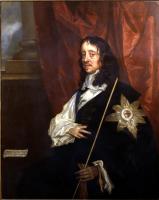
Samuel Pepys' Diary. 10th May 1667. Then to my Lord Treasurer's [aged 60], but missed Sir Ph. Warwicke [aged 57], and so back again, and drove hard towards Clerkenwell1, thinking to have overtaken my Lady Newcastle [aged 44], whom I saw before us in her coach, with 100 boys and girls running looking upon her but I could not: and so she got home before I could come up to her. But I will get a time to see her. So to the office and did more business, and then home and sang with pleasure with my wife, and to supper and so to bed.
Note 1. At Newcastle House, Clerkenwell Close, the [her husband] duke [aged 74] and duchess lived in great state. The house was divided, and let in tenements in the eighteenth century.
John Evelyn's Diary. 11th May 1667. To London; dined with the [her husband] Duke of Newcastle [aged 74], and sat discoursing with her Grace [aged 44] in her bedchamber after dinner, till my Lord Marquis of Dorchester [aged 61], with other company came in, when I went away.
Samuel Pepys' Diary. 30th May 1667. After dinner I walked to Arundell House [Map], the way very dusty, the day of meeting of the Society being changed from Wednesday to Thursday, which I knew not before, because the Wednesday is a Council-day, and several of the Council are of the Society, and would come but for their attending the King [aged 37] at Council; where I find much company, indeed very much company, in expectation of the Duchesse of Newcastle [aged 44], who had desired to be invited to the Society; and was, after much debate, pro and con., it seems many being against it; and we do believe the town will be full of ballads of it.
John Evelyn's Diary. 30th May 1667. To London, to wait on the Duchess of Newcastle [aged 44] (who was a mighty pretender to learning, poetry, and philosophy, and had in both published divers books) to the Royal Society, whither she came in great pomp, and being received by our Lord President at the door of our meeting-room, the mace, etc., carried before him, had several experiments shown to her. I conducted her Grace to her coach, and returned home.
Samuel Pepys' Diary. 30th May 1667. Anon comes the Duchesse [aged 44] with her women attending her; among others, the Ferabosco, of whom so much talk is that her lady would bid her show her face and kill the gallants. She is indeed black, and hath good black little eyes, but otherwise but a very ordinary woman I do think, but they say sings well. The Duchesse hath been a good, comely woman; but her dress so antick, and her deportment so ordinary, that I do not like her at all, nor did I hear her say any thing that was worth hearing, but that she was full of admiration, all admiration.
In 1669 [her step-daughter] Jane Cavendish [aged 47] died.
On 2nd July 1671 [her brother] John Lucas 1st Baron Lucas Shenfield [aged 64] died. His nephew Charles [aged 40] succeeded 2nd Baron Lucas of Shenfield although technically illegitimate his parents had married after his birth.
On 25th December 1676 [her husband] William Cavendish 1st Duke Newcastle upon Tyne [aged 84] died at Welbeck Abbey, Nottinghamshire [Map]. He was buried at Westminster Abbey [Map]. His son [her step-son] Henry [aged 46] succeeded 2nd Duke Newcastle upon Tyne, 2nd Earl Newcastle upon Tyne, 10th Baron Ogle.Frances Pierrepont Duchess Newcastle upon Tyne [aged 46] by marriage Duchess Newcastle upon Tyne.
On 15th December 1717 Margaret Lucas Duchess Newcastle upon Tyne [aged 94] died.
Great x 2 Grandfather: Thomas Lucas 
Great x 1 Grandfather: John Lucas
GrandFather: Thomas Lucas
Father: Thomas Lucas
Great x 1 Grandfather: John Fermor 
GrandMother: Mary Fermor
Great x 4 Grandfather: William Vaux 
Great x 3 Grandfather: William Vaux of Harrowden
Great x 2 Grandfather: Nicholas Vaux 1st Baron Vaux Harrowden
Great x 1 Grandmother: Maud Vaux