

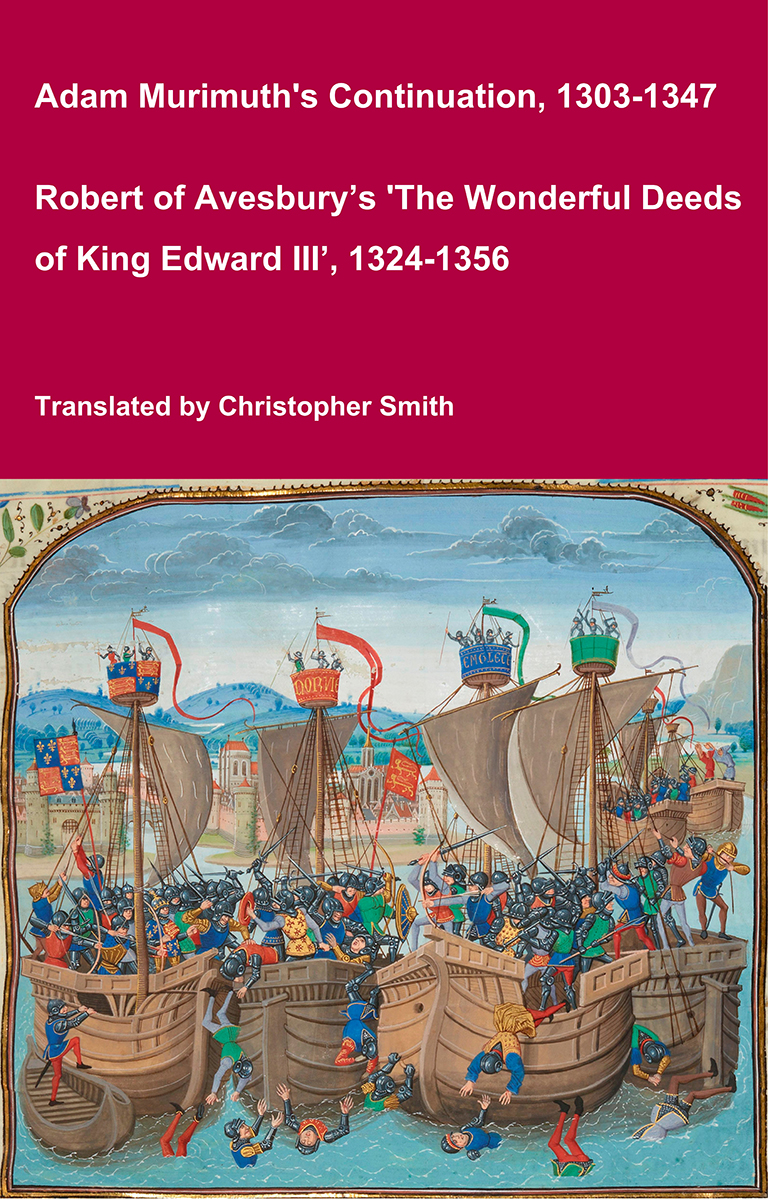
Adam Murimuth's Continuation and Robert of Avesbury’s 'The Wonderful Deeds of King Edward III'
This volume brings together two of the most important contemporary chronicles for the reign of Edward III and the opening phases of the Hundred Years’ War. Written in Latin by English clerical observers, these texts provide a vivid and authoritative window into the political, diplomatic, and military history of fourteenth-century England and its continental ambitions. Adam Murimuth Continuatio's Chronicarum continues an earlier chronicle into the mid-fourteenth century, offering concise but valuable notices on royal policy, foreign relations, and ecclesiastical affairs. Its annalistic structure makes it especially useful for establishing chronology and tracing the development of events year by year. Complementing it, Robert of Avesbury’s De gestis mirabilibus regis Edwardi tertii is a rich documentary chronicle preserving letters, treaties, and official records alongside narrative passages. It is an indispensable source for understanding Edward III’s claim to the French crown, the conduct of war, and the mechanisms of medieval diplomacy. Together, these works offer scholars, students, and enthusiasts a reliable and unembellished account of a transformative period in English and European history. Essential for anyone interested in medieval chronicles, the Hundred Years’ War, or the reign of Edward III.
Available at Amazon in eBook and Paperback format.
Paternal Family Tree: De Cotton
On 10th March 1635 [his father] Thomas Cotton of Combermere Abbey in Cheshire (age 26) and [his mother] Elizabeth Calverley (age 25) were married.
After 10th March 1635 Robert Cotton 1st Baronet was born to [his father] Thomas Cotton of Combermere Abbey in Cheshire (age 26) and [his mother] Elizabeth Calverley (age 25).
Around 1647 [his father] Thomas Cotton of Combermere Abbey in Cheshire (age 38) died.
In 1647 [his mother] Elizabeth Calverley (age 37) died.
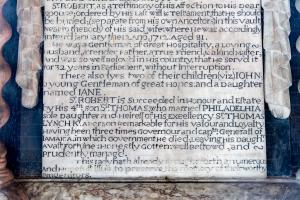
Around 1666 Robert Cotton 1st Baronet (age 30) and Hester Salusbury (age 29) were married. They had five sons and eleven daughters and over one hundred grandchildren.
In or before 1671 [his son] Hugh Calveley Cotton was born to Robert Cotton 1st Baronet (age 35) and [his wife] Hester Salusbury (age 33). He married before 18th December 1712 Mary Russell, daughter of William Russell 1st Baronet and Hester Rouse Lady Russell.
Around 1672 [his son] Thomas Cotton 2nd Baronet was born to Robert Cotton 1st Baronet (age 36) and [his wife] Hester Salusbury (age 35). He married before 2nd January 1695 Philadelphia Lynch Lady Cotton and had issue.
In 1677 Robert Cotton 1st Baronet (age 41) was created 1st Baronet Cotton of Combermere in Cheshire.
In 1679 Robert Cotton 1st Baronet (age 43) was elected MP Cheshire which seat he held until 1681.
On 23rd May 1684 [his brother-in-law] John Salusbury 4th Baronet (age 47) died. Baronet Salusbury of Lleweni in Denbighshire extinct. His sister [his wife] Hester Salusbury (age 47) and her husband Robert Cotton 1st Baronet (age 49) inherited his estates.
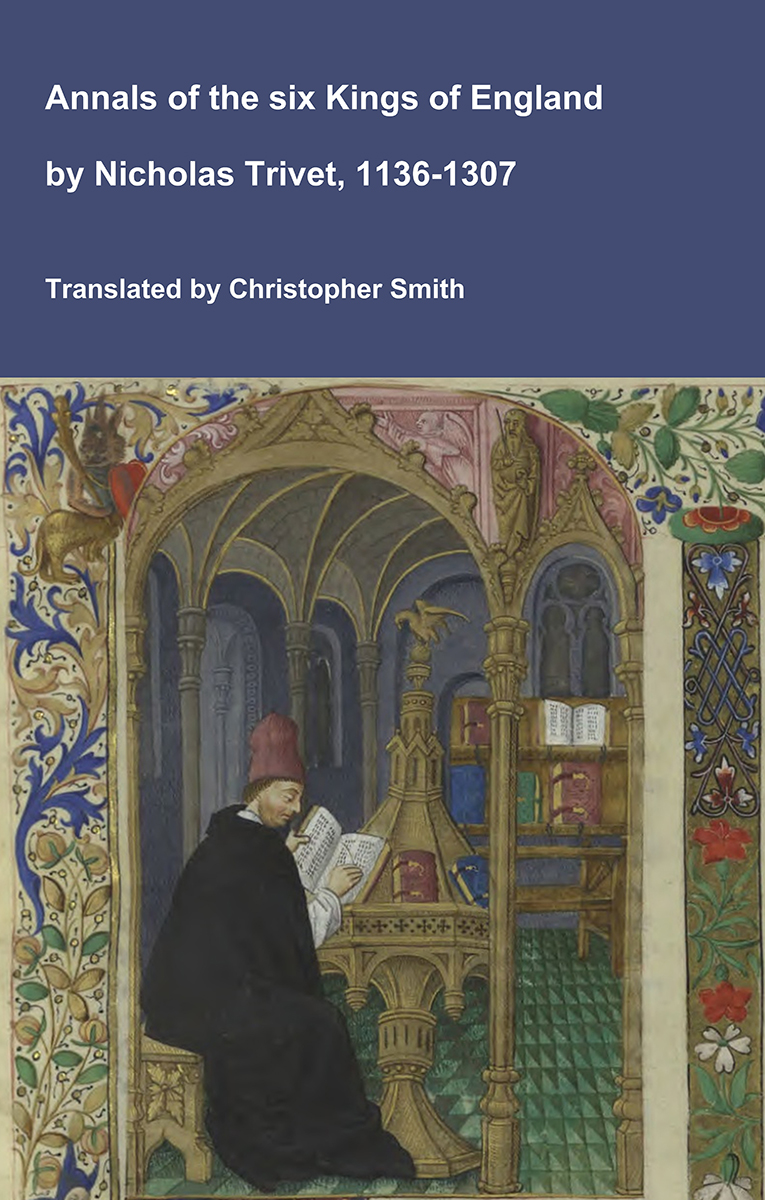
Annals of the six Kings of England by Nicholas Trivet
Translation of the Annals of the Six Kings of England by that traces the rise and rule of the Angevin aka Plantagenet dynasty from the mid-12th to early 14th century. Written by the Dominican scholar Nicholas Trivet, the work offers a vivid account of English history from the reign of King Stephen through to the death of King Edward I, blending political narrative with moral reflection. Covering the reigns of six monarchs—from Stephen to Edward I—the chronicle explores royal authority, rebellion, war, and the shifting balance between crown, church, and nobility. Trivet provides detailed insight into defining moments such as baronial conflicts, Anglo-French rivalry, and the consolidation of royal power under Edward I, whose reign he describes with particular immediacy. The Annals combines careful year-by-year reporting with thoughtful interpretation, presenting history not merely as a sequence of events but as a moral and political lesson. Ideal for readers interested in medieval history, kingship, and the origins of the English state, this chronicle remains a valuable and accessible window into the turbulent world of the Plantagenet kings.
Available at Amazon in eBook and Paperback format.
Combermere Papers. In 1685 Sir Robert (age 50) was committed to the Tower [Map] on a charge of treasonable correspondence with the Electress Sophia (age 54). The following is a copy of the warrant for his committal:
Robert Earl of Sunderland Baron Spencer & c & c
These are in His Majesty's name to authorize and require you to receive into your custodie the bodie of Sir Robert Cotton of Cheshire herewith sent to you for dangerous and treasonable practices!Keep him safe and close till he be discharged by due course of law for which this shall be your warrant.
Given at the Court at Windsor the 23rd daye of September 1685
SUNDERLAND [Robert Spencer 2nd Earl of Sunderland (age 44)]
To the Lieutenant of the Tower
Combermere Papers. After 23rd September 1685. By an act of kindness unusual on the part of James II Sir Robert (age 50) was allowed the society of one of his family within the Tower He chose his fourth son [his son] Thomas (age 13) a boy of eleven years old and beguiled the tedium of captivity by teaching him to read. [his wife] Lady Cotton (age 48) not being allowed to share her husband's imprisonment used to walk every day at a certain hour on Tower Hill till she learnt by an agreed signal hung out from a window that her husband was well. After a short delay Sir Robert was released the charge made against him having been found to be groundless. That there were however letters although perhaps not treasonable from the Electress Sophia (age 54) we learn from Mrs Piozzi who when a child saw some of this correspondence. She was too young to recollect anything about the contents but was afterwards told that they were full of Latin quotations. In accordance with what seems to have been a family mania for the destruction of papers Lord Combermere's father burnt the letters in question
Combermere Papers. 1689. When Sir [his son] Thomas Cotton (age 17) reached the age of seventeen his father (age 53) received a most extraordinary proposal from Admiral Sir George Herbert (age 41) [Note. George a mistake for Arthur?] afterwards Lord Torrington which he seems to have accepted without the slightest misgiving as to its morality. George was uncle and guardian to [his future daughter-in-law] Philadelphia (age 13) daughter and heiress of Sir Thomas Lynch twice Governor and Captain General of Jamaica who had died possessed of large estates in the West Indies a share in which Sir George coveted He therefore agreed to marry his ward though only thirteen years old to young Thomas Cotton on condition that his consent was purchased by a portion of the property. The marriage actually took place and the terms were duly carried out. Eventually Thomas though only a fourth son succeeded through the death of his elder brothers to the title and estates but did not enjoy them long dying in 1715 after only a three years tenure. His widow shortly afterwards married a Mr King on whom she bestowed the whole of her large fortune to the entire exclusion of her nine sons and six daughters. In the parish register of Wrenbury Church [Map] near Combermere the birth of a young King is recorded who soon after was christened there by the name of Cotton a novel compliment to the memory of the lady's first husband. Sir Thomas Lady Cotton survived her second partner for some years and lived at East Hyde a fine place in Hertfordshire where her four magnificent horses were the objects of great attention to her little niece [his great granddaughter] Hester Salusbury afterwards Mrs Piozzi. The stately old lady was in the habit of driving about in the neigh bourhood of her country place in a ponderous anti quated coach drawn by four black horses as solemnly grand as herself The animals were the delight of her little niece who in her autobiography thus fondly alludes to them:
At East Hyde I learned to love horses and when my mother hoped I was gaining health by the fresh air I was kicking my heels in a corn bin and learning to drive of the old coachman who like everybody else small and great delighted in taking me for a pupil. Grandmamma kept four great ramping war horses chevaux entiers for her carriage with immense long manes and tails which we buckled and combed and when after long practice I showed her and my mother how two of them poor Colonel and Peacock would lick my hand for a lump of sugar or fine white bread much were they amazed and more when my skill in guiding them round the court yard on the break could no longer be doubted or denied though strictly prohibited for the future.


In 1689 Robert Cotton 1st Baronet (age 53) was elected MP Cheshire which seat he held until 1702.
Before 2nd January 1695 [his son] Thomas Cotton 2nd Baronet (age 23) and [his daughter-in-law] Philadelphia Lynch Lady Cotton (age 19) were married. They had nine sons and six daughters.
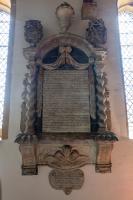
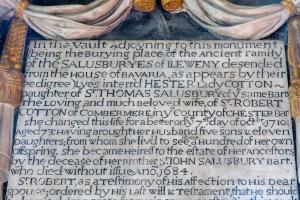
On 7th October 1710 [his wife] Hester Salusbury (age 73) died. She was buried at St Marcella's Church, Denbigh [Map].
Hester Salusbury: In 1637 she was born to Thomas Salusbury 2nd Baronet and Hester Tyrrell Lady Salusbury. Around 1666 Robert Cotton 1st Baronet and she were married. They had five sons and eleven daughters and over one hundred grandchildren. On 23rd May 1684 John Salusbury 4th Baronet died. Baronet Salusbury of Lleweni in Denbighshire extinct. His sister Hester Salusbury and her husband Robert Cotton 1st Baronet inherited his estates. Combermere Papers. After 23rd September 1685. By an act of kindness unusual on the part of James II Sir Robert was allowed the society of one of his family within the Tower He chose his fourth son Thomas a boy of eleven years old and beguiled the tedium of captivity by teaching him to read. Lady Cotton not being allowed to share her husband's imprisonment used to walk every day at a certain hour on Tower Hill till she learnt by an agreed signal hung out from a window that her husband was well. After a short delay Sir Robert was released the charge made against him having been found to be groundless. That there were however letters although perhaps not treasonable from the Electress Sophia we learn from Mrs Piozzi who when a child saw some of this correspondence. She was too young to recollect anything about the contents but was afterwards told that they were full of Latin quotations. In accordance with what seems to have been a family mania for the destruction of papers Lord Combermere's father burnt the letters in question
Before 18th December 1712 [his son] Hugh Calveley Cotton (age 41) and [his daughter-in-law] Mary Russell (age 43) were married.
Before 18th December 1712 [his son] Hugh Calveley Cotton (age 41) died.
On 18th December 1712 Robert Cotton 1st Baronet (age 77) died. His son Thomas (age 40) succeeded 2nd Baronet Cotton of Combermere in Cheshire. [his daughter-in-law] Philadelphia Lynch Lady Cotton (age 37) by marriage Lady Cotton of Combermere in Cheshire.
On 12th January 1713 Robert Cotton 1st Baronet was buried at St Marcella's Church, Denbigh [Map] next to his wife [his former wife] Hester Salusbury.
Kings Wessex: Great x 18 Grand Son of King Edmund "Ironside" I of England
Kings Gwynedd: Great x 17 Grand Son of Bleddyn ap Cynfyn King Gwynedd King Powys
Kings Seisyllwg: Great x 21 Grand Son of Hywel "Dda aka Good" King Seisyllwg King Deheubarth
Kings Powys: Great x 16 Grand Son of Maredudd ap Bleddyn King Powys
Kings England: Great x 12 Grand Son of King John of England
Kings Scotland: Great x 17 Grand Son of King Duncan I of Scotland
Kings Franks: Great x 24 Grand Son of Louis "Pious" King Aquitaine I King of the Franks
Kings France: Great x 18 Grand Son of Robert "Pious" II King of the Franks
Kings Duke Aquitaine: Great x 22 Grand Son of Ranulf I Duke Aquitaine
Great x 4 Grandfather: William de Cotton
Great x 3 Grandfather: John Cotton
Great x 2 Grandfather: George Cotton of Combermere 8 x Great Grand Son of King John of England
Great x 4 Grandfather: Thomas Mainwaring 11 x Great Grand Son of King Henry I "Beauclerc" England
Great x 3 Grandmother: Cecily Mainwaring 7 x Great Grand Daughter of King John of England
Great x 4 Grandmother: Jane Dudley  6 x Great Grand Daughter of King John of England
Great x 1 Grandfather: Richard Cotton 9 x Great Grand Son of King John of England
GrandFather: George Cotton 10 x Great Grand Son of King John of England
Father: Thomas Cotton of Combermere Abbey in Cheshire 11 x Great Grand Son of King John of England
Robert Cotton 1st Baronet 12 x Great Grand Son of King John of England
Great x 4 Grandfather: Hugh Calverley
Great x 3 Grandfather: George Calverley
Great x 2 Grandfather: Hugh Calverley
Great x 1 Grandfather: Hugh Calverley
Great x 3 Grandfather: Ralph Tattershall of Bulkeley
Great x 2 Grandmother: Eleanor Tattershall
GrandFather: George Calverley
Mother: Elizabeth Calverley
Great x 3 Grandfather: Richard Cholmondeley 
Great x 2 Grandfather: Hugh "The Elder" Cholmondeley
Great x 1 Grandfather: Hugh "The Younger" Cholmondeley
Great x 3 Grandfather: George Dorman
Great x 2 Grandmother: Ann Dorman
GrandMother: Mary Cholmondeley
Great x 1 Grandmother: Mary Holford