


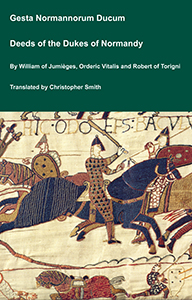
The Deeds of the Dukes of Normandy
The Gesta Normannorum Ducum [The Deeds of the Dukes of Normandy] is a landmark medieval chronicle tracing the rise and fall of the Norman dynasty from its early roots through the pivotal events surrounding the Norman Conquest of England. Originally penned in Latin by the monk William of Jumièges shortly before 1060 and later expanded at the behest of William the Conqueror, the work chronicles the deeds, politics, battles, and leadership of the Norman dukes, especially William’s own claim to the English throne. The narrative combines earlier historical sources with firsthand information and oral testimony to present an authoritative account of Normandy’s transformation from a Viking settlement into one of medieval Europe’s most powerful realms. William’s history emphasizes the legitimacy, military prowess, and governance of the Norman line, framing their expansion, including the conquest of England, as both divinely sanctioned and noble in purpose. Later chroniclers such as Orderic Vitalis and Robert of Torigni continued the history, extending the coverage into the 12th century, providing broader context on ducal rule and its impact. Today this classic work remains a foundational source for understanding Norman identity, medieval statesmanship, and the historical forces that reshaped England and Western Europe between 800AD and 1100AD.
Available at Amazon in eBook and Paperback format.
Paternal Family Tree: Killgrew
Before 1576 John Leigh and [his mother] Margery Saunders (age 29) were married.
Around 1576 [his father] William Killigrew (age 21) and [his mother] Margery Saunders (age 30) were married.
In 1580 Robert Killigrew was born to [his father] William Killigrew (age 25) and [his mother] Margery Saunders (age 34) at Lothbury.
In January 1591 Robert Killigrew (age 11) was educated at Christ Church College, Oxford University.
In 1601 Robert Killigrew (age 21) was appointed Privy Council.
In 1601 Robert Killigrew (age 21) was elected MP St Mawes.
In 1603 Robert Killigrew (age 23) was knighted by King James I of England and Ireland and VI of Scotland (age 36).
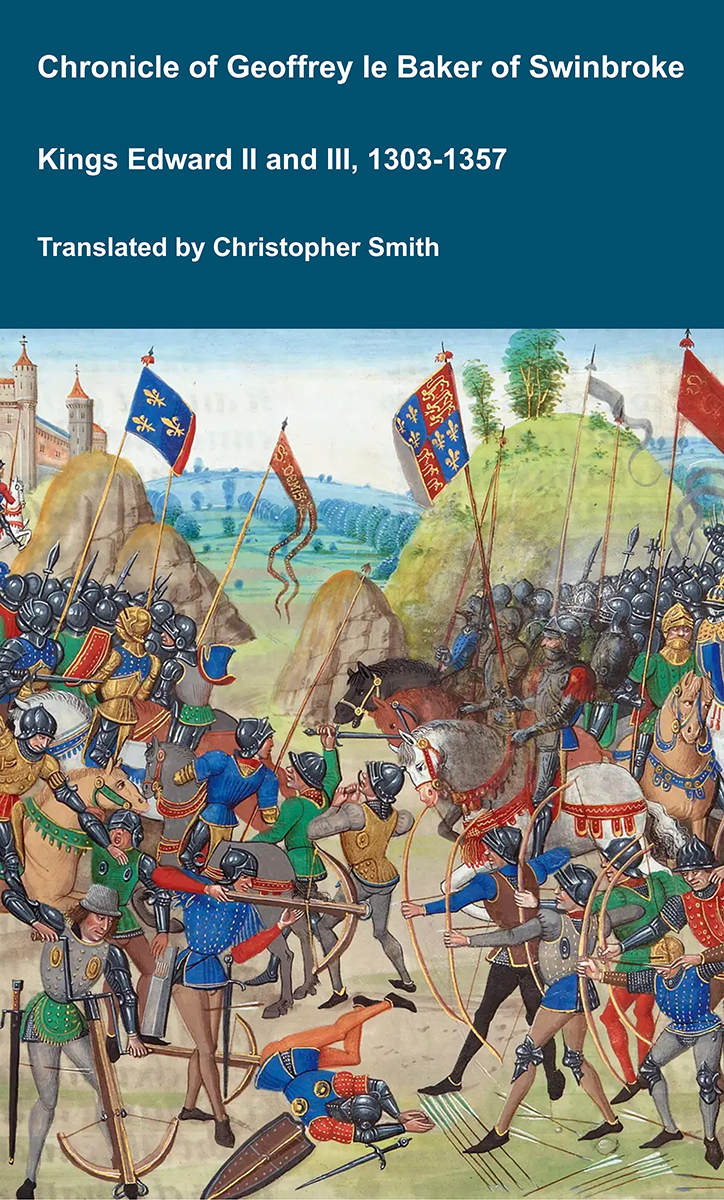
Chronicle of Geoffrey le Baker of Swinbroke
Baker was a secular clerk from Swinbroke, now Swinbrook, an Oxfordshire village two miles east of Burford. His Chronicle describes the events of the period 1303-1356: Gaveston, Bannockburn, Boroughbridge, the murder of King Edward II, the Scottish Wars, Sluys, Crécy, the Black Death, Winchelsea and Poitiers. To quote Herbert Bruce 'it possesses a vigorous and characteristic style, and its value for particular events between 1303 and 1356 has been recognised by its editor and by subsequent writers'. The book provides remarkable detail about the events it describes. Baker's text has been augmented with hundreds of notes, including extracts from other contemporary chronicles, such as the Annales Londonienses, Annales Paulini, Murimuth, Lanercost, Avesbury, Guisborough and Froissart to enrich the reader's understanding. The translation takes as its source the 'Chronicon Galfridi le Baker de Swynebroke' published in 1889, edited by Edward Maunde Thompson.
Available at Amazon in eBook and Paperback format.
In 1604 Robert Killigrew (age 24) was elected MP Newport.
In 1604 Robert Killigrew (age 24) and Mary Woodhouse were married.
In 1605 [his father] William Killigrew (age 50) was appointed Chamberlain of the Exchequer.

In 1606 [his son] William Killigrew was born to Robert Killigrew (age 26) and [his wife] Mary Woodhouse. He married Mary Hill and had issue.
In 1607 [his daughter] Anne Killigrew was born to Robert Killigrew (age 27) and [his wife] Mary Woodhouse.
In 1611 [his son] Robert Killigrew was born to Robert Killigrew (age 31) and [his wife] Mary Woodhouse.
On 7th February 1612 [his son] Thomas Killigrew was born to Robert Killigrew (age 32) and [his wife] Mary Woodhouse. He married (1) 1636 Cecilia Crofts and had issue (2) 1655 Charlotte Hesse and had issue.


On 11th February 1613 [his son] Henry Killigrew was born to Robert Killigrew (age 33) and [his wife] Mary Woodhouse at Hanworth.
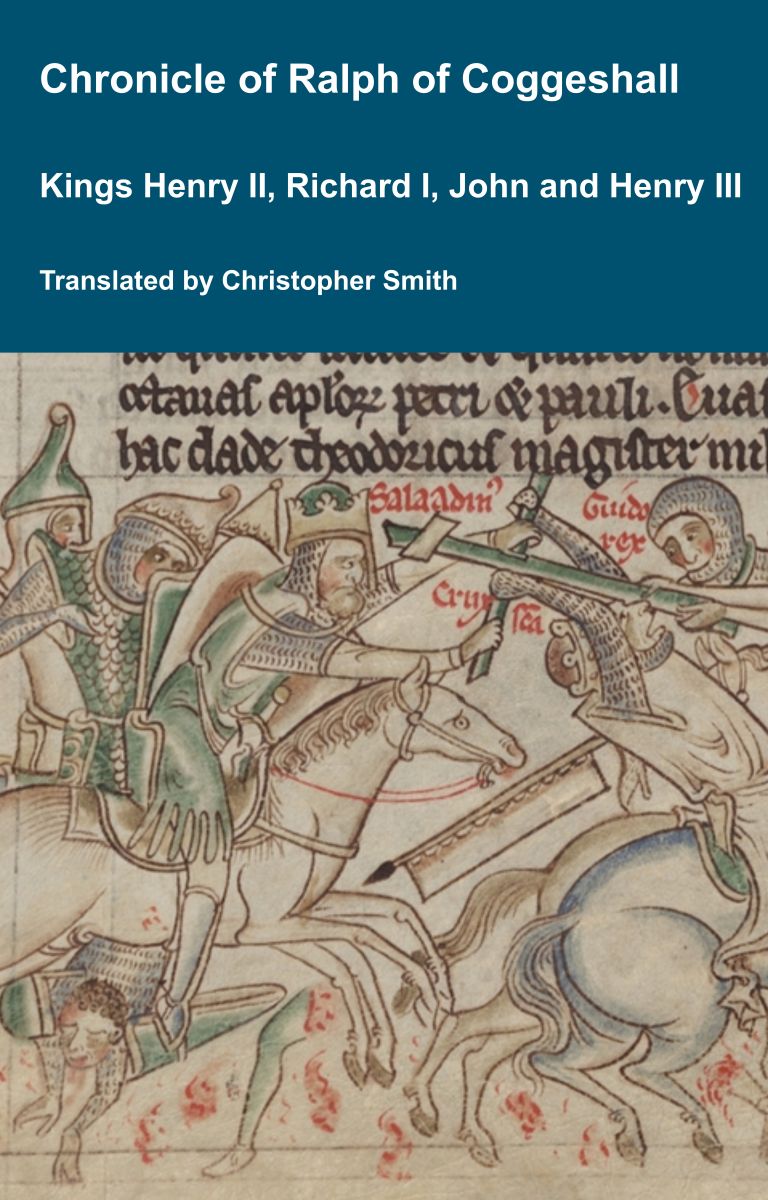
Chronicle of Abbot Ralph of Coggeshall
The Chronicle of Abbot Ralph of Coggeshall (Chronicon Anglicanum) is an indispensable medieval history that brings to life centuries of English and European affairs through the eyes of a learned Cistercian monk. Ralph of Coggeshall, abbot of the Abbey of Coggeshall in Essex in the early 13th century, continued and expanded his community’s chronicle, documenting events from the Norman Conquest of 1066 into the tumultuous reign of King Henry III. Blending eyewitness testimony, careful compilation, and the monastic commitment to record-keeping, this chronicle offers a rare narrative of political intrigue, royal power struggles, and social upheaval in England and beyond. Ralph’s work captures the reigns of pivotal figures such as Richard I and King John, providing invaluable insights into their characters, decisions, and the forces that shaped medieval rule. More than a simple annal, Chronicon Anglicanum conveys the texture of medieval life and governance, making it a rich source for scholars and readers fascinated by English history, monastic authorship, and the shaping of the medieval world.
Available at Amazon in eBook and Paperback format.
In May 1613 Robert Killigrew (age 33) was imprisoned at Fleet Prison [Map].
In 1614 Robert Killigrew (age 34) was elected MP Helston at Bath, Somerset [Map].
In July 1614 Robert Killigrew (age 34) was appointed MP Bath and Heytesbury.
Around 1615 [his daughter] Elizabeth Killigrew was born to Robert Killigrew (age 35) and [his wife] Mary Woodhouse. She died aged four in 1619.
In 1618 [his daughter] Catherine Killigrew was born to Robert Killigrew (age 38) and [his wife] Mary Woodhouse. She married after 1656 Thomas Stanley.
Around 1619 [his daughter] Elizabeth Killigrew (age 4) died.
In 1621 Robert Killigrew (age 41) was elected MP Newport.
In 1622 [his father] William Killigrew (age 67) died.
Chronicle of Walter of Guisborough
A canon regular of the Augustinian Guisborough Priory, Yorkshire, formerly known as The Chronicle of Walter of Hemingburgh, describes the period from 1066 to 1346. Before 1274 the Chronicle is based on other works. Thereafter, the Chronicle is original, and a remarkable source for the events of the time. This book provides a translation of the Chronicle from that date. The Latin source for our translation is the 1849 work edited by Hans Claude Hamilton. Hamilton, in his preface, says: 'In the present work we behold perhaps one of the finest samples of our early chronicles, both as regards the value of the events recorded, and the correctness with which they are detailed; Nor will the pleasing style of composition be lightly passed over by those capable of seeing reflected from it the tokens of a vigorous and cultivated mind, and a favourable specimen of the learning and taste of the age in which it was framed.'
Available at Amazon in eBook and Paperback format.
Before 16th May 1622 [his daughter] Elizabeth Killigrew Viscountess Shannon was born to Robert Killigrew (age 42) and [his wife] Mary Woodhouse. She married before 1650 Francis Boyle 1st Viscount Shannon, son of Richard Boyle 1st Earl Cork and Catherine Fenton Countess Cork.
In 1623 [his daughter] Mary Killigrew was born to Robert Killigrew (age 43) and [his wife] Mary Woodhouse.
In 1624 Robert Killigrew (age 44) was elected MP Penryn.
In 1625 Robert Killigrew (age 45) was elected MP Cornwall.
In 1626 Robert Killigrew (age 46) was elected MP Tregony.
In 1628 Robert Killigrew (age 48) was elected MP Bodmin.
In 1633 Robert Killigrew (age 53) died.
After 1633 Thomas Stafford (age 59) and [his former wife] Mary Woodhouse were married. He the illegitmate son of George Carew 1st Earl Totnes.
In 1756 [his former wife] Mary Woodhouse died.
GrandFather: John Killigrew 
Father: William Killigrew
GrandFather: Thomas Saunders
Mother: Margery Saunders