


Chronicle of a Bourgeois of Valenciennes
Récits d’un bourgeois de Valenciennes aka The Chronicle of a Bourgeois of Valenciennes is a vivid 14th-century vernacular chronicle written by an anonymous urban chronicler from Valenciennes in the County of Hainaut. It survives in a manuscript that describes local and regional history from about 1253 to 1366, blending chronology, narrative episodes, and eyewitness-style accounts of political, military, and social events in medieval France, Flanders, and the Low Countries. The work begins with a chronological framework of events affecting Valenciennes and its region under rulers such as King Philip VI of France and the shifting allegiances of local nobility. It includes accounts of conflicts, sieges, diplomatic manoeuvres, and the impact of broader struggles like the Hundred Years’ War on urban life in Hainaut. Written from the perspective of a burgher (bourgeois) rather than a monastery or royal court, the chronicle offers a rare lay viewpoint on high politics and warfare, reflecting how merchants, townspeople, and civic institutions experienced the turbulence of the 13th and 14th centuries. Its narrative style combines straightforward reporting of events with moral and civic observations, making it a valuable source for readers interested in medieval urban society, regional politics, and the lived experience of war and governance in pre-modern Europe.
Available at Amazon in eBook and Paperback format.
22nd July 1298 Battle of Falkirk
1301 Baron's Letter to the Pope
1308 Coronation of Edward II and Isabella
1312 Gaveston's Escape from Newcastle
In 1269 Henry I King Navarre and [his mother] Blanche Capet Queen Navarre were married. She the daughter of [his grandfather] Robert Capet Count of Artois and [his grandmother] Matilda Reginar Countess Saint Pol. He the son of Theobald IV King Navarre and Margaret Bourbon Queen Consort Navarre.
On 8th April 1269 [his father] Edmund "Crouchback" Plantagenet 1st Earl of Leicester 1st Earl Lancaster and Aveline Forz 6th Countess Albemarle and Lancaster were married. She by marriage Countess Lancaster. She the daughter of William Forz 4th Earl Albemarle and Isabella Redvers 8th Countess Devon and Albemarle. He the son of [his grandfather] King Henry III of England and [his grandmother] Eleanor of Provence Queen Consort England.
On 3rd February 1276 [his father] Edmund "Crouchback" Plantagenet 1st Earl of Leicester 1st Earl Lancaster and [his mother] Blanche Capet Queen Navarre were married. She by marriage Countess Lancaster. She the daughter of [his grandfather] Robert Capet Count of Artois and [his grandmother] Matilda Reginar Countess Saint Pol. He the son of King Henry III of England and Eleanor of Provence Queen Consort England.
Around 1278 Thomas Plantagenet 2nd Earl of Leicester, 2nd Earl Lancaster, Earl of Salisbury and Lincoln was born to [his father] Edmund "Crouchback" Plantagenet 1st Earl of Leicester 1st Earl Lancaster and [his mother] Blanche Capet Queen Navarre.
On 16th August 1284 [his brother-in-law] King Philip IV of France and [his half-sister] Joan Blois I Queen Navarre were married. She by marriage Queen Consort of France. She the daughter of Henry I King Navarre and [his mother] Blanche Capet Queen Navarre. He the son of King Philip III of France and Isabella Barcelona Queen Consort France.
On 5th October 1285 King Philip III of France died of dysentery; see Annals of Dunstable. [his brother-in-law] King Philip IV of France succeeded IV King France: Capet. [his half-sister] Joan Blois I Queen Navarre by marriage Queen Consort of France.
On 30th December 1292 [his brother] Henry Plantagenet 3rd Earl of Leicester 3rd Earl Lancaster and [his sister-in-law] Maud Chaworth were married. He the son of [his father] Edmund "Crouchback" Plantagenet 1st Earl of Leicester 1st Earl Lancaster and [his mother] Blanche Capet Queen Navarre.
In 1294 Thomas Plantagenet 2nd Earl of Leicester, 2nd Earl Lancaster, Earl of Salisbury and Lincoln and Alice Lacy Countess Leicester, and Lancaster 5th Countess of Salisbury 5th Countess Lincoln were married. She the daughter of Henry Lacy 4th Earl Lincoln, Earl Salisbury and Margaret Longespée 4th Countess of Salisbury and Lincoln. He the son of Edmund "Crouchback" Plantagenet 1st Earl of Leicester 1st Earl Lancaster and Blanche Capet Queen Navarre.
On 5th June 1296 [his father] Edmund "Crouchback" Plantagenet 1st Earl of Leicester 1st Earl Lancaster died at Bayonne. He was buried at Westminster Abbey. Thomas Plantagenet 2nd Earl of Leicester, 2nd Earl Lancaster, Earl of Salisbury and Lincoln succeeded 2nd Earl of Leicester, 2nd Earl Lancaster. [his wife] Alice Lacy Countess Leicester, and Lancaster 5th Countess of Salisbury 5th Countess Lincoln by marriage Countess of Leicester, Countess Lancaster.
On 22nd July 1298 [his uncle] King Edward I of England defeated the Scottish army led by William Wallace during the 22nd July 1298 Battle of Falkirk at Falkirk using archers to firstly attack the Scottish shiltrons with the heavy cavalry with infantry completing the defeat.
John de Graham and John Stewart of Bonkyll were killed.
The English were described in the Falkirk Roll that lists 111 men with their armorials including:
Guy Beauchamp 10th Earl Warwick.
Walter Beauchamp.
Humphrey Bohun 3rd Earl Hereford 2nd Earl Essex.
Robert Clifford 1st Baron Clifford.
Hugh "Elder" Despencer 1st Earl Winchester.
William Ferrers 1st Baron Ferrers of Groby.
Thomas Berkeley 6th and 1st Baron Berkeley.
Maurice Berkeley 7th and 2nd Baron Berkeley.
Henry Grey 1st Baron Grey of Codnor.
Reginald Grey 1st Baron Grey of Wilton.
John Grey 2nd Baron Grey of Wilton.
Simon Montagu 1st Baron Montagu.
William Ros 1st Baron Ros Helmsley.
John Segrave 2nd Baron Segrave.
Nicholas Segrave.
Robert de Vere 6th Earl of Oxford.
Alan Zouche 1st Baron Zouche Ashby.
Thomas Plantagenet 2nd Earl of Leicester, 2nd Earl Lancaster, Earl of Salisbury and Lincoln.
[his brother] Henry Plantagenet 3rd Earl of Leicester 3rd Earl Lancaster.
John Warenne 6th Earl of Surrey.
Henry Percy 9th and 1st Baron Percy.
Hugh Courtenay 1st or 9th Earl Devon.
Richard Fitzalan 1st or 8th Earl of Arundel.
Philip Darcy.
Robert Fitzroger.
Robert Fitzwalter 1st Baron Fitzwalter, or possiby a Roger Fitzwalter?.
Aymer de Valence 2nd Earl Pembroke.
John Wake 1st Baron Wake of Liddell, and.
[his father-in-law] Henry Lacy 4th Earl Lincoln, Earl Salisbury.
William Scrope was knighted.
John Moels 1st Baron Moels fought.
John Lovell 1st Baron Lovel fought.
 Become a Member via our Buy Me a Coffee page to read more.
Before 9th March 1301 seven Earls and 96 Barons signed a letter to the Pope refuting the Pope's claim that Scotland was subject to the Pope's feudal overlordship. The letter was never sent. Those who signed include: John Warenne 6th Earl of Surrey, Thomas Plantagenet 2nd Earl of Leicester, 2nd Earl Lancaster, Earl of Salisbury and Lincoln, Ralph Monthermer 1st Earl of Gloucester and Hertford, Humphrey Bohun 4th Earl Hereford 3rd Earl Essex, Roger Bigod 5th Earl Norfolk, Richard Fitzalan 1st or 8th Earl of Arundel, Guy Beauchamp 10th Earl Warwick, Aymer de Valence 2nd Earl Pembroke, William Leybourne 1st Baron Leybourne, [his brother] Henry Plantagenet 3rd Earl of Leicester 3rd Earl Lancaster, William Latimer 1st Baron Latimer of Corby, Edmund Hastings, John Hastings 2nd Baron Hastings 14th Baron Abergavenny, Edmund Mortimer 2nd Baron Mortimer of Wigmore, Fulk Fitzwarin 2nd Baron Fitzwarin, Henry Percy 9th and 1st Baron Percy, Robert Fitzwalter 1st Baron Fitzwalter, John Beauchamp 1st Baron Beauchamp Somerset, William de Braose 2nd Baron de Braose 10th Baron Bramber, John Botetort 1st Baron Botetort, Reginald Grey 1st Baron Grey of Wilton, John Moels 1st Baron Moels, Thomas Berkeley 6th and 1st Baron Berkeley, Robert de Vere 5th Earl of Oxford, John Strange 1st Baron Strange Knockin, Thomas Multon 1st Baron Multon, Robert Clifford 1st Baron Clifford, Walter Beauchamp, Alan Zouche 1st Baron Zouche Ashby, John Segrave 2nd Baron Segrave, William Ferrers 1st Baron Ferrers of Groby, Simon Montagu 1st Baron Montagu, Piers Mauley, Ralph Neville 1st Baron Neville of Raby, John Mohun 1st Baron Dunster, Roger Scales 1st Baron Scales, Thomas Furnival 1st Baron Furnivall, Hugh Bardolf 1st Baron Bardolf, Gilbert Talbot 1st Baron Talbot, William Deincourt 2nd Baron Deincourt, Edmund Stafford 1st Baron Stafford, Walter Fauconberg 1st Baron Fauconberg.
On 2nd May 1302 [his mother] Blanche Capet Queen Navarre died.
On 2nd April 1305 [his half-sister] Joan Blois I Queen Navarre died.
On 7th July 1307 [his uncle] King Edward I of England died at Burgh by Sands whilst on his way north to Scotland. King Edward II of England succeeded II King of England. Earl Chester merged with the Crown.
Edward had gathered around him Thomas Plantagenet 2nd Earl of Leicester, 2nd Earl Lancaster, Earl of Salisbury and Lincoln, Guy Beauchamp 10th Earl Warwick, Aymer de Valence 2nd Earl Pembroke and Robert Clifford 1st Baron Clifford and charged them with looking after his son in particular ensuring Piers Gaveston 1st Earl Cornwall didn't return from exile.
Fine Rolls. On 7th February 1308 King Edward II of England and [his niece] Isabella of France Queen Consort England returned from their wedding in Boulogne sur Mer to Dover, Kent.
7th February 1308. Be it remembered that on Wednesday after the Purification, Edward II, the king, returning from beyond seas, to wit, from Boulogne sur Mer, where he took to wife Isabel, daughter of the [his former brother-in-law] king of France, touched at Dover, Kent in his barge about the ninth hour [1500], Hugh le Despenser and the lord of Castellione of Gascony being in his company, and the Queen a little afterward touched there with certain ladies accompanying her, and because the great seal which had been taken with him beyond seas then remained in the keeping of the keeper of the wardrobe who could not arrive on that day, no writ was sealed from the hour of the king's coming until Friday following on which day the bishop of Chichester, chancellor, about the ninth hour [1500] delivered to the king in his chamber in Dover castle the seal used in England during the king's absence, and the king, receiving the same, delivered it to William de Melton, controller of the wardrobe, and forthwith delivered with his own hand to the chancellor the great seal under the seal of J. de Benstede, keeper of the wardrobe, and Master John Painter Fraunceis, in the presence of Thomas, Earl of Lancaster, Peter, Earl of Cornwall, and Hugh le Despenser, William Martyn and William Inge, knights, and Adam de Osgodby, clerk; and the chancellor on that day after lunch in his room (hospicio) in God's House, Dover, sealed writs with the great seal.
On 25th February 1308 King Edward II of England was crowned II King of England at Westminster Abbey by Henry Woodlock, Bishop of Winchester. [his niece] Isabella of France Queen Consort England was crowned Queen Consort England.
Piers Gaveston 1st Earl Cornwall carried the Royal Crown.
William Marshal 1st Baron Marshal carried the Gilt Spurs.
Humphrey Bohun 4th Earl Hereford 3rd Earl Essex carried the Royal Sceptre.
Edmund Fitzalan 2nd or 9th Earl of Arundel was Chief Butler, a heriditary office.
[his brother] Henry Plantagenet 3rd Earl of Leicester 3rd Earl Lancaster carried the Royal Rod.
Thomas Plantagenet 2nd Earl of Leicester, 2nd Earl Lancaster, Earl of Salisbury and Lincoln carried the sword Curtana.
Roger Mortimer 1st Earl March carried the table bearing the Royal Robes.
Thomas Grey and Robert Fitzwalter 1st Baron Fitzwalter attended.
Become a Member via our Buy Me a Coffee page to read more.
Around 1311 Thomas Plantagenet 2nd Earl of Leicester, 2nd Earl Lancaster, Earl of Salisbury and Lincoln commissioned the building of Melbourne Castle having received a license to crenallate his manor in from King Edward II of England; the castle wasn't completed before his execution. The records show £1,313 was spent on the project in the year 1313–14, of which £548 was paid to masons for dressing stone.
In February 1311 Thomas Plantagenet 2nd Earl of Leicester, 2nd Earl Lancaster, Earl of Salisbury and Lincoln by marriage Earl Salisbury, Earl Lincoln.
In February 1311 [his father-in-law] Henry Lacy 4th Earl Lincoln, Earl Salisbury died at Lincoln's Inn. [his wife] Alice Lacy Countess Leicester, and Lancaster 5th Countess of Salisbury 5th Countess Lincoln succeeded 5th Countess Salisbury, 5th Countess Lincoln, 10th Baroness Pontefract, 11th Baroness Halton. Thomas Plantagenet 2nd Earl of Leicester, 2nd Earl Lancaster, Earl of Salisbury and Lincoln by marriage Earl Salisbury, Earl Lincoln.
Around 19th March 1311 the nobility attempt to constrain King Edward II of England by imposing a Council of Ordainers upon him. The Council included twenty-one signatories including:
Guy Beauchamp 10th Earl Warwick.
Robert Clifford 1st Baron Clifford.
Thomas Plantagenet 2nd Earl of Leicester, 2nd Earl Lancaster, Earl of Salisbury and Lincoln.
Gilbert de Clare 8th Earl Gloucester 7th Earl Hertford.
[his father-in-law] Henry Lacy 4th Earl Lincoln, Earl Salisbury.
Become a Member via our Buy Me a Coffee page to read more.
On 4th May 1312 King Edward II of England and Piers Gaveston 1st Earl Cornwall were at Newcastle upon Tyne Castle where they barely escaped a force led by Thomas Plantagenet 2nd Earl of Leicester, 2nd Earl Lancaster, Earl of Salisbury and Lincoln, Henry Percy 9th and 1st Baron Percy and Robert Clifford 1st Baron Clifford. Piers Gaveston 1st Earl Cornwall escaped to Scarborough, North Yorkshire, King Edward II of England to York.
Around 15th June 1312 Piers Gaveston 1st Earl Cornwall was tried at Warwick Castle by Guy Beauchamp 10th Earl Warwick, Humphrey Bohun 4th Earl Hereford 3rd Earl Essex, Thomas Plantagenet 2nd Earl of Leicester, 2nd Earl Lancaster, Earl of Salisbury and Lincoln and Edmund Fitzalan 2nd or 9th Earl of Arundel. He was condemned to death.
Lanercost Chronicle. 19th June 1312. Having surrendered, he [Piers Gaveston 1st Earl Cornwall] was committed to the custody of Sir Aymer de Valence, Earl of Pembroke, who had ever before been his chief enemy, and about the feast of the nativity of John the Baptist, in the absence of Aymer de Valence, he was beheaded on the high road near the town of Warwick by command of the Earl of Lancaster and the Earl of Warwick.
Between 1313 and 1322 Dunstanburgh Castle, Northumberland was constructed on behalf of Thomas Plantagenet 2nd Earl of Leicester, 2nd Earl Lancaster, Earl of Salisbury and Lincoln when Thomas was in revolt against his cousin King Edward II of England. The castle is visible from the Royal Bamburgh Castle, Northumberland and may have sited deliberately as a challenge to Royal authority. The Master Mason was Master Elias, possibly Elias de Burton, who had been previously involved in the construction of Conwy Castle in North Wales. In 1316 King Edward II of England issued a license to crenellate.


Patent Rolls. 16th October 1313. Westminster.
Pardon to Thomas, Earl of Lancaster, and his adherents, followers, and confederates, of all causes of anger, indignation, suits, accusations, &c, arisen in any manner on account of Peter de Gavaston, from the time of the king's marriage with his dear companion Isabella, whether on account of the capture, detention, or death of Peter de Gavaston, or on account of any forcible entries into any towns or castles, or any sieges of the same; or on account of having borne arms, or of having taken any prisoners, or of having entered into any confederacies whatever, or in any other manner touching or concerning Peter de Gavaston, or that which befel him. French. [Fœdera: Parl. Writs.]
The like, word for word, to the under-mentioned persons, adherents of Thomas, Earl of Lancaster, for the death of Peter de Gavaston, viz.-
Humphrey de Bohun, Earl of Hereford and Essex.
Guy de Beauchamp, Earl of Warwick.
Robert de Holand.
Griffith de la Pole.
John de Heselarton.
Alexander de Cave.
Thomas le fiz Johan de Heselarton.
Robert de Stepelton.
Jordan de Dalden.
Robert le Conestable of Halsham.
William du Lunde and Thomas le fiz Phelip le Mareschal of Milford.
William Trussel.
William de Dacre.
William de Holand.
William la Zusche of Haringworthe.
Continues with another two hundred or so names.
Become a Member via our Buy Me a Coffee page to read more.
In 1316 John Warenne 7th Earl of Surrey attempted to divorce his wife Joan of Bar Countess of Surrey. He blamed Thomas Earl of Lancaster for his failure to obtain a divorce so kidnapped Thomas' wife Alice de Lacy Thomas retaliated by capturing Conisbrough Castle; King Edward confirmed Thomas as the new owner. Thomas subsequenly rebelled against the King and was executed and King Edward took possession of Conisbrough Castle. Following the usurption of King Edward the castle was returned to John Warenne 7th Earl of Surrey.
In 1317 Alice Lacy Countess Leicester, and Lancaster 5th Countess of Salisbury 5th Countess Lincoln was abducted from her manor of Canford, Dorset, by some of the household Knights of John Warenne 7th Earl of Surrey. She may have been complicit in the abduction. Warenne appears to be using the abduction to attack her husband Thomas Plantagenet 2nd Earl of Leicester, 2nd Earl Lancaster, Earl of Salisbury and Lincoln. Lancaster proceeded to wage war agaonmt Warenne although he didn't request the return of his wife.
In 1318 Thomas Plantagenet 2nd Earl of Leicester, 2nd Earl Lancaster, Earl of Salisbury and Lincoln and Alice Lacy Countess Leicester, and Lancaster 5th Countess of Salisbury 5th Countess Lincoln were divorced.
On 16th March 1322 the rebel army led by Thomas Plantagenet 2nd Earl of Leicester, 2nd Earl Lancaster, Earl of Salisbury and Lincoln attempted to cross the bridge over the River Ure (between Ripon and York) at Boroughbridge Bridge. Their path was blocked by forces loyal to the King led by Andrew Harclay 1st Earl Carlisle. Bartholomew Badlesmere 1st Baron Badlesmere, Roger Mortimer 1st Earl March, John Botetort 1st Baron Botetort and John Maltravers 1st Baron Maltravers fought for the rebels. Roger Clifford 2nd Baron Clifford, Nicholas Longford, Thomas Plantagenet 2nd Earl of Leicester, 2nd Earl Lancaster, Earl of Salisbury and Lincoln, John Mowbray 2nd Baron Mowbray were captured.
Warin Lisle was hanged after the battle at Pontefract.
Following the battle Hugh Audley 1st Earl Gloucester and his wife Margaret Clare Countess Gloucester were both imprisoned. He in Nottingham Castle and she in Sempringham Priory.
John Clinton 2nd Baron Clinton, Ralph Greystoke 1st Baron Greystoke, William Latimer 2nd Baron Latimer of Corby, Robert Lisle 1st Baron Lisle, Domhnall Mar II Earl of Mar and Peter Saltmarsh fought for the King.
Adam Everingham 1st Baron Everingham of Laxton was captured.
Humphrey Bohun 4th Earl Hereford 3rd Earl Essex was killed. John Bohun 5th Earl Hereford 4th Earl Essex succeeded 5th Earl Hereford, 4th Earl Essex.
Piers Grandison 2nd Baron Grandison fough for the rebels, and was captured.
Hugh Audley 1st Baron Audley of Stratton Audley surrendered before the battle and was imprisoned in Wallingford Castle for the rest of his life
John Giffard 2nd Baron Giffard Brimpsfield was captured.
Roger Mortimer 1st Earl March was imprisoned at Tower of London.


Become a Member via our Buy Me a Coffee page to read more.
Before 22nd March 1322, the date he was executed, Thomas Plantagenet 2nd Earl of Leicester, 2nd Earl Lancaster, Earl of Salisbury and Lincoln was tried by a tribunal consisting of, among others, Hugh "Elder" Despencer 1st Earl Winchester, Hugh "Younger" Despencer 1st Baron Despencer and Edmund Fitzalan 2nd or 9th Earl of Arundel. He was not allowed to speak in his defence, nor was he allowed to have anyone speak for him. He was convicted of treason and sentenced to death.
On 22nd March 1322 Thomas Plantagenet 2nd Earl of Leicester, 2nd Earl Lancaster, Earl of Salisbury and Lincoln was beheaded at Pontefract Castle following his capture six days before at the Battle of Boroughbridge. He was buried at Pontefract Priory. Earl of Leicester, Earl Lancaster forfeit.
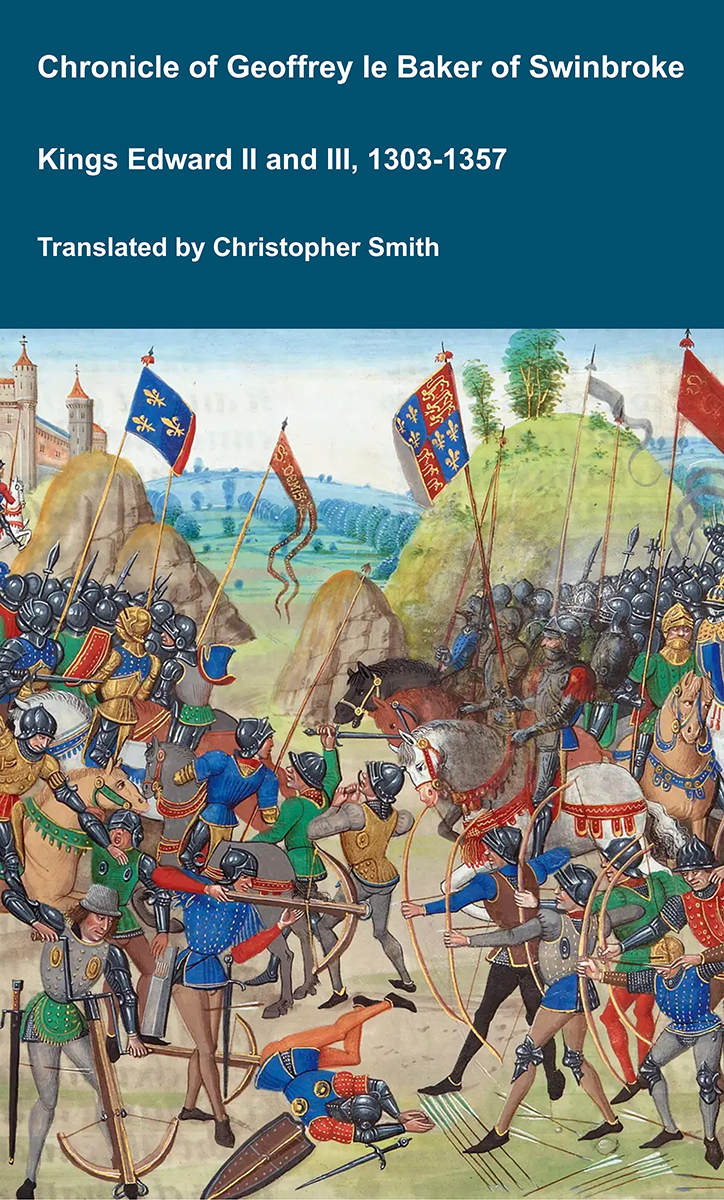 Chronicle of Geoffrey le Baker of Swinbroke. Indeed, the chief instigator of so great a disaster,1 Thomas, Earl of Lancaster, whose noble birth and immense wealth led others to follow him as though he were immortal, was, on the sixth day after the king's triumph [22nd March 1322], condemned by public justice to the penalty of hanging. But royal compassion did not permit such a shameful death for one of the king's own blood; instead, the punishment for treason was mercifully commuted to beheading. Of the others,2 eighteen were drawn and hanged in various places throughout England. Five fugitives were punished with exile. As for the rest, seized and worn down by the filth of prison, the king, showing mercy to the many, released them to redemption.
Nempe tante cladis principalem presumptorem Thomam comitem Lancastrie, cuius generositas et diviciarum amplitudo quasi immortali ceteros fecerunt aderere, vj. die post regis triumphum pupplica iusticia suspendio dampnatum, morte turpissima suum consanguineum non permisit tractari pietas regalis, set decapitacioni penam prodicionis misericorditer remisit. De numero ceterorum X et octo in diversis locis Anglie tractis et suspensis, V fugitivis exilio castigatis, ceteros squalore carcerali correptos, parcens multitudini, regia miseracio dimisit redempcioni.
Note 1. Vita Edward II, 270.
The story of Lancaster's capture and execution is told graphically in the Brute chronicle (Harley MS. 2279): "Whan sir Andrewe of Herkela sawe that sir Thomas men of Lancastre laskede and slakede, anone he and his companye come to the gentil knyghte Thomas of Lancastre and seyden: 'Yelde the, treytour, yelde the.' The gentil erle answerde tho and seide: 'Nay, lordes, traytours be we none; and to yow wil we nevere us yelde while that oure lyves lasten, but levere we have to bene slayn in oure treuthe than yelde us to yow.' And sir Andrewe ayen grad upone sir Thomas companye, yollyng as a wode wolfe, and seide: 'Yelde yow, treytours taken, yelde yow.' And with an hie vois and seide: 'Beth ware, seres, that none of yow be so bardie uppon life and lyme to mysdone Thomas bodie of Lancastre." And with that worde the good erle Thomas wente into a chapel and seide, knelyng don uppon his kneys, and turnede his visage towarde the crois and seide: 'Almyghti God, to the I me yelde, and holiche putte me into thi mercy.' And with that the vilaynes ribaudes lepte aboute him in evere side that gentile erle, as tirauntes and wode turmentours, and dispoylede him of his armure, and closed him in a robe of raye that was of his squyers lyvery, and furth lad him unto Yorke by water. Whan he was taken and broughte to Yorke, meny of the cite were ful glade, and uppon him criede with hie voi: 'A! sire traytour, ye erne wel come, blessid be God, for now shal ye have the rewarde that longe tyme ye have deservede'; and cast uppon him meny snow ballis, and meny other reproves dede him. But the gentil erle that suffred and seide nether one ne other. And in the same tyme the kyng herd of that scomfiture and was ful glad, and in haste come to Pountfret, and sir Hugh the Spencer, and sire Hugh his sone, and sir John erle of Arundelle, and sir Edmunde of Wodestoke, the kyngis brother, erle of Kente, and sire Aymer of Valence, erle of Penbroke, and maister Robert of Baldok, a fals pillede clerk, that was pryve and dwellyng in the kyngis courte; and alle come thider with the kyng. And sire Raufe of Beestone yaf up the castel to the kyng, and the kyng enterede into the castelle. And sire Andrewe of Herkela, a fak tiraunt, thurgh the kynges comaundement nome with him the gentil erle Thomas to Pountfret; and ther he was prisonede in his owen castelle that he had newe made, that stode ayens the abbay of kyng Edwarde. And sir Hugh the Spencer, the fader, and sir Hugh his sone caste and thoughte how and in what maner the good erle Thomas of Lancastre shulde ben dede, withoute eny iugement of his peris. Wherfor hit was ordeynede thurgh the kynges Justices that the kyng shuld putte uppone him poyntes of tretry. And so hit bifelle that he was lad to the barre bifore the kynges Justices, bare heed, as a these, in a faire halle within his owen castel that he had made therin meny a faire feste bothe to riche and eke to pore. And these were his Justices: sir Hugh the Spencer, the fader, sir Aymer the Valance, erle of Penbroke, sire Edmunde of Wodestoke, erle of Kente, sire John of Britaigne, erle of Richemonde, and sir Robert of Malmethorpe, iustice. And sir Robert him acoupede in this maner: 'Thomas, atte the first oure lorde the kyng and this courte excludeth yow of almaner answer. Thomas, our lorde the kyng putte uppon yow fat ye have in his lande riden with baner displayede, ayens his pees, as a treytour.' And with that worde the gentile erle Thomas with an hie vois sayde: 'Naye, forsothe, lordes, and by seynt Thomas I was never traytour.' The iustice seide ayen tho: 'Thomas, oure lorde the kyng putte uppon the that ye have robbede his folk and mordred his peple, as a thefe. Thomas, the kyng also putte uppon the that he descomfited yow and youre peple with his folke in his owen reame; wherfor ye wente and fley to the wode as an owtelawe, and also ye were taken as an outelawe. And, Thomas, as a treytour ye shulde ben hangede by resonn; but the kyng hath foryeve yow that iewes [punishment] for the love of quene Isabelle. And, Thomas, reson wolde that ye shulde ben honged, but the kyng hath foryeve hit yow for cause and love of your lynage. But, Thomas, for as moche as ye were take fleyng and as an outelawe, the kyng wil that youre hede be smyten of, as ye have wel deservede. Anone done him oute of prees, and anone bring him to his iugemente.' The gentile knyjte, whan he had herde alle these wordes, with an hie voys criede, sore wepyng, and seide: 'Alias, seint Thomas, faire fader, alias, shal I ben dede thus? Graunte me now, blissful Lord God, answer.' But alle hit avayle him noujte, for the cursede Gascoigne putte him hider and thider, and on him criede with an hie voys: 'O kyng Arthure, most dredful, wel knowe now fine opyn traytrye; in evel deth shall thow die, as thou hast wel deservede.' Tho sette thei uppon his hevede, in scorne, an olde chapelet alle torente and torne, that was not worth an halpeny. And, after, thei sette him uppon a lene white palfreye ful unsemeliche and eke al bare, with an olde bridel; and with an horrible noys they drow him oute of the castelle towarde his deth, and caste on him many ballis of snawe. And as the turmentours ladde him oute of the castelle, tho seide he thise petous wordis, and his handis helde up in hie towardes hevene: 'Now the Kyng of hevene yeve us mercie, for the erthely kyng hath us forsake.' And a frere prechoure wente with him oute of the castelle til that he come til the place that he endid his life, and to whome he shrofe him alle his life. And the gentile erle helde him faste bi the clothis, and saide: 'Faire fader, abide with us til that I be dede; for my flessh quaketh for drede of deth.'And soth for to saye the gentil erle sette him uppon his kneys and turnede him in to the est. But a ribaude, that men callede Higon of Mostone, sette hande uppon the gentil erle and seide in despite of him: 'Sir treytour, turne the towarde the Scottis, thine foule deth to underfonge'; and turnede the erle toward the north. The noble erle Thomas answerede tho with a mylde voys and seide: 'Now, faire lordes, I shal done alle youre wille.' And with that worde the frere wente fro him, ful sore wepyng. And anone a rebaude wente to him and smote of his hevede."
Note 2. See particulars of the executions in: Knighton 426, Chronicle of Lanercost 245, Gesta Edward de Carnarvon, 77, Annales Paulini 303 and Stubbs Constitutional History of England 2.381.
On 25th March 1322 Andrew Harclay 1st Earl Carlisle was created 1st Earl Carlisle in reward for his capture of Thomas Plantagenet 2nd Earl of Leicester, 2nd Earl Lancaster, Earl of Salisbury and Lincoln at the Battle of Boroughbridge.
In 1324 Eubulus Strange and [his former wife] Alice Lacy Countess Leicester, and Lancaster 5th Countess of Salisbury 5th Countess Lincoln were married. She the daughter of [his former father-in-law] Henry Lacy 4th Earl Lincoln, Earl Salisbury and [his former mother-in-law] Margaret Longespée 4th Countess of Salisbury and Lincoln.
In 1336 Hugh de Freyne Earl of Lincoln and Salisbury and [his former wife] Alice Lacy Countess Leicester, and Lancaster 5th Countess of Salisbury 5th Countess Lincoln were married. He by marriage Earl Salisbury, Earl Lincoln. She the daughter of [his former father-in-law] Henry Lacy 4th Earl Lincoln, Earl Salisbury and [his former mother-in-law] Margaret Longespée 4th Countess of Salisbury and Lincoln.
On 2nd October 1348 [his former wife] Alice Lacy Countess Leicester, and Lancaster 5th Countess of Salisbury 5th Countess Lincoln died without issue at Barlings Abbey. Earl Salisbury, Earl Lincoln, Baron Pontefract and Baron Halton extinct.