

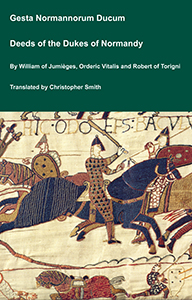
The Deeds of the Dukes of Normandy
The Gesta Normannorum Ducum [The Deeds of the Dukes of Normandy] is a landmark medieval chronicle tracing the rise and fall of the Norman dynasty from its early roots through the pivotal events surrounding the Norman Conquest of England. Originally penned in Latin by the monk William of Jumièges shortly before 1060 and later expanded at the behest of William the Conqueror, the work chronicles the deeds, politics, battles, and leadership of the Norman dukes, especially William’s own claim to the English throne. The narrative combines earlier historical sources with firsthand information and oral testimony to present an authoritative account of Normandy’s transformation from a Viking settlement into one of medieval Europe’s most powerful realms. William’s history emphasizes the legitimacy, military prowess, and governance of the Norman line, framing their expansion, including the conquest of England, as both divinely sanctioned and noble in purpose. Later chroniclers such as Orderic Vitalis and Robert of Torigni continued the history, extending the coverage into the 12th century, providing broader context on ducal rule and its impact. Today this classic work remains a foundational source for understanding Norman identity, medieval statesmanship, and the historical forces that reshaped England and Western Europe between 800AD and 1100AD.
Available at Amazon in eBook and Paperback format.
Blanchland Abbey, Northumberland is in Blanchland, Northumberland [Map], Abbeys in England.
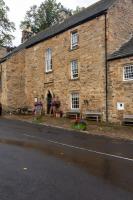
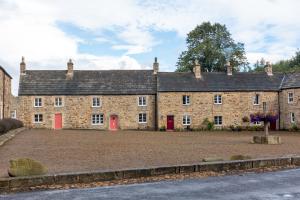
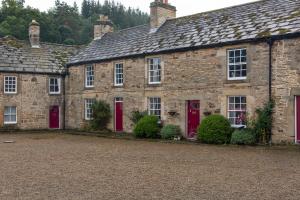
The village of Blanchland [Map] composed of buildings of the Abbey including its Gatehouse.
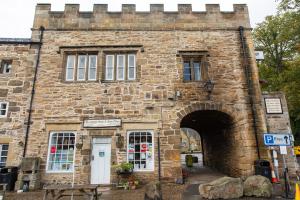
Medieval Grave Slabs at Blanchland Abbey, Northumberland [Map].
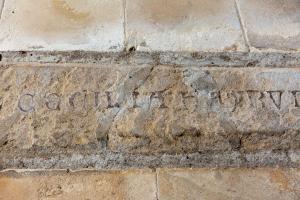
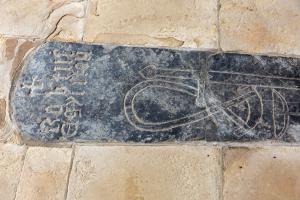
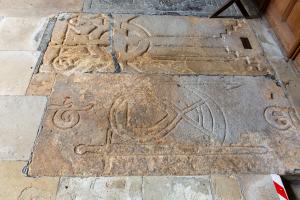
1165. Blanchland Abbey, Northumberland [Map] was founded as a premonstratensian priory in 1165 by Walter de Bolbec II (age 25) as a daughter house of Croxden Abbey, Staffordshire [Map]. It became an abbey in the late 13th century.
Blanchland Abbey, Northumberland [Map].
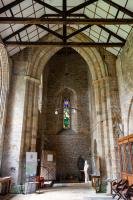
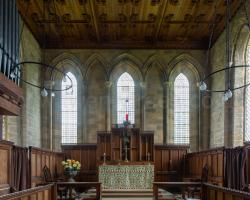
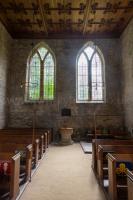
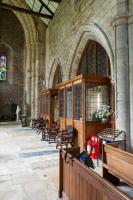
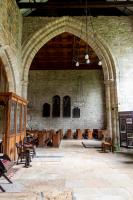
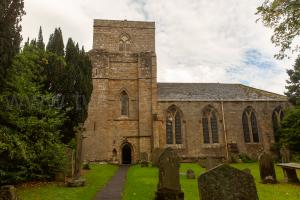
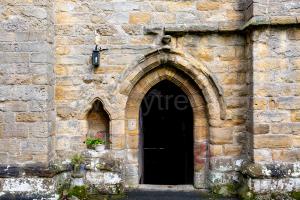
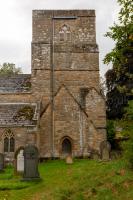
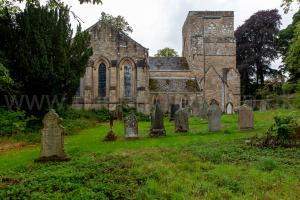
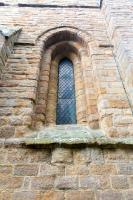
In 1539 Blanchland Abbey, Northumberland [Map] was dissolved and granted to the Bellow and Broxholm families. It was later acquired by the Radclyffe family from whom it passed by marriage to Nicholas Forster. Part of the abbey church was altered and retained for use as the parish church, and the abbots' former residence became the manor house.
Around 10th August 1607 Jane Radclyffe of Blanchland (age 56) died. Claudius Forster 1st Baronet (age 32) inherited Blanchland Abbey, Northumberland [Map].
Around 1623 Claudius Forster 1st Baronet (age 48) died without issue at Blanchland Abbey, Northumberland [Map]. He was buried at St Aidan's Church, Bamburgh [Map]. Baronet Forster of Bamburgh extinct. His brother John Forster (age 46) inherited his estates including Blanchland Abbey, Northumberland [Map].
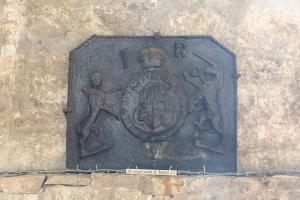
Before 1625. Arms of King James I of England and Ireland and VI of Scotland (age 58) at Blanchland Abbey, Northumberland [Map].