

Abbot John Whethamstede’s Chronicle of the Abbey of St Albans
Abbot John Whethamstede's Register aka Chronicle of his second term at the Abbey of St Albans, 1451-1461, is a remarkable text that describes his first-hand experience of the beginning of the Wars of the Roses including the First and Second Battles of St Albans, 1455 and 1461, respectively, their cause, and their consequences, not least on the Abbey itself. His text also includes Loveday, Blore Heath, Northampton, the Act of Accord, Wakefield, and Towton, and ends with the Coronation of King Edward IV. In addition to the events of the Wars of the Roses, Abbot John, or his scribes who wrote the Chronicle, include details in the life of the Abbey such as charters, letters, land exchanges, visits by legates, and disputes, which provide a rich insight into the day-to-day life of the Abbey, and the challenges faced by its Abbot.
Available at Amazon in eBook and Paperback format.
Carlisle, Cumberland is in Cumberland.
Flowers of History. 1071. In the same year, king William [aged 43] invaded Scotland with a great army, and Malcolm, king of Scotland [aged 39], came peaceably to Berwick [Map] to meet him, and became his subject. At this time, count Ranulph of Micenis governed the earldom of Carlisle, who had given efficacious assistance to king William in his conquest of England. He began to build the city of Carlisle [Map], and to strengthen the citizens with many privileges. But when king William was returning from Scotland through Cumberland, seeing so royal a city, he took it from count Ranulph, and gave him instead of it the earldom of Chester, which was endowed with many honours and privileges. And king William commanded Carlisle to be fortified with very strong towers and ramparts. Moreover, king William the Conqueror, on his return from Scotland, built a new castle at Durham [Map], to serve as a protection against the irruptions of the Scots.
Chronicon ex Chronicis by Florence and John of Worcester. On Monday the nones [5th April 1092] of April, Osmund, bishop of Salisbury, assisted by Walkelin, bishop of Winchester, and John, bishop of Bath, consecrated the church which he had built in the castle of Sarum. Remi, who by license from William the Elder had transferred the seat of his bishopric from Dorchester [Map] to Lincoln, was desirous of consecrating the church which he had built at Lincoln, worthy indeed to be the cathedral of a bishop's see1, because he felt that the day of his death was at hand; but Thomas, archbishop of York, opposed him, asserting that the church was built within his diocese. However, king William the younger, for a sum of money paid to him by Remi, summoned nearly all the bishops of England to assemble together on the twentieth of the ides [the 9th] of May, and dedicate the church; but two days before the time fixed, by the mysterious providence of God, bishop Remi himself departed from the world, and in consequence the consecration of the church was deferred. After this the king went into Northumbria, and restored the city which is called in the British tongue Cairleii, and in Latin Lugubalia (Carlisle [Map]), and built a castle there; for this city, like some others in that quarter, had been laid in ruins by the heathen Danes two hundred years before, and had been uninhabited up to this time.
Note 1. Cf. Henry of Huntingdon, pp. 219, 220, Antiq. Lib.
On 24th May 1153 King David I of Scotland [aged 69] died at Carlisle, Cumberland [Map]. His grandson Malcolm [aged 12] succeeded King Scotland.
On 9th February 1307 the Battle of Loch Ryan was a victory of local forces, led by Dungal MacDowall, supporter of King Edward I, over a force consisting of 1000 men and eighteen galleys led by Thomas Bruce [aged 23] and Alexander Bruce [aged 22], brothers of King Robert the Bruce I of Scotland [aged 32], supported by Malcolm McQuillan, Lord of Kintyre, and Sir Reginald Crawford. Only two galleys escaped. Malcolm McQuillan was captured an summarily executed.
Thomas Bruce, Alexander Bruce and Reginald Crawford were hanged (possibly hanged, drawn and quartered) at Carlisle, Cumberland [Map].
On 3rd March 1323 Andrew Harclay 1st Earl Carlisle [aged 53] was arraigned before a royal justice in Carlisle. He was hanged, drawn and quartered at Carlisle, Cumberland [Map] for having negotiated a truce with the Scots without the King's sanction. It recognised Scotland as an independent kingdom. King Edward considered the treaty to be an act treason. Earl Carlisle forfeit. After his death, his head was taken to the king at Knaresborough in Yorkshire, before it was hung up on London Bridge. The four parts of his body were dispersed around the country, and displayed in Carlisle, Newcastle, Bristol, and Dover. Less than three months after Harclay's execution, King Edward agreed on a thirteen-year truce with Scotland.
Before April 1360 Matthew Redman [aged 57] died at Carlisle, Cumberland [Map].
Froissart Book 13. Before 5th August 1388. Now let us speak of the earl Douglas [aged 30] and other, for they had more to do than they that went by Carlisle, Cumberland [Map]. When the earls of Douglas, of Moray [aged 46], of March, and Dunbar [aged 50]1 departed from the great host, they took their way thinking to pass the water and to enter into the bishopric of Durham, and to ride to the town and then to return, brenning and exiling the country and so to come to Newcastle [Map] and to lodge there in the town in the despite of all the Englishmen. And as they determined, so they did assay to put it in use, for they rode a great pace under covert without doing of any pillage by the way or assaulting of any castle, tower or house, but so came into the lord Percy's land and passed the river of Tyne without any let a three leagues above Newcastle not far from Brancepeth, and at last entered into the bishopric of Durham, where they found a good country. Then they began to make war, to slay people and to bren villages and to do many sore displeasures.
Note 1. George, earl of March and Dunbar: the text gives Mare, but there was at this time no earl of Mar.
In 1393 Richard Redman [aged 43] held a tournament at Carlisle, Cumberland [Map].
After 10th May 1461 John Neville 1st Marquess Montagu [aged 30] raised the siege at Carlisle, Cumberland [Map].

Chronicle of Edward Hall [1496-1548]. February 1537. Also in the said month, Nichol Musgrave, Thomas Tilbie, with other began a new rebellion at Kirbie Stephen [Map] in Westmoreland with eight thousand persons, and besieged the city of Carlisle [Map], from whence they were beaten, with the only power of the city, and in their returning the Duke of Norfolk [aged 64], who then was made Lieutenant of the North encountered with them, and took the captains, and according to the law martial, arraigned threescore and fourteen of them, and hanged them on Carlisle walls, but Musgrave escaped. And in the same month of February began yet another insurreccion, by the enticement of Sir Frances Bigod [aged 29], a man no doubt that loved God, and feared his Prince, with a right obedient and loving fear but now being deceived and provoked thereunto by false rebellious persons, it was his fortune to taste of the end which appertains to rebels such are men when God leaves them to themselves, and when they will enterprise the doing of that thing which God's most holy word utterly forbids. This Bigod was apprehended and brought to the Tower of London. This last rebellion began in Setrington, and in Pikerin Leigh, and Scarborough.
In 1545 Robert Smith was elected MP Carlisle.
On 21st March 1557 Anne Dacre Countess Arundel was born to Thomas Dacre 4th Baron Dacre Gilsland 8th Baron Greystoke [aged 30] and Elizabeth Leybourne Duchess Norfolk [aged 21] at Carlisle, Cumberland [Map]. She married 1571 her half third cousin once removed Philip Howard 13th or 20th Earl of Arundel, son of Thomas Howard 4th Duke of Norfolk and Mary Fitzalan Duchess Norfolk, and had issue.
Henry Machyn's Diary. 22nd July 1557. The sam day cam from my lord Dacurs of the North [aged 60], beyond Carlylle [Map], (blank) lyght hors-men to go [beyond] see.
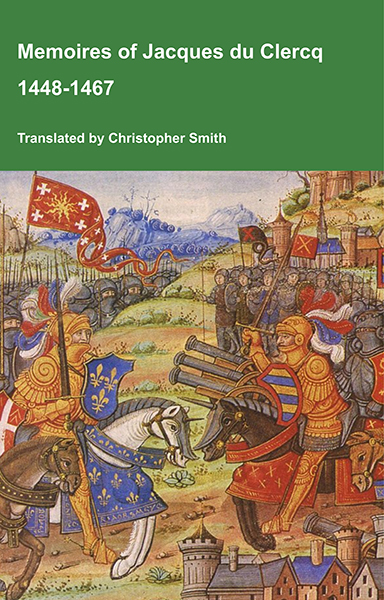
This is a translation of the 'Memoires of Jacques du Clercq', published in 1823 in two volumes, edited by Frederic, Baron de Reissenberg. In his introduction Reissenberg writes: 'Jacques du Clercq tells us that he was born in 1424, and that he was a licentiate in law and a counsellor to Philip the Good, Duke of Burgundy, in the castellany of Douai, Lille, and Orchies. It appears that he established his residence at Arras. In 1446, he married the daughter of Baldwin de la Lacherie, a gentleman who lived in Lille. We read in the fifth book of his Memoirs that his father, also named Jacques du Clercq, had married a lady of the Le Camelin family, from Compiègne. His ancestors, always attached to the counts of Flanders, had constantly served them, whether in their councils or in their armies.' The Memoires cover a period of nineteen years beginning in in 1448, ending in in 1467. It appears that the author had intended to extend the Memoirs beyond that date; no doubt illness or death prevented him from carrying out this plan. As Reissenberg writes the 'merit of this work lies in the simplicity of its narrative, in its tone of good faith, and in a certain air of frankness which naturally wins the reader’s confidence.' Du Clercq ranges from events of national and international importance, including events of the Wars of the Roses in England, to simple, everyday local events such as marriages, robberies, murders, trials and deaths, including that of his own father in Book 5; one of his last entries.
Available at Amazon in eBook and Paperback format.
Archaeologia Volume V32 1847 Section X. The Queen of Scots [aged 25] landed on the shore of Cumberland on the 16th of May, 1568. On the next day she wrote from Workington to Queen Elizabeth [aged 34], announcing her arrival. On the 18th she was conducted to Cockermouth, and the next day to Carlisle [Map]. There she remained till the 13th of July, when she was taken to Bolton [Map], castle of the Lord Scrope [aged 34], in the North Riding. She was at Bolton for more than half a year. Her last letter written from that place is dated January 25, 1569, the day before she reluctantly set out on her journey southward.


On 13th June 1592 Henry Scrope 9th Baron Scrope of Bolton [aged 58] died at Carlisle, Cumberland [Map]. His son Thomas [aged 25] succeeded 10th Baron Scrope of Bolton. Philadelphia Carey Baroness Scrope Bolton by marriage Baroness Scrope of Bolton.
On 22nd July 1620 Thomas Tully Divine was born in Carlisle, Cumberland [Map].
In 1661 Christopher Musgrave 4th Baronet [aged 29] was elected MP Carlisle. He was re-elected in 1679, 1681 and 1685.
In 1661 Philip Howard [aged 30] was elected MP Carlisle.
In 1712 John Thomas was born to John Thomas and Ann Kelsick in Carlisle, Cumberland [Map]. He married (1) 19th August 1742 Anne Clayton Lady Blackwell, daughter of William Clayton 1st Baronet and Martha Kenrick (2) 12th January 1775 Elizabeth Baldwin.
In 1775 Walter Spencer-Stanhope [aged 24] was elected MP Carlisle.
In 1780 William Lowther 1st Earl Lonsdale [aged 22] was elected MP Carlisle.
In 1796 Frederick Vane-Fletcher 2nd Baronet [aged 35] was elected MP Carlisle.
In 1802 Walter Spencer-Stanhope [aged 51] was elected MP Carlisle.
In 1808 Robert Hodgson of Congleton [aged 67] died at Carlisle, Cumberland [Map].
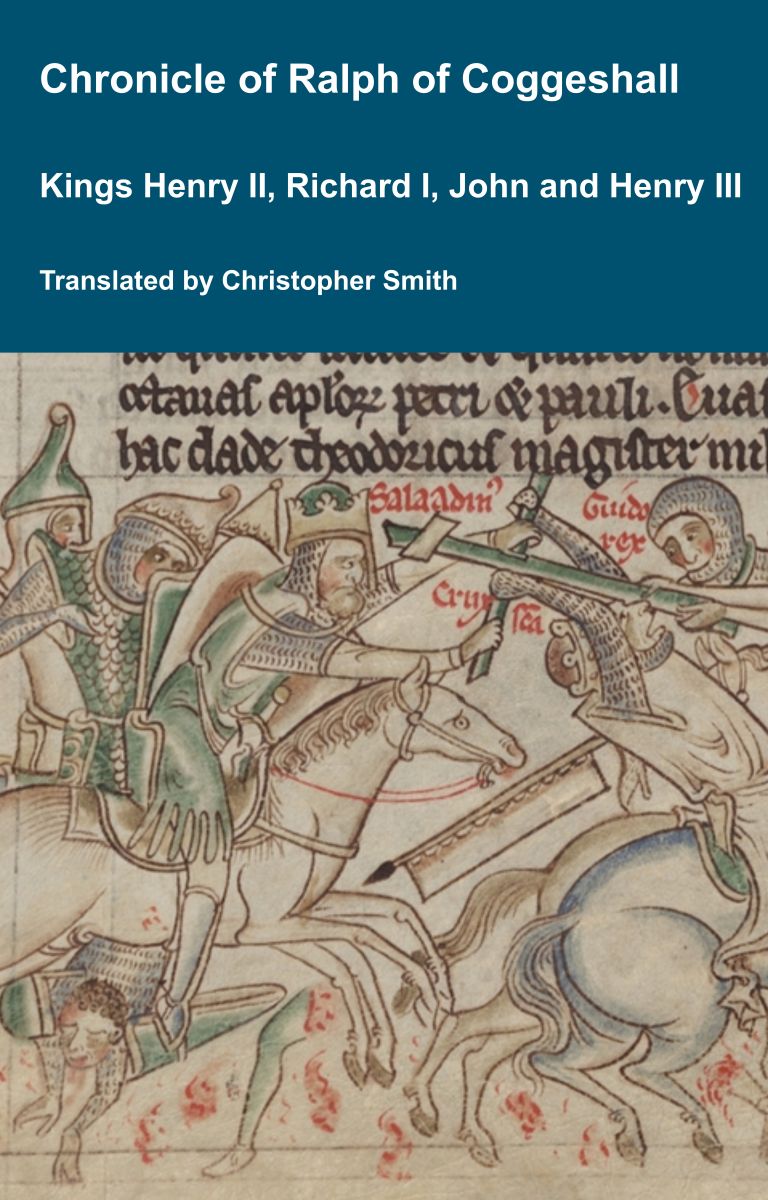
Chronicle of Abbot Ralph of Coggeshall
The Chronicle of Abbot Ralph of Coggeshall (Chronicon Anglicanum) is an indispensable medieval history that brings to life centuries of English and European affairs through the eyes of a learned Cistercian monk. Ralph of Coggeshall, abbot of the Abbey of Coggeshall in Essex in the early 13th century, continued and expanded his community’s chronicle, documenting events from the Norman Conquest of 1066 into the tumultuous reign of King Henry III. Blending eyewitness testimony, careful compilation, and the monastic commitment to record-keeping, this chronicle offers a rare narrative of political intrigue, royal power struggles, and social upheaval in England and beyond. Ralph’s work captures the reigns of pivotal figures such as Richard I and King John, providing invaluable insights into their characters, decisions, and the forces that shaped medieval rule. More than a simple annal, Chronicon Anglicanum conveys the texture of medieval life and governance, making it a rich source for scholars and readers fascinated by English history, monastic authorship, and the shaping of the medieval world.
Available at Amazon in eBook and Paperback format.
On 5th July 1843 Bishop Mandell Crichton was born at Carlisle, Cumberland [Map].
In 1859 Wilfrid Lawson 2nd Baronet [aged 29] was elected MP Carlisle which seat he held until 1865.
In 1868 Wilfrid Lawson 2nd Baronet [aged 38] was elected MP Carlisle which seat he held until 1885.
John of Fordun's Chronicle. 114. King Robert accused before the King of England by John Comyn
As the said John's accusations were repeated, at length, one night, while the wine glittered in the bowl, and that king was hastening to sit down with his secretaries, he talked over Robert's death in earnest, - and shortly determined that he would deprive him of life on the morrow. But when the Earl of Gloucester, who was Robert's true and tried friend in his utmost need, heard of this, he hastily, that same night, sent the aforesaid Robert, by his keeper of the wardrobe, twelve pence and a pair of spurs. So the keeper of the wardrobe, who guessed his lord's wishes, presented these things to Robert, from his lord, and added these words: "My lord sends these to you, in return for what he, on his side, got from you yesterday." Robert understood, from the tokens offered him, that he was threatened by the danger of death; so he discreetly gave the pence to the keeper of the wardrobe, and forthwith sent him back to the Earl with greeting in answer, and with thanks.
Then, when twilight came on, that night, after having ostentatiously ordered his servants to meet him at Carlisle [Map], with his trappings, on the evening of the following day, he straightway hastened towards Scotland, without delay, and never stopped travelling, day or night, until he was safe from the aforesaid king's spite. Tor he was under the guidance of One of whom it is written: - "There is no wisdom, no foresight, no understanding against the Lord, who knoweth how to snatch the good from trial, and mercifully to deliver from danger those that trust in Him.".
The River Eden rises near Aisgill, Westmoreland [Map] from where it flows past Mallerstang, Westmoreland [Map], Kirkby Stephen [Map], Little Musgrave, Westmoreland [Map], Warcop, Westmoreland [Map], Appleby-in-Westmoreland [Map], Bolton, Westmoreland [Map], Temple Sowerby, Westmoreland [Map], Long Meg and Her Daughters [Map], Armathwaite, Cumberland [Map], Wetheral, Cumberland [Map] to Carlisle, Cumberland [Map] after which it passes the Edward I Monument Burgh by Sands [Map] before joining the Irish Sea.
Stanegate Roman Road is a Roman Road that ran from Corbridge Roman Fort, Northumberland [Map], where Dere Street crossed the River Tyne, to Luguvalium Roman Town [Map] aka Carlisle. It predated Hadrians Wall, subsequently built north of it, by several decades.