

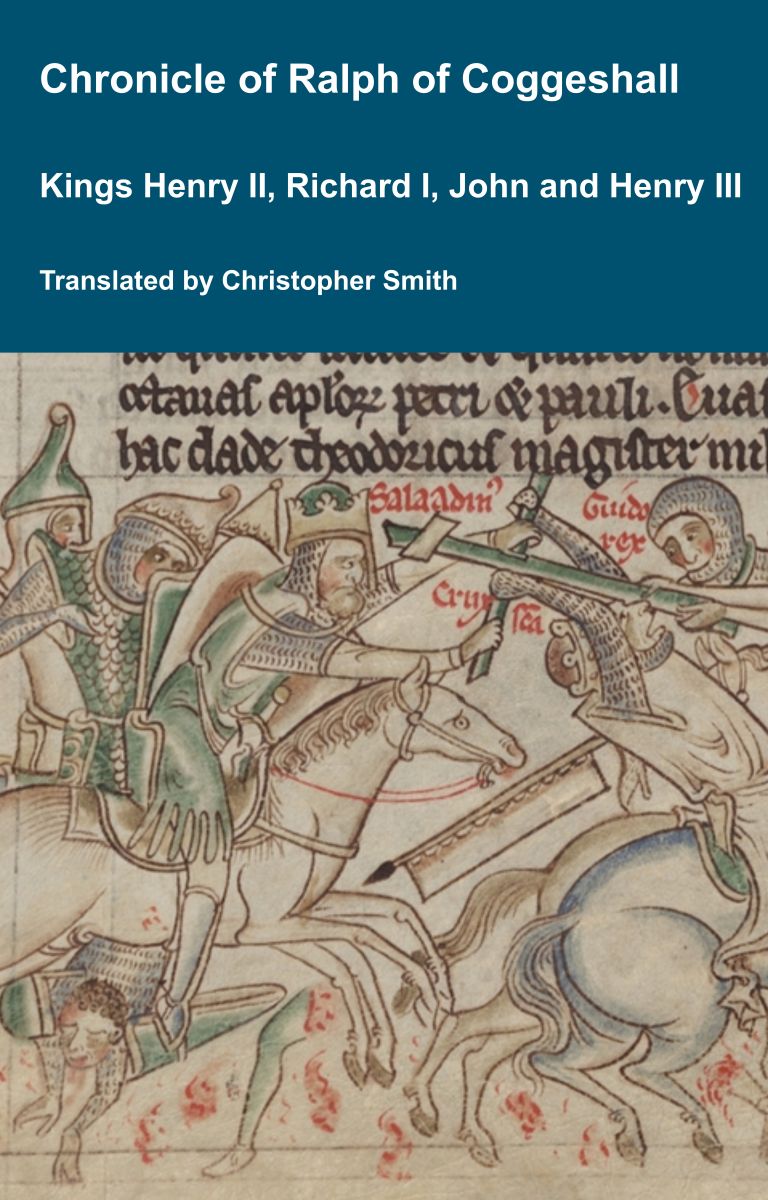
Chronicle of Abbot Ralph of Coggeshall
The Chronicle of Abbot Ralph of Coggeshall (Chronicon Anglicanum) is an indispensable medieval history that brings to life centuries of English and European affairs through the eyes of a learned Cistercian monk. Ralph of Coggeshall, abbot of the Abbey of Coggeshall in Essex in the early 13th century, continued and expanded his community’s chronicle, documenting events from the Norman Conquest of 1066 into the tumultuous reign of King Henry III. Blending eyewitness testimony, careful compilation, and the monastic commitment to record-keeping, this chronicle offers a rare narrative of political intrigue, royal power struggles, and social upheaval in England and beyond. Ralph’s work captures the reigns of pivotal figures such as Richard I and King John, providing invaluable insights into their characters, decisions, and the forces that shaped medieval rule. More than a simple annal, Chronicon Anglicanum conveys the texture of medieval life and governance, making it a rich source for scholars and readers fascinated by English history, monastic authorship, and the shaping of the medieval world.
Available at Amazon in eBook and Paperback format.
 Belsay, Northumberland
 Beukley, Northumberland
 Bothal, Northumberland
 Bradford
 Cambo, Northumberland
 Cambois, Northumberland
 Cockle Park, Northumberland
 Ewesley, Northumberland
 Guidepost, Northumberland
 Hetherton House, Northumberland
 Morpeth, Northumberland
Castle Morpeth is in Northumberland.
The River Blyth rises near Kirkheaton, Northumberland [Map] from where it flows past Bradford [Map], Belsay, Northumberland [Map], Ogle, Northumberland [Map], Kirkley, Northumberland [Map], Horton Grange, Northumberland [Map], Stannington, Northumberland [Map], Bedlington, Northumberland [Map] to Blyth, Northumberland [Map] where it reaches the North Sea.
From Corbridge Roman Fort, Northumberland [Map] Dere Street continues north through Hunnum aka Onnum Roman Fort [Map], where it crosses Hadrian's Wall, Little Whittington, Northumberland [Map], Beukley, Northumberland [Map], Great Swinburne, Northumberland [Map], Fourlaws Roman Camp [Map], Habitancum Roman Fort [Map], Blakehope Roman Fort [Map], High Rochester, Northumberland [Map], Featherwood Roman Camps [Map], Chew Green Roman Camps [Map] where it crosses the River Coquet and into Scotland.
On 7th November 1468 Ralph Ogle 3rd Baron Ogle was born to Owen Ogle 2nd Baron Ogle [aged 28] in Bothal, Northumberland [Map]. He married in or before 1490 his sixth cousin Margaret Gascoigne Baroness Ogle and had issue.
On 18th April 1629 Catherine Ogle 8th Baroness Ogle [aged 59] died at Bothal, Northumberland [Map]. Her son William [aged 36] succeeded 9th Baron Ogle.
St Andrew's Church, Bothal is also in Churches in Northumberland.
St Andrew's Church, Bothal [Map]. Lady Isabella de Vexi (1314) Ralph Lord Ogle (1513) & Lady Margaret Gascoigne. Alabaster. Bothal. Ray State. 1513. May be the same as Alnwick.
On 16th January 1513 Ralph Ogle 3rd Baron Ogle [aged 44] died in Morpeth, Northumberland [Map]. He was buried in St Andrew's Church, Bothal [Map]. His son Robert [aged 23] succeeded 4th Baron Ogle.
The River Blyth rises near Kirkheaton, Northumberland [Map] from where it flows past Bradford [Map], Belsay, Northumberland [Map], Ogle, Northumberland [Map], Kirkley, Northumberland [Map], Horton Grange, Northumberland [Map], Stannington, Northumberland [Map], Bedlington, Northumberland [Map] to Blyth, Northumberland [Map] where it reaches the North Sea.
On or before 30th August 1716, the date he was baptised at St Wilfrid's Church, Kirkharle [Map], Lancelot "Capability" Brown was born to William Brown and Ursula Hall at Kirkharle, Northumberland. His father was land agent to William Loraine 2nd Baronet [aged 58]. His mother was in servvice at Kirkharle Hall, Northumberland. He was educated at Cambo, Northumberland until he was sixteen years. He married 22nd November 1744 Bridget Wayet.


In 1688 the estates of Wallington Hall, Northumberland [Map] were sold by John Fenwick 3rd Baronet [aged 43] to William Blackett 1st Baronet [aged 30] for £4000 and an annuity of £2000 a year. The annuity was to be paid for his lifetime and that of his wife, Mary [aged 35]. Blackett was happy with the deal as he discovered lead on the land and became wealthy.
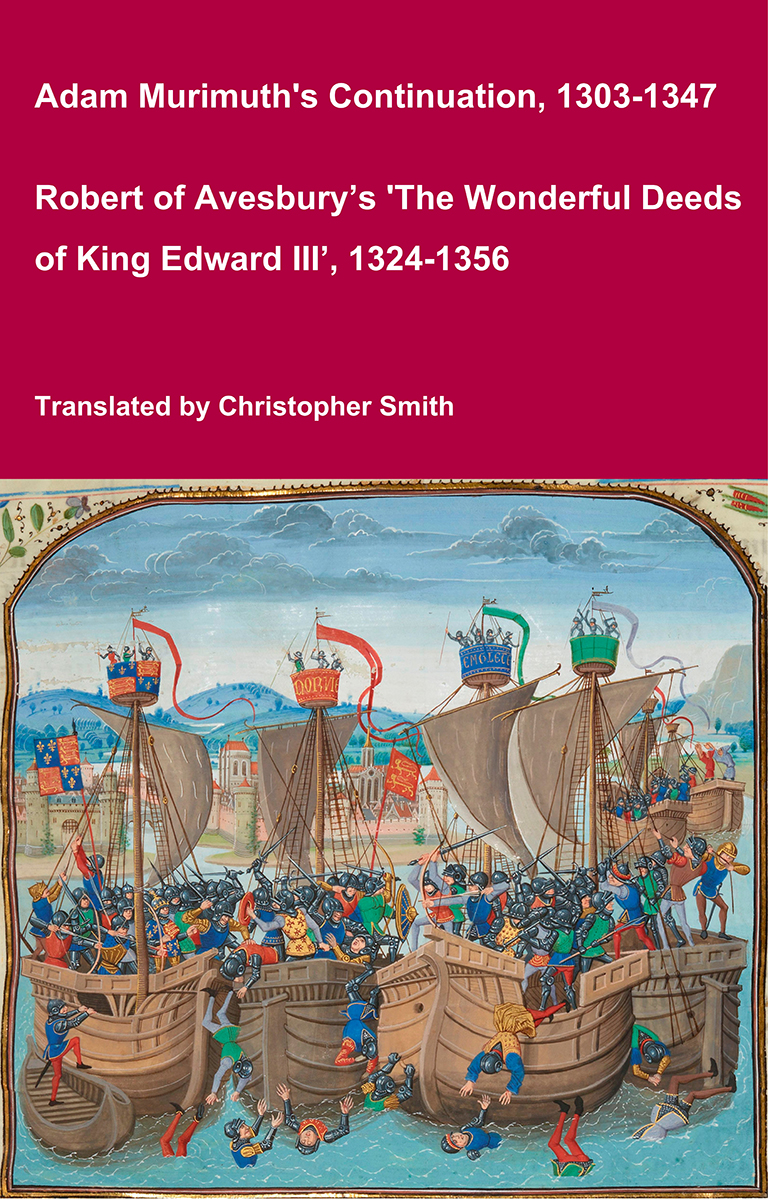
Adam Murimuth's Continuation and Robert of Avesbury’s 'The Wonderful Deeds of King Edward III'
This volume brings together two of the most important contemporary chronicles for the reign of Edward III and the opening phases of the Hundred Years’ War. Written in Latin by English clerical observers, these texts provide a vivid and authoritative window into the political, diplomatic, and military history of fourteenth-century England and its continental ambitions. Adam Murimuth Continuatio's Chronicarum continues an earlier chronicle into the mid-fourteenth century, offering concise but valuable notices on royal policy, foreign relations, and ecclesiastical affairs. Its annalistic structure makes it especially useful for establishing chronology and tracing the development of events year by year. Complementing it, Robert of Avesbury’s De gestis mirabilibus regis Edwardi tertii is a rich documentary chronicle preserving letters, treaties, and official records alongside narrative passages. It is an indispensable source for understanding Edward III’s claim to the French crown, the conduct of war, and the mechanisms of medieval diplomacy. Together, these works offer scholars, students, and enthusiasts a reliable and unembellished account of a transformative period in English and European history. Essential for anyone interested in medieval chronicles, the Hundred Years’ War, or the reign of Edward III.
Available at Amazon in eBook and Paperback format.
In December 1705 William Blackett 1st Baronet [aged 48] died. His son William [aged 15] succeeded 2nd Baronet Blackett of Newcastle upon Tyne in Northumberland and inherited Wallington Hall, Northumberland [Map].
In 1777 Wallington Hall, Northumberland [Map] was substantially rebuilt again, in Palladian style, for Walter Blackett [aged 69] by architect Daniel Garret.
On 14th February 1777 Walter Calverley aka Blackett 2nd Baronet [aged 69] died. Baronet Blackett of Claverley in Yorkshire extinct. He was buried at Calverley. His estates, including Wallington Hall, Northumberland [Map], in line with the will of William Blackett 2nd Baronet, passed to John Trevelyan 4th Baronet [aged 42], the son of Sir Walter's sister Julia [aged 64]; Wallington Hall, Northumberland [Map] remained in the Trevelyan family for over two centuries.

1867 . Thomas Woolner [aged 41]. "Civilization", Wallington Hall, Northumberland [Map].
In 1942 Wallington Hall, Northumberland [Map] was donated to the National Trust by Charles Trevelyan 3rd Baronet [aged 71].
The River Wansbeck rises near Risdale, Northumberland [Map] from where it flows past Kirkwhelpington, Northumberland [Map], Wallington, Northumberland [Map], Low Angerton, Northumberland [Map] to Meldon Park, Northumberland [Map] where it is joined by the Hart Burn.
The River Wansbeck continues through Mitford, Northumberland [Map] where it is joined by the River Font.
After Mitford, Northumberland [Map] the River Wansbeck flows past Morpeth, Northumberland [Map], Guidepost, Northumberland [Map] and Stakeford, Northumberland [Map] before joining the North Sea at Cambois, Northumberland [Map].
On 20th November 1597 Cuthbert Ogle 7th Baron Ogle [aged 57] died at Cockle Park, Northumberland [Map]. Baron Ogle abeyant between his two daughters Joane Ogle Countess Shrewsbury and Waterford [aged 31] and Catherine Ogle 8th Baroness Ogle [aged 27].
The River Font rises near Ewesley, Northumberland [Map] from where it flows past Nunnykirk, Northumberland [Map], Netherwitton, Northumberland [Map], Newton Underwood, Northumberland [Map] to Mitford, Northumberland [Map] where it joins the River Wansbeck.
The River Wansbeck rises near Risdale, Northumberland [Map] from where it flows past Kirkwhelpington, Northumberland [Map], Wallington, Northumberland [Map], Low Angerton, Northumberland [Map] to Meldon Park, Northumberland [Map] where it is joined by the Hart Burn.
The River Wansbeck continues through Mitford, Northumberland [Map] where it is joined by the River Font.
After Mitford, Northumberland [Map] the River Wansbeck flows past Morpeth, Northumberland [Map], Guidepost, Northumberland [Map] and Stakeford, Northumberland [Map] before joining the North Sea at Cambois, Northumberland [Map].
The Hart Burn rises near Harwood, Northumberland [Map] from where it flows past Hetherton House, Northumberland [Map], Scots Gap, Northumberland [Map], Hartburn, Northumberland [Map] to Meldon Park, Northumberland [Map] where it joins the River Wansbeck.
Collectanea by John Leland [1502-1552]. The XXVIth Day of the said Monneth [26th July 1503] the said Qwene departed from the said Place, after the Custome precedent, varey richly and in fayr Aray. And the sayd Mayr conveyd hyr out of the said Towne, and after tuke Lyve of hyr.
Haff a Mylle owt of the said Towne was Syr Hnmfrey Lyde and the Prior of Bryngburn, well apoynted and well horst, to the Nombre of XX Horsys. Their Folks arayd of their Liveray. And a Mylle from the said Towne was in Ordre the Scheryrfe of Northumberlaund, Syr Rawff Evers, in Company of many other Gentylmen, varey well appoynted, their Folks clothed in their Liveray, well monted. And with them wer many honests Folks of the Countre. with Spers and Bowes, in Jackets, to the Nombre of Two hondreth Horsys.
With the sam fayr Company was the said Qwene conveyd to Morpath [Map], and by the Towne passed in fayr Ordre, wher ther was much People; and so she went to the Abbay [Map], where sche was well receyved by th Abbot and Religyous revested, at the Gatt of the Church, with the Crosse. And after the Receyvyng she was conveyd to her Lodgyngs in the said Place for that sam Nyght.
On 16th January 1513 Ralph Ogle 3rd Baron Ogle [aged 44] died in Morpeth, Northumberland [Map]. He was buried in St Andrew's Church, Bothal [Map]. His son Robert [aged 23] succeeded 4th Baron Ogle.
Tudor Tracts Chapter 4. Monday the 29th of August [1547]. All Captains with their bands, that had been mustered, were commanded forward. My Lord's Grace himself did early also then depart the town; dined at Morpeth [Map], twelve miles on the way; and lay that night at Alnwick Castle [Map], with Sir Robert Bowes [aged 55] Knight Lord Warden of the Middle Marches; being twelve miles further. Where neither lacked any store of guests, nor of good cheer to welcome them with; in the provision whereof, a man might note great cost and diligence, and in the spending, a liberal heart.
14th June 1913. Funeral Procession of Emily Wilding Davison [deceased] at Morpeth, Northumberland [Map].


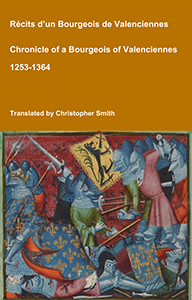
Chronicle of a Bourgeois of Valenciennes
Récits d’un bourgeois de Valenciennes aka The Chronicle of a Bourgeois of Valenciennes is a vivid 14th-century vernacular chronicle written by an anonymous urban chronicler from Valenciennes in the County of Hainaut. It survives in a manuscript that describes local and regional history from about 1253 to 1366, blending chronology, narrative episodes, and eyewitness-style accounts of political, military, and social events in medieval France, Flanders, and the Low Countries. The work begins with a chronological framework of events affecting Valenciennes and its region under rulers such as King Philip VI of France and the shifting allegiances of local nobility. It includes accounts of conflicts, sieges, diplomatic manoeuvres, and the impact of broader struggles like the Hundred Years’ War on urban life in Hainaut. Written from the perspective of a burgher (bourgeois) rather than a monastery or royal court, the chronicle offers a rare lay viewpoint on high politics and warfare, reflecting how merchants, townspeople, and civic institutions experienced the turbulence of the 13th and 14th centuries. Its narrative style combines straightforward reporting of events with moral and civic observations, making it a valuable source for readers interested in medieval urban society, regional politics, and the lived experience of war and governance in pre-modern Europe.
Available at Amazon in eBook and Paperback format.

14th June 1913. The Central News reported:
Emily Wilding Davison's [deceased] funeral procession passing Piccadilly Circus [Map], 14th June 1913. Following her tragic death, Davison was instantly embraced as a martyr to the cause. On 14 June 1913 her body was borne on an open hearse through London to a memorial service at St George's Church, Bloomsbury before being taken by train to Morpeth, Northumberland [Map] for a family funeral. The funeral procession (the last great suffrage march) was organised by fellow suffragette Grace Roe, and the memorial service was presided over by clergy from the Church League for Women's Suffrage.
The River Wansbeck rises near Risdale, Northumberland [Map] from where it flows past Kirkwhelpington, Northumberland [Map], Wallington, Northumberland [Map], Low Angerton, Northumberland [Map] to Meldon Park, Northumberland [Map] where it is joined by the Hart Burn.
The River Wansbeck continues through Mitford, Northumberland [Map] where it is joined by the River Font.
After Mitford, Northumberland [Map] the River Wansbeck flows past Morpeth, Northumberland [Map], Guidepost, Northumberland [Map] and Stakeford, Northumberland [Map] before joining the North Sea at Cambois, Northumberland [Map].

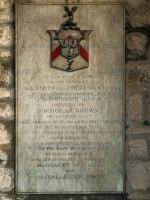
St Bartholomew's Church, Whittingham [Map]. Memorial to Alexander Collingwood of Collingwood House, Morpeth [Map], died 26th September 1795.