

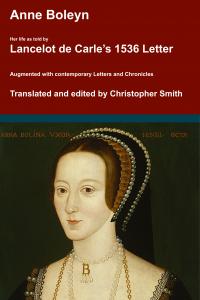
Anne Boleyn. Her Life as told by Lancelot de Carle's 1536 Letter.
In 1536, two weeks after the execution of Anne Boleyn, her brother George and four others, Lancelot du Carle, wrote an extraordinary letter that described Anne's life, and her trial and execution, to which he was a witness. This book presents a new translation of that letter, with additional material from other contemporary sources such as Letters, Hall's and Wriothesley's Chronicles, the pamphlets of Wynkyn the Worde, the Memorial of George Constantyne, the Portuguese Letter and the Baga de Secrets, all of which are provided in Appendices.
Available at Amazon in eBook and Paperback format.
Hounslow is in Middlesex.

John Evelyn's Diary. 17th September 1678. She was, accordingly, carried to Godolphin, in Cornwall, in a hearse with six horses, attended by two coaches of as many, with about thirty of her relations and servants. There accompanied the hearse her husband's brother, Sir William (age 38), two more of his brothers, and three sisters; her husband (age 33) was so overcome with grief, that he was wholly unfit to travel so long a journey, till he was more composed. I went as far as Hounslow with a sad heart; but was obliged to return upon some indispensable affairs. The corpse was ordered to be taken out of the hearse every night, and decently placed in the house, with tapers about it, and her servants attending, to Cornwall; and then was honourably interred in the parish church of Godolphin. This funeral cost not much less than £1,000.
John Evelyn's Diary. 23rd October 1686. Went with the Countess of Sunderland (age 40) to Cranbourne, a lodge and walk of my Lord Godolphin's (age 41) in Windsor park. There was one room in the house spared in the pulling down the old one, because the late Duchess of York was born in it; the rest was built and added to it by Sir George Carteret, Treasurer of the Navy; and since, the whole was purchased by my Lord Godolphin, who spoke to me to go see it, and advise what trees were fit to be cut down to improve the dwelling, being environed with old rotten pollards, which corrupt the air. It stands on a knoll which though insensibly rising, gives it a prospect over the Keep of Windsor, about three miles N. E. of it. The ground is clayey and moist; the water stark naught; the park is pretty; the house tolerable, and gardens convenient. After dinner, we came back to London, having two coaches both going and coming, of six horses apiece, which we changed at Hounslow.


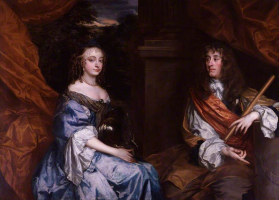
John Evelyn's Diary. 12th July 1688. The camp now began at Hounslow, but the nation was in high discontent.
On 21st February 1919 Sidney Spencer (age 28) died at a Military Hospital in Hounslow. He was buried at St Andrews Church, Barnwell [Map]. Service No. 3/8575. 3rd Bn. Northamptonshire Regiment transf. to (464013), 660th Agricultural Coy. Labour Corps.
Sidney Spencer: Around 1891 he was born.


On 14th April 1967 the Jimi Hendrix Experience played the Ricky Tick Club at 1a High Street.
Around April 1497 Cornish rose in rebellion against taxes being raised by King Henry VII of England and Ireland (age 40) to support his wars against Scotland and against changes to the operation and privileges of the Cornish tin mining industry. The rebel army of 15,000 sought to replace Henry's ministers who they saw as responsible for the taxation: Cardinal John Morton (age 77) and Reginald Bray (age 57), the Chancellor of the Duchy of Lancaster. The army travelled from Cornwall through Devon and Somerset attempting, unsuccessfully, to recruit more men. At Wells, Somerset [Map] they were joined by James Tuchet 7th Baron Audley, 4th Baron Tuchet (age 34) who took on command. The rebel army then travelled through Salisbury and Winchester, Hampshire [Map].
When Henry became aware of the rebel army he diverted his main army led by Giles Daubeney 1st Baron Daubeney (age 46) to meet the rebels. Daubeny's army camped at Hounslow Heath [Map] on 13th June 1497.


On 1st August 1603 John Townshend (age 35) was killed in a duel on horseback with Matthew Browne (age 40) at Hounslow Heath [Map].
Matthew Browne died the following day.
John Evelyn's Diary. 29th June 1678. Returned with my Lord (age 60) by Hounslow Heath [Map], where we saw the newly raised army encamped, designed against France, in pretense, at least; but which gave umbrage to the Parliament. His Majesty (age 48) and a world of company were in the field, and the whole army in battalia; a very glorious sight. Now were brought into service a new sort of soldiers, called Grenadiers, who were dexterous in flinging hand grenades, everyone having a pouch full; they had furred caps with coped crowns like Janizaries, which made them look very fierce, and some had long hoods hanging down behind, as we picture fools. Their clothing being likewise piebald, yellow and red.


John Evelyn's Diary. 2nd June 1686. Such storms, raine and foul weather, seldom known at this time of the yeare. The camp at Hounslow Heath [Map], from sicknesse and other inconveniences of weather, forc'd to retire to quarters; ye storms being succeeded by excessive hot weather, many grew sick. Greate feasting there, especialy in Lord Dunbarton's (age 51) quarters. There were many jealousies and discourses of what was the meaning of this incampment. A Seale this day, mostly pardons and discharges of Kn* Baronets fees, wch having ben pass'd over for so many yeares, did greatly dis oblige several families who had serv'd his Ma* (age 52). Lord Tirconnell (age 56) gon to Ireland, with greate powers and commissions, giving as much cause of talke as the camp, especialy 19 new privy councillors and judges being now made, amongst wch but three Protestants, and Tirconnell made Generall.


John Evelyn's Diary. 6th June 1687. The Camp was now again pitched at Hounslow [Map], the Commanders profusely vying in the expense and magnificence of tents.
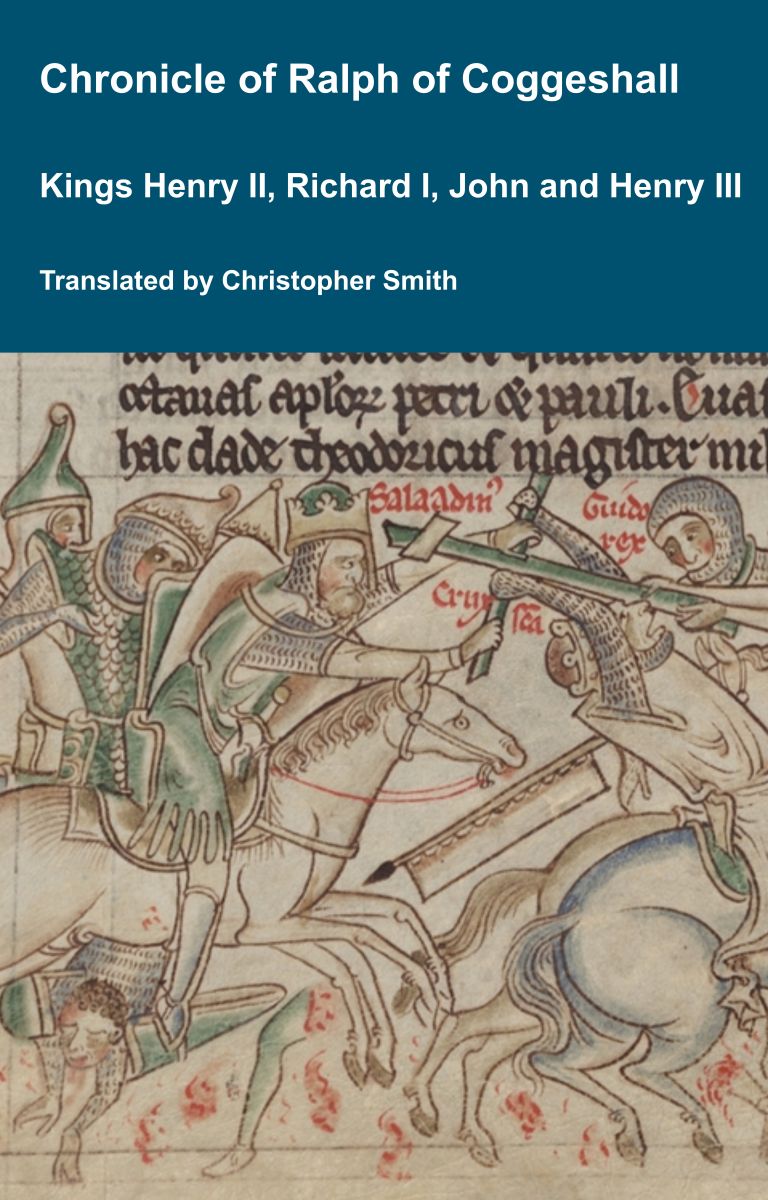
Chronicle of Abbot Ralph of Coggeshall
The Chronicle of Abbot Ralph of Coggeshall (Chronicon Anglicanum) is an indispensable medieval history that brings to life centuries of English and European affairs through the eyes of a learned Cistercian monk. Ralph of Coggeshall, abbot of the Abbey of Coggeshall in Essex in the early 13th century, continued and expanded his community’s chronicle, documenting events from the Norman Conquest of 1066 into the tumultuous reign of King Henry III. Blending eyewitness testimony, careful compilation, and the monastic commitment to record-keeping, this chronicle offers a rare narrative of political intrigue, royal power struggles, and social upheaval in England and beyond. Ralph’s work captures the reigns of pivotal figures such as Richard I and King John, providing invaluable insights into their characters, decisions, and the forces that shaped medieval rule. More than a simple annal, Chronicon Anglicanum conveys the texture of medieval life and governance, making it a rich source for scholars and readers fascinated by English history, monastic authorship, and the shaping of the medieval world.
Available at Amazon in eBook and Paperback format.
In 1654 William Waller (age 57) bought at Osterley Park Hounslow.
Henry Machyn's Diary. 2nd March 1557. The ij day of Marche rod from the Towre [Map] my lord Sturtun (age 37) with ser Robart Oxinbryge (age 49) the leyff-tenantt, and iiij of my lordes servandes, and with serten of the gard, thrugh London, and so to Honsley, and ther thay lay alle nyght at the seyne of the Angell, and the morow after to Staynes, and so to Bassyng-stoke, and so to Sturtun, to sufer deth, and ys iiij men; and to more men for robyng of a ryche farmer in that contrey, to be hangyd, for ther was layd by the sam farmer a-for the consell that a knyght and ys men dyd rob him, and the knyght was layd in the Flett tylle yt plessyd God that the theyff was taken; the knyght ys nam ys callyd ser [blank] Wrothun knyght.
Note. P. 127. last line. For Sturton read Salisbury, as in the next page.