


Chronicle of a Bourgeois of Valenciennes
Récits d’un bourgeois de Valenciennes aka The Chronicle of a Bourgeois of Valenciennes is a vivid 14th-century vernacular chronicle written by an anonymous urban chronicler from Valenciennes in the County of Hainaut. It survives in a manuscript that describes local and regional history from about 1253 to 1366, blending chronology, narrative episodes, and eyewitness-style accounts of political, military, and social events in medieval France, Flanders, and the Low Countries. The work begins with a chronological framework of events affecting Valenciennes and its region under rulers such as King Philip VI of France and the shifting allegiances of local nobility. It includes accounts of conflicts, sieges, diplomatic manoeuvres, and the impact of broader struggles like the Hundred Years’ War on urban life in Hainaut. Written from the perspective of a burgher (bourgeois) rather than a monastery or royal court, the chronicle offers a rare lay viewpoint on high politics and warfare, reflecting how merchants, townspeople, and civic institutions experienced the turbulence of the 13th and 14th centuries. Its narrative style combines straightforward reporting of events with moral and civic observations, making it a valuable source for readers interested in medieval urban society, regional politics, and the lived experience of war and governance in pre-modern Europe.
Available at Amazon in eBook and Paperback format.
Lancashire is in North-West England.
The River Wyre rises near Tarnbrook, Lancashire [Map] from where it flows under Stoops Bridge, Abbeystead [Map], past Dolphinholme, Lancashire [Map], Garstang, Lancashire [Map], St Michael's on Wyre, Lancashire [Map] to Fleetwood, Lancashire [Map] where it joins the Irish Sea.
On 26th September 1882 Walter Marsden was born to John Marsden at Church, Lancashire. He was baptised on 18th January 1883 at Church, Lancashire. His father's occupation on the 1891 census is Blacksmith. He married December 1916 Hilda Beatrice Hoare.
Church War Memorial is also in Churches in Lancashire.
Church War Memorial [Map]. War memorial, c. 1920. White ashlar, with Sculpture. On a short plinth a draped figure standing with arms spread on top of a tapered slab in which it is partly embedded. Lettering on back of slab. Sculpted by Walter Marsden (age 37).


In 1429 William Atherton was born to William Atherton (age 24) and Margaret Byron (age 17) at Atherton, Lancashire.
Around 1438 Nicholas Atherton was born to William Atherton (age 33) and Margaret Byron (age 26) at Atherton, Lancashire.
Around 1450 William Atherton (age 45) died at Atherton, Lancashire.
In 1455 Thomas Ratclyffe (age 64) died at Barton Alkrington, Lancashire.
The History of William Marshal was commissioned by his son shortly after William’s death in 1219 to celebrate the Marshal’s remarkable life; it is an authentic, contemporary voice. The manuscript was discovered in 1861 by French historian Paul Meyer. Meyer published the manuscript in its original Anglo-French in 1891 in two books. This book is a line by line translation of the first of Meyer’s books; lines 1-10152. Book 1 of the History begins in 1139 and ends in 1194. It describes the events of the Anarchy, the role of William’s father John, John’s marriages, William’s childhood, his role as a hostage at the siege of Newbury, his injury and imprisonment in Poitou where he met Eleanor of Aquitaine and his life as a knight errant. It continues with the accusation against him of an improper relationship with Margaret, wife of Henry the Young King, his exile, and return, the death of Henry the Young King, the rebellion of Richard, the future King Richard I, war with France, the death of King Henry II, and the capture of King Richard, and the rebellion of John, the future King John. It ends with the release of King Richard and the death of John Marshal.
Available at Amazon in eBook and Paperback format.
In 1330 Thomas Booth was born at Barton, Lancashire.
Around 1354 John Booth of Barton in Lancashire was born to Thomas Booth (age 24) at Barton, Lancashire. He married in or before 1382 Joanna Trafford and had issue.
In 1370 Thomas Booth (age 40) died at Barton, Lancashire.
Around 1382 Thomas Booth was born to John Booth of Barton in Lancashire (age 28) and Joanna Trafford (age 24) at Barton, Lancashire.
Around 1385 Henry Booth of Harleston in Derbyshire was born to John Booth of Barton in Lancashire (age 31) and Joanna Trafford (age 27) at Barton, Lancashire. He married in or before 1414 Isabel Fynderne and had issue.
In 1396 Roger Booth was born to John Booth of Barton in Lancashire (age 42) at Barton, Lancashire.
On 21st December 1515 George Booth was born to George Booth (age 24) at Barton, Lancashire.
On 21st December 1515 Anne Booth was born to George Booth (age 24) at Barton, Lancashire.
On 20th September 1398 Thomas Boteler 4th Baron Sudeley (age 39) died at Bewsey, Lancashire. His son John (age 13) succeeded 5th Baron Sudeley.
Blackburn Cathedral is also in Cathedrals in England.
Abbot John Whethamstede’s Chronicle of the Abbey of St Albans
Abbot John Whethamstede's Register aka Chronicle of his second term at the Abbey of St Albans, 1451-1461, is a remarkable text that describes his first-hand experience of the beginning of the Wars of the Roses including the First and Second Battles of St Albans, 1455 and 1461, respectively, their cause, and their consequences, not least on the Abbey itself. His text also includes Loveday, Blore Heath, Northampton, the Act of Accord, Wakefield, and Towton, and ends with the Coronation of King Edward IV. In addition to the events of the Wars of the Roses, Abbot John, or his scribes who wrote the Chronicle, include details in the life of the Abbey such as charters, letters, land exchanges, visits by legates, and disputes, which provide a rich insight into the day-to-day life of the Abbey, and the challenges faced by its Abbot.
Available at Amazon in eBook and Paperback format.
Blackburn Cathedral, the Cathedral Church of Saint Mary the Virgin with Saint Paul, was raised to Cathedral status in 1926.
On or before 5th December 1652, the date she was baptised at St Mary the Virgin Church, Blackburn, Mary Yates was born to William Yates of Stanley House, Blackburn. She married 24th January 1671 Oswald Mosley and had issue.
On 24th January 1671 Oswald Mosley (age 31) and Mary Yates (age 18) were married at St Mary the Virgin Church, Blackburn.
On 13th May 1460 Margaret Molyneux (age 44) died at Bradley, Lancashire.
In 1560 Thomas Gerard 1st Baronet was born to Thomas Gerard of Bryn (age 25) at Bryn, Lancashire.
Around 1584 Thomas Gerard 2nd Baronet was born to Thomas Gerard 1st Baronet (age 24) at Bryn, Lancashire. He married in or before 1612 Frances Molyneux, daughter of Richard Molyneux 1st Baronet and Frances Gerard Lady Molyneux, and had issue.
The River Hodder rises near the Cross of Greet, Lancashire [Map] from where it flows under the Cross of Greet Bridge [Map], through Stockes Reservoir [Map] to Slaidburn, Lancashire [Map]. From Slaidburn it flows past Newton-in-Bowland, Lancashire [Map], under Knowlmere Bridge, Lancashire [Map], past Dunsop Bridge, Lancashire [Map] where it is joined by the River Dunsop and shortly after by the Langden Brook, under Burnholme Bridge, Lancashire [Map], past Whitewell, Lancashire [Map], under Doeford Bridge, Lancashire [Map], High Hodder Brodge, Lancashire [Map] and Low Hodder Bridge, Lancashire [Map] after which it joins the River Ribble near Great Mitton, Lancashire [Map].
In 1508 Thomas Ratclyffe was born to Thomas Radclyffe (age 25) at Bury, Lancashire.
The River Mersey is formed from the River Goyt and River Tame which converge at Stockport, Cheshire [Map] from where it flows through Carrington, Lancashire [Map], Warrington, Cheshire [Map], Widnes, Lancashire [Map] and Runcorn, Cheshire [Map] to Liverpool, Lancashire [Map] after which it joins the Irish Sea.
Chronicle of a Bourgeois of Valenciennes
Récits d’un bourgeois de Valenciennes aka The Chronicle of a Bourgeois of Valenciennes is a vivid 14th-century vernacular chronicle written by an anonymous urban chronicler from Valenciennes in the County of Hainaut. It survives in a manuscript that describes local and regional history from about 1253 to 1366, blending chronology, narrative episodes, and eyewitness-style accounts of political, military, and social events in medieval France, Flanders, and the Low Countries. The work begins with a chronological framework of events affecting Valenciennes and its region under rulers such as King Philip VI of France and the shifting allegiances of local nobility. It includes accounts of conflicts, sieges, diplomatic manoeuvres, and the impact of broader struggles like the Hundred Years’ War on urban life in Hainaut. Written from the perspective of a burgher (bourgeois) rather than a monastery or royal court, the chronicle offers a rare lay viewpoint on high politics and warfare, reflecting how merchants, townspeople, and civic institutions experienced the turbulence of the 13th and 14th centuries. Its narrative style combines straightforward reporting of events with moral and civic observations, making it a valuable source for readers interested in medieval urban society, regional politics, and the lived experience of war and governance in pre-modern Europe.
Available at Amazon in eBook and Paperback format.
On 11th January 1800 Charles Nevinson Howard (age 24) died in a shooting accident at Holker Hall, Cartmel.
On 11th April 1879 Charles Wentworth George Howard (age 65) died at Holker Hall, Cartmel.
On 13th August 1460 Peter Gerard of Bryn Kings was born to Thomas Gerard (age 29) and Cecily Fouleshurst (age 17) at Brindle, Chorley. He married 1476 his half fourth cousin once removed Margaret Stanley and had issue.
On 20th June 1494 Peter Gerard of Bryn Kings (age 33) died at Brindle, Chorley.
Around 1415 Adam Clayton was born at Clayton, Lancashire.
Around 1412 Alice Stanley was born to John Stanley (age 26) and Elizabeth Harrington (age 26) at Clifton, Lancashire. She married Thomas Dutton.
The River Hodder rises near the Cross of Greet, Lancashire [Map] from where it flows under the Cross of Greet Bridge [Map], through Stockes Reservoir [Map] to Slaidburn, Lancashire [Map]. From Slaidburn it flows past Newton-in-Bowland, Lancashire [Map], under Knowlmere Bridge, Lancashire [Map], past Dunsop Bridge, Lancashire [Map] where it is joined by the River Dunsop and shortly after by the Langden Brook, under Burnholme Bridge, Lancashire [Map], past Whitewell, Lancashire [Map], under Doeford Bridge, Lancashire [Map], High Hodder Brodge, Lancashire [Map] and Low Hodder Bridge, Lancashire [Map] after which it joins the River Ribble near Great Mitton, Lancashire [Map].
The Cross of Greet, Lancashire [Map] was a stone cross that was the ancient boundary point and watershed between the medieval lordships of Bowland and Burton-in-Lonsdale, Clitheroe and Hornby.
William of Worcester's Chronicle of England
William of Worcester, born around 1415, and died around 1482 was secretary to John Fastolf, the renowned soldier of the Hundred Years War, during which time he collected documents, letters, and wrote a record of events. Following their return to England in 1440 William was witness to major events. Twice in his chronicle he uses the first person: 1. when writing about the murder of Thomas, 7th Baron Scales, in 1460, he writes '… and I saw him lying naked in the cemetery near the porch of the church of St. Mary Overie in Southwark …' and 2. describing King Edward IV's entry into London in 1461 he writes '… proclaimed that all the people themselves were to recognize and acknowledge Edward as king. I was present and heard this, and immediately went down with them into the city'. William’s Chronicle is rich in detail. It is the source of much information about the Wars of the Roses, including the term 'Diabolical Marriage' to describe the marriage of Queen Elizabeth Woodville’s brother John’s marriage to Katherine, Dowager Duchess of Norfolk, he aged twenty, she sixty-five or more, and the story about a paper crown being placed in mockery on the severed head of Richard, 3rd Duke of York.
Available at Amazon in eBook and Paperback format.
The River Hodder rises near the Cross of Greet, Lancashire [Map] from where it flows under the Cross of Greet Bridge [Map], through Stockes Reservoir [Map] to Slaidburn, Lancashire [Map]. From Slaidburn it flows past Newton-in-Bowland, Lancashire [Map], under Knowlmere Bridge, Lancashire [Map], past Dunsop Bridge, Lancashire [Map] where it is joined by the River Dunsop and shortly after by the Langden Brook, under Burnholme Bridge, Lancashire [Map], past Whitewell, Lancashire [Map], under Doeford Bridge, Lancashire [Map], High Hodder Brodge, Lancashire [Map] and Low Hodder Bridge, Lancashire [Map] after which it joins the River Ribble near Great Mitton, Lancashire [Map].
In 1364 John Croft was born to John Richard Croft (age 32) in Dalton in Furness, Lancashire.
In 1452 Nicholas Croft (age 62) died in Dalton in Furness, Lancashire.
On 26th December 1734 George Romney was born in Beckside, Dalton in Furness.
The River Tame rises from a number of reservoirs on Saddleworth Moor near Denshaw, Lancashire [Map] from where it flows past Delph, Lancashire [Map], Uppermill, Lancashire [Map], Mossley, Lancashire [Map], Stalybridge, Lancashire [Map], Ashton-under-Lyne, Lancashire [Map], Woodley, Lancashire [Map], Reddish Vale, Lancashire [Map] before joining the River Goyt to form the River Mersey.
The River Tame rises from a number of reservoirs on Saddleworth Moor near Denshaw, Lancashire [Map] from where it flows past Delph, Lancashire [Map], Uppermill, Lancashire [Map], Mossley, Lancashire [Map], Stalybridge, Lancashire [Map], Ashton-under-Lyne, Lancashire [Map], Woodley, Lancashire [Map], Reddish Vale, Lancashire [Map] before joining the River Goyt to form the River Mersey.

On 21st May 1825 Rachel Howard (age 9) died. She was buried at St Lawrence's Church, Denton.
Rachel Howard: On 11th October 1815 she was born to John Howard and Elizabeth m Howard.

On 13th July 1880 Emma Howard (age 61) died. She was buried at St Lawrence's Church, Denton.
Emma Howard: On 20th September 1818 she was born to John Howard and Elizabeth m Howard.
The History of William Marshal was commissioned by his son shortly after William’s death in 1219 to celebrate the Marshal’s remarkable life; it is an authentic, contemporary voice. The manuscript was discovered in 1861 by French historian Paul Meyer. Meyer published the manuscript in its original Anglo-French in 1891 in two books. This book is a line by line translation of the first of Meyer’s books; lines 1-10152. Book 1 of the History begins in 1139 and ends in 1194. It describes the events of the Anarchy, the role of William’s father John, John’s marriages, William’s childhood, his role as a hostage at the siege of Newbury, his injury and imprisonment in Poitou where he met Eleanor of Aquitaine and his life as a knight errant. It continues with the accusation against him of an improper relationship with Margaret, wife of Henry the Young King, his exile, and return, the death of Henry the Young King, the rebellion of Richard, the future King Richard I, war with France, the death of King Henry II, and the capture of King Richard, and the rebellion of John, the future King John. It ends with the release of King Richard and the death of John Marshal.
Available at Amazon in eBook and Paperback format.
The River Hodder rises near the Cross of Greet, Lancashire [Map] from where it flows under the Cross of Greet Bridge [Map], through Stockes Reservoir [Map] to Slaidburn, Lancashire [Map]. From Slaidburn it flows past Newton-in-Bowland, Lancashire [Map], under Knowlmere Bridge, Lancashire [Map], past Dunsop Bridge, Lancashire [Map] where it is joined by the River Dunsop and shortly after by the Langden Brook, under Burnholme Bridge, Lancashire [Map], past Whitewell, Lancashire [Map], under Doeford Bridge, Lancashire [Map], High Hodder Brodge, Lancashire [Map] and Low Hodder Bridge, Lancashire [Map] after which it joins the River Ribble near Great Mitton, Lancashire [Map].
The River Wyre rises near Tarnbrook, Lancashire [Map] from where it flows under Stoops Bridge, Abbeystead [Map], past Dolphinholme, Lancashire [Map], Garstang, Lancashire [Map], St Michael's on Wyre, Lancashire [Map] to Fleetwood, Lancashire [Map] where it joins the Irish Sea.
The River Hodder rises near the Cross of Greet, Lancashire [Map] from where it flows under the Cross of Greet Bridge [Map], through Stockes Reservoir [Map] to Slaidburn, Lancashire [Map]. From Slaidburn it flows past Newton-in-Bowland, Lancashire [Map], under Knowlmere Bridge, Lancashire [Map], past Dunsop Bridge, Lancashire [Map] where it is joined by the River Dunsop and shortly after by the Langden Brook, under Burnholme Bridge, Lancashire [Map], past Whitewell, Lancashire [Map], under Doeford Bridge, Lancashire [Map], High Hodder Brodge, Lancashire [Map] and Low Hodder Bridge, Lancashire [Map] after which it joins the River Ribble near Great Mitton, Lancashire [Map].
In 1529 Thomas Grosvenor was born to Thomas Grosvenor at Eccles, Lancashire [Map].
On 27th January 1562 Richard Grosvenor of Eaton was born to Thomas Grosvenor (age 33) at Eccles, Lancashire [Map]. He married before 9th January 1585 Christiana Brooke and had issue.
In 1639 Dorothy Egerton (age 74) died at Eccles, Lancashire [Map].
On 28th November 1324 Joan Gernet (age 54) died at Eccleston, Lancashire.
On 27th September 1514 Richard Southwell (age 85) died at Everton, Lancashire.
Abbot John Whethamstede’s Chronicle of the Abbey of St Albans
Abbot John Whethamstede's Register aka Chronicle of his second term at the Abbey of St Albans, 1451-1461, is a remarkable text that describes his first-hand experience of the beginning of the Wars of the Roses including the First and Second Battles of St Albans, 1455 and 1461, respectively, their cause, and their consequences, not least on the Abbey itself. His text also includes Loveday, Blore Heath, Northampton, the Act of Accord, Wakefield, and Towton, and ends with the Coronation of King Edward IV. In addition to the events of the Wars of the Roses, Abbot John, or his scribes who wrote the Chronicle, include details in the life of the Abbey such as charters, letters, land exchanges, visits by legates, and disputes, which provide a rich insight into the day-to-day life of the Abbey, and the challenges faced by its Abbot.
Available at Amazon in eBook and Paperback format.

On 8th February 1842 John Brunner 1st Baronet was born to Reverend John Brunner (age 41) at Everton, Lancashire. He married 14th June 1864 Salome Davies and had issue.
Around 1346 Nicholas Harrington of Hornby was born to John Harrington of Farleton (age 46) and Katherine Banastre at Farleton, Lancashire. He married (1) before 1364 Isabel English and had issue (2) before August 1397 Joan or Jennet Venables.
Around 1373 William Harrington was born to Nicholas Harrington of Hornby (age 27) and Isabel English at Farleton, Lancashire. He married Margaret Neville and had issue.
Before February 1404 Nicholas Harrington of Hornby (age 58) died at Farleton, Lancashire.
The River Wyre rises near Tarnbrook, Lancashire [Map] from where it flows under Stoops Bridge, Abbeystead [Map], past Dolphinholme, Lancashire [Map], Garstang, Lancashire [Map], St Michael's on Wyre, Lancashire [Map] to Fleetwood, Lancashire [Map] where it joins the Irish Sea.
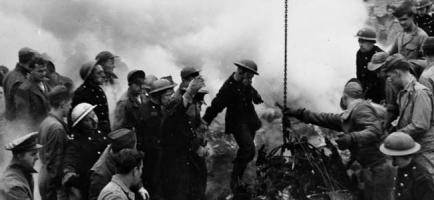
On 23rd August 1944 a United States Army Air Forces (USAAF) Consolidated B-24 Liberator crashed during a test flight into the centre of the village of Freckleton, Lancashire, England, killing all three crewmen aboard the aircraft and 58 individuals on the ground, including 38 children aged four to six.
On approach from, the pilot First Lieutenant John Bloemendal reported to the control tower that he was aborting landing at the last moment and would perform a go-around. Shortly afterwards, and out of sight of the second aircraft, the aircraft hit the village of Freckleton, just east of the airfield.
Already flying very low to the ground and with wings near vertical, the B-24's right wing tip hit a tree-top and was ripped away as it impacted with the corner of a building. The rest of the wing continued, ploughing along the ground and through a hedge. The fuselage partly demolished three houses and the Sad Sack Snack Bar that catered specifically for American servicemen from the airbase, before crossing Lytham Road and bursting into flames.
After part of the aircraft hit the infants' wing of Freckleton Holy Trinity School, fuel from the ruptured tanks ignited and produced another sea of flames.
52 people (the three crew members on the B-24, 34 children, one teacher, six American servicemen, one RAF airman and seven Snack Bar staff) died instantly, with nine others (four children, one teacher, an American serviceman and three RAF airmen) later dying in hospital from their injuries.



Around 1130 Hervey Butler was born to Hervey de Clare (age 30) at Weeton Fylde, Lancashire. He married Maud Valoignes and had issue.
In 1189 Hervey de Clare (age 89) died at Weeton Fylde, Lancashire.
The River Wyre rises near Tarnbrook, Lancashire [Map] from where it flows under Stoops Bridge, Abbeystead [Map], past Dolphinholme, Lancashire [Map], Garstang, Lancashire [Map], St Michael's on Wyre, Lancashire [Map] to Fleetwood, Lancashire [Map] where it joins the Irish Sea.
Chronicle of a Bourgeois of Valenciennes
Récits d’un bourgeois de Valenciennes aka The Chronicle of a Bourgeois of Valenciennes is a vivid 14th-century vernacular chronicle written by an anonymous urban chronicler from Valenciennes in the County of Hainaut. It survives in a manuscript that describes local and regional history from about 1253 to 1366, blending chronology, narrative episodes, and eyewitness-style accounts of political, military, and social events in medieval France, Flanders, and the Low Countries. The work begins with a chronological framework of events affecting Valenciennes and its region under rulers such as King Philip VI of France and the shifting allegiances of local nobility. It includes accounts of conflicts, sieges, diplomatic manoeuvres, and the impact of broader struggles like the Hundred Years’ War on urban life in Hainaut. Written from the perspective of a burgher (bourgeois) rather than a monastery or royal court, the chronicle offers a rare lay viewpoint on high politics and warfare, reflecting how merchants, townspeople, and civic institutions experienced the turbulence of the 13th and 14th centuries. Its narrative style combines straightforward reporting of events with moral and civic observations, making it a valuable source for readers interested in medieval urban society, regional politics, and the lived experience of war and governance in pre-modern Europe.
Available at Amazon in eBook and Paperback format.
In 1391 Thomas Ratclyffe was born at Winmarleigh, Garstang.
Around 1539 Anne Ratclyffe was born to Thomas Ratclyffe (age 31) at Winmarleigh, Garstang. She married in or before 1555 Gilbert Gerard and had issue.
The River Ribble rises near Gearstones, North Yorkshire [Map], being formed from the Thorn Gill, from where it flows past Selside, North Yorkshire [Map] and Horton in Ribblesdale, North Yorkshire [Map], under Helwith Bridge, North Yorkshire [Map], over Stainforth Force [Map], through Settle, North Yorkshire [Map], past Paythorne, Lancashire [Map], Sawley, Lancashire [Map], Clitheroe, Lancashire [Map] to Great Mitton, Lancashire [Map] where it is joined by the River Hodder. It continues under Ribchester Bridge, Lancashire [Map] past Ribchester Roman Fort, Lancashire [Map] to Preston, Lancashire [Map] after which it joins the Irish Sea.
The River Lune rises near Newbiggin-on-Lune, Westmoreland [Map] from where it flows past Kelleth, Westmoreland [Map], Tebay, Westmoreland [Map], Beckfoot, Westmoreland [Map], Firbank, Westmoreland [Map], Hallbeck, Westmoreland [Map], Middleton, Westmoreland [Map], Kirkby Lonsdale, Westmoreland [Map], Gressingham, Lancashire [Map] to Lancaster, Lancashire [Map] after which it joins the Irish Sea.
Around 1360 Philip Clifford was born to Roger Clifford 5th Baron Clifford (age 26) and Maud Beauchamp Baroness Clifford (age 25) at Groby, Lancashire.
Around 1480 Peter Legh was born to Peter Leigh (age 25) and Eleanor Savage (age 28) at Haydock, Lancashire. He married 1503 his second cousin twice removed Jane Gerard and had issue.
On 12th October 1853 Dudley Fitzgerald De Ros 23rd Baron Ros Helmsley (age 26) and Elizabeth Egerton Baroness Ros of Helmsley (age 21) were married at Heaton, Lancashire. She the daughter of Thomas Grosvenor 2nd Earl Wilton (age 53) and Mary Smith-Stanley Countess Wilton (age 52).
On 25th August 1925 the Heywood War Memorial [Map] was unveiled by the Very Reverend The Dean of Manchester. The memorial was sculpted by Walter Marsden (age 42).


The History of William Marshal was commissioned by his son shortly after William’s death in 1219 to celebrate the Marshal’s remarkable life; it is an authentic, contemporary voice. The manuscript was discovered in 1861 by French historian Paul Meyer. Meyer published the manuscript in its original Anglo-French in 1891 in two books. This book is a line by line translation of the first of Meyer’s books; lines 1-10152. Book 1 of the History begins in 1139 and ends in 1194. It describes the events of the Anarchy, the role of William’s father John, John’s marriages, William’s childhood, his role as a hostage at the siege of Newbury, his injury and imprisonment in Poitou where he met Eleanor of Aquitaine and his life as a knight errant. It continues with the accusation against him of an improper relationship with Margaret, wife of Henry the Young King, his exile, and return, the death of Henry the Young King, the rebellion of Richard, the future King Richard I, war with France, the death of King Henry II, and the capture of King Richard, and the rebellion of John, the future King John. It ends with the release of King Richard and the death of John Marshal.
Available at Amazon in eBook and Paperback format.
The River Hodder rises near the Cross of Greet, Lancashire [Map] from where it flows under the Cross of Greet Bridge [Map], through Stockes Reservoir [Map] to Slaidburn, Lancashire [Map]. From Slaidburn it flows past Newton-in-Bowland, Lancashire [Map], under Knowlmere Bridge, Lancashire [Map], past Dunsop Bridge, Lancashire [Map] where it is joined by the River Dunsop and shortly after by the Langden Brook, under Burnholme Bridge, Lancashire [Map], past Whitewell, Lancashire [Map], under Doeford Bridge, Lancashire [Map], High Hodder Brodge, Lancashire [Map] and Low Hodder Bridge, Lancashire [Map] after which it joins the River Ribble near Great Mitton, Lancashire [Map].
Around 1510 Margaret Holcroft was born to John Holcroft (age 14) in Holcroft, Lancashire. She married in or before 1520 James Gerard of Astley and had issue.
Around 1511 John Holcroft was born to John Holcroft (age 15) in Holcroft, Lancashire.
In 1505 Thomas Holcroft was born to John Holcroft (age 35) in Holcroft Hall, Lancashire.
On 1st August 1364 Robert Pembridge (age 50) died at Holland, Lancashire.
St Michael's Church, Kirkham is also in Churches in Lancashire.
On 15th December 1657 Thomas Clifton (age 51) died. He was buried at St Michael's Church, Kirkham [Map] on 17th December 1657.
The River Hodder rises near the Cross of Greet, Lancashire [Map] from where it flows under the Cross of Greet Bridge [Map], through Stockes Reservoir [Map] to Slaidburn, Lancashire [Map]. From Slaidburn it flows past Newton-in-Bowland, Lancashire [Map], under Knowlmere Bridge, Lancashire [Map], past Dunsop Bridge, Lancashire [Map] where it is joined by the River Dunsop and shortly after by the Langden Brook, under Burnholme Bridge, Lancashire [Map], past Whitewell, Lancashire [Map], under Doeford Bridge, Lancashire [Map], High Hodder Brodge, Lancashire [Map] and Low Hodder Bridge, Lancashire [Map] after which it joins the River Ribble near Great Mitton, Lancashire [Map].
On 5th October 1396 Richard Molyneux was born to Richard Molyneux IV Lord of Sefton at Sefton, Lardbrook. He married (1) 1415 Helen Harrington and had issue (2) after 16th June 1422 Joan aka Jane Haydock and had issue.
In 1416 Margaret Molyneux was born to Richard Molyneux (age 19) and Helen Harrington (age 18) at Sefton, Lardbrook. She married (1) Adam Clayton (2) William Bulkeley (3) before 1433 Piers Legh and had issue.
Jean de Waurin's Chronicle of England Volume 6 Books 3-6: The Wars of the Roses
Jean de Waurin was a French Chronicler, from the Artois region, who was born around 1400, and died around 1474. Waurin’s Chronicle of England, Volume 6, covering the period 1450 to 1471, from which we have selected and translated Chapters relating to the Wars of the Roses, provides a vivid, original, contemporary description of key events some of which he witnessed first-hand, some of which he was told by the key people involved with whom Waurin had a personal relationship.
Available at Amazon in eBook and Paperback format.
Around 1417 Ellen aka Anne Molyneux was born to Richard Molyneux (age 20) and Helen Harrington (age 19) at Sefton, Lardbrook. She married in or before 1436 her fifth cousin Robert Neville and had issue.
Around 1386 John Stanley was born to John Stanley (age 36) and Isabel Lathom (age 22) at Lathom, Lancashire. He married in or before 1405 Elizabeth Harrington, daughter of Robert Harrington 3rd Baron Harington and Isabel Loring Baroness Harington, and had issue.
On 26th October 1414 Isabel Lathom (age 50) died at Lathom, Lancashire.
In 1423 Elizabeth Stanley was born to Thomas Stanley 1st Baron Stanley (age 18) and Jane Goushill Baroness Stanley (age 22) at Lathom, Lancashire. She a great x 4 granddaughter of King Edward I of England. She married in or before 1445 Richard Molyneux of Sefton and had issue.
In September 1531 Henry Stanley 4th Earl of Derby was born to Edward Stanley 3rd Earl of Derby (age 22) and Dorothy Howard Countess Derby (age 20) at Lathom, Lancashire. He married 7th February 1555 his fourth cousin Margaret Clifford Countess Derby, daughter of Henry Clifford 2nd Earl of Cumberland and Eleanor Brandon Countess Cumberland, and had issue.


On 24th October 1572 Edward Stanley 3rd Earl of Derby (age 63) died at Lathom, Lancashire. His son Henry (age 41) succeeded 4th Earl Derby, 12th Baron Strange Knockin, 8th Baron Mohun of Dunster, 5th Baron Stanley. Margaret Clifford Countess Derby (age 32) by marriage Countess Derby.
Richard Shireburn (age 50) was an executor in his will.
On 25th September 1593 Henry Stanley 4th Earl of Derby (age 62) died at Lathom, Lancashire. His son Ferdinando (age 34) succeeded 5th Earl Derby, 13th Baron Strange Knockin, 9th Baron Mohun of Dunster, 6th Baron Stanley. Alice Spencer Countess Derby (age 44) by marriage Countess Derby.
Annales of England by John Stow. 16th April 1594. The 16 of April, Ferdinando, Earl of Derby (age 35) deceased at Latham, whose strange sickness and death, gathered by those who were present with him at the time thereof, was such as follows: his diseases apparant, were vomiting of sower or rusty matter with blood, the yellow jaundice: melting of his fat, swelling and hardness of his spleen, a vehement hichcock1, and four days. before be died, stopping of his water.
The causes of all his diseases were thought be the physcians; to be partly a surfeit, and partly most violent distempering himself with vehement exercise, taken four days together in the Garter week.
Note 1. In falconry, "hitchcocking" refers to the process of binding or securing the wings of a bird of prey, such as a hawk or falcon, to prevent it from flying away while being transported or handled. It's a technique used to restrain the bird safely without causing harm.
On 12th December 1837 Edward Bootle Wibraham 1st Earl Lathom was born to Richard Bootle-Wilbraham (age 36) and Jessy Brooke in Blythe Hall, Lathom. He married 17th August 1860 Alice Villiers Countess Lathom, daughter of George William Villiers 4th Earl Clarendon and Katherine Grimston Countess Clarendon, and had issue.
Abbot John Whethamstede’s Chronicle of the Abbey of St Albans
Abbot John Whethamstede's Register aka Chronicle of his second term at the Abbey of St Albans, 1451-1461, is a remarkable text that describes his first-hand experience of the beginning of the Wars of the Roses including the First and Second Battles of St Albans, 1455 and 1461, respectively, their cause, and their consequences, not least on the Abbey itself. His text also includes Loveday, Blore Heath, Northampton, the Act of Accord, Wakefield, and Towton, and ends with the Coronation of King Edward IV. In addition to the events of the Wars of the Roses, Abbot John, or his scribes who wrote the Chronicle, include details in the life of the Abbey such as charters, letters, land exchanges, visits by legates, and disputes, which provide a rich insight into the day-to-day life of the Abbey, and the challenges faced by its Abbot.
Available at Amazon in eBook and Paperback format.
In 1336 Thomas Vernon (age 46) died at Lostock Hall, Lancashire.
The River Hodder rises near the Cross of Greet, Lancashire [Map] from where it flows under the Cross of Greet Bridge [Map], through Stockes Reservoir [Map] to Slaidburn, Lancashire [Map]. From Slaidburn it flows past Newton-in-Bowland, Lancashire [Map], under Knowlmere Bridge, Lancashire [Map], past Dunsop Bridge, Lancashire [Map] where it is joined by the River Dunsop and shortly after by the Langden Brook, under Burnholme Bridge, Lancashire [Map], past Whitewell, Lancashire [Map], under Doeford Bridge, Lancashire [Map], High Hodder Brodge, Lancashire [Map] and Low Hodder Bridge, Lancashire [Map] after which it joins the River Ribble near Great Mitton, Lancashire [Map].
On 19th June 1518 William Gerard was born to Thomas Gerard (age 30) at Ashton in Makerfield, Lancashire.
Around 1540 Thomas Gerard was born illegitimately to William Gerard (age 21) at Ashton in Makerfield, Lancashire.
On 4th October 1585 John Gerard of New Hall was born to Thomas Gerard (age 45) at Ashton in Makerfield, Lancashire.
Before 10th December 1608 Thomas Gerard was born to John Gerard of New Hall (age 23) at Ashton in Makerfield, Lancashire. He married 21st September 1629 Susannah Snow and had issue.
In 1281 John Harrington 1st Baron Harington was born to Robert Harrington (age 30) and Agnes Cansfield at Farleton, Melling. He married (1) Margaret aka Joan Dacre Baroness Harington and had issue (2) Juliana Barlingham and had issue.
Around 31st March 1606 Ralph Assheton was born to Richard Assheton (age 28) at Middleton, Lancashire.
On 17th February 1650 Ralph Assheton (age 43) died at Middleton, Lancashire.
Abbot John Whethamstede’s Chronicle of the Abbey of St Albans
Abbot John Whethamstede's Register aka Chronicle of his second term at the Abbey of St Albans, 1451-1461, is a remarkable text that describes his first-hand experience of the beginning of the Wars of the Roses including the First and Second Battles of St Albans, 1455 and 1461, respectively, their cause, and their consequences, not least on the Abbey itself. His text also includes Loveday, Blore Heath, Northampton, the Act of Accord, Wakefield, and Towton, and ends with the Coronation of King Edward IV. In addition to the events of the Wars of the Roses, Abbot John, or his scribes who wrote the Chronicle, include details in the life of the Abbey such as charters, letters, land exchanges, visits by legates, and disputes, which provide a rich insight into the day-to-day life of the Abbey, and the challenges faced by its Abbot.
Available at Amazon in eBook and Paperback format.
On 19th February 1716 Nathaniel Curzon 4th Baronet (age 40) and Mary Assheton Baroness Curzon (age 22) were married at Middleton, Lancashire.


The River Tame rises from a number of reservoirs on Saddleworth Moor near Denshaw, Lancashire [Map] from where it flows past Delph, Lancashire [Map], Uppermill, Lancashire [Map], Mossley, Lancashire [Map], Stalybridge, Lancashire [Map], Ashton-under-Lyne, Lancashire [Map], Woodley, Lancashire [Map], Reddish Vale, Lancashire [Map] before joining the River Goyt to form the River Mersey.
The River Hodder rises near the Cross of Greet, Lancashire [Map] from where it flows under the Cross of Greet Bridge [Map], through Stockes Reservoir [Map] to Slaidburn, Lancashire [Map]. From Slaidburn it flows past Newton-in-Bowland, Lancashire [Map], under Knowlmere Bridge, Lancashire [Map], past Dunsop Bridge, Lancashire [Map] where it is joined by the River Dunsop and shortly after by the Langden Brook, under Burnholme Bridge, Lancashire [Map], past Whitewell, Lancashire [Map], under Doeford Bridge, Lancashire [Map], High Hodder Brodge, Lancashire [Map] and Low Hodder Bridge, Lancashire [Map] after which it joins the River Ribble near Great Mitton, Lancashire [Map].
Around 1510 Anne Radclyffe was born to Alexander Radclyffe of Ordsall (age 37) and Alice Booth (age 33) at Ordsall Hall, Lancashire [Map]. She married before 1526 her third cousin Edmund Trafford and had issue.
Around 1512 Eleanor Radclyffe was born to Alexander Radclyffe of Ordsall (age 39) and Alice Booth (age 35) at Ordsall Hall, Lancashire [Map]. She married in or before 1532 Richard Molyneux and had issue.
In 1573 Margaret Radclyffe of Ordsall Hall was born to John Radclyffe of Ordsall Hall (age 37) in Ordsall Hall, Lancashire [Map]. She and her brother Alexander Radclyffe of Ordsall Hall were twins.
In 1573 Alexander Radclyffe of Ordsall Hall was born to John Radclyffe of Ordsall Hall (age 37) in Ordsall Hall, Lancashire [Map]. He and his sister Margaret Radclyffe of Ordsall Hall were twins.
On 24th February 1581 John Radclyffe of Ordsall was born to John Radclyffe of Ordsall Hall (age 45) at Ordsall Hall, Lancashire [Map].
On 19th January 1589 John Radclyffe of Ordsall Hall (age 53) died at Ordsall Hall, Lancashire [Map]. On 11th February 1589 he was buried in Manchester Church [Map].
The History of William Marshal was commissioned by his son shortly after William’s death in 1219 to celebrate the Marshal’s remarkable life; it is an authentic, contemporary voice. The manuscript was discovered in 1861 by French historian Paul Meyer. Meyer published the manuscript in its original Anglo-French in 1891 in two books. This book is a line by line translation of the first of Meyer’s books; lines 1-10152. Book 1 of the History begins in 1139 and ends in 1194. It describes the events of the Anarchy, the role of William’s father John, John’s marriages, William’s childhood, his role as a hostage at the siege of Newbury, his injury and imprisonment in Poitou where he met Eleanor of Aquitaine and his life as a knight errant. It continues with the accusation against him of an improper relationship with Margaret, wife of Henry the Young King, his exile, and return, the death of Henry the Young King, the rebellion of Richard, the future King Richard I, war with France, the death of King Henry II, and the capture of King Richard, and the rebellion of John, the future King John. It ends with the release of King Richard and the death of John Marshal.
Available at Amazon in eBook and Paperback format.
In September 1599 when the Queen (age 65) moved her Court to Nonsuch Palace [Map]. Margaret Radclyffe of Ordsall Hall (age 26) returned to her childhood home of Ordsall Hall, Lancashire [Map] where her condition continued to deteriorate.


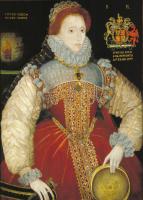


Burscough Priory is also in Priories in England.
Burscough Priory [Map] was an Augustinian Priory founded by Robert Fitz-Henry, Lord of Lathom, in 1190 and dissolved around 1536.
On 6th June 1414 John Stanley (age 64) died at Ardee, Louth, County Louth. He was buried at Burscough Priory [Map].
On 20th February 1459 Thomas Stanley 1st Baron Stanley (age 54) died at Knowsley, Lancashire. He was buried at Burscough Priory [Map]. His son Thomas (age 24) succeeded King Mann, 2nd Baron Stanley. Eleanor Neville Baroness Stanley (age 12) by marriage Baroness Stanley.
In 1466 Jane Goushill Baroness Stanley (age 65) died. She was buried at Burscough Priory [Map]
On 29th July 1504 Thomas Stanley 1st Earl of Derby (age 69) died. He was buried at Burscough Priory [Map]. His grandson Thomas (age 19) succeeded 2nd Earl Derby, 10th Baron Strange Knockin, 6th Baron Mohun of Dunster, 3rd Baron Stanley.
The River Ribble rises near Gearstones, North Yorkshire [Map], being formed from the Thorn Gill, from where it flows past Selside, North Yorkshire [Map] and Horton in Ribblesdale, North Yorkshire [Map], under Helwith Bridge, North Yorkshire [Map], over Stainforth Force [Map], through Settle, North Yorkshire [Map], past Paythorne, Lancashire [Map], Sawley, Lancashire [Map], Clitheroe, Lancashire [Map] to Great Mitton, Lancashire [Map] where it is joined by the River Hodder. It continues under Ribchester Bridge, Lancashire [Map] past Ribchester Roman Fort, Lancashire [Map] to Preston, Lancashire [Map] after which it joins the Irish Sea.
On 3rd May 1286 Ranulph Dacre (age 40) died at Prescot, Lancashire.
On 2nd January 1623 Barbara Walsingham (age 63) died at Preston, Lancashire [Map].
On 19th February 1712 Arthur Devis was born to Anthony Devis at Preston, Lancashire [Map]. He married 20th July 1742 Elizabeth Faulkener and had issue.
The 1715 Battle of Preston was the final action of the 1715 Jacobite Rebellion. It commenced on 9th November 1715 when Jacobite cavalry entered Preston, Lancashire [Map]. Royalist troops arrived in number over the next few days surrounding Preston forcing the Jacocobite surrender. 1463 were taken prisoner of which 463 were English. The Scottish prisoners included:
George Seton 5th Earl of Winton (age 38). The only prisoner to plead not guilty, sentenced to death, escaped from the Tower of London [Map] on 4th August 1716 around nine in the evening. Travelled to France then to Rome.
On 24th February 1716 William Gordon 6th Viscount Kenmure (age 44) was beheaded on Tower Hill [Map].
On 9th February 1716 William Maxwell 5th Earl Nithsale was sentenced to be executed on 24th February 1716. The night before his wife (age 36) effected his escape from the Tower of London [Map] by exchanging his clothes with those of her maid. They travelled to Paris then to Rome where the court of James "Old Pretender" Stewart (age 27) was.
James Radclyffe 3rd Earl Derwentwater (age 26) was imprisoned in the Tower of London [Map]. He was examined by the Privy Council on 10th January 1716 and impeached on 19th January 1716. He pleaded guilty in the expectation of clemency. He was attainted and condemned to death. Attempts were made to procure his pardon. His wife Anna Maria Webb Countess Derwentwater (age 24), her sister Mary Webb (age 21) [Note. Assumed to be her sister Mary], their aunt Anne Brudenell Duchess Richmond (age 45), Barbara Villiers 1st Duchess of Cleveland appealed to King George I (age 55) in person without success.
On 24th February 1716 James Radclyffe 3rd Earl Derwentwater was beheaded on Tower Hill [Map]. Earl Derwentwater, Baronet Radclyffe of Derwentwater in Cumberland forfeit.
William Murray 2nd Lord Nairne was tried on 9th February 1716 for treason, found guilty, attainted, and condemned to death. He survived long enough to benefit from the Indemnity Act of 1717.
General Thomas Forster of Adderstone (age 31) was attainted. He was imprisoned at Newgate Prison, London [Map] but escaped to France.
On 14th May 1716 Henry Oxburgh was hanged, drawn and quartered at Tyburn [Map]. He was buried at Church of St Gile's in the Fields. His head was spiked on Temple Bar.
The trials and sentences were overseen by the Lord High Steward William Cowper 1st Earl Cowper (age 50) for which he subsequently received his Earldom.
 Become a Member via our Buy Me a Coffee page to read more.
The River Ribble rises near Gearstones, North Yorkshire [Map], being formed from the Thorn Gill, from where it flows past Selside, North Yorkshire [Map] and Horton in Ribblesdale, North Yorkshire [Map], under Helwith Bridge, North Yorkshire [Map], over Stainforth Force [Map], through Settle, North Yorkshire [Map], past Paythorne, Lancashire [Map], Sawley, Lancashire [Map], Clitheroe, Lancashire [Map] to Great Mitton, Lancashire [Map] where it is joined by the River Hodder. It continues under Ribchester Bridge, Lancashire [Map] past Ribchester Roman Fort, Lancashire [Map] to Preston, Lancashire [Map] after which it joins the Irish Sea.
St Andrew's Church, Ashton-on-Ribble. Marble monument to Captain Thomas Pedder, who died at the Relief of Lucknow, by Henry Weekes.
Henrici Quinti, Angliæ Regis, Gesta, is a first-hand account of the Agincourt Campaign, and subsequent events to his death in 1422. The author of the first part was a Chaplain in King Henry's retinue who was present from King Henry's departure at Southampton in 1415, at the siege of Harfleur, the battle of Agincourt, and the celebrations on King Henry's return to London. The second part, by another writer, relates the events that took place including the negotiations at Troye, Henry's marriage and his death in 1422.
Available at Amazon in eBook and Paperback format.
On 17th November 1617 Catherine Gerard Lady Hoghton (age 48) died at Houghton Tower, Preston.

On 17th August 1648 John Hay 1st Marquess Tweeddale (age 23) for the Royalist army at Walton en le Dale, Preston during the 1648 Battle of Preston.
On 9th March 1795 Henry Hoghton 6th Baronet (age 66) died at Walton Hall, Preston. His son Henry (age 26) succeeded 7th Baronet Hoghton of Hoghton Tower in Lancashire.
In 1380 John Radclyffe was born to James Radclyffe of Attleburgh (age 25) and Margaret aka Joan Tempest (age 33) at Radclyffe, Lancashire. He married (1) Katherine Burnell and had issue (2) Cecilia Mortimer and had issue.
Chronicle of Gregory. 9th September 1460. Ande this same year the Duke of Yorke (age 48) come out of Yrlonde, and londyd at the Redde Clyffe in Loncaschyre, and his lyvery was whyte and brewe in her clothyng, and i-brawderyd a-bove with fetyrlockys. And this he come forthe towarde London; ande then his lady the duchyes (age 45) met with him in a chare i-coveryd with blewe felewette, and iiij pore coursserys theryn. And so he come to Habyngdon, and there he sende for trompeters and claryners to bryng him to London, and there he gave them baners with the hole armys of Inglonde without any dyversyte, and commaundyd his swerde to ben borne uppe ryghte be-fore hym; and soo he rode forthe unto Lundon tylle he come to Westemyster to Kyng Harrys palys ande there he claymyde the crowne of Inglonde.
Around 1483 Thomas Radclyffe was born to Richard Radclyffe (age 28) at Radclyffe, Lancashire.
The River Tame rises from a number of reservoirs on Saddleworth Moor near Denshaw, Lancashire [Map] from where it flows past Delph, Lancashire [Map], Uppermill, Lancashire [Map], Mossley, Lancashire [Map], Stalybridge, Lancashire [Map], Ashton-under-Lyne, Lancashire [Map], Woodley, Lancashire [Map], Reddish Vale, Lancashire [Map] before joining the River Goyt to form the River Mersey.
The River Ribble rises near Gearstones, North Yorkshire [Map], being formed from the Thorn Gill, from where it flows past Selside, North Yorkshire [Map] and Horton in Ribblesdale, North Yorkshire [Map], under Helwith Bridge, North Yorkshire [Map], over Stainforth Force [Map], through Settle, North Yorkshire [Map], past Paythorne, Lancashire [Map], Sawley, Lancashire [Map], Clitheroe, Lancashire [Map] to Great Mitton, Lancashire [Map] where it is joined by the River Hodder. It continues under Ribchester Bridge, Lancashire [Map] past Ribchester Roman Fort, Lancashire [Map] to Preston, Lancashire [Map] after which it joins the Irish Sea.
Time Team Series 1 Episode 2: On the Edge of an Empire was filmed between 3rd September 1993 and 5th September 1993. It was originally shown on 23rd January 1994.
Location: Ribchester Roman Fort, Lancashire [Map].
Category: Time Team Roman and Iron Age.
Time Team:
Tony Robinson (age 47), Presenter
Mick Aston (age 47), Bristol University Landscape Archaeologist
Carenza Lewis (age 30), Royal Commission on Historic Monuments
Phil Harding (age 43), Wessex Archaeological Trust Field Archaeologist
Robin Bush (age 50), Archivist
Victor Ambrus (age 58), Historical Illustrator
John Gator, Chris Gaffney, Geophysics
Adrian Olivier, Lancaster University Archaeology Unit
Ermine Street Guard
Techniques: Excavation, Resistivity, Magnetometry
Sources: Publius (or Flavius) Vegetius Renatus' "De re militari"
Historical Figures: Brigantes, Queen Cartimandua, King Caractacus of the Silures, King Venutius of the Brigantes, Vellocatus.
Events:
Outcomes: Broken Roman Quern, Decorated Samian Ware, Punic Ditch, plans of Wooden and Stone Forts, location of bathhouse.
The River Ribble rises near Gearstones, North Yorkshire [Map], being formed from the Thorn Gill, from where it flows past Selside, North Yorkshire [Map] and Horton in Ribblesdale, North Yorkshire [Map], under Helwith Bridge, North Yorkshire [Map], over Stainforth Force [Map], through Settle, North Yorkshire [Map], past Paythorne, Lancashire [Map], Sawley, Lancashire [Map], Clitheroe, Lancashire [Map] to Great Mitton, Lancashire [Map] where it is joined by the River Hodder. It continues under Ribchester Bridge, Lancashire [Map] past Ribchester Roman Fort, Lancashire [Map] to Preston, Lancashire [Map] after which it joins the Irish Sea.
On 4th October 1679 Richard Byron 2nd Baron Byron (age 73) died at Rochdale, Lancashire. His son William (age 43) succeeded 3rd Baron Byron of Rochdale in Lancashire.
On 9th June 1866 George Kemp 1st Baron Rochdale was born to George Tawke Kemp and Emily Lydia Kelsall in Rochdale, Lancashire. He married 5th August 1896 Beatrice Mary Egerton Baroness Rochdale, daughter of Francis Egerton 3rd Earl Ellesmere and Katherine Louisa Phipps Countess Ellesmere, and had issue.
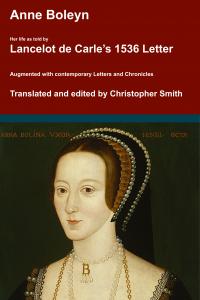
Anne Boleyn. Her Life as told by Lancelot de Carle's 1536 Letter.
In 1536, two weeks after the execution of Anne Boleyn, her brother George and four others, Lancelot du Carle, wrote an extraordinary letter that described Anne's life, and her trial and execution, to which he was a witness. This book presents a new translation of that letter, with additional material from other contemporary sources such as Letters, Hall's and Wriothesley's Chronicles, the pamphlets of Wynkyn the Worde, the Memorial of George Constantyne, the Portuguese Letter and the Baga de Secrets, all of which are provided in Appendices.
Available at Amazon in eBook and Paperback format.
On 20th April 1767 Mary Smith was born to Charles Smith of Summer Castle in Rochdale. She was baptised on 27th April 1767 at St Mary's Church, Rochdale [Note. Assumed to be the Parish Church of Rochdale] She married 23rd December 1784 James Royds of Falinge and had issue.
On 23rd December 1784 James Royds of Falinge (age 26) and Mary Smith (age 17) were married at St Mary's Church, Rochdale [Note. Assumed to be the Parish Church of Rochdale.]
On 7th October 1790 Reverend Edward Royds was baptised at St Mary's Church, Rochdale.
On 20th September 1799 Reverend Charles Smith Royds was born to James Royds of Falinge (age 41) and Mary Smith (age 32). He was baptised on 29th November 1799 at St Mary's Church, Rochdale. He married 20th June 1837 Mary Anne Twemlow and had issue.
On 15th May 1630 Thomas Gerard 2nd Baronet (age 46) died at Winwick Parish Newhall, Rufford. His son William (age 18) succeeded 3rd Baronet Gerard of Bryn in Lancashire.
The River Ribble rises near Gearstones, North Yorkshire [Map], being formed from the Thorn Gill, from where it flows past Selside, North Yorkshire [Map] and Horton in Ribblesdale, North Yorkshire [Map], under Helwith Bridge, North Yorkshire [Map], over Stainforth Force [Map], through Settle, North Yorkshire [Map], past Paythorne, Lancashire [Map], Sawley, Lancashire [Map], Clitheroe, Lancashire [Map] to Great Mitton, Lancashire [Map] where it is joined by the River Hodder. It continues under Ribchester Bridge, Lancashire [Map] past Ribchester Roman Fort, Lancashire [Map] to Preston, Lancashire [Map] after which it joins the Irish Sea.
The River Hodder rises near the Cross of Greet, Lancashire [Map] from where it flows under the Cross of Greet Bridge [Map], through Stockes Reservoir [Map] to Slaidburn, Lancashire [Map]. From Slaidburn it flows past Newton-in-Bowland, Lancashire [Map], under Knowlmere Bridge, Lancashire [Map], past Dunsop Bridge, Lancashire [Map] where it is joined by the River Dunsop and shortly after by the Langden Brook, under Burnholme Bridge, Lancashire [Map], past Whitewell, Lancashire [Map], under Doeford Bridge, Lancashire [Map], High Hodder Brodge, Lancashire [Map] and Low Hodder Bridge, Lancashire [Map] after which it joins the River Ribble near Great Mitton, Lancashire [Map].
On 23rd December 1854 Adrian Scott Stokes was born at Southport, Lancashire.
Abbot John Whethamstede’s Chronicle of the Abbey of St Albans
Abbot John Whethamstede's Register aka Chronicle of his second term at the Abbey of St Albans, 1451-1461, is a remarkable text that describes his first-hand experience of the beginning of the Wars of the Roses including the First and Second Battles of St Albans, 1455 and 1461, respectively, their cause, and their consequences, not least on the Abbey itself. His text also includes Loveday, Blore Heath, Northampton, the Act of Accord, Wakefield, and Towton, and ends with the Coronation of King Edward IV. In addition to the events of the Wars of the Roses, Abbot John, or his scribes who wrote the Chronicle, include details in the life of the Abbey such as charters, letters, land exchanges, visits by legates, and disputes, which provide a rich insight into the day-to-day life of the Abbey, and the challenges faced by its Abbot.
Available at Amazon in eBook and Paperback format.
The River Wyre rises near Tarnbrook, Lancashire [Map] from where it flows under Stoops Bridge, Abbeystead [Map], past Dolphinholme, Lancashire [Map], Garstang, Lancashire [Map], St Michael's on Wyre, Lancashire [Map] to Fleetwood, Lancashire [Map] where it joins the Irish Sea.
The River Hodder rises near the Cross of Greet, Lancashire [Map] from where it flows under the Cross of Greet Bridge [Map], through Stockes Reservoir [Map] to Slaidburn, Lancashire [Map]. From Slaidburn it flows past Newton-in-Bowland, Lancashire [Map], under Knowlmere Bridge, Lancashire [Map], past Dunsop Bridge, Lancashire [Map] where it is joined by the River Dunsop and shortly after by the Langden Brook, under Burnholme Bridge, Lancashire [Map], past Whitewell, Lancashire [Map], under Doeford Bridge, Lancashire [Map], High Hodder Brodge, Lancashire [Map] and Low Hodder Bridge, Lancashire [Map] after which it joins the River Ribble near Great Mitton, Lancashire [Map].
Around 1534 Gilbert Gerard was born to James Gerard of Astley (age 24) and Margaret Holcroft (age 24) at Sudbury, Lancashire. He married in or before 1555 Anne Ratclyffe and had issue.
In 1569 Frances Gerard Lady Molyneux was born to Gilbert Gerard (age 35) and Anne Ratclyffe (age 30) at Sudbury, Lancashire. She married 1590 Richard Molyneux 1st Baronet and had issue.
The River Wyre rises near Tarnbrook, Lancashire [Map] from where it flows under Stoops Bridge, Abbeystead [Map], past Dolphinholme, Lancashire [Map], Garstang, Lancashire [Map], St Michael's on Wyre, Lancashire [Map] to Fleetwood, Lancashire [Map] where it joins the Irish Sea.
Around 1467 Thomas Washington was born to Robert Washington (age 27) at Tewitfield, Lancashire.
Around 1475 Robert Washington was born to Robert Washington (age 35) at Tewitfield, Lancashire.
Around 1500 Thomas Washington was born to Robert Washington (age 25) at Tewitfield, Lancashire.
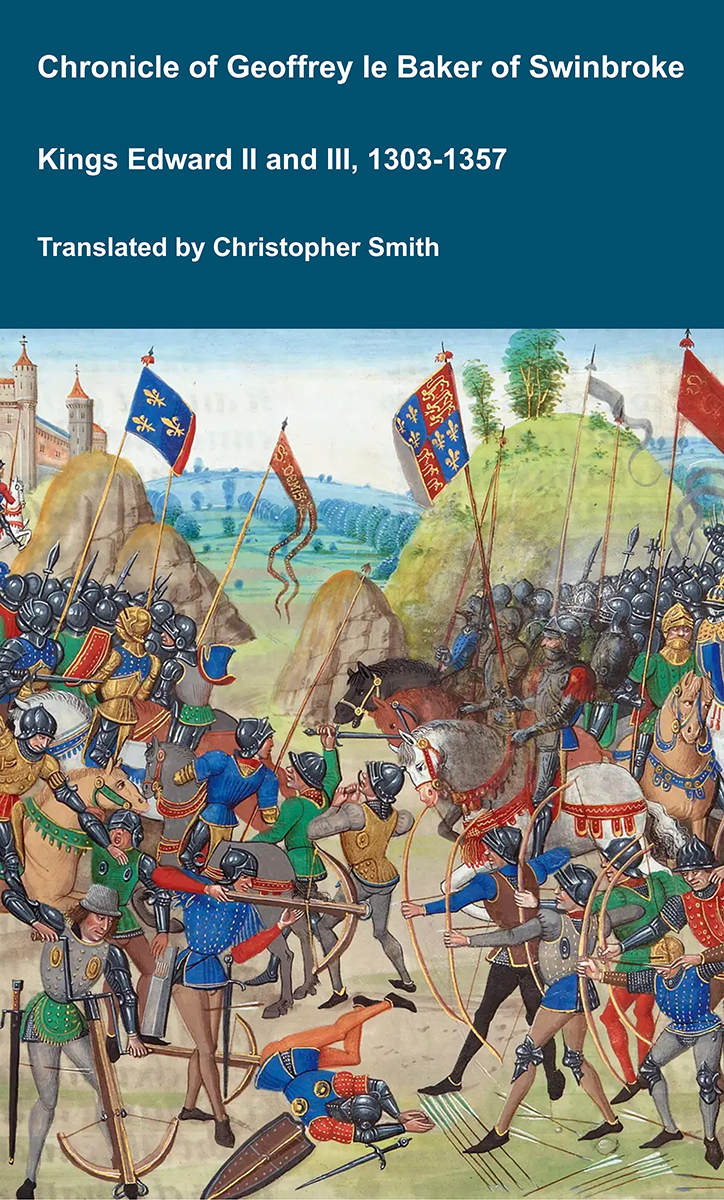
Chronicle of Geoffrey le Baker of Swinbroke
Baker was a secular clerk from Swinbroke, now Swinbrook, an Oxfordshire village two miles east of Burford. His Chronicle describes the events of the period 1303-1356: Gaveston, Bannockburn, Boroughbridge, the murder of King Edward II, the Scottish Wars, Sluys, Crécy, the Black Death, Winchelsea and Poitiers. To quote Herbert Bruce 'it possesses a vigorous and characteristic style, and its value for particular events between 1303 and 1356 has been recognised by its editor and by subsequent writers'. The book provides remarkable detail about the events it describes. Baker's text has been augmented with hundreds of notes, including extracts from other contemporary chronicles, such as the Annales Londonienses, Annales Paulini, Murimuth, Lanercost, Avesbury, Guisborough and Froissart to enrich the reader's understanding. The translation takes as its source the 'Chronicon Galfridi le Baker de Swynebroke' published in 1889, edited by Edward Maunde Thompson.
Available at Amazon in eBook and Paperback format.
Around 1525 Leonard Washington was born to John Washington (age 55) at Tewitfield, Lancashire.
Around 1528 Jane Washington was born to John Washington (age 58) at Tewitfield, Lancashire.
On 6th September 1528 Robert Washington (age 88) died at Tewitfield, Lancashire.
Tottington War Memorial [Map] was unveiled by Lord Walsingham (age 71) at the Tottington Reading Room on 2nd May 1920 during a United Service of the Established and Free Churches of Tottington. Out of a population of around 250 people, 60 had joined up to serve in the First World War, and the memorial commemorates the 15 servicemen from Tottington and neighbouring Sturston who fell and the 45 men who returned safely. It was organised by a local War Memorial Committee and funded by public subscription.
The roundels were sculpted by Walter Marsden (age 37).
John Augustus Grey 7th Baron Walsingham: On 21st March 1849 he was born to Thomas Grey 5th Baron Walsingham and Emily Julia Thellusson Baroness Walsingham. On 3rd December 1919 Thomas Grey 6th Baron Walsingham died. His half brother John succeeded 7th Baron Walsingham of Walsingham in Norfolk. On 21st March 1929 John Augustus Grey 7th Baron Walsingham died. His son George succeeded 8th Baron Walsingham of Walsingham in Norfolk.


On 13th October 1370 Eleanor Holland Countess March and Ulster was born to Thomas Holland 2nd Earl Kent (age 20) and Alice Fitzalan Countess Kent (age 20) at Upholland, Lancashire. She a great x 2 granddaughter of King Edward I of England. She married (1) 7th October 1388 her second cousin once removed Roger Mortimer 4th Earl March 3rd Earl of Ulster, son of Edmund Mortimer 3rd Earl March, Earl of Ulster and Philippa Plantagenet Countess March 2nd Countess Ulster, and had issue (2) before 19th June 1399 her half third cousin once removed Edward Charleton 5th Baron Cherleton, son of John Charleton 3rd Baron Cherleton and Joan Stafford Baroness Cherleton and Talbot, and had issue.
In 1374 Thomas Holland 1st Duke Surrey was born to Thomas Holland 2nd Earl Kent (age 24) and Alice Fitzalan Countess Kent (age 24) at Upholland, Lancashire. He a great x 2 grandson of King Edward I of England. He married before 20th October 1392 his third cousin once removed Joan Stafford Countess Kent, daughter of Hugh Stafford 2nd Earl Stafford and Philippa Beauchamp Countess Stafford.
The River Tame rises from a number of reservoirs on Saddleworth Moor near Denshaw, Lancashire [Map] from where it flows past Delph, Lancashire [Map], Uppermill, Lancashire [Map], Mossley, Lancashire [Map], Stalybridge, Lancashire [Map], Ashton-under-Lyne, Lancashire [Map], Woodley, Lancashire [Map], Reddish Vale, Lancashire [Map] before joining the River Goyt to form the River Mersey.
On 2nd May 1823 Henry Blundell Leigh was born to John Shaw Leigh (age 31) in Walton-on-the-Hill, Lancashire.
The Deeds of the Dukes of Normandy
The Gesta Normannorum Ducum [The Deeds of the Dukes of Normandy] is a landmark medieval chronicle tracing the rise and fall of the Norman dynasty from its early roots through the pivotal events surrounding the Norman Conquest of England. Originally penned in Latin by the monk William of Jumièges shortly before 1060 and later expanded at the behest of William the Conqueror, the work chronicles the deeds, politics, battles, and leadership of the Norman dukes, especially William’s own claim to the English throne. The narrative combines earlier historical sources with firsthand information and oral testimony to present an authoritative account of Normandy’s transformation from a Viking settlement into one of medieval Europe’s most powerful realms. William’s history emphasizes the legitimacy, military prowess, and governance of the Norman line, framing their expansion, including the conquest of England, as both divinely sanctioned and noble in purpose. Later chroniclers such as Orderic Vitalis and Robert of Torigni continued the history, extending the coverage into the 12th century, providing broader context on ducal rule and its impact. Today this classic work remains a foundational source for understanding Norman identity, medieval statesmanship, and the historical forces that reshaped England and Western Europe between 800AD and 1100AD.
Available at Amazon in eBook and Paperback format.
On 1st May 1835 Thomas Molyneux of Newsham House in West Derby in Lancashire (age 82) died. He was buried at St Mary's Church, Walton-on-the-Hill.
On 27th April 1842 Clement Royds (age 20) drowned in the River Mersey. He was working at the time with his twin brother Henryin the offices of their uncles, Molyneux Taylor, merchants. He had joined a boat club, and one day he and his cousin Alfred Littledale with three others were taking a four across the river. It was a rough day and they were swamped. They turned the boat over, thinking they could cling better to it that way, but only the two holding on to the bow and stern were saved. Clement was last seen lying across the boat, but was washed off. His mother in a letter to her son Tom is Australia said:
"His body was found a fortnight after the calamity, he was not disfigured at all and his hair looked so beautiful in full curl all over his head, and his dress so nice. His grandfather's ring was in his pocket, which I am going to send you, as a remembrance of your Grandfather and more especially of your poor brother's untimely fate, and when you look at it, think should he have been cut off in an unprepared state, what his agonies of mind must have been, as well as his body when he found he was about to face his Maker, and let it be a warning to you."
He was buried at St Mary's Church, Walton-on-the-Hill, the burial place of the Molyneux family, and there is a window in Brereton church "To the glory of God, and in memory of Clement Royds, died April 27th 1842 aged 20 years".
On 7th August 1845 Reverend Edward Royds (age 24) and Anne Mary Littledale (age 25) were married at St Mary's Church, Walton-on-the-Hill. They were first cousins.
Around 1440 Robert Washington was born at Warton, Lancashire.
Around 1470 John Washington was born to Robert Washington (age 30) at Warton, Lancashire.
In 1528 John Washington (age 58) died at Warton, Lancashire.
On 21st December 1910 at the Pretoria Pit at Westhoughton, Lancashire 341 miners were killed by an explosion. Four were rescued, one died the same day, another the next. The only survivors were Joseph Staveley and William Davenport. A further fatailty occurred on the same day when William Turton died while fighting a fire in No. 3 pit.
Around 1782 George Chadwick was born to George Chadwick (age 42) and Martha Hill (age 35) at Whitefield, Lancashire.
The River Hodder rises near the Cross of Greet, Lancashire [Map] from where it flows under the Cross of Greet Bridge [Map], through Stockes Reservoir [Map] to Slaidburn, Lancashire [Map]. From Slaidburn it flows past Newton-in-Bowland, Lancashire [Map], under Knowlmere Bridge, Lancashire [Map], past Dunsop Bridge, Lancashire [Map] where it is joined by the River Dunsop and shortly after by the Langden Brook, under Burnholme Bridge, Lancashire [Map], past Whitewell, Lancashire [Map], under Doeford Bridge, Lancashire [Map], High Hodder Brodge, Lancashire [Map] and Low Hodder Bridge, Lancashire [Map] after which it joins the River Ribble near Great Mitton, Lancashire [Map].
Jean de Waurin's Chronicle of England Volume 6 Books 3-6: The Wars of the Roses
Jean de Waurin was a French Chronicler, from the Artois region, who was born around 1400, and died around 1474. Waurin’s Chronicle of England, Volume 6, covering the period 1450 to 1471, from which we have selected and translated Chapters relating to the Wars of the Roses, provides a vivid, original, contemporary description of key events some of which he witnessed first-hand, some of which he was told by the key people involved with whom Waurin had a personal relationship.
Available at Amazon in eBook and Paperback format.
Samuel Pepys' Diary. 6th December 1660. This morning some of the Commissioners of Parliament and Sir W. Batten (age 59) went to Sir G. Carteret's (age 50) office here in town, and paid off the Chesnut. I carried my wife to White Friars and landed her there, and myself to Whitehall to the Privy Seal, where abundance of pardons to seal, but I was much troubled for it because that there are no fees now coming for them to me. Thence Mr. Moore and I alone to the Leg in King Street, and dined together on a neat's tongue and udder. From thence by coach to Mr. Crew's (age 62) to my Lord, who told me of his going out of town to-morrow to settle the militia in Huntingdonshire, and did desire me to lay up a box of some rich jewels and things that there are in it, which I promised to do. After much free discourse with my Lord, who tells me his mind as to his enlarging his family, &c., and desiring me to look him out a Master of the Horse and other servants, we parted. From thence I walked to Greatorex (age 35) (he was not within), but there I met with Mr. Jonas Moore (age 43)1, and took him to the Five Bells,' and drank a glass of wine and left him. To the Temple [Map], when Sir R. Parkhurst (as was intended the last night) did seal the writings, and is to have the £2000 told to-morrow. From, thence by water to Parliament Stairs, and there at an alehouse to Doling (who is suddenly to go into Ireland to venture his fortune); Simonds D'Ewes 1st Baronet (who is at a great loss for £200 present money, which I was loth to let him have, though I could now do it, and do love him and think him honest and sufficient, yet lothness to part with money did dissuade me from it); Luellin (who was very drowsy from a dose that he had got the last night), Mr. Mount and several others, among the rest one Mr. Pierce, an army man, who did make us the best sport for songs and stories in a Scotch tone (which he do very well) that ever I heard in my life. I never knew so good a companion in all my observation. From thence to the bridge by water, it being a most pleasant moonshine night, with a waterman who did tell such a company of bawdy stories, how once he carried a lady from Putney in such a night as this, and she bade him lie down by her, which he did, and did give her content, and a great deal more roguery.
Note 1. Jonas Moore was born at Whitley, Lancashire, February 8th, 1617, and was appointed by Charles I tutor to the Duke of York (age 27). Soon after the Restoration he was knighted and made Surveyor-General of the Ordnance. He was famous as a mathematician, and was one of the founders of the Royal Society. He died August 27th, 1679, and at his funeral sixty pieces of ordnance were discharged at the Tower.
Become a Member via our Buy Me a Coffee page to read more.
The River Mersey is formed from the River Goyt and River Tame which converge at Stockport, Cheshire [Map] from where it flows through Carrington, Lancashire [Map], Warrington, Cheshire [Map], Widnes, Lancashire [Map] and Runcorn, Cheshire [Map] to Liverpool, Lancashire [Map] after which it joins the Irish Sea.
Around 1460 Bishop William Smyth was born to Robert Smyth of Peel Hall at Farnworth, Widnes.
In September 1544 Archbishop Richard Bancroft was born in Farnworth, Widnes.
On 14th December 1752 John Leigh was born to Thomas Leigh (age 27) in Farnworth, Widnes.
In 1692 John Leigh was born to Thomas Leigh in Upton Farnworth, Widnes.
On 17th August 1701 Thomas Leigh died in Upton Farnworth, Widnes.
On 25th October 1895 George Thomas Orlando Bridgeman (age 72) died at The Hall, Wigan.
William of Worcester's Chronicle of England
William of Worcester, born around 1415, and died around 1482 was secretary to John Fastolf, the renowned soldier of the Hundred Years War, during which time he collected documents, letters, and wrote a record of events. Following their return to England in 1440 William was witness to major events. Twice in his chronicle he uses the first person: 1. when writing about the murder of Thomas, 7th Baron Scales, in 1460, he writes '… and I saw him lying naked in the cemetery near the porch of the church of St. Mary Overie in Southwark …' and 2. describing King Edward IV's entry into London in 1461 he writes '… proclaimed that all the people themselves were to recognize and acknowledge Edward as king. I was present and heard this, and immediately went down with them into the city'. William’s Chronicle is rich in detail. It is the source of much information about the Wars of the Roses, including the term 'Diabolical Marriage' to describe the marriage of Queen Elizabeth Woodville’s brother John’s marriage to Katherine, Dowager Duchess of Norfolk, he aged twenty, she sixty-five or more, and the story about a paper crown being placed in mockery on the severed head of Richard, 3rd Duke of York.
Available at Amazon in eBook and Paperback format.
In 1422 John Booth of Barton in Lancashire (age 68) died at Winmarleigh, Lancashire.
The River Tame rises from a number of reservoirs on Saddleworth Moor near Denshaw, Lancashire [Map] from where it flows past Delph, Lancashire [Map], Uppermill, Lancashire [Map], Mossley, Lancashire [Map], Stalybridge, Lancashire [Map], Ashton-under-Lyne, Lancashire [Map], Woodley, Lancashire [Map], Reddish Vale, Lancashire [Map] before joining the River Goyt to form the River Mersey.
In 1145 Richard Fitzrichard was born to Roger Fitzrichard 1st Baron Warkworth and Alice Vere Baroness Warkworth at Woodplumpton, Lancashire.
In 1201 Richard Fitzrichard (age 56) died at Woodplumpton, Lancashire.
Around 1460 Isabel Worsley was born to Otewell Worsley (age 50) at Worsley Hall, Lancashire. She married before 1479 Richard Culpepper and had issue.