Jean de Waurin's Chronicle of England Volume 6 Books 3-6: The Wars of the Roses
Jean de Waurin was a French Chronicler, from the Artois region, who was born around 1400, and died around 1474. Waurin’s Chronicle of England, Volume 6, covering the period 1450 to 1471, from which we have selected and translated Chapters relating to the Wars of the Roses, provides a vivid, original, contemporary description of key events some of which he witnessed first-hand, some of which he was told by the key people involved with whom Waurin had a personal relationship.
Available at Amazon in eBook and Paperback format.
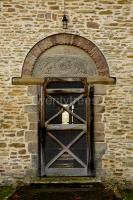
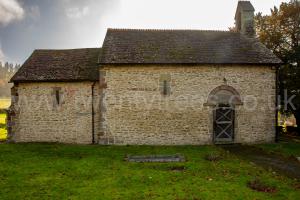
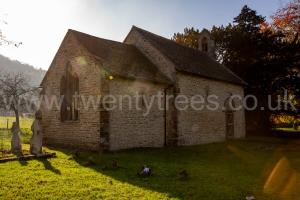
St Giles' Church, Pipe Aston is in Pipe Aston, Herefordshire, Churches in Herefordshire.
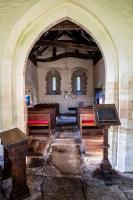
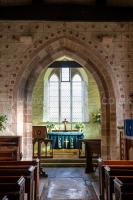
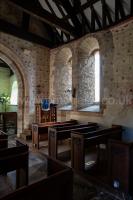
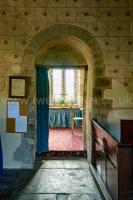
The painted interior of St Giles' Church, Pipe Aston [Map] which was discovered during restoration in 1879.
The Herefordshire School of Carving at St Giles' Church, Pipe Aston [Map]. Tympanum over the North doorway. An "agnus dei" - Lamb of God - flanked by a winged eagle and a winged bull surrounded byan archivolt of animals and foliage enclosed within a chevroned arch. The church guide describes the eagle as the emblem of St John complementing the winged bull emblem of St Luke which has at the end of one of its forelegs a block that is assumed to be St Luke's Gospel. Malcolm Thurlby, in this excellent book "The Herefordshire School of Romanesque Sculpture" suggest the carving is of a griffin. The imposts at the end of the arches have, on the left, dragons entwined, and, on the right, foliage. See Herefordshire School of Carving.


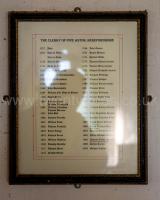
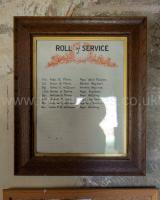
2009. The clergy and Roll of Service at St Giles' Church, Pipe Aston [Map].