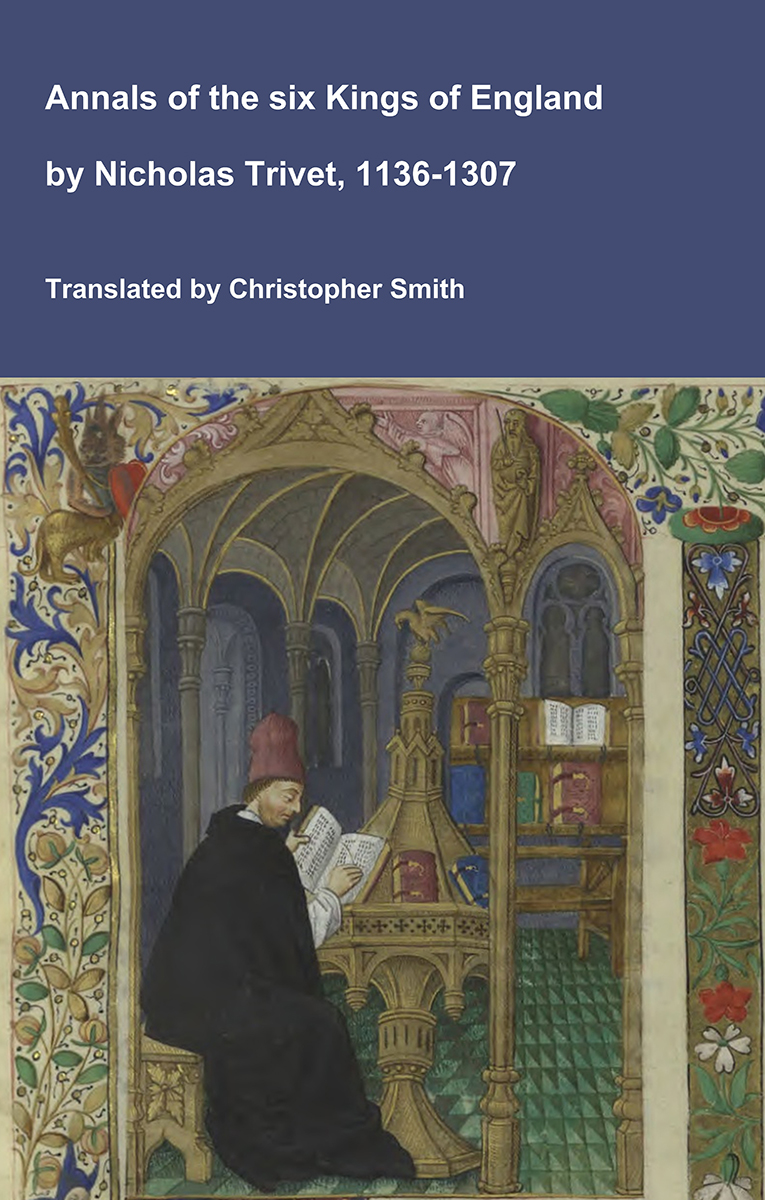
Annals of the six Kings of England by Nicholas Trivet
Translation of the Annals of the Six Kings of England by that traces the rise and rule of the Angevin aka Plantagenet dynasty from the mid-12th to early 14th century. Written by the Dominican scholar Nicholas Trivet, the work offers a vivid account of English history from the reign of King Stephen through to the death of King Edward I, blending political narrative with moral reflection. Covering the reigns of six monarchs—from Stephen to Edward I—the chronicle explores royal authority, rebellion, war, and the shifting balance between crown, church, and nobility. Trivet provides detailed insight into defining moments such as baronial conflicts, Anglo-French rivalry, and the consolidation of royal power under Edward I, whose reign he describes with particular immediacy. The Annals combines careful year-by-year reporting with thoughtful interpretation, presenting history not merely as a sequence of events but as a moral and political lesson. Ideal for readers interested in medieval history, kingship, and the origins of the English state, this chronicle remains a valuable and accessible window into the turbulent world of the Plantagenet kings.
Available at Amazon in eBook and Paperback format.
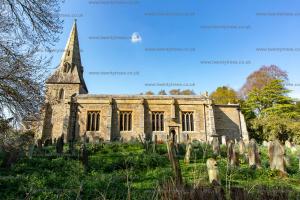
St John Lee Church, Hexham is in Hexham, Northumberland [Map], Churches in Northumberland.
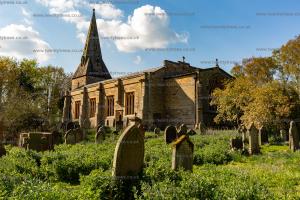
Exterior of St John Lee Church, Hexham [Map].
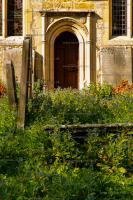
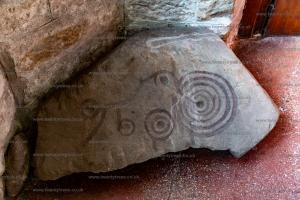
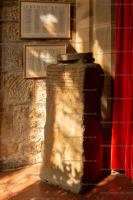
Cup and Ringmarked Stone, and the Oakwood Stone, at St John Lee Church, Hexham [Map].
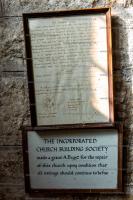
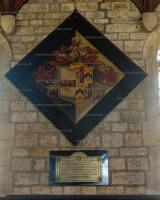
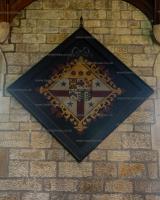
Hatchments at St John Lee Church, Hexham [Map].
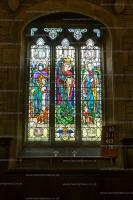
Windows at St John Lee Church, Hexham [Map].
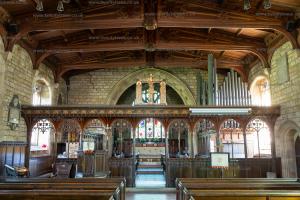
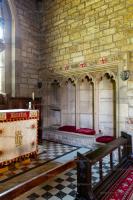
Rood Screen and Interior at St John Lee Church, Hexham [Map].
Bede. How Bishop John cured a dumb man by his blessing. [687 a.d.]
In the beginning of Aldfrid's reign, Bishop Eata died, and was succeeded in the bishopric of the church of Hagustald [Map] by the holy man John, of whom those that knew him well are wont to tell many miracles, and more particularly Berthun, a man worthy of all reverence and of undoubted truthfulness, and once his deacon, now abbot of the monastery called Inderauuda [Map], that is, "In the wood of the Deiri": some of which miracles we have thought fit to hand on to posterity. There is a certain remote dwelling [Map] enclosed by a mound, among scattered trees, not far from the church of Hagustald [Map], being about a mile and a half distant and separated from it by the River Tyne, having an oratory dedicated to St. Michael the Archangel, where the man of God used frequently, as occasion offered, and specially in Lent, to abide with a few companions and in quiet give himself to prayer and study. Having come hither once at the beginning of Lent to stay, he bade his followers find out some poor man labouring under any grievous infirmity, or want, whom they might keep with them during those days, to receive alms, for so he was always used to do.
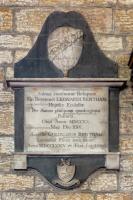
After 25th May 1770. St John Lee Church, Hexham [Map]. Monument to Reverend Leonard Bentham.

After 25th August 1867. St John Lee Church, Hexham [Map]. Grave of Amos Dent of Hexham who was killed in an accident at Hexham Railway Station on 24 Aug 1867 dying the following day.
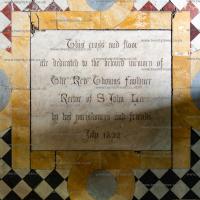
After July 1892. Memorial at St John Lee Church, Hexham [Map] to the Reverend Thomas Faulkner.
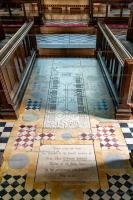

After 27th September 1915. St John Lee Church, Hexham [Map]. Monument to Captain James Harold Cuthbert (deceased),
This is a translation of the 'Memoires of Jacques du Clercq', published in 1823 in two volumes, edited by Frederic, Baron de Reissenberg. In his introduction Reissenberg writes: 'Jacques du Clercq tells us that he was born in 1424, and that he was a licentiate in law and a counsellor to Philip the Good, Duke of Burgundy, in the castellany of Douai, Lille, and Orchies. It appears that he established his residence at Arras. In 1446, he married the daughter of Baldwin de la Lacherie, a gentleman who lived in Lille. We read in the fifth book of his Memoirs that his father, also named Jacques du Clercq, had married a lady of the Le Camelin family, from Compiègne. His ancestors, always attached to the counts of Flanders, had constantly served them, whether in their councils or in their armies.' The Memoires cover a period of nineteen years beginning in in 1448, ending in in 1467. It appears that the author had intended to extend the Memoirs beyond that date; no doubt illness or death prevented him from carrying out this plan. As Reissenberg writes the 'merit of this work lies in the simplicity of its narrative, in its tone of good faith, and in a certain air of frankness which naturally wins the reader’s confidence.' Du Clercq ranges from events of national and international importance, including events of the Wars of the Roses in England, to simple, everyday local events such as marriages, robberies, murders, trials and deaths, including that of his own father in Book 5; one of his last entries.
Available at Amazon in eBook and Paperback format.
On 21st May 1916 Simon Richard Richmond Mewburn (age 31) was killed in action when he led his men to attack a bridge over the Shatt-el-hai, Wasit, Iraq. His body was never found. A fellow Officer wrote: "I can't bear to think that we shall have his cheery company no more in this world" .He has a memorial at St John Lee Church, Hexham [Map] sculpted by Thomas John Clapperton (age 36).
Simon Richard Richmond Mewburn: On 9th September 1884 he was born. After 21st May 1916. St John Lee Church, Hexham [Map]. Monument to Simon Richard Richmond Mewburn sculpted by Thomas John Clapperton.
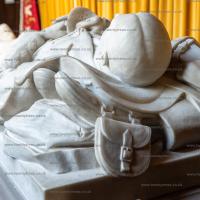
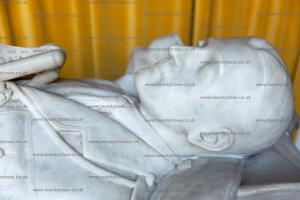
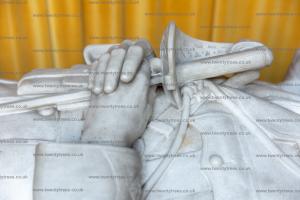
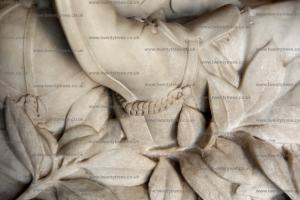
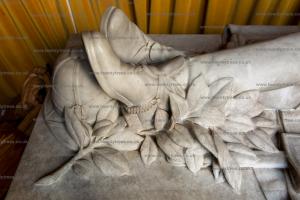
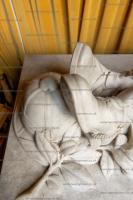
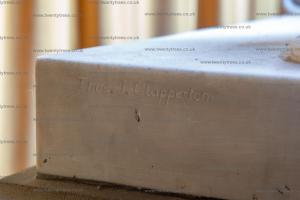
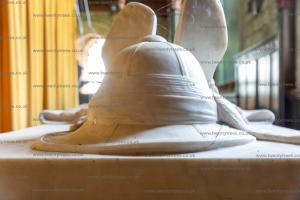
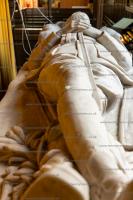
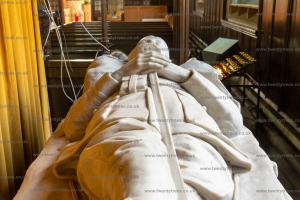
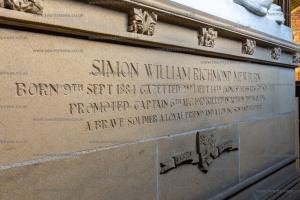
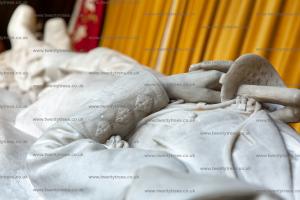
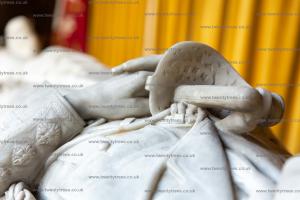
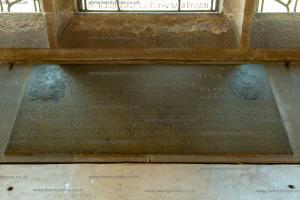
After 21st May 1916. St John Lee Church, Hexham [Map]. Monument to Simon Richard Richmond Mewburn (deceased) sculpted by Thomas John Clapperton (age 36).

After 22nd August 1918. St John Lee Church, Hexham [Map]. Monument to George Pears Walton.

After 8th January 1921. Memorial at St John Lee Church, Hexham [Map] to Rector Christian Paul Sherman.
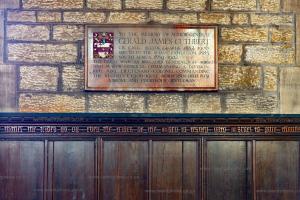
After 1931. Memorial at St John Lee Church, Hexham [Map] to Major-General Gerald James Cuthbert (age 69).
Major-General Gerald James Cuthbert: On 12th September 1861 he was born to William Cuthbert of Beaufront Castle. On 1st February 1931 Major-General Gerald James Cuthbert died.
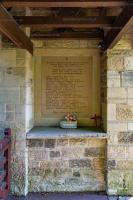
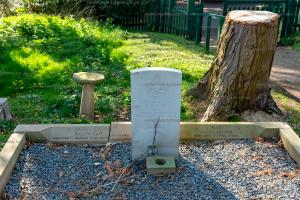
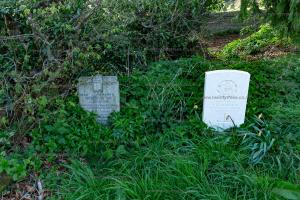
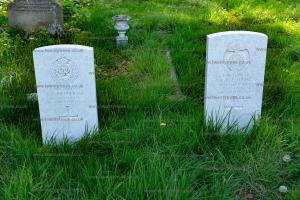
After 1945. Memorial at St John Lee Church, Hexham [Map] to those who fell in World War II, and War Graves.