Anne Boleyn. Her Life as told by Lancelot de Carle's 1536 Letter.
In 1536, two weeks after the execution of Anne Boleyn, her brother George and four others, Lancelot du Carle, wrote an extraordinary letter that described Anne's life, and her trial and execution, to which he was a witness. This book presents a new translation of that letter, with additional material from other contemporary sources such as Letters, Hall's and Wriothesley's Chronicles, the pamphlets of Wynkyn the Worde, the Memorial of George Constantyne, the Portuguese Letter and the Baga de Secrets, all of which are provided in Appendices.
Available at Amazon in eBook and Paperback format.
St Mary Magdalene's Church, Leintwardine is in Leintwardine, Herefordshire [Map], Churches in Herefordshire.
Between 1174 and 1179 Hugh Mortimer granted St Mary Magdalene's Church, Leintwardine [Map] to his new foundation of Wigmore Abbey [Map]. The St Mary Magdalene's Church, Leintwardine [Map] is built partly in the vallum, or ditch, that enclosed the Roman town of Bravonium. The foundations are Saxon and Norman but the main part of the church is 13th and 14th century. The earliest detail in the church is the blocked 12th-century W. doorway, which is probably not in situ. Towards the end of the thirteenth century a south aisle was added to the nave and in the first half of the fourteenth century a north aisle and two chapels were added together with a new chancel and an impressive south tower of five storeys over a powerful porch.
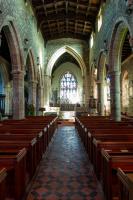
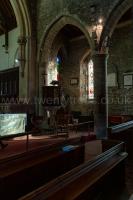
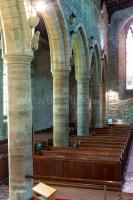
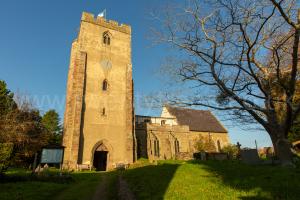
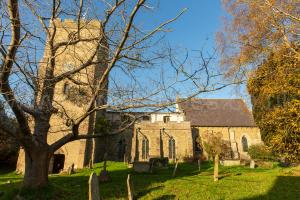
After 1326 Roger Mortimer 1st Earl March (age 38) commissioned the building of the Mortimer chapel, now known as the Lady Chapel, at St Mary Magdalene's Church, Leintwardine [Map].
Around September 1353 King Edward III of England (age 40) visited St Mary Magdalene's Church, Leintwardine [Map] and laid a cloth of gold at the feet of the statue of the Virgin Mary.
Memorials inside St Mary Magdalene's Church, Leintwardine [Map].
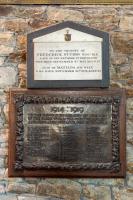
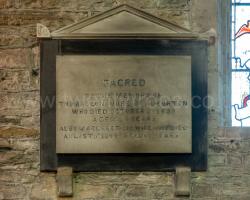
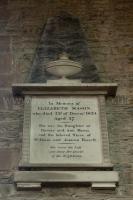
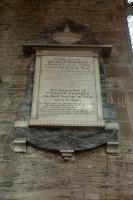
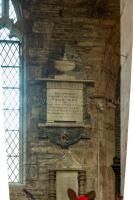
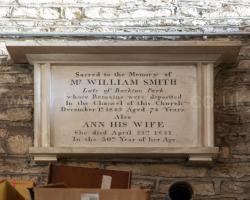
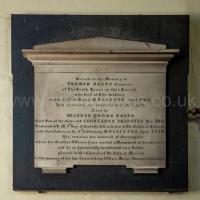
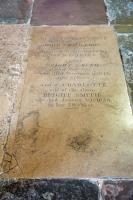
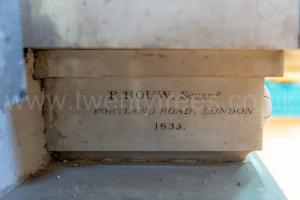
1835. Memorial to Banastre Tarleton 1st Baronet sculpted by Peter Rouw (age 63) at St Mary Magdalene's Church, Leintwardine [Map].
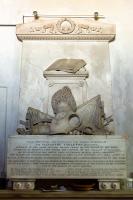
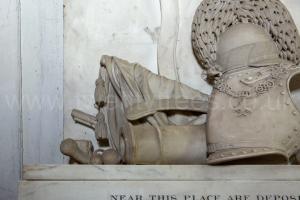

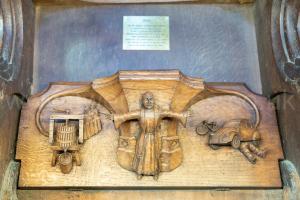
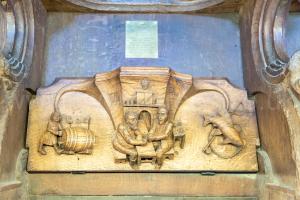
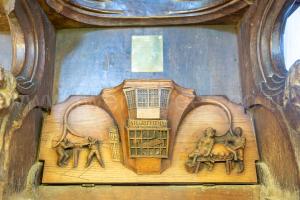
2010. A number of new misericords added to St Mary Magdalene's Church, Leintwardine [Map] after 2010.