William of Worcester's Chronicle of England
William of Worcester, born around 1415, and died around 1482 was secretary to John Fastolf, the renowned soldier of the Hundred Years War, during which time he collected documents, letters, and wrote a record of events. Following their return to England in 1440 William was witness to major events. Twice in his chronicle he uses the first person: 1. when writing about the murder of Thomas, 7th Baron Scales, in 1460, he writes '… and I saw him lying naked in the cemetery near the porch of the church of St. Mary Overie in Southwark …' and 2. describing King Edward IV's entry into London in 1461 he writes '… proclaimed that all the people themselves were to recognize and acknowledge Edward as king. I was present and heard this, and immediately went down with them into the city'. William’s Chronicle is rich in detail. It is the source of much information about the Wars of the Roses, including the term 'Diabolical Marriage' to describe the marriage of Queen Elizabeth Woodville’s brother John’s marriage to Katherine, Dowager Duchess of Norfolk, he aged twenty, she sixty-five or more, and the story about a paper crown being placed in mockery on the severed head of Richard, 3rd Duke of York.
Available at Amazon in eBook and Paperback format.
St Nicholas Square, Newcastle upon Tyne is in Newcastle upon Tyne, Northumberland [Map].
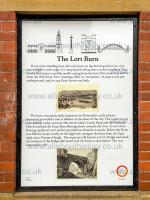
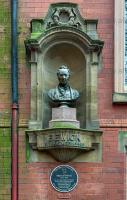
After 1827. St Nicholas Square, Newcastle upon Tyne. The Lort Burn and Statue of Thomas Bewick.
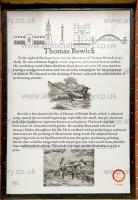
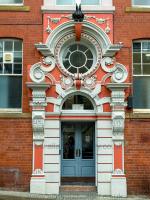
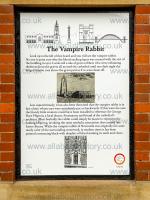
1860. St Nicholas Square, Newcastle upon Tyne. "The Vampire Rabbit". Above the doorway. Arguably a hare with its ears on backwards which might be a reference to a local doctor George Hare Phipson.
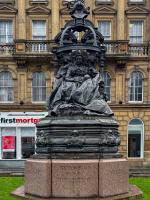
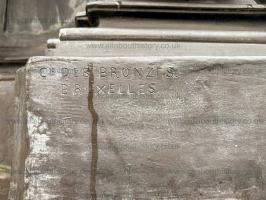
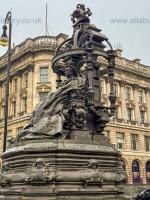
Bronze Status of Queen Victoria [Map] commemorating 500 years of Shrievalty i.e. the jurisdiction of a sheriff of Newcastle. The statue was a gift to Newcastle by William Haswell Stephenson who was mayor of the city seven times. He commissioned the sculptor Sir Alfred Gilbert [aged 48] to create it and was finally unveiled on the 24th of April 1903, two years after her death. There are two inscriptions on the pedestal reading "Victoria RI 1837-1901" and "Thine is the Greatness and the Power and the Glory and the Victory and the Majesty".