The Deeds of the Dukes of Normandy
The Gesta Normannorum Ducum [The Deeds of the Dukes of Normandy] is a landmark medieval chronicle tracing the rise and fall of the Norman dynasty from its early roots through the pivotal events surrounding the Norman Conquest of England. Originally penned in Latin by the monk William of Jumièges shortly before 1060 and later expanded at the behest of William the Conqueror, the work chronicles the deeds, politics, battles, and leadership of the Norman dukes, especially William’s own claim to the English throne. The narrative combines earlier historical sources with firsthand information and oral testimony to present an authoritative account of Normandy’s transformation from a Viking settlement into one of medieval Europe’s most powerful realms. William’s history emphasizes the legitimacy, military prowess, and governance of the Norman line, framing their expansion, including the conquest of England, as both divinely sanctioned and noble in purpose. Later chroniclers such as Orderic Vitalis and Robert of Torigni continued the history, extending the coverage into the 12th century, providing broader context on ducal rule and its impact. Today this classic work remains a foundational source for understanding Norman identity, medieval statesmanship, and the historical forces that reshaped England and Western Europe between 800AD and 1100AD.
Available at Amazon in eBook and Paperback format.
St Vincent's Church, Caythorpe is in Caythorpe, South Kesteven, Churches in Lincolnshire.
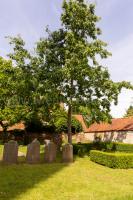
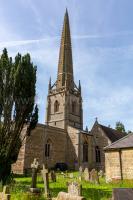
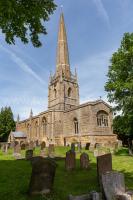
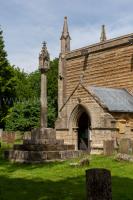
St Vincent's Church, Caythorpe [Map]. Exterior.
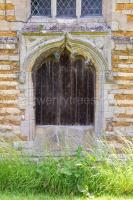
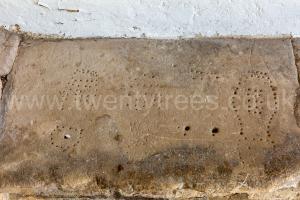
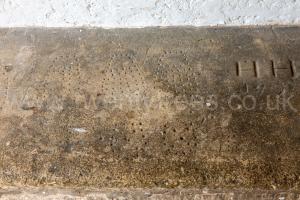
St Vincent's Church, Caythorpe [Map]. Curious markings in the church porch.
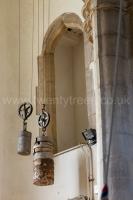
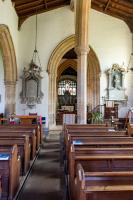
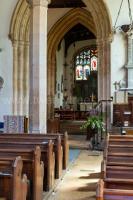
St Vincent's Church, Caythorpe [Map]. Interior.
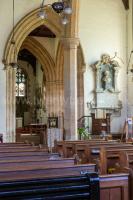
After 2nd December 1608. St Vincent's Church, Caythorpe [Map]. Memorial to Charles Hussey of Honington (deceased).
Charles Hussey of Honington: Around 1535 he was born to Robert Hussey and Jane Stydolf. Before 10th October 1585 Charles Hussey of Honington and Ellen Birch were married. On 2nd December 1608 Charles Hussey of Honington died.
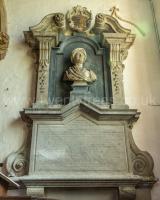
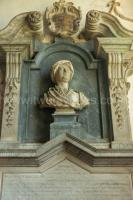

After 22nd May 1648. St Vincent's Church, Caythorpe [Map]. Memorial to Edward Hussey 1st Baronet and his second wife Elizabeth de Vic.
Elizabeth de Vic: she was born to Charles de Vic 2nd Baronet. On 31st May 1698 Edward Hussey 3rd Baronet and she were married.
On 2nd December 1664 Charles Hussey 1st Baronet (age 38) died. He was buried at St Vincent's Church, Caythorpe [Map]. His son Charles succeeded 2nd Baronet Hussey of Caythorpe in Lincolnshire.
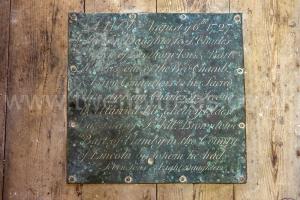
After 1727. St Vincent's Church, Caythorpe [Map]. Memorial to Anne Hussey.
Anne Hussey: she was born to Charles Hussey 1st Baronet and Elizabeth Brownlow Lady Hussey. On 6th August 1727 Anne Hussey died.
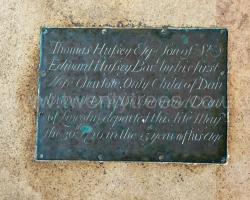
After 30th May 1730. St Vincent's Church, Caythorpe [Map]. Memorial to Thomas Hussey (deceased).
Thomas Hussey: Around 1695 he was born to Edward Hussey 3rd Baronet and Charlotte Brevint. On 30th May 1730 Thomas Hussey died.
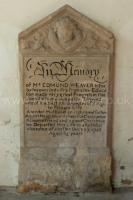
After 1748. St Vincent's Church, Caythorpe [Map]. Memorial to Edmund Weaver.
William of Worcester's Chronicle of England
William of Worcester, born around 1415, and died around 1482 was secretary to John Fastolf, the renowned soldier of the Hundred Years War, during which time he collected documents, letters, and wrote a record of events. Following their return to England in 1440 William was witness to major events. Twice in his chronicle he uses the first person: 1. when writing about the murder of Thomas, 7th Baron Scales, in 1460, he writes '… and I saw him lying naked in the cemetery near the porch of the church of St. Mary Overie in Southwark …' and 2. describing King Edward IV's entry into London in 1461 he writes '… proclaimed that all the people themselves were to recognize and acknowledge Edward as king. I was present and heard this, and immediately went down with them into the city'. William’s Chronicle is rich in detail. It is the source of much information about the Wars of the Roses, including the term 'Diabolical Marriage' to describe the marriage of Queen Elizabeth Woodville’s brother John’s marriage to Katherine, Dowager Duchess of Norfolk, he aged twenty, she sixty-five or more, and the story about a paper crown being placed in mockery on the severed head of Richard, 3rd Duke of York.
Available at Amazon in eBook and Paperback format.
After 1748. St Vincent's Church, Caythorpe [Map]. Memorials.
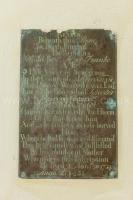
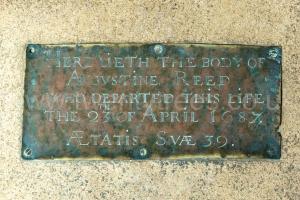
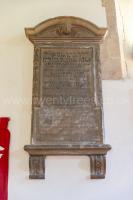
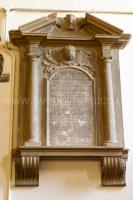
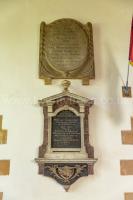
After 1785. St Vincent's Church, Caythorpe [Map]. Memorials to Richard Metheringham and William Shield.
After 1834. St Vincent's Church, Caythorpe [Map]. Memorials to the Woodcok family.
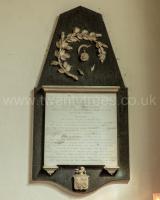
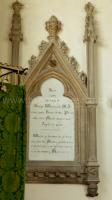
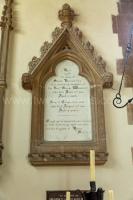
After 1834. St Vincent's Church, Caythorpe [Map]. Memorials.
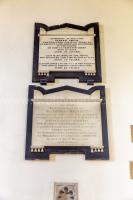
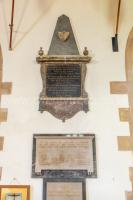
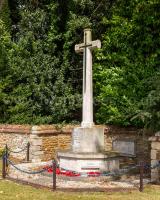
After 1918. St Vincent's Church, Caythorpe [Map]. War Memorial.
After 1918. St Vincent's Church, Caythorpe [Map]. Commonwealth War Graves.
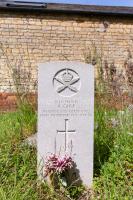
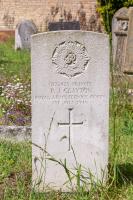
St Vincent's Church, Caythorpe [Map]. Window dedicated to the Airbourne Signals.
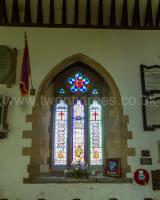
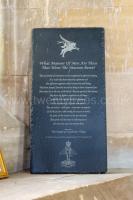
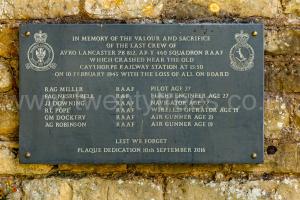
St Vincent's Church, Caythorpe [Map]. Memorial to those who lost their lives in an air accident whilst on a training mission on 10th February 1945. Avro Lancaster PB812 crashed into the old Caythorpe Railway Station with the loss of all lives.
After 1982. St Vincent's Church, Caythorpe [Map]. Memorial to those of the Parachute Signals who lost their life in the Falklands Island Campaign.
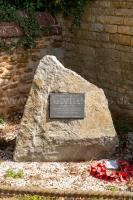
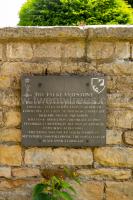
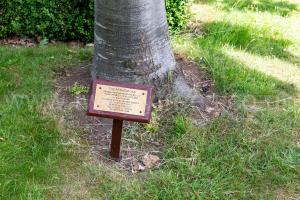
19th October 2000. St Vincent's Church, Caythorpe [Map]. The Arnhem Oak.