


Lord Lieutenant is in Lieutenant.
On 8th February 1793 Justinian Isham 7th Baronet [aged 52] was appointed Deputy Lieutenant of Northamptonshire.
In 1952 Gyles Isham 12th Baronet [aged 48] was appointed Deputy Lieutenant of Northamptonshire.
In 1757 Philip Yorke 2nd Earl of Hardwicke [aged 36] was appointed Lord Lieutenant Cambridgeshire.
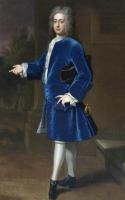
In 1761 Nicholas Bayly 2nd Baronet Bayly of Plas Newydd in Anglesey [aged 52] was appointed Lord Lieutenant of Anglesey.
On 2nd March 1869 William Owen Stanley [aged 66] was appointed Lord Lieutenant of Anglesey.

In 1596 William Knollys 1st Earl Banbury [aged 52] was appointed Lord Lieutenant of Berkshire.
In 1628 Henry Rich 1st Earl Holland [aged 37] was appointed Lord Lieutenant of Berkshire.


In 1632 Henry Rich 1st Earl Holland [aged 41] was appointed Lord Lieutenant of Berkshire.
In 1702 William Craven 2nd Baron Craven [aged 33] was appointed Lord Lieutenant of Berkshire which office he held until his death in 1711.
In 1727 Charles Beauclerk 2nd Duke St Albans [aged 30] was appointed Lord Lieutenant of Berkshire.
Henrici Quinti, Angliæ Regis, Gesta, is a first-hand account of the Agincourt Campaign, and subsequent events to his death in 1422. The author of the first part was a Chaplain in King Henry's retinue who was present from King Henry's departure at Southampton in 1415, at the siege of Harfleur, the battle of Agincourt, and the celebrations on King Henry's return to London. The second part, by another writer, relates the events that took place including the negotiations at Troye, Henry's marriage and his death in 1422.
Available at Amazon in eBook and Paperback format.

In 1660 Richard Neville [aged 44] was appointed Deputy Lieutenant Berkshire which post he held until his death.
On 22nd November 1801 William Pleydell-Bouverie 3rd Earl Radnor [aged 22] was appointed Deputy Lieutenant Berkshire.
In 1720 William Morgan [aged 19] was appointed Lord Lieutenant of Brecknockshire.
In 1865 George Pratt 2nd Marquess Camden [aged 65] was appointed Lord Lieutenant of Brecknockshire.
In 1866 Charles Morgan 1st Baron Tredegar [aged 73] was appointed Lord Lieutenant of Brecknockshire which position he held for life.
In 1607 Thomas Egerton 1st Viscount Brackley [aged 67] was appointed Lord Lieutenant of Buckinghamshire.
In 1641 William Paget 5th Baron Paget Beaudasert [aged 31] was appointed Lord Lieutenant of Buckinghamshire.
In 1660 John Egerton 2nd Earl Bridgewater [aged 36] was appointed Lord Lieutenant of Buckinghamshire.
In 1758 Richard Grenville-Temple 2nd Earl Temple [aged 46] was appointed Lord Lieutenant of Buckinghamshire.
In 1702 Henry Paget 1st Earl Uxbridge [aged 38] was appointed Deputy Lieutenant Buckinghamshire.
Henrici Quinti, Angliæ Regis, Gesta, is a first-hand account of the Agincourt Campaign, and subsequent events to his death in 1422. The author of the first part was a Chaplain in King Henry's retinue who was present from King Henry's departure at Southampton in 1415, at the siege of Harfleur, the battle of Agincourt, and the celebrations on King Henry's return to London. The second part, by another writer, relates the events that took place including the negotiations at Troye, Henry's marriage and his death in 1422.
Available at Amazon in eBook and Paperback format.
In 1761 Thomas Wynn 1st Baron Newborough [aged 25] was appointed Lord Lieutenant of Carnarvonshire.
In 1689 William Glynne 1st Baronet [aged 50] was appointed Deputy Lieutenant Carnarvonshire.
In 1846 Spencer Bulkeley Wynn 3rd Baron Newborough [aged 42] was appointed Deputy Lieutenant Carnarvonshire.
In 1670 John Egerton 2nd Earl Bridgewater [aged 46] was appointed Lord Lieutenant of Cheshire.
In 1569 Hugh "The Elder" Cholmondeley [aged 56] was appointed Deputy Lieutenant Cheshire.
In 1585 Hugh "The Elder" Cholmondeley [aged 72] was appointed Deputy Lieutenant Cheshire.
In 1587 Hugh "The Elder" Cholmondeley [aged 74] was appointed Deputy Lieutenant Cheshire.
In 1616 Thomas Savage 1st Viscount Savage [aged 30] was appointed Deputy Lieutenant Cheshire.
In 1839 William Lewis Trelawny aka Salusbury-Trelawny 8th Baronet [aged 57] was appointed Lord Lieutenant of Cornwall.
In 1851 William Williams 1st Baronet [aged 59] was appointed Deputy Warden of the Stannaries, High Sheriff of Cornwall and Deputy Lord Lieutenant of Cornwall.
Chronicle of a Bourgeois of Valenciennes
Récits d’un bourgeois de Valenciennes aka The Chronicle of a Bourgeois of Valenciennes is a vivid 14th-century vernacular chronicle written by an anonymous urban chronicler from Valenciennes in the County of Hainaut. It survives in a manuscript that describes local and regional history from about 1253 to 1366, blending chronology, narrative episodes, and eyewitness-style accounts of political, military, and social events in medieval France, Flanders, and the Low Countries. The work begins with a chronological framework of events affecting Valenciennes and its region under rulers such as King Philip VI of France and the shifting allegiances of local nobility. It includes accounts of conflicts, sieges, diplomatic manoeuvres, and the impact of broader struggles like the Hundred Years’ War on urban life in Hainaut. Written from the perspective of a burgher (bourgeois) rather than a monastery or royal court, the chronicle offers a rare lay viewpoint on high politics and warfare, reflecting how merchants, townspeople, and civic institutions experienced the turbulence of the 13th and 14th centuries. Its narrative style combines straightforward reporting of events with moral and civic observations, making it a valuable source for readers interested in medieval urban society, regional politics, and the lived experience of war and governance in pre-modern Europe.
Available at Amazon in eBook and Paperback format.

In 1619 William Cavendish 2nd Earl Devonshire [aged 29] was appointed Lord Lieutenant of Derbyshire.
On 13th November 1638 William Cavendish 3rd Earl Devonshire [aged 21] was appointed Lord Lieutenant of Derbyshire in which position he remained until 22 Mar 1642.


On 20th August 1660 William Cavendish 3rd Earl Devonshire [aged 42] was re-appointed Lord Lieutenant of Derbyshire.
In 1684 Robert Leke 3rd Earl Scarsdale [aged 29] was appointed Lord Lieutenant of Derbyshire.
In 1711 Nicholas Leke 4th Earl Scarsdale [aged 29] was appointed Lord Lieutenant of Derbyshire.
In 1630 John Freschville 1st Baron Frescheville [aged 22] was appointed Deputy Lieutenant Derbyshire.
Before 8th February 1869 Sewallis Edward Shirley 10th Earl Ferrers [aged 22] was appointed Deputy Lieutenant Derbyshire.
On 10th June 1902 Cecil Reginald John Manners [aged 34] was appointed Deputy Lieutenant Derbyshire.
In 1552 John Russell 1st Earl Bedford [aged 67] was appointed Lord Lieutenant of Devon.
In 1584 Francis Russell 2nd Earl Bedford [aged 57] was appointed Lord Lieutenant of Devon.
In 1714 William Courtenay 6th Earl Devon [aged 37] was appointed Lord Lieutenant of Devon.
Henrici Quinti, Angliæ Regis, Gesta, is a first-hand account of the Agincourt Campaign, and subsequent events to his death in 1422. The author of the first part was a Chaplain in King Henry's retinue who was present from King Henry's departure at Southampton in 1415, at the siege of Harfleur, the battle of Agincourt, and the celebrations on King Henry's return to London. The second part, by another writer, relates the events that took place including the negotiations at Troye, Henry's marriage and his death in 1422.
Available at Amazon in eBook and Paperback format.
In 1616 Amyas Bampfylde of Poltimore and North Molton [aged 56] was appointed Deputy Lieutenant Devon.
On 7th May 1552 Henry Neville 5th Earl of Westmoreland [aged 27] was appointed Lord Lieutenant of Durham.
In 1780 Francis Osborne 5th Duke Leeds [aged 28] was appointed Lord Lieutenant of East Riding Yorkshire.

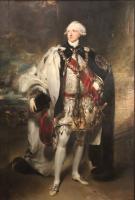

On 22nd July 1847 George Howard 7th Earl Carlisle [aged 45] was appointed Lord Lieutenant of East Riding Yorkshire.
In 1880 Marmaduke Constable-Maxwell 11th Lord Herries [aged 42] was appointed Lord Lieutenant of East Riding Yorkshire.
Charles Henry Wilson 1st Baron Nunburnholme was appointed Deputy Lieutenant East Riding of Yorkshire.

In 1712 Francis North 2nd Baron Guildford [aged 38] was appointed Lord Lieutenant of Essex.
In 1741 Benjamin Mildmay 1st Earl Fitzwalter [aged 68] was appointed Lord Lieutenant of Essex.
In 1754 Other Lewis Windsor 4th Earl Plymouth [aged 22] was appointed Lord Lieutenant of Flintshire.
In 1798 Robert Grosvenor 1st Marquess Westminster [aged 30] was appointed Lord Lieutenant of Flintshire.
In 1624 Henry Poole [aged 32] was appointed Deputy Lieutenant Gloucestershire.
The London Gazette 21873. Commissions signed by the Lord Lieutenant of the County of Gloucester, and of the City and County of the City of Gloucester, and of the City and County of the City of Bristol.
Robert Nigel Fitzhardinge Kingscote [aged 26], Esq, to be Deputy Lieutenant. Dated 15th April, 1856.

In 1667 Charles Paulet 1st Duke Bolton [aged 37] was appointed Lord Lieutenant of Hampshire.
Henrici Quinti, Angliæ Regis, Gesta, is a first-hand account of the Agincourt Campaign, and subsequent events to his death in 1422. The author of the first part was a Chaplain in King Henry's retinue who was present from King Henry's departure at Southampton in 1415, at the siege of Harfleur, the battle of Agincourt, and the celebrations on King Henry's return to London. The second part, by another writer, relates the events that took place including the negotiations at Troye, Henry's marriage and his death in 1422.
Available at Amazon in eBook and Paperback format.
In February 1676 Edward Noel 1st Earl Gainsborough [aged 35] was appointed Lord Lieutenant of Hampshire.
In 1689 Charles Paulet 1st Duke Bolton [aged 59] was appointed Lord Lieutenant of Hampshire.
In 1798 Charles Burroughs-Paulet 13th Marquess Winchester [aged 33] was appointed Lord Lieutenant of Hampshire.

In 1800 Thomas Orde-Powlett 1st Baron Bolton [aged 59] was appointed Lord Lieutenant of Hampshire.
On 18th April 1975 Arthur Valerian Wellesley 8th Duke Wellington [aged 59] was appointed Deputy Lieutenant Hampshire.
In 1640 Charles Cecil [aged 21] was appointed Lord Lieutenant of Hertfordshire.
In 1681 John Egerton 2nd Earl Bridgewater [aged 57] was appointed Lord Lieutenant of Hertfordshire.
In 1771 James Cecil 1st Marquess Salisbury [aged 22] was appointed Lord Lieutenant of Hertfordshire.
In March 1722 Edward Montagu Viscount Hinchingbrooke [aged 29] was appointed Lord Lieutenant of Huntingdonshire.

In 1841 John William Montagu 7th Earl Sandwich [aged 29] was appointed Lord Lieutenant of Huntingdonshire which office he held for life.
In 1551 Thomas Cheney [aged 66] was appointed Lord Lieutenant of Kent.
The Deeds of the Dukes of Normandy
The Gesta Normannorum Ducum [The Deeds of the Dukes of Normandy] is a landmark medieval chronicle tracing the rise and fall of the Norman dynasty from its early roots through the pivotal events surrounding the Norman Conquest of England. Originally penned in Latin by the monk William of Jumièges shortly before 1060 and later expanded at the behest of William the Conqueror, the work chronicles the deeds, politics, battles, and leadership of the Norman dukes, especially William’s own claim to the English throne. The narrative combines earlier historical sources with firsthand information and oral testimony to present an authoritative account of Normandy’s transformation from a Viking settlement into one of medieval Europe’s most powerful realms. William’s history emphasizes the legitimacy, military prowess, and governance of the Norman line, framing their expansion, including the conquest of England, as both divinely sanctioned and noble in purpose. Later chroniclers such as Orderic Vitalis and Robert of Torigni continued the history, extending the coverage into the 12th century, providing broader context on ducal rule and its impact. Today this classic work remains a foundational source for understanding Norman identity, medieval statesmanship, and the historical forces that reshaped England and Western Europe between 800AD and 1100AD.
Available at Amazon in eBook and Paperback format.
In 1797 Charles Marsham 1st Earl Romney [aged 52] was appointed Lord Lieutenant of Kent.
In 1670 John Egerton 2nd Earl Bridgewater [aged 46] was appointed Lord Lieutenant of Lancashire.
In 1676 William Stanley 9th Earl of Derby [aged 21] was appointed Lord Lieutenant of Lancashire.
In 1688 William Stanley 9th Earl of Derby [aged 33] was appointed Lord Lieutenant of Lancashire.
In 1702 James Stanley 10th Earl of Derby [aged 37] was appointed Lord Lieutenant of Lancashire.

In 1776 Edward Smith-Stanley 12th Earl of Derby [aged 23] was appointed Lord Lieutenant of Lancashire.
From 1990 to 1999 Ralph John Assheton 2nd Baron Clitheroe [aged 60] served as Vice-Lord Lieutenant of Lancashire.
In 1826 Richard Bootle-Wilbraham [aged 24] was appointed Deputy Lieutenant Lancashire.
On 14th February 1667 John Manners 8th Earl of Rutland [aged 62] was appointed Lord Lieutenant of Leicestershire.

In 1721 John Manners 3rd Duke Rutland [aged 24] was appointed Lord Lieutenant of Leicestershire.
The History of William Marshal was commissioned by his son shortly after William’s death in 1219 to celebrate the Marshal’s remarkable life; it is an authentic, contemporary voice. The manuscript was discovered in 1861 by French historian Paul Meyer. Meyer published the manuscript in its original Anglo-French in 1891 in two books. This book is a line by line translation of the first of Meyer’s books; lines 1-10152. Book 1 of the History begins in 1139 and ends in 1194. It describes the events of the Anarchy, the role of William’s father John, John’s marriages, William’s childhood, his role as a hostage at the siege of Newbury, his injury and imprisonment in Poitou where he met Eleanor of Aquitaine and his life as a knight errant. It continues with the accusation against him of an improper relationship with Margaret, wife of Henry the Young King, his exile, and return, the death of Henry the Young King, the rebellion of Richard, the future King Richard I, war with France, the death of King Henry II, and the capture of King Richard, and the rebellion of John, the future King John. It ends with the release of King Richard and the death of John Marshal.
Available at Amazon in eBook and Paperback format.
In November 1900 Henry John Brinsley Manners 8th Duke Rutland [aged 48] was appointed Lord Lieutenant of Leicestershire.

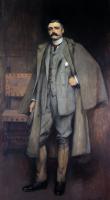

In 1949 Robert Godfrey Wolseley Bewicke-Copley 5th Baron Cromwell [aged 55] was appointed Lord Lieutenant of Leicestershire in which office he served until his death in 1966.
On 10th February 1852 Washington Sewallis Shirley 9th Earl Ferrers [aged 30] was appointed Deputy Lieutenant Leicestershire.
On 14th June 1585 Edward Manners 3rd Earl of Rutland [aged 35] was appointed Lord Lieutenant of Lincolnshire.
On 15th July 1612 Francis Manners 6th Earl of Rutland [aged 34] was appointed Lord Lieutenant of Lincolnshire.
On 12th February 1779 Brownlow Bertie 5th Duke Ancaster and Kesteven [aged 49] was appointed Lord Lieutenant of Lincolnshire and to the Privy Council.
On 12th February 1779 Robert Bertie 4th Duke Ancaster and Kesteven [aged 22] was appointed to the Privy Council and as Lord Lieutenant of Lincolnshire.
In 1675 Bennet Sherard 1st Earl Harborough was appointed Lord Lieutenant of Rutland and Deputy Lieutenant Lincolnshire.
On 30th November 1761 Richard Lumley-Saunderson 4th Earl Scarborough [aged 36] was appointed Deputy Lieutenant Lincolnshire.
In 1939 Hugh John Francis Sibthorp Cholmeley 5th Baronet [aged 32] was appointed Deputy Lieutenant Lincolnshire.
In 1628 Henry Rich 1st Earl Holland [aged 37] was appointed Lord Lieutenant of Middlesex.
Chronicle of a Bourgeois of Valenciennes
Récits d’un bourgeois de Valenciennes aka The Chronicle of a Bourgeois of Valenciennes is a vivid 14th-century vernacular chronicle written by an anonymous urban chronicler from Valenciennes in the County of Hainaut. It survives in a manuscript that describes local and regional history from about 1253 to 1366, blending chronology, narrative episodes, and eyewitness-style accounts of political, military, and social events in medieval France, Flanders, and the Low Countries. The work begins with a chronological framework of events affecting Valenciennes and its region under rulers such as King Philip VI of France and the shifting allegiances of local nobility. It includes accounts of conflicts, sieges, diplomatic manoeuvres, and the impact of broader struggles like the Hundred Years’ War on urban life in Hainaut. Written from the perspective of a burgher (bourgeois) rather than a monastery or royal court, the chronicle offers a rare lay viewpoint on high politics and warfare, reflecting how merchants, townspeople, and civic institutions experienced the turbulence of the 13th and 14th centuries. Its narrative style combines straightforward reporting of events with moral and civic observations, making it a valuable source for readers interested in medieval urban society, regional politics, and the lived experience of war and governance in pre-modern Europe.
Available at Amazon in eBook and Paperback format.
In 1642 Henry Rich 1st Earl Holland [aged 51] was appointed Lord Lieutenant of Middlesex.

In 1660 Richard Sackville 5th Earl Dorset [aged 37] was appointed Lord Lieutenant of Middlesex.
In 1841 James Brownlow William Gascoyne-Cecil 2nd Marquess Salisbury [aged 49] was appointed Lord Lieutenant of Middlesex.
In 1884 George Byng 3rd Earl Strafford [aged 53] was appointed Lord Lieutenant of Middlesex.
On 23rd March 1625 Baptist Hicks 1st Viscount Campden [aged 68] was appointed Deputy Lieutenant Middlesex.
On 6th April 1689 Henry Paget 1st Earl Uxbridge [aged 26] was appointed Deputy Lieutenant Middlesex.
In 1739 John Hobart 1st Earl Buckinghamshire [aged 45] was appointed Lord Lieutenant of Norfolk.
In 1846 Thomas Coke 2nd Earl of Leicester [aged 23] was appointed Lord Lieutenant of Norfolk.
On 13th March 1845 Augustus Frederick Keppel 5th Earl Albermarle [aged 50] was appointed Deputy Lieutenant Norfolk.
In 1802 George William Frederick Osborne 6th Duke Leeds [aged 26] was appointed Lord Lieutenant of North Riding Yorkshire.
Jean de Waurin's Chronicle of England Volume 6 Books 3-6: The Wars of the Roses
Jean de Waurin was a French Chronicler, from the Artois region, who was born around 1400, and died around 1474. Waurin’s Chronicle of England, Volume 6, covering the period 1450 to 1471, from which we have selected and translated Chapters relating to the Wars of the Roses, provides a vivid, original, contemporary description of key events some of which he witnessed first-hand, some of which he was told by the key people involved with whom Waurin had a personal relationship.
Available at Amazon in eBook and Paperback format.
In 1812 Bellingham Reginald Graham 7th Baronet [aged 22] was appointed Deputy Lieutenant of North Riding Yorkshire.
In 1740 Charles Bennet 2nd Earl Tankerville [aged 42] was appointed Lord Lieutenant of Northumberland.
In 1552 Henry Manners 2nd Earl of Rutland [aged 25] was appointed Lord Lieutenant of Nottinghamshire.
In 1574 Edward Manners 3rd Earl of Rutland [aged 24] was appointed Lord Lieutenant of Nottinghamshire.
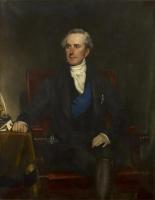
In 1809 Henry Pelham-Clinton 4th Duke Newcastle-under-Lyne [aged 23] was appointed Lord Lieutenant of Nottinghamshire which office he held until 1839.
In 1839 John Lumley-Savile 8th Earl Scarborough [aged 50] was appointed Lord Lieutenant of Nottinghamshire.
In 1683 William Clifton 3rd Baronet [aged 19] was appointed Deputy Lieutenant Nottinghamshire.
In 1688 William Glynne 1st Baronet [aged 49] was appointed Deputy Lieutenant Oxfordshire.
In April 1791 Thomas Harley [aged 60] was appointed Lord Lieutenant of Radnorshire.
In August 1804 Thomas Harley [aged 73] was appointed Lord Lieutenant of Radnorshire.
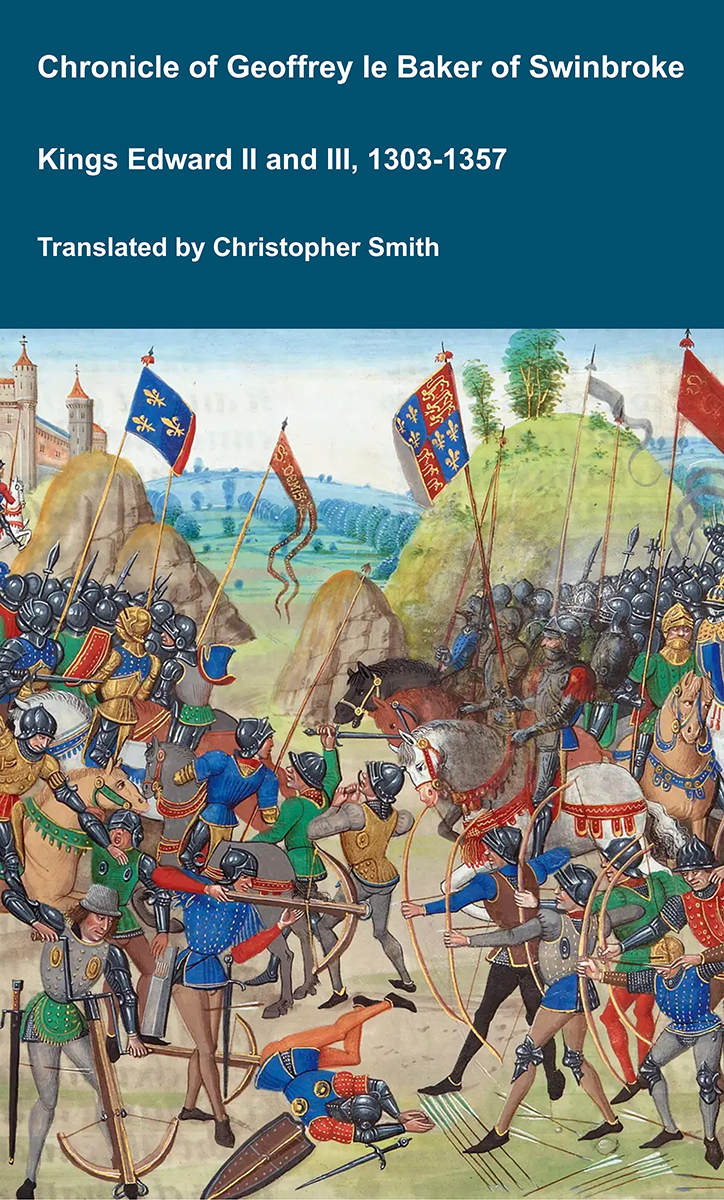
Chronicle of Geoffrey le Baker of Swinbroke
Baker was a secular clerk from Swinbroke, now Swinbrook, an Oxfordshire village two miles east of Burford. His Chronicle describes the events of the period 1303-1356: Gaveston, Bannockburn, Boroughbridge, the murder of King Edward II, the Scottish Wars, Sluys, Crécy, the Black Death, Winchelsea and Poitiers. To quote Herbert Bruce 'it possesses a vigorous and characteristic style, and its value for particular events between 1303 and 1356 has been recognised by its editor and by subsequent writers'. The book provides remarkable detail about the events it describes. Baker's text has been augmented with hundreds of notes, including extracts from other contemporary chronicles, such as the Annales Londonienses, Annales Paulini, Murimuth, Lanercost, Avesbury, Guisborough and Froissart to enrich the reader's understanding. The translation takes as its source the 'Chronicon Galfridi le Baker de Swynebroke' published in 1889, edited by Edward Maunde Thompson.
Available at Amazon in eBook and Paperback format.
In 1675 Bennet Sherard 1st Earl Harborough was appointed Lord Lieutenant of Rutland and Deputy Lieutenant Lincolnshire.
In 1712 John Cecil 6th Earl Exeter [aged 37] was appointed Lord Lieutenant of Rutland.
In 1715 Bennet Sherard 1st Earl Harborough [aged 40] was appointed Lord Lieutenant of Rutland.
Henry Manners 2nd Earl of Rutland was appointed Lord Lieutenant of Rutland.
In 1660 Francis Newport 1st Earl Bradford [aged 39] was appointed Lord Lieutenant of Shropshire.
In 1689 Francis Newport 1st Earl Bradford [aged 68] was appointed Lord Lieutenant of Shropshire.
In 1704 Richard Newport 2nd Earl Bradford [aged 59] was appointed Lord Lieutenant of Shropshire.
In 1714 Richard Newport 2nd Earl Bradford [aged 69] was appointed Lord Lieutenant of Shropshire.
In 1724 Henry Newport 3rd Earl Bradford [aged 41] was appointed Lord Lieutenant of Shropshire.
In 1590 Francis Newport [aged 35] was appointed Deputy Lieutenant Shropshire.
In 1792 John Paulett 4th Earl Paulett [aged 35] was appointed Lord Lieutenant of Somerset.
Jean de Waurin's Chronicle of England Volume 6 Books 3-6: The Wars of the Roses
Jean de Waurin was a French Chronicler, from the Artois region, who was born around 1400, and died around 1474. Waurin’s Chronicle of England, Volume 6, covering the period 1450 to 1471, from which we have selected and translated Chapters relating to the Wars of the Roses, provides a vivid, original, contemporary description of key events some of which he witnessed first-hand, some of which he was told by the key people involved with whom Waurin had a personal relationship.
Available at Amazon in eBook and Paperback format.
In 1819 Thomas Thynne 2nd Marquess of Bath [aged 53] was appointed Lord Lieutenant of Somerset.
In 1803 Henry George Herbert 2nd Earl Carnarvon [aged 30] was appointed Deputy Lieutenant Somerset.

In 1569 Walter Devereux 1st Earl Essex [aged 27] was appointed Lord Lieutenant of Staffordshire which post he held for life.
In 1887 William Legge 5th Earl Dartmouth [aged 63] was appointed Lord Lieutenant of Staffordshire.
On 14th May 1689 Henry Paget 1st Earl Uxbridge [aged 26] was appointed Deputy Lieutenant Staffordshire.
On 9th October 1852 William Legge 5th Earl Dartmouth [aged 29] was appointed Deputy Lieutenant Staffordshire.
On 10th January 1857 Washington Sewallis Shirley 9th Earl Ferrers [aged 35] was appointed Deputy Lieutenant Staffordshire.
On 8th February 1869 Sewallis Edward Shirley 10th Earl Ferrers [aged 22] was appointed Deputy Lieutenant Staffordshire.
In 1640 Thomas Jermyn [aged 67] was appointed Lord Lieutenant of Suffolk.

In 1886 Frederick William John Hervey 3rd Marquess of Bristol [aged 51] was appointed Lord Lieutenant of Suffolk.
In 1600 Matthew Browne [aged 37] was appointed Deputy Lieutenant of Surrey.
In 1619 Robert More [aged 37] was appointed Deputy Lieutenant of Surrey.
John Evelyn's Diary. 30th March 1694. I went to the Duke of Norfolk [aged 39], to desire him to make cousin Evelyn of Nutfield [aged 52] one of the Deputy-Lieutenants of Surrey, and entreat him to dismiss my brother [aged 76], now unable to serve by reason of age and infirmity. The Duke granted the one, but would not suffer my brother to resign his commission, desiring he should keep the honor of it during his life, though he could not act. He professed great kindness to our family.
Abbot John Whethamstede’s Chronicle of the Abbey of St Albans
Abbot John Whethamstede's Register aka Chronicle of his second term at the Abbey of St Albans, 1451-1461, is a remarkable text that describes his first-hand experience of the beginning of the Wars of the Roses including the First and Second Battles of St Albans, 1455 and 1461, respectively, their cause, and their consequences, not least on the Abbey itself. His text also includes Loveday, Blore Heath, Northampton, the Act of Accord, Wakefield, and Towton, and ends with the Coronation of King Edward IV. In addition to the events of the Wars of the Roses, Abbot John, or his scribes who wrote the Chronicle, include details in the life of the Abbey such as charters, letters, land exchanges, visits by legates, and disputes, which provide a rich insight into the day-to-day life of the Abbey, and the challenges faced by its Abbot.
Available at Amazon in eBook and Paperback format.
On 25th February 1905 Edward Feetham Coates 1st Baronet [aged 52] was appointed Deputy Lieutenant of Surrey.
In 1749 Francis Greville 1st Earl Brooke Warwick Castle 1st Earl Warwick [aged 29] was appointed Lord Lieutenant of Warwickshire.
In 1954 Sidney Herbert 16th Earl of Pembroke, 13th Earl of Montgomery [aged 47] was appointed Lord Lieutenant of Wiltshire which office he held for life.
On 8th November 1750 Jacob Bouverie 1st Viscount Folkestone [aged 56] was appointed Deputy Lieutenant Wiltshire.
The Times. 20th February 1891. We regret to announce that EARL BEAUCHAMP [deceased], Lord Lieutenant of Worcestershire, died suddenly yesterday at Madresfield Court, his Worcestershire seat. He was taken ill while at luncheon, after a journey to a neighbouring town, and died before medical aid could be obtained, the cause of death being heart disease. His death will be felt as a serious loss, both in the English Church and in the Conservative party. A strong and moderately "high" Churchman, he took a leading position in his own diocese and in the Church at large in the promotion and defence of Anglican interests and; though he did not come prominently before the public as a politician, he exercised for many years considerable influence in the councils of the Tory' leaders. Frederic Lygon was the second son of the fourth Earl Beauchamp by Lady Susan Caroline Eliot, daughter of the secoud earl of St. Germans. He was born in 1830, and was educated at Eton and Christ Church, Oxford. In 1852 he was elected a Fellow of All Souls, and the received tho degree of D.C.L. from his University in 1870. As the Hon. Frederick Lygon, he entered Parliament as member for Tewkesbury in 1857, for which place be sat till 1863, when be was elected for West Worcestershire. At his elder brother's death, without issue, in 1866, he succeeded to the peerage as sixth Earl. Both as a member of the House of Commons and as a peer he hold posts in Conservative Governments. In 1859 he was for a short time a Lord of the Admiralty. During the whole of Mr. Disraeli's Ministry which lasted from 1874 to 1880 he was Lord Steward of the Queen's Household. On the return of the Conservatives to power in 1885 he ras Paymaster-General of the Forces for the few months that the Government lasted, and he returned the same post when the general election put an end to Mr. Gladstone's short-lived Administration in 1886. He did not, however, remain in the Goverornent for a year, as he resigned in June, 1887. Since 1876 he had been Lord Lieutenant of Worcestershire. The deceased earl was twice married, 1st, in 1868, to Lady Mary Catharine, only daughter of the sixth Earl Stanhope (she died in 1876), and, secondly, to Lady Emily Annora Charlotte [aged 37], daughter of the third Earl Mdanvers [aged 66]. He is succeeded by his eldest son, William, Viscount Elmley, who was born in 1872.


 Become a Member via our Buy Me a Coffee page to read more.
In 1757 Other Lewis Windsor 4th Earl Plymouth [aged 25] was appointed Deputy Lieutenant Worcestershire.

In 1704 Henry Boyle 1st Baron Carleton [aged 34] was appointed Lord Lieutenant of the West Riding of Yorkshire and Lord Treasurer of Ireland.
In 1763 Francis Hastings 10th Earl Huntingdon [aged 33] was appointed Lord Lieutenant of the West Riding of Yorkshire.
In 162 Henry Grey 8th Earl Kent was appointed Lord Lieutentant of Bedfordshire which office he held until his death in 1639.
In 1621 Henry Grey 8th Earl Kent [aged 38] was appointed Lord Lieutentant of Bedfordshire which office he held until 1627.