

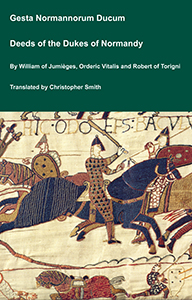
The Deeds of the Dukes of Normandy
The Gesta Normannorum Ducum [The Deeds of the Dukes of Normandy] is a landmark medieval chronicle tracing the rise and fall of the Norman dynasty from its early roots through the pivotal events surrounding the Norman Conquest of England. Originally penned in Latin by the monk William of Jumièges shortly before 1060 and later expanded at the behest of William the Conqueror, the work chronicles the deeds, politics, battles, and leadership of the Norman dukes, especially William’s own claim to the English throne. The narrative combines earlier historical sources with firsthand information and oral testimony to present an authoritative account of Normandy’s transformation from a Viking settlement into one of medieval Europe’s most powerful realms. William’s history emphasizes the legitimacy, military prowess, and governance of the Norman line, framing their expansion, including the conquest of England, as both divinely sanctioned and noble in purpose. Later chroniclers such as Orderic Vitalis and Robert of Torigni continued the history, extending the coverage into the 12th century, providing broader context on ducal rule and its impact. Today this classic work remains a foundational source for understanding Norman identity, medieval statesmanship, and the historical forces that reshaped England and Western Europe between 800AD and 1100AD.
Available at Amazon in eBook and Paperback format.
MP Great Marlow is in Member Parliament.
In 1624 Henry Borlase (age 34) was elected MP Great Marlow.

In 1625 John Backhouse was elected MP Great Marlow.
In April 1640 John Borlase 1st Baronet (age 20) was elected MP Great Marlow in the Short Parliament.
In November 1640 John Borlase 1st Baronet (age 21) was elected MP Great Marlow in the Long Parliament but the election was subequently declared void.
In 1659 William Borlase (age 38) was elected MP Great Marlow in the Third Protectorate Parliament.
In 1660 William Borlase (age 39) was elected MP Great Marlow in the Convention Parliament.
In 1661 William Borlase (age 40) was elected MP Great Marlow in the Cavalier Parliament.
In March 1669 Charles Cheyne 1st Viscount Newhaven (age 43) was elected MP Great Marlow.
In 1673 John Borlase 2nd Baronet (age 31) was elected MP Great Marlow which seat he held until his death in 1689
In 1679 Humphrey Winch 1st Baronet (age 56) was elected MP Great Marlow which seat he held until 1681.
In 1685 Humphrey Winch 1st Baronet (age 62) was elected MP Great Marlow which seat he held until 1689.
In 1754 Charles Churchill (age 40) was elected MP Great Marlow in the 1754 General Election.
In 1761, 1768 and 1774 William Clayton (age 43) was elected MP Great Marlow which seat he held until 1783.
In 1783 William Clayton 4th Baronet (age 20) was elected MP Great Marlow which seat he held until he stood down in 1790.
In 1820 Lieutenant-Colonel Thomas Peers Williams (age 24) was elected MP Great Marlow.
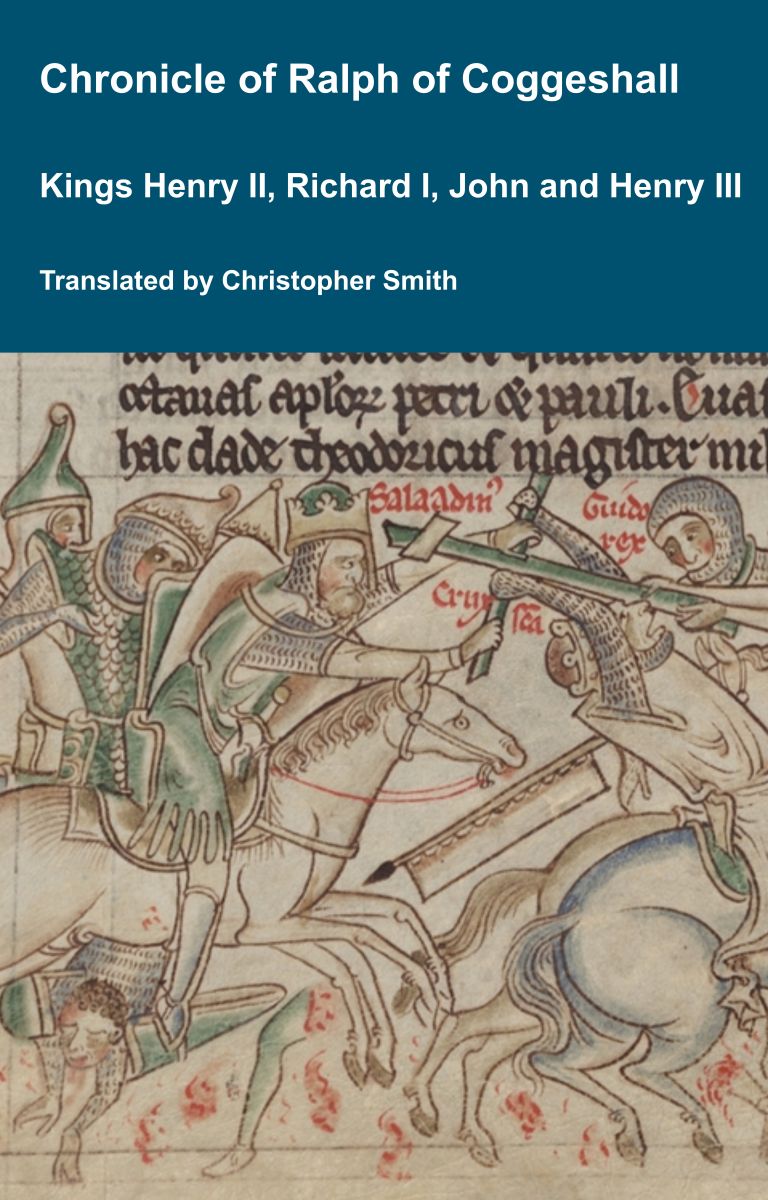
Chronicle of Abbot Ralph of Coggeshall
The Chronicle of Abbot Ralph of Coggeshall (Chronicon Anglicanum) is an indispensable medieval history that brings to life centuries of English and European affairs through the eyes of a learned Cistercian monk. Ralph of Coggeshall, abbot of the Abbey of Coggeshall in Essex in the early 13th century, continued and expanded his community’s chronicle, documenting events from the Norman Conquest of 1066 into the tumultuous reign of King Henry III. Blending eyewitness testimony, careful compilation, and the monastic commitment to record-keeping, this chronicle offers a rare narrative of political intrigue, royal power struggles, and social upheaval in England and beyond. Ralph’s work captures the reigns of pivotal figures such as Richard I and King John, providing invaluable insights into their characters, decisions, and the forces that shaped medieval rule. More than a simple annal, Chronicon Anglicanum conveys the texture of medieval life and governance, making it a rich source for scholars and readers fascinated by English history, monastic authorship, and the shaping of the medieval world.
Available at Amazon in eBook and Paperback format.
In 1832 William Clayton 5th Baronet (age 45) was elected MP Great Marlow which seat he held until 1842.