

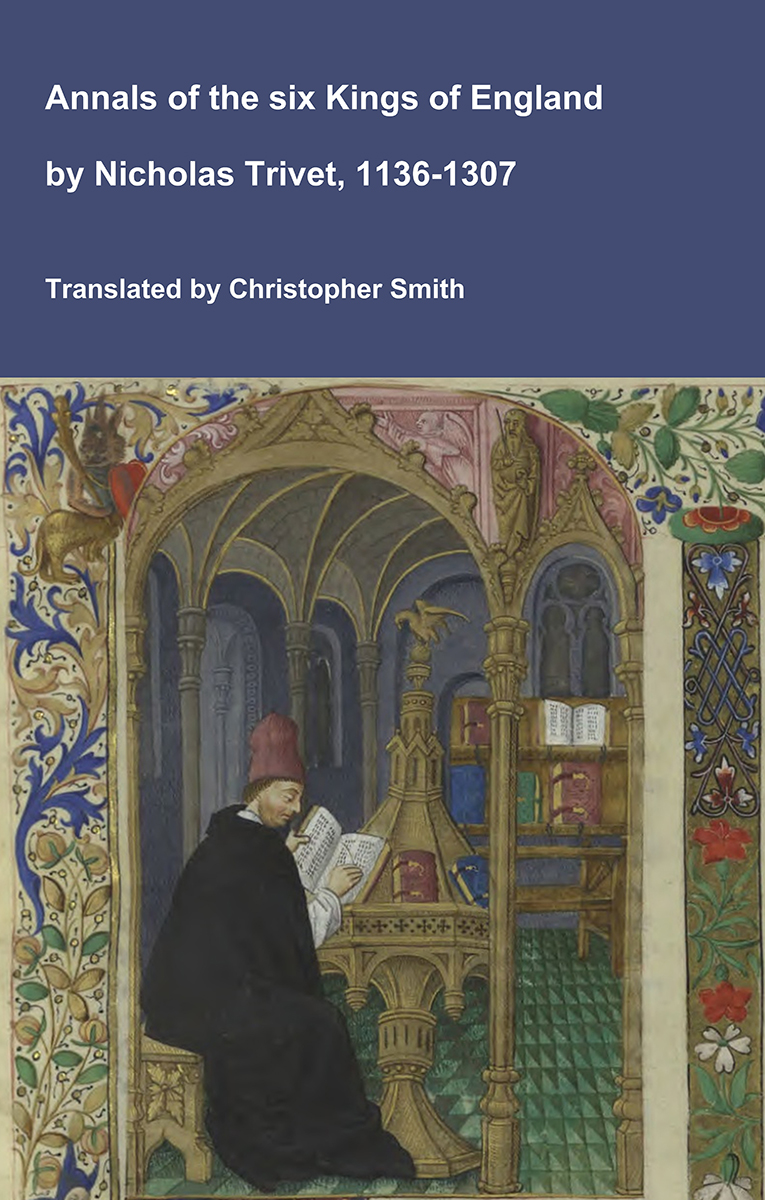
Annals of the six Kings of England by Nicholas Trivet
Translation of the Annals of the Six Kings of England by that traces the rise and rule of the Angevin aka Plantagenet dynasty from the mid-12th to early 14th century. Written by the Dominican scholar Nicholas Trivet, the work offers a vivid account of English history from the reign of King Stephen through to the death of King Edward I, blending political narrative with moral reflection. Covering the reigns of six monarchs—from Stephen to Edward I—the chronicle explores royal authority, rebellion, war, and the shifting balance between crown, church, and nobility. Trivet provides detailed insight into defining moments such as baronial conflicts, Anglo-French rivalry, and the consolidation of royal power under Edward I, whose reign he describes with particular immediacy. The Annals combines careful year-by-year reporting with thoughtful interpretation, presenting history not merely as a sequence of events but as a moral and political lesson. Ideal for readers interested in medieval history, kingship, and the origins of the English state, this chronicle remains a valuable and accessible window into the turbulent world of the Plantagenet kings.
Available at Amazon in eBook and Paperback format.
Master of the Rolls is in Master.
In May 1286 Bishop John Langton was appointed Master of the Rolls.
On 20th January 1334 Michael de Wath was appointed Master of the Rolls.
In 1462 Bishop John Alcock (age 32) was appointed Master of the Rolls.
In March 1472 Cardinal John Morton (age 52) was appointed Master of the Rolls.
On 4th January 1479 Bishop Robert Morton (age 44) was appointed Master of the Rolls.
On 13th November 1485 Bishop Robert Morton (age 50) was appointed Master of the Rolls.
From 5th May 1492 to 13th February 1494 Bishop John Blythe (age 32) was appointed Master of the Rolls.
Letters and Papers Foreign and Domestic Henry VIII 1509. 11th June 1509. 44. John Yonge (age 44), Ll.D. Confirmation of grant, 22 Jan., 23 Henry VII., of the office of keeper or master of rolls, books and records of Chancery, with the house of the Converts to dwell in, a tun of Gascon wine annually, &c. Del. Westm., 11 June, 1 Henry VIII. S.B. (countersigned: Will'mus Cantuar., T. Surrey, Oxynford, C. Somerset., Thomas Rowthale.) Pat. 1 Henry VIII, p. 2, m. 5. [165.]
On 12th May 1516 Bishop Cuthbert Tunstall (age 42) was appointed Master of the Rolls.
On 16th January 1542 Robert Southwell (age 36) was appointed Master of the Rolls which position he held until 1550.
Wriothesley's Chronicle [1508-1562]. 16th January 1542. This yeare, the 16th daye of Januarye, 1541 [1542], beganne the Parliament at Westminster, and that daye was masse of the Holy Ghost, the Kinge rydinge from his pallace at Westminster in his Parliament robes, with all his lordes spirituall and temporall in theyr robes, and so rode to the church of St. Petersc; and that daye the Kinge made knightes in the Parliament Chamber, Mr. Robert Southwell, Mr of the Rolles, and Mr. Pollard (age 37), the King's Rememberancer.
Note c. Westminster Abbey.
In 1553 Nicholas Hare (age 69) was appointed Master of the Rolls.
In 1603 Edward Bruce 1st Lord Kinloss (age 55) was appointed Master of the Rolls.
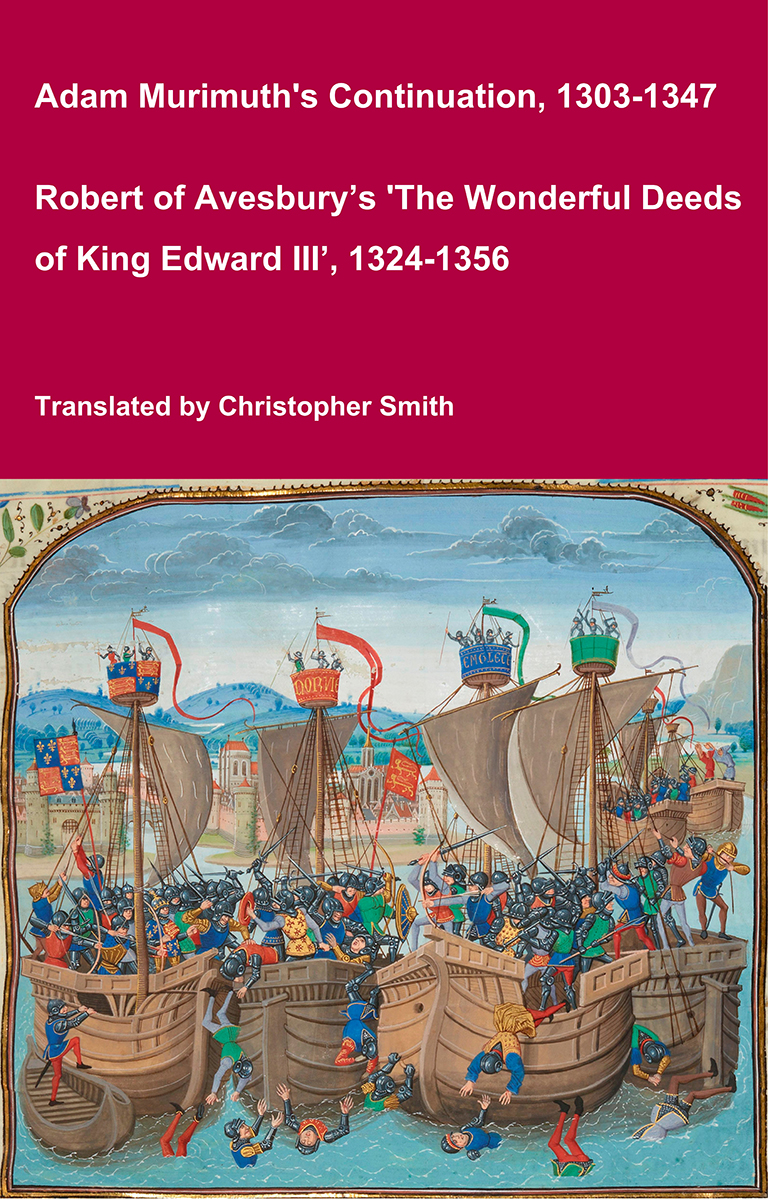
Adam Murimuth's Continuation and Robert of Avesbury’s 'The Wonderful Deeds of King Edward III'
This volume brings together two of the most important contemporary chronicles for the reign of Edward III and the opening phases of the Hundred Years’ War. Written in Latin by English clerical observers, these texts provide a vivid and authoritative window into the political, diplomatic, and military history of fourteenth-century England and its continental ambitions. Adam Murimuth Continuatio's Chronicarum continues an earlier chronicle into the mid-fourteenth century, offering concise but valuable notices on royal policy, foreign relations, and ecclesiastical affairs. Its annalistic structure makes it especially useful for establishing chronology and tracing the development of events year by year. Complementing it, Robert of Avesbury’s De gestis mirabilibus regis Edwardi tertii is a rich documentary chronicle preserving letters, treaties, and official records alongside narrative passages. It is an indispensable source for understanding Edward III’s claim to the French crown, the conduct of war, and the mechanisms of medieval diplomacy. Together, these works offer scholars, students, and enthusiasts a reliable and unembellished account of a transformative period in English and European history. Essential for anyone interested in medieval chronicles, the Hundred Years’ War, or the reign of Edward III.
Available at Amazon in eBook and Paperback format.
In 1611 Edward Phelips (age 54) was appointed Master of the Rolls which office he held until his death in 1614.