

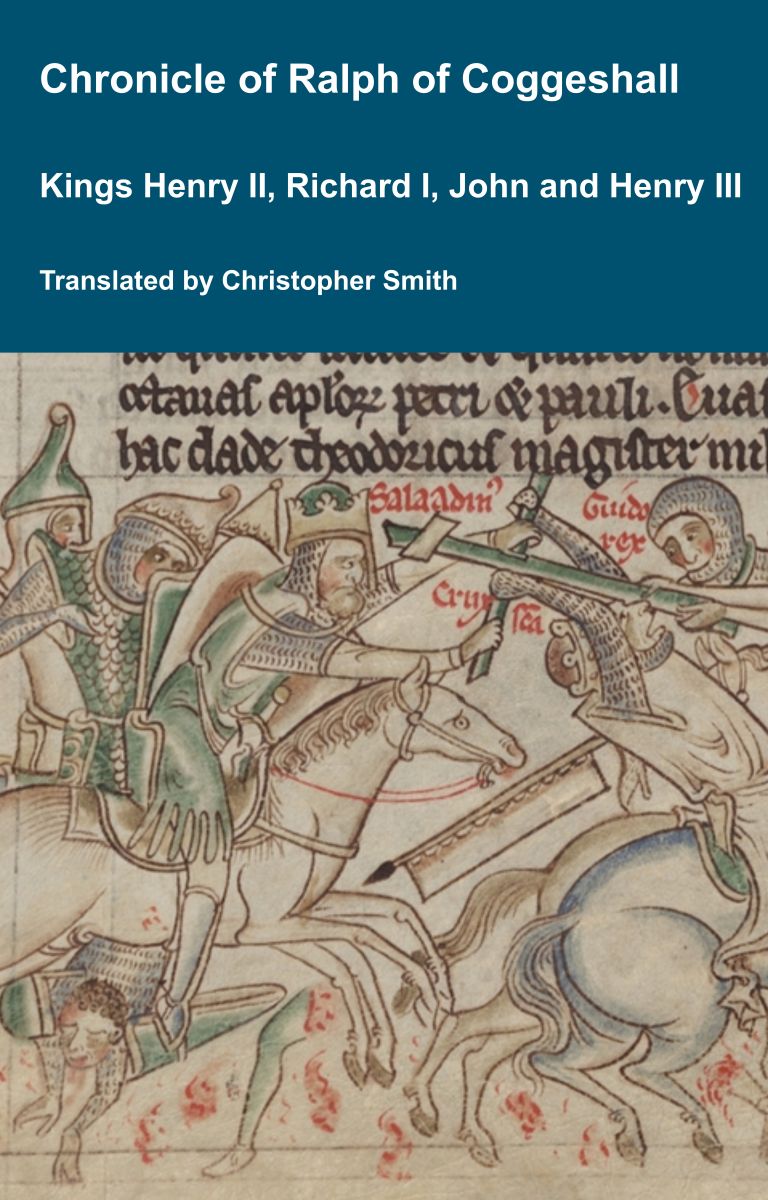
Chronicle of Abbot Ralph of Coggeshall
The Chronicle of Abbot Ralph of Coggeshall (Chronicon Anglicanum) is an indispensable medieval history that brings to life centuries of English and European affairs through the eyes of a learned Cistercian monk. Ralph of Coggeshall, abbot of the Abbey of Coggeshall in Essex in the early 13th century, continued and expanded his community’s chronicle, documenting events from the Norman Conquest of 1066 into the tumultuous reign of King Henry III. Blending eyewitness testimony, careful compilation, and the monastic commitment to record-keeping, this chronicle offers a rare narrative of political intrigue, royal power struggles, and social upheaval in England and beyond. Ralph’s work captures the reigns of pivotal figures such as Richard I and King John, providing invaluable insights into their characters, decisions, and the forces that shaped medieval rule. More than a simple annal, Chronicon Anglicanum conveys the texture of medieval life and governance, making it a rich source for scholars and readers fascinated by English history, monastic authorship, and the shaping of the medieval world.
Available at Amazon in eBook and Paperback format.
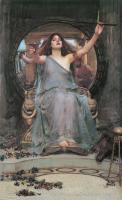
Metamorphoses Book 14. Peace bearing Hermes gave him [Ulysses] a white flower
from a black root, called Moly by the gods.
With this protection and the god's advice
he entered Circe's hall and, as she gave
the treacherous cup and with her magic wand
essayed to touch his hair, he drove her back
and terrified her with his quick drawn sword.
She gave her promise, and, right hands exchanged,
he was received unharmed into her couch,
where he required the bodies of his friends
awarded him, as his prized marriage gift.
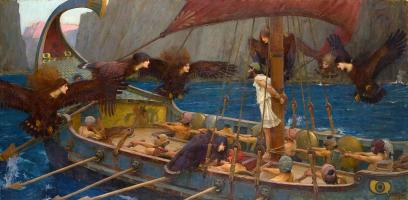
Metamorphoses Book 14. The lover Glaucus wept. He fled the embrace of Circe and her hostile power of herbs and magic spells. But Scylla did not leave the place of her disaster; and, as soon as she had opportunity, for hate of Circe, she robbed Ulysses of his men. She would have wrecked the Trojan ships, if she had not been changed beforehand to a rock which to this day reveals a craggy rim. And even the rock awakes the sailors' dread.
Metamorphoses Book 14. The goddess in her jealous rage could not and would not injure him, whom she still loved, but turned her wrath upon the one preferred. She bruised immediately the many herbs most infamous for horrid juices, which, when bruised, she mingled with most artful care and incantations given by Hecate. Then, clothed in azure vestments, she passed through her troop of fawning savage animals, and issued from the center of her hall. Pacing from there to Rhegium, opposite the dangerous rocks of Zancle, she at once entered the tossed waves boiling up with tides: on these as if she walked on the firm shore, she set her feet and, hastening on dry shod, she skimmed along the surface of the deep. Not far away there was an inlet curved, round as a bent bow, which was often used by Scylla as a favorite retreat. There, she withdrew from heat of sea and sky when in the zenith blazed the unclouded sun and cast the shortest shadows on the ground. Circe infected it before that hour, polluting it with monster-breeding drugs. She sprinkled juices over it, distilled from an obnoxious root, and thrice times nine she muttered over it with magic lips, her most mysterious charm involved in words of strangest import and of dubious thought. Scylla came there and waded in waist deep, then saw her loins defiled with barking shapes. Believing they could be no part of her, she ran and tried to drive them back and feared the boisterous canine jaws. But what she fled she carried with her. And, feeling for her thighs, her legs, and feet, she found Cerberian jaws instead. She rises from a rage of dogs, and shaggy backs encircle her shortened loins.
Metamorphoses Book 14. Now the Euboean dweller in great waves, Glaucus, had left behind the crest of Aetna, raised upward from a giant's head; and left the Cyclops' fields, that never had been torn by harrow or by plough and never were indebted to the toil of oxen yoked; left Zancle, also, and the opposite walls of Rhegium, and the sea, abundant cause of shipwreck, which confined with double shores bounds the Ausonian and Sicilian lands. All these behind him, Glaucus, swimming on with his huge hands through those Tyrrhenian seas, drew near the hills so rich in magic herbs and halls of Circe, daughter of the Sun, halls filled with men in guise of animals. After due salutations had been given-received by her as kindly-Glaucus said, "You as a goddess, certainly should have compassion upon me, a god; for you alone (if I am worthy of it) can relieve my passion. What the power of herbs can be, Titania, none knows more than I, for by their power I was myself transformed. To make the cause of my strange madness known, I have found Scylla on Italian shores, directly opposite Messenian walls. It shames me to recount my promises, entreaties, and caresses, and at last rejection of my suit. If you have known a power of incantation, I implore you now repeat that incantation here, with sacred lips-If herbs have greater power, use the tried power of herbs. But I would not request a cure-the healing of this wound. Much better than an end of pain, let her share, and feel with me my impassioned flame."
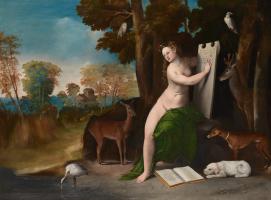
Around 1525. Dosso Dossi (age 36). "Circe and Her Lovers in a Landscape".

Around 1782 George Romney (age 47). Portrait of Amy Lyon aka Emma Hart Lady Hamilton (age 16) as Circe.

Around 1782 George Romney (age 47). Portrait of Amy Lyon aka Emma Hart Lady Hamilton (age 16) as Circe.

Before 1786 Angelica Kauffmann (age 44). "Circe enticing Ulysses".
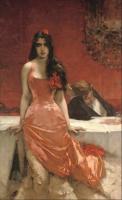
1880. Charles Hermans (age 40). "Circe the temptress".
The History of William Marshal was commissioned by his son shortly after William’s death in 1219 to celebrate the Marshal’s remarkable life; it is an authentic, contemporary voice. The manuscript was discovered in 1861 by French historian Paul Meyer. Meyer published the manuscript in its original Anglo-French in 1891 in two books. This book is a line by line translation of the first of Meyer’s books; lines 1-10152. Book 1 of the History begins in 1139 and ends in 1194. It describes the events of the Anarchy, the role of William’s father John, John’s marriages, William’s childhood, his role as a hostage at the siege of Newbury, his injury and imprisonment in Poitou where he met Eleanor of Aquitaine and his life as a knight errant. It continues with the accusation against him of an improper relationship with Margaret, wife of Henry the Young King, his exile, and return, the death of Henry the Young King, the rebellion of Richard, the future King Richard I, war with France, the death of King Henry II, and the capture of King Richard, and the rebellion of John, the future King John. It ends with the release of King Richard and the death of John Marshal.
Available at Amazon in eBook and Paperback format.
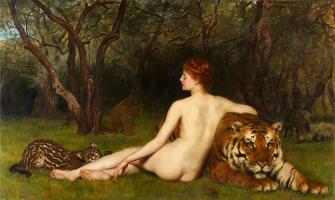
Around 1885. John Collier (age 34). "Circe".
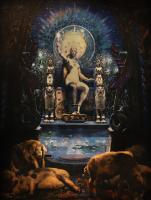
1888. Louis Chalon (age 25). "Circe".
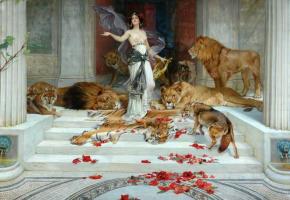
Around 1889. Wright Barker (age 25). "Circe".
1891. John William Waterhouse (age 41). "Circe Offering the Cup to Ulysses".
Ulysses: Metamorphoses Book 14. The lover Glaucus wept. He fled the embrace of Circe and her hostile power of herbs and magic spells. But Scylla did not leave the place of her disaster; and, as soon as she had opportunity, for hate of Circe, she robbed Ulysses of his men. She would have wrecked the Trojan ships, if she had not been changed beforehand to a rock which to this day reveals a craggy rim. And even the rock awakes the sailors' dread.
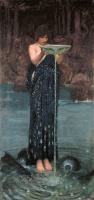
1892. John William Waterhouse (age 42). "Circe Invidiosa" aka Circe Jealous.
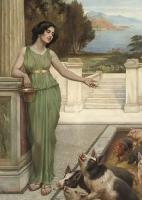
1904-1912. Wright Barker (age 40). "Circe".