

Chronicle of a Bourgeois of Valenciennes
Récits d’un bourgeois de Valenciennes aka The Chronicle of a Bourgeois of Valenciennes is a vivid 14th-century vernacular chronicle written by an anonymous urban chronicler from Valenciennes in the County of Hainaut. It survives in a manuscript that describes local and regional history from about 1253 to 1366, blending chronology, narrative episodes, and eyewitness-style accounts of political, military, and social events in medieval France, Flanders, and the Low Countries. The work begins with a chronological framework of events affecting Valenciennes and its region under rulers such as King Philip VI of France and the shifting allegiances of local nobility. It includes accounts of conflicts, sieges, diplomatic manoeuvres, and the impact of broader struggles like the Hundred Years’ War on urban life in Hainaut. Written from the perspective of a burgher (bourgeois) rather than a monastery or royal court, the chronicle offers a rare lay viewpoint on high politics and warfare, reflecting how merchants, townspeople, and civic institutions experienced the turbulence of the 13th and 14th centuries. Its narrative style combines straightforward reporting of events with moral and civic observations, making it a valuable source for readers interested in medieval urban society, regional politics, and the lived experience of war and governance in pre-modern Europe.
Available at Amazon in eBook and Paperback format.
Paternal Family Tree: Capet
1651 Charles II Crowned King Scotland
1661 Creation of Baronets and Peerages by Charles II Post Coronation
1662 Marriage of Charles II and Catherine of Braganza
1662 Trial and Execution of Henry Vane "The Younger"
In 1633 [her father] John IV King Portugal [aged 28] and [her mother] Luisa de Guzman Queen Consort Portugal [aged 19] were married. She by marriage Duchess Braganza.
On 25th November 1638 Catherine of Braganza Queen Consort England was born to [her father] John IV King Portugal [aged 34] and [her mother] Luisa de Guzman Queen Consort Portugal [aged 25] in Ducal Palace of Vila Viçosa, Nossa Senhora da Conceição, Vila Viçosa.
On 1st December 1640 [her father] John IV King Portugal [aged 36] was created IV King Portugal by popular revolt ending the sixty year period of the Iberian Union where Spain and Portugal had the same ruler. [her mother] Luisa de Guzman Queen Consort Portugal [aged 27] by marriage Queen Consort Portugal.
On 23rd October 1642 the Battle of Edge Hill was fought at Edge Hill [Map]. The Royal army was commanded by King Charles I of England, Scotland and Ireland [aged 41] (with his son [her future husband] King Charles II of England Scotland and Ireland [aged 12] present), Prince Rupert Palatinate Simmern 1st Duke Cumberland [aged 22] and Richard Spencer [aged 49] commanded the army that included Maurice Palatinate Simmern [aged 21], Richard Byron 2nd Baron Byron [aged 36], Lucius Carey 2nd Viscount Falkland [aged 32], Charles Cavendish [aged 22], Henry Newton aka Puckering 3rd Baronet [aged 24], Spencer Compton 2nd Earl of Northampton [aged 41], Thomas Salusbury 2nd Baronet [aged 30], John Byron 1st Baron Byron [aged 43] and William Feilding 1st Earl Denbigh [aged 55].
George Stewart 9th Seigneur D'Aubigny [aged 24] was killed.
Of the Parliamentary army Basil Feilding 2nd Earl Denbigh [aged 34] and Robert Devereux 3rd Earl Essex [aged 51]. Oliver St John 5th Baron St John [aged 39] was wounded.
Samuel Sandes [aged 27] commanded a troop of horse.
Richard Sandes [aged 26] was killed.
Thomas Strickland [aged 20] was knighted on the field for his gallantry.
Henry Hunloke 1st Baronet [aged 24] was knighted by King Charles I of England, Scotland and Ireland.
William Dugdale [aged 37] witnessed the battle and subsequently surveyed the battlefield.
John Hinton [aged 38] was present.
Edward Verney [aged 52] was killed.
John Assheton [aged 29] was killed.
Robert Bertie 1st Earl Lindsey [aged 59] was killed. His son Montagu [aged 34] succeeded 2nd Earl Lindsey, 15th Baron Willoughby de Eresby.
William Pennyman 1st Baronet [aged 35] commanded a regiment, of which he served as Colonel, which he led for the King.
Edward Stradling 2nd Baronet [aged 42] fought for the King, was captured imprisoned for seven months, and died a month after his release.
In November 1644 George Goring 1st Earl Norwich [aged 59] was created 1st Earl Norwich by [her future husband] King Charles II of England Scotland and Ireland [aged 14] for his support during the Civil War. The last Earl Norwich of the previous creation was his uncle Edward Denny 1st Earl Norwich brother of his mother Anne Denny [aged 77].
In 1646 Elizabeth Capell [aged 54] died in the Channel Islands [Map] to where her husband had travelled with King Charles II of England Scotland and Ireland [aged 15].
On 1st January 1651 [her future husband] King Charles II of England Scotland and Ireland [aged 20] was crowned II King Scotland at Scone Abbey [Map].

In 1656 John Middleton 1st Earl Middleton [aged 48] was created 1st Earl Middleton by [her future husband] King Charles II of England Scotland and Ireland [aged 25] whilst in exile. Grizel Durham Countess Middleton by marriage Countess Middleton.
On 6th November 1656 [her father] John IV King Portugal [aged 52] died. His son [her brother] Alfonso [aged 13] succeeded King Portuagal.
In 1659 Thomas Allen 1st Baronet [aged 26] was appointed Lord Mayor of London in which role he welcomed [her future husband] King Charles II of England Scotland and Ireland [aged 28] into the City of London on 29th May 1660; an important step to his Restoration.
Around 1660 Elizabeth Trentham Viscountess Cullen [aged 20] was appointed Lady of the Bedchamber to Catherine of Braganza Queen Consort England [aged 21].


In 1660 Barbara Villiers Countess Suffolk [aged 37] was appointed Lady of the Bedchamber to Catherine of Braganza Queen Consort England [aged 21] which position she held until 1681.
Adam Murimuth's Continuation and Robert of Avesbury’s 'The Wonderful Deeds of King Edward III'
This volume brings together two of the most important contemporary chronicles for the reign of Edward III and the opening phases of the Hundred Years’ War. Written in Latin by English clerical observers, these texts provide a vivid and authoritative window into the political, diplomatic, and military history of fourteenth-century England and its continental ambitions. Adam Murimuth Continuatio's Chronicarum continues an earlier chronicle into the mid-fourteenth century, offering concise but valuable notices on royal policy, foreign relations, and ecclesiastical affairs. Its annalistic structure makes it especially useful for establishing chronology and tracing the development of events year by year. Complementing it, Robert of Avesbury’s De gestis mirabilibus regis Edwardi tertii is a rich documentary chronicle preserving letters, treaties, and official records alongside narrative passages. It is an indispensable source for understanding Edward III’s claim to the French crown, the conduct of war, and the mechanisms of medieval diplomacy. Together, these works offer scholars, students, and enthusiasts a reliable and unembellished account of a transformative period in English and European history. Essential for anyone interested in medieval chronicles, the Hundred Years’ War, or the reign of Edward III.
Available at Amazon in eBook and Paperback format.
In 1661 Henry Wood 1st Baronet [aged 63] was in attendance on Queen Catharine [aged 22] on her voyage from Lisbon, and was subsequently a member of her Council.
In May 1661 [her future husband] King Charles II of England Scotland and Ireland [aged 30] created new Baronetcies and Peerages...
10th May 1661 William Smyth 1st Baronet [aged 45] was created 1st Baronet Smyth of Redcliff in Buckinghamshire.
16th May 1661 Hugh Smyth 1st Baronet [aged 29] was created 1st Baronet Smyth of Ashton Court in Somerset. Anne Ashburnham Lady Smyth [aged 23] by marriage Lady Smyth of Ashton Court in Somerset.
18th May 1661 Robert Jenkinson 1st Baronet [aged 40] was created 1st Baronet Jenkinson of Walcot in Oxfordshire and of Hawkesbury in Gloucestershire.
20th May 1661 William Glynne 1st Baronet [aged 23] was created 1st Baronet Glynne of Bicester aka Bisseter in Oxfordshire.
23rd May 1661 Henry Ingram 1st Viscount Irvine [aged 21] was created 1st Viscount Irvine.
In June 1661 [her future husband] King Charles II of England Scotland and Ireland [aged 31] created new Baronetcies and Peerages...
5th June 1661 James Clavering 1st Baronet [aged 41] was created 1st Baronet Clavering of Axwell in County Durham.
13th June 1661 Thomas Adams 1st Baronet [aged 75] was created 1st Baronet Adams of London.
14th June 1661 Henry Moore 1st Earl Drogheda [aged 39] was created 1st Earl Drogheda.
On 17th June 1661...
Godfrey Copley 1st Baronet [aged 38] was created 1st Baronet Copley Sprotborough.
Abraham Cullen 1st Baronet [aged 37] was created 1st Baronet Cullen of East Sheen in Surrey.
James Rushout 1st Baronet [aged 17] was created 1st Baronet Rushout of Northwick Park in Worcestershire aged only seveneteen.
William Stanley 1st Baronet [aged 33] was created 1st Baronet Stanley of Hooton in Cheshire. Charlotte Molyneux Lady Stanley by marriage Lady Stanley of Hooton in Cheshire.
Griffith Williams 1st Baronet was created 1st Baronet Williams of Penrhyn in Caernarfonshire.
18th June 1661 Thomas Vyner 1st Baronet [aged 72] was created 1st Baronet Vyner of London.
18th June 1661 Henry Winchcombe 1st Baronet [aged 18] was created 1st Baronet Winchcombe of Bucklebury in Berkshire.
26th June 1661 Theobald Taaffe 1st Earl Carlingford [aged 58] was created 1st Earl Carlingford.
In August 1661 [her future husband] King Charles II of England Scotland and Ireland [aged 31] created new Baronetcies and Peerages...
2nd August 1661 Thomas Carew 1st Baronet [aged 29] was created 1st Baronet Carew of Haccombe in Devon.
4th August 1661 John Chichester 1st Baronet [aged 38] was created 1st Baronet Chichester of Raleigh in Devon.
7th August 1661 Mark Milbanke 1st Baronet [aged 23] was created 1st Baronet Milbanke of Halnaby in Yorkshire. Elizabeth Acklom Lady Milbanke by marriage Lady Milbanke of Halnaby in Yorkshire.
17th August 1661 William Boyd 1st Earl Kilmarnock [aged 15] was created 1st Earl Kilmarnock.
On 11th December 1661 Roger Palmer 1st Earl Castlemaine [aged 27] was created 1st Earl Castlemaine, 1st Baron Limerick by [her future husband] King Charles II of England Scotland and Ireland [aged 31] in gratitude for allowing his wife Barbara Villiers 1st Duchess of Cleveland [aged 21] to become the King's mistress. Barbara Villiers 1st Duchess of Cleveland by marriage Countess Castlemaine. The title was to descend only to children of Barbara, which in effect, constrained it to her children with Charles. See Diary of Samuel Pepys, 7th December 1661.




In 1662 William Brouncker 2nd Viscount Brounckner [aged 42] was appointed Chancellor to Catherine of Braganza Queen Consort England [aged 23].
From 1662 John Hervey [aged 45] was Treasurer to Catherine of Braganza Queen Consort England [aged 23].
On 14th May 1662 Catherine of Braganza Queen Consort England [aged 23] landed at Portsmouth, Hampshire [Map].
On 21st May 1662 King Charles II of England Scotland and Ireland [aged 31] and Catherine of Braganza Queen Consort England [aged 23] were married at Portsmouth, Hampshire [Map]. She by marriage Queen Consort England. She the daughter of John IV King Portugal and Luisa de Guzman Queen Consort Portugal [aged 48]. He the son of King Charles I of England, Scotland and Ireland and Henrietta Maria Bourbon Queen Consort England [aged 52].

On 14th June 1662 Henry Vane "The Younger" [aged 49] was beheaded at Tower Hill [Map] for treason against [her husband] King Charles II [aged 32]. He had been sentenced to be hanged, drawn and quartered, however, King Charles II commuted the sentence to beheading.

Around 1663 Peter Lely [aged 44]. Portrait of Eleanor Needham Baroness Byron [aged 36] depicted as Saint Catherine of Alexandria in a guise probably intended to flatter Charles II's Queen, Catherine of Braganza [aged 24]. Accordingly she carries the martyr's palm branch and leans upon a wheel. The sitter looks to two putti in the upper left, one of whom holds a wreath of bay leaves above her head. She is wearing a copper-red dress with a richly decorated blue mantle about her arms.
Eleanor Needham Baroness Byron: Around 1627 she was born to Robert Needham 2nd Viscount Kilmorey and Eleanor Dutton. In 1644 John Byron 1st Baron Byron and she were married. She by marriage Baroness Byron of Rochdale in Lancashire. The difference in their ages was 28 years. On 26th January 1664 she died.

In 1663 Mary Fairfax Duchess Buckingham [aged 24] was appointed Lady of the Bedchamber to Catherine of Braganza Queen Consort England [aged 24] which position she held until 1693.
On 14th February 1663 [her illegitimate step-son] James Scott 1st Duke Monmouth 1st Duke Buccleuch [aged 13] was created 1st Duke Monmouth, 1st Earl Doncaster, 1st Baron Scott of Tynedale by [her husband] King Charles II of England Scotland and Ireland [aged 32].


On 20th April 1663 [her illegitimate step-son] James Scott 1st Duke Monmouth 1st Duke Buccleuch [aged 14] and Anne Scott Duchess Monmouth and Buccleuch [aged 12] were married. She by marriage Duchess Monmouth. She the daughter of Francis Scott 2nd Earl Buccleuch and Margaret Leslie Countess Buccleuch and Wemyss [aged 42]. He the illegitmate son of [her husband] King Charles II of England Scotland and Ireland [aged 32] and Lucy Walter. They were fifth cousins.

Around 1665 Peter Lely [aged 46]. Portrait of Catherine of Braganza Queen Consort England [aged 26].
Abbot John Whethamstede’s Chronicle of the Abbey of St Albans
Abbot John Whethamstede's Register aka Chronicle of his second term at the Abbey of St Albans, 1451-1461, is a remarkable text that describes his first-hand experience of the beginning of the Wars of the Roses including the First and Second Battles of St Albans, 1455 and 1461, respectively, their cause, and their consequences, not least on the Abbey itself. His text also includes Loveday, Blore Heath, Northampton, the Act of Accord, Wakefield, and Towton, and ends with the Coronation of King Edward IV. In addition to the events of the Wars of the Roses, Abbot John, or his scribes who wrote the Chronicle, include details in the life of the Abbey such as charters, letters, land exchanges, visits by legates, and disputes, which provide a rich insight into the day-to-day life of the Abbey, and the challenges faced by its Abbot.
Available at Amazon in eBook and Paperback format.
In 1665 John Denham [aged 50] and Margaret Brooke Lady Denham [aged 25] were married. She, thereafter, conducted a very public affair with the future [her brother-in-law] King James II [aged 31]. To her husband's mortification, she insisted on being acknowledged publicly as a Royal mistress, saying that she would not, unlike her predecessor Goditha Price "go up and down the back stairs". The difference in their ages was 25 years.
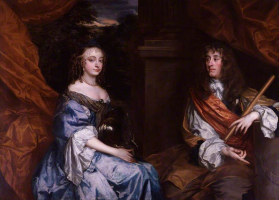


In 1665 William Cavendish 1st Duke Newcastle upon Tyne [aged 72] was created 1st Duke Newcastle upon Tyne by [her husband] King Charles II of England Scotland and Ireland [aged 34]. Margaret Lucas Duchess Newcastle upon Tyne [aged 42] by marriage Duchess Newcastle upon Tyne.
On 3rd June 1665 at the Battle of Lowestoft an English fleet commanded by [her brother-in-law] King James II of England Scotland and Ireland [aged 31], Prince Rupert Palatinate Simmern 1st Duke Cumberland [aged 45] and Edward Montagu 1st Earl Sandwich [aged 39] defeated a Dutch Fleet.
Richard Boyle was killed.
Charles Maccarthy Viscount Muskerry was killed.
Charles Berkeley 1st Earl Falmouth [aged 35] was killed by a cannonball aboard the Royal Charles. Earl Falmouth extinct, Baron Botetourt Langport in Somerset extinct. His father Charles [aged 65] succeeded 2nd Viscount Fitzhardinge of Berehaven in Kerry. Penelope Godolphin Viscountess Fitzhardinge by marriage Viscountess Fitzhardinge of Berehaven in Kerry. Possibly the only occasion when a father has succeeded his son.
Charles Weston 3rd Earl of Portland [deceased] was killed by a cannon shot. On 13th June 1665 His uncle Thomas [aged 55] succeeded 4th Earl of Portland, 4th Baron Weston of Nayland in Suffolk.
Thomas Allin 1st Baronet [aged 53] was present.
Admiral Jeremy Smith commanded the Mary.
Captain George Batts fought. He was assigned to Sir George Ayscue's [aged 49] division in the Blue Squadron.
James Ley 3rd Earl Marlborough [aged 47] was killed at the Battle of Lowestoft commanding Old James attempting to recover a captured ship. His half brother William [aged 53] succeeded 4th Earl Marlborough.


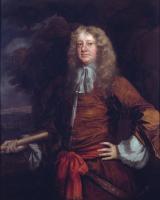
On 27th February 1666 [her mother] Luisa de Guzman Queen Consort Portugal [aged 52] died.
On 2nd August 1666 Alfonso VI King Portugal [aged 22] and Marie Françoise Élisabeth of Savoy Queen Consort of Portugal [aged 20] were married. She had arrived in Portugal on the same day. The marriage was not consummated. She subsequently married her brother-in-law Peter II King Portugal [aged 17] when he took control of the Portuguese throne; an example of Married to Two Siblings. She by marriage Queen Consort Portugal. She the daughter of Charles Amadeus Duke of Nemours and Élisabeth Bourbon Vendôme. He the son of John IV King Portugal and Luisa de Guzman Queen Consort Portugal.
On 3rd December 1666 James Stewart 1st Duke Cambridge [aged 3] was created 1st Duke Cambridge by [her brother-in-law] James, Duke of York [aged 33]. See Samuel Pepys' Diary 1666 December 06.
Those present included [her husband] King Charles II of England Scotland and Ireland [aged 36], James, Duke of York, Prince Rupert Palatinate Simmern 1st Duke Cumberland [aged 46], William Cecil 2nd Earl Salisbury [aged 75], George Monck 1st Duke Albemarle [aged 57], Thomas Howard 1st Earl Berkshire [aged 79], Charles Stewart 6th Duke Lennox 3rd Duke Richmond [aged 27], Edward Montagu 2nd Earl Manchester [aged 64], [her illegitimate step-son] James Scott 1st Duke Monmouth 1st Duke Buccleuch [aged 17].

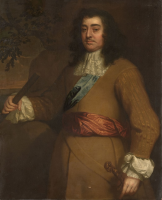


In 1667 Archbishop William Sancroft [aged 49] was appointed Archbishop of Canterbury at the express wish of [her husband] King Charles II of England Scotland and Ireland [aged 36].
On 6th January 1667 Margaret Brooke Lady Denham [aged 27] died. She was rumoured to have been poisoned by her husband John Denham [aged 52] by giving her a poisoned cup of chocolate. In any case rumour named several other possible poisoners, including her former lover [her brother-in-law] James [aged 33], his wife Anne Hyde [aged 29] and his sister-in-law, Lady Rochester [aged 21].


On 7th October 1667 Edgar Stewart 1st Duke Cambridge was created 1st Duke Cambridge by [her husband] King Charles II of England Scotland and Ireland [aged 37].
On 2nd April 1668 Peter II King Portugal [aged 18] and Marie Françoise Élisabeth of Savoy Queen Consort of Portugal [aged 21] were married. She had, two years before, married his older brother Alfonso VI King Portugal [aged 24] who he, Peter, had deposed; an example of Married to Two Siblings. She the daughter of Charles Amadeus Duke of Nemours and Élisabeth Bourbon Vendôme. He the son of John IV King Portugal and Luisa de Guzman Queen Consort Portugal.
Before July 1669 James Howard [aged 29] and [her illegitimate step-daughter] Charlotte Jemima Henrietta Maria Fitzroy Countess Yarmouth [aged 19] were married. She the illegitmate daughter of [her husband] King Charles II of England Scotland and Ireland [aged 39] and Elizabeth Killigrew Viscountess Shannon [aged 47].

Around 1670 Jacob Huysmans [aged 37]. Portrait of Catherine of Braganza Queen Consort England [aged 31].
In 1670 Barbara Villiers 1st Duchess of Cleveland [aged 29] was created 1st Duchess Cleveland, 1st Countess of Southampton and 1st Baroness Nonsuch by [her husband] King Charles II of England Scotland and Ireland [aged 39] for having given birth to five of his illegitimate children.
In 1670 William Sarsfield and [her illegitimate step-daughter] Mary Walters [aged 18] were married. She the illegitmate daughter of [her husband] King Charles II of England Scotland and Ireland [aged 39] and Lucy Walter.
On 25th May 1671 Henry Wood 1st Baronet [aged 73] died without male issue. Baronet Wood extinct. On 31st May 1671 he was buried at Ufford, Suffolk. His daughter Mary Wood Duchess Southampton [aged 8] was his heir. In view of the great wealth she was to inherit she was betrothed to Charles Fitzroy 1st Duke Southampton 2nd Duke Cleveland [aged 8], an illegitmate son of [her husband] King Charles II of England Scotland and Ireland [aged 40] and Barbara Villiers 1st Duchess of Cleveland [aged 30]. On her father's death she went to live with Barbara Villiers 1st Duchess of Cleveland. They, Mary Wood Duchess Southampton and Charles Fitzroy 1st Duke Southampton 2nd Duke Cleveland married 1679 but she died a year later from smallpox.
Before 1673 William Paston 2nd Earl of Yarmouth [aged 18] and [her illegitimate step-daughter] Charlotte Jemima Henrietta Maria Fitzroy Countess Yarmouth [aged 22] were married. She by marriage Countess of Yarmouth. She the illegitmate daughter of [her husband] King Charles II of England Scotland and Ireland [aged 42] and Elizabeth Killigrew Viscountess Shannon [aged 50]. He the son of Robert Paston 1st Earl of Yarmouth [aged 41] and Rebecca Clayton Countess Yarmouth [aged 37].
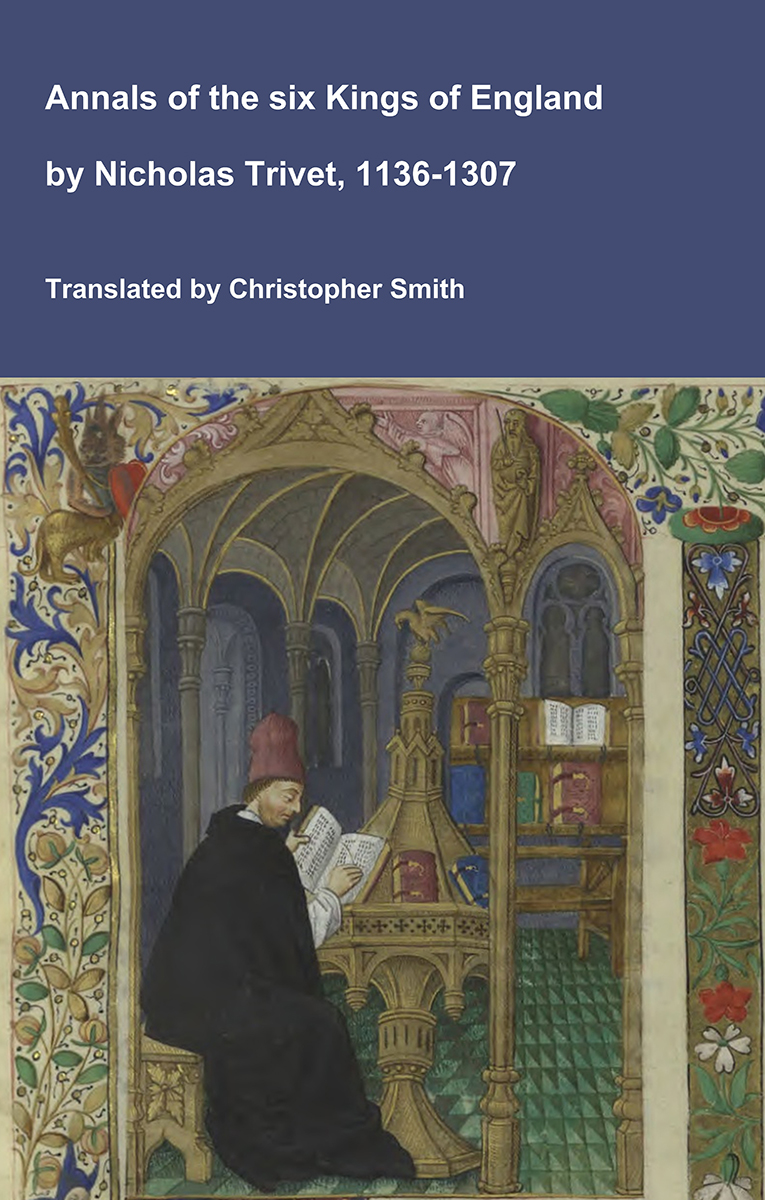
Annals of the six Kings of England by Nicholas Trivet
Translation of the Annals of the Six Kings of England by that traces the rise and rule of the Angevin aka Plantagenet dynasty from the mid-12th to early 14th century. Written by the Dominican scholar Nicholas Trivet, the work offers a vivid account of English history from the reign of King Stephen through to the death of King Edward I, blending political narrative with moral reflection. Covering the reigns of six monarchs—from Stephen to Edward I—the chronicle explores royal authority, rebellion, war, and the shifting balance between crown, church, and nobility. Trivet provides detailed insight into defining moments such as baronial conflicts, Anglo-French rivalry, and the consolidation of royal power under Edward I, whose reign he describes with particular immediacy. The Annals combines careful year-by-year reporting with thoughtful interpretation, presenting history not merely as a sequence of events but as a moral and political lesson. Ideal for readers interested in medieval history, kingship, and the origins of the English state, this chronicle remains a valuable and accessible window into the turbulent world of the Plantagenet kings.
Available at Amazon in eBook and Paperback format.
On 20th September 1673 [her brother-in-law] James, Duke of York [aged 39] and Mary of Modena Queen Consort England Scotland and Ireland [aged 14] were married. The difference in their ages was 24 years. He the son of King Charles I of England, Scotland and Ireland and [her mother-in-law] Henrietta Maria Bourbon Queen Consort England.


In 1674 Edward Lee 1st Earl Lichfield [aged 10] was created 1st Earl Lichfield as a consequence of his being betrothed to Charlotte Fitzroy Countess Lichfield [aged 9], a natural daughter of [her husband] King Charles II of England Scotland and Ireland [aged 43].
On 16th May 1674 Thomas Lennard 1st Earl of Sussex [aged 20] and [her illegitimate step-daughter] Anne Fitzroy Countess Sussex [aged 13] were married at Hampton Court Palace, Richmond [Map]. She the illegitmate daughter of [her husband] King Charles II of England Scotland and Ireland [aged 43] and Barbara Villiers 1st Duchess of Cleveland [aged 33]. They were first cousin once removed.
On 1st October 1674 George Fitzroy 1st Duke Northumberland [aged 8] was created 1st Earl of Northumberland, 1st Viscount Falmouth, 1st Baron Pontefract by [her husband] King Charles II of England Scotland and Ireland [aged 44].
On 5th October 1674 Thomas Lennard 1st Earl of Sussex [aged 20] was created 1st Earl of Sussex. [her illegitimate step-daughter] Anne Fitzroy Countess Sussex [aged 13] by marriage Countess of Sussex.
On 28th July 1675 [her illegitimate step-son] Charles "Don Carlo" Fitzcharles 1st Earl Plymouth [aged 18] was created 1st Earl Plymouth, 1st Viscount Totnes, 1st Baron Dartmouth.
On 9th August 1675 Charles Lennox 1st Duke Richmond [aged 3] was created 1st Duke Richmond, 1st Earl March, 1st Baron Settrington by [her husband] King Charles II of England Scotland and Ireland [aged 45].
On 11th September 1675 Henry Fitzroy 1st Duke Grafton [aged 11] was created 1st Duke Grafton by [her husband] King Charles II of England Scotland and Ireland [aged 45]. Isabella Bennet Duchess Grafton [aged 7] by marriage Duchess Grafton.


On 21st December 1676 Charles Beauclerk 1st Duke St Albans [aged 6] was created 1st Earl Burford, 1st Baron Heddington by [her husband] King Charles II of England Scotland and Ireland [aged 46].
On 19th September 1678 [her illegitimate step-son] Charles "Don Carlo" Fitzcharles 1st Earl Plymouth [aged 21] and Bridget Osborne Countess Plymouth were married in Wimbledon, Surrey. She by marriage Countess Plymouth. She the daughter of Thomas Osborne 1st Duke Leeds [aged 46] and Bridget Bertie Duchess Leeds [aged 49]. He the illegitmate son of [her husband] King Charles II of England Scotland and Ireland [aged 48] and Catherine Pegge [aged 43].
In 1679 John Robartes 1st Earl Radnor [aged 73] was created 1st Earl Radnor, 1st Viscount Bodmin by [her husband] King Charles II of England Scotland and Ireland [aged 48] in reward for having supported Charles' brother James II King England, Scotland and Ireland 1633-1701's future accession. Letitia Isabella Smythe Countess Radnor [aged 49] by marriage Countess Radnor.
On 17th October 1680 [her illegitimate step-son] Charles "Don Carlo" Fitzcharles 1st Earl Plymouth [aged 23] died of dysentery at Tangier [Map] during the Siege of Tangier. Earl Plymouth, Viscount Totnes and Baron Dartmouth extinct.
On 17th November 1681 Jean Chardin [aged 38] was knighted at Whitehall Palace [Map] by [her husband] King Charles II of England Scotland and Ireland [aged 51]. The same day Jean Chardin and Esther Lardinière Peigné were married.

On 2nd December 1682 Henry Somerset 1st Duke Beaufort [aged 53] was created 1st Duke Beaufort by [her husband] King Charles II of England Scotland and Ireland [aged 52]. Mary Capell Duchess Beaufort [aged 52] by marriage Duchess Beaufort.
On 6th April 1683 George Fitzroy 1st Duke Northumberland [aged 17] was created 1st Duke Northumberland by [her husband] King Charles II of England Scotland and Ireland [aged 52].
Chronicle of Walter of Guisborough
A canon regular of the Augustinian Guisborough Priory, Yorkshire, formerly known as The Chronicle of Walter of Hemingburgh, describes the period from 1066 to 1346. Before 1274 the Chronicle is based on other works. Thereafter, the Chronicle is original, and a remarkable source for the events of the time. This book provides a translation of the Chronicle from that date. The Latin source for our translation is the 1849 work edited by Hans Claude Hamilton. Hamilton, in his preface, says: 'In the present work we behold perhaps one of the finest samples of our early chronicles, both as regards the value of the events recorded, and the correctness with which they are detailed; Nor will the pleasing style of composition be lightly passed over by those capable of seeing reflected from it the tokens of a vigorous and cultivated mind, and a favourable specimen of the learning and taste of the age in which it was framed.'
Available at Amazon in eBook and Paperback format.
In 12th September 1683 Alfonso VI King Portugal [aged 40] died. His brother Peter [aged 34] succeeded King Portugal. Marie Françoise Élisabeth of Savoy Queen Consort of Portugal [aged 37] by marriage Queen Consort Portugal for a second time albeit for three months only.
In 1684 [her illegitimate step-daughter] Charlotte Jemima Henrietta Maria Fitzroy Countess Yarmouth [aged 34] died.
On 5th January 1684 Charles Beauclerk 1st Duke St Albans [aged 13] was created 1st Duke St Albans by [her husband] King Charles II of England Scotland and Ireland [aged 53].
On 6th February 1685 [her husband] King Charles II of England Scotland and Ireland [aged 54] died around midday the morning at Whitehall Palace [Map] attended by Charles Scarburgh [aged 69]. His brother [her brother-in-law] James [aged 51] succeeded II King England Scotland and Ireland. Duke York merged with the Crown. Mary of Modena Queen Consort England Scotland and Ireland [aged 26] by marriage Queen Consort England Scotland and Ireland. His brother King James II of England Scotland and Ireland, William Chiffinch [aged 83], Richard Mason [aged 52] and Archbishop William Sancroft [aged 68] were present.
The time of his death reported differtently by different contemporary sources: John Evelyn's Diary 'at halfe an houre after eleven in the morning', the Anonymous Letter to Reverend Roper: 'Yesterday noon', Ambassador Barillon's Account: 'and at noon, he died without any struggle or convulsion.' and Charl;es Scarburgh's Manuscript: 'He expired on February the Sixth soon after noon'.
According to Mark Bryant's book "Private Lives: Curious Facts about the Famous and Infamous' King Charles is supposed to have said the much repested phrase: "I am sorry, gentlemen, for being such a time a-dying." This doesn't appear to come from a contemporary source. Macaulay in his 'History of England', writing much later has "He apologised to those who had stood round him all night for the trouble which he had caused. He had been, he said, a most unconscionable time dying; but he hoped that they would excuse it." Perhaps the nearest we can find in a contemporary source is the Anonymous Letter to Reverend Roper: 'and beg the pardon of the standers by, and those that were employed about him, that he gave them so much trouble: that he hoped the work was almost over...'


Before 1687 Pieter Borsseler [aged 52]. Portrait of Catherine of Braganza Queen Consort England [aged 48].
In 1687 [her brother] Peter II King Portugal [aged 37] and [her sister-in-law] Maria Sophia of Neuburg Queen Consort Portugal [aged 20] were married. He the son of [her father] John IV King Portugal and [her mother] Luisa de Guzman Queen Consort Portugal.
In 1687 Henry Savile [aged 26] died. His will written 07 Oct 1687...
Wheras my father [aged 50], the Lord Marquess of Halifax, by indenture 11 Apr., 36 Chas. II, did settle the reversion of a certain fee farm rent of £550 out of the manors of Bradbury and Hilton, co. Durham, after the death of the now Queen Dowager [aged 45], unto himself, and after his decease unto me and my heirs. I give unto my dear wife Hester, Lady Eland [aged 18], and her heirs, all such rent of £550, and other rents issuing out of the said manors. I make my wife sole executrix, and give her all my money, plate, jewels, furniture, and personal estate whatsoever. In presence of Carbery [aged 44], Tho. Tenison [aged 47], Wm. Smythe, Edward Browne. Proved 8 June, 1688, by Hester Savile.


Before 1696 Jacob Huysmans [aged 62]. Portrait of Catherine of Braganza Queen Consort England [aged 57].

Before 1696 Jacob Huysmans [aged 62]. Portrait of Catherine of Braganza Queen Consort England [aged 57].
On 31st December 1705 Catherine of Braganza Queen Consort England [aged 67] died at the Bemposta Palace some twenty years after the death of her husband King Charles II of England Scotland and Ireland. She was buried at Monastery of São Vicente de Fora.
Before 27th August 1718 Anne Temple Lady Lyttelton [aged 69] was appointed Maid of Honour to Catherine of Braganza Queen Consort England.
Grammont. The King was ready to split his sides with laughing, when the Chevalier de Grammont, resuming the discourse, "apropos, sire," said he, "I had forgot to tell you, that, to increase my ill-humour, I was stopped, as I was getting out of my chair, by the devil of a phantom in masquerade, who would by all means persuade me that the queen had commanded me to dance with her; and as I excused myself with the least rudeness possible, she charged me to find out who was to be her partner, and desired me to send him to her immediately so that your Majesty will do well to give orders about it; for she has placed herself in ambush in a coach, to seize upon all those who pass through Whitehall. However, I must tell you, that it is worth while to see her dress; for she must have at least sixty ells of gauze and silver tissue about her, not to mention a sort of a pyramid upon her head, adorned with a hundred thousand baubles."
The Deeds of the Dukes of Normandy
The Gesta Normannorum Ducum [The Deeds of the Dukes of Normandy] is a landmark medieval chronicle tracing the rise and fall of the Norman dynasty from its early roots through the pivotal events surrounding the Norman Conquest of England. Originally penned in Latin by the monk William of Jumièges shortly before 1060 and later expanded at the behest of William the Conqueror, the work chronicles the deeds, politics, battles, and leadership of the Norman dukes, especially William’s own claim to the English throne. The narrative combines earlier historical sources with firsthand information and oral testimony to present an authoritative account of Normandy’s transformation from a Viking settlement into one of medieval Europe’s most powerful realms. William’s history emphasizes the legitimacy, military prowess, and governance of the Norman line, framing their expansion, including the conquest of England, as both divinely sanctioned and noble in purpose. Later chroniclers such as Orderic Vitalis and Robert of Torigni continued the history, extending the coverage into the 12th century, providing broader context on ducal rule and its impact. Today this classic work remains a foundational source for understanding Norman identity, medieval statesmanship, and the historical forces that reshaped England and Western Europe between 800AD and 1100AD.
Available at Amazon in eBook and Paperback format.
Grammont. The necessity of affairs had exposed Charles II from his earliest youth to the toils and perils of a bloody war. The fate of the king his father had left him for inheritance nothing but his misfortunes and disgraces. They overtook him everywhere; but it was not until he had struggled with his ill-fortune to the last extremity that he submitted to the decrees of Providence.
All those who were either great on account of their birth or their loyalty had followed him into exile; and all the young persons of the greatest distinction having afterwards joined him, composed a court worthy of a better fate.
Plenty and prosperity, which are thought to tend only to corrupt manners, found nothing to spoil in an indigent and wandering court. Necessity, on the contrary, which produces a thousand advantages whether we will or no, served them for education; and nothing was to be seen among them but an emulation in glory, politeness, and virtue.
With this little court, in such high esteem for merit, the King of England returned two years prior to the period we mention, to ascend a throne which, to all appearances, he was to fill as worthily as the most glorious of his predecessors. The magnificence displayed on thus occasion was renewed at his coronation.
The death of the Duke of Gloucester, and of the Princess Royal, which followed soon after, had interrupted the course of this splendour by a tedious mourning, which they quitted at last to prepare for the reception of the Infanta of Portugal.


Grammont. The queen was a woman of sense, and used all her endeavours to please the king, by that kind obliging behaviour which her affection made natural to her: she was particularly attentive in promoting every sort of pleasure and amusement especially such as she could be present at herself.
Grammont. Among her lovers, the most considerable, though the least professedly so, was the Duke of York: it was in vain for him to conceal it, the court was too well acquainted with his character to doubt of his inclinations for her. He did not think it proper to declare such sentiments as were not fit for Miss Hamilton to hear; but he talked to her as much as he could, and ogled her with great assiduity. As hunting was his favourite diversion, that sport employed him one part of the day, and he came home generally much fatigued; but Miss Hamilton's presence revived him, when he found her either with the queen or the duchess. There it was that, not daring to tell her of what lay heavy on his heart, he entertained her with what he had in his head: telling her miracles of the cunning of foxes and the mettle of horses; giving her accounts of broken legs and arms, dislocated shoulders, and other curious and entertaining adventures; after which, his eyes told her the rest, till such time as sleep interrupted their conversation; for these tender interpreters could not help sometimes composing themselves in the midst of their ogling.
The Lord Ross Divorce attracted considerable public attention since it highlighted the shortcomings of the divorce laws. Anne Pierrepont had clearly committed adultery since she was in London at the time of the conception whilst her husband, known by the courtesy title Lord Ross was at Belvoir Castle [Map]. The child would be considered legitimate since the parents were married; the law made no provision for adultery or divorce. He was forced to seek legislation in Parliament that made the child illegitimate and, therefore, unable to inherit his title. He was further compelled to seek legislation so that he could marry again so that he could produce an heir.
King Charles II of England Scotland and Ireland took a more than passing interest, it is believed, since divorce may have been an option since he and his wife Catherine of Braganza Queen Consort England had not had any children in their eight years of marriage despite he having had eight illegitimate children.
Grammont. "My poor philosopher," answered the Chevalier de Grammont, "you understand Latin very well, you can make good verses, you understand the course, and are acquainted with the nature of the stars in the firmament; but, as for the luminaries of the terrestrial globe, you are utterly unacquainted with them: you have told me nothing about Miss Hamilton, but what the king told me three days ago. That she has refused the savages you have mentioned is all in her favour if she had admitted their addresses, I would have had nothing to say to her, though I love her to distraction. Attend now to what I am going to say: I am resolved to marry her, and I will have my tutor Saint Evremond himself to be the first man to commend me for it. As for an establishment, I shall make my peace with the king, and will solicit him to make her one of the ladies of the bed-chamber to the queen: this he will grant me. Toulongeon will die, without my assistance.
Note. [Count de Toulongeon was elder brother to Count Grammont, who, by his death, in 1679, became, according to St. Evremond, on that event, one of the richest noblemen at court.-See St. Evremond's Works. vol. ii., p. 327.]
"Notwithstanding all his care; Miss Hamilton will have Semeat,-[A country seat belonging to the family of the Grammonts.]-with the Chevalier de Grammont, as an indemnification for the Norfolks and Richmonds. Now, have you any thing to advance against this project? For I will bet you an hundred louis, that everything will happen as I have foretold it."
Grammont. This billet, with the present, was delivered to Miss Blague with the same success as the other had been conveyed to Lady Muskerry. Miss Hamilton had just received an account of it, when the latter came to pay her a visit: something seemed to possess her thoughts very much; when, having stayed some time, her cousin desired her to walk into her cabinet. As soon as they were there: "I desire your secrecy for what I am going to tell you," said Lady Muskerry. "Do not you wonder what strange creatures men are? Do not trust to them, my dear cousin: my Lord Muskerry, who, before our marriage, could have passed whole days and nights in seeing me dance, thinks proper now to forbid me dancing, and says it does not become me. This is not all: he has so often rung in my ears the subject of this masquerade, that I am obliged to hide from him the honour the queen has done me, in inviting me to it. However, I am surprised I am not informed who is to be my partner: but if you knew what a plague it is, to find out, in this cursed town, in what manner the people of Babylon dress, you would pity me for what I have suffered since the time I have been appointed: besides, the cost which it puts me to is beyond all imagination."

Grammont. His intention, which we mentioned before, of establishing himself in the confidence of Miss Stewart, no longer occupied his thoughts: she now was of opinion that she was capable of being the mistress of her own conduct: she had done all that was necessary to inflame the king's passions, without exposing her virtue by granting the last favours; but the eagerness of a passionate lover, blessed with favourable opportunities, is difficult to withstand, and still more difficult to vanquish; and Miss Stewart's virtue was almost exhausted, when the queen was attacked with a violent fever, which soon reduced her to extreme danger.
Grammont. This last account surprised all the assembly, except those who had a share in the plot. The queen assured them, that all she had appointed for the ball were present; and the king, having paused some minutes: "I bet," said he, "that it is the Duchess of Newcastle." "And I," said Lord Muskerry, coming up to Miss Hamilton, "will bet it is another fool; for I am very much mistaken if it is not my wife."
Grammont. Then it was that Miss Stewart was greatly pleased with herself for the resistance she had made, though she had paid dearly for it: a thousand flattering hopes of greatness and glory filled her heart, and the additional respect that was universally paid her, contributed not a little to increase them. The queen was given over by her physicians: the few Portuguese women that had not been sent back to their own country filled the court with doleful cries; and the good nature of the king was much affected with the situation in which he saw a princess, whom, though he did not love her, yet he greatly esteemed. She loved him tenderly, and thinking that it was the last time she should ever speak to him, she told him, that the concern he showed for her death, was enough to make her quit life with regret; but that not possessing charms sufficient to merit his tenderness, she had at least the consolation in dying to give place to a consort who might be more worthy of it, and to whom heaven, perhaps, might grant a blessing that had been refused to her. At these words, she bathed his hands with some tears, which he thought would be her last: he mingled his own with hers; and without supposing she would take him at his word, he conjured her to live for his sake. She had never yet disobeyed him; and, however dangerous sudden impulses may be, when one is between life and death, this transport of joy, which might have proved fatal to her, saved her life, and the king's wonderful tenderness had an effect, for which every person did not thank heaven in the same manner.
Grammont. It was in the height of the rejoicings they were making for this new queen, in all the splendour of a brilliant court, that the Chevalier de Grammont arrived to contribute to its magnificence and diversions.
Accustomed as he was to the grandeur of the court of France, he was surprised at the politeness and splendour of the court of England. The king was inferior to none, either in shape or air; his wit was pleasant; his disposition easy and affable; his soul, susceptible of opposite impressions, was compassionate to the unhappy, inflexible to the wicked, and tender even to excess; he showed great abilities in urgent affairs, but was incapable of application to any that were not so: his heart was often the dupe, but oftener the slave, of his engagements.
The character of the Duke of York was entirely different he had the reputation of undaunted courage, an inviolable attachment for his word, great economy in his affairs, hauteur, application, arrogance, each in their turn: a scrupulous observer of the rules of duty and the laws of justice; he was accounted a faithful friend, and an implacable enemy.
His morality and justice, struggling for some time with prejudice, had at last triumphed, by his acknowledging for his wife Miss Hyde, maid of honour to the Princess Royal, whom he had secretly married in Holland. Her father, from that time prime minister of England, supported by this new interest, soon rose to the head of affairs, and had almost ruined them: not that he wanted capacity, but he was too self-sufficient.


Grammont. It was in consequence of this impatience, of which Miss Hamilton was informed, that she founded the design of diverting herself at the expense of this silly woman. The queen sent notes to those whom she appointed to be present, and described the manner in which they were to be dressed. Miss Hamilton wrote a note exactly in the same manner to Lady Muskerry, with directions for her to be dressed in the Babylonian fashion.
Abbot John Whethamstede’s Chronicle of the Abbey of St Albans
Abbot John Whethamstede's Register aka Chronicle of his second term at the Abbey of St Albans, 1451-1461, is a remarkable text that describes his first-hand experience of the beginning of the Wars of the Roses including the First and Second Battles of St Albans, 1455 and 1461, respectively, their cause, and their consequences, not least on the Abbey itself. His text also includes Loveday, Blore Heath, Northampton, the Act of Accord, Wakefield, and Towton, and ends with the Coronation of King Edward IV. In addition to the events of the Wars of the Roses, Abbot John, or his scribes who wrote the Chronicle, include details in the life of the Abbey such as charters, letters, land exchanges, visits by legates, and disputes, which provide a rich insight into the day-to-day life of the Abbey, and the challenges faced by its Abbot.
Available at Amazon in eBook and Paperback format.
Grammont. She assembled her counsel to advise about the means of sending it: this cabinet was composed of one of her brothers and a sister, who were glad to divert themselves at the expense of those who deserved it. After having consulted some time, they at last resolved upon a mode of conveying it into her own hands. Lord Muskerry was just going out, when she received it: he was a man of honour, rather serious, very severe, and a mortal enemy to ridicule. His wife's deformity was not so intolerable to him, as the ridiculous figure she made upon all occasions. He thought that he was safe in the present case, not believing that the queen would spoil her masquerade by naming Lady Muskerry as one of the dancers nevertheless, as he was acquainted with the passion his wife had to expose herself in public, by her dress and dancing, he had just been advising her very seriously to content herself with being a spectator of this entertainment, even though the queen should have the cruelty to engage her in it: he then took the liberty to show her what little similarity there was between her figure, and that of persons to whom dancing and magnificence in dress were allowable. His sermon concluded at last, by an express prohibition to solicit a place at this entertainment, which they had no thoughts of giving her; but far from taking his advice in good part, she imagined that he was the only person who had prevented the queen from doing her an honour she so ardently desired; and as soon as he was gone out, her design was to go and throw herself at her Majesty's feet to demand justice. She was in this very disposition when she received the billet: three times did she kiss it; and without regarding her husband's injunctions, she immediately got into her coach in order to get information of the merchants who traded to the Levant, in what manner the ladies of quality dressed in Babylon.
Grammont. The queen, imagining that so splendid a carriage might prove fortunate for her, wished to appear in it first, with the Duchess of York. Lady Castlemaine, who had seen them in it, thinking that it set off a fine figure to greater advantage than any other, desired the king to lend her this wonderful calash to appear in it the first fine day in Hyde Park: Miss Stewart had the same wish, and requested to have it on the same day. As it was impossible to reconcile these two goddesses, whose former union was turned into mortal hatred, the king was very much perplexed.
Grammont. The queen dowager, who, though she had no share in these broils, had no objection to them, and as usual being diverted with this circumstance, she took occasion to joke with the Chevalier de Grammont, for having thrown this bone of contention among such competitors; and did not fail to give him, in the presence of the whole court, those praises which so magnificent a present deserved: "But how comes it," said she, "that you have no equipage yourself, though you are at so great an expense? for I am told that you do not keep even a single footman, and that one of the common runners in the streets lights you home with a stinking link." "Madam," said he, "the Chevalier de Grammont hates pomp: my linkboy, of whom you speak, is faithful to my service; and besides, he is one of the bravest fellows in the world. Your Majesty is unacquainted with the nation of link-boys: it is a charming one, I can assure you: a man cannot step out in the night without being surrounded by a dozen of them. The first time I became acquainted with them, I retained all that offered me their services; so that when I arrived at Whitehall, I had at least two hundred about my chair: the sight was new; for those who had seen me pass with this illumination, asked whose funeral it was. These gentlemen, however, began fighting about some dozen shillings I had thrown among them then; and he whom your Majesty mentions having beaten three or four of his companions, I retained him for his valour. As for the parade of coaches and footmen, I despise it: I have sometimes had five or six valets-de-chambre at once, without having a single servant in livery, except my chaplain Poussatin." "How!" said the queen, bursting out laughing, "a chaplain in your livery! he surely was not a priest?" "Pardon me, madam," said he, "and the first priest in the world for dancing the Biscayan jig." "Chevalier," said the king, "pray tell us the history of your chaplain Poussatin."
Grammont. She was willing to do everything in order, and therefore began with her cousin Muskerry, on account of her rank. Her two darling foibles were dress and dancing. Magnificence of dress was intolerable with her figure; and though her dancing was still more insupportable, she never missed a ball at court: and the queen had so much complaisance for the public, as always to make her dance; but it was impossible to give her a part in an entertainment so important and splendid as this masquerade: however, she was dying with impatience for the orders she expected.
Grammont. The ball was not very well executed, if one maybe allowed the expression, so long as they danced only slow dances; and yet there were as good dancers, and as beautiful women in this assembly, as were to be found in the whole world: but as their number was not great, they left the French, and went to country dances. When they had danced some time, the king thought fit to introduce his auxiliaries, to give the others a little respite; the queen's and the duchess's maids of honour were therefore called in to dance with the gentlemen.
Kings Wessex: Great x 19 Grand Daughter of King Edmund "Ironside" I of England
Kings Gwynedd: Great x 23 Grand Daughter of Maredudd ab Owain King Deheubarth King Powys King Gwynedd
Kings Seisyllwg: Great x 25 Grand Daughter of Hywel "Dda aka Good" King Seisyllwg King Deheubarth
Kings Powys: Great x 23 Grand Daughter of Maredudd ab Owain King Deheubarth King Powys King Gwynedd
Kings Godwinson: Great x 18 Grand Daughter of King Harold II of England
Kings England: Great x 9 Grand Daughter of King Edward III of England
Kings Scotland: Great x 18 Grand Daughter of King Duncan I of Scotland
Kings Franks: Great x 25 Grand Daughter of Charles "Charlemagne aka Great" King of the Franks King Lombardy Holy Roman Emperor
Kings France: Great x 19 Grand Daughter of Hugh I King of the Franks
Kings Duke Aquitaine: Great x 23 Grand Daughter of Ranulf I Duke Aquitaine
Great x 4 Grandfather: Fernando II Duke of Braganza  8 x Great Grand Son of King Henry "Curtmantle" II of England
Great x 3 Grandfather: Jaime I Duke of Braganza 4 x Great Grand Son of King Edward III of England
Great x 4 Grandmother: Isabella Aviz 3 x Great Grand Daughter of King Edward III of England
Great x 2 Grandfather: Teodosio I Duke of Braganza 5 x Great Grand Son of King Edward III of England
Great x 1 Grandfather: Joao I Duke of Braganza 6 x Great Grand Son of King Edward III of England
Great x 4 Grandfather: Fernando II Duke of Braganza 8 x Great Grand Son of King Henry "Curtmantle" II of England
Great x 3 Grandfather: Dinis of Graganza Count of Lemos 4 x Great Grand Son of King Edward III of England
Great x 4 Grandmother: Isabella Aviz 3 x Great Grand Daughter of King Edward III of England
Great x 2 Grandmother: Isabel de Lencastre 5 x Great Grand Daughter of King Edward III of England
GrandFather: Teodosio II Duke of Braganza 7 x Great Grand Son of King Edward III of England
Father: John IV King Portugal 8 x Great Grand Son of King Edward III of England
Great x 1 Grandfather: Juan Fernández de Velasco y Tovar 5th Duke of Frías
GrandMother: Ana de Velasco y Téllez Girón Duchess Braganza
Great x 2 Grandfather: Pedro Téllez Girón y de la Cueva 1st Duke of Osuna
Great x 1 Grandmother: María Tellez Girón
Catherine of Braganza Queen Consort England 9 x Great Grand Daughter of King Edward III of England
GrandFather: Manuel Perez de Guzman y Silva 8th Duke of Medina Sidonia