

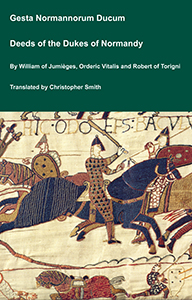
The Deeds of the Dukes of Normandy
The Gesta Normannorum Ducum [The Deeds of the Dukes of Normandy] is a landmark medieval chronicle tracing the rise and fall of the Norman dynasty from its early roots through the pivotal events surrounding the Norman Conquest of England. Originally penned in Latin by the monk William of Jumièges shortly before 1060 and later expanded at the behest of William the Conqueror, the work chronicles the deeds, politics, battles, and leadership of the Norman dukes, especially William’s own claim to the English throne. The narrative combines earlier historical sources with firsthand information and oral testimony to present an authoritative account of Normandy’s transformation from a Viking settlement into one of medieval Europe’s most powerful realms. William’s history emphasizes the legitimacy, military prowess, and governance of the Norman line, framing their expansion, including the conquest of England, as both divinely sanctioned and noble in purpose. Later chroniclers such as Orderic Vitalis and Robert of Torigni continued the history, extending the coverage into the 12th century, providing broader context on ducal rule and its impact. Today this classic work remains a foundational source for understanding Norman identity, medieval statesmanship, and the historical forces that reshaped England and Western Europe between 800AD and 1100AD.
Available at Amazon in eBook and Paperback format.
Charles II King Naples was appointed II King Naples.
On 31st January 1246 [his father] King Charles Capet of Sicily and [his mother] Beatrice Provence Queen Consort Sicily were married. She the daughter of [his grandfather] Raymond IV Count Provence and [his grandmother] Beatrice Savoy Countess Provence. He the son of King Louis VIII of France and Blanche Ivrea Queen Consort France.
In 1254 Charles II King Naples was born to [his father] King Charles Capet of Sicily and [his mother] Beatrice Provence Queen Consort Sicily.
In 1265 [his brother-in-law] Robert Dampierre III Count Flanders and [his sister] Blanche Capet Countess Flanders were married. She by marriage Countess Flanders. He the son of Guy Dampierre Count Flanders and Mathilde Bethune.
On 26th February 1266 the Battle of Benevento was fought between [his father] King Charles Capet of Sicily and Manfred King Sicily. Manfred King Sicily was killed. King Charles Capet of Sicily succeeded King Sicily. [his mother] Beatrice Provence Queen Consort Sicily by marriage Queen Consort Sicily.
In 1267 [his mother] Beatrice Provence Queen Consort Sicily died.
After 23rd August 1268 Guy Montfort Count Nola was created 1st Count Nola by [his father] King Charles Capet of Sicily as a reward for his performance at the Battle of Tagliacozzo
In November 1268 [his father] King Charles Capet of Sicily and [his step-mother] Margaret Burgundy Queen Consort Sicily were married. She by marriage Queen Consort Sicily. The difference in their ages was 22 years. He the son of [his grandfather] King Louis VIII of France and [his grandmother] Blanche Ivrea Queen Consort France.
In July 1269 [his sister] Blanche Capet Countess Flanders died.
In 1270 Charles II King Naples and Mary of Hungary Queen Consort Naples were married.
On 8th September 1271 [his son] Charles Martel King Hungary was born to Charles II King Naples and [his wife] Mary of Hungary Queen Consort Naples. He married 1281 Clementia Habsburg and had issue.
In 1273 [his daughter] Margaret Capet Countess Valois was born to Charles II King Naples and [his wife] Mary of Hungary Queen Consort Naples. She married 16th August 1290 Charles Valois I Count Valois, son of King Philip III of France and Isabella Barcelona Queen Consort France, and had issue.
On 9th February 1274 [his son] Saint Louis Capet Bishop Toulouse was born to Charles II King Naples and [his wife] Mary of Hungary Queen Consort Naples.
In 1275 [his son] Robert "Wise" King Naples was born to Charles II King Naples and [his wife] Mary of Hungary Queen Consort Naples.
In 1281 [his son] Raymond Berengar Capet was born to Charles II King Naples and [his wife] Mary of Hungary Queen Consort Naples. He married 1305 Margaret Bourbon, daughter of Robert Bourbon 1st Count Clermont and Beatrice Burgundy.
In 1281 Charles Martel King Hungary and Clementia Habsburg were married. She the daughter of Rudolph I King Romans and Gertrude Hohenburg. He the son of Charles II King Naples and Mary of Hungary Queen Consort Naples.
In 1283 [his son] John Capet was born to Charles II King Naples and [his wife] Mary of Hungary Queen Consort Naples.
In 1284 [his son] Tristan Capet was born to Charles II King Naples and [his wife] Mary of Hungary Queen Consort Naples. He died aged four in 1288.
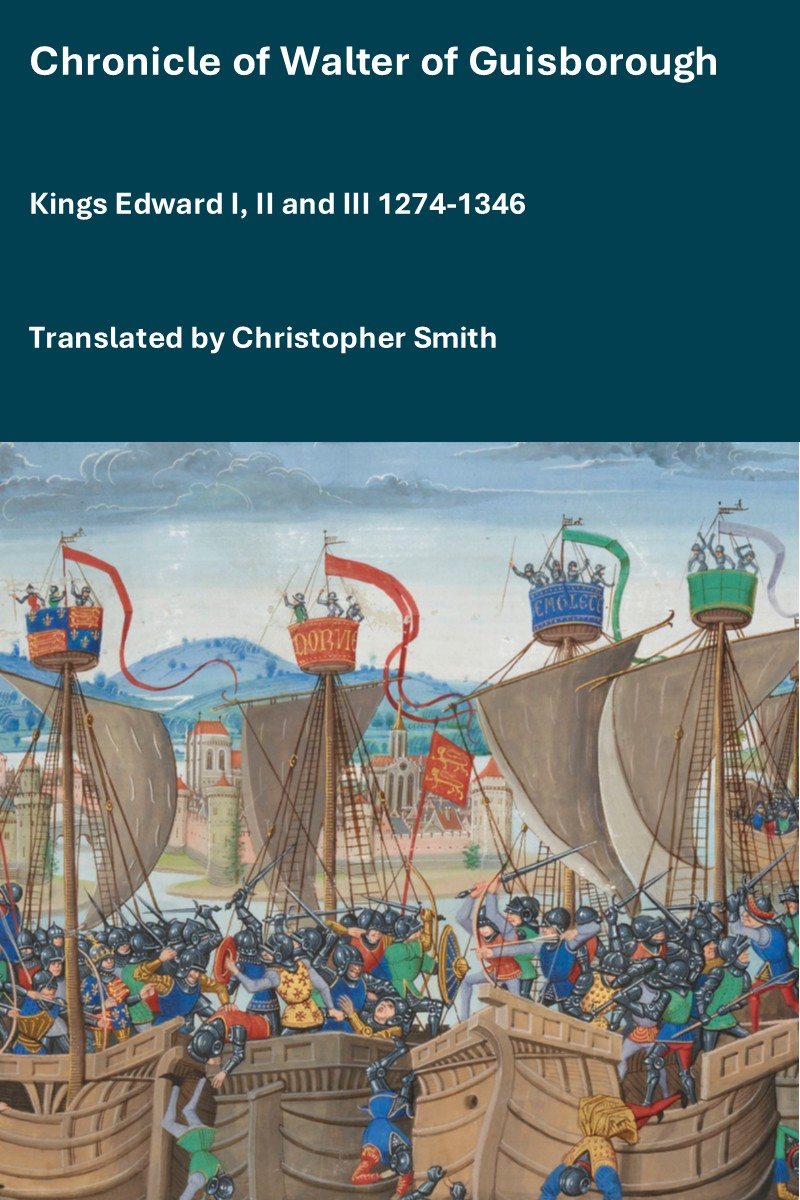 Chronicle of Walter of Guisborough. In the year of our Lord 1285, William, Archbishop of York, died at Pontigny, where he was also buried. He was succeeded by John Romanus, who travelled to the papal court and was consecrated there by Pope Honorius. In the same year, after Easter, the king held his parliament at Westminster in London, where he issued many statutes known as the Second Statutes of Westminster, consisting of forty-eight chapters. In that parliament, the king informed his magnates that he would be required to cross over to Gascony in order to address certain urgent matters. Once the kingdom was settled and all things were at peace, the king set out for Gascony in the following year. There, upon hearing complaints and discovering the treachery of certain men of Bordeaux, who had spoken with the King of France and promised to submit to his authority rather than remain faithful to the King of England, he ordered some to be dragged by horses. The elder ringleaders of the crime were hanged in the streets, using timber taken from their own houses. In this way he restored all of Gascony to his peace. From there, he intervened in the disputes between the kings of France, Spain, and Aragon, and succeeded in leading them toward peace and reconciliation. He also redeemed Charles of Salerno, his kinsman, from imprisonment under the King of Aragon, paying a considerable ransom1. In the following year, Charles received the crown of the Kingdom of Jerusalem and Sicily at Rieti from Pope Nicholas IV, after the death of King Charles of Sicily, his father. The king remained overseas in those regions for almost three full years, and when he returned to England, he heard numerous complaints against his justices. Upon conducting inquiries and discovering the truth, he permanently exiled his chief justice, Sir Thomas de Weyland, and heavily fined his associates. He removed the powerful from office and elevated the humble in their place.
Anno Domini MCCLXXXV obiit Willelmus Eborum archiepiscopus apud Pontiniacum, ubi et reconditus jacet; cui successit Johannes Romanus qui profectus ad curiam consecratus est ibidem ab Honorio papa. Eodem anno post Pascha tenuit rex parliamentum suum apud Westmonasterium Londoniis, ubi fecit statuta multa quæ dicuntur Statuta Westmonasterii secunda, et continent XLVIII capitula; in quo parliamento prædixit rex magnatibus suis quod oporteret eum transfretare in Vasconiam, pro quibusdam arduis corrigendis: ordinataque terra, et omnibus in pace agentibus, profectus est in Vasconiam in anno sequenti, ubi audita querela et fraude cognita quorundam Burdegalensium qui cum rege Francourum locuti fuerant et promiserant se ejus potestati subjici velle nec in fide regis Angliæ ulterius permanere, quosdam fecit equis trahi, et majores natu auctores sceleris sublatis lignis de eorum domibus in plateis jussit suspendi, stabilivitque totam Vasconiam in pace sua; et extunc interposuit partes suas inter reges discordantes, regem scilicet Franciæ, Hispaniæ et Aragonum, ita scilicet quod eos ad bonum pacis et quietis allexit, redemitque Carolum principem de Murreo consanguineum suum a carcere regis Aragonum, data pecunia non modica; qui quidem Carolus in anno sequenti apud Reatam a papa Nicolao IV. regni Jerusalem et Siciliæ diadema suscepit, post obitum regis Siciliæ Caroli patris sui. Moratus est itaque rex in partibus transmarinis per tres annos fere continuos, et inde reversus in Angliam audivit querimonias multas de justiciariis suis, quibus inquisitis et cognitis ipsum capitalem justiciarium suum dominum Thomam de Weyland perpetuo exulavit, et reliquos ejus consocios pecunia mulctavit copiosa, deposuitque potentes de sede et exaltavit humiles.
Note 1. Charles of Salerno was King Edward's first cousin; Charles' mother Beatrice of Provence was a younger sister of King Edward's mother Eleanor of Provence. Charles obtained his freedom in November 1288, a sum of 30,00 marks being agreed on with Alphonso of Arragon as his ransom; and was crowned King on the 29th of the May, in the following year, at Rieti, in the duchy of Spoleto.
 Become a Member via our Buy Me a Coffee page to read more.
On 7th January 1285 [his father] King Charles Capet of Sicily died.
In 1288 [his son] Tristan Capet died.
In 1290 [his daughter] Maria Capet was born to Charles II King Naples and [his wife] Mary of Hungary Queen Consort Naples.
On 16th August 1290 [his son-in-law] Charles Valois I Count Valois and Margaret Capet Countess Valois were married. She by marriage Countess Valois. She the daughter of Charles II King Naples and Mary of Hungary Queen Consort Naples. He the son of King Philip III of France and Isabella Barcelona Queen Consort France.
In 1291 [his son] Peter Capet was born to Charles II King Naples and [his wife] Mary of Hungary Queen Consort Naples.
In 1294 [his son] John Capet Duke Durazzo was born to Charles II King Naples and [his wife] Mary of Hungary Queen Consort Naples. He married (1) March 1318 Matilda Hainaut (2) 14th November 1321 Agnes Perigord.
In 1295 [his daughter] Beatrice Capet was born to Charles II King Naples and [his wife] Mary of Hungary Queen Consort Naples.
On 12th August 1295 [his son] Charles Martel King Hungary died at Naples. He was buried at Naples Cathedral.
On 29th October 1295 [his son-in-law] James "The Just" II King Aragon and Blanche Capet Queen Consort Aragon were married. She by marriage Queen Consort Aragon. She the daughter of Charles II King Naples and Mary of Hungary Queen Consort Naples. He the son of Peter III King Aragon and Constance Hohenstaufen Queen Consort Aragon.
On 19th August 1298 [his son] Saint Louis Capet Bishop Toulouse died.
On 31st December 1299 [his daughter] Margaret Capet Countess Valois died.
In 1305 Raymond Berengar Capet and Margaret Bourbon were married. She the daughter of Robert Bourbon 1st Count Clermont and Beatrice Burgundy. He the son of Charles II King Naples and Mary of Hungary Queen Consort Naples.
In 1307 [his son] Raymond Berengar Capet died.
After 16th March 1308 [his son] John Capet died.
On 5th May 1309 Charles II King Naples died. [his son] Charles Martel King Hungary succeeded King Naples.
On 25th March 1323 [his former wife] Mary of Hungary Queen Consort Naples died.
[his daughter] Eleanor Capet was born to Charles II King Naples and Mary of Hungary Queen Consort Naples. She married Frederick III King Sicily and had issue.
[his daughter] Blanche Capet Queen Consort Aragon was born to Charles II King Naples and Mary of Hungary Queen Consort Naples. She married 29th October 1295 James "The Just" II King Aragon, son of Peter III King Aragon and Constance Hohenstaufen Queen Consort Aragon, and had issue.
[his son] Philip I Capet was born to Charles II King Naples and Mary of Hungary Queen Consort Naples.