


Chronicle of Abbot Ralph of Coggeshall
The Chronicle of Abbot Ralph of Coggeshall (Chronicon Anglicanum) is an indispensable medieval history that brings to life centuries of English and European affairs through the eyes of a learned Cistercian monk. Ralph of Coggeshall, abbot of the Abbey of Coggeshall in Essex in the early 13th century, continued and expanded his community’s chronicle, documenting events from the Norman Conquest of 1066 into the tumultuous reign of King Henry III. Blending eyewitness testimony, careful compilation, and the monastic commitment to record-keeping, this chronicle offers a rare narrative of political intrigue, royal power struggles, and social upheaval in England and beyond. Ralph’s work captures the reigns of pivotal figures such as Richard I and King John, providing invaluable insights into their characters, decisions, and the forces that shaped medieval rule. More than a simple annal, Chronicon Anglicanum conveys the texture of medieval life and governance, making it a rich source for scholars and readers fascinated by English history, monastic authorship, and the shaping of the medieval world.
Available at Amazon in eBook and Paperback format.
05 Apr is in April.
Chronicon ex Chronicis by Florence and John of Worcester. On Monday the nones [5th April 1092] of April, Osmund, bishop of Salisbury, assisted by Walkelin, bishop of Winchester, and John, bishop of Bath, consecrated the church which he had built in the castle of Sarum. Remi, who by license from William the Elder had transferred the seat of his bishopric from Dorchester [Map] to Lincoln, was desirous of consecrating the church which he had built at Lincoln, worthy indeed to be the cathedral of a bishop's see1, because he felt that the day of his death was at hand; but Thomas, archbishop of York, opposed him, asserting that the church was built within his diocese. However, king William the younger, for a sum of money paid to him by Remi, summoned nearly all the bishops of England to assemble together on the twentieth of the ides [the 9th] of May, and dedicate the church; but two days before the time fixed, by the mysterious providence of God, bishop Remi himself departed from the world, and in consequence the consecration of the church was deferred. After this the king went into Northumbria, and restored the city which is called in the British tongue Cairleii, and in Latin Lugubalia (Carlisle [Map]), and built a castle there; for this city, like some others in that quarter, had been laid in ruins by the heathen Danes two hundred years before, and had been uninhabited up to this time.
Note 1. Cf. Henry of Huntingdon, pp. 219, 220, Antiq. Lib.
On 5th April 1205 Isabella Anjou Queen Jerusalem [aged 33] died.
 Chronicle of Walter of Guisborough. And while he remained there, the King of Scotland sent messengers to him, religious men, namely Brother Adam Blunt, Guardian of the Friars Minor of Roxburgh, and three brethren with him, on the fifth day of April [1296], who were to deliver to him his homage in these words: "To the magnificent prince1, Lord Edward, by the grace of God King of England, John, by the same grace King of Scotland, [sends greeting]. Since you, and others of your kingdom, not without your knowledge, or at least not without your duty to know, have by your violent power notoriously and frequently inflicted upon us and the inhabitants of our realm grave and intolerable injuries, insults, burdens, and also enormous damages, contrary to our liberties and those of our realm, and against God and justice: summoning us outside our kingdom, at the lightest suggestion of anyone, at your mere will, and unduly harassing us; occupying our castles, lands, and possessions, and those of our people within your realm, without any fault of ours; seizing our goods and those of our subjects, both by land and sea, and receiving them into your kingdom; slaying merchants and other inhabitants of our realm; and violently carrying off our men from our kingdom into your own, and there detaining and imprisoning them. For the redress of which wrongs we have often sent messengers to you, but these not only remain uncorrected to this day, but, through you and yours, are daily made worse and added to the former. For you, with an innumerable multitude of armed men, your host being publicly assembled, have come in hostile manner to the borders of our kingdom to disinherit us and the inhabitants of our realm; and, advancing beyond, you have within our kingdom cruelly committed slaughters and burnings, as well as assaults and violent invasions, both by land and sea. We, therefore, being no longer able to endure such injuries, insults, oppressions, and damages, nor yet your hostile attacks, nor to remain in your fealty and homage, though they were by violent pressure extorted from us; but rather, desiring to rise up against you for the defence of ourselves and of our realm, to whose defence and guardianship we are bound by the tie of our oath: we, in our own name, and in the name of all and each of our faithful subjects of our realm, return to you by these presents the fealty and homage which were made to you, whether by us or by any other of the inhabitants of our realm, by reason of the lands which they held of you in your kingdom, or by reason of your homage or retention."2 And this letter bore no date. The king [Edward] accepted the resignation of homage and ordered it to be recorded in his chancery rolls as a perpetual memorial of the event. And so it was done.
Cumque maneret ibidem sic, misit ad eum rex Scotiæ nuncios, religiosos viros, scilicet fratrem Adamum Blunt gardianum fratrum Minorum de Rokesburgh, et tres socios cum eo fratres, quinto die intrante mense Aprilis, qui sibi homagium suum traderent in hæc verba: "Magnifico principi, domino Edwardo, Dei gratia regi Angliæ, Johannes eadem gratia rex Scotiæ. Cum vos, ac alii de regno vestro, vobis non ignorantibus, vel saltem ignorare non debentibus, per violentam potentiam vestram nobis et regni nostri incolis graves et intolerabiles injurias, contemptus et gravamina, necnon et damna enormia, contra nostras et regni nostri libertates, ac contra Deum et justitiam, notorie et frequenter intuleritis: nos extra regnum nostrum, ad levem cujuscunque suggestionem, pro libito voluntatis vestræ citando, et indebite vexando: castra nostra, terras, et possessiones nostras, et nostrorum infra regnum vestrum, sine nostris demeritis occupando: bona nostra, ac subditorum nostrorum, tam per terram, quam per mare, rapiendo, et infra regnum vestrum receptando: mercatores et alios regni nostri incolas occidendo: hominesque nostros de regno nostro violenter in regnum vestrum abducendo, ipsosque ibidem detinendo et incarcerando. Super quibus reformandis nuncios nostros sæpe vobis transmisimus, quæ non solum adhuc remanent incorrecta verum etiam de die in diem per vos et vestros prioribus deteriora cumulantur. Vos namque cum innumerabili armatorum multitudine, exercitu vestro publice congregato, ad exhæredandum nos et regni nostri incolas ad fines regni nostri hostiliter accessistis; et ultra progredientes in regno nostro strages et incendia, necnon insultus et invasiones violentas, tam per terram quam per mare, commisistis inhumane. Nos dictas injurias, contemptus, gravamina et damna, necnon et hostiles impugnationes, ulterius sustinere non valentes, nec in fidelitate et homagio vestro, licet per violentam impressionem extortis, manendo; contra vos etiam ad defensionem nostram et regni nostri, cujus defensioni et tuitioni vinculo juramenti sumus astricti, nos volentes erigere; fidelitatem et homagium vobis facta tam a nobis quam ab aliis quibuscunque regni nostri incolis, fidelibus nos tris, ratione terrarum quas in regno vestro de vobis tenebant, et etiam ratione menagii seu retentionis vestræ, nomine nostro ac nomine eorundem omnium et singulorum vobis reddimus per præsentes." Et fuit ista litera sine data. Recepitque rex homagium resignatum, et præcepit ut inrotularetur in rotulis cancellariæ suæ ad perpetuam rei gestæ memoriam, et factum est sic.
Note 1. A copy of this document is printed in Rymer, Fœdera, 1.836, purporting to be taken from the Litt. et Autogr. Edward I, in the Tower of London. A search has been made there for it, but without success. The variations between Guisborough's copy and that printed in the Fœdera are given below. The exemplar commences with the following introduction: "In the name of God, Amen. This is the copy of a certain letter of the King of Scotland, and on behalf of the same king by the religious men, the Warden of the Friars Minor of Roxburgh and his companion, in the year of Our Lord 1296, in the ninth indiction, on the fifth day of the month of April, at Berwick-upon-Tweed, in the castle of the same town, presented to the lord King of England, whose tenor is as follows."
Note 2. The copy in the Fœdera continues thus: "The letter written below was copied and publicly read in the aforesaid year and indiction, on the fifth day before the end of the month of April, at Berwick upon Tweed, in the house of the Carmelite friars; in the presence of the venerable men, Lords John de Langeton, Chancellor of the aforesaid lord King of England; William de Hamilton, Archdeacon of York; and Robert, called Galbi, public notary."
Exemplata et ascultata fuit subscripta littera anno et indictione prædictis, quinta die exeunte mensis Aprilis, apud Berewycum super Twedam, in domo fratrum de Carmelo; præsentibus venerabilibus viris, dominis Johanne de Langeton, præfati domini regis Angliæ cancellario; Willielmo de Hamelton archdiacono Eborrum; et Robert dicto Galbi notario publico.
 Become a Member via our Buy Me a Coffee page to read more.
On 5th April 1336 John Capet Duke Durazzo [aged 42] died at Naples [Map].
On 5th April 1340 Archbishop William Melton [aged 65] died at Cawood Palace [Map].
Murimuth and Avesbury. Also in that year, in April 1340ENDNOTE 1, William Melton, archbishop of York, died; and afterwards two were elected in dispute, namely William la Zouche and William Killesby.
Hoc anno Domini MCCCXL, mense Aprilis, moritur Willelmus de Meltone, archiepiscopus Eboracensis, et postea eliguntur duo in discordia, scilicet Willelmus la Zouche et Willelmus de Killesby.
Note 1. Archbishop William Melton died on 5th April 1340.
Murimuth and Avesbury. The king of Navarre, who possessed within the duchy of Normandy many castles and very large lordships, had been appointed there by John, king of France, as his lieutenant in that duchy, acting on behalf of the king and of his firstborn son, the duke of Normandy, who was also then dauphin of Vienne. When the said king of Navarre had entertained this firstborn son during his visit to Normandy, the prince afterwards invited the king of Navarre, the count of Harcourt, and several other lords and knights of those regions to dine with him in the castle of the city of Rouen, speaking to them peacefully and with feigned friendship. On a Tuesday, the day after the feast of St Ambrose, in the aforesaid year, while those invited guests were reclining together at table in the castle, the said king John of France suddenly and unexpectedly entered the hall armed, accompanied by a large number of armed men. Immediately he personally arrested the king of Navarre, placing a club upon his head, and caused the count of Harcourt and five other knights who were dining there to be arrested as well. He sent the king of Navarre to Paris, where he was to remain imprisoned in the castle. He also sent to Paris one of the five arrested knights, who had killed Charles of Spain, the chief counsellor of King John, acting on the orders of the king of Navarre in Normandy at a place called L’Aigle; and there he caused him to be put cruelly to death. But the count of Harcourt and four other knights, who had been arrested as mentioned, were taken outside the city of Rouen toward the gallows used for thieves. As they were being led there, the count begged the king to explain why he and his companions should die, and asked that he might be allowed a priest to confess his sins. The king refused both requests: he would give no reason for their death, nor allow them to have a priest. Instead he ordered them to make their confessions publicly before the people. Thus, without any confession except to God alone, he caused them to be cruelly and inhumanly beheaded by his attendants [on 5th April 1356], because of which he lost the loyalty of many men’s hearts. When these events were quickly reported to Philip, brother of the king of Navarre, he at once fortified and strongly guarded all the castles of the king of Navarre in Normandy. He also immediately sent two knights and two squires to England to inform the king of England of what had happened, imploring his aid and declaring that if the king of England would personally come into Normandy with his forces, or send sufficient assistance, then Philip and all those who adhered to him would submit themselves and their possessions to him and hold with him.
Rex Navarriæ, habens infra ducatum Normanniæ multa castra et dominia valde magna, factus est ibidem per regem Franciæ Johannem, in ipso ducatu, ipsius regis et filii sui primogeniti, ducis Normanniæ, tunc etiam dolphini de Vienna, locum tenens; et, cum idem rex Navarriæ eundem primogenitum venientem in Normanniam convivasset, dictus primogenitus præfatum regem Navarrie comitemque de Harecourt ac plures alios dominos militesque de partibus illis ad convivandum eosdem apud se in castro civitatis Rothomagensis, pacifice eis loquens, in dolo simulata amicitia, invitavit. Et quodam die Martis, in crastino festi sancti Ambrosii, anno Domini supradicto, dictis invitatis simul ad mensam in dicto castro discumbentibus, præfatus rex Francie Johannes armatus, cum aliis armatis in multitudine numerosa subito et inopinate venit et intravit domum, ubi erant sedentes; ac statim in persona propria dictum regem Navarriæ arestavit, ponendo quandam clavam super caput ejus, dictumque comitem de Harecourt et quinque alios milites de dictis simul discumbentibus fecit per alium arestari. Ac ille præfatum regem Navarriæ Parisius misit, ibidem in castro sub carcerali custodia remansurum. Misitque etiam Parisius unum de dictis quinque militibus arestatis qui dominum Carolum de Spayne, principalem consiliarium dicti regis Franciæ Johannis, de præcepto dicti regis Navarriæ occiderat in Normannia, apud villam vocatam Egle; et eundem poni fecit ibidem crudeliter morti diræ Dictum vero comitem de Harecourt et iiijor alios milites, ut præmittitur, arestatos duci fecit coram se extra dictam civitatem Rothomagensem versus furcas latronum; et, dum ducerentur, dictus comes supplicavit eidem regi quod dignaretur sibi causam exponere quare ipse et socii sui cum ipso ducti mori deberent, et quod posset habere sacerdotem ad confitendum sibi peccata sua. Tunc idem rex nullam causam mortis ipsorum dicere voluit nec permittere quod sacerdotem haberent, sed præcepit quod coram toto populo suas emitterent confessiones. Sicque ipsos non confessos, nisi soli Deo, fecit crudeliter et inhumaniter per suos satellites decollari; propter quæ corda virorum perdidit valde multa. Quibus enim gestis ad notitiam domini Philippi, fratris domini regis Navarriæ, festinanter perlatis, idem dominus Philippus omnia castra dicti regis Navarriæ in Normannia fecit muniri et fortiter custodiri; duosque milites et duos domicellos misit protinus in Angliam, ad exponendum præmissa domino regi Angliæ, ipsiusque auxilium implorando, et intimandum eidem quod, si in Normanniam cum sua potentia personaliter venire vellet, vel competentem potentiam in auxilium ipsius domini Philippi et aliorum dominorum sibi adhærentium mittere vellet, idem dominus Philippus et omnes sibi adhærentes se et sua sibi redderent et cum ipso tenerent.
On 5th April 1356 Jean V de Harcourt [aged 31] was beheaded. See Robert de Avesnes.
Chronicle of Geoffrey le Baker of Swinbroke
Baker was a secular clerk from Swinbroke, now Swinbrook, an Oxfordshire village two miles east of Burford. His Chronicle describes the events of the period 1303-1356: Gaveston, Bannockburn, Boroughbridge, the murder of King Edward II, the Scottish Wars, Sluys, Crécy, the Black Death, Winchelsea and Poitiers. To quote Herbert Bruce 'it possesses a vigorous and characteristic style, and its value for particular events between 1303 and 1356 has been recognised by its editor and by subsequent writers'. The book provides remarkable detail about the events it describes. Baker's text has been augmented with hundreds of notes, including extracts from other contemporary chronicles, such as the Annales Londonienses, Annales Paulini, Murimuth, Lanercost, Avesbury, Guisborough and Froissart to enrich the reader's understanding. The translation takes as its source the 'Chronicon Galfridi le Baker de Swynebroke' published in 1889, edited by Edward Maunde Thompson.
Available at Amazon in eBook and Paperback format.
On 5th April 1365 William Wittelsbach IV Count Holland VI Count Hainaut V Count Zeeland was born to Albert Wittelsbach I Duke Lower Bavaria [aged 28] and Margaret of Silesia Duchesa Lowwer Bavaria [aged 23]. He married his third cousin Margaret Valois Countess Holland, daughter of Philip "Bold" Valois II Duke Burgundy and Margaret Dampierre Duchess Burgundy, and had issue.
On 28th March 1424 King James I of Scotland [aged 29] signed his release agreement, in which he promised to pay a ransom of 60,000 marks, at Durham, County Durham [Map]. He and his wife Joan Beaufort Queen Consort Scotland [aged 20], married for seven weeks, travelled to Melrose Abbey [Map] arriving on 5th April 1424
On 5th April 1508 Ercole Este II Duke Ferrara was born to Alfonso Este I Duke Ferrara, Modena and Reggio [aged 31] and Lucrezia Borgia [aged 27]. He married April 1528 Renée of France Duchess of Ferrara, daughter of Louis XII King France and Anne of Brittany Queen Consort France, and had issue.
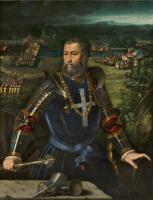
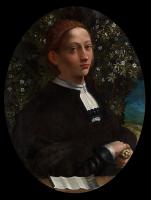
Diary of Edward VI. 5th April 1550. The bishop of Chichestre3, befor a vehement affirmer of transubstantiation, did preach against (it) at Whestmuster in the preching place.
Removing to Grenwich from Whestmuster.
Note 3. George Day [aged 49], already noticed in p. 37 of the present volume.
On 5th April 1580 Augusta Oldenburg was born to Frederick II King of Denmark [aged 45] and Sophie Mecklenburg-Schwerin Queen Consort Denmark [aged 22].
On 5th April 1601 Archbishop William Laud [aged 27] was ordained priest.


On 5th April 1604 Charles Lorraine II Duke Lorraine was born to Francis Lorraine II Duke Lorraine [aged 32]. He married 1625 his first cousin Nicole Lorraine Duchess Lorraine, daughter of Henry Lorraine II Duke Lorraine and Margherita Gonzaga Duchess Lorraine.

Diary of Anne Clifford. 5th April 1617. The 5th my Lord [aged 28] went up to my closet and said how little money I had left contrary to all they had told him. Sometimes I had fair words from him and sometimes foul, but I took all patiently, and did strive to give him as much content and assurance of my love as I could possibly, yet I told him that I would never part with Westmoreland upon any condition whatever. Upon the 6th after supper because my Lord was sullen and not willing to go into the nursery I made Mary bring the Child to him into my chamber, which was the 1st time she stirred abroad since she was sick.
Diary of Anne Clifford. 5th April 1619. The 5th Lord Hume [aged 53] died in Channel Row, who married Mrs Mary Dudley [aged 33], my old companion, and left her as well as he could possibly.

John Evelyn's Diary. 5th April 1652. My brother George [aged 34] brought to Sayes Court [Map] Cromwell's [aged 52] Act of Oblivion to all that would submit to the Government.

John Evelyn's Diary. 5th April 1659. Came the Earl of Northampton [aged 36] and the famous painter, Mr. Wright [aged 41], to visit me.
Samuel Pepys' Diary. 5th April 1664. Thence back, and there spoke to several Lords, and so did his solicitor (one that W. Joyce hath promised £5 to if he be released). Lord Peterborough [aged 42] presented a petition to the House from W. Joyce: and a great dispute, we hear, there was in the House for and against it. At last it was carried that he should be bayled till the House meets again after Easter, he giving bond for his appearance. This was not so good as we hoped, but as good as we could well expect.
Chronicle of Abbot Ralph of Coggeshall
The Chronicle of Abbot Ralph of Coggeshall (Chronicon Anglicanum) is an indispensable medieval history that brings to life centuries of English and European affairs through the eyes of a learned Cistercian monk. Ralph of Coggeshall, abbot of the Abbey of Coggeshall in Essex in the early 13th century, continued and expanded his community’s chronicle, documenting events from the Norman Conquest of 1066 into the tumultuous reign of King Henry III. Blending eyewitness testimony, careful compilation, and the monastic commitment to record-keeping, this chronicle offers a rare narrative of political intrigue, royal power struggles, and social upheaval in England and beyond. Ralph’s work captures the reigns of pivotal figures such as Richard I and King John, providing invaluable insights into their characters, decisions, and the forces that shaped medieval rule. More than a simple annal, Chronicon Anglicanum conveys the texture of medieval life and governance, making it a rich source for scholars and readers fascinated by English history, monastic authorship, and the shaping of the medieval world.
Available at Amazon in eBook and Paperback format.
Samuel Pepys' Diary. 5th April 1664. Up very betimes, and walked to my cozen Anthony Joyce's, and thence with him to his brother Will, in Tuttle Street, where I find him pretty cheery over (what) he was yesterday (like a coxcomb), his wife being come to him, and having had his boy with him last night. Here I staid an hour or two and wrote over a fresh petition, that which was drawn by their solicitor not pleasing me, and thence to the Painted Chamber [Map], and by and by away by coach to my Lord Peterborough's [aged 42], and there delivered the petition into his hand, which he promised most readily to deliver to the House today.
John Evelyn's Diary. 5th April 1665. Was a day of public humiliation and for success of this terrible war, begun doubtless at secret instigation of the French to weaken the States and Protestant interest. Prodigious preparations on both sides.
Samuel Pepys' Diary. 5th April 1666. After dinner home, where I find my wife hath on a sudden, upon notice of a coach going away to-morrow, taken a resolution of going in it to Brampton, we having lately thought it fit for her to go to satisfy herself and me in the nature of the fellow that is there proposed to my sister. So she to fit herself for her journey and I to the office all the afternoon till late, and so home and late putting notes to "It is decreed, nor shall thy fate, &c". and then to bed. The plague is, to our great grief, encreased nine this week, though decreased a few in the total. And this encrease runs through many parishes, which makes us much fear the next year.
Samuel Pepys' Diary. 5th April 1667. So to the 'Change [Map], and there met with Mr. James Houblon, but no hopes, as he sees, of peace whatever we pretend, but we shall be abused by the King of France [aged 28]. Then home to the office, and busy late, and then to Sir W. Batten's [aged 66], where Mr. Young was talking about the building of the City again; and he told me that those few churches that are to be new built are plainly not chosen with regard to the convenience of the City; they stand a great many in a cluster about Cornhill [Map]; but that all of them are either in the gift of the Lord Archbishop, or Bishop of London, or Chancellor [aged 58], or gift of the City. Thus all things, even to the building of churches, are done in this world! And then he says, which I wonder at, that I should not in all this time see, that Moorefields [Map] have houses two stories high in them, and paved streets, the City having let leases for seven years, which he do conclude will be very much to the hindering the building of the City; but it was considered that the streets cannot be passable in London till a whole street be built; and several that had got ground of the City for charity, to build sheds on, had got the trick presently to sell that for £60, which did not cost them £20 to put up; and so the City, being very poor in stock, thought it as good to do it themselves, and therefore let leases for seven years of the ground in Moorefields [Map]; and a good deal of this money, thus advanced, hath been employed for the enabling them to find some money for Commissioner Taylor, and Sir W. Batten, towards the charge of "The Loyall London", or else, it is feared, it had never been paid. And Taylor having a bill to pay wherein Alderman Hooker [aged 55] was concerned it was his invention to find out this way of raising money, or else this had not been thought on.


Samuel Pepys' Diary. 5th April 1669. Up, and by coach, it being very cold, to White Hall, expecting a meeting of Tangier, but it did not. But, however, did wait there all the morning, and, among other things, I spent a little time with Creed walking in the garden, and talking about our Office, and Child's coming in to be a Commissioner; and, being his friend, I did think he might do me a kindness to learn of him what the Duke of Buckingham [aged 41] and the faction do design touching me, and to instil good words concerning me, which he says, and I believe he will: and it is but necessary; for I have not a mind indeed at this time to be put out of my Office, if I can make any shift that is honourable to keep it; but I will not do it by deserting the Duke of York [aged 35].


On 5th April 1695 George Savile 1st Marquess Halifax [aged 61] died apparently as a consequence of eating undercooked chicken. He was buried in the north aisle of the King Henry VII Chapel, Westminster Abbey [Map]. His son William [aged 30] succeeded 2nd Marquess Halifax, 2nd Earl Halifax, 2nd Viscount Halifax, 2nd Baron Savile of Elland, 5th Baronet Savile of Thornhill. Mary Finch Duchess Roxburghe [aged 18] by marriage Marchioness Halifax.
John Evelyn's Diary. 7th April 1695. Lord Halifax [deceased] died suddenly at London, the day his daughter [aged 18] was married to the Earl of Nottingham's [aged 61] son [aged 22] at Burleigh. Lord H. was a very rich man, very witty, and in his younger days somewhat positive.
On 5th April 1697 Charles XI King Sweden [aged 41] died.
On 5th April 1709 Emanuel Saxe Coburg Altenburg was born to Frederick Saxe Coburg Altenburg II Duke Saxe Gotha Altenburg [aged 32] and Magdalena Augusta Anhalt-Zerbst Duchess Saxe Gotha Altenburg at Gotha. He died aged one in 1710.
On 5th April 1713 Richard Welby [aged 55] died. Monument at St Andrew's Church, Denton [Map]. Sculpted by Thomas Green of Camberwell [aged 54]. The fully wigged standing life sized figure of the deceased stands in an arched surround flanked by fluted Pilasters with acanthus scrolls and broken segmental pediment contaning a cherub and putti leaning down from heaven holding a metal coronet, surmounted by an achievement. Beneath is he inscription panel and to either side putti holding memento mori, and mourning, one with tears.
The inscription reads:
M.S.
Here are deposited the Remains of
Richard Welby of Denton Esqr
Lord of the Mannours of Welby Streglethorp Saperton and
Swinsted and High Sheriff of the County of Lincoln 1705
A Gentleman of an ancient & Virtuous Family, a good Christian
a Loyal Subject, a true lover of the Church
a sincere Respector of its Clergy and
a daily Frequentor of its Worship
In His private Character, Modest, Humble and Courteous
of great Probity and universal Charity
The Poor lost in him a liberal and silent Benefactor
his Tenants, a forbearing Landlord;
his Servants, a kind and prudent master;
his Relations, an invaluable Friend;
his Children, a most indulgent Father and
his Mournfull Wife ye Best of Husbands.
He marry'd Mary Daughter & Sole Heiress of John Towers of
the Isle of Ely Esqr, by whom he had Issue;
Mary Interred here, Selina, William and John twins, Eleanor & Richard
After a tedious Sickness, which he bore with exemplary patience
and resignation, he dyed on Easter day 1713
In hopes of a Joyfull Resurrection; & lament his loss
the Righteous shall be had in everlasting Remembrance
MARY his once happy Wife now Sorrowfull Relict
??????? her own Affection
Erected this Monument Dec 10 1714.
Mary Welby
Ob June 8 1759
Ae 74
Richard Welby: In 1658 he was born. Before 1713 he and Mary Towers were married.


Become a Member via our Buy Me a Coffee page to read more.
On 5th April 1716 Georgiana Caroline Carteret was baptised at St Martin in the Fields Church [Map].
On 5th April 1720 Francis Scott 2nd Duke Buccleuch [aged 25] and Jane Douglas were married at Earl of Rochester's House Privy Gardens Whitehall Palace. She the daughter of James Douglas 2nd Duke Queensberry and Mary Boyle Duchess Queensbury. He the son of James Scott and Henrietta Hyde Countess Dalkeith [aged 43]. They were second cousins. He a great grandson of King Charles II of England Scotland and Ireland.
Chronicle of Geoffrey le Baker of Swinbroke
Baker was a secular clerk from Swinbroke, now Swinbrook, an Oxfordshire village two miles east of Burford. His Chronicle describes the events of the period 1303-1356: Gaveston, Bannockburn, Boroughbridge, the murder of King Edward II, the Scottish Wars, Sluys, Crécy, the Black Death, Winchelsea and Poitiers. To quote Herbert Bruce 'it possesses a vigorous and characteristic style, and its value for particular events between 1303 and 1356 has been recognised by its editor and by subsequent writers'. The book provides remarkable detail about the events it describes. Baker's text has been augmented with hundreds of notes, including extracts from other contemporary chronicles, such as the Annales Londonienses, Annales Paulini, Murimuth, Lanercost, Avesbury, Guisborough and Froissart to enrich the reader's understanding. The translation takes as its source the 'Chronicon Galfridi le Baker de Swynebroke' published in 1889, edited by Edward Maunde Thompson.
Available at Amazon in eBook and Paperback format.
On 5th April 1724 Maria Amalia Habsburg Spain was born to Charles Habsburg Spain VI Holy Roman Emperor [aged 38] and Elisabeth of Brunswick-Wolfenbüttel Holy Roman Empress [aged 32]. She died aged six in 1730.
On 5th April 1751 Frederick I King Sweden [aged 74] died. His third cousin once removed Adolph [aged 40] succeeded King Sweden. He the first king of the House of Holstein-Gottorp.
On 16th December 1775 Jane Austen was born to George Austen [aged 44] and Cassandra Leigh [aged 36] in Steventon, Hampshire. She was baptised on 5th April 1776 at St Nicholas' Church, Steventon at which her father was rector; the delay being caused by adverse weather.
North Transept, St Albans Cathedral. Memorial sculpted by Francis Leggatt Chantrey [aged 52] to Frederica Sophia, wife of James Mure of Cecil Lodge in Hertfordshire, who erected the monument, daughter of Christopher Metcalfe of Hawsted in Suffolk. Died 5th April 1834.


On 5th April 1837 Algernon Charles Swinburne was born to Admiral Charles Henry Swinburne [aged 40] and Jane Henrietta Ashburnham [aged 27] at 7 Chester Street Grosvenor Place.


On 5th April 1846 Henry Wellesley 3rd Duke Wellington was born to Charles Wellesley [aged 38] and Augusta Sophia Anne Pierrepoint at Apsley House, Hyde Park Corner. He married 7th March 1882 Evelyn Katrine Gwenfra Williams Duchess Wellington.
On 5th April 1848 William Copeland Borlase was born to Samuel Borlase and Mary Anne Copeland at Castle Horneck, Penzance.

On 5th April 1853 Ford Madox Brown [aged 31] and Emma Matilda Hill [aged 23] were married at St Dunstan's in the West, Fleet Street [Map]. The witnesses were Dante Gabriel Rossetti [aged 24] and Thomas Seddon [aged 31]. Rector Edward Auriol [aged 48] performed the ceremony.
Edward Auriol: On 27th February 1805 he was born to James Peter Auriol. On 28th September 1829 Edward Auriol and Georgina Morris were married. On 7th January 1842 he was appointed Rector of St Dunstan's in the West, Fleet Street [Map]. On 10th July 1880 Edward Auriol died.
On 5th April 1863 Victoria Hesse Darmstadt Marchioness Milford Haven was born to Prince Louis Hesse Darmstadt IV Grand Duke [aged 25] and Princess Alice Saxe Coburg Gotha [aged 19] at Windsor Castle [Map]. She a granddaughter of Queen Victoria of the United Kingdom. She married her first cousin once removed Prince Louis of Battenburg 1st Marquess Milford Haven and had issue.


On 5th April 1865 Nesta Fitzgerald was born to Charles William Fitzgerald Fitzgerald 4th Duke Leinster [aged 46] and Caroline Leveson-Gower Duchess Leinster [aged 37] at Kilkea Castle, Castledermot, County Kildare.

5th April 1881. Census. 2 Palace Gate, Kensington.
John Everett Millais 1st Baronet [aged 51]
Euphemia "Effie" Gray Lady Millais [aged 52]
Mary
John, Grandchild
Euphemia, Grandchild
Albert Gray, Brother-in-law
Nine servants.
Become a Member via our Buy Me a Coffee page to read more.

On 5th April 1884 Leopold Saxe Coburg Gotha 1st Duke Albany [deceased] was buried at St George's Chapel, Windsor Castle [Map].
Chronicle of Abbot Ralph of Coggeshall
The Chronicle of Abbot Ralph of Coggeshall (Chronicon Anglicanum) is an indispensable medieval history that brings to life centuries of English and European affairs through the eyes of a learned Cistercian monk. Ralph of Coggeshall, abbot of the Abbey of Coggeshall in Essex in the early 13th century, continued and expanded his community’s chronicle, documenting events from the Norman Conquest of 1066 into the tumultuous reign of King Henry III. Blending eyewitness testimony, careful compilation, and the monastic commitment to record-keeping, this chronicle offers a rare narrative of political intrigue, royal power struggles, and social upheaval in England and beyond. Ralph’s work captures the reigns of pivotal figures such as Richard I and King John, providing invaluable insights into their characters, decisions, and the forces that shaped medieval rule. More than a simple annal, Chronicon Anglicanum conveys the texture of medieval life and governance, making it a rich source for scholars and readers fascinated by English history, monastic authorship, and the shaping of the medieval world.
Available at Amazon in eBook and Paperback format.

On 5th April 1886 Wriothesley Russell [aged 81] died. He was buried at St Michael's Church, Chenies [Map].
Wriothesley Russell: On 11th May 1804 he was born to John Russell 6th Duke Bedford and Georgiana Gordon Duchess Bedford. He a great x 3 grandson of King Charles II of England Scotland and Ireland. On 23rd June 1829 Wriothesley Russell and Elizabeth Laura Henrietta Russell were married. He the son of John Russell 6th Duke Bedford and Georgiana Gordon Duchess Bedford. They were first cousins. He a great x 3 grandson of King Charles II of England Scotland and Ireland. She a great x 3 granddaughter of King Charles II of England Scotland and Ireland.
On 5th April 1890 Harry Mengden Scarth [aged 75] died at Tangier [Map]. He was buried at All Saints Church, Wrington [Map].
5th April 1891. Census. 1 St Edmunds Terrace.
Ford Madox Brown [aged 69]. Head. Widower.
Catherine Heuffer [aged 40]. Daughter. Widow.
Ford Madox Ford aka Heuffer [aged 17]. Grandson. 17.
Oliver Madox Heuffer [aged 14]. Grandson. 15.
Juliet Catherine Emma Heuffer [aged 10]. Granddaughter. 10.
Charlotte Kindy. Servant. 31.
Margaret Mullin. Servant. 23.
Ford Madox Ford aka Heuffer: On 17th December 1873 he was born to Francis Heuffer and Catherine Emily Brown On 26th June 1939 he died.
Oliver Madox Heuffer: In 1877 he was born to Francis Heuffer and Catherine Emily Brown On 22nd June 1931 he died.
Juliet Catherine Emma Heuffer: In 1881 she was born to Francis Heuffer and Catherine Emily Brown In 1944 she died.


Become a Member via our Buy Me a Coffee page to read more.
5th April 1891. Census. 3 St Edmunds Terrace.
William Michael Rossetti [aged 61]. Head. 61.
Emma Lucy Madox Brown [aged 47]. Wife. 47.
Olivia Madox Rossetti [aged 15]. Son. 15
Gabriel Arthur Rossetti [aged 14]. Son. 14.
Helen Maria [aged 11]. Daughter. 11.
Mary Elizabeth [aged 10]. Daughter. 9.
3 x Servants.


Become a Member via our Buy Me a Coffee page to read more.
5th April 1891. Census. Draycott Lodge
William Holman Hunt [aged 64]. Head. 64. Artist of figure and landscape. Sculp.
Marion Edith Waugh [aged 44]. Wife. 44.
Gladys Hunt [aged 13]. Daughter. 14. School Girl.
Hilary Lushington Hunt [aged 11]. Son. 11. School Boy.
Edith Spark. 24. Governess.
Mary A Ottaway. 53. Nurse.
Eugenie P A Bassel. 17. Housemaid.
Ella A Rich. 31. Cook.
Ann Butler. 63. Servant
Richard Butler. 60. Servant.
Gladys Hunt: In 1878 she was born to William Holman Hunt and Marion Edith Waugh at Jerusalem [Map].
Hilary Lushington Hunt: On 6th May 1879 he was born to William Holman Hunt and Marion Edith Waugh at 2 Warwick Gardens, Kensington.


Become a Member via our Buy Me a Coffee page to read more.
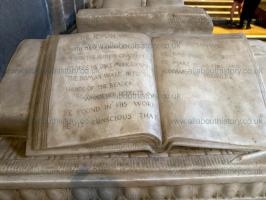
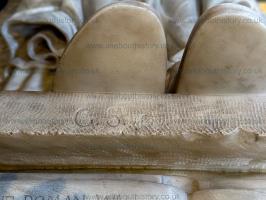
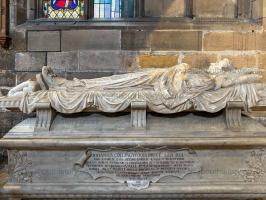
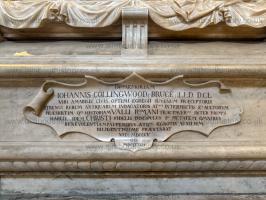
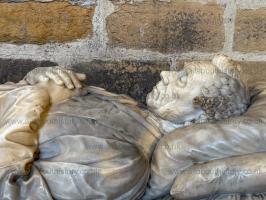
On 5th April 1892 John Collingwood Bruce [aged 87] died. Monument at the Cathedral Church St Nicholas, Newcastle upon Tyne [Map] showing Bruce with his feet resting on his book "Hadrian's Wall" sculpted by George Blackall Simonds [aged 48] in 1896.
John Collingwood Bruce: In 1805 he was born to John Bruce. In 1833 he and Charlotte Gainsford were married.
On 2nd April 1895 Clarissa Hall [aged 70] died. Her funeral was held at the Grosvenor Chapel, Mayfair on 5th April 1895 attended by her daughters Clarita "Clara" Jerome [aged 44], Jenny Jerome [aged 41] and Leonie Blanche Jerome Lady Leslie [aged 36], her grandsons Winston Churchill [aged 20] and John Strange "Jack" Spencer-Churchill [aged 15] and the Dowager Frances Anne Emily Vane Duchess of Marlborough [aged 72].
On 5th April 1908 Ronald Henry Fulke Greville [aged 43] died of pneumonia without issue following an operation, predeceasing his own father.
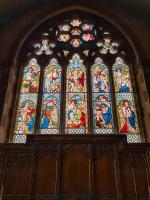
St Michael's Church, Rocester [Map]. 6283 Private G. Harper. North Staffordshire Regiment. Died 5th April 1917 aged 36.
On 5th April 1918 Lewis Charles Bagot Chester [aged 19] was killed in action at Ayette, France.
William of Worcester's Chronicle of England
William of Worcester, born around 1415, and died around 1482 was secretary to John Fastolf, the renowned soldier of the Hundred Years War, during which time he collected documents, letters, and wrote a record of events. Following their return to England in 1440 William was witness to major events. Twice in his chronicle he uses the first person: 1. when writing about the murder of Thomas, 7th Baron Scales, in 1460, he writes '… and I saw him lying naked in the cemetery near the porch of the church of St. Mary Overie in Southwark …' and 2. describing King Edward IV's entry into London in 1461 he writes '… proclaimed that all the people themselves were to recognize and acknowledge Edward as king. I was present and heard this, and immediately went down with them into the city'. William’s Chronicle is rich in detail. It is the source of much information about the Wars of the Roses, including the term 'Diabolical Marriage' to describe the marriage of Queen Elizabeth Woodville’s brother John’s marriage to Katherine, Dowager Duchess of Norfolk, he aged twenty, she sixty-five or more, and the story about a paper crown being placed in mockery on the severed head of Richard, 3rd Duke of York.
Available at Amazon in eBook and Paperback format.
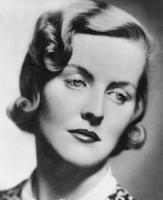
5th April 1939. Tatler. Unity Mitford [aged 24] (centre), pictured 15 months after returning to England.

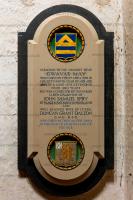
On 5th April 1955 Gwavas May Spry [aged 59] died. Memorial at St Anthony's Church, St Anthony in Roseland [Map].
Gwavas May Spry: Around 1896 she was born to John Samuel Spry and Harriet. Before 5th April 1955 Lieutenant-Colonel Duncan Grant-Dalton and she were married.
On 5th April 1365 William Wittelsbach IV Count Holland VI Count Hainaut V Count Zeeland was born to Albert Wittelsbach I Duke Lower Bavaria [aged 28] and Margaret of Silesia Duchesa Lowwer Bavaria [aged 23]. He married his third cousin Margaret Valois Countess Holland, daughter of Philip "Bold" Valois II Duke Burgundy and Margaret Dampierre Duchess Burgundy, and had issue.
On 5th April 1508 Ercole Este II Duke Ferrara was born to Alfonso Este I Duke Ferrara, Modena and Reggio [aged 31] and Lucrezia Borgia [aged 27]. He married April 1528 Renée of France Duchess of Ferrara, daughter of Louis XII King France and Anne of Brittany Queen Consort France, and had issue.
On 5th April 1580 Augusta Oldenburg was born to Frederick II King of Denmark [aged 45] and Sophie Mecklenburg-Schwerin Queen Consort Denmark [aged 22].
On 5th April 1604 Charles Lorraine II Duke Lorraine was born to Francis Lorraine II Duke Lorraine [aged 32]. He married 1625 his first cousin Nicole Lorraine Duchess Lorraine, daughter of Henry Lorraine II Duke Lorraine and Margherita Gonzaga Duchess Lorraine.
On 5th April 1696 Anne Hamilton 2nd Countess Ruglen was born to John Hamilton 1st Earl Ruglen 3rd Earl Selkirk [aged 32] and Elizabeth Hutchinson Countess Ruglen [aged 19]. She married in or before 1724 her second cousin William Douglas 2nd Earl March, son of William Douglas 1st Earl March and Jean Hay Countess March, and had issue.

On 5th April 1703 Frances Berkeley Baroness Byron was born to William Berkeley 4th Baron Berkeley [aged 40] and Frances Temple Baroness Berkeley. She married 3rd December 1720 William Byron 4th Baron Byron, son of William Byron 3rd Baron Byron and Elizabeth Chaworth Baroness Byron, and had issue.
On 5th April 1703 twins Charles Hervey and Henrietta Hervey were born to John Hervey 1st Earl Bristol [aged 37] and Elizabeth Felton Countess Bristol [aged 26].


On 5th April 1709 Emanuel Saxe Coburg Altenburg was born to Frederick Saxe Coburg Altenburg II Duke Saxe Gotha Altenburg [aged 32] and Magdalena Augusta Anhalt-Zerbst Duchess Saxe Gotha Altenburg at Gotha. He died aged one in 1710.
On 5th April 1724 Maria Amalia Habsburg Spain was born to Charles Habsburg Spain VI Holy Roman Emperor [aged 38] and Elisabeth of Brunswick-Wolfenbüttel Holy Roman Empress [aged 32]. She died aged six in 1730.
On 5th April 1747 Thomas Hanmer 2nd Baronet was born to Walden Hanmer 1st Baronet [aged 30]. He married 3rd December 1779 Margaret Kenyon Lady Hanmer and had issue.
Jean de Waurin's Chronicle of England Volume 6 Books 3-6: The Wars of the Roses
Jean de Waurin was a French Chronicler, from the Artois region, who was born around 1400, and died around 1474. Waurin’s Chronicle of England, Volume 6, covering the period 1450 to 1471, from which we have selected and translated Chapters relating to the Wars of the Roses, provides a vivid, original, contemporary description of key events some of which he witnessed first-hand, some of which he was told by the key people involved with whom Waurin had a personal relationship.
Available at Amazon in eBook and Paperback format.
On 5th April 1748 Francis Needham 1st Earl Kilmorley was born.
On 5th April 1758 Henry Harford was born illegitimately to Frederick Calvert 6th Baron Baltimore [aged 27] and Hester Whelan. He a great x 3 grandson of King Charles II of England Scotland and Ireland.
On 5th April 1773 Henry Peyto Verney 24th Baron Latimer 16th Baron Willoughby was born to John Peyto Verney 22nd Baron Latimer 14th Baron Willoughby [aged 34] and Louisa North Baroness Latimer Baroness Willoughby of Broke [aged 36] at Compton Verney House, Warwickshire. He married 10th March 1829 Margaret Williams.
On 5th April 1785 Thomas Hay-Drummond 11th Earl Kinnoull was born to Robert Hay-Drummond 10th Earl Kinnoul [aged 34] and Sarah Harley Countess Kinnoul at Bath, Somerset [Map]. He married 17th August 1824 Louisa Burton Rowley Countess Kinnoul, daughter of Admiral Charles Rowley 1st Baronet and Elizabeth King, and had issue.
On 5th April 1797 Lady Caroline Cavendish was born to George Augustus Henry Cavendish 1st Earl Burlington [aged 43] and Elizabeth Compton Countess Burlington [aged 36].
On 5th April 1798 Margarette Willes Baroness Leigh was born.
On 5th April 1802 George Harry Grey 8th Baron Grey of Groby was born to George Grey 6th Earl Stamford 2nd Earl Warrington [aged 36] and Henrietta Charteris Countess Stamford and Warrington. He married 1824 his first cousin Katherine Charteris Baroness Grey Groby, daughter of Francis Charteris 8th Earl of Wemyss Douglas 4th Earl March, and had issue.
On 5th April 1820 Henry Hickman Bacon 11th and 10th Baronet was born to Nicholas Bacon [aged 33]. He married 17th March 1853 Elizabeth Beckett Lady Hickman, daughter of Thomas Beckett 3rd Baronet and Caroline Beckett.
On 5th April 1836 Thomas Fletcher Fenton Boughey 4th Baronet was born to Thomas Fletcher Fenton Boughey 3rd Baronet [aged 27].
William of Worcester's Chronicle of England
William of Worcester, born around 1415, and died around 1482 was secretary to John Fastolf, the renowned soldier of the Hundred Years War, during which time he collected documents, letters, and wrote a record of events. Following their return to England in 1440 William was witness to major events. Twice in his chronicle he uses the first person: 1. when writing about the murder of Thomas, 7th Baron Scales, in 1460, he writes '… and I saw him lying naked in the cemetery near the porch of the church of St. Mary Overie in Southwark …' and 2. describing King Edward IV's entry into London in 1461 he writes '… proclaimed that all the people themselves were to recognize and acknowledge Edward as king. I was present and heard this, and immediately went down with them into the city'. William’s Chronicle is rich in detail. It is the source of much information about the Wars of the Roses, including the term 'Diabolical Marriage' to describe the marriage of Queen Elizabeth Woodville’s brother John’s marriage to Katherine, Dowager Duchess of Norfolk, he aged twenty, she sixty-five or more, and the story about a paper crown being placed in mockery on the severed head of Richard, 3rd Duke of York.
Available at Amazon in eBook and Paperback format.
On 5th April 1836 Harriet Stonor Viscountess Clifden was born to Thomas Stonor 3rd Baron Camoys [aged 38] and Frances Towneley Baroness Camoys [aged 35]. She married 8th February 1864 Leopold George Agar-Ellis 5th Viscount Clifden, son of George James Welbore Agar 1st Baron Dover and Georgiana Howard Lady Dover.
On 5th April 1837 Algernon Charles Swinburne was born to Admiral Charles Henry Swinburne [aged 40] and Jane Henrietta Ashburnham [aged 27] at 7 Chester Street Grosvenor Place.
On 5th April 1846 Henry Wellesley 3rd Duke Wellington was born to Charles Wellesley [aged 38] and Augusta Sophia Anne Pierrepoint at Apsley House, Hyde Park Corner. He married 7th March 1882 Evelyn Katrine Gwenfra Williams Duchess Wellington.
On 5th April 1847 Francis Egerton 3rd Earl Ellesmere was born to George Leveson-Gower aka Egerton 2nd Earl Ellesmere [aged 23] and Mary Louisa Campbell Countess Ellesmere [aged 22]. He married 9th December 1868 Katherine Louisa Phipps Countess Ellesmere, daughter of George Phipps 2nd Marquess Normanby and Laura Russell Marchioness Normanby, and had issue.
On 5th April 1848 William Copeland Borlase was born to Samuel Borlase and Mary Anne Copeland at Castle Horneck, Penzance.
On 5th April 1855 Edward Southwell 24th Baron de Clifford was born to Edward Southwell Russell 23rd Baron de Clifford [aged 31].
On 5th April 1855 Carnegie Jervis 5th Viscount St Vincent was born to Carnegie Jervis 3rd Viscount St Vincent [aged 29].
On 5th April 1857 Edward Knatchbull-Hugessen 2nd Baron Brabourne was born to Edward Knatchbull-Hugessen 1st Baron Brabourne [aged 27]. He married 2nd November 1880 Amy Virginia Beaumont, daughter of Wentworth Beaumont 1st Baron Allendale and Margaret Anne Burgh, and had issue.
On 5th April 1858 Mabel Markham Countess Annesley was born. She was baptised on 4th May 1858.
On 5th April 1863 Victoria Hesse Darmstadt Marchioness Milford Haven was born to Prince Louis Hesse Darmstadt IV Grand Duke [aged 25] and Princess Alice Saxe Coburg Gotha [aged 19] at Windsor Castle [Map]. She a granddaughter of Queen Victoria of the United Kingdom. She married her first cousin once removed Prince Louis of Battenburg 1st Marquess Milford Haven and had issue.
On 5th April 1863 Emma Selina Portman was born to William Henry Portman 2nd Viscount Portman [aged 33] and Mary Selina Wentworth-Fitzwilliam Viscountess Portman [aged 27]. She married 1885 Ronald Leslie-Melville 11th Earl of Leven 10th Earl of Melville and had issue.
On 5th April 1865 Nesta Fitzgerald was born to Charles William Fitzgerald Fitzgerald 4th Duke Leinster [aged 46] and Caroline Leveson-Gower Duchess Leinster [aged 37] at Kilkea Castle, Castledermot, County Kildare.
On 5th April 1869 Mary Frances Neville Marchioness Abergavenny was born to Ralph Pelham Neville [aged 37]. She married (1) 8th July 1891 Henry Charles Hardinge 3rd Viscount Hardinge, son of Charles Stewart Hardinge 2nd Viscount Hardinge and Lavinia Bingham Viscountess Hardinge, and had issue (2) 18th October 1928 her first cousin Henry Neville 3rd Marquess Abergavenny, son of William Neville 1st Marquess Abergavenny and Caroline Vanden Bempte Johnston Marchioness Abergavenny.
The History of William Marshal was commissioned by his son shortly after William’s death in 1219 to celebrate the Marshal’s remarkable life; it is an authentic, contemporary voice. The manuscript was discovered in 1861 by French historian Paul Meyer. Meyer published the manuscript in its original Anglo-French in 1891 in two books. This book is a line by line translation of the first of Meyer’s books; lines 1-10152. Book 1 of the History begins in 1139 and ends in 1194. It describes the events of the Anarchy, the role of William’s father John, John’s marriages, William’s childhood, his role as a hostage at the siege of Newbury, his injury and imprisonment in Poitou where he met Eleanor of Aquitaine and his life as a knight errant. It continues with the accusation against him of an improper relationship with Margaret, wife of Henry the Young King, his exile, and return, the death of Henry the Young King, the rebellion of Richard, the future King Richard I, war with France, the death of King Henry II, and the capture of King Richard, and the rebellion of John, the future King John. It ends with the release of King Richard and the death of John Marshal.
Available at Amazon in eBook and Paperback format.
On 5th April 1873 Algernon Augustus Henry Stracey was born to Edward Henry Gervase Stracey 6th Baronet [aged 34].
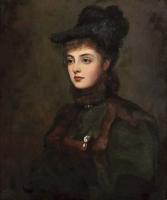
On 5th April 1874 Margaret Rachel Scott was born to John Scott 3rd Earl Eldon [aged 29]. She married 27th April 1897 her first cousin Frederick Gustavus Hamilton-Russell, son of Gustavus Hamilton-Russell 8th Viscount Boyne and Katherine Frances Scott.
On 5th April 1884 Lieutenant-Commander Evelyn Temple-Gore-Langton was born to William Stephen Temple Gore-Langton 4th Earl Temple [aged 36] and Helen Mabel Graham-Montgomery Countess Temple of Stowe.
On 5th April 1890 William Arthington Worsley 4th Baronet was born to William Henry Arthington Worsley 3rd Baronet [aged 29]. He married 20th May 1924 Joyce Morgan Brunner Lady Worsley, daughter of John Brunner 2nd Baronet and Lucy Marianne Morgan Lady Brunner, and had issue.
On 5th April 1903 Joan Douglas-Scott-Montagu was born illegitimately to John Douglas-Scott-Montagu 2nd Baron Montagu of Beaulieu [aged 36] and Eleanor Thornton [aged 22].
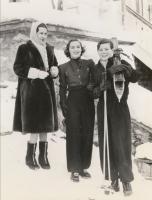
On 5th April 1931 Shaun Plunket was born to Terence Plunket 6th Baron Plunket [aged 31] and Dorothé Mabel Lewis [aged 31].
On 5th April 1934 James Cecil 3rd Baron Rockley was born to Robert William Evelyn Gascoyne-Cecil 2nd Baron Rockley [aged 33]. He married before 29th July 1961 Sarah Cadogan, daughter of William Gerald Charles Cadogan 7th Earl Cadogan and Primrose Lilian Yarde-Buller Countess Cadogan, and had issue.
On 5th April 1937 Richard William Hyde-Parker 12th Baronet was born to William Stephan Hyde Parker 11th Baronet [aged 45].
On 5th April 1950 Robert Byron 13th Baron Byron was born to Richard Byron 12th Baron Byron [aged 50].
On 5th April 1983 William Feilden 8th Baronet was born to Henry Feilden 7th Baronet [aged 31].
On 5th April 1345 Richard Fitzalan 3rd or 10th Earl of Arundel 8th Earl of Surrey [aged 39] and Eleanor Plantagenet Countess Arundel and Surrey [aged 26] were married at Ditton Church, Stoke Poges. She by marriage Countess Arundel. She the daughter of Henry Plantagenet 3rd Earl of Leicester 3rd Earl Lancaster [aged 64] and Maud Chaworth. He the son of Edmund Fitzalan 2nd or 9th Earl of Arundel and Alice Warenne Countess Arundel. They were half third cousins. He a great x 5 grandson of King John of England. She a great granddaughter of King Henry III of England.
On 5th April 1624 John Hay 1st Earl Tweeddale [aged 31] and Jean Seton [aged 18] were married. She by marriage Lord Hay of Yester. She the daughter of Alexander Seton 1st Earl Dunfermline and Grizel Leslie Countess Dunfermline. They were third cousins.
On 5th April 1637 William Cunningham 9th Earl Glencairn [aged 27] and Anne Ogilvy Countess Glancairn were married. She by marriage Countess Glencairn. She the daughter of James Ogilvy 1st Earl Findlater [aged 42] and Elizabeth Leslie. He the son of William Cunningham 8th Earl Glencairn and Jean Kerr Countess Glencairn. They were half second cousin once removed.
Henrici Quinti, Angliæ Regis, Gesta, is a first-hand account of the Agincourt Campaign, and subsequent events to his death in 1422. The author of the first part was a Chaplain in King Henry's retinue who was present from King Henry's departure at Southampton in 1415, at the siege of Harfleur, the battle of Agincourt, and the celebrations on King Henry's return to London. The second part, by another writer, relates the events that took place including the negotiations at Troye, Henry's marriage and his death in 1422.
Available at Amazon in eBook and Paperback format.
On 5th April 1648 Edward Dering 2nd Baronet [aged 22] and Mary Harvey Lady Dering [aged 18] were married. She by marriage Lady Dering of Surrenden Dering in Kent. They had seventeen children, of whom 10 survived to adulthood.
On 5th April 1719 Thomas Gresley 4th Baronet [aged 20] and Dorothy Bowyer were married at St Lawrence's Church, Biddulph.
On 5th April 1720 Francis Scott 2nd Duke Buccleuch [aged 25] and Jane Douglas were married at Earl of Rochester's House Privy Gardens Whitehall Palace. She the daughter of James Douglas 2nd Duke Queensberry and Mary Boyle Duchess Queensbury. He the son of James Scott and Henrietta Hyde Countess Dalkeith [aged 43]. They were second cousins. He a great grandson of King Charles II of England Scotland and Ireland.
On 5th April 1820 William Legge 4th Earl Dartmouth [aged 35] and Frances Charlotte Chetwynd-Talbot Countess Dartmouth [aged 18] were married. She by marriage Countess Dartmouth. She the daughter of Charles Chetwynd-Talbot 2nd Earl Talbot [aged 42] and Frances Thomasina Lambart Countess Talbot. He the son of George Legge 3rd Earl Dartmouth and Frances Finch Countess Dartmouth [aged 59].
On 5th April 1843 Charles Rowley 2nd Baronet [aged 42] and Peroline Marcowitz Lady Rowley were married.
On 5th April 1853 Ford Madox Brown [aged 31] and Emma Matilda Hill [aged 23] were married at St Dunstan's in the West, Fleet Street [Map]. The witnesses were Dante Gabriel Rossetti [aged 24] and Thomas Seddon [aged 31]. Rector Edward Auriol [aged 48] performed the ceremony.
Edward Auriol: On 27th February 1805 he was born to James Peter Auriol. On 28th September 1829 Edward Auriol and Georgina Morris were married. On 7th January 1842 he was appointed Rector of St Dunstan's in the West, Fleet Street [Map]. On 10th July 1880 Edward Auriol died.
On 5th April 1866 Charles Adolphus Murray 7th Earl Dunmore [aged 25] and Gertrude Coke [aged 19] were married. She the daughter of Thomas Coke 2nd Earl of Leicester [aged 43] and Juliana Whitbread Countess Leicester [aged 40]. He the son of Alexander Murray 6th Earl Dunmore and Catherine Herbert Countess Dunmore [aged 51].
On 5th April 1923 John William Beaumont Pease 1st Baron Wardington [aged 63] and Dorothy Charlotte Forster Baroness Wardington [aged 31] were married. The difference in their ages was 31 years.
On 5th April 1168 Robert Beaumont 2nd Earl of Leicester [aged 64] died. His son Robert succeeded 3rd Earl of Leicester.
On 5th April 1205 Isabella Anjou Queen Jerusalem [aged 33] died.
On 5th April 1291 Beatrix Dampierre [aged 31] died.
Chronicle of Geoffrey le Baker of Swinbroke
Baker was a secular clerk from Swinbroke, now Swinbrook, an Oxfordshire village two miles east of Burford. His Chronicle describes the events of the period 1303-1356: Gaveston, Bannockburn, Boroughbridge, the murder of King Edward II, the Scottish Wars, Sluys, Crécy, the Black Death, Winchelsea and Poitiers. To quote Herbert Bruce 'it possesses a vigorous and characteristic style, and its value for particular events between 1303 and 1356 has been recognised by its editor and by subsequent writers'. The book provides remarkable detail about the events it describes. Baker's text has been augmented with hundreds of notes, including extracts from other contemporary chronicles, such as the Annales Londonienses, Annales Paulini, Murimuth, Lanercost, Avesbury, Guisborough and Froissart to enrich the reader's understanding. The translation takes as its source the 'Chronicon Galfridi le Baker de Swynebroke' published in 1889, edited by Edward Maunde Thompson.
Available at Amazon in eBook and Paperback format.
On 5th April 1308 Reginald Grey 1st Baron Grey of Wilton [aged 68] died. His son John [aged 40] succeeded 2nd Baron Grey of Wilton.
On 5th April 1325 Ralph Monthermer 1st Earl of Gloucester and Hertford [aged 55] died. Earl Gloucester, Earl Hertford extinct. His son Thomas [aged 23] succeeded 2nd Baron Monthermer.
On 5th April 1336 John Capet Duke Durazzo [aged 42] died at Naples [Map].
On 5th April 1340 Archbishop William Melton [aged 65] died at Cawood Palace [Map].
On 5th April 1353 Joan Grey Baroness Basset Drayton [aged 70] died.
On 5th April 1369 Bartholomew "The Younger" Burghesh 2nd Baron Burghesh [aged 41] died. He was buried at Lady Chapel Walsingham Priory. His daughter Elizabeth [aged 27] succeeded 3rd Baroness Burghesh.
On 5th April 1478 Bishop John Booth died.
On 4th April 1589 or 5th April 1589 Mildred Cooke Baroness Burghley [aged 63] died. She was buried at the Chapel of St Nicholas, Westminster Abbey [Map].
On 5th April 1619 Alexander Home 1st Earl of Home [aged 53] died at Channel Row. His son James [aged 12] succeeded 2nd Earl of Home.
On 5th April 1679 Elizabeth Carey Viscountess Mordaunt [aged 47] died.
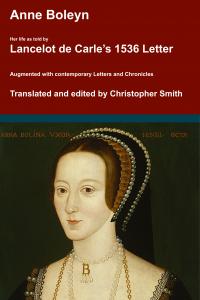
Anne Boleyn. Her Life as told by Lancelot de Carle's 1536 Letter.
In 1536, two weeks after the execution of Anne Boleyn, her brother George and four others, Lancelot du Carle, wrote an extraordinary letter that described Anne's life, and her trial and execution, to which he was a witness. This book presents a new translation of that letter, with additional material from other contemporary sources such as Letters, Hall's and Wriothesley's Chronicles, the pamphlets of Wynkyn the Worde, the Memorial of George Constantyne, the Portuguese Letter and the Baga de Secrets, all of which are provided in Appendices.
Available at Amazon in eBook and Paperback format.
On 5th April 1684 William Brouncker 2nd Viscount Brounckner [aged 64] died. His brother Henry [aged 57] succeeded 3rd Viscount Brouckner of Lyons in Leinster.
On 5th April 1695 George Savile 1st Marquess Halifax [aged 61] died apparently as a consequence of eating undercooked chicken. He was buried in the north aisle of the King Henry VII Chapel, Westminster Abbey [Map]. His son William [aged 30] succeeded 2nd Marquess Halifax, 2nd Earl Halifax, 2nd Viscount Halifax, 2nd Baron Savile of Elland, 5th Baronet Savile of Thornhill. Mary Finch Duchess Roxburghe [aged 18] by marriage Marchioness Halifax.
On 5th April 1697 Charles XI King Sweden [aged 41] died.
On 5th April 1713 Richard Welby [aged 55] died. Monument at St Andrew's Church, Denton [Map]. Sculpted by Thomas Green of Camberwell [aged 54]. The fully wigged standing life sized figure of the deceased stands in an arched surround flanked by fluted Pilasters with acanthus scrolls and broken segmental pediment contaning a cherub and putti leaning down from heaven holding a metal coronet, surmounted by an achievement. Beneath is he inscription panel and to either side putti holding memento mori, and mourning, one with tears.
The inscription reads:
M.S.
Here are deposited the Remains of
Richard Welby of Denton Esqr
Lord of the Mannours of Welby Streglethorp Saperton and
Swinsted and High Sheriff of the County of Lincoln 1705
A Gentleman of an ancient & Virtuous Family, a good Christian
a Loyal Subject, a true lover of the Church
a sincere Respector of its Clergy and
a daily Frequentor of its Worship
In His private Character, Modest, Humble and Courteous
of great Probity and universal Charity
The Poor lost in him a liberal and silent Benefactor
his Tenants, a forbearing Landlord;
his Servants, a kind and prudent master;
his Relations, an invaluable Friend;
his Children, a most indulgent Father and
his Mournfull Wife ye Best of Husbands.
He marry'd Mary Daughter & Sole Heiress of John Towers of
the Isle of Ely Esqr, by whom he had Issue;
Mary Interred here, Selina, William and John twins, Eleanor & Richard
After a tedious Sickness, which he bore with exemplary patience
and resignation, he dyed on Easter day 1713
In hopes of a Joyfull Resurrection; & lament his loss
the Righteous shall be had in everlasting Remembrance
MARY his once happy Wife now Sorrowfull Relict
??????? her own Affection
Erected this Monument Dec 10 1714.
Mary Welby
Ob June 8 1759
Ae 74
Richard Welby: In 1658 he was born. Before 1713 he and Mary Towers were married.
Become a Member via our Buy Me a Coffee page to read more.
On 5th April 1735 Edward Stradling 5th Baronet [aged 62] died. His son Thomas [aged 24] succeeded 6th Baronet Stradling of St Donats in Glamorganshire.
On 5th April 1751 Frederick I King Sweden [aged 74] died. His third cousin once removed Adolph [aged 40] succeeded King Sweden. He the first king of the House of Holstein-Gottorp.
On 5th April 1752 John Lister-Kaye 4th Baronet [aged 54] died. His son John [aged 26] succeeded 5th Baronet Kaye of Woodsome Hall in Yorkshire.
On 5th April 1778 Marmaduke Langdale 5th Baron Langdale died. Baron Langdale of Holme in Yorkshire extinct.
On 5th April 1787 Mary Cardonnel Countess Talbot [aged 68] died.


On 5th April 1789 William Vane 2nd Viscount Vane [aged 75] died. Viscount Vane extinct.
On 5th April 1824 Mary Stuart Countess Lonsdale [aged 83] died.
On 5th April 1846 Margaret Catherine Blackwood Lady Dallas died.

On 5th April 1855 Philadelphia Rowley Lady Cotton [aged 92] died.
On 5th April 1861 Ann Frederica Elizabeth Fleming Lady Fleming [aged 77] died.
William of Worcester's Chronicle of England
William of Worcester, born around 1415, and died around 1482 was secretary to John Fastolf, the renowned soldier of the Hundred Years War, during which time he collected documents, letters, and wrote a record of events. Following their return to England in 1440 William was witness to major events. Twice in his chronicle he uses the first person: 1. when writing about the murder of Thomas, 7th Baron Scales, in 1460, he writes '… and I saw him lying naked in the cemetery near the porch of the church of St. Mary Overie in Southwark …' and 2. describing King Edward IV's entry into London in 1461 he writes '… proclaimed that all the people themselves were to recognize and acknowledge Edward as king. I was present and heard this, and immediately went down with them into the city'. William’s Chronicle is rich in detail. It is the source of much information about the Wars of the Roses, including the term 'Diabolical Marriage' to describe the marriage of Queen Elizabeth Woodville’s brother John’s marriage to Katherine, Dowager Duchess of Norfolk, he aged twenty, she sixty-five or more, and the story about a paper crown being placed in mockery on the severed head of Richard, 3rd Duke of York.
Available at Amazon in eBook and Paperback format.
On 5th April 1876 George Augustus Frederick Charles Holroyd 2nd Earl Sheffield [aged 74] died. His son Henry [aged 44] succeeded 3rd Earl Sheffield of Dunamore in Meath, 3rd Viscount Pevensey, 3rd Baron Sheffield of Dunamore in Meath, 3rd Baron Sheffield of Roscommon in Roscommon, 3rd Baron Sheffield of Sheffield in Yorkshire.
On 5th April 1880 Frances Towneley Baroness Camoys [aged 79] died.
On 5th April 1881 Philip de Malpas Grey-Egerton 10th Baronet [aged 74] died. His son Philip [aged 48] succeeded 11th Baronet Egerton and Oulton. Henrietta Denison Lady Egerton [aged 45] by marriage Lady Egerton and Oulton.
On 5th April 1890 Harry Mengden Scarth [aged 75] died at Tangier [Map]. He was buried at All Saints Church, Wrington [Map].
On 5th April 1892 John Collingwood Bruce [aged 87] died. Monument at the Cathedral Church St Nicholas, Newcastle upon Tyne [Map] showing Bruce with his feet resting on his book "Hadrian's Wall" sculpted by George Blackall Simonds [aged 48] in 1896.
John Collingwood Bruce: In 1805 he was born to John Bruce. In 1833 he and Charlotte Gainsford were married.
On 5th April 1892 Robert Bermingham Clements 4th Earl of Leitrim [aged 45] died.
On 2nd April 1895 Clarissa Hall [aged 70] died. Her funeral was held at the Grosvenor Chapel, Mayfair on 5th April 1895 attended by her daughters Clarita "Clara" Jerome [aged 44], Jenny Jerome [aged 41] and Leonie Blanche Jerome Lady Leslie [aged 36], her grandsons Winston Churchill [aged 20] and John Strange "Jack" Spencer-Churchill [aged 15] and the Dowager Frances Anne Emily Vane Duchess of Marlborough [aged 72].
On 5th April 1914 John Shiffner 5th Baronet [aged 56] died. His son John [aged 14] succeeded 6th Baronet Shiffner of Coombe in Sussex.
On 5th April 1923 George Edward Stanhope Molyneux Herbert 5th Earl Carnarvon [aged 56] died in the Continental Savoy Hotel, Cairo of an mosquito bite infected by a razor cut. His son Henry [aged 24] succeeded 6th Earl Carnarvon, 6th Baron Porchester of Highclere in Hampshire. Anne Catherine Tredick Wendell Countess Carnarvon [aged 22] by marriage Countess Carnarvon.
On 5th April 1939 Warner Hastings 15th Earl Huntingdon [aged 70] died. He was buried at Hasting's Chapel, St Helen's Church, Ashby-de-la-Zouch [Map]. His son Francis [aged 38] succeeded 16th Earl Huntingdon. Cristina Casati Stampa di Soncino Countess Huntingdon [aged 38] by marriage Countess Huntingdon.
On 5th April 1946 Gerald Bagot 5th Baron Bagot [aged 79] died. His first cousin once removed Caryl [aged 69] succeeded 6th Baron Bagot of Bagot's Bromley in Staffordshire, 11th Baronet Bagot of Blithfield Hall.
Anne Boleyn. Her Life as told by Lancelot de Carle's 1536 Letter.
In 1536, two weeks after the execution of Anne Boleyn, her brother George and four others, Lancelot du Carle, wrote an extraordinary letter that described Anne's life, and her trial and execution, to which he was a witness. This book presents a new translation of that letter, with additional material from other contemporary sources such as Letters, Hall's and Wriothesley's Chronicles, the pamphlets of Wynkyn the Worde, the Memorial of George Constantyne, the Portuguese Letter and the Baga de Secrets, all of which are provided in Appendices.
Available at Amazon in eBook and Paperback format.
On 5th April 1960 Herbert Hervey 5th Marquess of Bristol [aged 89] died. His son Victor [aged 44] succeeded 6th Marquess of Bristol, 6th Earl Jermyn of Horningworth in Suffolk, 10th Earl Bristol, 11th Baron Hervey of Ickworth in Suffolk.
On 5th April 1968 John Denison 8th Baron Londesborough [aged 66] died. His son Richard [aged 8] succeeded 9th Baron Londesborough of Londesborough in the East Riding of Yorkshire.
On 5th April 1991 William Philip Sidney 1st Viscount de l'Isle [aged 81] died. His son Philip [aged 45] succeeded 2nd Viscount de Lisle of Penshurst in Kent, 7th Baron De Lisle and Dudley, 10th Baronet Shelley of Castle Goring in Sussex, 8th Baronet Shelley-Sidney of Penshurst Place in Kent.
On 5th April 2002 Arthur Mountifort Longfield Ponsonby 11th Earl Bessborough [aged 89] died. His son Myles [aged 61] succeeded 12th Earl Bessborough, 13th Viscount Duncannon of Duncannon in Wexford, 13th Baron Bessborough of Bessborough in Kilkenny.