

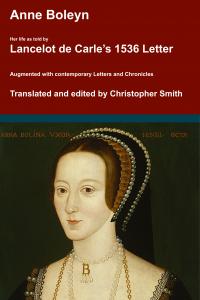
Anne Boleyn. Her Life as told by Lancelot de Carle's 1536 Letter.
In 1536, two weeks after the execution of Anne Boleyn, her brother George and four others, Lancelot du Carle, wrote an extraordinary letter that described Anne's life, and her trial and execution, to which he was a witness. This book presents a new translation of that letter, with additional material from other contemporary sources such as Letters, Hall's and Wriothesley's Chronicles, the pamphlets of Wynkyn the Worde, the Memorial of George Constantyne, the Portuguese Letter and the Baga de Secrets, all of which are provided in Appendices.
Available at Amazon in eBook and Paperback format.
09 Jan is in January.
1284 Translation of Saint William of York
1514 Death of Anne Duchess of Brittany
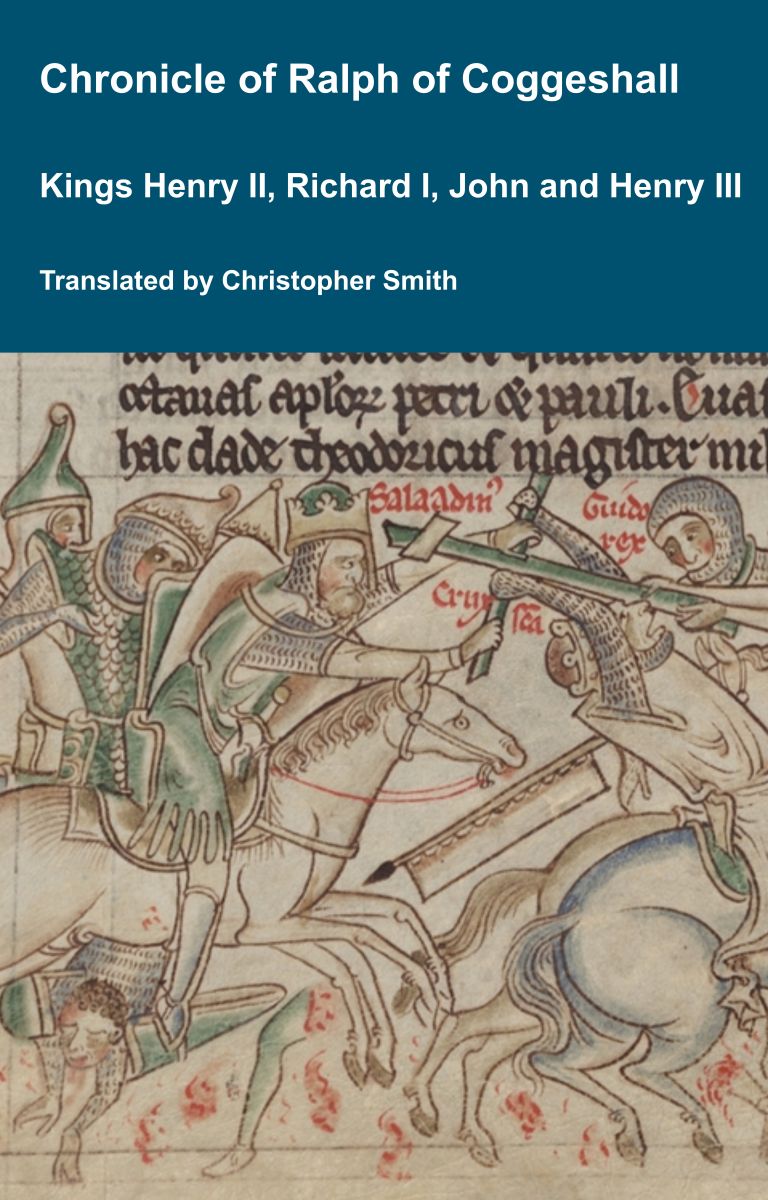 Chronicum Anglicanum by Ralph Coggeshall. On the Saturday [9th January 1216] next after Epiphany, the earl of Winchester and the other earls returned to London from overseas, bringing with them forty-one ships laden with knights and men-at-arms. On the Friday [29th January] before the Feast of the Purification of Blessed Mary, the aforesaid Savaric, with his companions, besieged the castle of Colchester; but when they heard that the barons of London were hurrying to the relief of the castle, on the Wednesday [3rd February] after the Purification of Blessed Mary they withdrew toward St Edmund's.
Sabbato proximo post Epiphaniam, redierunt Londonias a transmarinis comes Wintoniensis et cæteri comites, ducentes secum XLI naves militibus et servientibus onustas. Die Veneris ante Purificationem Beatæ Mariæ, Savaricus supradictus, cum sociis suis, obsederunt castellum Colecestriæ; sed, audito quod barones Londoniæ festinarent ad succursum castelli, die Mercurii post Purificationem Beatæ Mariæ, versus Sanctum-Edmundum recesserunt.
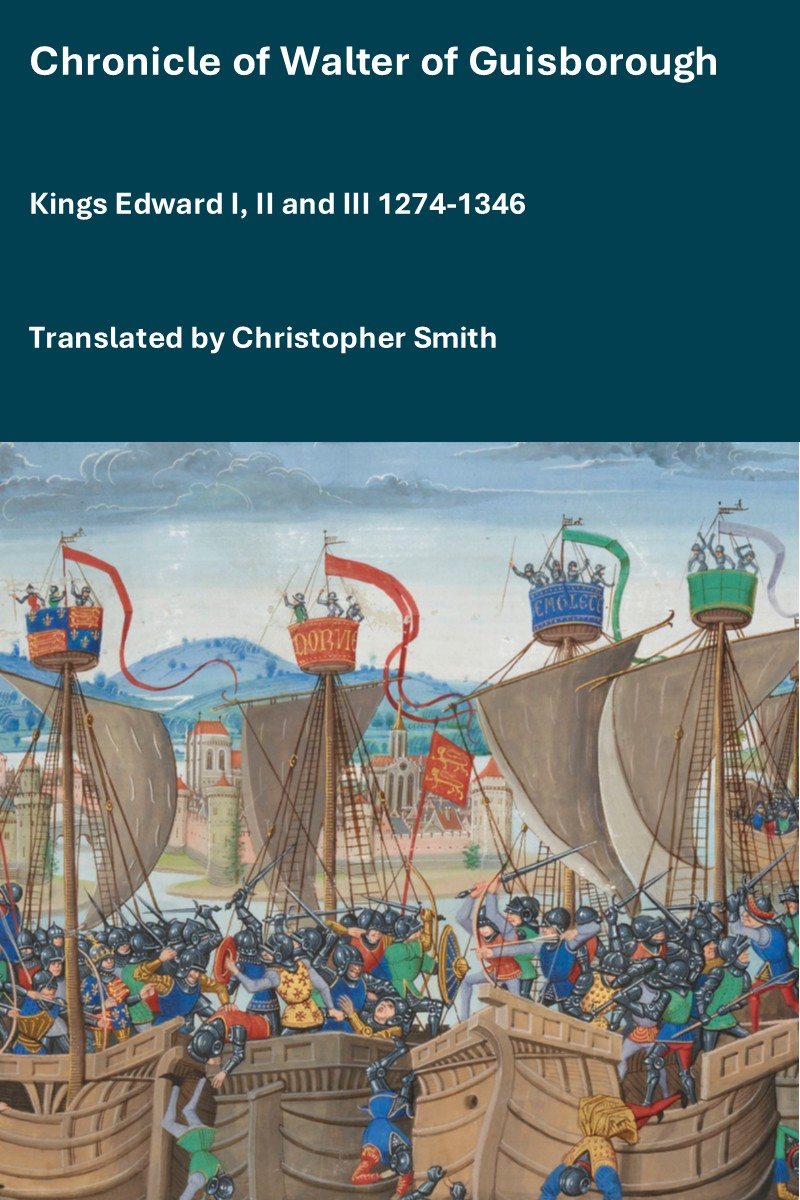 Chronicle of Walter of Guisborough. In the same year, namely on the Sunday within the octave of the Epiphany of the Lord, which that year fell on the ninth of January [1284], Saint William, Archbishop of York, was translated, and reverently placed in a silver and gold reliquary by the venerable father William de Wickwane, then Archbishop of York, along with the other bishops of England who had gathered there for the occasion. The king and queen were present, together with other nobles of the realm, clergy, and a great crowd of people. On that same day, Antony de Bek (age 39) was consecrated Bishop of Durham in the same place, by Archbishop de Wickwane. Shortly afterward, the king set out for Wales, in order to stabilize and organize that land. While he was at Caernarfon, the queen gave birth to a son, whom they named Edward; this occurred in the year 1284. That same year, Alfonso (age 10), son of the king, died at Windsor.
Eodem anno, scilicet dominica infra octavas Epiphaniæ Domini, quæ fuit anno illo V idus Januarii, translatus fuit sanctus Willelmus Eborum archiepiscopus, et in capsa argentea et aurea reverenter reconditus, per venerabilem patrem Willelmum Wichewange tunc Eborum archiepiscopum, et cæteros Angliæ episcopos qui ob hoc ibidem convenerant, assistente rege et regina cum cæteris magnatibus terræ et clero et populo. Eodem etiam die consecratus est ibidem et ab eodem de Bek, archiepiscopo Antonius de Bek Dunolmensis episcopus. Et profectus est exinde rex in Walliam ut terram illam et stabiliret et ordinaret; ubi cum esset apud Carnarvan peperit ei regina filium, et vocavit nomen ejus Edwardum, scilicet MCCLXXXIV; et eodem anno obiit Alfonsus, filius Prince Alregis, apud Windesover.
Chronicle of Walter of Guisborough. And when at length the election of the bishop of Durham was completed, the archbishop opposed the election of Anthony (age 39), saying that he had been elected by persons under excommunication, and therefore should not be admitted. The lord king, however, sent his own trusted servant, Sir John de Vescy, to the archbishop to say, and to threaten under heavy forfeiture, that he was not to hinder the election and promotion of his most special clerk; rather, if the archbishop had a legal case against the monks who had made the election, he should bring and pursue it in due place and time, but the elect was not to be punished for the offence of the others. And so the archbishop was afraid for himself, and gave way, fearing man more than God, and consecrated him, as has been said, on the day of the Translation of Saint William [9th January 1284]. Later, however, he repented of it. After him, Archbishop John Romanus (age 54) wished to make a visitation; but because he was greedy, they bought him off with money for the whole of his term. After him, Archbishop Henry of Newark did not begin such proceedings, because he lived only a short time, and besides this, he was a friend of the bishop of Durham. After him, Archbishop Thomas of Corbridge, although he visited his own province twice within four years (except for his own chapter), nevertheless did not approach Durham, because he feared the king and the trouble it would bring.
Factaque demum electione Dunolmensis, opposuit se archiepiscopus contra electum Anthonium, dicens ipsum esse electum ab excommunicatis, et propter hoc non fore admittendum. Et misit ad archiepiscopum dominus rex familiarem suum, dominum Johannem de Vescy, qui diceret, et sub gravi forisfactura comminaret, quod electionem et promotionem specialissimi clerici sui non impediret: imo si actionem haberet contra monachos eligentes, institueret et persequeretur eam pro loco et tempore; et non puniretur electus pro delicto cæterorum. Timuitque sibi archiepiscopus et adquievit, magis timens hominem quam Deum, et consecravit eum, ut supradictum est, in die translationis sancti Willelmi; postea tamen poenituit. Post hunc archiepiscopus Johannes Romanus voluit visitasse; sed quia avarus erat extinxerunt eum pecunia data pro toto tempore suo. Post illum archiepiscopus Henricus de Newerk non incepit talia, eo quod parvo tempore vixit, et præter hoc fuit familiaris domini Dunolmensis episcopi. Post quem archiepiscopus Thomas de Corebrigge, qui licet provinciam propriam infra quatuor annos, excepto proprio capitulo, duabus vicibus visitasset, Dunolmum tamen non petiit, eo quod timuit regem et vexationem.
Annals of Dunstable. The lord king and the queen, after Christmas, were at York for the consecration1 of Anthony Bek, bishop of Durham. Thence the lord king held his parliament at Lincoln. Thence the lord king returned to Wales, ordaining that the Welsh and their heirs should live henceforth according to the laws of England."
Dominus rex et regina post Natale Domini apud Eboracum interfuerunt consecrationi Antonii Bek, Dunelmensis episcopi. Inde dominus rex tenuit parliamentum suum apud Lincolniam. Inde dominus rex rediit Walliam, statuens quod Wallenses et eorum hæredes viverent in posterum secundum leges Anglicanas.
Note 1. Anthony Bek, bishop of Durham, was consecrated on 9th January 1284 by Archbishop of York, William de Wickwane. On the same day that the remains of Saint William of York were translated from a small altar in the Minster to a shrine in the centre of the Nave. See
Walter of Guisborough.
On 15th August 1369 Philippa of Hainaut Queen Consort England (age 55) died at Windsor Castle [Map]. Her husband King Edward III of England (age 56) and youngest son Thomas of Woodstock 1st Duke of Gloucester (age 14) were present. She was given a state funeral six months later on 9th January 1370 at which she was interred at on the northeast side of the Chapel of St Edward the Confessor, Westminster Abbey [Map]. Her alabaster effigy was executed by sculptor Jean de Liège.
Patent Rolls. 9th January 1378. Nomination, as a crown right after coronation, at the supplication of the king's kinswoman, the countess of Norfolk, and mandate to the abbess and convent of Winchester for the admission of Agnes Denham of Winchester as a nun. By p.s.
On 9th January 1431 Joan of Arc (age 19) was tried at Rouen Castle [Map]. John Lancaster 1st Duke Bedford (age 41) and Henry Beauchamp 1st Duke Warwick (age 5) were present.


On 9th January 1450 Bishop Adam Moleyns was lynched by a mob of discontented unpaid soldiers who dragged him from the Royal Garrison Church, Portsmouth and executed him for being a supporter of William "Jackanapes" de la Pole 1st Duke of Suffolk (age 53) and for the losses in Normandy.
Paston Letters Volume 2 270. Edmund Clere To John Paston1
To my welbeloved cosyn, John Paston, be this delivered. 9th January 1455.
Right welbeloved cosyn, I recomaund me to you, latyng you wite such tidings as we have.
Blessed be God, the Kyng is wel amended, and hath ben syn Cristemesday, and on Seint Jones day 27th December 1454 comaunded his awmener [almoner] to ride to Caunterbury wyth his offryng, and comaunded the secretarie to offre at Seint Edwards.
And on the Moneday after noon the Queen came to him, and brought my Lord Prynce with her. And then he askid what the Princes name was, and the Queen told him Edward; and than he hild up his hands and thankid God therof. And he seid he never knew til that tyme, nor wist not what was seid to him, nor wist not where he had be whils he hath be seke til now. And he askid who was godfaders, and the Queen told him, and he was wel apaid.
And she told him that the Cardinal was dede, and he seid he knew never therof til that tyme; and he seid oon of the wisist Lords in this land was dede.
And my Lord of Wynchestr (age 57) and my Lord of Seint Jones were with him on the morow after Tweltheday, and he speke to hem as well as ever he did; and when thei come out thei wept for joye.
And he seith he is in charitee with all the world, and so he wold all the Lords were. And now he seith matyns of Our Lady and evesong, and herith his Masse devoutly; and Richard shall tell yow more tidings by mouth.
I pray yow recomaund me to my Lady Morley, and to Maister Prior2, and to my Lady Felbrigge3, and to my Lady Hevenyngham4, and to my cosyn your moder, and to my cosyn your wife.
Wreten at Grenewich on Thursday after Twelftheday. Be your cosyn, Edmund C.
Note 1. [From Fenn, i. 80.] There is no doubt about the date of this letter. The King fell ill at Clarendon in the autumn of 1453, and remained in a state of utter imbecility during the greater part of the year 1454, so that in March a deputation from the House of Peers, sent to communicate with him on the death of his Chancellor, Cardinal Kemp, was obliged to report that they had been utterly unable to obtain from him any answer or sign that he understood the least thing said to him. It appears from this letter that his recovery was about Christmas, when he heard for the first time of the birth of his son fourteen months before, and of the death of Cardinal Kemp nine months before.
Note 2. Probably the Prior of Bromholm.
Note 3. Catherine, widow of Sir Simon Felbrigg. She was the daughter of Anketill Mallory, Esq. of Winwick, in Northamptonshire.
Note 4. Sir John Heveningham married Elizabeth (age 55), daughter of Sir John Reedesham. Unless he married a second time, this Elizabeth was now his widow. Their son, also John (age 18), married Alice Savile (age 3) sometime before 1460.
On 9th January 1499 John "Cicero" Hohenzollern Elector Brandenburg (age 43) died.
9th January 1513. Thomas Spinelly (age 41) to Lewis Maroton. Has received two letters, dated respectively 28th December and 3d January, expressing the impatience of the Emperor for the conclusion of the matter in treaty, with Madame, between himself and the King of England (age 21), who, he thinks, has cooled. If the Emperor had dealt earnestly, it had been accomplished long ago; and the continual diligence of the King's ambassadors for eight months proves the contrary. Reminds him how, at the outset, the King wrote with his own hand to the Emperor. On the arrival of the ambassadors at her Court, instead of a brief expedition of the business that had been promised, the Emperor, after some discussion, demanded 100,000 escus d'or, saying that the Pope and the King of Aragon (age 60) would give him as much,-a point that had never been mentioned before. And, although the treaty was for the interest of the Emperor and the King of Castile, as well as himself, the King, upon the declaration of Sir Thomas Boleyn (age 36), consented to let the Emperor have the 100,000 crowns. But before the conclusion of the negotiations the Emperor left, promising to send his daughter full powers and return in two months. The powers did not come till three months, and then clogged with new conditions, such as that the Prince and his subjects should remain neutral. Even to this the King assented, on certain conditions. Such conduct demands reciprocity on their part. Spinelly cannot believe what he is told, that over and above the sum already stipulated the Emperor will be so unreasonable as to demand more; and for his part he would not dare propose it. Begs him to obtain such a commission for Madame as may suffice to make an end without needing other ambassadors. Can think of no cause why the King has not advertised the Emperor of his wish for troops, unless it be that his ambassador, who is to return to him, will explain; and also he may think that what is said to the daughter is likewise said to the father. Malines, 9 Jan. 1512.
On 9th January 1514 Anne of Brittany Queen Consort France (age 36) died. She the last of the de Montfort family to hold the title (the Montfort family is a scion the Capet family; her father was descended from Louis VII King of the Franks. Claude Valois Orléans Queen Consort France (age 14) succeeded I Duchess Brittany. Claude and King Francis I of France (age 19) married after which the Duchy of Brittany and the Crown of France were combined.


Letters and Papers. 9th January 1536. Vienna Archives. 59. Chapuys (age 46) to Charles V.
Just after having finished my last letter of 30 Dec. I mounted horse to go with all possible haste "selon la grande compagnie que menvoie" to see the Queen (deceased). On my arrival she called roe at once, and that it might not be supposed her sickness was feigned and also because there was a friend of Cromwell's whom the King had sent to accompany me, or rather to spy and note all that was said and done, the Queen thought best, with my consent, that my conductor and the principal persons of the house, such as the chamberlain and steward, who had not seen her for more than a year, and several others, should be at our first interview. After I had kissed hands she took occasion to thank me for the numerous services I had done her hitherto and the trouble I had taken to come and see her, a thing that she had very ardently desired, thinking that my coming would be salutary for her, and, at all events, if it pleased God to take her, it would be a consolation to her to die under my guidance (entre mes braz) and not unprepared, like a beast. I gave her every hope, both of her health and otherwise, informing her of the offers the King had made me of what houses she would, and to cause her to be paid the remainder of certain arrears, adding, for her further consolation, that the King was very sorry for her illness; and on this I begged her to take heart and get well, if for no other consideration, because the union and peace of Christendom depended upon her life. To show this I used many arguments, as had been prearranged with another person between the Queen and me, in order that my conductor and some of the bystanders might make report of it, so that by this means they might have the greater care of her life. After some other conversation, the Queen bade me rest after the fatigue of the journey, and meanwhile she thought she could sleep a little, which she had not done for two hours altogether during the six days previous. Shortly afterwards she sent for me again, and I spent full two hours in conversation with her, and though I several times wished to leave her for fear of wearying her, I could not do so, she said it was so great a pleasure and consolation. I spent the same period of time with her every day of the four days I staid there. She inquired about the health of your Majesty and the state of your affairs, and regretted her misfortune and that of the Princess, and the delay of remedy by which all good men had suffered in person and in goods, and so many ladies were going to perdition. But, on my showing her that your Majesty could not have done better than you had done hitherto, considering the great affairs which had hindered you, and also that the delay had not been without advantages (for, besides there being some hope that the French, who formerly solicited the favour of this King, would now turn their backs, there was this, that the Pope, by reason of the death of the cardinal of Rochester, and other disorders, intended to seek a remedy in the name of the Holy See, and thus, preparations being made at the instance of the Holy See, the King could not blame her as the cause), she was quite satisfied and thought the delay had been for the best. And as to the heresies here [I said] she knew well that God said there must of necessity be heresies and slanders for the exaltation of the good and confusion of the wicked, and that she must consider that the heresies were not so rooted here that they would not soon be remedied, and that it was to be hoped that those who had been deluded would afterwards be the most firm, like St. Peter after he had tripped. of these words she showed herself very glad, for she had previously had some scruple of conscience because [the heresies] had arisen from her affair.
Having staid there four days, and seeing that she began to take a little sleep, and also that her stomach retained her food, and that she was better than she had been, she thought, and her physician agreed with her (considering her out of danger), that I should return, so as not to abuse the licence the King had given me, and also to request the King to give her a more convenient house, as he had promised me at my departure. I therefore took leave of her on Tuesday evening, leaving her very cheerful; and that evening I saw her laugh two or three times, and about half an hour after I left her she desired to have some pastime (soy recreer) with one of my men "que fait du plaisant." On Wednesday morning one of her chamber told me that she had slept better. Her physician confirmed to me again his good hope of her health, and said I need not fear to leave, for, if any new danger arose, he would inform me with all diligence. Thereupon I started, and took my journey at leisure, lest any further news should overtake me on the road; but none came. This morning I sent to Cromwell to know when I could have audience of the King his master to thank him for the good cheer he had caused to be shown me in my journey, and also to speak about the said house. He sent to inform me of the lamentable news of the death of the most virtuous Queen, which took place on Friday the morrow of the Kings, about 2 p.m. This has been the most cruel news that could come to me, especially as I fear the good Princess will die of grief, or that the concubine (age 35) will hasten what she has long threatened to do, viz., to kill her; and it is to be feared that there is little help for it. I will do my best to comfort her, in which a letter from your Majesty would help greatly. I cannot relate in detail the circumstances of the Queen's decease, nor how she has disposed of her affairs, for none of her servants has yet come. I know not if they have been detained.
This evening, on sending to tell (qu. ask?) Cromwell what they had determined to do, that I might for my part do my duty, he told my man that just as he was entering the gate he had dispatched one of his own to inform me, on the part of the King and Council, that it was determined to give her a very solemn and honorable funeral both on account of her virtue and as having been wife of Prince Arthur, and, moreover, for her lineage and relationship to your Majesty, and that, if I wished to be present, the King would send me some black cloth for myself and my servants, but that the time and place had not yet been arranged. I replied that, presuming that everything would be done duly, I agreed to be present, and that, as to the cloth, the King need not trouble himself about it, for I was provided. It is certain that they will not perform her exequies as Queen, but only as Princess, and for this reason I despatch in haste to Flanders one of my servants who will have time to go and come, that I may know how to conduct myself, for nothing will be done for 18 or 20 days. The Queen's illness began about five weeks ago, as I then wrote to your Majesty, and the attack was renewed on the morrow of Christmas day. It was a pain in the stomach, so violent that she could retain no food. I asked her physician several times if there was any suspicion of poison. He said he was afraid it was so, for after she had drunk some Welsh beer she had been worse, and that it must have been a slow and subtle poison1 for he could not discover evidences of simple and pure poison; but on opening her, indications will be seen. London, 9 Jan. 1535. Fr., from a modern copy, pp. 4.
Note 1. "Poison aterminec (qu. atermoiee?) et artificieuse."


Letters and Papers. 9th January 1536. Add. MS. 28,588, f. 114. B. M. 60. Chapuys (age 46) to Ortiz.
Received on the 29th ult. the Emperor's letter of the 3rd ult., and with them, the [account of the] receptions given to the Emperor in Micina and Naples.
Hearing that the Queen was very ill, went to ask the King for leave to visit her, which he obtained, with some trouble. Set off as soon as possible. Found that the Queen had been troubled with vomiting and pain in the stomach for a week, being unable to eat or sleep, except so little that it might be called nothing. She was so wasted that she could not support herself either on her feet or sitting in bed. During four days that he was with her she got better, and seemed to be much comforted by his visit. She did not cease to tell him that he had served her well, and shown the affection for her service, which she knew that he felt. She desired him to return and solicit her removal, in which the physician concurred, thinking her out of danger for the time. Returned as she wished, and to-day news came to the King that on the third day after his departure she had a relapse and died in twelve hours, which was the day before yesterday, Friday the 7th, at 2 p.m. Feels it deeply, and hopes the same fate will not happen to the Princess. Will not now mention what her Highness said, and her last wishes. Refers to his letter to Cifuentes. London, 9 Jan. 1536. Sp., pp. 3. Modern copy.
Abbot John Whethamstede’s Chronicle of the Abbey of St Albans
Abbot John Whethamstede's Register aka Chronicle of his second term at the Abbey of St Albans, 1451-1461, is a remarkable text that describes his first-hand experience of the beginning of the Wars of the Roses including the First and Second Battles of St Albans, 1455 and 1461, respectively, their cause, and their consequences, not least on the Abbey itself. His text also includes Loveday, Blore Heath, Northampton, the Act of Accord, Wakefield, and Towton, and ends with the Coronation of King Edward IV. In addition to the events of the Wars of the Roses, Abbot John, or his scribes who wrote the Chronicle, include details in the life of the Abbey such as charters, letters, land exchanges, visits by legates, and disputes, which provide a rich insight into the day-to-day life of the Abbey, and the challenges faced by its Abbot.
Available at Amazon in eBook and Paperback format.

On 9th January 1564 Margaret Audley Duchess Norfolk (age 24) died at Norwich, Norfolk [Map] following the birth of her fourth child. She was initially buried at Church of St John the Baptist, Norwich [Map]. Her remains were moved to the Church of St Michael the Archangel, Framlingham [Map].
On 9th January 1606 Stephen Lyttelton (age 31) and Robert Wintour (age 38) were arrested at Hagley Hall, Worcestershire for their part in the Gunpowder Plot after a cook named John Finwood had informed the authorities. Stephen Lyttelton was executed sometime thereafter at Stafford.

Diary of Anne Clifford. 9th January 1617. Upon the 9th I went up to see the things in the closet and began to have Mr Sandy's book read to me about the Government of the Turks, my Lord (age 27) sitting the most part of the day reading in his closet.
Samuel Pepys' Diary. 9th January 1660. Monday. For these two or three days I have been much troubled with thoughts how to get money to pay them that I have borrowed money of, by reason of my money being in my uncle's hands. I rose early this morning, and looked over and corrected my brother John's (age 19) speech, which he is to make the next apposition,-[Note. Declamations at St. Paul's School, in which there were opponents and respondents.]-and after that I went towards my office, and in my way met with W. Simons, Muddiman, and Jack Price, and went with them to Harper's and in many sorts of talk I staid till two of the clock in the afternoon. I found Muddiman a good scholar, an arch rogue; and owns that though he writes new books for the Parliament, yet he did declare that he did it only to get money; and did talk very basely of many of them. Among other things, W. Simons told me how his uncle Scobel was on Saturday last called to the bar, for entering in the journal of the House, for the year 1653, these words: "This day his Excellence the Lord General Cromwell dissolved this House;" which words the Parliament voted a forgery, and demanded of him how they came to be entered. He answered that they were his own handwriting, and that he did it by virtue of his office, and the practice of his predecessor; and that the intent of the practice was to-let posterity know how such and such a Parliament was dissolved, whether by the command of the King, or by their own neglect, as the last House of Lords was; and that to this end, he had said and writ that it was dissolved by his Excellence the Lord G[eneral]; and that for the word dissolved, he never at the time did hear of any other term; and desired pardon if he would not dare to make a word himself when it was six years after, before they came themselves to call it an interruption; but they were so little satisfied with this answer, that they did chuse a committee to report to the House, whether this crime of Mr. Scobell's did come within the act of indemnity or no. Thence I went with Muddiman to the Coffee-House, and gave 18d. to be entered of the Club. Thence into the Hall, where I heard for certain that Monk (age 51) was coming to London, and that Bradshaw's lodgings were preparing for him. Thence to Mrs. Jem's, and found her in bed, and she was afraid that it would prove the smallpox. Thence back to Westminster Hall [Map], where I heard how Sir H. Vane (age 46) was this day voted out of the House, and to sit no more there; and that he would retire himself to his house at Raby [Map], as also all the rest of the nine officers that had their commissions formerly taken away from them, were commanded to their farthest houses from London during the pleasure of the Parliament. Here I met with the Quarter Master of my Lord's (age 34) troop, and his clerk Mr. Jenings, and took them home, and gave them a bottle of wine, and the remainder of my collar of brawn; and so good night. After that came in Mr. Hawly, who told me that I was mist this day at my office, and that tomorrow I must pay all the money that I have, at which I was put to a great loss how I should get money to make up my cash, and so went to bed in great trouble.



On 9th January 1662 John Holles 1st Duke Newcastle upon Tyne was born to Gilbert Holles 3rd Earl de Clare (age 28) and Grace Pierrepont Countess de Clare (age 29) at Edwinstowe, Nottinghamshire. He married 1st March 1690 his first cousin Margaret Cavendish Duchess Newcastle upon Tyne, daughter of Henry Cavendish 2nd Duke Newcastle upon Tyne and Frances Pierrepont Duchess Newcastle upon Tyne, and had issue.
John Evelyn's Diary. 9th January 1662. I saw acted the Third Part of "The Siege of Rhodes". In this acted the fair and famous comedian called Roxalana (age 19) from the part she performed; and I think it was the last, she being taken to be the Earl of Oxford's (age 34) Miss [Note. Probably Diana Kirke Countess of Oxford] (as at this time they began to call lewd women). It was in recitative music.


Samuel Pepys' Diary. 9th January 1663. Waking in the morning, my wife I found also awake, and begun to speak to me with great trouble and tears, and by degrees from one discourse to another at last it appears that Sarah has told somebody that has told my wife of my meeting her at my brother's and making her sit down by me while she told me stories of my wife, about her giving her scallop to her brother, and other things, which I am much vexed at, for I am sure I never spoke any thing of it, nor could any body tell her but by Sarah's own words. I endeavoured to excuse my silence herein hitherto by not believing any thing she told me, only that of the scallop which she herself told me of. At last we pretty good friends, and my wife begun to speak again of the necessity of her keeping somebody to bear her company; for her familiarity with her other servants is it that spoils them all, and other company she hath none, which is too true, and called for Jane to reach her out of her trunk, giving her the keys to that purpose, a bundle of papers, and pulls out a paper, a copy of what, a pretty while since, she had wrote in a discontent to me, which I would not read, but burnt. She now read it, and it was so piquant, and wrote in English, and most of it true, of the retiredness of her life, and how unpleasant it was; that being wrote in English, and so in danger of being met with and read by others, I was vexed at it, and desired her and then commanded her to tear it. When she desired to be excused it, I forced it from her, and tore it, and withal took her other bundle of papers from her, and leapt out of the bed and in my shirt clapped them into the pocket of my breeches, that she might not get them from me, and having got on my stockings and breeches and gown, I pulled them out one by one and tore them all before her face, though it went against my heart to do it, she crying and desiring me not to do it, but such was my passion and trouble to see the letters of my love to her, and my Will wherein I had given her all I have in the world, when I went to sea with my Lord Sandwich (age 37), to be joyned with a paper of so much disgrace to me and dishonour, if it should have been found by any body. Having torn them all, saving a bond of my uncle Robert's, which she hath long had in her hands, and our marriage license, and the first letter that ever I sent her when I was her servant1, I took up the pieces and carried them into my chamber, and there, after many disputes with myself whether I should burn them or no, and having picked up, the pieces of the paper she read to-day, and of my Will which I tore, I burnt all the rest, and so went out to my office troubled in mind.
Note 1. The usual word at this time for a lover. We have continued the correlative term "mistress", but rejected that of "servant".
Samuel Pepys' Diary. 9th January 1664. Up (my underlip being mightily swelled, I know not how but by overrubbing it, it itching) and to the office, where we sat all the morning, and at noon I home to dinner, and by discourse with my wife thought upon inviting my Lord Sandwich (age 38) to a dinner shortly. It will cost me at least ten or twelve pounds; but, however, some arguments of prudence I have, which however I shall think again upon before I proceed to that expence.
Samuel Pepys' Diary. 9th January 1666. After dinner Pierce and I up to my chamber, where he tells me how a great difference hath been between the Duke (age 32) and Duchesse (age 28), he suspecting her to be naught with Mr. Sidney (age 24)1. But some way or other the matter is made up; but he was banished the Court, and the Duke for many days did not speak to the Duchesse at all. He tells me that my Lord Sandwich (age 40) is lost there at Court, though the King (age 35) is particularly his friend. But people do speak every where slightly of him; which is a sad story to me, but I hope it may be better again. And that Sir G. Carteret (age 56) is neglected, and hath great enemies at work against him. That matters must needs go bad, while all the town, and every boy in the streete, openly cries, "the King cannot go away till my Baroness Castlemaine's (age 25) be ready to come along with him"; she being lately put to bed And that he visits her and Mrs. Stewart (age 18) every morning before he eats his breakfast. All this put together makes me very sad, but yet I hope I shall do pretty well among them for all this, by my not meddling with either of their matters. He and Ferrers gone I paid uncle Thomas his last quarter's money, and then comes Mr. Gawden and he and I talked above stairs together a good while about his business, and to my great joy got him to declare that of the £500 he did give me the other day, none of it was for my Treasurershipp for Tangier [Map] (I first telling him how matters stand between Povy (age 52) and I, that he was to have half of whatever was coming to me by that office), and that he will gratify me at 2 per cent. for that when he next receives any money. So there is £80 due to me more than I thought of. He gone I with a glad heart to the office to write, my letters and so home to supper and bed, my wife mighty full of her worke she hath to do in furnishing her bedchamber.
Note 1. "This Duchess was Chancellor Hyde's (age 56) daughter, and she was a very handsome woman, and had a great deal of wit; therefore it was not without reason that Mr. Sydney, the handsomest youth of his time, of the Duke's bedchamber, was so much in love with her, as appeared to us all, and the Duchess not unkind to him, but very innocently. He was afterwards banished the Court for another reason, as was reported" (Sir John Reresby's Memoirs, August 5th, 1664, ed. Cartwright, pp. 64,65). "'How could the Duke of York make my mother a Papist?' said the Princess Mary to Dr. Bumet. 'The Duke caught a man in bed with her,' said the Doctor, 'and then had power to make her do anything.' The Prince, who sat by the fire, said, 'Pray, madam, ask the Doctor a few more questions'" (Spence's "Anecdotes", ed. Singer, 329).
Samuel Pepys' Diary. 9th January 1667. Thence to Faythorne (age 51), and bought a head or two; one of them my Lord of Ormond's (age 56), the best I ever saw, and then to Arundell House [Map], where first the Royall Society meet, by the favour of Mr. Harry Howard (age 38), who was there, and has given us his grandfather's library, a noble gift, and a noble favour and undertaking it is for him to make his house the seat for this college. Here was an experiment shown about improving the use of powder for creating of force in winding up of springs and other uses of great worth. And here was a great meeting of worthy noble persons; but my Lord Bruncker (age 47), who pretended to make a congratulatory speech upon their coming hither, and in thanks to Mr. Howard, do it in the worst manner in the world, being the worst speaker, so as I do wonder at his parts and the unhappiness of his speaking.
Samuel Pepys' Diary. 9th January 1667. Thence home by coach and to the office, and then home to supper, Mercer and her sister there, and to cards, and then to bed. Mr. Cowling did this day in the House-lobby tell me of the many complaints among people against Mr. Townsend in the Wardrobe, and advises me to think of my Lord Sandwich's (age 41) concernment there under his care. He did also tell me upon my demanding it, that he do believe there are some things on foot for a peace between France and us, but that we shall be foiled in it.
Samuel Pepys' Diary. 9th January 1668. After dinner to the office again, where busy till night, very busy, and among other things wrote to my father about lending Anthony Joyce the money he desires; and I declare that I would do it as part of Pall's (age 27) portion, and that Pall should have the use of the money till she be married, but I do propose to him to think of Mr. Cumberland (age 36) rather than this Jackson that he is upon; and I confess I have a mighty mind to have a relation so able a man, and honest, and so old an acquaintance as Mr. Cumberland. I shall hear his answer by the next [post]. At night home and to cards with my wife and girle, and to supper late, and so to bed.
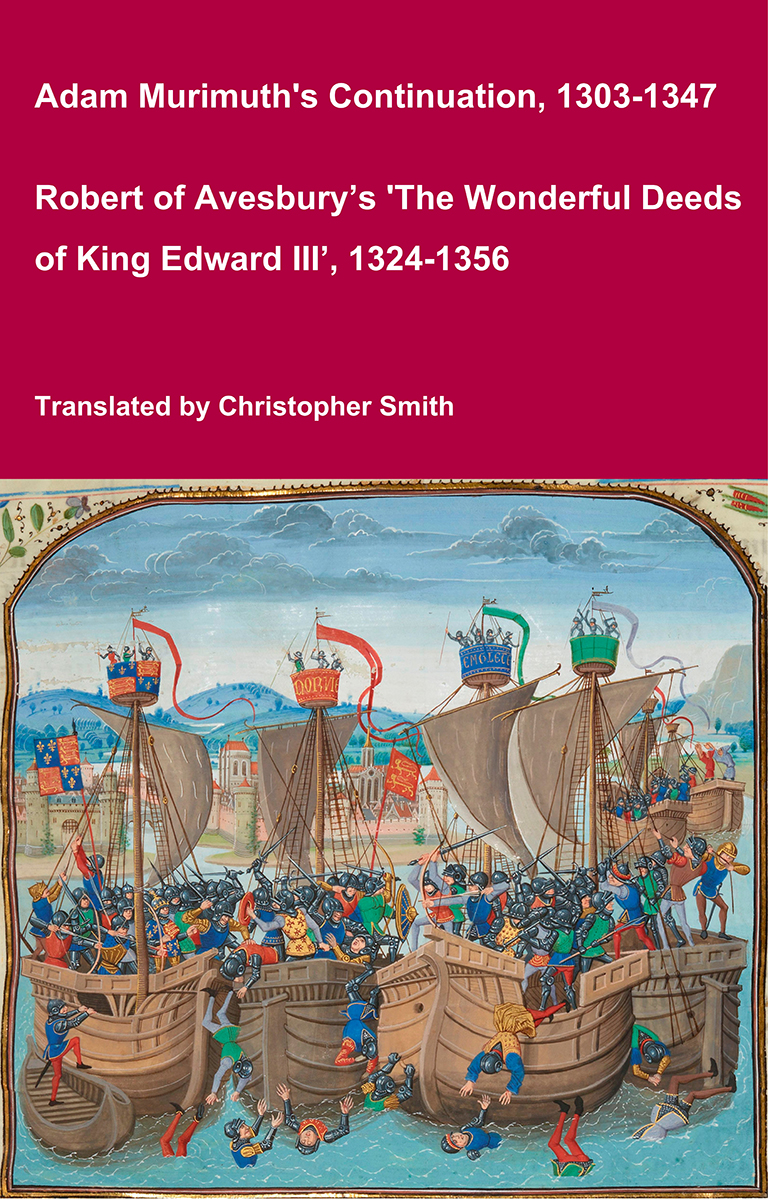
Adam Murimuth's Continuation and Robert of Avesbury’s 'The Wonderful Deeds of King Edward III'
This volume brings together two of the most important contemporary chronicles for the reign of Edward III and the opening phases of the Hundred Years’ War. Written in Latin by English clerical observers, these texts provide a vivid and authoritative window into the political, diplomatic, and military history of fourteenth-century England and its continental ambitions. Adam Murimuth Continuatio's Chronicarum continues an earlier chronicle into the mid-fourteenth century, offering concise but valuable notices on royal policy, foreign relations, and ecclesiastical affairs. Its annalistic structure makes it especially useful for establishing chronology and tracing the development of events year by year. Complementing it, Robert of Avesbury’s De gestis mirabilibus regis Edwardi tertii is a rich documentary chronicle preserving letters, treaties, and official records alongside narrative passages. It is an indispensable source for understanding Edward III’s claim to the French crown, the conduct of war, and the mechanisms of medieval diplomacy. Together, these works offer scholars, students, and enthusiasts a reliable and unembellished account of a transformative period in English and European history. Essential for anyone interested in medieval chronicles, the Hundred Years’ War, or the reign of Edward III.
Available at Amazon in eBook and Paperback format.
Samuel Pepys' Diary. 9th January 1668. So to the office, where all the morning busy, and so home at noon to dinner with my people, where Mr. Hollier (age 59) come and dined with me, and it is still mighty pleasant to hear him talk of Rome and the Pope, with what hearty zeal and hatred he talks against him.
On 9th January 1669 Captain Francis Bromwich was killed in a duel, or a brawl. See Samuel Pepys Diary 11 January 1669.
John Evelyn's Diary. 9th January 1684. I went crosse the Thames on the ice, now become so thick as to beare not onely streetes of boothes, in which they roasted meate, and had divers shops of wares, quite acrosse as in a towne, but coaches, carts, and horses, passed over. So I went from Westminster Stayres to Lambeth [Map], and din'd with the Archbishop (age 66): where I met my Lord Bruce, Sir Geo. Wheeler (age 32), Coll. Cooke, and severall divines. After dinner and discourse with his Grace till evening prayers, Sir Geo. Wheeler and I walked over the ice from Lambeth Stayres to the horse ferry.

Henry Chaplin A Memoir: Youth I. It must have been immediately after the marriage of Diana Chaplin (age 18), and probably in honour of that event, that a masquerade was held at Blankney Hall, of which a list of some of the principal guests and their impersonations has been preserved. Thomas Chaplin having died in 1747, his son John (age 28), who was not yet married, was presumably the host on this occasion. He chose for himself the character of Henry V Ill., and if he enjoyed the same splendid proportions as his descendant, the last Squire, his choice was justified. An old yellow torn sheet of paper has been preserved on which in faded ink is written:
A LIST OF THE COMPANY AS THEY DANCED AT THE MASQUERADE AT BLANKNEY, THE 9TH JANUARY 1749.
Lord George Manners (age 25)... A Spaniard
Mr. Glover... A Rich Vandyke
Mr. Chaplin.. King Harry the 8th
Mr. C. Chaplin (age 18)... A Huzsar
Mr. Amcotts... A Venetian Dancer
Mr. Nevill... Mercury
Sir Francis Dashwood (age 40)... Pluto (King of Hell with a Little infernal boy bearing up his train)
Mr. Pownall... A Vandyke
Mr. Thornton... A Dancer
Capt. Bell... A Chimney Sweeper (in black Satin)
Duke of Kingston (age 38)... In a Gold White Domino
Mr. Carter... A Priest
Major Gibbon... Queen Elizabeth's Porter
Mr. Dashwood (age 32), Bror to Sir Francis... A Russian
Mr. Stevens... A Black Domino
Mr. Porter... Mercury
Mr. Foster... A Domino
Mr. Willis... A Sailor
Mr. King... A Vandyke
Mr. Richd Welby... A Hungarian
Lady Vere Bertie.. A fair Maid of the Inn
Lady Tyrconnel... A Spanish Lady
Miss Wheat... Rubens' Wife
Miss Thornton... Flora
Miss Disney... Violette
Miss N. Amcotts... The Rising Morn
Miss Carter... Queen of the Scots as a widow
Lady Thorold... A Spanish Lady
Miss Mainwaring... Representing Night in a Black Gown with Stars
Miss Maddison... A Country Girl
Lady Dashwood... A Vandyke
Miss Bertie... A Dancer
Miss Bet Hales... An old-fashioned Lady
Mrs. Willie... A Country Girl
Miss I. Cust... Italian Dancer
Miss King... Aurette
Miss N. Welby... A Quaker
Mrs. Porter... A Turkish Lady
Miss Hales... A Country Girl
Miss Lucy Cust... An old Lady
COMPANY THAT SAT BY
Lady Vere Bertie... An Italian Peasant
Lord Tyrconnel... In a blue & silver Domino
Colonel Armiger...
Young Mr. Wills... Capt. Flask
Mr. Middlemore... In a Pink Domino
Mr. Villarial... Scaramouch
Mrs. Chaplin... An Old Woman
Lady George Manners (the Bride) [Diana Chaplin]... A Jardiniere
Mrs. Wills... Queen Elizabeth
Miss Truman... Columbine
Among all this motley crowd, not the least imposing figure was probably that of Sir Francis Dashwood, appropriate in the character chosen, since he was one of the most prominent supporters of the Hell Fire Club.1
Note 1. He was Chancellor of the Exchequer. Wilkes described him as one who from puzzling all his life at tavern bills was called by Lord Bute to administer the finances of the Kingdom which were 100 millions in debt He was the founder of the Society of the Franciscans at Medmenham Abbey, where the door was surmounted by the motto, "Fay ce que voudras" ["Do Whatever You Want"], and where he played the part of an immoral buffoon for the amusement of Privy Councillors and Members of Parliament.
On 9th January 1758 George Granville Leveson-Gower 1st Duke Sutherland was born to Granville Leveson-Gower 1st Marquess Stafford (age 36) and Louisa Egerton Countess Gower (age 34). He married 4th September 1785 Elizabeth Sutherland Duchess Sutherland 19th Countess Sutherland, daughter of William Sutherland 18th Earl Sutherland, and had issue.


On 9th January 1780 Charles Manners-Sutton 1st Viscount Canterbury was born to Archbishop Charles Manners-Sutton (age 24) and Mary Thoroton. Coefficient of inbreeding 3.13%. He married 8th July 1811 Lucy Maria Denison and had issue.


After 9th January 1784. Grave slab to George Savile 8th Baronet (deceased) at Church of St Michael and All Angels, Thornhill [Map].
George Savile 8th Baronet: On 18th July 1726 he was born to George Savile 7th Baronet and Mary Pratt. On 9th January 1784 George Savile 8th Baronet died. He was buried at Church of St Michael and All Angels, Thornhill [Map]. Baronet Savile of Thornhill extinct.

On 9th January 1794 Henry Paulet (age 26) was promoted to post-captain and was given command of HMS Vengeance by Sir John Jervis (age 59). Paulet served as flag captain to Commodore Charles Thompson at the capture of Martinique.
On 9th January 1806 the funeral of Horatio Nelson 1st Viscount Nelson was held at St Paul's Cathedral [Map].


9th January 1806. Augustus Charles Pugin (age 44). Funeral of Horatio Nelson.

9th January 1806. Augustus Charles Pugin (age 44). Funeral of Horatio Nelson.
The London Gazette 15881. 9th January 1806. Early in the Morning of Thursday the 9th Instant, His Royal Highness the Prince of Wales (age 43), Their Royal Highnesses the Dukes of the Blood Royal, with several of the Great Officers, and the Nobility and Gentry, in their Carriages; the Relations of the Deceased, with the Officers and others of his Household, the Officers of Armss, and a Number of Naval Officers, in Mourning Coaches, assembled in Hyde Park; having been admitted at Cumberland and Grosvenor Gates upon producing Tickets issued from the College of Arms.; and, having there been marshalled within the Rails, proceeded, One by One, across Piccadilly, into St. James's Park, by the Gate at the top of Constitution Hill, and onwards, through the Horse Guards, to the Admiralty, in the Order in which they were to move in the Procession.
The Chief Mourner, with his Supporters and Train-Bearer, and the several Naval Officers to whom Duties were assigned in the Solemnity, assembled at the Admiralty: the Seamen and Marines of the Victory, the Pensioners from Greenwich Hospital, the Watermen of the Deceased, the Six Conductors, the Messenger of the College of Arms, and the Marshal's-Men, with the Trumpets and Drums, were stationed in the Admiralty Yard.
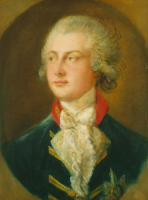


On 9th January 1819 William Powell Frith was born in Aldfield, North Yorkshire [Map]. He married (1) in or before 1848 Isabelle (2) 1880 Mary Alford.
On 9th January 1830 Mary Jemima Yorke Baroness Grantham (age 73) died. She was buried at the De Grey Mausoleum, St John the Baptist Church, Flitton [Map]. Memorial sculpted by W. T. Kelsey.
Mary Jemima Yorke Baroness Grantham: On 9th February 1756 she was born to Philip Yorke 2nd Earl of Hardwicke and Jemima Campbell 2nd Marchioness Grey. In 1780 Thomas Robinson 2nd Baron Grantham and she were married. She by marriage Baroness Grantham. She the daughter of Philip Yorke 2nd Earl of Hardwicke and Jemima Campbell 2nd Marchioness Grey. In 1816 Amabel Yorke Countess Grey was created 1st Countess de Grey with a special remainder to her sister Mary Jemima Yorke Baroness Grantham and her sister's male heirs.


On 9th January 1848 Frederica Hanover was born to George V King Hanover (age 28) and Marie Saxe Altenburg Queen Consort Hanover. He a great grandson of King George III of Great Britain and Ireland.
The History of William Marshal was commissioned by his son shortly after William’s death in 1219 to celebrate the Marshal’s remarkable life; it is an authentic, contemporary voice. The manuscript was discovered in 1861 by French historian Paul Meyer. Meyer published the manuscript in its original Anglo-French in 1891 in two books. This book is a line by line translation of the first of Meyer’s books; lines 1-10152. Book 1 of the History begins in 1139 and ends in 1194. It describes the events of the Anarchy, the role of William’s father John, John’s marriages, William’s childhood, his role as a hostage at the siege of Newbury, his injury and imprisonment in Poitou where he met Eleanor of Aquitaine and his life as a knight errant. It continues with the accusation against him of an improper relationship with Margaret, wife of Henry the Young King, his exile, and return, the death of Henry the Young King, the rebellion of Richard, the future King Richard I, war with France, the death of King Henry II, and the capture of King Richard, and the rebellion of John, the future King John. It ends with the release of King Richard and the death of John Marshal.
Available at Amazon in eBook and Paperback format.
On 9th January 1858 William Augustus Lane Fox-Pitt was born to Augustus Henry Fox Pitt-Rivers (age 30) and Alice Margaret Stanley (age 30).
On 9th January 1859 Sophia Paulett Duchess of Cleveland (age 73) died. Monument in St Mary's Church, Staindrop [Map].
Sophia Paulett Duchess of Cleveland: On 16th March 1785 she was born to John Paulett 4th Earl Paulett and Sophia Pocock Countess Paulett. On 18th November 1809 Henry Vane 2nd Duke Cleveland and she were married at St George's Church, Hanover Square. She the daughter of John Paulett 4th Earl Paulett and Sophia Pocock Countess Paulett. He the son of William Henry Vane 1st Duke Cleveland and Catharine Margaret Powlett Countess Darlington. On 28th January 1842 William Henry Vane 1st Duke Cleveland died. He was buried at St Mary's Church, Staindrop [Map]. His son Henry succeeded 2nd Duke of Cleveland, 2nd Marquess of Cleveland, 4th Earl Darlington, 4th Viscount Barnard, 6th Baron Barnard, 2nd Baron Raby of Raby Castle in County Durham. She by marriage Duchess of Cleveland.


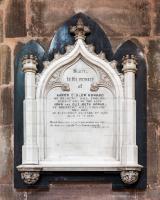
On 9th January 1861 Aaron Clulow Howard (age 39) died at Southport, Lancashire.
Aaron Clulow Howard: In 1822 he was born to John Howard and Elizabeth m Howard.
On 9th January 1862 John O'Connor (age 31) and Ellen Fairburn were married at Islington Parish Church. She the half-sister of his first wife Ann Butler Fairburn who had died two years before. The had two sons: Henry, born 1862, and Joseph William, born 1864.
On 9th January 1939 Murray Beauclerk 14th Duke St Albans was born to Charles Beauclerk 13th Duke St Albans (age 23) and Nathalie Chatham Walker. He married (1) 31st January 1963 Rosemary Frances Scoones Viscoutess Exmouth.
On 9th January 1982 Catherine Middleton Princess of Wales was born to Michael Middleton (age 32) and Carole Elizabeth Goldsmith (age 26). She married 29th April 2011 William Prince of Wales, son of King Charles III and Diana Spencer Princess Wales.
On 9th January 1567 Thomas Temple 1st Baronet was born to John Temple (age 25). He married 1585 Hester Sandes and had issue.
On 9th January 1585 Richard Grosvenor 1st Baronet was born to Richard Grosvenor of Eaton (age 22) and Christiana Brooke at Eaton Hall, Cheshire [Map]. He married 1600 Lettice Cholmondeley and had issue.
On 9th January 1620 Elizabeth Altham Countess Anglesey was born to James Altham of Oxhey. She married 24th April 1638 Arthur Annesley 1st Earl Annesley, son of Francis Annesley 1st Viscount Valentia and Dorothy Philipps, and had issue.
On 9th January 1626 John Newton 2nd Baronet was born to Thomas Newton (age 66). He married 1645 Mary Eyre and had issue.
Henrici Quinti, Angliæ Regis, Gesta, is a first-hand account of the Agincourt Campaign, and subsequent events to his death in 1422. The author of the first part was a Chaplain in King Henry's retinue who was present from King Henry's departure at Southampton in 1415, at the siege of Harfleur, the battle of Agincourt, and the celebrations on King Henry's return to London. The second part, by another writer, relates the events that took place including the negotiations at Troye, Henry's marriage and his death in 1422.
Available at Amazon in eBook and Paperback format.
On 9th January 1627 Elizabeth Foote was born to Thomas Foote 1st Baronet (age 29). She married 1642 John Cutler 1st Baronet and had issue.
On 9th January 1662 John Holles 1st Duke Newcastle upon Tyne was born to Gilbert Holles 3rd Earl de Clare (age 28) and Grace Pierrepont Countess de Clare (age 29) at Edwinstowe, Nottinghamshire. He married 1st March 1690 his first cousin Margaret Cavendish Duchess Newcastle upon Tyne, daughter of Henry Cavendish 2nd Duke Newcastle upon Tyne and Frances Pierrepont Duchess Newcastle upon Tyne, and had issue.
On 9th January 1697 Gabriel Hanger 1st Baron Coleraine was born to George Hanger of Driffield in Gloucestershire and Ann Beale. He married 18th January 1736 Elizabeth Bond Baroness Coleraine and had issue.
On 9th January 1731 William Pulteney was born to William Pulteney 1st Earl Bath (age 46) and Anne Maria Gumley Countess Bath.
On 9th January 1735 John Jervis 1st Earl St Vincent was born to Swynfen Jervis. He married 5th June 1783 Martha Parker.
On 9th January 1758 George Granville Leveson-Gower 1st Duke Sutherland was born to Granville Leveson-Gower 1st Marquess Stafford (age 36) and Louisa Egerton Countess Gower (age 34). He married 4th September 1785 Elizabeth Sutherland Duchess Sutherland 19th Countess Sutherland, daughter of William Sutherland 18th Earl Sutherland, and had issue.
On 9th January 1762 Richard Croft 6th Baronet was born to Herbert Croft (age 40). He married 3rd November 1789 Margaret Denman and had issue.
On 9th January 1780 Charles Manners-Sutton 1st Viscount Canterbury was born to Archbishop Charles Manners-Sutton (age 24) and Mary Thoroton. Coefficient of inbreeding 3.13%. He married 8th July 1811 Lucy Maria Denison and had issue.
On 9th January 1794 John Hay-Williams 2nd Baronet was born to John Williams 1st Baronet (age 32) and Margaret Williams Lady Williams (age 25). He married 1842 Sarah Elizabeth Amherst, daughter of William Pitt Amherst 1st Earl Amherst and Sarah Archer Countess Plymouth and Amherst.

On 9th January 1810 Frances Elizabeth Anson Marchioness Hertford was born to Thomas Anson 1st Viscount Anson (age 42) and Anne Margaret Coke Viscountess Anson (age 30). She married 9th May 1839 Francis George Hugh Seymour-Conway 5th Marquess Hertford and had issue.
Jean de Waurin's Chronicle of England Volume 6 Books 3-6: The Wars of the Roses
Jean de Waurin was a French Chronicler, from the Artois region, who was born around 1400, and died around 1474. Waurin’s Chronicle of England, Volume 6, covering the period 1450 to 1471, from which we have selected and translated Chapters relating to the Wars of the Roses, provides a vivid, original, contemporary description of key events some of which he witnessed first-hand, some of which he was told by the key people involved with whom Waurin had a personal relationship.
Available at Amazon in eBook and Paperback format.
On 9th January 1814 Lieutenant-Colonel Henry Edward Hall Gage was born to Henry Hall Gage 4th Viscount Gage (age 22) and Elizabeth Maria Foley (age 20). He married 31st August 1840 his sixth cousin Sophia Selena Knightley, daughter of Charles Knightley 2nd Baronet and Selina Mary Hervey Lady Knightley, and had issue.
On 9th January 1819 William Powell Frith was born in Aldfield, North Yorkshire [Map]. He married (1) in or before 1848 Isabelle (2) 1880 Mary Alford.
On 9th January 1819 Caroline Margaret Fox-Strangways Lady Kerrison was born to Henry Fox-Strangways 3rd Earl of Ilchester (age 31) and Caroline Leonora Murray Countess Ilchester. She married 23rd July 1844 Edward Kerrison 2nd Baronet, son of Edward Kerrison 1st Baronet and Mary Martha Ellice.
On 9th January 1822 Thomas Moncrieffe 7th Baronet was born to David Moncrieffe 6th Baronet (age 33) and Helen Mackay Countess Bradford (age 21). He married 2nd May 1843 Louisa Hay-Drummond Lady Moncrieffe, daughter of Thomas Hay-Drummond 11th Earl Kinnoull and Louisa Burton Rowley Countess Kinnoul, and had issue.
On 9th January 1836 Mary Selina Wentworth-Fitzwilliam Viscountess Portman was born to William Charles Wentworth-Fitzwilliam and Selina Jenkinson (age 23). She married 21st June 1855 William Henry Portman 2nd Viscount Portman, son of Edward Berkeley Fitzharding 1st Viscount Portman and Emma Lascelles Baroness Portman, and had issue.
On 9th January 1841 Adelaide Cavendish was born to Henry Cavendish 3rd Baron Waterpark (age 47) and Elizabeth Jane Anson Baroness Waterpark (age 24). She married 3rd December 1863 Samuel Clowes and had issue.
On 9th January 1848 Frederica Hanover was born to George V King Hanover (age 28) and Marie Saxe Altenburg Queen Consort Hanover. He a great grandson of King George III of Great Britain and Ireland.
On 9th January 1855 Henry Charles Bunbury 10th Baronet was born to Henry William St Pierre Bunbury (age 42) and Cecila Caroline Napier (age 36).
On 9th January 1858 William Augustus Lane Fox-Pitt was born to Augustus Henry Fox Pitt-Rivers (age 30) and Alice Margaret Stanley (age 30).
On 9th January 1862 Cecil Talbot Clifton 24th Baron Grey of Ruthin was born to Augustus Wykeham Clifton (age 33) and Bertha Lelgarde Rawdon-Hastings 22nd Baroness Grey Ruthyn (age 27).
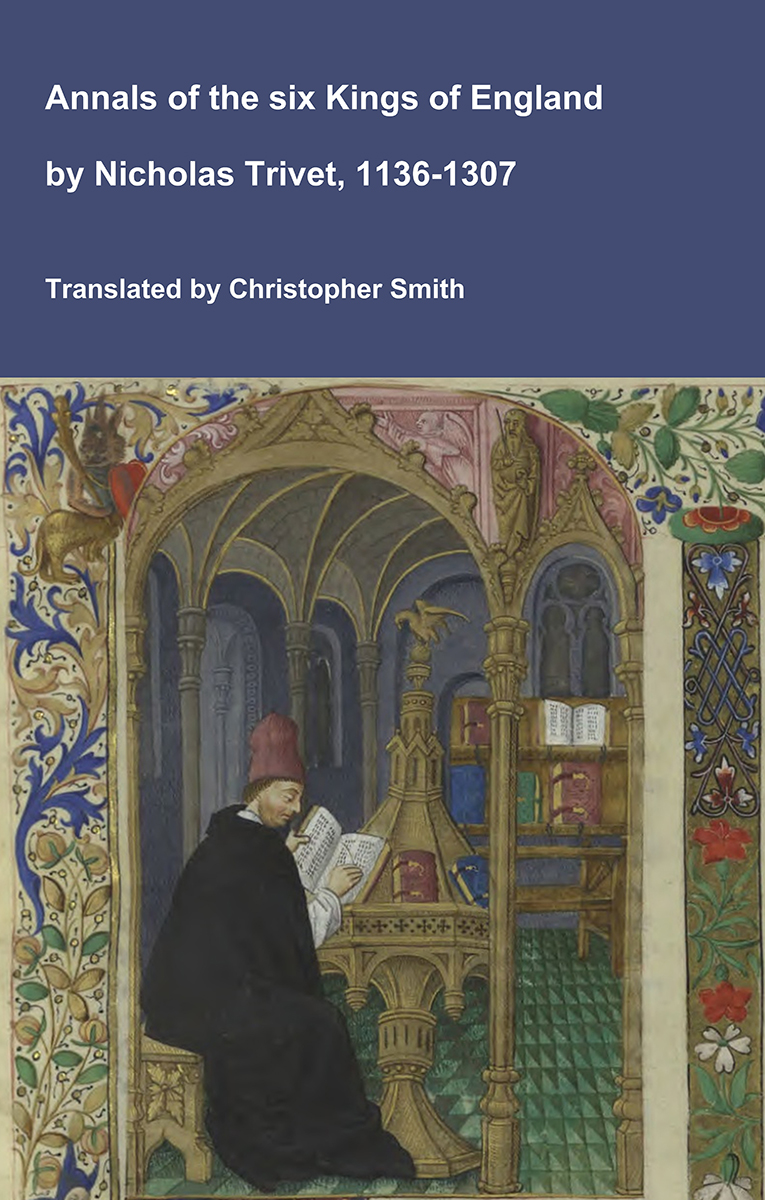
Annals of the six Kings of England by Nicholas Trivet
Translation of the Annals of the Six Kings of England by that traces the rise and rule of the Angevin aka Plantagenet dynasty from the mid-12th to early 14th century. Written by the Dominican scholar Nicholas Trivet, the work offers a vivid account of English history from the reign of King Stephen through to the death of King Edward I, blending political narrative with moral reflection. Covering the reigns of six monarchs—from Stephen to Edward I—the chronicle explores royal authority, rebellion, war, and the shifting balance between crown, church, and nobility. Trivet provides detailed insight into defining moments such as baronial conflicts, Anglo-French rivalry, and the consolidation of royal power under Edward I, whose reign he describes with particular immediacy. The Annals combines careful year-by-year reporting with thoughtful interpretation, presenting history not merely as a sequence of events but as a moral and political lesson. Ideal for readers interested in medieval history, kingship, and the origins of the English state, this chronicle remains a valuable and accessible window into the turbulent world of the Plantagenet kings.
Available at Amazon in eBook and Paperback format.
On 9th January 1869 Noel Edward Noel-Buxton 1st Baron Noel-Buxton was born to Thomas Fowell Buxton 3rd Baronet (age 31) and Victoria Noel Lady Buxton (age 29). He married 30th April 1914 Lucy Edith Pelham Burn.
On 9th January 1878 Aubrey Craven Theophilus Robin Hood Hastings was born to Francis Power Plantagenet Hastings 14th Earl Huntingdon (age 36) and Mary Anne Westenra Countess Huntingdon (age 30).
On 9th January 1889 William Lorenzo Parker 3rd Baronet was born to William Parker 2nd Baronet (age 64). He married 5th June 1915 Ruth Hanbury-Sparrow Lady Parker and had issue.
On 9th January 1891 Horatio Corbin Walpole was born to Robert Walpole 5th Earl Orford (age 36). He died aged two in 1893.
On 9th January 1898 Randal Smith 2nd Baron Bicester was born to Vivian Hugh Smith 1st Baron Bicester (age 30) and Sybil Mary McDonnell Baroness Bicester (age 21). He married 29th November 1922 Dorothea Gwenllian James.
On 9th January 1902 John Charles Peniston Milbanke 11th Baronet was born to John Peniston Milbanke 10th Baronet (age 29) and Amelia Madeline Louisa Crichton (age 25). He married 11th November 1928 Margaret Sheila MacKellar Chisholm.
On 9th January 1906 Sidney Herbert 16th Earl of Pembroke, 13th Earl of Montgomery was born to Reginald Herbert 15th Earl Pembroke 12th Earl Montgomery (age 25) and Beatrice Eleanor Paget Countess Pembroke and Montgomery (age 22). He was educated at Eton College [Map] and Pembroke College, Oxford University. He married 27th July 1936 Mary Dorothea Hope Countess Pembroke and Montgomery, daughter of John Hope 1st Marquess Linlithgow, and had issue.
On 9th January 1917 Charles Petty-Fitzmaurice 7th Marquess of Lansdowne was born to Henry Petty-Fitzmaurice 6th Marquess of Lansdowne (age 44).
On 9th January 1919 Major Robert Jocelyn Palmer Baron Lucas was born to Roundell Palmer 3rd Earl Selborne (age 31) and Grace Ridley Countess Selborne (age 30). He married 11th May 1950 Anne Rosemary Cooper 11th Baroness Lucas, daughter of Lieutenant-Colonel Howard Lister Cooper Baron Lucas and Nan Ino Cooper 10th Baroness Lucas, and had issue.
On 9th January 1920 Thomas Brooke 2nd Viscount Alanbrooke was born to Field-Marshal Alan Brooke 1st Viscount Alanbrooke (age 36).
Henrici Quinti, Angliæ Regis, Gesta, is a first-hand account of the Agincourt Campaign, and subsequent events to his death in 1422. The author of the first part was a Chaplain in King Henry's retinue who was present from King Henry's departure at Southampton in 1415, at the siege of Harfleur, the battle of Agincourt, and the celebrations on King Henry's return to London. The second part, by another writer, relates the events that took place including the negotiations at Troye, Henry's marriage and his death in 1422.
Available at Amazon in eBook and Paperback format.
On 9th January 1939 Murray Beauclerk 14th Duke St Albans was born to Charles Beauclerk 13th Duke St Albans (age 23) and Nathalie Chatham Walker. He married (1) 31st January 1963 Rosemary Frances Scoones Viscoutess Exmouth.
On 9th January 1982 Catherine Middleton Princess of Wales was born to Michael Middleton (age 32) and Carole Elizabeth Goldsmith (age 26). She married 29th April 2011 William Prince of Wales, son of King Charles III and Diana Spencer Princess Wales.
On 9th January 1449 Richard Welles 7th Baron Welles, Baron Willoughby (age 21) and Joan Willoughby 7th Baroness Willoughby of Eresby (age 24) were married. They were fourth cousins. He a great x 5 grandson of King Edward I of England. She a great x 4 granddaughter of King Edward I of England.
On 9th January 1620 Francis Molyneux 2nd Baronet (age 18) and Theodosia Heron (age 18) were married at St Laurence's Church, Surfleet. They had one son and four daughters.
On 9th January 1696 Richard Jones 1st Earl Ranelagh (age 54) and Margaret Cecil Countess Ranelagh (age 24) were married. She by marriage Countess Ranelagh. The difference in their ages was 30 years. She the daughter of James Cecil 3rd Earl Salisbury and Margaret Manners Countess of Salisbury.


On 9th January 1730 Henry Cavendish 1st Baronet (age 22) and Anne Pyne (age 23) were married. They were fifth cousin once removed.
On 9th January 1777 Ralph Milbanke aka Noel 6th Baronet (age 29) and Judith Noel (age 26) were married.
On 9th January 1813 Robert Jocelyn 3rd Earl Roden (age 24) and Maria Frances Catherine Stapleton Countess Roden were married. He the son of Robert Jocelyn 2nd Earl Roden (age 56).
On 9th January 1862 John O'Connor (age 31) and Ellen Fairburn were married at Islington Parish Church. She the half-sister of his first wife Ann Butler Fairburn who had died two years before. The had two sons: Henry, born 1862, and Joseph William, born 1864.
On 9th January 1933 Anthony Chaplin 3rd Viscount Chaplin and Alvilde Bridges Viscountess Chaplin (age 23) were married.
On 15th August 1369 Philippa of Hainaut Queen Consort England (age 55) died at Windsor Castle [Map]. Her husband King Edward III of England (age 56) and youngest son Thomas of Woodstock 1st Duke of Gloucester (age 14) were present. She was given a state funeral six months later on 9th January 1370 at which she was interred at on the northeast side of the Chapel of St Edward the Confessor, Westminster Abbey [Map]. Her alabaster effigy was executed by sculptor Jean de Liège.
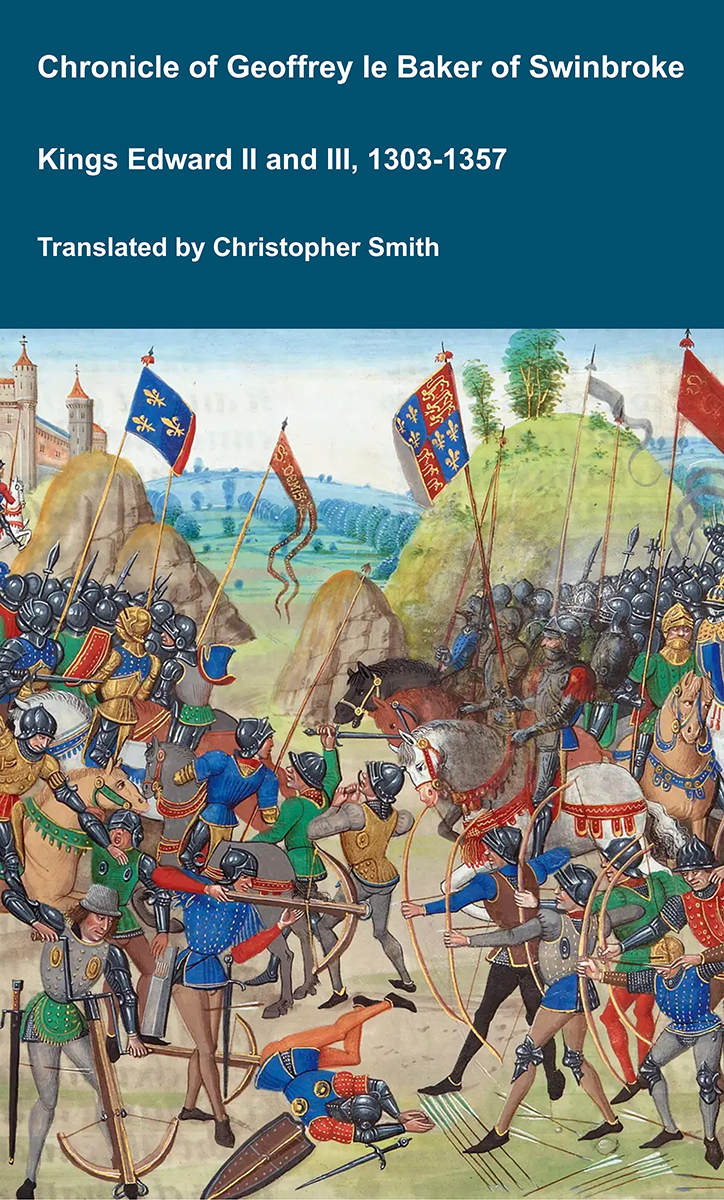
Chronicle of Geoffrey le Baker of Swinbroke
Baker was a secular clerk from Swinbroke, now Swinbrook, an Oxfordshire village two miles east of Burford. His Chronicle describes the events of the period 1303-1356: Gaveston, Bannockburn, Boroughbridge, the murder of King Edward II, the Scottish Wars, Sluys, Crécy, the Black Death, Winchelsea and Poitiers. To quote Herbert Bruce 'it possesses a vigorous and characteristic style, and its value for particular events between 1303 and 1356 has been recognised by its editor and by subsequent writers'. The book provides remarkable detail about the events it describes. Baker's text has been augmented with hundreds of notes, including extracts from other contemporary chronicles, such as the Annales Londonienses, Annales Paulini, Murimuth, Lanercost, Avesbury, Guisborough and Froissart to enrich the reader's understanding. The translation takes as its source the 'Chronicon Galfridi le Baker de Swynebroke' published in 1889, edited by Edward Maunde Thompson.
Available at Amazon in eBook and Paperback format.
On 9th January 1450 Bishop Adam Moleyns was lynched by a mob of discontented unpaid soldiers who dragged him from the Royal Garrison Church, Portsmouth and executed him for being a supporter of William "Jackanapes" de la Pole 1st Duke of Suffolk (age 53) and for the losses in Normandy.
On 9th January 1463 William Neville 1st Earl Kent (age 58) died. He was buried at Guisborough Priory [Map]. No surviving legitimate issue. Earl Kent extinct.
On 9th January 1469 Anne Ferrers 8th Baroness Ferrers Chartley died. Her son John (age 5) succeeded 9th Baron Ferrers of Chartley.
On 9th January 1499 John "Cicero" Hohenzollern Elector Brandenburg (age 43) died.
On 9th January 1564 Margaret Audley Duchess Norfolk (age 24) died at Norwich, Norfolk [Map] following the birth of her fourth child. She was initially buried at Church of St John the Baptist, Norwich [Map]. Her remains were moved to the Church of St Michael the Archangel, Framlingham [Map].
On 9th January 1617 Marmaduke Wyvill 1st Baronet (age 76) died. He was buried at Masham. His grandson Marmaduke (age 22) succeeded 2nd Baronet Wyvill of Constable Burton in Yorkshire.
On 9th January 1674 Thomas Brereton 2nd Baronet (age 42) died. Baronet Brereton of Hanford in Cheshire extinct.
On 9th January 1689 Hugh Cholmley 4th Baronet (age 56) died without male issue. Baronet Cholmley of Whitby in Yorkshire extinct.

On 9th January 1749 Henry Herbert 6th Earl Montgomery 9th Earl Pembroke (age 55) died at Pembroke House Whitehall Palace. His son Henry (age 14) succeeded 10th Earl Pembroke, 7th Earl Montgomery.
On 9th January 1755 Augustus Berkeley 4th Earl Berkeley (age 39) died. His son Frederick (age 10) succeeded 5th Earl Berkeley, 5th Viscount Dursley, 13th Baron Berkeley.
On 9th January 1762 Bishop Thomas Hayter (age 60) died.
On 9th January 1770 Nathaniel Booth 4th Baron Delamer (age 60) died. Baron Delamer extinct. His second cousin George (age 45) succeeded 6th Baronet Booth of Dunham Massey.
The History of William Marshal was commissioned by his son shortly after William’s death in 1219 to celebrate the Marshal’s remarkable life; it is an authentic, contemporary voice. The manuscript was discovered in 1861 by French historian Paul Meyer. Meyer published the manuscript in its original Anglo-French in 1891 in two books. This book is a line by line translation of the first of Meyer’s books; lines 1-10152. Book 1 of the History begins in 1139 and ends in 1194. It describes the events of the Anarchy, the role of William’s father John, John’s marriages, William’s childhood, his role as a hostage at the siege of Newbury, his injury and imprisonment in Poitou where he met Eleanor of Aquitaine and his life as a knight errant. It continues with the accusation against him of an improper relationship with Margaret, wife of Henry the Young King, his exile, and return, the death of Henry the Young King, the rebellion of Richard, the future King Richard I, war with France, the death of King Henry II, and the capture of King Richard, and the rebellion of John, the future King John. It ends with the release of King Richard and the death of John Marshal.
Available at Amazon in eBook and Paperback format.
On 9th January 1784 George Savile 8th Baronet (age 57) died. He was buried at Church of St Michael and All Angels, Thornhill [Map]. Baronet Savile of Thornhill extinct.
On 9th January 1805 Edward Winnington 2nd Baronet (age 55) died. His son Thomas (age 25) succeeded 3rd Baronet Winnington of Stanford Court in Worcestershire.
On 9th January 1813 Grace Foley Countess Clanbrassil (age 70) died.
On 9th January 1830 Mary Jemima Yorke Baroness Grantham (age 73) died. She was buried at the De Grey Mausoleum, St John the Baptist Church, Flitton [Map]. Memorial sculpted by W. T. Kelsey.
Mary Jemima Yorke Baroness Grantham: On 9th February 1756 she was born to Philip Yorke 2nd Earl of Hardwicke and Jemima Campbell 2nd Marchioness Grey. In 1780 Thomas Robinson 2nd Baron Grantham and she were married. She by marriage Baroness Grantham. She the daughter of Philip Yorke 2nd Earl of Hardwicke and Jemima Campbell 2nd Marchioness Grey. In 1816 Amabel Yorke Countess Grey was created 1st Countess de Grey with a special remainder to her sister Mary Jemima Yorke Baroness Grantham and her sister's male heirs.
On 9th January 1831 Charlotte Boyle 20th Baroness Ros of Helmsley (age 61) died. Her son Henry (age 37) succeeded 21st Baron Ros Helmsley.
On 9th January 1854 Newton Wallop aka Fellowes 4th Earl of Portsmouth (age 81) died. He was buried at All Saints Church, Eggesford. His son Isaac (age 28) succeeded 5th Earl Portsmouth, 5th Viscount Lymington, 5th Baron Wallop of Farley Wallop Hampshire.
On 9th January 1859 Sophia Paulett Duchess of Cleveland (age 73) died. Monument in St Mary's Church, Staindrop [Map].
Sophia Paulett Duchess of Cleveland: On 16th March 1785 she was born to John Paulett 4th Earl Paulett and Sophia Pocock Countess Paulett. On 18th November 1809 Henry Vane 2nd Duke Cleveland and she were married at St George's Church, Hanover Square. She the daughter of John Paulett 4th Earl Paulett and Sophia Pocock Countess Paulett. He the son of William Henry Vane 1st Duke Cleveland and Catharine Margaret Powlett Countess Darlington. On 28th January 1842 William Henry Vane 1st Duke Cleveland died. He was buried at St Mary's Church, Staindrop [Map]. His son Henry succeeded 2nd Duke of Cleveland, 2nd Marquess of Cleveland, 4th Earl Darlington, 4th Viscount Barnard, 6th Baron Barnard, 2nd Baron Raby of Raby Castle in County Durham. She by marriage Duchess of Cleveland.
On 9th January 1870 Elizabeth Sackville Countess De La Warr (age 74) died. Her son Reginald (age 52) succeeded 2nd Baron Buckhurst of Buckhurst in Sussex.
On 9th January 1883 Frederick Vincent 11th Baronet (age 85) died. His son William (age 48) succeeded 12th Baronet Vincent of Stoke d'Abernon.
On 9th January 1900 Standish Prendergast Vereker 4th Viscount Gort (age 80) died. His son John (age 50) succeeded 5th Viscount Gort.
On 9th January 1905 Cornwallis Maude 1st Earl Montalt (age 87) died.
Abbot John Whethamstede’s Chronicle of the Abbey of St Albans
Abbot John Whethamstede's Register aka Chronicle of his second term at the Abbey of St Albans, 1451-1461, is a remarkable text that describes his first-hand experience of the beginning of the Wars of the Roses including the First and Second Battles of St Albans, 1455 and 1461, respectively, their cause, and their consequences, not least on the Abbey itself. His text also includes Loveday, Blore Heath, Northampton, the Act of Accord, Wakefield, and Towton, and ends with the Coronation of King Edward IV. In addition to the events of the Wars of the Roses, Abbot John, or his scribes who wrote the Chronicle, include details in the life of the Abbey such as charters, letters, land exchanges, visits by legates, and disputes, which provide a rich insight into the day-to-day life of the Abbey, and the challenges faced by its Abbot.
Available at Amazon in eBook and Paperback format.

On 9th January 1906 Rosamund Pennell Lady Barrow died.
On 9th January 1919 Andrew Marshall Porter 1st Baronet (age 81) died. His son John (age 47) succeeded 2nd Baronet Porter of Merrion Square in Dublin.
On 9th January 1953 Henry William Duff Gordon 6th Baronet (age 86) died. His son Douglas (age 60) succeeded 7th Baronet Duff-Gordon of Halkin in Aberdeenshire.
On 9th January 1969 Robert Fitzpatrick Courtenay Vernon 4th Baron Lyveden (age 76) died. His second cousin Sidney (age 80) succeeded 5th Baron Lyveden.
On 9th January 1970 John Campbell 5th Earl Cawdor (age 69) died. His son Hugh (age 37) succeeded 6th Earl Cawdor of Castlemartin in Pembrokeshire, 7th Baron Cawdor of Castlemartin in Pembrokeshire.
On 9th January 2003 James Heron Walker 5th Baronet (age 88) died. His son Victor (age 60) succeeded 6th Baronet Walker of Sand Hutton in Yorkshire.