

Chronicle of Abbot Ralph of Coggeshall
The Chronicle of Abbot Ralph of Coggeshall (Chronicon Anglicanum) is an indispensable medieval history that brings to life centuries of English and European affairs through the eyes of a learned Cistercian monk. Ralph of Coggeshall, abbot of the Abbey of Coggeshall in Essex in the early 13th century, continued and expanded his community’s chronicle, documenting events from the Norman Conquest of 1066 into the tumultuous reign of King Henry III. Blending eyewitness testimony, careful compilation, and the monastic commitment to record-keeping, this chronicle offers a rare narrative of political intrigue, royal power struggles, and social upheaval in England and beyond. Ralph’s work captures the reigns of pivotal figures such as Richard I and King John, providing invaluable insights into their characters, decisions, and the forces that shaped medieval rule. More than a simple annal, Chronicon Anglicanum conveys the texture of medieval life and governance, making it a rich source for scholars and readers fascinated by English history, monastic authorship, and the shaping of the medieval world.
Available at Amazon in eBook and Paperback format.
24 Oct is in October.
1055 Battle and Burning of Hereford
1338 French Raid on Southampton
1535 Sweating Sickness Outbreak
On 24th October 996 Hugh I King of the Franks (age 55) died. His son Robert (age 24) succeeded II King France: Capet.
Anglo-Saxon Chronicle. 24th October 1055. This year died Earl Siward at York; and his body lies within the minster at Galmanho76, which he had himself ordered to be built and consecrated, in the name of God and St. Olave, to the honour of God and to all his saints. Archbishop Kinsey fetched his pall from Pope Victor. Then, within a little time after, a general council was summoned in London, seven nights before mid-Lent; at which Earl Elgar, son of Earl Leofric, was outlawed almost without any guilt; because it was said against him that he was the betrayer of the king and of all the people of the land. And he was arraigned thereof before all that were there assembled, though the crime laid to his charge was unintentional. The king, however, gave the earldom, which Earl Siward formerly had, to Tosty (age 29), son of Earl Godwin. Whereupon Earl Elgar sought Griffin's territory in North-Wales; whence he went to Ireland, and there gave him a fleet of eighteen ships, besides his own; and then returned to Wales to King Griffin with the armament, who received him on terms of amity. And they gathered a great force with the Irishmen and the Welsh: and Earl Ralph collected a great army against them at the town of Hereford [Map]; where they met; but ere there was a spear thrown the English people fled, because they were on horses. The enemy then made a great slaughter there-about four hundred or five hundred men; they on the other side none. They went then to the town, and burned it utterly; and the large minster [Map]77 also which the worthy Bishop Athelstan had caused to be built, that they plundered and bereft of relic and of reef, and of all things whatever; and the people they slew, and led some away. Then an army from all parts of England was gathered very nigh;78 and they came to Gloucester: whence they sallied not far out against the Welsh, and there lay some time. And Earl Harold (age 33) caused the dike to be dug about the town the while. Meantime men began to speak of peace; and Earl Harold and those who were with him came to Bilsley, where amity and friendship were established between them. The sentence of outlawry against Earl Elgar was reversed; and they gave him all that was taken from him before. The fleet returned to Chester, and there awaited their pay, which Elgar promised them. The slaughter was on the ninth before the calends of November. In the same year died Tremerig, the Welsh bishop, soon after the plundering; who was Bishop Athelstan's substitute, after he became infirm.
Note 76 The church, dedicated to St. Olave, was given by Alan Earl of Richmond, about thirty-three years afterwards, to the first abbot of St. Mary's in York, to assist him in the construction of the new abbey. It appears from a MS. quoted by Leland, that Bootham-bar was formerly called "Galman-hithe", not Galmanlith, as printed by Tanner and others.
Note 77 Called St. Ethelbert's minster; because the relics of the holy King Ethelbert were there deposited and preserved.
Note 78 The place where this army was assembled, though said to be very nigh to Hereford, was only so with reference to the great distance from which some part of the forces came; as they were gathered from all England. They met, I conjecture, on the memorable spot called "Harold's Cross", near Cheltenham, and thence proceeded, as here stated, to Gloucester.
Chronicon ex Chronicis by Florence and John of Worcester. 24th October 1055. Earl Ralph, the cowardly son of king Edward's (age 52) sister, having assembled an army, fell in with the enemy two miles from the city of Hereford [Map], on the ninth of the calends of November [24th October]. He ordered the English, contrary to their custom, to fight on horseback; but just as the engagement was about to commence, the earl, with his French and Normans, were the first to flee. The English seeing this, followed their leader's example, and nearly the whole of the enemy's army going in pursuit, four or five hundred of the fugitives were killed, and many were wounded. Having gained the victory, king Griffyth and earl Algar entered Hereford [Map], and having slain seven of the canons who defended the doors of the principal church, and burnt the monastery built by bishop Athelstan, that true servant of Christ, with all its ornaments, and the relics of St. Ethelbert, king and martyr, and other saints, and having slain some of the citizens, and made many other captives, they returned laden with spoil.
Chronicum Anglicanum by Ralph Coggeshall. 1154. The most pious King Stephen died on the 9th day before the Kalends of November [24th October] and was buried in the church of Faversham, which he himself had founded with his queen, Matilda.
MCLIV. Obiit piissimus rex Stephanus nono calendas Novembris, sepultusque est in ecclesia de Faveresham, quam ipse fundaverat cum regina sua Mathildi.
On 24th October 1249 Alphonse Count Poitiers II Count Toulouse (age 28) arrived at Damietta during the Seventh Crusade.
On 24th October 1271 Elizabeth Duchess Bavaria (age 35) died.
On 24th October 1273 Louis "Strict" Wittelsbach II Duke Upper Bavaria (age 44) and Matilda Habsburg Duchess Bavaria (age 20) were married. She by marriage Duchess Bavaria. The difference in their ages was 23 years. She the daughter of Rudolph I King Romans (age 55) and Gertrude Hohenburg (age 48). He the son of Otto "Illustrious" Wittelsbach II Duke Bavaria and Agnes Welf Duchess Bavaria. They were fourth cousin twice removed. He a great x 2 grandson of King Henry "Curtmantle" II of England.
Close Rolls 1339-41. 24th October 1339. To the abbot (sic) of St. Swithun's, Winchester, collector in the diocese of Winchester, of the triennial tenth granted by the clergy of the province of Canterbury. Order to permit the rectors of the churches of Holy Rood, St. Michael and All Saints, Southampton, and the prior of St. Denis near Southampton, to whom the churches are pensionary, to have respite until the quinzaine of Michaelmas next for the sums for the said tenth from the time of the burning of those churches and the houses in the parishes thereof by the raid of the king's enemies on Southampton, so that what is necessary to be done in the matter may be ordained in the meantime by the council, as the rectors and prior have besought the king to discharge them of the said tenths, as they have nothing except the oblations brought by the parishioners for the maintenance of the priest of any of those churches, for paying the pensions due thereon and for maintaining other charges. By C.
On 8th May 1360 King Edward III of England (age 47) and King John "The Good" II of France (age 41), and their eldest sons Edward "Black Prince" (age 29) and the future King Charles V of France (age 21), ratified the Treaty of Brétigny at Calais [Map]. Louis Valois Anjou I Duke Anjou (age 20) and John Valois 1st Duke Berry (age 19) were given as hostages.
Philip "Bold" Valois II Duke Burgundy (age 18) was ransomed. The treaty confirmed lands held by King Edward III of England including Aquitaine.
King John "The Good" II of France was ransomed for three million écus being released after the payment of the first third.
Bishop William of Wykeham (age 40) was present.
The Treaty was signed on 24th October 1360 at Calais.
On 24th October 1378 David Stewart 1st Duke Rothesay was born to King Robert III of Scotland (age 41) and Annabella Drummond Queen Consort Scotland (age 28). He married his half third cousin once removed Marjory Douglas Duchess Rothesay, daughter of Archibald "Grim" Douglas 3rd Earl Douglas and Joanna Strathearn Countess Douglas.
On 24th October 1420 René Valois Anjou I Duke Anjou (age 11) and Isabella Metz Duchess Anjou I Duchess Lorraine (age 20) were married. She the daughter of Charles Metz II Duke Lorraine (age 56). He the son of King Louis of Naples and Yolande Barcelona Queen Consort Naples (age 39). They were third cousins. He a great x 5 grandson of King Henry III of England.
Calendar of State Papers of Milan 1458. 1458. Oct. 24. Potenze Estere. Inghilterra. Milan Archives. 26. Raffaelo De Negra to Bianca Maria Visconti, Duchess of Milan.
I am writing to report what an Englishman told me about the magnificence of the Queen of England (age 28) and how she was brought to England. I will tell you something of the King of England. First of all the Englishman told me that the King of England took her without any dowry, and he even restored some lands which he held to her father. When the queen landed in England the king dressed himself as a squire, the Duke of Suffolk doing the same, and took her a letter which he said the King of England had written. When the queen read the letter the king took stock (amirò) of her, saying that a woman may be seen over well when she reads a letter, and the queen never found out that it was the king because she was so engrossed in reading the letter, and she never looked at the king in his squire's dress, who remained on his knees all the time. After the king had gone the Duke of Suffolk said: Most serene queen, what do you think of the squire who brought the letter? The queen replied: I did not notice him, as I was occupied in reading the letter he brought. The duke remarked: Most serene queen, the person dressed as a squire was the most serene King of England, and the queen was vexed at not having known it, because she had kept him on his knees. The queen afterwards went from thence. The king really wrote to her and they made great triumphs.
The Englishman told me that the queen is a most handsome woman, though somewhat dark and not so beautiful as your Serenity. He told me that his mistress is wise and charitable, and your Serenity has the reputation of being equally wise and more charitable. He said that his queen had an income of 80,000 gold crowns. She has a most handsome boy, six years old1. The following noblemen serve her: the Dukes of Somerset (… stre), York, Gloucester (Gozestre), Beaufort (bauforte), Clarence (Clarenza), (sen. re), Exeter (setre), Buckingham (borchaincay), Norfolk (noforcho) and Suffolk (soforcho). Their wives are at Court also, and when the wife of the Duke of Petro a Baylito, the king's son (age 5) and all the duchesses speak to the queen, they always go on their knees before her. She asked me when your Serenity was in the great hall at Milan what ladies were about you. I answered marchionesses and countesses; among others Madonna Antonia de Perora e Parmina. She asked who the ladies were. I told her that Madonna Antonia da Perora was Countess of Moltuni and Parmina and Marchioness of la Pieve da Cayré, and all the others were great ladies. I remarked that your Serenity has a splendid Court. I have mentioned these affairs of England because your Serenity delights in noble things.
Milan, the 24th October, 1458.
[Italian.]
Note 1. Edward, Prince of Wales was born on the 13th October, 1453, and therefore was only five at this time.

On 24th October 1503 Isabel Aviz Queen Consort Spain was born to Manuel "Fortunate" I King Portugal (age 34) and Maria Trastámara Queen Consort Portugal (age 21). Coefficient of inbreeding 8.38%. She married 10th March 1526 her first cousin Charles V Holy Roman Emperor, son of Philip "Handsome Fair" King Castile and Joanna "The Mad" Trastámara Queen Castile, and had issue.
Chronicle of a Bourgeois of Valenciennes
Récits d’un bourgeois de Valenciennes aka The Chronicle of a Bourgeois of Valenciennes is a vivid 14th-century vernacular chronicle written by an anonymous urban chronicler from Valenciennes in the County of Hainaut. It survives in a manuscript that describes local and regional history from about 1253 to 1366, blending chronology, narrative episodes, and eyewitness-style accounts of political, military, and social events in medieval France, Flanders, and the Low Countries. The work begins with a chronological framework of events affecting Valenciennes and its region under rulers such as King Philip VI of France and the shifting allegiances of local nobility. It includes accounts of conflicts, sieges, diplomatic manoeuvres, and the impact of broader struggles like the Hundred Years’ War on urban life in Hainaut. Written from the perspective of a burgher (bourgeois) rather than a monastery or royal court, the chronicle offers a rare lay viewpoint on high politics and warfare, reflecting how merchants, townspeople, and civic institutions experienced the turbulence of the 13th and 14th centuries. Its narrative style combines straightforward reporting of events with moral and civic observations, making it a valuable source for readers interested in medieval urban society, regional politics, and the lived experience of war and governance in pre-modern Europe.
Available at Amazon in eBook and Paperback format.
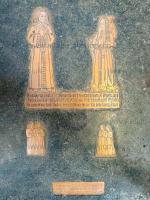
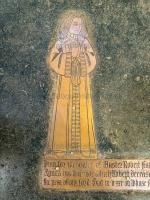
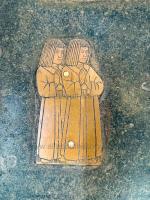
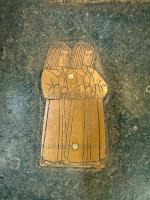
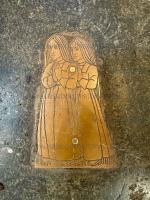
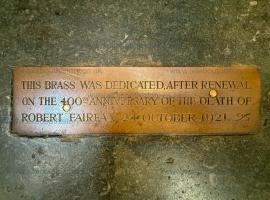
Choir, St Albans Cathedral. Brass to Robert Fayrfax, died 24th October 1521, his wife Agnes, and their children. Fayrfax was the organist of St Albans Abbey responsible for the music there from 1498 to 1502.
On 24th October 1525 Thomas Dacre 2nd Baron Dacre Gilsland (age 57) died in an accident. His son William (age 32) succeeded 3rd Baron Dacre Gilsland. He inherited about 280 km² of land in Cumberland, 120 km² in Yorkshire and 80 km² in Northumberland.
Letters and Papers Foreign and Domestic Henry VIII 1535. 24th October 1535. R. O. 676. Stephen Bishop of Winchester (age 52) to Cromwell.
After a good passage, and the loss today of my servant Wodal by the great sickness, wherewith he was infected at his late being in London longer than I would he should, tomorrow I leave for the French court. My journey, though slow, is, I fear me, "more speedy than my horse, by reason of their travail on the seas, will maintain." The bailly of Troyes left me word to make no haste. If you think greater speed necessary, I shall use the post. I write you this that you may explain to the King the delay in my journey, which, in the "strange watery weather" in France, is more cumbrous than wont. Calays, 24 Oct. Signed.
P. 1. Add.: Chief Secretary. Endd.
Letters and Papers Foreign and Domestic Henry VIII 1535. 24th October 1535. 681. In the Charterhouse of London, revelations have been had from a deceased person, showing the glorious crown of martyrdom obtained by the cardinal of Rochester and the other martyred saints in England. Cromwell, who procures everything that Anne (age 34) wishes, has forbidden these revelations to be published. Rome, 24 Oct. 1535.
Sp., pp. 5. Modern copy.


Letters and Papers Foreign and Domestic Henry VIII 1535. 24th October 1535. Add. MS. 28, 588, f. 31. B. M. 681. Dr. Ortiz to the Empress.
Wrote last on the 8th. The Imperial Ambassador in London wrote on the 25th Sept., that the Queen (age 49) and Princess (age 19) were in good health. On the 14th he had written that the Princess had been ill and was getting better, and that the governess (age 59) of her household, la Ana's (age 34) aunt, had concealed her illness for 12 days, so that he could not provide her with physicians. Neither the Ambassador nor his servant are allowed to visit her, which shows the Queen and Princess have special need of God's protection. The state of England is getting more and more disorderly. It is publicly said that mass is a great abuse; that Our Lord is not in the Sacrament of the Eucharist, and only was so when He consecrated it; that saying the Ave Maria is folly; and that Our Lady cannot help those who pray to her and invoke her aid, for she is only a woman like others. Blasphemous words are said of images. The rents of many churches are taken away, and it is said that they will take away images, shrines (templos), and the principal temporalities of the Church. Is much grieved at the danger to the lives of the Queen and Princess, and begs the Empress to have continual prayer made on their behalf. Sees no remedy if nuestro Señor does not take them out of the kingdom.


Letters and Papers Foreign and Domestic Henry VIII 1535. 24th October 1535. 681. Is much grieved to hear that the Earl of Kildare (age 22) has been deserted by his confederates, and persuaded by an uncle of his in England to go thither with a promise of pardon. Hostages have been left in his country, but that is of little importance. It is evident that he will be either martyred or perverted.
On the night of the 24th and 25th October 1537 Queen Jane Seymour (age 28) died around two in the morning at Hampton Court Palace [Map] as a result of complications arising from childbirth.


Chronicle of Edward Hall [1496-1548]. 24th October 1537. But Lord what lamentation shortly after was made for the death of his noble and gracious mother Queen Jane (age 28), which departed out of this life the fourteenth day [a mistake for 24th] of October, next following: and of none in the realm was it more heavier taken than of the King's Majesty (age 46) himself, whose death caused the King immediately to remove unto Westminster, where he mourned and kept himself close and secret a great while.
Letters and Papers Foreign and Domestic Henry VIII 1537. 24th October 1537. 970. Earl of Rutland, Bishop of Carlisle, and Others to [Cromwell]. Nero C. x. 2. B. M. St. P. i. 572. Hearne's1 Sylloge, 114.
Yesterday afternoon the Queen (age 28) had "an naturall laxe," by reason of which she seemed to amend till toward night. All night she has been very sick, and rather "appears" than amends. Her confessor has been with her this morning, and is now preparing to minister the Sacrament of Unction. Hampton Court, Wednesday, 8 a.m.
Signed: Thomas Rutland—Robert Karliolen.—Edward Bayntun—John Chamber, priest—William Butt—George Owen.
Note 1. Two of the signatures are quite mis-read by Hearne or the copy he followed.
Letters and Papers Foreign and Domestic Henry VIII 1537. 24th October 1537. 971. Norfolk to Cromwell. R.O.
"My good lord, I pray you to be here tomorrow early to comfort our good master, for as for our mistress [Queen Jane Seymour (age 28)] there is no likelihood of her life, the more pity, and I fear she shall not be on lyve at the time ye shall read this. At viij at night, with the hand of [your] sorrowful friend, T. Norffolk."
Hol., mutilated.
Letters and Papers Foreign and Domestic Henry VIII 1537. 24th October 1537. 977. Sir J. Russell to Cromwell. R. O. St. P. i. 573.
I have received your letter and shown it to the King, who caused Mr. Nevell to send for divers of the men, who shall be here to-morrow. Yesterday Mr. Treasurer and I examined one of Mr. Nevell's servants, who confessed to 20, not one of them in the bill the King had of you; so, by the time those you wrote of shall be taken, ye shall have a great number accused. Today the King intended to remove to Asher, and, because the Queen (age 28) was very sick this night and today, he tarried, but he will be there tomorrow. "If she amend he will go and if she amend not he told me this day he could not find in his heart to tarry." She was in great danger yesternight and to day but, if she sleep this night, the physicians hope that she is past danger. Hampton Court, xxiiiiith (sic) day of October. Signed.
Add.: Lord Privy Seal. Endd.: 24 October.
Wriothesley's Chronicle [1508-1562]. 24th October 1537. This yeare, the 14 of October [a mistake for 24th], beinge Weddnesday1, Queene Jane (age 28) departed this lyfe, lyeinge in childe bedd, aboute 2 of the clocke in the morninge, when she had reigned as the Kings wife, beinge never crowned, one yeare and a quarter2.
Note 1. This date has evidently been tampered with by the transcriber to make it correspond with Stow, Hall, Godwin, and others, who assign the Queen's death to the 14th, whereas it took place on the 24th, which was evidently correctly given by the original writer of this Chronicle, as he makes it Wednesday, whereas the 14th would have been Sunday. It is very remarkable that the date of an event of so much interest at the time as the Queen's death should haye been misplaced by no less than ten days by nearly all ancient chroniclers, but the doubt as to the correct date is set at rest by an original letter written by Sir John Russell, from Hampton Court, to Cromwell, and dated the 24th of October, which is still extant in the Public Record Office, and reads as follows: "Sir, the King was determyned this day to have remoyed to Asher, and because the Queene was very sik this night and this day he taried, but to morrowe, God willing, he entendithe to be ther. If she amende, he will go; and if she amende not, he tolde me this day, he coold not fynde in his harte to tary; for I ensuer you she hathe bene in grete dannger yesternight and this day, bnt, thankid be God, she is somwhat amended, and, if she skape this night, the fyshionns be in good hope that she is past all dannger." Also Cecil's Journal is to the same effect.
Note 2. One year and nearly five months.
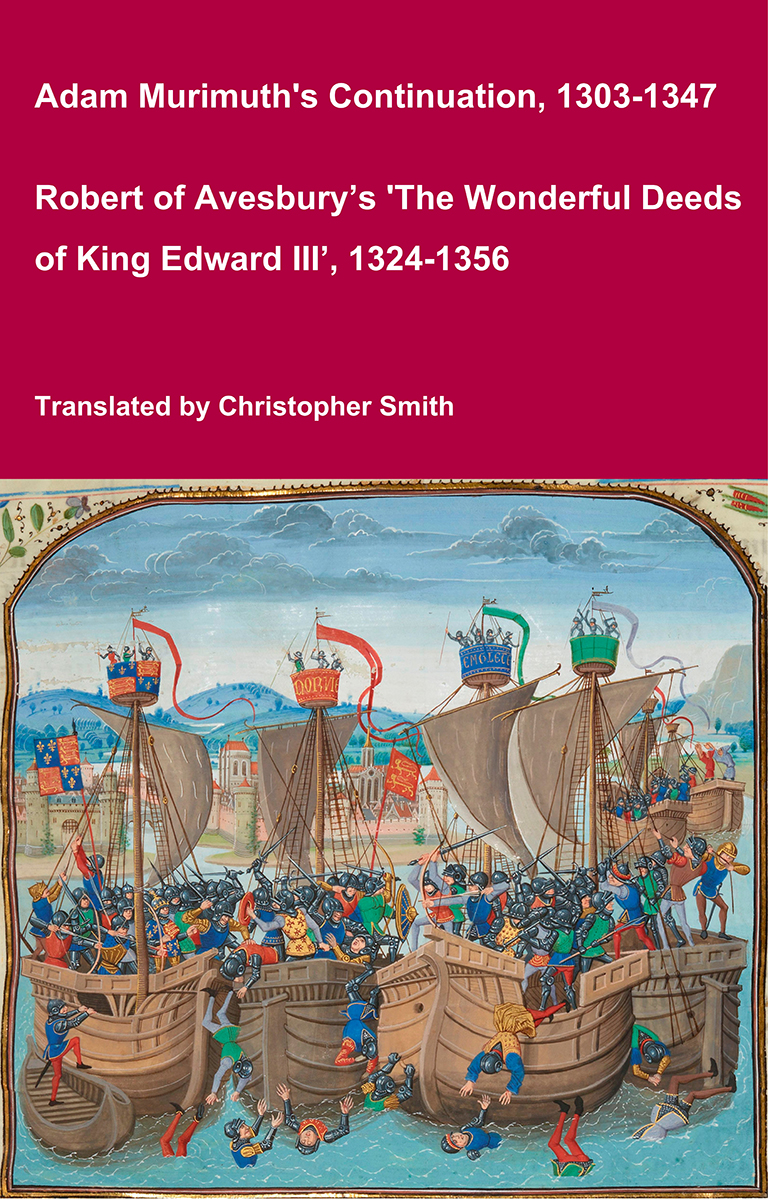
Adam Murimuth's Continuation and Robert of Avesbury’s 'The Wonderful Deeds of King Edward III'
This volume brings together two of the most important contemporary chronicles for the reign of Edward III and the opening phases of the Hundred Years’ War. Written in Latin by English clerical observers, these texts provide a vivid and authoritative window into the political, diplomatic, and military history of fourteenth-century England and its continental ambitions. Adam Murimuth Continuatio's Chronicarum continues an earlier chronicle into the mid-fourteenth century, offering concise but valuable notices on royal policy, foreign relations, and ecclesiastical affairs. Its annalistic structure makes it especially useful for establishing chronology and tracing the development of events year by year. Complementing it, Robert of Avesbury’s De gestis mirabilibus regis Edwardi tertii is a rich documentary chronicle preserving letters, treaties, and official records alongside narrative passages. It is an indispensable source for understanding Edward III’s claim to the French crown, the conduct of war, and the mechanisms of medieval diplomacy. Together, these works offer scholars, students, and enthusiasts a reliable and unembellished account of a transformative period in English and European history. Essential for anyone interested in medieval chronicles, the Hundred Years’ War, or the reign of Edward III.
Available at Amazon in eBook and Paperback format.
On 24th October 1550 Louis Valois Duke Orléans (age 1) died.
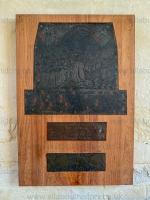
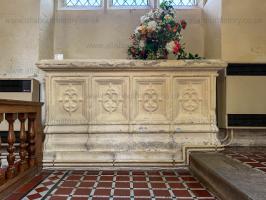
On 24th October 1558 Jane Halwell Baroness Bray died. Chest tomb at Church of St Mary, Eaton Bray on which there was a brass showing her and her eleven children praying.
Jane Halwell Baroness Bray: she was born to Richard Halwell of Halwell in Devon and Jane Norbury. On 21st February 1497 Edmund Braye 1st Baron Braye and she were married. She by marriage Baroness Braye.
On 24th October 1570 Christian Oldenburg was born to John "Younger" Oldenburg Duke Schleswig Holstein Sonderburg (age 25) and Elisabeth of Brunswick-Grubenhagen (age 20).
On 24th October 1579 Albert V Wittelsbach V Duke Bavaria (age 51) died. His son William (age 31) succeeded V Duke Bavaria.

Diary of Anne Clifford. 24th October 1619. The 24th my Lady Margaret christened Mary's child with Sir Wilkam Selby and my Coz. Sackville and called him Richard, but neither my Lord (age 30) nor I was at Church.
Note. About this time the Gallery was hung with all my Lord's caparisons which Edwards the upholsterer made up.
On 24th October 1625 Friedrich Wettin Duke Saxe Altenburg (age 26) was shot in the head during a skirmish. He was unmarried. His brother Johann (age 25) succeeded Duke Saxe Altenburg.
On 24th October 1636 Ernest "The Pious" Saxe Gotha I Duke Saxe Gotha (age 34) and Elisabeth Sophie Saxe Altenburg Duchess Saxe Gotha (age 17) were married at Altenburg. She by marriage Duchess Saxe Gotha. She the daughter of Johann Philipp Wettin Duke Saxe Altenburg (age 39) and Elisabeth of Brunswick-Wolfenbüttel Duchess of Saxe-Altenburg (age 43). He the son of Johann Wettin II Duke Saxe Weimar and Dorothea Maria Anhalt. They were first cousin once removed.
On 24th October 1642 Oliver St John 5th Baron St John (age 39) died from wounds received at the Battle of Edge Hill the day before. His nephew Oliver (age 9) succeeded 6th Baron St John of Bletso. Frances Cavendish Countess Bolingbroke by marriage Baroness St John of Bletso.
On 24th October 1655 Philip Ernest Oldenburg was born to Ernest Günther Oldenburg I Duke Schleswig Holstein Sonderburg Augustenburg (age 46) and Auguste Oldenburg Duchess Schleswig Holstein Sonderburg Augustenburg (age 22). Coefficient of inbreeding 6.27%.
Samuel Pepys' Diary. 24th October 1660. So to Mr. Lilly's (age 42) with Mr. Spong, where well received, there being a club to-night among his friends. Among the rest Esquire Ashmole (age 43), who I found was a very ingenious gentleman. With him we two sang afterward in Mr. Lilly's study. That done, we all pared; and I home by coach, taking Mr. Booker' with me, who did tell me a great many fooleries, which may be done by nativities, and blaming Mr. Lilly for writing to please his friends and to keep in with the times (as he did formerly to his own dishonour), and not according to the rules of art, by which he could not well err, as he had done. I set him down at Lime-street end, and so home, where I found a box of Carpenter's tools sent by my cozen, Thomas Pepys, which I had bespoke of him for to employ myself with sometimes. To bed.

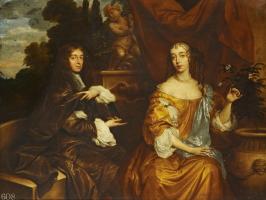
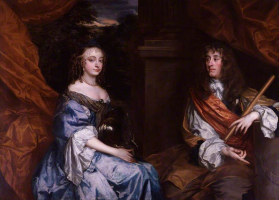


Samuel Pepys' Diary. 24th October 1660. To White Hall, in my way met with Mr. Moore, who went back with me. He tells me, among other things, that the Duke of York is now sorry for his lying with my Lord Chancellor's (age 51) daughter, who is now brought to bed of a boy. From Whitehall to Mr. De Cretz, who I found about my Lord's picture.


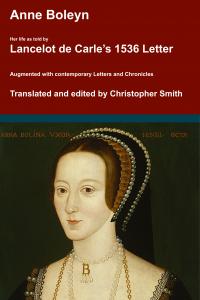
Anne Boleyn. Her Life as told by Lancelot de Carle's 1536 Letter.
In 1536, two weeks after the execution of Anne Boleyn, her brother George and four others, Lancelot du Carle, wrote an extraordinary letter that described Anne's life, and her trial and execution, to which he was a witness. This book presents a new translation of that letter, with additional material from other contemporary sources such as Letters, Hall's and Wriothesley's Chronicles, the pamphlets of Wynkyn the Worde, the Memorial of George Constantyne, the Portuguese Letter and the Baga de Secrets, all of which are provided in Appendices.
Available at Amazon in eBook and Paperback format.
Samuel Pepys' Diary. 24th October 1660. From thence to Mr. Lilly's (age 42), where, not finding Mr. Spong, I went to Mr. Greatorex (age 35), where I met him, and so to an alehouse, where I bought of him a drawing-pen; and he did show me the manner of the lamp-glasses, which carry the light a great way, good to read in bed by, and I intend to have one of them.
On 24th October 1660 William Seymour 2nd Duke of Somerset (age 72) died. His grandson William (age 6) succeeded 3rd Duke Somerset, 2nd Marquess Hertford, 3rd Earl Hertford, 3rd Baron Beauchamp of Hatch Beauchamp in Somerset.
Samuel Pepys' Diary. 24th October 1662. This noon came to see me and sat with me a little after dinner Mr. Pierce, the chyrurgeon, who tells me how ill things go at Court: that the King (age 32) do show no countenance to any that belong to the Queen (age 23); nor, above all, to such English as she brought over with her, or hath here since, for fear they should tell her how he carries himself to Mrs. Palmer (age 21); insomuch that though he has a promise, and is sure of being made her chyrurgeon, he is at a loss what to do in it, whether to take it or no, since the King's mind is so altered in favour to all her dependants, whom she is fain to let go back into Portugall (though she brought them from their friends against their wills with promise of preferment), without doing any thing for them. But he tells me that her own physician did tell him within these three days that the Queen do know how the King orders things, and how he carries himself to my Baroness Castlemaine's and others, as well as any body; but though she hath spirit enough, yet seeing that she do no good by taking notice of it, for the present she forbears it in policy; of which I am very glad. But I pray God keep us in peace; for this, with other things, do give great discontent to all people.


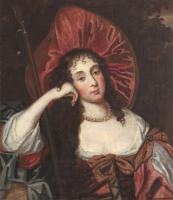


Samuel Pepys' Diary. 24th October 1663. It seems that, after the much talk of troubles and a plot, something is found in the North that a party was to rise, and some persons that were to command it are found, as I find in a letter that Mr. Coventry (age 35) read to-day about it from those parts1.
Note 1. This refers to a rising in the West Riding of Yorkshire, which took place on October 12th, and was known as the Farneley Wood Plot. The rising was easily put down, and several prisoners were taken. A special commission of oyer and terminer was sent down to York to try the prisoners in January, 1663-64, when twenty-one were convicted and executed. (See Whitaker's "Loidis and Elmete", 1816.).
John Evelyn's Diary. 24th October 1664. We dined at Sir Timothy Tyrill's (age 47) at Shotover. This gentleman married the daughter and heir (age 45) of Dr. James Usher, Archbishop of Armagh, that learned prelate. There is here in the grove a fountain of the coldest water I ever felt, and very clear. His plantation of oaks and other timber is very commendable. We went in the evening to Oxford, lay at Dr. Hyde's (age 47), principal of Magdalen-Hall (related to the Lord Chancellor (age 55)), brother to the Lord Chief Justice (age 69) and that Sir Henry Hyde, who lost his head for his loyalty. We were handsomely entertained two days. The Vice-Chancellor, who with Dr. Fell, Dean of Christ Church, the learned Dr. Barlow, Warden of Queen's, and several heads of houses, came to visit Lord Cornbury his father being now Chancellor of the University), and next day invited us all to dinner. I went to visit Mr. Boyle (age 37) (now here), whom I found with Dr. Wallis and Dr. Christopher Wren, in the tower of the schools, with an inverted tube, or telescope, observing the discus of the sun for the passing of Mercury that day before it; but the latitude was so great that nothing appeared; so we went to see the rarities in the library, where the keepers showed me my name among the benefactors. They have a cabinet of some medals, and pictures of the muscular parts of man's body. Thence, to the new theater, now building at an exceeding and royal expense by the Lord Archbishop of Canterbury [Sheldon (age 66)], to keep the Acts in for the future, till now being in St. Mary's Church. The foundation had been newly laid, and the whole designed by that incomparable genius my worthy friend, Dr. Christopher Wren, who showed me the model, not disdaining my advice in some particulars. Thence, to see the picture on the wall over the altar of All Souls, being the largest piece of fresco painting (or rather in imitation of it, for it is in oil of turpentine) in England, not ill designed by the hand of one Fuller; yet I fear it will not hold long. It seems too full of nakeds for a chapel.


Samuel Pepys' Diary. 24th October 1664. Thence into the galleries to talk with my Lord Sandwich (age 39); among other things, about the Prince's (age 44) writing up to tell us of the danger he and his fleete lie in at Portsmouth, Hampshire [Map], of receiving affronts from the Dutch; which, my Lord said, he would never have done, had he lain there with one ship alone: nor is there any great reason for it, because of the sands. However, the fleete will be ordered to go and lay themselves up at the Cowes. Much beneath the prowesse of the Prince, I think, and the honour of the nation, at the first to be found to secure themselves. My Lord is well pleased to think, that, if the Duke and the Prince go, all the blame of any miscarriage will not light on him; and that if any thing goes well, he hopes he shall have the share of the glory, for the Prince is by no means well esteemed of by any body.

Samuel Pepys' Diary. 24th October 1665. Lay long, having a cold. Then to my Lord and sent him going to Oxford, and I to my office, whither comes Sir William Batten (age 64) now newly from Oxford. I can gather nothing from him about my Lord Sandwich (age 40) about the business of the prizes, he being close, but he shewed me a bill which hath been read in the House making all breaking of bulke for the time to come felony, but it is a foolish Act, and will do no great matter, only is calculated to my Lord Sandwich's case. He shewed me also a good letter printed from the Bishopp of Munster to the States of Holland shewing the state of their case. Here we did some business and so broke up and I to Cocke (age 48), where Mr. Evelyn (age 44) was, to dinner, and there merry, yet vexed again at publique matters, and to see how little heed is had to the prisoners and sicke and wounded.


Samuel Pepys' Diary. 24th October 1665. Thence to my office, and no sooner there but to my great surprise am told that my Lord Sandwich (age 40) is come to towne; so I presently to Boreman's, where he is and there found him: he mighty kind to me, but no opportunity of discourse private yet, which he tells me he must have with me; only his business is sudden to go to the fleece, to get out a few ships to drive away the Dutch.
Samuel Pepys' Diary. 24th October 1666. I to the Hall and there walked long, among others talking with Mr. Hayes (age 29), Prince Rupert's (age 46) Secretary, a very ingenious man, and one, I think, fit to contract some friendship with. Here I staid late, walking to and again, hearing how the Parliament proceeds, which is mighty slowly in the settling of the money business, and great factions growing every day among them. I am told also how Holmes (age 44) did last Sunday deliver in his articles to the King (age 36) and Cabinet against [Sir Jeremy] Smith, and that Smith hath given in his answer, and lays his not accompanying the fleete to his pilot, who would not undertake to carry the ship further; which the pilot acknowledges. The thing is not accommodated, but only taken up, and both sides commanded to be quiet; but no peace like to be. The Duke of Albemarle (age 57) is Smith's friend, and hath publiquely swore that he would never go to sea again unless Holmes's commission were taken from him1. I find by Hayes that they did expect great glory in coming home in so good condition as they did with the fleete, and therefore I the less wonder that the Prince was distasted with my discourse the other day about the bad state of the fleete. But it pleases me to hear that he did expect great thanks, and lays the fault of the want of it upon the fire, which deadened everything, and the glory of his services. About seven at night home, and called my wife, and, it being moonshine, took her into the garden, and there layed open our condition as to our estate, and the danger of my having it [his money] all in the house at once, in case of any disorder or troubles in the State, and therefore resolved to remove part of it to Brampton [Map], and part some whither else, and part in my owne house, which is very necessary, and will tend to our safety, though I shall not think it safe out of my owne sight. So to the office, and then to supper and to bed.
Note 1. In the instructions given to Sir Thomas Clifford (age 36) (August 5th, 1666) to be communicated to Prince Rupert and the Duke of Albemarle, we read: "to tell them that the complaint of Sir Jeremy Smith's misbehaviour in the late engagement being so universal, unless he have fully satisfied the generals he should be brought to trial by court-martial, and there purged or condemned". The Duke of Albemarle answered the King (August 14th?): "Wishes to clear a gallant man falsely accused, Sir Jeremiah Smith, who had more men killed and hurt, and his ship received more shot than any in the fleet. There is not a more spirited man serves in the fleet". On October 27th H. Muddiman wrote to Sir Edward Stradling: "Sir Jeremy Smith has got as much credit by his late examination as his enemies wished him disgrace, the King and Duke of York (age 33) being fully satisfied of his valour in the engagement. It appears that he had 147 men killed and wounded, while the most eminent of his accusers had but two or three". With regard to Sir Jeremy's counter-charges, we read: "Nov. 3. The King having maturely considered the charges brought against Sir Rob. Holmes by Sir Jeremy Smith, finds no cause to suspect Sir Robert of cowardice in the fight with the Dutch of June 25 and 26, but thinks that on the night of the 26th he yielded too easily to the opinion of his pilot, without consulting those of the other ships, muzzled his ship, and thus obliged the squadron to do the same, and so the enemy, which might have been driven into the body of the King's fleet, then returning from the pursuit, was allowed to escape" (Calendar of State Papers, 1666-67, pp. 14, 40, 222, 236).

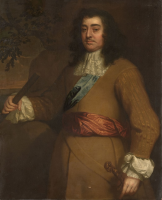


John Evelyn's Diary. 24th October 1672. Met in Council, the Earl of Shaftesbury (age 51), now our president, swearing our secretary and his clerks, which was Mr. Locke, an excellent learned gentleman, and student of Christ Church, Mr. Lloyd, and Mr. Frowde. We dispatched a letter to Sir Thomas Linch, Governor of Jamaica, giving him notice of a design of the Dutch on that island.


John Evelyn's Diary. 24th October 1675. Dined at Lord Chamberlain's (age 57) with the Holland Ambassador L. Duras (age 34), a valiant gentleman whom his Majesty (age 45) made an English Baron, of a cadet, and gave him his seat of Holmby, in Northamptonshire.


On 24th October 1682 William Aikman was born.
John Evelyn's Diary. 24th October 1684. I din'd at Sir Stephen Fox's (age 57) with the Duke of Northumberland (age 18). He seem'd to be a young gentleman of good capacity, well bred, civil, and modest: newly come from travell, and had made his campaigne at the siege of Luxemburg. Of all his Ma*s (age 54) children (of which he had now six Dukes) this seem'd the most accomplish'd and worth the owning. He is extraordinary handsome and well shap'd. What ye Dukes of Richmond (age 12) and St. Alban's (age 14) will prove, their youth does not yet discover; they are very pretty boys.


Abbot John Whethamstede’s Chronicle of the Abbey of St Albans
Abbot John Whethamstede's Register aka Chronicle of his second term at the Abbey of St Albans, 1451-1461, is a remarkable text that describes his first-hand experience of the beginning of the Wars of the Roses including the First and Second Battles of St Albans, 1455 and 1461, respectively, their cause, and their consequences, not least on the Abbey itself. His text also includes Loveday, Blore Heath, Northampton, the Act of Accord, Wakefield, and Towton, and ends with the Coronation of King Edward IV. In addition to the events of the Wars of the Roses, Abbot John, or his scribes who wrote the Chronicle, include details in the life of the Abbey such as charters, letters, land exchanges, visits by legates, and disputes, which provide a rich insight into the day-to-day life of the Abbey, and the challenges faced by its Abbot.
Available at Amazon in eBook and Paperback format.
John Evelyn's Diary. 24th October 1686. Dr. Warren preached before the Princess [NOTE. Not clear which Princess this is]; possibly at Whitehall, on 5th Matthew, of the blessedness of the pure in heart, most elegantly describing the bliss of the beatifical vision. In the afternoon, Sir George Wheeler (age 35), knight and baronet, preached on the 4th Matt. upon the necessity of repentance, at St. Margaret's [Map], an honest and devout discourse, and pretty tolerably performed. This gentleman coming from his travels out of Greece, fell in love with the daughter of Sir Thomas Higgins (age 62), his Majesty's resident at Venice, niece to the Earl of Bath, and married her. When they returned into England, being honored with knighthood, he would needs turn preacher, and took orders. He published a learned and ingenious book of his travels, and is a very worthy person, a little formal and particular, but exceedingly devout.

On 24th October 1733 Henrietta Churchill 2nd Duchess of Marlborough (age 52) died. Her nephew Charles (age 26) succeeded 3rd Duke Marlborough, 3rd Marquess of Blandford, 3rd Earl of Marlborough, 3rd Baron Churchill of Sandridge in Hertfordshire. Elizabeth Trevor Duchess of Marlborough (age 20) by marriage Duchess Marlborough.
On 24th October 1733 John Stapylton 3rd Baronet (age 50) died from a fall from a horse on the way to attend a parliamentary adoption meeting at York, where he was to be adopted as the Tory candidate for the county at the impending general election. His son Miles (age 25) succeeded 4th Baronet Stapylton Stapleton of Myton in Yorkshire.
On 24th October 1745 Archbishop Thomas Herring (age 52) in a speech at York Castle [Map] during the Jacobite Rebellion said:
"these Commotions in the North are but Part of a Great Plan concerted for our Ruin-They have begun under the Countenance, and will be supported by the Forces of France and Spain, our old and inveterate, (and late Experience calls upon me to add, our savage and blood-thirsty) Enemies-A Circumstance that should fire the Indignation of every honest Englishman. If these Designs should succeed, and Popery and Arbitrary Power come in upon us, under the Influence and Direction of these two Tyrannical and Corrupted Courts, I leave you to reflect, what would become of every Thing that is valuable to us! We are now bless'd with the mild Administration of a Just and Protestant King, who is of so strict an Adherence to the Laws of our Country, that not an Instance can be pointed out, during his whole reign, wherein he made the least Attempt upon the Liberty, or Property, or Religion, of a single Person. But if the Ambition and Pride of France and Spain, is to dictate to us, we must submit to a Man to govern us under their hated and accursed Influence, who brings his Religion from Rome, and Rules and Maxims of his Government from Paris and Madrid.".
Horace Walpole 4th Earl Orford (age 28) said this speech "had as much true spirit, honesty and bravery in it as ever was penned by an historian for an ancient hero".


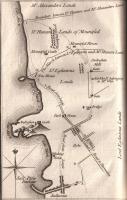
On 24th October 1769 Alexander Montgomerie 10th Earl Eglinton (age 46) was shot and killed by an excise officer or Gaudger (Scots) named Mungo Campbell following a dispute about the latter's right to bear arms on the Earl's grounds. The Earl died from his abdominal wounds late that evening at one o'clock on the morning of the 25th October 1769 at Eglinton Castle. His brother Archibald (age 43) succeeded 11th Earl Eglinton.
John Brown, tide-officer or tide-waiter (a customs officer who boarded and inspected incoming ships) at Saltcoats, gave evidence that on the day of the earl's death, Tuesday 24 October 1769, he was on duty and walking with Mungo Campbell "They passed through the grounds of Montfodd, and thereafter crossed a burn, which is the march between Montfodd and the earl of Eglintoun's property, and went through lord Eglintoun's ground towards the sea."
The trial of Mungo Campbell, before the High Court of Justiciary in Scotland, for the murder of Alexander Earl of Eglintoun. Extracted from the records of the court:
That the earl faid to him, That he might have a right to carry a gun, but not upon his lands, without his liberty. That the pannel upon this faid to the earl, I beg your lordfhip's pardon: or, I beg your pardon. That at this time lord Eglintoun was difmounted from his horfe, and advancing nearer the pannel, who again was retiring fometimes backwards, at other times tideways, having his mufket dill pointed at the earl. But the deponent did not obferve whether he had his hand upon the cock or not; neither drd the deponent hear any threatnings uled by the pannel againft the earl. Depones, whein the pannel was retreating, he fell clofe by where the deponent was fitting on his horfe, and by his fall frightened the deponent's horfe, fo that the horfe reeled a little; during which time the deponent did not obferve the pannel, but immediately thereafter, having got -his horfe fettled, he faw the pannel half fitting half lying, and faw him point his gun towards Lord Eglintoun, and immediately fire it. — That at this time lord Eglintoun was within two or three yards of the pannel. That upon this lord Eglintoun gave three or four loud cries, that he was gone. Depones, that the pannel fired his gun without putting it to his fhoulder, but raifed the butt above his haunch, and pointed it at the earl.
Campbell was convicted of murder but hanged himself with a silk scarf provided by his friends before the sentence could be carried out.
A map of the lands of Montfode and Ardrossan in 1769 showing the details of the incident.
Alexander Montgomerie 10th Earl Eglinton: On 10th February 1723 he was born to Alexander Montgomerie 9th Earl Eglinton and Susanna Kennedy Countess Winton. On 18th February 1729 Alexander Montgomerie 9th Earl Eglinton died. His son Alexander succeeded 10th Earl Eglinton.

On 24th October 1780 Charles Henry Manners was born to Charles Manners 4th Duke Rutland (age 26) and Mary Isabella Somerset Duchess Rutland (age 24).
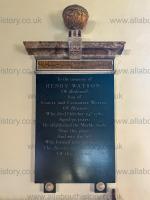
Holy Trinity Church, Ashford-in-the-Water [Map]. Memorial to Henry Watson of Bakewell who died 24th October 1786.
On 24th October 1787 Charles Manners 4th Duke Rutland (age 33) died at Phoenix Park Lodge, Phoenix Park, Dublin. His son John (age 9) succeeded 5th Duke Rutland, 5th Marquess Grandby, 13th Earl of Rutland, 5th Baron Manners of Haddon in Derbyshire.
The action of 24 October 1798 was a minor naval engagement of the French Revolutionary Wars. Two Dutch ships were intercepted in the North Sea within hours of leaving port, 56 km northwest of the Texel, by the British ship HMS Sirius captained by Richard King 2nd Baronet (age 23). Both Dutch vessels were carrying large quantities of military supplies and French soldiers, reinforcements for the French and Irish forces participating in the Irish Rebellion of 1798.
On 24th October 1800 Isabella Mary Montagu Scott was born to Charles Scott 4th Duke Buccleuch 6th Duke Queensberry (age 28) and Harriet Katherine Townshend Duchess Buccleuch Duchess Queensbury (age 26). Coefficient of inbreeding 1.60%. She married 1823 Peregrine Cust, son of Brownlow Cust 1st Baron Brownlow and Frances Bankes Baroness Brownlow.
Ten Years' Digging. On the 24th of October, we opened a large trench in the barrow [Larks Low Barrow [Map]] at Larkslow, near Middleton by Youlgrave, which was first examined by Mr. William Bateman, in 1825, when amongst other things were found a cinerary urn, containing burnt bones, and an "incense cup". It appeared by our excavation, that the centre of the barrow had been surrounded by large masses of chert, within which circle the interment had been deposited. We discovered the calcined bones which had been emptied out of the urn at the former opening, and a few pieces of an unburnt skeleton. From a very careful examination of the former, we find them to consist of the remains of a full-grown person, and an infant, with whom had been calcined a few small instruments of flint, a bone pin, and a tooth of some large animal. It is probable that the critical examination of all deposits of burnt bones would lead to much curious information respecting the statistics of suttee, and infanticide, both which abominations we are unwillingly compelled, by accumulated evidence to believe were practised in Pagan Britain.
Chronicle of Abbot Ralph of Coggeshall
The Chronicle of Abbot Ralph of Coggeshall (Chronicon Anglicanum) is an indispensable medieval history that brings to life centuries of English and European affairs through the eyes of a learned Cistercian monk. Ralph of Coggeshall, abbot of the Abbey of Coggeshall in Essex in the early 13th century, continued and expanded his community’s chronicle, documenting events from the Norman Conquest of 1066 into the tumultuous reign of King Henry III. Blending eyewitness testimony, careful compilation, and the monastic commitment to record-keeping, this chronicle offers a rare narrative of political intrigue, royal power struggles, and social upheaval in England and beyond. Ralph’s work captures the reigns of pivotal figures such as Richard I and King John, providing invaluable insights into their characters, decisions, and the forces that shaped medieval rule. More than a simple annal, Chronicon Anglicanum conveys the texture of medieval life and governance, making it a rich source for scholars and readers fascinated by English history, monastic authorship, and the shaping of the medieval world.
Available at Amazon in eBook and Paperback format.
On 24th October 1872 Arthur Charles Wellesley 4th Duke Wellington (age 23) and Kathleen Emily Bulkeley Williams Duchess Wellington (age 24) were married.
Wiltshire Archaeological Magazine 1878 V17 Pages 253-254. One mile south of Silbury the wanderer over the down in that district may have noticed a few sarsen stones lying scattered in an irregular line on the brow of a hill commanding a full view of Silbury to the north, with Abury beyond it.
A close examination of these stones some years ago caused me to suspect that though now overthrown, and so moved from their original position, they must have once formed the segment of a large circle. But though I have many times visited them, and speculated on their probable intention, it was not till this autumn, when a more careful scrutiny resulted in my finding four other stones peeping just above ground, and certain faint indications of a trench, all of which would come within the supposed circle, that I determined to examine the ground more searchingly with the probe and the spade.
Accordingly having obtained the ready permission of the owner, the Rev. Robert Ashe, and the cordial consent of the occupier, Mr. Pinniger, and having happily secured the valuable assistance of one, who by his admirable treatises on Abury and Stonehenge, has earned the title of a master in British antiquities (Mr. William Long), I set a careful man to dig early one morning in September last; and guided by the stones which appeared above ground, and the mark of the trench, we triumphantly vindicated our impression that it was a circle, by unearthing in that one day no less than twenty-two sarsen stones, lying from two to twelve inches below the surface.
That these stones, though generally very small, were manifestly placed in the position they now occupy, in many cases nearly touching one another, and that they formed part of a large circle, is (I think) unmistakable. What that circle was, and what was its probable intention, I will not now discuss. Enough for the present that we have proved its existence; that the area it occupied is very large, with a diameter of about ninety yards; that the traces of the entire circle are by no means complete; and that subsequent days' diggings have as yet revealed but four more stones, none of which come within the exact circle.
It is my intention to continue the examination, when the weather will allow on that most exposed down. I only make mention of the investigation now, before it is completed, in order that, while the stones are yet uncovered, any one who desires to do so, may visit the spot, and form his own opinion of the circle, which may readily be found by following the waggon-track nearly opposite Silbury, on the Beckhampton side, and continuing due south till the stones are reached.
A. C. SMITH.
Yatesbury Rectory,
October 24th, 1877.
Note 1. It has been suggested to me that the rebus may stand for Baynton, as one of that family had the Britford manor for a few years as trustee. The foliage however appeared rather to be that of an ash.
On 24th October 1878 Karl Glücksburg Duke Schleswig Holstein Sonderburg Glücksburg (age 66) died. His brother Friedrich (age 64) succeeded Duke Schleswig Holstein Sonderburg Glücksburg. Adelheid Schasumburg Lippe Duchess Schleswig Holstein Sonderburg Glücksburg by marriage Duchess Schleswig Holstein Sonderburg Glücksburg.
On 24th October 1886 George William Sackville Russell 10th Duke Bedford (age 34) and Adeline Marie Somers Duchess Bedford (age 34) were married. She the daughter of Charles Somers-Cocks 3rd Earl Somers. He the son of Francis Russell 9th Duke Bedford (age 67) and Elizabeth Sackville-West Duchess Bedford (age 68).

On 24th October 1887 Victoria Eugénie Mountbatten Queen Consort Spain was born to Henry Mountbatten (age 29) and Princess Beatrice (age 30). She a granddaughter of Queen Victoria of the United Kingdom. She married 1906 her fifth cousin once removed Alfonso XIII King Spain, son of Alfonso XII King Spain and Maria Christina of Austria Queen Consort Spain, and had issue.
On 24th October 1911 Rita Emily Carr-Ellison Duchess Grafton was born to John Ralph Stockley Carr-Ellison (age 44) and Alice Ursula Lang. She married (1) before 15th May 1941 Lieutenant-Commander John Thurburn Currie (2) 18th July 1944 Charles Alfred Euston Fitzroy 10th Duke Grafton.
On 24th October 1914 Edmund Antrobus (age 27) was killed in action. The Germans made a determined effort to break through on the left of the Grenadiers near Kruiseik, and the Company made a counterattack. He was killed fighting with his platoon. He was buried at Ypres (Menin Gate) Memorial, CWGC Cemetery, West-Vlaanderen, Belgium.


On 24th October 1915 John Frederick Hepburn-Stuart-Forbes-Trefusis (age 37) died from wounds.
On 24th October 1927 Adolphus Cambridge Duke Teck (age 59) died. He was buried at St George's Chapel, Windsor Castle [Map]. His son George (age 32) succeeded 2nd Marquess Cambridge.
The Times. 24th October 1928. The King was represented by Sir Harry Verney, and the Prince of Wales by the Hon Bruce Ogilvy, and Princess Louise, Duchess of Argyll by Col B. W. L. MacMahon at the service for Sir Frank Dicksee which took place yesterday in Westminster Abbey. The Dean of Westminster officiated, assisted by Canon Storr, and the Reverend H. L. Nixon. A procession was formed at the West Door, and proceeded through the nave headed by the full choir and clergy.
The Pall Bearers were all titled with the exception of J. W. MacKail the distinguished academic and son-in-law of Sir Edward Burne-Jones. Amongst the mourners were many members of the Dicksee family, including Miss Mary Dicksee (sister), and Mr Herbert Thomas Dicksee. Official representatives included The French Ambassador, the Belgian Ambassador. The Brazilian Ambassador, the Swedish Minister, the High Commissioners for Australia and New Zealand, and (the 2nd) Lord Leverhume. Also present were many Academicians including W. Ouless, Sir John Lavery (age 72), W. Goscombe-John (age 68). Mrs Blair Leighton, widow of Edmund, and Lady East (age 83), widow of Sir Alfred were also among the mourners. The list of mourners in The Times includes many of the most distinguished people of the day.
On 24th October 1929 "Black Thursday" a record 12.9 million shares were traded on the New York Stock Exchange.
Chronicle of a Bourgeois of Valenciennes
Récits d’un bourgeois de Valenciennes aka The Chronicle of a Bourgeois of Valenciennes is a vivid 14th-century vernacular chronicle written by an anonymous urban chronicler from Valenciennes in the County of Hainaut. It survives in a manuscript that describes local and regional history from about 1253 to 1366, blending chronology, narrative episodes, and eyewitness-style accounts of political, military, and social events in medieval France, Flanders, and the Low Countries. The work begins with a chronological framework of events affecting Valenciennes and its region under rulers such as King Philip VI of France and the shifting allegiances of local nobility. It includes accounts of conflicts, sieges, diplomatic manoeuvres, and the impact of broader struggles like the Hundred Years’ War on urban life in Hainaut. Written from the perspective of a burgher (bourgeois) rather than a monastery or royal court, the chronicle offers a rare lay viewpoint on high politics and warfare, reflecting how merchants, townspeople, and civic institutions experienced the turbulence of the 13th and 14th centuries. Its narrative style combines straightforward reporting of events with moral and civic observations, making it a valuable source for readers interested in medieval urban society, regional politics, and the lived experience of war and governance in pre-modern Europe.
Available at Amazon in eBook and Paperback format.
On 24th October 1933 Annie Louisa Swynnerton née Robinson (age 89) died.
On 24th October 1935 George Victor Robert John Innes-Kerr 9th Duke Roxburghe (age 22) and Mary Evelyn Hungerford Crewe Milnes Duchess Roxburghe (age 20) were married. She by marriage Duchess Roxburghe. She the daughter of Robert Offley Ashburton Crewe Milnes 1st Marquess of Crewe (age 77) and Margaret Etrenne Hannah "Peggy" Primrose Marchioness Crewe (age 54). He the son of Henry John Innes-Kerr 8th Duke Roxburghe.
Keiller Collection Letters 24 Oct 1937. 24th October, 1937. Alexander Keiller (age 47) to Vere Gordon Childe (age 45).
Dear Childe,
Very many thanks indeed for your letter of the 10th which I would have answered before but, when it arrived, I was up with Influenza. I got up sooner than I should in order to return to the site of excavations in the north—weetern sector which are still in procreee and, not unnaturally, caugnt another chill and retired to bed again.
I do hope that we meet soon for I fear that your experiences as the guest of the Gazi will have laid a mantle of amnesia over your transatlantic [?].
Raymond Firth must have misunderstood my letter completely if, as you say, he though that I was irritated with R.A.I. becauoe J. Foster called himself a "Fellow" thereof. Why I wrote to Firth on the matter at all was that Foster Forbes (age 48) consistently advertised the fact that he was "F.R.A.I., F.S.A." that it would be an excellent thing both these organisations forwarded a protest to the B.B.C., lest that consumately complacent body considered that these two learned Societies concurred with J.F.F.s fantastic statements, and that their silence might be taken to weigh the scales against the more articulate objctions of The Prehistoric Society, The Wilts Archaeological Society, The Hampshire Field Club and others. The Prehistorlc Society are discussing the matter on Wednesdat and will certainly send a strongly worded protest. Equally naturally, the Society of Antiquaries of London propose to do nothing about the matter at save that. "the President wili probably speak to Reith about it if he a chance when he next sees him". The Society of London have for so many yeare adopted the methods towards prehistory of the Duke of Plaza Toro that one would hardly expect them to do anything else than, actually nothing at all.
Reverting again to Firth and the R.A.I. believe no one realises better than I that such initials after one'e nane mean nothing beyond the fact that one hae been interested enouch to pay a couple of guineas or so annually for the right to use the library of the Institution. Personally I never put any letters after my name if I can avoid it, unless F.G.S. if I happen to be writing on geological subjects iun a vain hope that I may convey to my readers I that I am justified in doing so. I was going to say that, having resigned from The Royal Philatelic Society I cannot now utilise the initials "F.R.P.S." which used to give the impression that I had a commercial if not technical knowledge of Chemistry.
Needless to say I agree with everything you say concerning J. Foster Forbes. Kendrick wrote to me the other day and suggested that two reputable arehaeologists should broadcast talks contraverting Foster Forbe's fantastic statements. I have since heard from the B.B.C. concerning Kendrick's suggestion that I should be one of those selected but, owing to illness, as I say, I have not yet had an opportunity of answering either Kendrick of the B.B.C. The most important this was that the B.B.C. told me they had writted to you to ask you to undertake the frist broadcast. I do most sincerely hope that you will see your way to consent for, when I first got Kendrick's letter your name naturally sprang to my mind as being the most suitable person to undertake the task. Why I should have asked to be the second I cannot imagine, for i could, as I am sure that you could too, instantly name half-a-dozen men very much more competent to undertake the job than I.
After all I but an archaeological surveyor and excavator when all is said and done. I do not lay and never have laid claim to being a "savant" as regards comparative archaeology. I can contravert Foster Forbes' statements concerning Avebury, or the megalithic monuments in the north—east of Scotland, but so can plenty of other people who can hold the publie interest better than could I on wider aspects of the subjecty so unsatisfactorily traversed by J. Foster Forbes.
I am writing to the B.B.C. to suggesting to them that, apart altogether frocu these two immediate talks, a series of talks should be given, say once a fortnight, beginning shortly after the New Yeur and dealing respectively with various periods of British prehistory. In this case, unless more suitable names ware suggested something on the following lines might be adopted:
Palaeolithic (Burkitt).
Mesolithic (Clarke).
Neolithic (Myself, or anyone else who is preferred).
Bronze Age (Piggott or Stone).
Early Iron Age (Hawkes).
Roman (Collingwood).
Saxon and Dark Agee (Kendrick) .
With a summary of the whole to round up the course by O.G.S. Crawford. Alternatively, instead of dividing prehistory into the above hidebound compartments, certain of the talks might represent the transitionary period of one into the next,
Mesolithic — Neolithic (Clarke)
Neolithic — Early Bronze Ace ( Pit.•gott).
Bronze Age — Early Iron Ace (Hawkes).
and so on. Whnt do you think of the Idea?
Anyhow I do hope that you consent to the B.B.C's invitation, and that when you do you will give J. Foster Forbes the sheer undiluted hell that he so richly deserves and for which with sucg unparallel verbosity he has demonstrably asked.
Best wishes to you from all of us here,
Yours sincerely
John Foster Forbes: In 1889 he was born at Rothiemay Castle, Aberdeenshire. In July 1958 he died in the Brighton General Hospital after complications following an operation for peritonitis.


On 24th October 1942 Captain Anthony Edmund Winn (age 33) was killed in action at El Alamein.
On 24th October 1378 David Stewart 1st Duke Rothesay was born to King Robert III of Scotland (age 41) and Annabella Drummond Queen Consort Scotland (age 28). He married his half third cousin once removed Marjory Douglas Duchess Rothesay, daughter of Archibald "Grim" Douglas 3rd Earl Douglas and Joanna Strathearn Countess Douglas.
On 24th October 1503 Isabel Aviz Queen Consort Spain was born to Manuel "Fortunate" I King Portugal (age 34) and Maria Trastámara Queen Consort Portugal (age 21). Coefficient of inbreeding 8.38%. She married 10th March 1526 her first cousin Charles V Holy Roman Emperor, son of Philip "Handsome Fair" King Castile and Joanna "The Mad" Trastámara Queen Castile, and had issue.
On 24th October 1570 Christian Oldenburg was born to John "Younger" Oldenburg Duke Schleswig Holstein Sonderburg (age 25) and Elisabeth of Brunswick-Grubenhagen (age 20).
On 24th October 1597 John Cooper 1st Baronet was born to John Cooper (age 45) and Margaret Skutt. He married (1) before 20th July 1628 Anne Ashley Lady Cooper, daughter of Anthony Ashley 1st Baronet and Jane Okeover, and had issue (2) after 20th July 1628 Mary Hicks Lady Cooper and Morrison, daughter of Baptist Hicks 1st Viscount Campden and Elizabeth May Viscountess Campden.
On 24th October 1630 Mary Foote was born to Thomas Foote 1st Baronet (age 32). She married before 23rd June 1654 Arthur Onslow 1st and 2nd Baronet and had issue.
On 24th October 1655 Philip Ernest Oldenburg was born to Ernest Günther Oldenburg I Duke Schleswig Holstein Sonderburg Augustenburg (age 46) and Auguste Oldenburg Duchess Schleswig Holstein Sonderburg Augustenburg (age 22). Coefficient of inbreeding 6.27%.

On 24th October 1668 William Craven 2nd Baron Craven was born to William Craven (age 30) and Margaret Clapham (age 19) at Benham Park, Speen, Newbury. He married 12th October 1697 Elizabeth Skipwith Baroness Craven.
On 24th October 1674 Albertine Johannette Nassau Hadamar Countess Salm was born. She married 20th July 1700 Louis Otto Salm Count Salm Salm, son of Charles Theodore Salm Prince Salm and Luise Marie Palatinate Simmern Countess Salm, and had issue.
On 24th October 1674 Louis Otto Salm Count Salm Salm was born to Charles Theodore Salm Prince Salm (age 29) and Luise Marie Palatinate Simmern Countess Salm (age 27). He a great x 2 grandson of King James I of England and Ireland and VI of Scotland. He married 20th July 1700 Albertine Johannette Nassau Hadamar Countess Salm and had issue.
Abbot John Whethamstede’s Chronicle of the Abbey of St Albans
Abbot John Whethamstede's Register aka Chronicle of his second term at the Abbey of St Albans, 1451-1461, is a remarkable text that describes his first-hand experience of the beginning of the Wars of the Roses including the First and Second Battles of St Albans, 1455 and 1461, respectively, their cause, and their consequences, not least on the Abbey itself. His text also includes Loveday, Blore Heath, Northampton, the Act of Accord, Wakefield, and Towton, and ends with the Coronation of King Edward IV. In addition to the events of the Wars of the Roses, Abbot John, or his scribes who wrote the Chronicle, include details in the life of the Abbey such as charters, letters, land exchanges, visits by legates, and disputes, which provide a rich insight into the day-to-day life of the Abbey, and the challenges faced by its Abbot.
Available at Amazon in eBook and Paperback format.
On 24th October 1675 Field Marshal Richard Temple 1st Viscount Cobham was born to Richard Temple 3rd Baronet (age 41) and Mary Knapp Lady Temple. He married September 1715 Anne Halsey Viscountess Cobham and had issue.
On 24th October 1682 William Aikman was born.
On 24th October 1689 John Wray 12th Baronet was born to William Wray (age 25) and Isabella Ullithorne (age 24). He married 4th March 1728 Frances Norcliffe Lady Wray and had issue.
On 24th October 1701 Robert Spencer 4th Earl of Sunderland was born to Charles Spencer 3rd Earl of Sunderland (age 26) and Anne Churchill Countess Sunderland (age 18).
On 24th October 1725 George Jackson aka Duckett 1st Baronet was born to George Jackson of Hill House in Richmond in Yorkshire (age 37) and Hannah Ward. He married (1) 1745 Mary Ward (2) 9th September 1775 Grace Goldstone Lady Duckett and had issue.
On 24th October 1780 Charles Henry Manners was born to Charles Manners 4th Duke Rutland (age 26) and Mary Isabella Somerset Duchess Rutland (age 24).
On 23rd September 1781 George Baring was born to Francis Baring 1st Baronet (age 41) and Harriet Herring Lady Baring (age 31). He was baptised on 24th October 1781 at St Gabriel's Church. He married 6th March 1806 Harriet Rochfort D'Oyly, daughter of John Hadley D'Oyly 6th Baronet and Diana Rochfort Lady D'Oyly, and had issue.
On 24th October 1784 Yekaterina Semyonovna Vorontsova Countess Pembroke and Montgomery was born to Semyon Romanovich Vorontsova (age 40) at St Petersburg. She married 25th January 1808 George Augustus Herbert 11th Earl Pembroke 8th Earl Montgomery, son of Henry Herbert 10th Earl Pembroke 7th Earl Montgomery and Elizabeth Spencer Countess Pembroke and Montgomery, and had issue.
On 24th October 1800 Isabella Mary Montagu Scott was born to Charles Scott 4th Duke Buccleuch 6th Duke Queensberry (age 28) and Harriet Katherine Townshend Duchess Buccleuch Duchess Queensbury (age 26). Coefficient of inbreeding 1.60%. She married 1823 Peregrine Cust, son of Brownlow Cust 1st Baron Brownlow and Frances Bankes Baroness Brownlow.
On 24th October 1827 George Frederick Samuel Robinson 1st Marquess Ripon was born to Frederick John Robinson 1st Earl Ripon (age 44) and Sarah Albinia Louisa Hobart (age 34) at 10 Downing Street, Westminster [Map]. He married 8th April 1851 his first cousin once removed Henrietta Anne Theodosia Vyner Marchioness Ripon and had issue.


Abbot John Whethamstede’s Chronicle of the Abbey of St Albans
Abbot John Whethamstede's Register aka Chronicle of his second term at the Abbey of St Albans, 1451-1461, is a remarkable text that describes his first-hand experience of the beginning of the Wars of the Roses including the First and Second Battles of St Albans, 1455 and 1461, respectively, their cause, and their consequences, not least on the Abbey itself. His text also includes Loveday, Blore Heath, Northampton, the Act of Accord, Wakefield, and Towton, and ends with the Coronation of King Edward IV. In addition to the events of the Wars of the Roses, Abbot John, or his scribes who wrote the Chronicle, include details in the life of the Abbey such as charters, letters, land exchanges, visits by legates, and disputes, which provide a rich insight into the day-to-day life of the Abbey, and the challenges faced by its Abbot.
Available at Amazon in eBook and Paperback format.
On 24th October 1835 Henry Aubrey-Fletcher 4th Baronet was born to Henry Fletcher 3rd Baronet (age 28) and Emily Maria Browne Lady Fletcher.
On 24th October 1841 Craven Charles Goring 10th Baronet was born to Reverend Charles Goring (age 36).
On 24th October 1857 George Capell 7th Earl of Essex was born to Arthur de Vere Capell (age 31). He married (1) 12th July 1882 Ellenor Harriet Maria Harford and had issue (2) 14th December 1893 Adele Beach Grant Countess Essex and had issue.

On 24th October 1869 Captain Leopold Jenner was born to William Jenner 1st Baronet (age 54) and Adela Adey. He was educated at Marlborough College and the Royal Military College, Sandhurst. He married 1899 Nora Helen Gertrude Stewart.
On 24th October 1871 Edmund Waller 6th Baronet was born to Reverend Ernest Alured Waller (age 35). He married 14th June 1906 Muriel Grace Adderley Lady Waller.
On 24th October 1880 Clara Isabel Murray Baroness Doverdale was born to Montolieu Fox Oliphant Murray 1st Viscount Elibank (age 40). She married (1) 6th August 1902 Oswald Partington 2nd Baron Doverdale, son of Edward Partington 1st Baron Doverdale, and had issue.
On 24th October 1887 Victoria Eugénie Mountbatten Queen Consort Spain was born to Henry Mountbatten (age 29) and Princess Beatrice (age 30). She a granddaughter of Queen Victoria of the United Kingdom. She married 1906 her fifth cousin once removed Alfonso XIII King Spain, son of Alfonso XII King Spain and Maria Christina of Austria Queen Consort Spain, and had issue.
On 24th October 1888 Sybil Fellowes Marchioness of Ormonde was born to William Henry Fellowes 2nd Baron de Ramsey of Ramsey Abbey (age 40) and Rosamond Jane Frances Spencer-Churchill (age 40). She married 23rd February 1915 her third cousin once removed James George Anson Butler 5th Marquess Ormonde, son of James Arthur Wellington Foley Butler 4th Marquess Ormonde and Ellen Stager Marchioness Ormonde, and had issue.
On 24th October 1896 Arthur Ramsey Hogg 7th Baronet was born to Ernest Charles Hogg (age 33).
On 24th October 1903 Elizabeth Howard was born to Charles James Stanley Howard 10th Earl Carlisle (age 36) and Rhona Ankaret Estrange Countess Carlisle (age 36).
Abbot John Whethamstede’s Chronicle of the Abbey of St Albans
Abbot John Whethamstede's Register aka Chronicle of his second term at the Abbey of St Albans, 1451-1461, is a remarkable text that describes his first-hand experience of the beginning of the Wars of the Roses including the First and Second Battles of St Albans, 1455 and 1461, respectively, their cause, and their consequences, not least on the Abbey itself. His text also includes Loveday, Blore Heath, Northampton, the Act of Accord, Wakefield, and Towton, and ends with the Coronation of King Edward IV. In addition to the events of the Wars of the Roses, Abbot John, or his scribes who wrote the Chronicle, include details in the life of the Abbey such as charters, letters, land exchanges, visits by legates, and disputes, which provide a rich insight into the day-to-day life of the Abbey, and the challenges faced by its Abbot.
Available at Amazon in eBook and Paperback format.
On 24th October 1911 Rita Emily Carr-Ellison Duchess Grafton was born to John Ralph Stockley Carr-Ellison (age 44) and Alice Ursula Lang. She married (1) before 15th May 1941 Lieutenant-Commander John Thurburn Currie (2) 18th July 1944 Charles Alfred Euston Fitzroy 10th Duke Grafton.
On 24th October 1916 Robert Gascoyne-Cecil 6th Marquess of Salisbury was born to Robert Arthur James Gascoyne-Cecil 5th Marquess Salisbury (age 23) and Elizabeth Vere Cavendish Marchioness Salisbury (age 21). He married 18th December 1945 Marjorie Olein Wyndham-Quin.


On 24th October 1916 Philip Allan Stonhouse 18th and 15th Baronet was born to Arthur Allan Stonhouse 17th and 14th Baronet (age 31).
On 24th October 1922 Elizabeth Cocks was born to Arthur Cocks 6th Baron Somers (age 35). She married 28th February 1947 Major Benjamin Hervey-Bathurst, son of Frederick Hervey-Bathurst 5th Baronet.
On 24th October 1923 Anthony Gerard Edward Noel 5th Earl of Gainsborough was born to Arthur Noel 4th Earl of Gainsborough (age 39) and Alice Mary Eyre Countess Gainsborough. He a great x 3 grandson of King William IV of the United Kingdom. He married 23rd July 1947 Mary Stourton Countess Gainsborough and had issue.
On 24th October 1929 Rachel Leila Brand 27th Baroness Dacre was born to Thomas Brand 4th Viscount Hampden (age 29) and Leila Seely Viscountess Hampden (age 29). She married 26th July 1951 her third cousin William Douglas-Home Baron Dacre, son of Charles Cospatrick Douglas-Home 13th Earl of Home and Lilian Lambton Countess of Home, and had issue.
On 24th October 1932 John Michael Bennet Lawes 5th Baronet was born to John Claud Lawes 4th Baronet (age 34).
On 24th October 1941 Richard Henry Strutt 5th Baron Belper was born to Alexander Ronald George Strutt 4th Baron Belper (age 29).
On 24th October 1273 Louis "Strict" Wittelsbach II Duke Upper Bavaria (age 44) and Matilda Habsburg Duchess Bavaria (age 20) were married. She by marriage Duchess Bavaria. The difference in their ages was 23 years. She the daughter of Rudolph I King Romans (age 55) and Gertrude Hohenburg (age 48). He the son of Otto "Illustrious" Wittelsbach II Duke Bavaria and Agnes Welf Duchess Bavaria. They were fourth cousin twice removed. He a great x 2 grandson of King Henry "Curtmantle" II of England.
On 24th October 1420 René Valois Anjou I Duke Anjou (age 11) and Isabella Metz Duchess Anjou I Duchess Lorraine (age 20) were married. She the daughter of Charles Metz II Duke Lorraine (age 56). He the son of King Louis of Naples and Yolande Barcelona Queen Consort Naples (age 39). They were third cousins. He a great x 5 grandson of King Henry III of England.
On 24th October 1626 Simonds D'Ewes 1st Baronet (age 23) and Anne Clopton (age 14) were married.
The Deeds of the Dukes of Normandy
The Gesta Normannorum Ducum [The Deeds of the Dukes of Normandy] is a landmark medieval chronicle tracing the rise and fall of the Norman dynasty from its early roots through the pivotal events surrounding the Norman Conquest of England. Originally penned in Latin by the monk William of Jumièges shortly before 1060 and later expanded at the behest of William the Conqueror, the work chronicles the deeds, politics, battles, and leadership of the Norman dukes, especially William’s own claim to the English throne. The narrative combines earlier historical sources with firsthand information and oral testimony to present an authoritative account of Normandy’s transformation from a Viking settlement into one of medieval Europe’s most powerful realms. William’s history emphasizes the legitimacy, military prowess, and governance of the Norman line, framing their expansion, including the conquest of England, as both divinely sanctioned and noble in purpose. Later chroniclers such as Orderic Vitalis and Robert of Torigni continued the history, extending the coverage into the 12th century, providing broader context on ducal rule and its impact. Today this classic work remains a foundational source for understanding Norman identity, medieval statesmanship, and the historical forces that reshaped England and Western Europe between 800AD and 1100AD.
Available at Amazon in eBook and Paperback format.
On 24th October 1636 Ernest "The Pious" Saxe Gotha I Duke Saxe Gotha (age 34) and Elisabeth Sophie Saxe Altenburg Duchess Saxe Gotha (age 17) were married at Altenburg. She by marriage Duchess Saxe Gotha. She the daughter of Johann Philipp Wettin Duke Saxe Altenburg (age 39) and Elisabeth of Brunswick-Wolfenbüttel Duchess of Saxe-Altenburg (age 43). He the son of Johann Wettin II Duke Saxe Weimar and Dorothea Maria Anhalt. They were first cousin once removed.
On 24th October 1738 Thomas Kennedy 9th Earl Cassilis and Susan Hamilton Countess Cassilis were married. She the daughter of John Hamilton 1st Earl Ruglen 3rd Earl Selkirk (age 74) and Elizabeth Hutchinson Countess Ruglen.
On 24th October 1742 John Rogers 3rd Baronet (age 34) and Hannah Trefusis were married at St Benet's Church, Paul's Wharf [Map].
On 24th October 1749 James Lindsay 5th Earl Balcarres (age 57) and Anne Dalrymple Countess Balcarres (age 22) were married. They had eight sons and three daughters. The difference in their ages was 35 years. He the son of Colin Lindsay 3rd Earl Balcarres and Margaret Campbell Countess Balcarres.

On 24th October 1788 Arthur Chichester 1st Marquess Donegal (age 49) and Charlotte Spencer were married. She died less than a year later.
On 24th October 1809 John Margetts Brewer and Sarah Dunn-Gardner Marchioness Townshend were married bigamously at Gretna Green, Dumfrieshire. She was, at the time, married to George Ferrers Townshend 3rd Marquess Townshend (age 30) although they had separated on 8th May 1808. The couple had a number of children who adopted the surname Townshend until delegitimated in 1843 by a private Act of Parliament and barred from using the surname Townshend.
On 24th October 1820 Edward Knatchbull 9th Baronet (age 38) and Fanny Knight (age 27) were married. She by marriage Lady Knatchbull of Mersham Hatch in Kent.
On 24th October 1872 Arthur Charles Wellesley 4th Duke Wellington (age 23) and Kathleen Emily Bulkeley Williams Duchess Wellington (age 24) were married.
On 24th October 1885 Sewallis Edward Shirley 10th Earl Ferrers (age 38) and Ina Maude Hedges-White Countess Ferrers were married. She by marriage Countess Ferrers. She the daughter of William Henry Hare Hedges-White 3rd Earl Bantry. He the son of Washington Sewallis Shirley 9th Earl Ferrers and Annabella Augusta Chichester Countess Ferrers.
On 24th October 1886 George William Sackville Russell 10th Duke Bedford (age 34) and Adeline Marie Somers Duchess Bedford (age 34) were married. She the daughter of Charles Somers-Cocks 3rd Earl Somers. He the son of Francis Russell 9th Duke Bedford (age 67) and Elizabeth Sackville-West Duchess Bedford (age 68).
Chronicle of a Bourgeois of Valenciennes
Récits d’un bourgeois de Valenciennes aka The Chronicle of a Bourgeois of Valenciennes is a vivid 14th-century vernacular chronicle written by an anonymous urban chronicler from Valenciennes in the County of Hainaut. It survives in a manuscript that describes local and regional history from about 1253 to 1366, blending chronology, narrative episodes, and eyewitness-style accounts of political, military, and social events in medieval France, Flanders, and the Low Countries. The work begins with a chronological framework of events affecting Valenciennes and its region under rulers such as King Philip VI of France and the shifting allegiances of local nobility. It includes accounts of conflicts, sieges, diplomatic manoeuvres, and the impact of broader struggles like the Hundred Years’ War on urban life in Hainaut. Written from the perspective of a burgher (bourgeois) rather than a monastery or royal court, the chronicle offers a rare lay viewpoint on high politics and warfare, reflecting how merchants, townspeople, and civic institutions experienced the turbulence of the 13th and 14th centuries. Its narrative style combines straightforward reporting of events with moral and civic observations, making it a valuable source for readers interested in medieval urban society, regional politics, and the lived experience of war and governance in pre-modern Europe.
Available at Amazon in eBook and Paperback format.
On 24th October 1889 William FitzHerbert 7th Baronet (age 15) and Nora Maitland Lady Fitzherbert (age 14) were married. She the daughter of Frederick Maitland 13th Earl of Lauderdale (age 48).
On 24th October 1923 Robert Villiers Grimston 1st Baron Grimston (age 26) and Sybil Rose Neumann Baroness Grimston were married.
On 24th October 1935 George Victor Robert John Innes-Kerr 9th Duke Roxburghe (age 22) and Mary Evelyn Hungerford Crewe Milnes Duchess Roxburghe (age 20) were married. She by marriage Duchess Roxburghe. She the daughter of Robert Offley Ashburton Crewe Milnes 1st Marquess of Crewe (age 77) and Margaret Etrenne Hannah "Peggy" Primrose Marchioness Crewe (age 54). He the son of Henry John Innes-Kerr 8th Duke Roxburghe.
On 24th October 996 Hugh I King of the Franks (age 55) died. His son Robert (age 24) succeeded II King France: Capet.
On 24th October 1131 Gerard II Count Guelders (age 26) died. His son Henry (age 14) succeeded I Count Guelders.
On 24th October 1168 William IV Count of Nevers (age 38) died. His brother Guy succeeded Count Nevers.
On 23 or 24th October 1195 Bishop Henry de Sully died.
On 24th or 27th October 1206 Bishop Henry Marshal (age 58) died. He was buried at Exeter Cathedral [Map] where his tomb is extant.
On 24th October 1271 Elizabeth Duchess Bavaria (age 35) died.
On 24th October 1283 John Beauchamp 1st Baron Beauchamp (age 35) died at Hatch Beauchamp, Somerset. Baron Beauchamp Feudal extinct. His son John Beauchamp 1st Baron Beauchamp Somerset (age 9) was created Baron Beauchamp Somerset in 1299.
Chronicle of Walter of Guisborough
A canon regular of the Augustinian Guisborough Priory, Yorkshire, formerly known as The Chronicle of Walter of Hemingburgh, describes the period from 1066 to 1346. Before 1274 the Chronicle is based on other works. Thereafter, the Chronicle is original, and a remarkable source for the events of the time. This book provides a translation of the Chronicle from that date. The Latin source for our translation is the 1849 work edited by Hans Claude Hamilton. Hamilton, in his preface, says: 'In the present work we behold perhaps one of the finest samples of our early chronicles, both as regards the value of the events recorded, and the correctness with which they are detailed; Nor will the pleasing style of composition be lightly passed over by those capable of seeing reflected from it the tokens of a vigorous and cultivated mind, and a favourable specimen of the learning and taste of the age in which it was framed.'
Available at Amazon in eBook and Paperback format.
On 24th October 1525 Thomas Dacre 2nd Baron Dacre Gilsland (age 57) died in an accident. His son William (age 32) succeeded 3rd Baron Dacre Gilsland. He inherited about 280 km² of land in Cumberland, 120 km² in Yorkshire and 80 km² in Northumberland.
On 24th October 1550 Louis Valois Duke Orléans (age 1) died.
On 24th October 1558 Jane Halwell Baroness Bray died. Chest tomb at Church of St Mary, Eaton Bray on which there was a brass showing her and her eleven children praying.
Jane Halwell Baroness Bray: she was born to Richard Halwell of Halwell in Devon and Jane Norbury. On 21st February 1497 Edmund Braye 1st Baron Braye and she were married. She by marriage Baroness Braye.
On 24th October 1572 Edward Stanley 3rd Earl of Derby (age 63) died at Lathom, Lancashire. His son Henry (age 41) succeeded 4th Earl Derby, 12th Baron Strange Knockin, 8th Baron Mohun of Dunster, 5th Baron Stanley. Margaret Clifford Countess Derby (age 32) by marriage Countess Derby.
Richard Shireburn (age 50) was an executor in his will.


On 24th October 1579 Albert V Wittelsbach V Duke Bavaria (age 51) died. His son William (age 31) succeeded V Duke Bavaria.
On 24th October 1589 Christopher St Lawrence 8th Baron Howth (age 78) died. His son Nicholas (age 39) succeeded 9th Baron Howth.
On 24th October 1625 Friedrich Wettin Duke Saxe Altenburg (age 26) was shot in the head during a skirmish. He was unmarried. His brother Johann (age 25) succeeded Duke Saxe Altenburg.
On 24th October 1637 Edward Denny 1st Earl Norwich (age 68) died. Earl Norwich, Baron Denny of Waltham in Essex extinct.
On 24th October 1642 Oliver St John 5th Baron St John (age 39) died from wounds received at the Battle of Edge Hill the day before. His nephew Oliver (age 9) succeeded 6th Baron St John of Bletso. Frances Cavendish Countess Bolingbroke by marriage Baroness St John of Bletso.

On 24th October 1652 George Booth 1st Baronet (age 96) died at Bowdon, Altrincham, Cheshire. His grandson George (age 29) succeeded 2nd Baronet Booth of Dunham Massey.
On 24th October 1657 Thomas Bland 1st Baronet (age 43) died. His son Francis (age 15) succeeded 2nd Baronet Bland of Kippax Park in Yorkshire.
William of Worcester's Chronicle of England
William of Worcester, born around 1415, and died around 1482 was secretary to John Fastolf, the renowned soldier of the Hundred Years War, during which time he collected documents, letters, and wrote a record of events. Following their return to England in 1440 William was witness to major events. Twice in his chronicle he uses the first person: 1. when writing about the murder of Thomas, 7th Baron Scales, in 1460, he writes '… and I saw him lying naked in the cemetery near the porch of the church of St. Mary Overie in Southwark …' and 2. describing King Edward IV's entry into London in 1461 he writes '… proclaimed that all the people themselves were to recognize and acknowledge Edward as king. I was present and heard this, and immediately went down with them into the city'. William’s Chronicle is rich in detail. It is the source of much information about the Wars of the Roses, including the term 'Diabolical Marriage' to describe the marriage of Queen Elizabeth Woodville’s brother John’s marriage to Katherine, Dowager Duchess of Norfolk, he aged twenty, she sixty-five or more, and the story about a paper crown being placed in mockery on the severed head of Richard, 3rd Duke of York.
Available at Amazon in eBook and Paperback format.
On 24th October 1660 William Seymour 2nd Duke of Somerset (age 72) died. His grandson William (age 6) succeeded 3rd Duke Somerset, 2nd Marquess Hertford, 3rd Earl Hertford, 3rd Baron Beauchamp of Hatch Beauchamp in Somerset.
On 24th October 1733 John Stapylton 3rd Baronet (age 50) died from a fall from a horse on the way to attend a parliamentary adoption meeting at York, where he was to be adopted as the Tory candidate for the county at the impending general election. His son Miles (age 25) succeeded 4th Baronet Stapylton Stapleton of Myton in Yorkshire.
On 24th October 1733 Henrietta Churchill 2nd Duchess of Marlborough (age 52) died. Her nephew Charles (age 26) succeeded 3rd Duke Marlborough, 3rd Marquess of Blandford, 3rd Earl of Marlborough, 3rd Baron Churchill of Sandridge in Hertfordshire. Elizabeth Trevor Duchess of Marlborough (age 20) by marriage Duchess Marlborough.
On 24th October 1753 Joseph Danvers 1st Baronet (age 66) died. He was buried in a tomb built half inside the graveyard and half outside on Danvers' estate to allow his favourite dog to be buried with him (the dog being buried on unconsecrated ground) at St Leonard's Church Swithland Charnwood, Leicestershire. His son John (age 31) succeeded 2nd Baronet Danvers of Swithland in Leicestershire.
On 24th October 1769 Alexander Montgomerie 10th Earl Eglinton (age 46) was shot and killed by an excise officer or Gaudger (Scots) named Mungo Campbell following a dispute about the latter's right to bear arms on the Earl's grounds. The Earl died from his abdominal wounds late that evening at one o'clock on the morning of the 25th October 1769 at Eglinton Castle. His brother Archibald (age 43) succeeded 11th Earl Eglinton.
John Brown, tide-officer or tide-waiter (a customs officer who boarded and inspected incoming ships) at Saltcoats, gave evidence that on the day of the earl's death, Tuesday 24 October 1769, he was on duty and walking with Mungo Campbell "They passed through the grounds of Montfodd, and thereafter crossed a burn, which is the march between Montfodd and the earl of Eglintoun's property, and went through lord Eglintoun's ground towards the sea."
The trial of Mungo Campbell, before the High Court of Justiciary in Scotland, for the murder of Alexander Earl of Eglintoun. Extracted from the records of the court:
That the earl faid to him, That he might have a right to carry a gun, but not upon his lands, without his liberty. That the pannel upon this faid to the earl, I beg your lordfhip's pardon: or, I beg your pardon. That at this time lord Eglintoun was difmounted from his horfe, and advancing nearer the pannel, who again was retiring fometimes backwards, at other times tideways, having his mufket dill pointed at the earl. But the deponent did not obferve whether he had his hand upon the cock or not; neither drd the deponent hear any threatnings uled by the pannel againft the earl. Depones, whein the pannel was retreating, he fell clofe by where the deponent was fitting on his horfe, and by his fall frightened the deponent's horfe, fo that the horfe reeled a little; during which time the deponent did not obferve the pannel, but immediately thereafter, having got -his horfe fettled, he faw the pannel half fitting half lying, and faw him point his gun towards Lord Eglintoun, and immediately fire it. — That at this time lord Eglintoun was within two or three yards of the pannel. That upon this lord Eglintoun gave three or four loud cries, that he was gone. Depones, that the pannel fired his gun without putting it to his fhoulder, but raifed the butt above his haunch, and pointed it at the earl.
Campbell was convicted of murder but hanged himself with a silk scarf provided by his friends before the sentence could be carried out.
A map of the lands of Montfode and Ardrossan in 1769 showing the details of the incident.
Alexander Montgomerie 10th Earl Eglinton: On 10th February 1723 he was born to Alexander Montgomerie 9th Earl Eglinton and Susanna Kennedy Countess Winton. On 18th February 1729 Alexander Montgomerie 9th Earl Eglinton died. His son Alexander succeeded 10th Earl Eglinton.
On 24th October 1787 Charles Manners 4th Duke Rutland (age 33) died at Phoenix Park Lodge, Phoenix Park, Dublin. His son John (age 9) succeeded 5th Duke Rutland, 5th Marquess Grandby, 13th Earl of Rutland, 5th Baron Manners of Haddon in Derbyshire.
On 24th October 1819 Arthur Hasselrigge aka Grey 11th Baronet (age 28) died. His son Arthur (age 7) succeeded 12th Baronet Grey of Noseley Hall in Leicestershire.
On 24th October 1822 John Kynaston Powell (age 69) died. His brother Edward (age 64) succeeded 2nd Baronet Powell aka Kynaston of Hardwick and Worthen in Shropshire.
On 24th October 1829 Thomas Taylour 1st Marquess of Headfort (age 71) died. His son Thomas (age 42) succeeded 2nd Marquess of Headfort.
On 24th October 1835 George Harry Grey 8th Baron Grey of Groby (age 33) died.
On 24th October 1844 James Lloyd 1st Baronet (age 82) died.
On 24th October 1847 Theodosia Margaret Monson Lady Shaw (age 85) died.
Chronicle of Geoffrey le Baker of Swinbroke
Baker was a secular clerk from Swinbroke, now Swinbrook, an Oxfordshire village two miles east of Burford. His Chronicle describes the events of the period 1303-1356: Gaveston, Bannockburn, Boroughbridge, the murder of King Edward II, the Scottish Wars, Sluys, Crécy, the Black Death, Winchelsea and Poitiers. To quote Herbert Bruce 'it possesses a vigorous and characteristic style, and its value for particular events between 1303 and 1356 has been recognised by its editor and by subsequent writers'. The book provides remarkable detail about the events it describes. Baker's text has been augmented with hundreds of notes, including extracts from other contemporary chronicles, such as the Annales Londonienses, Annales Paulini, Murimuth, Lanercost, Avesbury, Guisborough and Froissart to enrich the reader's understanding. The translation takes as its source the 'Chronicon Galfridi le Baker de Swynebroke' published in 1889, edited by Edward Maunde Thompson.
Available at Amazon in eBook and Paperback format.
On 24th October 1859 George Child-Villiers 6th Earl Jersey (age 51) died. His son Victor (age 14) succeeded 7th Earl Jersey, 10th Viscount Grandison, 7th Viscount Villiers, 7th Baron Villiers.
On 24th October 1859 William Waldegrave 8th Earl Waldegrave (age 70) died. His grandson William (age 8) succeeded 9th Earl Waldegrave, 10th Baron Waldegrave Chewton Somerset, 13th Baronet Waldegrave of Hever Castle.
On 24th October 1878 Karl Glücksburg Duke Schleswig Holstein Sonderburg Glücksburg (age 66) died. His brother Friedrich (age 64) succeeded Duke Schleswig Holstein Sonderburg Glücksburg. Adelheid Schasumburg Lippe Duchess Schleswig Holstein Sonderburg Glücksburg by marriage Duchess Schleswig Holstein Sonderburg Glücksburg.
On 24th October 1896 Albert aka Abdullah Sassoon 1st Baronet (age 78) died. His son Edward (age 40) succeeded 2nd Baronet Sassoon of Kensington-gore in London.
On 24th October 1921 George Somerset 3rd Baron Raglan (age 64) died. His son Fitzroy (age 36) succeeded 4th Baron Raglan.
On 24th October 1927 Adolphus Cambridge Duke Teck (age 59) died. He was buried at St George's Chapel, Windsor Castle [Map]. His son George (age 32) succeeded 2nd Marquess Cambridge.
On 24th October 1933 Annie Louisa Swynnerton née Robinson (age 89) died.
On 24th October 1934 Anne Lucy Errington Baroness Arundel Wardour (age 92) died.

On 24th October 1951 Frederick Hervey 4th Marquess of Bristol (age 87) died. His brother Herbert (age 81) succeeded 5th Marquess of Bristol, 5th Earl Jermyn of Horningworth in Suffolk, 9th Earl Bristol, 10th Baron Hervey of Ickworth in Suffolk.
On 24th October 1973 Rosina Tuchet-Jesson 24th Baroness Audley (age 62) died. Her first cousin Richard (age 59) succeeded 25th Baron Audley of Heighley in Staffordshire.
On 24th October 1978 Elizabeth Valetta Montagu-Stuart-Wortley Countess Abingdon (age 82) died.
On 24th October 1980 Colonel Richard Hamilton Glyn 9th and 5th Baronet (age 73) died. His son Richard (age 37) succeeded 10th Baronet Glyn of Ewell in Surrey, 6th Baronet Glyn of Gaunts in Dorset.
On 24th October 2012 Richard David Christopher Brooke 11th Baronet (age 74) died. His son Richard (age 46) succeeded 12th Baronet Brooke of Norton Priory in Cheshire.