

Annals of the six Kings of England by Nicholas Trivet
Translation of the Annals of the Six Kings of England by that traces the rise and rule of the Angevin aka Plantagenet dynasty from the mid-12th to early 14th century. Written by the Dominican scholar Nicholas Trivet, the work offers a vivid account of English history from the reign of King Stephen through to the death of King Edward I, blending political narrative with moral reflection. Covering the reigns of six monarchs—from Stephen to Edward I—the chronicle explores royal authority, rebellion, war, and the shifting balance between crown, church, and nobility. Trivet provides detailed insight into defining moments such as baronial conflicts, Anglo-French rivalry, and the consolidation of royal power under Edward I, whose reign he describes with particular immediacy. The Annals combines careful year-by-year reporting with thoughtful interpretation, presenting history not merely as a sequence of events but as a moral and political lesson. Ideal for readers interested in medieval history, kingship, and the origins of the English state, this chronicle remains a valuable and accessible window into the turbulent world of the Plantagenet kings.
Available at Amazon in eBook and Paperback format.
25 Apr is in April.
1457 John Neville married Isabel Ingaldsthorpe
25 Apr 1464 Battle of Hedgeley Moor
1472 Arrest of Archbishop George Neville
Chronicon ex Chronicis by Florence and John of Worcester. 25th April 1123. Alexander [aged 45], king of Scots, died on the seventh of the calends of May [25th April].
Note. Some sources say 1124?
Chronicle of Roger de Hoveden. 25th April 1194. On the twenty-fifth, twenty-sixth, and twenty-seventh days of April, the King remained at Portsmouth.
Vicesima quinta, et vicesima sexta, et vicesima septima die mensis Aprilis, fecit rex moram apud Portesmue.
On 25th April 1196 Alfonso II King Aragon [aged 39] died. His son Peter [aged 17] succeeded II King Aragon.
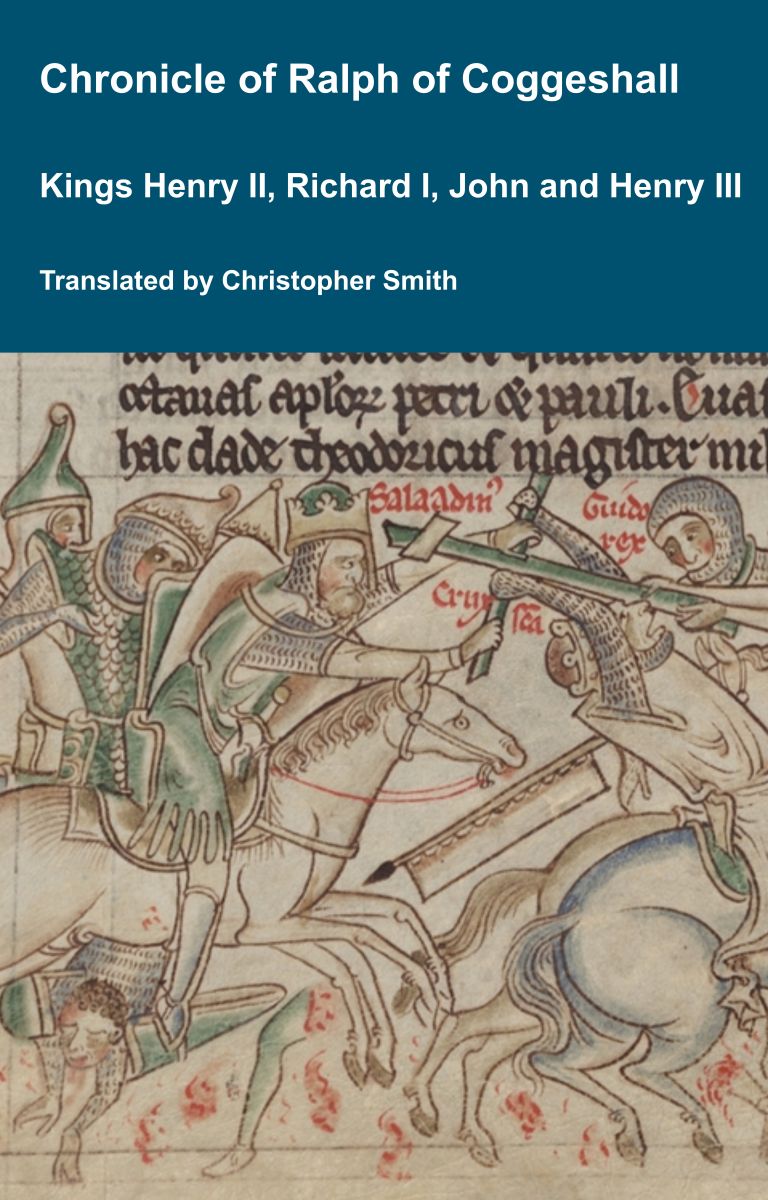 Chronicum Anglicanum by Ralph Coggeshall. While the armies overseas were thus clashing with one another, Duke John in the meantime secretly crossed into England with his private retinue, and being peacefully received by the nobles of all England, was immediately, on the day of the Lord's Ascension [27th May 1199], crowned1 with the greatest pomp of the citizens at Westminster by Lord Hubert [aged 39], archbishop of Canterbury. Then King John returned to Normandy, bringing with him a great army from the English lands, which throughout that summer contended against the French host, and he experienced well enough the prowess of the enemy army.
Exercitibus autem transmarinis ita ad invicem congredientibus, dux Johannes interim cum privatis suis latenter in Angliam applicuit, atque a proceribus totius Angliæ pacifice susceptus, statim die Ascensionis Dominicæ a domno Huberto, Cantuariens archiepiscopo, apud Westmonasterium, cum maxima civium pompa coronatus est. Dein rex Johannes Normanniam regressus, maximum exercitum de Anglicanis partibus secum adduxit, qui per totam illam æstatem contra Gallicanum exercitum concertans, satis hostilis exercitus probitatem expertus est.
Note 1. Ralph de Decito: "John, lord of Ireland, the (legitimate) heir of his brother King Richard of Normandy, received the power of the duchy of Normandy by sword and blade at Rouen, through the hand of Walter, archbishop of Rouen, on the seventh day before the Kalends of May [25th April 1199]. When he came to England, on the solemn feast of the Lord's Ascension he was solemnly anointed king at Westminster by the hand of Hubert, archbishop of Canterbury, on the fifth day before the Kalends of June [27th May 1199]."
On 25th April 1214 King Louis IX of France was born to King Louis VIII of France [aged 26] and Blanche Ivrea Queen Consort France [aged 26]. He a great grandson of King Henry "Curtmantle" II of England. He married 27th May 1234 his half third cousin Margaret Provence Queen Consort France, daughter of Raymond IV Count Provence and Beatrice Savoy Countess Provence, and had issue.
On 25th April 1228 Conrad Hohenstaufen King Germany was born to Frederick I King Jerusalem II Holy Roman Emperor [aged 33] and Isabella Brienne II Queen Jerusalem [aged 16].
On 25th April 1279 Archbishop Walter Giffard [aged 54] died at York [Map]. He was buried at York Minster [Map].
In January 1283 King Edward I surrounded Dafydd's [aged 44] base of Snowdonia with a massive army. Dafydd initially operated from Dolwyddelan [Map]. Dafydd moved down to Castell y Bere [Map]. In April, Castell y Bere was besieged by over 3,000 men, and the small Welsh garrisonsurrendered on 25th April 1283. Dafydd escaped the siege and moved north to Dolbadarn Castle [Map]. In May 1283, he was forced to move again, this time to the mountains above the Welsh royal home in Abergwyngregyn.
On 25th April 1284 King Edward II of England was born to King Edward I of England [aged 44] and Eleanor of Castile Queen Consort England [aged 43] at Caernarfon Castle [Map]. He married 28th January 1308 his second cousin once removed Isabella of France Queen Consort England, daughter of King Philip IV of France and Joan Blois I Queen Navarre, and had issue.
Annals of the six Kings of England by Nicholas Trivet
Translation of the Annals of the Six Kings of England by that traces the rise and rule of the Angevin aka Plantagenet dynasty from the mid-12th to early 14th century. Written by the Dominican scholar Nicholas Trivet, the work offers a vivid account of English history from the reign of King Stephen through to the death of King Edward I, blending political narrative with moral reflection. Covering the reigns of six monarchs—from Stephen to Edward I—the chronicle explores royal authority, rebellion, war, and the shifting balance between crown, church, and nobility. Trivet provides detailed insight into defining moments such as baronial conflicts, Anglo-French rivalry, and the consolidation of royal power under Edward I, whose reign he describes with particular immediacy. The Annals combines careful year-by-year reporting with thoughtful interpretation, presenting history not merely as a sequence of events but as a moral and political lesson. Ideal for readers interested in medieval history, kingship, and the origins of the English state, this chronicle remains a valuable and accessible window into the turbulent world of the Plantagenet kings.
Available at Amazon in eBook and Paperback format.
Annals of Dunstable. In the same year a son was born to the lord king, on the feast of Saint Mark [25th April 1284], at Caernarfon [Map], and he was called Edward.
Eodem anno natus est domino regi filius, die Sancti Marci apud Kanarvan, et vocatus est Edwardus.
On 25th April 1295 Sancho IV King Castile IV King Leon [aged 36] died. His son Ferdinand [aged 9] succeeded IV King Castile, IV King Leon.
Annals of Six Kings of England by Nicholas Trivet [1258-1328]. The king, having heard this letter, accepted the renunciation of his homage, and commanded his chancellor to have this letter enrolled, for the perpetual memory of the matter. The earls of Scotland above named, with their retinues assembled at the castle of Jedburgh, set out into England, and, laying waste all things with slaughter and fire, as far as the priory of Hexham, entered it on the fourth day before the Ides of April [10th April 1296], the canons having fled. In the morning, however, they destroyed the priory and the whole town by fire. From there they advanced to the house of the nuns of Lambley, and, some buildings having been burned, the church being spared, they returned into Scotland with great spoil. Patrick, Earl of Dunbar, coming to the King of England, submitted himself to him with all his power. The castle of Dunbar, besieged by the Scots on the feast of Saint Michael1 [25th April 1296], was, through the treachery of certain persons within it, surrendered to them, for the recovery of which the king sent John, Earl of Surrey, and William, Earl of Warwick, with a very large force of knights. When the army of the Scots came upon them, in order to bring aid to those besieged, a hard battle was fought [on Friday 27th April 1296], and at length the Scots fleeing, the English pursued them for nearly eight miles, as far as the forest of Selkirk, inflicting great slaughter, so that the number of those slain was estimated at ten thousand men. On the following Saturday [28th April 1296], namely the eighteenth day before the Kalends of May2, the castle was surrendered to the king upon his arrival, in which were captured three earls, of Menteith, of Atholl, and of Ross, and six barons, namely John Comyn the younger, William de St Clair, Richard Siward the elder, John of Inchmartin, Alexander of Moray, Edmund Comyn of Kilbride, together with twenty-nine other knights, two clerks, and eighty-three squires, whom the king sent to various castles of England to be held in custody.
Rex audita hac littera resignationem homagii sui admisit, et cancellario suo præcepit hanc litteram registrari, ad perpetuam memoriam rei gestæ. Comites Scotiæ superius nominati, cum eorum comitiva, apud castrum de Gedeworthe coadunati, profecti sunt in Angliam; et vastantes omnia cæde et incendio, usque ad prioratum Haugustuldensem, et in eodem, fugientibus canonicis, se quarto idus Aprilis receperunt. Mane vero facto, prioratum cum tota villa incendio destruxere. Progressi inde ad domum monialium de Lamelay, domibusque quibusdam salva ecclesia incensis, cum ingenti præda in Scotiam revertuntur. Patricius, comes de Dunbar, ad regem Angliæ veniens, se eidem cum tota sua subdidit potestate. Castrum de Dunbar in festo S. Michaelis obsessum a Scotis, fraude quorumdam in eo existentium redditum est eisdem : pro quo recuperando misit rex Joannem Surreiæ et Willeimum Warewici comites, cum militia magna valde. Quibus superveniens Scotorum exercitus, ut obsessis ferret auxilium, excipitur pugna dura: fugientibus tandem Scotis insequuntur Anglici per octo milliaria fere, usque ad forestam de Selelark, stragem nimiam ingerentes; ita ut cæsorum numerus ad decem millia hominum fuerit æstimatus. Sabbato sequente, videlicet decimo octavo calendas Maii, regi advenienti redditum est castrum, in quo capti sunt comites tres, de Meneteth, de Asceles et de Ros; barones sex, videlicet Joannes Comin junior, Willeimus de Sancto Claro, Ricardus Siwardi senior, Joannes Hincmartino, Alexander de Muravia, Eadmundus Comin de Kilbrid, cum aliis militibus viginti novem, clericis duobus, et scutiferis octoginta tribus, quos ad diversa castra Angliæ misit rex in custodia detinendos.
Note 1. The author writes St Michael, whose Feast Day is the 29th September. This appears to be a mistake for the Feast Day of St Mark, the 25th April. The date of the 25th is consistent with the Lanercost Chronicle: 'In accordance with this plan, on the eleventh of the kalends of May [21st April 1296] the Earl of Mar and others came before Dunbar with the chosen candidates for knighthood, intending to have that fortress as a base. After they had plundered the neighbourhood and burnt the town, they laid siege to the castle. Now as there was no proper garrison in the place, the countess, with her slender household and the earl's brother, defended it for two days. But the enemy, pretending that the earl was a traitor through his having joined the cause of the King of England in order to keep faith, persuaded the lady to surrender honourably; and so, at dawn of the fourth day [25th April 1296] they entered the castle ...'
Note 2. The author here is incorrect. The 'following Saturday' is the 28th April 1296, the fourth day before the Kalends of May.
Lanercost Chronicle. About the same time a voice was heard in the high heavens by trustworthy ears, calling thrice for vengeance upon the unrighteous nation. How this reached the divine ears will be made clear by the misfortunes which were shortly to befal that people. For as these cowardly fellows were hastening home, impelled by divine vengeance they adopted a further counsel of foolishness, whereby in separate columns one part of their army occupied the narrow pass into Lothian, the other, the passes bordering on Teviotdale, so as to threaten the march of an English force should it attempt to pass beyond them, when they would attack it upon both flanks. In accordance with this plan, on the eleventh of the kalends of May [21st April 1296] the Earl of Mar and others came before Dunbar with the chosen candidates for knighthood, intending to have that fortress as a base. After they had plundered the neighbourhood and burnt the town, they laid siege to the castle. Now as there was no proper garrison in the place, the countess, with her slender household and the earl's brother, defended it for two days. But the enemy, pretending that the earl was a traitor through his having joined the cause of the King of England in order to keep faith, persuaded the lady to surrender honourably; and so, at dawn of the fourth day [25th April 1296] they entered the castle, having as commander a man renowned in war and expert in arms, Sir Richard Siward. And when they had crowded in, like sheep into a pen, straightway they were beleaguered before evening by land and sea, as though God had assembled them as a sacrifice for their enemies. When it was known that they were besieged, summons was issued to all parts of Scotland for an early muster to relieve the besieged and a day was fixed at the beginning of May for hostilities in the field. I Nor was it only the secular arm [that was raised] but also the ecclesiastical arm drew a poisoned sword, ordering, under pain of suspension, that all in charge of parishes should on every Lord's day in the presence of the people fulminate solemn denunciation of the Prince of England and the Bishop of Durham, the clergy f chanting Deus laudem ne fa. Thereafter many ordained priests are known to have taken part in th
 Adam Murimuth Continuation. Likewise, in this year, on the 13th day of April1, in the year of the Lord 1342, Pope Benedict XII died; and the see was vacant for thirteen days. To him succeeded Clement VI, a monk of the Order of Saint Benedict, a master of theology, who had previously been abbot of Fécamp in Normandy. [Continues as in
Murimuth, 'and afterward cardinal priest of Saints Nereus...']
Adam Murimuth Continuation. Likewise, in this year, on the 13th day of April1, in the year of the Lord 1342, Pope Benedict XII died; and the see was vacant for thirteen days. To him succeeded Clement VI, a monk of the Order of Saint Benedict, a master of theology, who had previously been abbot of Fécamp in Normandy. [Continues as in
Murimuth, 'and afterward cardinal priest of Saints Nereus...']
Item, hoc anno, XIIJ die Aprilis, anno Domini millesimo CCCXL secundo, obiit papa Benedictus XII; et vacavit sedes diebus XIIJ. Cui successit Clemens VI monachus ordinis sancti Benedicti, magister theologiæ, qui prius fuerat abbes Feskampiæ in Normannia [continues as in Murimuth, p. 124, to impedito].
Note 1. The date here is incorrect. Pope Benedict XII died on 25th April 1342.
On 25th April 1397 Thomas Holland 2nd Earl Kent [aged 47] died. He was buried in Bourne Abbey, Lincolnshire [Map]. His son Thomas [aged 23] succeeded 3rd Earl Kent, 2nd Baron Holand, 7th Baron Wake of Liddell. Joan Stafford Countess Kent [aged 19] by marriage Countess Kent.
 Memoires Jacques du Clercq. Now I wish to relate what the Count of Étampes did, who had withdrawn to Wattrelos and Lannoy after the slaughter of the men of Ghent, accompanied only by the Picards. He resolved that he would go to raise the siege of Oudenaarde before the duke knew anything of it. On the 25th day of April 1452, he did so. He greatly desired to make this plan known to Sir Simon de Lalaing, captain of Oudenaarde, who was shut up inside the town, and to whom no one could gain access because of the army of the Ghenters. Therefore he managed to find three men, some of whom were soldiers from the castle of Lille called Jonesse, who promised, each for fifty crowns, that they would strip themselves naked, enter the river Scheldt as close as they could to the enemy camp, and swim across so as to enter Oudenaarde, and deliver letters to Sir Simon, so that he might be ready at the hour the count would indicate. And so they did. At the time that the said count had written to Sir Simon, he departed from the place where he was, in fine and orderly array, and formed three divisions. In the first division, called the vanguard, were Anthony, the duke's bastard son, the lord of Saneuses, Jacques de Lallaing, and several other noble men-at-arms and archers. In the second division was the said count, nobly accompanied; and in the third division, called the rear guard, were many knights and squires. Thus they advanced until they came near the siege. Then the count ordered all the archers to dismount. And since the count was not yet a knight, he requested knighthood from the lord of Saneuses; and after he had received it, he created fifty-two knights, among whom I shall name some: first, Anthony, bastard of the duke; Louis of Bourbon; the lord of Haines; Wallerand, lord of Moreuil; Jean de Comines; Jean de Miraumont; Philippe de Lallaing; Robert, lord of Austruelles; Anthony, lord of Aveluy; David d'Artus; Anthony, lord of Hérin; the one-eyed Dens and his son; the lord of Halluin in France; Percheville, lord of Belleforière; Hugues de Neufville; Allard, lord of Rabodenhue; and others, whose number would be too long to recount, and whose names I do not know.
Or, vous veuille compter du comte d'Estampes qui s'estoit restraict a Watrelot et a Lannoy après l'occision faite des Gantois, accompagnié des Picards seulement, lequel conclud qu'il iroit lever le siege de Audenarde, ains que le duc en sceut rien. Le xxve jour d'apvril mil iiije lij, comme il feit, laquelle conclusion il avoit grand desir de faire sçavoir a messire Symon de Lallaing, capitaine d'Audenarde, lequel estoit enclos dedans ladite ville, et n'y pooit on entrer pour l'ost desdits Gantois; lors feit tant qu'il trouva trois compagnons, dont les ungs estoient soldoyés du chastel de Lille nommé Jonesse, lesquels promeirent moiennant chacun cinquante courronnes, qu'ils se mectroient touts nuds en la riviere de l'Escaut au plus près qu'ils polroient aller pour l'ost, et nageroient tant en la moitié que entreroient en Audenarde, et porteroient lettres audit messire Symon, pour estre prest a l'heure que ledit comte lui escriproit, comme il feirent; et a l'heure que ledit comte avoit rescript audit messire Symon, se partist du lieu ou il estoit en moult et belle ordonnance, et feit et ordonna trois batailles; en la premiere bataille que l'on appelle l'avant garde fust Anthoine, fils bastard du duc, le Sr de Saneuses, Jacques de Lallaing et plusieurs aultres nobles hommes d'armes et archiers; en la seconde bataille estoit ledit comte moult et noblement accompagnié, et en la tierche bataille que l'on appelle l'arriere garde, plusieurs chevalliers et escuyers, et ainsy chevaulcherent tant qu'ils vindrent assés près du siege; lors feit le comte touts les archiers descendre a pied, et pourtant que le comte n'estoit point chevallier, requist l'ordre de chevallerie au Sr de Saneuses, et après qu'il l'eust receu, il feit cinquante deux chevalliers, desquels aulcuns je nommeray; premierement Anthoine, bastard du duc, Loys de Bourbon, le St de Haines, Wallerand St de Moreult, Jehan de Comines, Jehan de Miraulmont, Philippe de Lallaing, Robert S d'Austreulles, Anthoine S d'Avelluy, David d'Artus, Anthoine S de Herin, le borgne Dens et son fils, le S de Hallewin en Franche; Percheville, seigneur de Belleforiere, Hugues de Noeufville, Allard S de Rabodengres et aultresdont le compte seroit trop long a racompter, et aussy des aultres ne sçay les noms.
On 25th April 1457 John Neville 1st Marquess Montagu [aged 26] and Isabel Ingaldsthorpe [aged 16] were married by Cardinal Thomas Bourchier [aged 39] at Canterbury Cathedral [Map]. She the heir of her father Edmund Ingaldsthorpe who had died the previous year. Eight manors were settled on them in jointure. He the son of Richard Neville Earl Salisbury [aged 57] and Alice Montagu 5th Countess of Salisbury [aged 50]. They were second cousin once removed. He a great x 2 grandson of King Edward III of England. She a great x 5 granddaughter of King Edward I of England.
In 1460 a petition noted "The Nevilles state that Isabel was found to be Ingoldisthorpe's daughter and heir. When they requested livery of the estates from the chancellor in Chancery, he refused on the grounds that the king had granted the marriage and wardship to the queen [aged 29]. The Nevilles disputed this as Isabel was 14, and not a minor at common law. John Neville made recognizances in £1,000 to the queen on the understanding that if it was found that such a grant to the queen was not available, then she would not take any money from Neville. The Nevilles are unable to have a day in their law, and the queen has still levied part of the £1,000, and they are forced to sue a special livery at great expense. They request that the recognizances by annulled, and that women of the age of 14 when their ancestors die should have no problem of obtaining livery of their lands and tenements." See National Archives UK John Nevyll (Neville), knight; Isabel Neville, wife of John Neville, knight. SC 8/28/1398 1460.
On 25th April 1464 a Yorkist army commanded by John Neville 1st Marquess Montagu [aged 33] defeated a Lancastrian army commanded by Henry Beaufort 2nd or 3rd Duke of Somerset [aged 28] at Hedgeley Moor, Northumberland [Map].
Of the Lancastrians...
Thomas Ros 9th Baron Ros Helmsley [aged 36] and Robert Hungerford 3rd Baron Hungerford 1st Baron Moleyns [aged 33] fled from the battle.
Ralph Percy [aged 39] was killed.

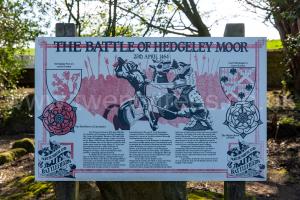


Chronicle of Edward Hall [1496-1548]. [25th April 1464] Lorde Montacute, forgat not the office of a good capitain, nor beyng well furnished with suche as he knewe would neither flie backeward, nor stande still lookyng, and not fightyng, thought no leger to tract the tyme, but with a valiant corage, marched forward toward his enemies, and in his iorney, he was inconntered, with the lorde Hungerford, tho Lorde Roos, sir Raufe Percy, and diverse other, at a place called Hegely More. Where sodainly thesaied lordes, in maner, without stroke strikyng, fled, and onely sir Raufe Percy abode, and was there manfully slain, with diverse other, saiyiig, when he was diyng: I have saued the birde in my bosome: meanyng that he had kept, both his promise and othe, to kyng Henry the VI: Forgettyng that he in kyng Henries moste necessitie, abandoned him and submitted hym to kyng Edward, (as you before have heard.)
Grafton's Chronicle [1507-1573]. [25th April 1464] The Lorde Montacute, forgat not the office of a good Capitaine, and beyng well furnished with such as he knewe would neyther flye backwarde, nor stande still lokyng on, thought no lenger to tract the tyme, but with a valiant courage marched forwarde towarde his enemies, and encountered with the Lorde Hungerford, the Lorde Roos, syr Rauie Percye, and diuers other, at a place called Hegely More. Where sodainly the sayde Lordes in maner without stroke strikyng fled, and onely syr Raufe Percy abode, and was there manfully slain, with divers other, saiyng, when he was diyng: I bauve saved the birde in my bosome: meanyng that he had kept, both his promise and othe to king Henry the sixt.
Chronicle of Gregory. Ande in the wey thedyrwarde there met with him that fals Duke of Somersette, Syr Raffe Percy, the Lord Hungerforde, and the Lord Roos, whythe alle her company, to the nombyr of vM [5000] men of armys. And this metynge was a pon Synte Markys day; and that same day was Syr Raffe Percy slayne. And whenn that he was dede alle the party was schomfytyd and put to rebuke. Ande every man avoydyd and toke his way with full sory hertys. And then my Lord of Mountegeue toke his hors and roode to Norham, and fecchyd yn the Schottys, and brought them unto the Lordys Commyssyonourys. And there was concludyd a pes [Note. peace] for xv year with the Schottys. And the Schottys ben trewe it moste nedys contynu so longe, but hit is harde for to tryste unto hem, for they byn evyr founde full of gyle and dyssayte.
On 25th April 1472 Archbishop George Neville [aged 40] was imprisoned at Hammes Castle.
Warkworth's Chronicle [1461-1474]. 25th April 1472. Also this yere, or a lytelle before, George the ArcheBishop of Yorke [aged 40], and brother to the Earl of Warwick, was withe Kynge Edwarde at Wynsoure, and huntede, and hade there ryghte good chere, and supposid he hade stonde in grete favour with the Kynge: for the Kynge seid to the sayde Archebyschope that he wuld come for to hunte and disporte withe him in his manere at Moore; whereof he was ryghte glade, and toke his leve and went home to make purvyaunce therfore; and fett oute of Londone, and dyverse other places, alle his plate and othere stuffe that he hade hyde after Barnet felde and Teukysbury feld; and also borowede more stuff of other menne, and purveyde for the Kynge for two or iij. dayes for mete and drynke and logynge, and arayed as rychely and as plesauntly as he coude. And the day afore the Kynge schulde have comyne to the ArcheBishop, to the seid manere of Moore, whiche the saide Archebisshoppe hade purchasshed and byllede1 it ryghte comodiusly and plesauntly, the Kynge send a gentylman to the seide Archebisshoppe, and commaundyd him to come to Wyndsoure to him; and asone as he came he was arested and apeched of hye treysone, that he schuld helpe the Earl of Oxenforde; and anone ryght he was put to warde. And forthewithe Sere William of Parre, knyghte, and Thomas Vaghan, squyre, withe othere many dyverse gentilmenne and yomen, were sent to the seide manere of Moore; and ther by the Kynges comawndement seysede the seid manere into the Kynges handes, and alle the good that was therin, whiche was worthe xx. Ml. or more, and alle other lordschippes and landes that the seid Bishop hade withein England, and alle his stuff and rychesse withein alle his lordschippes; and sent the same bisschoppe overe the see to Caleis, and from thens to the castelle of Hammys, and ther he was kepte presonere many a day; and the Kynge alle that seasone toke the prophete of the ArcheBishopryche, &c. And anone after the Kynge brake the seyd Archebysschoppes mytere, in the whiche were fulle many ryche stones and preciouse, and made therof a croune for him self. And alle his other juels, plate, and stuff, the Kynge gaff it to his eldest sonne and heyre Prynce Edward: for the sayd Archebisshoppe hade be Chaunselere of Englond many dayes, and he and his brotheres hade the reule of the lande, and hade gaderyde grete rychesse many yeres, whiche in one day was lost; and alle be the hye jugement of ryghtwisnes (as many manne seide be hym) for his grete covetousenes, and had no pyte of Kynge Harry menne, and was cause of many mannys undoynge for Kynge Edwardys sake, if he mighte gete any good by hym. Wherefore suche goodes as were gaderide with synne, were loste with sorwe. And also menne supposid for cause he was duble to Kynge Herry, and kepte hym in Londone, where he wulde a be at Westmynstere, he hade a lettere send frome Kynge Edward to kepe hym oute of sanctuary, and he hade his charture send hym; where he had be a trewe manne to Kynge Herry, as the comons of Londone were, Kynge Edward hade not comene into Londone afore Barnet felde, &c.
Note 1. Hade purchased and byllede. Moor Park in Hertfordshire, now the seat of the Marquess of Westminster. Clutterbuck (History of Hertfordshire, i. 191) states that the Archbishop had license to inclose 600 acres of pasture and land in Rickmersworth and Watford for a park, and to embattle the site of the manor of Moor in Rickmersworth; and quotes for authority Pat. 9. H. VI. m. 10; but George Neville was then unborn, and on further inquiry we find that the grant was made five years earlier, to Henry (Beaufort) Bishop of Winchester: "Quod Henr' Ep'us Winton' et alii possint kernell' manerium suam de More in Rickmansworth, ac imparcare sexcent, acras terræ, & c. ac liber' warrenn [That Bishop Henry of Winchester and others may enclose their manor of More in Rickmansworth, and impark six hundred acres of land, etc., and have free warren there].' ib'm " 2 Pat. 4 Hen. VI. m. 10.-J.G.N.

Before 25th April 1502 Prince Arthur's [deceased] body was transported from Ludlow, Shropshire [Map] to Worcester Cathedral [Map] via the River Servern in a special wagon upholstered in black and drawn by six horses, also caparisoned in black.
On 25th April 1502 Prince Arthur Tudor [deceased] was buried in the Chantry Chapel of Prince Arthur in Worcester Cathedral [Map].
Bishop William Smyth [aged 42], Bishop of Lincoln and Lord President of the Council of Wales and the Marches, presided.
George Grey 2nd Earl Kent [aged 48] and George Talbot 4th Earl of Shrewsbury [aged 34] received Arthur's Coat of Arms, Richard Grey 3rd Earl Kent [aged 21] received Arthur's shield, John Grey 2nd Baron Grey of Powis [aged 17] received Arthur's sword, pommel forwards. Gruffydd ap Rhys ap Thomas Deheubarth [aged 24] carried Prince Arthur's banner.
Gerald Fitzgerald 9th Earl of Kildare [aged 15] rode Arthur's courser as the Man at Arms, in Arthur's full armour, carrying Arthur's poleaxe, pointed down, through the Nave to the Altar where he was stripped of Arthur's clothes.
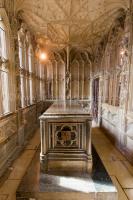
The Chapel is to the right of the High Altar in the Chancel. It is decorated with heraldic carvings symbolising the houses of York, Lancaster, Beaufort and Catherine of Aragon's Pomegranate. His Purbeck marble tomb chest is decorated with the arms of England. He is buried beneath the cathedral's floor several feet away from the tomb that visitors can see.



76 Edward Echyngham to Wolsey. Upon Saynt Markes daye the which was the 25 daye of Aprill, mylord Admyrall appoynted 4 capiteyns and hymself for to bordethe. [galyes. A]t 4 of the clok in the afternone, my saide lorde. went into [one of the galeys] hymself with 80 men with hym, and in thother [mylord] Ferris, with suche companye as hym semyd best, and ... with 2 small crayres, in oon of the crayres w[ent] Wal[lop], and in thother went sir Henry S[herburne] and William Sidnaye. And theise were they that enterprysed for to wyn [the] ffrenche galyes, with helpe °f the bootes for there couth no ship comme LtoJ theyme.for lack of water, for the said frenche galyes laye in a baye [betwene] rockes, and on both sides of the galyes was made bulwerkes [where] laye full of ordynaunce, that no boote nor vessell couth comme unto them, but that they must comme betwene the bulwarkes, the which [were] soo thick with gonnes and crosbowis that the quarrelles and the gonstons came together as thick as it hade be haylestones.
Ffor all this Mylorde wold needes borde the galyes his owen p[ers]on for there couth no man counsayle hym the contrary, and at the owre above wreten he bordit the galye that Preyer John was in. And as sone as he was aborde of Pryer Johns o-alye, he le[ped] oute of his owne galye unto the fore casteli of Pryer Johns galye, and Charran, the Spanyart with hym, with 16 other persones. S[ir, by] advice of mylorde Admyrall and Charran, thay hade cast theyre ancre in to ... of the french galye, and fastened the cabull unto the capsten, for this consideration] yf it happened ... any of the galyes to have bene on fyre, that they myght have vered the cabull and have fallen of. But, Sir, how so ever it fo ... the Frenchmen did hew asondr the cabull, or els somme of our [said] maryners in our galye lete slip the cable, when mylorde Admyrell [went] into the frenche galye, and all for fere of thordynaunce that w[as on] the galyes and from the lande, and so they lefte this [poor Admerall in the] handes of his enymyes, wheras by divers mens say[ing] the Morris, pickes. Sir, ther was a maryner that ... the which is woundit in 18 placys ..., the whiche by adventure recouered unto the boye of the galye, and soo the bote of the galye toke hym up, and he saythe that he sawe my lord Admyrall thras[ted] up agaynst the rayls of the galy with Morris pikes. Also Charran's boye tellith a tale in like maner, for when his maister and mylorde Admyrall were entert the galye, Charran bade his boye fetche hym his hande gonne and when he came up with the hande gonne to delyuer to his maister the oone galye was o-one of from thother, and he saith he see my lord Admirall wayvyng with his handes and cryeng to the galye: 'Comme aborde agayne! Comme aborde agayne!' And when mylord [aged 37] saw the galye couth not comme to hym agayne, the boy saide he sawe hym take his whistill from aboute his neck, and wrap it together, and hurlid it in to the see, and thus he lost the sight of my saide lorde Admyrall.
On 25th April 1513 Edward Howard [aged 37] was killed in action. See Navy Letters.
Adam Murimuth's Continuation and Robert of Avesbury’s 'The Wonderful Deeds of King Edward III'
This volume brings together two of the most important contemporary chronicles for the reign of Edward III and the opening phases of the Hundred Years’ War. Written in Latin by English clerical observers, these texts provide a vivid and authoritative window into the political, diplomatic, and military history of fourteenth-century England and its continental ambitions. Adam Murimuth Continuatio's Chronicarum continues an earlier chronicle into the mid-fourteenth century, offering concise but valuable notices on royal policy, foreign relations, and ecclesiastical affairs. Its annalistic structure makes it especially useful for establishing chronology and tracing the development of events year by year. Complementing it, Robert of Avesbury’s De gestis mirabilibus regis Edwardi tertii is a rich documentary chronicle preserving letters, treaties, and official records alongside narrative passages. It is an indispensable source for understanding Edward III’s claim to the French crown, the conduct of war, and the mechanisms of medieval diplomacy. Together, these works offer scholars, students, and enthusiasts a reliable and unembellished account of a transformative period in English and European history. Essential for anyone interested in medieval chronicles, the Hundred Years’ War, or the reign of Edward III.
Available at Amazon in eBook and Paperback format.
Letters. 25th April 1544. Catherine, Countess of Westmoreland [aged 45] to Earl of Shrewsbury [aged 44].
After my most hearty recommendations unto your good lordship, this shall be to advertise the same that my servant, Ninian Meuvill, the bringer hereof, who is a gentleman, and is very desirous to serve the king's majesty on the borders fore anenst Scotland. Wherefore, my lord, I pray you that you would, at this mine instance and desire, admit him to be a eaptain upon the said borders. Trusting that he will so use himself therein or in any other business that it shall please your lordship to put him unto, if it be belonging a gentleman to do, that you shall be contented therewith, or else I would be right loath to write thus in his favour. And Almighty God preserve your good lordship.
From Brandspath [Map], the 25th day of April.
To the Right Honourable and my very good lord, the King's Majesty's Lieutenant, be this given.
[Talbot Papers, Volume B. Folio. 18. College of Arms. Original.]
The Countess of Westmoreland was the second daughter of Edward, Duke of Backingham, and given in marriage to Ralph, Earl of Westmoreland [aged 46], to compensate him for his disappointment, when her elder sister Elizabeth [aged 47], to whom he had been previously plighted, was given in marriage to Thomas, Earl Surrey [aged 71], afterwards 4th Duke of Norfolk. She had a large family of seven sons and nine daughters. She died on Tuesday, May 14th, 1555, and was buried the following Friday at St. Leonard's, Shoreditch.a
The residence of the countess at Colbrandspath exposed her to occasional perils, in the often disturbed state of the northern counties. Thomas Tempest, writing on one occasion to the Duke of Norfolk, detailing some disturbances that had arisen on account of the absence of the Bishop of Durham and Earl of Westmoreland, adds, — "My lady of Westmoreland, with such counsel as she taketh to her, stayeth the country here for a time; I assure your lordship, she rather playeth the part of a knight than of a lady, as your lordship shall well perceive at your coming hither."b
The Earl of Shrewsbury, to whom the present letter is addressed, was appointed lieutenant of the North in the year 1544.
Note a. Harleian MS. 897, fol. 80.
Note b. Miscellaneous Letters, 1st series, vol. iv. fol. 15. State Paper Office.
Diary of Edward VI. 25th April 1550. The lord Clinton [aged 38] captain of Bolein [Boulogne], having sent away befor al his men saving 1800, and al his ordonnaunce saving that the treaty did reserve, issued out of the towne with these 1800, delivering it to mons. Chastillon [aged 31], receiving of him the six hostagies English1, aquittaunce for delivery of the towne1a and save-conduyt to com to Cales [Map], whither when lie cam(e) he placed 1800 in the emperour's frontieres.
Note 1. These young noblemen, when released from their honourable and very agreeable duty, were desirous to prolong their stay in France, in order to visit the French court. On the 24th of April — "Mocion was made for license that our hostaiges, that is to wete, the duke of Suffolke [aged 14], th'erle of Hertforde [aged 10], the lorde Matraverse [aged 12], the lord Talbott [aged 22], the lorde Strange [aged 18], and the lorde Fitzwaren [aged 21], might make their repaire unto the Frenche corte to see the king, like as the French hostaiges have libertie here to come to the corte. Whereupon it was thought convenient, that, forasmuch as the appointment of the delivery of Boloigne is this present day, which being accomplissed our hostaiges must be restored home, therefore they shall not have license till the counsaill be advertised of their deliverance: that, if they go, they may go at libertie and not as hostaiges. And to that effect a lettre written to mr. Blount, requiring him immediately upon their delivery to advertise the lords here, and to lerne withall the time of the Frenche king's approche into those parties, to th'entent our younge lords may meet him as neere the confines as may be.
"April xxviij. Upon lettres receaved from my lord Clynton and Richard Blount esquire, of the receipt of our hostaiges which are already retorned to Calays, it was agreed that, forasmuch as the French king's comyng downe into Bullonoys is uncertain, our young lords that had been hostaiges shulde immediately return home, notwithstanding their request and first determinacion that they shulde have licence to visite the French king." (Council Book.)
Note 1a. Boulogne was delivered to the seigneur de la Eochepot and the seigneur de Chastillon on the 25th of April by the hands of Edward lord Clinton, sir Richard Cotton, and sir Leonard Beckwith: see the acquittance of the French commissioners, mentioned by King Edward, in Rymer, xv. 228; the treaty for its surrender having been concluded on the 24th March (ibid. 230).


History and Antiquities of Hengrave in Suffolk. 25th April 1556. On the twenty-fifth of April, f 1556, his [deceased] remains were deposited in West Firle church, in a chapel, adjoining the chancel, appropriated for the burial place of the family. Attached to the east wall is an altar tomb, with the recumbent figures, beautifully sculptured in alabaster, of Sir John Gage and Philippa his wife; at his feet is a ram, the crest of his family; at her's the crest of Gulde ford, the trunk of a tree, emitting flames of fire. At the west end of the tomb, on a brass plate, are the arms of Gage, quartering St. Clere, and impaling Gulde ford, viz. quarterly, 1st, or, a saltire between four martlets sable, for Guldeford; 2d. argent, a chief sable, over all a bend ingrailed gules, for Halden; 3d. Barry of six or and azure, on a chief, of the first, two pallets between two esquires, of the second, and on an escutcheon of pretence, argent, a pheon sable, for Mortimer; 4th. ermine on a chevron azure, fess between three wolves heads erased azure; 6th. Vairé a canton gules, for Filliol: round the verge of the tomb are the words: Scio quod Redemptor meus vivit, et in novissimo die de terra surrecturus sum, et rursum circumdabor pelle mea, et in carne mea videbo Deum Salvatorem meum, quem visurus sum ego ipse, et oculi mei conspecturi sunt, et non alius: reposita est hæc spes mea in sinu meo. Job cap. xix, versus xx. On a brass plate, at the east end of the tomb, against the wall, in a small canopied recess, are the arms of Gage and St. Clere, quarterly, encircled by the garter, with this inscription:
HIC JACET Jones. GAGE, PRECLARI ORDINIS GARTERII, MILES;
QUONDAM CONSTABULARIUS TURRIS LONDINI; CANCELLARIUS
DUCATUS LANCASTRIÆ; DOMINUS CAMERARIUS HOSPICII REGINÆ MARIÆ; AC UNUS DE PRIVATO CONCILIO EJUSDEM REGINÆ.
ET PHILIPPA UXOR EJUS.
QUI OBIERUNT ANNO 1557,5 QUORUM ANIMABUS
PROPITI ETUR DEUS.
Note f. Strype's Eccles. Mem.
Note g. A mistake for 1556.


On 25th April 1557 Thomas Stafford [aged 24] sailed from Dieppe with two ships and over 30 men. He took Scarborough Castle [Map] and declared himself Protector of the Realm.
Henry Machyn's Diary. 25th April 1559. The xxv day of April, was sant Markes day, the Quen('s) [aged 25] grace supt at Beynard castyll [Map] at my lord of Penproke('s) [aged 58] P[lace,] and after supper the Quen('s) grace rowed up and downe Temes, and [a] C [100] bottes [boats] at bowte here grace, with trumpettes and drumes and flutes and gones, and sqwybes horlyng on he [high] to and fro, tyll x at nyght, or her grace depertyd, and all the water-syd st ... with a M [1000] pepull lokyng one here grace.
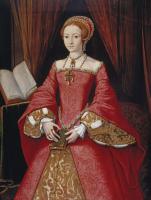


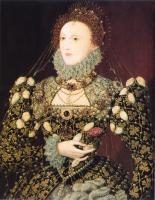
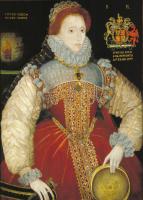


On 25th April 1562 Friedrich Wilhelm Wettin I Duke Saxe Weimar was born to Johann Wilhelm Wettin Duke Saxe Weimar [aged 32] and Dorothea Susanne Palatine Duchess Saxe Weimar at Weimar. He married (1) 5th May 1583 his third cousin once removed Sophie of Württemberg Duchess of Saxe-Weimar and had issue (2) 9th September 1591 his fourth cousin once removed Anna Maria Countess Palatine of Neuburg and had issue.
On 25th April 1582 Christian Wettin I Elector Saxony [aged 21] and Sophie of Brandenburg [aged 13] were married. He the son of Augustus Wettin Elector of Saxony [aged 55] and Anna Oldenburg [aged 49]. They were third cousins.
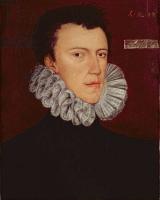
On 25th April 1585 Philip Howard 13th or 20th Earl of Arundel [aged 27] was imprisoned at Tower of London [Map].

On 25th April 1599 Oliver Cromwell was born to Robert Cromwell [aged 36] and Elizabeth Steward [aged 33] at Huntingdon [Map]. He married 22nd August 1620 Elizabeth Bourchier and had issue.
On 25th April 1608 Gaston Bourbon was born to Henry IV King France [aged 54] and Marie de Medici Queen Consort France [aged 32]. He married (1) 1626 his third cousin once removed Marie Bourbon Duchess Montpensier (2) 1632 his third cousin once removed Marguerite Lorraine Duchess Montpensier, daughter of Francis Lorraine II Duke Lorraine, and had issue.


Diary of Anne Clifford. 25th April 1619. Sunday 25th after dinner, I and my Lady Warwick went to Denmark House and went to sermon in the great Hall, after sermon my Lord [aged 30] came thither to fetch me, so we went to Hyde Park and took the air. After my Lord came home he went to see my Brother Sackville who still continueth to look ill and is very sick and out of temper in his body.
On 25th April 1625 Johann Friedrich Hanover was born to George Hanover Duke Brunswick-Lüneburg [aged 43] and Anne Eleonore Hesse Darmstadt Duchess Brunswick-Lüneburg [aged 23]. He married 30th November 1668 Benedicta Henrietta Palatinate Simmern and had issue.

John Evelyn's Diary. 25th April 1659. A wonderful and sudden change in the face of the public; the new protector, Richard [aged 32], slighted; several pretenders and parties strive for the government: all anarchy and confusion; Lord have mercy on us!
On 25th April 1660...
Thomas Thynne [aged 50] was elected MP Hindon.
Henry Carey 4th Viscount Falkland [aged 26] was elected MP Oxfordshire.
Henry Cavendish 2nd Duke Newcastle upon Tyne [aged 29] was elected MP Derbyshire.
John Glynne [aged 58] was elected MP Caernarfonshire.
William Glynne 1st Baronet [aged 22] was elected MP Caernarfon.
Francis Godolphin [aged 54] was elected MP Heytesbury.
Richard Jennings [aged 41] was elected MP St Albans.


Adam Murimuth's Continuation and Robert of Avesbury’s 'The Wonderful Deeds of King Edward III'
This volume brings together two of the most important contemporary chronicles for the reign of Edward III and the opening phases of the Hundred Years’ War. Written in Latin by English clerical observers, these texts provide a vivid and authoritative window into the political, diplomatic, and military history of fourteenth-century England and its continental ambitions. Adam Murimuth Continuatio's Chronicarum continues an earlier chronicle into the mid-fourteenth century, offering concise but valuable notices on royal policy, foreign relations, and ecclesiastical affairs. Its annalistic structure makes it especially useful for establishing chronology and tracing the development of events year by year. Complementing it, Robert of Avesbury’s De gestis mirabilibus regis Edwardi tertii is a rich documentary chronicle preserving letters, treaties, and official records alongside narrative passages. It is an indispensable source for understanding Edward III’s claim to the French crown, the conduct of war, and the mechanisms of medieval diplomacy. Together, these works offer scholars, students, and enthusiasts a reliable and unembellished account of a transformative period in English and European history. Essential for anyone interested in medieval chronicles, the Hundred Years’ War, or the reign of Edward III.
Available at Amazon in eBook and Paperback format.
Samuel Pepys' Diary. 25th April 1663. Lastly, I did hear that the Queen [aged 24] is much grieved of late at the King's neglecting her, he having not supped once with her this quarter of a year, and almost every night with my Baroness Castlemaine's [aged 22]; who hath been with him this St. George's feast at Windsor, and came home with him last night; and, which is more, they say is removed as to her bed from her own home to a chamber in White Hall, next to the King's own; which I am sorry to hear, though I love her much.


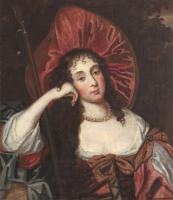


Samuel Pepys' Diary. 25th April 1663. So to bed. At Westminster Hall [Map], this day, I buy a book lately printed and licensed by Dr. Stradling [aged 43], the Bishop of London's chaplin, being a book discovering the practices and designs of the papists, and the fears of some of our own fathers of the Protestant church heretofore of the return to Popery as it were prefacing it. The book is a very good book; but forasmuch as it touches one of the Queenmother's [aged 53] fathers confessors, the Bishop, which troubles many good men and members of Parliament, hath called it in, which I am sorry for.


Samuel Pepys' Diary. 25th April 1663. At noon we rose, Sir W. Batten [aged 62] ashamed and vexed, and so home to dinner, and after dinner walked to the old Exchange [Map] and so all along to Westminster Hall [Map], White Hall, my Lord Sandwich's [aged 37] lodgings, and going by water back to the Temple [Map] did pay my debts in several places in order to my examining my accounts tomorrow to my great content. So in the evening home, and after supper (my father at my brother's) and merrily practising to dance, which my wife hath begun to learn this day of Mr. Pembleton1, but I fear will hardly do any great good at it, because she is conceited that she do well already, though I think no such thing.
Note 1. Pembleton, the dancing-master, made Pepys very jealous, and there are many allusions to him in the following pages. His lessons ceased on May 27th.


Samuel Pepys' Diary. 25th April 1664. Thence down with Mr. Coventry [aged 36] and Sir W. Rider, who was there (going along with us from the East Indya house to-day) to discourse of my Lord Peterborough's [aged 42] accounts, and then walked over the Parke, and in Mr. Cutler's coach with him and Rider as far as the Strand, and thence I walked to my Lord Sandwich's [aged 38], where by agreement I met my wife, and there dined with the young ladies; my Lady, being not well, kept her chamber. Much simple discourse at table among the young ladies.

Samuel Pepys' Diary. 25th April 1666. So home, and with my wife and Mercer spent our evening upon our new leads by our bedchamber singing, while Mrs. Mary Batelier looked out of the window to us, and we talked together, and at last bid good night. However, my wife and I staid there talking of several things with great pleasure till eleven o'clock at night, and it is a convenience I would not want for any thing in the world, it being, methinks, better than almost any roome in my house. So having, supped upon the leads, to bed. The plague, blessed be God! is decreased sixteen this week.
John Evelyn's Diary. 25th April 1667. Visited again the Duke of Newcastle [aged 74], with whom I had been acquainted long before in France, where the Duchess [aged 44] had obligation to my wife's [aged 32] mother for her marriage there; she was sister to Lord Lucas [aged 60], and maid of honor then to the Queen-Mother [aged 57]; married in our chapel at Paris. My wife being with me, the Duke and Duchess both would needs bring her to the very Court.
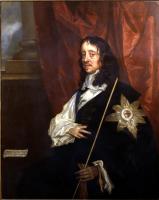
Samuel Pepys' Diary. 25th April 1667. Thence by coach to my Lord Treasurer's [aged 60], and there being come too soon to the New Exchange, but did nothing, and back again, and there found my Lord Bruncker [aged 47] and T. Harvy, and walked in a room very merrily discoursing.
Samuel Pepys' Diary. 25th April 1667. By and by comes my Lord Ashly [aged 45] and tells us my Lord Treasurer [aged 60] is ill and cannot speak with us now.


Samuel Pepys' Diary. 25th April 1668. At noon home to dinner, and thence after dinner to the Duke of York's playhouse, and there saw "Sir Martin Marr-all", which, the more I see, the more I like, and thence to Westminster Hall [Map], and there met with Roger Pepys [aged 50]; and he tells me that nothing hath lately passed about my Lord Sandwich [aged 42], but only Sir Robert Carr [aged 31] did speak hardly of him. But it is hoped that nothing will be done more, this meeting of Parliament, which the King [aged 37] did, by a message yesterday, declare again, should rise the 4th of May, and then only adjourne for three months: and this message being only adjournment, did please them mightily, for they are desirous of their power mightily.
Samuel Pepys' Diary. 25th April 1668. Up, and with Sir J. Minnes [aged 69] to my Lord Brouncker [aged 48], and with him all of us to my Lord Ashly [aged 46] to satisfy him about the reason of what we do or have done in the business of the tradesmen's certificates, which he seems satisfied with, but is not, but I believe we have done what we can justify, and he hath done what he cannot in stopping us to grant them, and I believe it will come into Parliament and make trouble.


On 25th April 1679 Jane Rolle Lady Carew died; wife of Alexander Carew 2nd Baronet. She was buried at St James' Church, Antony [Map].
Jane Rolle Lady Carew: she was born to Robert Rolle of Heanton. In December 1631 Alexander Carew 2nd Baronet and she were married at St Petroc's Church, Petrockstowe [Map]. She being his step-aunt, sister of his step-mother Grace Rolle Lady Rolle. On 14th March 1643 Richard Carew 1st Baronet died. His son Alexander succeeded 2nd Baronet Carew of Antony in Cornwall. She by marriage Lady Carew of Antony in Cornwall.
On 25th April 1682 Peregrine Osborne 2nd Duke Leeds [aged 23] and Bridget Hyde Duchess Leeds [aged 20] were married. He the son of Thomas Osborne 1st Duke Leeds [aged 50] and Bridget Bertie Duchess Leeds [aged 53].
Annals of the six Kings of England by Nicholas Trivet
Translation of the Annals of the Six Kings of England by that traces the rise and rule of the Angevin aka Plantagenet dynasty from the mid-12th to early 14th century. Written by the Dominican scholar Nicholas Trivet, the work offers a vivid account of English history from the reign of King Stephen through to the death of King Edward I, blending political narrative with moral reflection. Covering the reigns of six monarchs—from Stephen to Edward I—the chronicle explores royal authority, rebellion, war, and the shifting balance between crown, church, and nobility. Trivet provides detailed insight into defining moments such as baronial conflicts, Anglo-French rivalry, and the consolidation of royal power under Edward I, whose reign he describes with particular immediacy. The Annals combines careful year-by-year reporting with thoughtful interpretation, presenting history not merely as a sequence of events but as a moral and political lesson. Ideal for readers interested in medieval history, kingship, and the origins of the English state, this chronicle remains a valuable and accessible window into the turbulent world of the Plantagenet kings.
Available at Amazon in eBook and Paperback format.
On 25th April 1684 James Graham 3rd Marquess Montrose [aged 26] died. His son James [aged 2] succeeded 4th Marquess Montrose.
Calendar of the State Papers of William and Mary 1693 April. 25th April 1693. Whitehall. [Lord Godolphin] to the King. Upon the occasion of Lady Inchiquin's going into Ireland, the Queen has been pleased to give us her commands concerning the payment of her portion as maid of honour, and seems very desirous that 1,000l. of it should be in money to enable them (sic) to pay their debts before they leave this kingdom, which otherwise will be impossible for them. I have told the Queen that I cannot see any possibility of doing what she desires in this matter, unless you order that this sum is to be paid out of the money of the East India Company's tenths when it comes in this next term. If you consent, I find it will be a great satisfaction to the Queen, a charity to them and an ease to yourself; for without it I believe they will be forced to stay here and importune you next winter for the same thing.
We have been in the City to-day, to borrow the remainder of the money wanting to pay the seamen before the fleet goes out, and I hope they will not stay a moment upon that account, for if they please they can be early enough at Brest to prevent the conjunction of the French fleet there, with the squadron expected from the Mediterranean, which I should think is what our fleet ought principally to intend; and they need not apprehend, as formerly, leaving the port of Brest open and giving liberty to the ships there to come into the Channel, for the French will never dare to venture that while they know we have a fleet, so much superior to theirs, lying to the westward of theirs.
You will receive, by this post, a representation from Lord Nottingham about the East India Company's forfeiture of their charter, in default for paying the tax on their joint stock into the Hixchequer on the day appointed by the act of parliament. You will see that Lord Nottingham remains full of the same spirit in this matter which was so often troublesome to you before you left. I do not know if, in rigour of law, the company's action amounts to a forfeiture; but it is as little for your service and the preservation of trade, as it 1s consistent with justice and equity, that any advantage be aaa of the forfeiture. [S.P. Dom. King William's Chest 14, NO. 8.]
On 25th April 1702 Katherine Murray was born to John Murray 1st Duke Atholl [aged 42] and Catherine Hamilton Duchess Atholl [aged 40]. She died aged seven in 1710.
On 25th April 1707 Léopold Clement Charles Lorraine was born to Leopold Duke of Lorraine [aged 27] and Élisabeth Charlotte Bourbon Duchess Lorraine [aged 30]. He a great x 3 grandson of King James I of England and Ireland and VI of Scotland.


On 25th April 1721 James Herbert [aged 16] drowned having fallen off a footbridge near his home whilst out walking. He is known to have suffered from apoplexy; his most recent occurrence being five days prior to his death.
On 25th April 1776 Mary Hanover Duchess Gloucester and Edinburgh was born to King George III of Great Britain and Ireland [aged 37] and Charlotte Mecklenburg Strelitz Queen Consort England [aged 31]. She married 22nd July 1816 her first cousin William Frederick Hanover 2nd Duke Gloucester and Edinburgh, son of William Henry Hanover 1st Duke Gloucester and Edinburgh and Maria Walpole Duchess Gloucester and Edinburgh.

On 25th April 1783 William Henry Vane 1st Duke Cleveland [aged 16] matriculated at Christ Church College, Oxford University.
On 25th April 1785 Charles Tynte 5th Baronet [aged 74] died. Baronet Tynte of Halswell in Somerset extinct. He was buried on 8th September 1785 at the Church of St Edward King and Martyr, Goathurst [Map] where he has amonument by Joseph Nollekens [aged 47]. His estates were inherired by his niece Jane Hassell, daughter of his sister Jane Tynte, who had married Colonel John Johnson aka Kemeys-Tynte who changed his name from Johnson to Kemeys-Tynte.
On 25th April 1795 Charlotte Sophia Somerset Baroness Calthorpe was born to Henry Charles Somerset 6th Duke Beaufort [aged 28] and Charlotte Sophia Leveson-Gower Duchess Beaufort [aged 24]. She married 12th August 1823 Frederick Gough 4th Baron Calthorpe, son of Henry Gough-Calthorpe 1st Baron Calthorpe and Frances Carpenter Baroness Calthorpe, and had issue.

The London Gazette 18356. Whitehall, April 25, 1827.
The King has been pleased to direct letters patent to be passed under the Great Seal, granting the dignity of a Viscount of the United Kingdom of Great Britain and Ireland unto the Right Honourable Frederick John Robinson [aged 44], and the heirs male of his body lawfully begotten, by the name, stile, and title of Viscount Goderich, of Nocton, in the county of Lincoln.
The King has also been pleased to direct letters patent to be passed under the Great Seal, granting the dignity of a Baron of the United Kingdom of Great Britain and Ireland unto James Earl of Fife, and the heirs male of his body lawfully begotten, by the name, stile, and title of Baron Fife, of the county Fife.
The King has also been pleased to direct letters patent to be passed under the Great Seal, granting the dignity of a Baron of the United Kingdom of Great Britain and Ireland unto the Right Honourable Sir Charles Abbott [aged 64], Knt Chief Justice of the Court of King's Bench, and the heirs male of his body lawfully begotten, by the namey stile, and title, of Baron Tenterden, of Hendon, in the county of Middlesex.
The King has also been pleased to direct letters patent to be passed under the Great Seal, granting the dignity of a Baron of the United Kingdom of Great Britain and Ireland unto the Right Honourable William Conyngham Plunket [aged 62], and the heirs male of his body lawfully begotten, by the name, stile, and title of Baron Plunket, of Newtown, in, the county of Cork.
This is a translation of the 'Memoires of Jacques du Clercq', published in 1823 in two volumes, edited by Frederic, Baron de Reissenberg. In his introduction Reissenberg writes: 'Jacques du Clercq tells us that he was born in 1424, and that he was a licentiate in law and a counsellor to Philip the Good, Duke of Burgundy, in the castellany of Douai, Lille, and Orchies. It appears that he established his residence at Arras. In 1446, he married the daughter of Baldwin de la Lacherie, a gentleman who lived in Lille. We read in the fifth book of his Memoirs that his father, also named Jacques du Clercq, had married a lady of the Le Camelin family, from Compiègne. His ancestors, always attached to the counts of Flanders, had constantly served them, whether in their councils or in their armies.' The Memoires cover a period of nineteen years beginning in in 1448, ending in in 1467. It appears that the author had intended to extend the Memoirs beyond that date; no doubt illness or death prevented him from carrying out this plan. As Reissenberg writes the 'merit of this work lies in the simplicity of its narrative, in its tone of good faith, and in a certain air of frankness which naturally wins the reader’s confidence.' Du Clercq ranges from events of national and international importance, including events of the Wars of the Roses in England, to simple, everyday local events such as marriages, robberies, murders, trials and deaths, including that of his own father in Book 5; one of his last entries.
Available at Amazon in eBook and Paperback format.
On 25th April 1827 Charlotte Saxe Meiningen Duchess Saxe Gotha Altenburg [aged 75] died in Genoa.
On 25th April 1843 Princess Alice Saxe Coburg Gotha was born to Prince Albert Saxe Coburg Gotha [aged 23] and Queen Victoria of the United Kingdom [aged 23]. Coefficient of inbreeding 7.25%. She married 1st July 1862 Prince Louis Hesse Darmstadt IV Grand Duke and had issue.
Thomas Bateman 1845. On the 25th of April, 1845, in the forenoon, was opened a small barrow, called Stoney Lowe [Map], situate upon the more elevated portion of the Cold Eaton Farm, near Biggin [Map]. It was like most of the smaller barrows, composed of nearly equal proportions of earth and small stones; amongst the latter were many pieces of sandstone, which must have been conveyed for the purpose of constructing the mound from a considerable distance, as no rock of the same description of stone is known to exist in the neighbourhood of the tumulus. About the centre of the barrow several very large limestones were found lying upon the level of the natural soil, which in other parts of the barrow had not been disturbed; but upon removing the stones, the contrary was found to be the case in the centre, as about three feet beneath them a cist was discovered, sunk in the ground, and lined with thin flat limestones, placed edgeways; at each end of the cist were considerable remains of decayed wood, whilst instead of the expected interment in the middle was found an iron dagger, to which a knife of the same metal was attached, by the incrustation of rust in which they were enveloped, and which retained a very distinct impression of linen cloth, in which they appeared to have been folded. In one comer of the cist was a small heap of pure charcoal, unmixed with any other substance, and in another comer was one small piece of bone, apparently from some large bird, which was the only relic of organic life found in this tumulus, which, despite of this very unusual circumstance, had certainly never been before investigated.

Thomas Bateman 1845. In the afternoon of the same day a far more interesting barrow was opened, the name of which is Green Lowe [Map]. It is situated upon the tract of land known as Alsop Moor which has since proved very productive of ancient British remains. This tumulus had been heaped over a rocky and unequal surface, in which a hole had been cut in order to serve the purpose of a cist. In removing the upper portion of the barrow a few human bones, horses' teeth, and rats' bones were discovered, and on clearing out the soil with which the cist was filled, the skeleton of a man in the prime of life was laid bare; his knees were contracted and drawn up until they nearly approached the head; and immediately in the rear of the shoulders were placed an elegant and most elaborately-ornamented drinking-cup, a piece of spherical pyrites, or iron ore, before alluded to as being an occasional ornament of the Britons, a flint instrument of the circular-headed form, and a splendid flint dagger; a little lower down the back of the skeleton there lay three beautifully-chipped and barbed arrow-heads of flinty seven other instruments of the same material but of inferior workmanship and three instruments made from the ribs of some animal neatly rounded at each end and much like a mesh-rule for nettings or perhaps used as modelling tools in the construction of urns. Still lower down, close to the pelvis, lay the remains of an infant; across the pelvis lay a bone pin, made from the leg of a small deer, which had probably been used to secure the folds of some vestments in which the body had been enveloped previous to its interment. The contents of this barrow are highly interesting, as they present a striking degree of similarity to the contents of barrows discovered in Wiltshire, particularly to the relics engraved in plate 18, vol. i of Sir Richard Hoare's work. The drinking-cup there figured bears a characteristic resemblance to the one here discovered, which is quite different to any heretofore found in Derbyshire; indeed, had railways then existed, and communication with distant places been as easy as at the present day, we should have attributed both vessels to one designer and manufacture. All the flints here discovered had undergone the action of fire, and present a spotless white, which materially improves their appearance.

On 25th April 1847 John Douglas Edward Henry Campbell 7th Duke Argyll [aged 69] died at Inveraray Castle. His son George [aged 23] succeeded 8th Duke Argyll, 5th Baron Hamilton of Hameldon in Leicestershire. Elizabeth Georgiana Leveson-Gower Duchess Argyll by marriage Duchess Argyll.

On 25th April 1853 Henrietta Fitzherbert [aged 3] died at Tissington Hall, Derbyshire [Map]. Memorial at St Mary's Church, Tissington [Map].
Henrietta Fitzherbert: On 18th August 1849 she was born to William Fitzherbert 4th Baronet and Ann Alleyne Lady Fitzherbert.
On 25th April 1854 Frederick Mackenzie [aged 66] died.

On 14th January 1894 William John Butler [aged 75] died. He was buried at Lincoln Cathedral [Map] on 18th January 1894. On 25th April 1896 a monument by Farmer & Brindley of red Verona marble with an alabaster effigy carved by Léon-Joseph Chavalliaud [aged 35] was unveiled.
On 25th April 1897 Princess Mary Windsor Countess Harewood was born to King George V of the United Kingdom [aged 31] and Victoria Mary Teck Queen Consort England [aged 29]. Coefficient of inbreeding 1.86%. She married 28th February 1922 Henry Lascelles 6th Earl Harewood, son of Henry Ulrick Lascelles 5th Earl Harewood and Florence Katharine Bridgeman Countess Harewood, and had issue.

Archaeologia Volume 84 1935 Section VI. 25th April 1912. Plate XXXIII. Fig. 1. The southern of the two 'Longstones [Map]' at Beckhampton, which fell on 2 Dec. 1911, taken from the E.
This is a translation of the 'Memoires of Jacques du Clercq', published in 1823 in two volumes, edited by Frederic, Baron de Reissenberg. In his introduction Reissenberg writes: 'Jacques du Clercq tells us that he was born in 1424, and that he was a licentiate in law and a counsellor to Philip the Good, Duke of Burgundy, in the castellany of Douai, Lille, and Orchies. It appears that he established his residence at Arras. In 1446, he married the daughter of Baldwin de la Lacherie, a gentleman who lived in Lille. We read in the fifth book of his Memoirs that his father, also named Jacques du Clercq, had married a lady of the Le Camelin family, from Compiègne. His ancestors, always attached to the counts of Flanders, had constantly served them, whether in their councils or in their armies.' The Memoires cover a period of nineteen years beginning in in 1448, ending in in 1467. It appears that the author had intended to extend the Memoirs beyond that date; no doubt illness or death prevented him from carrying out this plan. As Reissenberg writes the 'merit of this work lies in the simplicity of its narrative, in its tone of good faith, and in a certain air of frankness which naturally wins the reader’s confidence.' Du Clercq ranges from events of national and international importance, including events of the Wars of the Roses in England, to simple, everyday local events such as marriages, robberies, murders, trials and deaths, including that of his own father in Book 5; one of his last entries.
Available at Amazon in eBook and Paperback format.
On 25th April 1915 Edward Maxwell Salvesen [aged 23] was killed in action at St Julien. Memorial at St Giles' Cathedral, Edinburgh.
The Bond of Sacrifice Volume 2
2nd LIEUTENANT EDWARD MAXWELL SALVESEN, 4th (EXTRA RESERVE) (attd. 2nd) BATTN. ROYAL DUBLIN FUSILIERS, who was killed in action on the 25th April, 1915, was the second son of Lord Salvesen, Senator of the College of Justice, and Lady Salvesen, daughter of Lord Trayner, Senator of the College of Justice,of Dean Park House, Edinburgh. He was born at Crawford Priory, Fifeshire, on the 30th August, 1891, and was educated at Cargilfield, Midlothian, and at Clifton College. Being at first intended for the Diplomatic Service, he spent a year in France and a year in Germany to acquire the languages. In 1912 he entered University College, Oxford, where he took his degree of B.A. in 1914, with second class Honours in Law, with the intention of completing his legal studies in Edinburgh before joining the Scottish Bar. He was a very good tennis and football player and also a very good shot and fisherman.
On the outbreak of the War he returned from Norway, where he had been on holiday, and as he could not at once get a commission he enlisted in Lovat’s Scouts. After training with that. Corps for two months he was given acommission as 2nd Lieutenant in the 4th Battalion of the Royal Dublin Fusiliers in October, 1914, and on 1st January, 1915, joined the 2nd Battalion of his Regiment at the front; his having been previously in the O.T.C. shortened his period of training. His Battalion at the time he joined it wasin the trenches, and continued to be so until about a fortnight before the action in which he was killed. This was near St. Julien, a brother officer, Lieutenant Dickie, giving the following account of the circumstances :—
"He was in the same Company as myself and very popular indeed with both officers and men. Early on Sunday morning wereceived orders to attack the Germans in and just each side of the village of St. Julien, where some Canadians were still believed to be holding out. Very early in the attack my Company Commander was slightly hit, and 1 took command of the Company. We reached a farm about 350 yards from the village with very few casualties, and I received orders from the Colonel as to my exact objective, and told Maxwell and the other platoon commanders exactly what to do. We then went forward with the rest of the Battalion for about 60 yards, when the Colonel said that my company would have to go forward and support the attack by the remainder of the Battalion. He asked me if I could make good the village, and I said I would try. Up to this time the fire from our front was almost negligible, but there was a good deal of machine gun fire from a hill called 20 on our flank. As we moved for the next rush we were met. with a perfectly devastating fire at close range from the village! At first I could not make out where it came from. Maxwell came on with his Platoon after me, and got down at the end of the rush, nbout 50 yards, I should think, unhurt. We only lost ten men in the rush. The fire on our front and flank became almost like a hailstorm, but we could not retire unless the right moved, as we were supposed to be supporting their advance. Just as I realised which houses the fire was coming from (it was impossible to see through our glasses as they were all wet and muddy), I saw your son turn over. I called out, "Are youhit?" but got no answer. Before I could move one got me in the right shoulder, coming out under the shoulder blade, but doing no damage. I slipped out of my equipment and went over to whére your son lay. He was dead. One of the flanking bullets had hit him in the back of the neck. He did his job splendidly, and died a man's death. He went forward in that attack as well as if it was company training, and the men followed him to a man." Lieutenant Dickie recovered from his wound, after being invalided.
Edward Maxwell Salvesen: On 30th August 1891 he was born to Edward Theodore Salvesen and Georgine Maxwell Trayner.

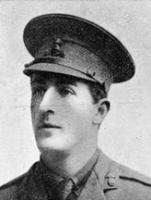

On 25th April 1935 Gertrude Stuart [aged 85] died. Memorial at Church of St Deiniol, Hawarden, Flintshire.
Gertrude Stuart: On 11th November 1849 she was born. On 30th September 1875 William Henry Gladstone and she were married.
On 25th April 1943 Leonard Stanford Merrifield [aged 63] died.

On 25th April 1952 Gertrude "Gertie" Millar Countess of Dudley [aged 73] died. She was buried at the Earl of Dudley's Memory Garden, St Michael's Church, Himley [Map].

On 25th April 2015 Edward Douglas Coke 7th Earl of Leicester [aged 78] died. His son Thomas [aged 49] succeeded 8th Earl of Leicester. He was buried at St Withburga's Church, Holkham [Map].
Edward Douglas Coke 7th Earl of Leicester: On 6th May 1936 he was born to Anthony Louis Lovel Coke 6th Earl of Leicester. On 19th June 1994 Anthony Louis Lovel Coke 6th Earl of Leicester died. His son Edward succeeded 7th Earl of Leicester.
Thomas Coke 8th Earl of Leicester: On 6th July 1965 he was born to Edward Douglas Coke 7th Earl of Leicester.
On 25th April 1214 King Louis IX of France was born to King Louis VIII of France [aged 26] and Blanche Ivrea Queen Consort France [aged 26]. He a great grandson of King Henry "Curtmantle" II of England. He married 27th May 1234 his half third cousin Margaret Provence Queen Consort France, daughter of Raymond IV Count Provence and Beatrice Savoy Countess Provence, and had issue.
On 25th April 1228 Conrad Hohenstaufen King Germany was born to Frederick I King Jerusalem II Holy Roman Emperor [aged 33] and Isabella Brienne II Queen Jerusalem [aged 16].
On 25th April 1284 King Edward II of England was born to King Edward I of England [aged 44] and Eleanor of Castile Queen Consort England [aged 43] at Caernarfon Castle [Map]. He married 28th January 1308 his second cousin once removed Isabella of France Queen Consort England, daughter of King Philip IV of France and Joan Blois I Queen Navarre, and had issue.
On 25th April 1287 Roger Mortimer 1st Earl March was born to Edmund Mortimer 2nd Baron Mortimer of Wigmore [aged 36] and Margaret Fiennes [aged 18]. He a great x 3 grandson of King John of England. He married 20th September 1301 his third cousin once removed Joan Geneville Baroness Mortimer 2nd Baroness Geneville and had issue.
On 25th April 1362 John Charleton 4th Baron Cherleton was born to John Charleton 3rd Baron Cherleton [aged 26] and Joan Stafford Baroness Cherleton and Talbot [aged 18]. He a great x 3 grandson of King Edward I of England. He married before 19th October 1401 his third cousin once removed Alice Fitzalan Baroness Cherleton, daughter of Richard Fitzalan 9th Earl of Surrey 4th or 11th Earl of Arundel and Elizabeth Bohun Countess Arundel and Surrey.
Henrici Quinti, Angliæ Regis, Gesta, is a first-hand account of the Agincourt Campaign, and subsequent events to his death in 1422. The author of the first part was a Chaplain in King Henry's retinue who was present from King Henry's departure at Southampton in 1415, at the siege of Harfleur, the battle of Agincourt, and the celebrations on King Henry's return to London. The second part, by another writer, relates the events that took place including the negotiations at Troye, Henry's marriage and his death in 1422.
Available at Amazon in eBook and Paperback format.
On 25th April 1372 William Ferrers 5th Baron Ferrers of Groby was born to Henry Ferrers 4th Baron Ferrers of Groby [aged 17] and Joan Hoo Baroness Ferrers Groby. He a great x 4 grandson of King Edward I of England. He married (1) before 1415 his fourth cousin once removed Philippa Clifford, daughter of Roger Clifford 5th Baron Clifford and Maud Beauchamp Baroness Clifford, and had issue (2) before 18th May 1445 his half third cousin once removed Margaret Montagu Baroness Ferrers Groby, daughter of John Montagu 3rd Earl Salisbury and Maud Francis Countess of Salisbury.
On 25th April 1562 Friedrich Wilhelm Wettin I Duke Saxe Weimar was born to Johann Wilhelm Wettin Duke Saxe Weimar [aged 32] and Dorothea Susanne Palatine Duchess Saxe Weimar at Weimar. He married (1) 5th May 1583 his third cousin once removed Sophie of Württemberg Duchess of Saxe-Weimar and had issue (2) 9th September 1591 his fourth cousin once removed Anna Maria Countess Palatine of Neuburg and had issue.
On 25th April 1599 Oliver Cromwell was born to Robert Cromwell [aged 36] and Elizabeth Steward [aged 33] at Huntingdon [Map]. He married 22nd August 1620 Elizabeth Bourchier and had issue.
On 25th April 1608 Gaston Bourbon was born to Henry IV King France [aged 54] and Marie de Medici Queen Consort France [aged 32]. He married (1) 1626 his third cousin once removed Marie Bourbon Duchess Montpensier (2) 1632 his third cousin once removed Marguerite Lorraine Duchess Montpensier, daughter of Francis Lorraine II Duke Lorraine, and had issue.
On 25th April 1621 Roger Boyle 1st Earl Orrery was born to Richard Boyle 1st Earl Cork [aged 54] and Catherine Fenton Countess Cork [aged 36]. He married Margaret Howard Countess Orrery, daughter of Theophilus Howard 2nd Earl Suffolk and Elizabeth Home Countess Suffolk, and had issue.
On 25th April 1625 Johann Friedrich Hanover was born to George Hanover Duke Brunswick-Lüneburg [aged 43] and Anne Eleonore Hesse Darmstadt Duchess Brunswick-Lüneburg [aged 23]. He married 30th November 1668 Benedicta Henrietta Palatinate Simmern and had issue.
On 25th April 1653 John Bowyer 2nd Baronet was born to John Bowyer 1st Baronet [aged 29]. He married 10th July 1672 Jane Murray, daughter of Henry Murray of Berkhampstead and Anne Bayning Viscountess Bayning, and had issue.
On 25th April 1655 John Lowther 1st Viscount Lonsdale was born to John Lowther [aged 27] and Elizabeth Bellingham.
On 25th April 1665 Charles Fairfax 7th Viscount Fairfax was born to Nicholas Fairfax [aged 43].
On 25th April 1693 Charles Hotham 5th Baronet was born to Charles Hotham 4th Baronet [aged 30] and Bridget Gee [aged 21]. He married 1724 his fourth cousin twice removed Gertrude Stanhope Baroness Hotham, daughter of Philip Stanhope 3rd Earl Chesterfield and Elizabeth Savile, and had issue.
On 25th April 1694 Richard Boyle 3rd Earl Burlington was born to Charles Boyle 2nd Earl Burlington [aged 26] and Juliana Noel Countess Burlington [aged 22]. He married 21st March 1720 his fourth cousin once removed Dorothy Savile Countess Burlington, daughter of William Savile 2nd Marquess Halifax and Mary Finch Duchess Roxburghe, and had issue.


On 25th April 1699 William Brownlow was born to William Brownlow 4th Baronet [aged 33] and Dorothy Mason Baroness Brownlow [aged 32].


On 25th April 1702 Katherine Murray was born to John Murray 1st Duke Atholl [aged 42] and Catherine Hamilton Duchess Atholl [aged 40]. She died aged seven in 1710.
Chronicle of Geoffrey le Baker of Swinbroke
Baker was a secular clerk from Swinbroke, now Swinbrook, an Oxfordshire village two miles east of Burford. His Chronicle describes the events of the period 1303-1356: Gaveston, Bannockburn, Boroughbridge, the murder of King Edward II, the Scottish Wars, Sluys, Crécy, the Black Death, Winchelsea and Poitiers. To quote Herbert Bruce 'it possesses a vigorous and characteristic style, and its value for particular events between 1303 and 1356 has been recognised by its editor and by subsequent writers'. The book provides remarkable detail about the events it describes. Baker's text has been augmented with hundreds of notes, including extracts from other contemporary chronicles, such as the Annales Londonienses, Annales Paulini, Murimuth, Lanercost, Avesbury, Guisborough and Froissart to enrich the reader's understanding. The translation takes as its source the 'Chronicon Galfridi le Baker de Swynebroke' published in 1889, edited by Edward Maunde Thompson.
Available at Amazon in eBook and Paperback format.
On 25th April 1707 Léopold Clement Charles Lorraine was born to Leopold Duke of Lorraine [aged 27] and Élisabeth Charlotte Bourbon Duchess Lorraine [aged 30]. He a great x 3 grandson of King James I of England and Ireland and VI of Scotland.
On 25th April 1717 James Barry 5th Earl Barrymore was born to James Barry 4th Earl Barrymore [aged 50] and Anne Chichester Countess Barrymore. He married 8th June 1738 his third cousin Margaret Davys Countess Barrymore, daughter of Paul Davys 1st Viscount Mount Cashell and Catherine MacCarty Viscountess Mount Cashel, and had issue.
On 25th April 1725 Augustus Keppel 1st Viscount Keppel was born to William Anne Keppel 2nd Earl Albermarle [aged 22] and Anne Lennox Countess Albermarle [aged 21]. He a great grandson of King Charles II of England Scotland and Ireland.


On 25th April 1726 Charles Gould aka Morgan 1st Baronet was born. He was educated at Westminster School [Map] and Christ Church College, Oxford University reciving BA in 1747 and MA in 1750.
On 25th April 1744 George Devereux 13th Viscount Hereford was born to Edward Devereux 11th Viscount Hereford [aged 34] and Catherine Mytton. He married 15th December 1768 Marianna Devereux Viscountess Hereford and had issue.
On 25th April 1758 George Coventry 7th Earl Coventry was born to George Coventry 6th Earl Coventry [aged 35] and Maria Gunning Countess Coventry [aged 25]. He married (1) before 1764 Catherine Henley, daughter of Robert Henley 1st Earl Northington and Jane Huband (2) 10th January 1783 Margaret "Peggy" Pitches Countess Coventry and had issue.


On 25th April 1768 Margaret Williams Lady Williams was born.
On 25th April 1769 Robert Brudenell 6th Earl Cardigan was born to Robert Brudenell and Anne Bishopp [aged 41] at Westminster [Map]. He married 8th March 1794 Penelope Cooke Countess Cardigan and had issue.
On 25th April 1776 Mary Hanover Duchess Gloucester and Edinburgh was born to King George III of Great Britain and Ireland [aged 37] and Charlotte Mecklenburg Strelitz Queen Consort England [aged 31]. She married 22nd July 1816 her first cousin William Frederick Hanover 2nd Duke Gloucester and Edinburgh, son of William Henry Hanover 1st Duke Gloucester and Edinburgh and Maria Walpole Duchess Gloucester and Edinburgh.
On 25th April 1777 Charles Chetwynd-Talbot 2nd Earl Talbot was born to John Chetwynd-Talbot 1st Earl Talbot [aged 28] and Charlotte Augusta Hill Countess Talbot. He married 1800 Frances Thomasina Lambart Countess Talbot and had issue.


Chronicle of Geoffrey le Baker of Swinbroke
Baker was a secular clerk from Swinbroke, now Swinbrook, an Oxfordshire village two miles east of Burford. His Chronicle describes the events of the period 1303-1356: Gaveston, Bannockburn, Boroughbridge, the murder of King Edward II, the Scottish Wars, Sluys, Crécy, the Black Death, Winchelsea and Poitiers. To quote Herbert Bruce 'it possesses a vigorous and characteristic style, and its value for particular events between 1303 and 1356 has been recognised by its editor and by subsequent writers'. The book provides remarkable detail about the events it describes. Baker's text has been augmented with hundreds of notes, including extracts from other contemporary chronicles, such as the Annales Londonienses, Annales Paulini, Murimuth, Lanercost, Avesbury, Guisborough and Froissart to enrich the reader's understanding. The translation takes as its source the 'Chronicon Galfridi le Baker de Swynebroke' published in 1889, edited by Edward Maunde Thompson.
Available at Amazon in eBook and Paperback format.
On 25th April 1790 Arthur Chichester 7th Baronet was born to John Chichester [aged 38]. He married 8th September 1819 Charlotte Hamlyn-Williams, daughter of James Hamlyn-Williams 2nd Baronet and Diana Anne Whitaker, and had issue.
On 25th April 1793 Lawrence Palk 3rd Baronet was born to Lawrence Palk 2nd Baronet [aged 27] and Dorothy Elizabeth Vaughan [aged 28]. He married 9th December 1815 his first cousin Anna Eleanora Wrey Lady Palk, daughter of Bourchier Wrey 7th Baronet and Anne Palk Lady Wrey, and had issue.
On 25th April 1795 Charlotte Sophia Somerset Baroness Calthorpe was born to Henry Charles Somerset 6th Duke Beaufort [aged 28] and Charlotte Sophia Leveson-Gower Duchess Beaufort [aged 24]. She married 12th August 1823 Frederick Gough 4th Baron Calthorpe, son of Henry Gough-Calthorpe 1st Baron Calthorpe and Frances Carpenter Baroness Calthorpe, and had issue.
On 25th April 1804 Francis Curzon was born to Nathaniel Curzon 2nd Baron Scarsdale [aged 51] and Félicité Anne Josephe de Wattines Lady Scarsdale [aged 39].


On 25th April 1835 William Tyssen-Amherst 1st Baron Amherst was born to William George Daniel-Tyssen [aged 33] and Mary Fountaine.
On 25th April 1839 Alexander Victor Paget was born to Henry Paget 2nd Marquess Anglesey [aged 41] and Henrietta Bagot Marchioness Anglesey.
On 25th April 1843 Princess Alice Saxe Coburg Gotha was born to Prince Albert Saxe Coburg Gotha [aged 23] and Queen Victoria of the United Kingdom [aged 23]. Coefficient of inbreeding 7.25%. She married 1st July 1862 Prince Louis Hesse Darmstadt IV Grand Duke and had issue.
On 25th April 1846 Gilbert Augustus Clayton-East 7th and 3rd Baronet was born to Gilbert East Gilbert East 2nd Baronet [aged 22].
On 25th April 1852 Richard Bethell 3rd Baron Westbury was born to Richard Augustus Bethell 2nd Baron Westbury [aged 22]. He married 24th July 1882 Agatha Manners Tollemache Baroness Westbury and had issue.
On 25th April 1857 Mary Rothes Tyssen-Amherst 2nd Baroness Amherst was born to William Tyssen-Amherst 1st Baron Amherst [aged 22] at Didlington Hall, Swaffham. She married 2nd September 1885 William Cecil, son of William Alleyne Cecil 3rd Marquess Exeter, and had issue.
This is a translation of the 'Memoires of Jacques du Clercq', published in 1823 in two volumes, edited by Frederic, Baron de Reissenberg. In his introduction Reissenberg writes: 'Jacques du Clercq tells us that he was born in 1424, and that he was a licentiate in law and a counsellor to Philip the Good, Duke of Burgundy, in the castellany of Douai, Lille, and Orchies. It appears that he established his residence at Arras. In 1446, he married the daughter of Baldwin de la Lacherie, a gentleman who lived in Lille. We read in the fifth book of his Memoirs that his father, also named Jacques du Clercq, had married a lady of the Le Camelin family, from Compiègne. His ancestors, always attached to the counts of Flanders, had constantly served them, whether in their councils or in their armies.' The Memoires cover a period of nineteen years beginning in in 1448, ending in in 1467. It appears that the author had intended to extend the Memoirs beyond that date; no doubt illness or death prevented him from carrying out this plan. As Reissenberg writes the 'merit of this work lies in the simplicity of its narrative, in its tone of good faith, and in a certain air of frankness which naturally wins the reader’s confidence.' Du Clercq ranges from events of national and international importance, including events of the Wars of the Roses in England, to simple, everyday local events such as marriages, robberies, murders, trials and deaths, including that of his own father in Book 5; one of his last entries.
Available at Amazon in eBook and Paperback format.

On 25th April 1862 Edward Grey 1st Viscount Fallodon was born to Lieutenant Colonel George Henry Grey [aged 27] and Harriet Jane Pearson [aged 23]. He married (1) 1885 Dorothy Widdrington (2) 1922 Pamela Wyndham Viscountess Grey.
On 25th April 1865 Arthur Frederick Bligh was born to John Stuart Bligh 6th Earl Darnley [aged 38] and Harriet Mary Pelham Countess Darnley [aged 36].
On 25th April 1878 Mary Heathcote-Willoughby-Drummond Countess Dalhousie was born to Gilbert Henry Heathcote Drummond Willoughby 1st Earl Ancaster [aged 47] and Evelyn Elizabeth Gordon Countess Ancaster [aged 32]. She married 14th July 1903 Arthur Ramsay 14th Earl Dalhousie, son of John William Maule Ramsay 13th Earl Dalhousie and Ida Louise Bennet Countess Dalhousie.
On 25th April 1895 Gavin William Esmond Elliot-Murray-Kynynmound was born to Gilbert Elliot-Murray-Kynynmound 4th Earl Minto [aged 49] and Mary Caroline Grey Countess Minto [aged 37].
On 25th April 1896 John Lindsay Dashwood 10th Baronet was born to Robert John Dashwood 9th Baronet [aged 36]. He married 20th December 1922 Helen Moira Eaton Lady Dashwood and had issue.
On 25th April 1897 Princess Mary Windsor Countess Harewood was born to King George V of the United Kingdom [aged 31] and Victoria Mary Teck Queen Consort England [aged 29]. Coefficient of inbreeding 1.86%. She married 28th February 1922 Henry Lascelles 6th Earl Harewood, son of Henry Ulrick Lascelles 5th Earl Harewood and Florence Katharine Bridgeman Countess Harewood, and had issue.
On 25th April 1904 Charles John Wilson 3rd Baron Nunburnholme was born to Charles Henry Wellesley Wilson 2nd Baron Nunburnholme [aged 29] and Marjorie Cecilia Wynn-Carington Baroness Willoughby of Parham [aged 24]. He married (1) 24th November 1927 his fourth cousin Mary Beatrice Thynne Baroness Nunburnholme, daughter of Thomas Henry Thynne 5th Marquess of Bath and Violet Caroline Mordaunt Marchioness Bath, and had issue (2) 31st October 1953 Alex Hockley Baroness Nunburnholme and had issue.
On 25th April 1907 Vivian Tyrell Champion de Crespigny 8th Baronet was born to Tyrell Other William Champion de Crespigny [aged 47]. He married (1) 1930 Barbara aka Helen Dobb (2) 12th August 1943 Monica Flemming (3) 24th November 1947 Barbara aka Helen Dobb.
On 25th April 1913 Robert Walpole 9th and 7th Baron Walpole was born to Lieutenant Horatio Spencer Walpole [aged 31] and Dorothea Frances Montgomerie [aged 32].
On 25th April 1914 Henry Farrington 7th Baronet was born to Henry Anthony Farrington 6th Baronet [aged 42] and Dorothy Maria Farrington [aged 28].
On 25th April 1920 Richard Heywood Pelly was born to Harold Alwyne Pelly 5th Baronet [aged 26].
On 25th April 1939 Thomas Patrick John Anson 5th Earl Lichfield was born to Thomas William Anson [aged 26] and Anne Ferelith Bowes-Lyon [aged 21]. His mother was niece of the Queen Elizabeth Bowes-Lyon Queen Consort England [aged 38]; as such he was a second cousin to King Charles III. He married 8th March 1975 his sixth cousin Leonora Mary Grosvenor Countess Lichfield, daughter of Robert George Grosvenor 5th Duke Westminster and Viola Maud Lyttelton Duchess Westminster, and had issue.
On 25th April 1457 John Neville 1st Marquess Montagu [aged 26] and Isabel Ingaldsthorpe [aged 16] were married by Cardinal Thomas Bourchier [aged 39] at Canterbury Cathedral [Map]. She the heir of her father Edmund Ingaldsthorpe who had died the previous year. Eight manors were settled on them in jointure. He the son of Richard Neville Earl Salisbury [aged 57] and Alice Montagu 5th Countess of Salisbury [aged 50]. They were second cousin once removed. He a great x 2 grandson of King Edward III of England. She a great x 5 granddaughter of King Edward I of England.
In 1460 a petition noted "The Nevilles state that Isabel was found to be Ingoldisthorpe's daughter and heir. When they requested livery of the estates from the chancellor in Chancery, he refused on the grounds that the king had granted the marriage and wardship to the queen [aged 29]. The Nevilles disputed this as Isabel was 14, and not a minor at common law. John Neville made recognizances in £1,000 to the queen on the understanding that if it was found that such a grant to the queen was not available, then she would not take any money from Neville. The Nevilles are unable to have a day in their law, and the queen has still levied part of the £1,000, and they are forced to sue a special livery at great expense. They request that the recognizances by annulled, and that women of the age of 14 when their ancestors die should have no problem of obtaining livery of their lands and tenements." See National Archives UK John Nevyll (Neville), knight; Isabel Neville, wife of John Neville, knight. SC 8/28/1398 1460.
On 25th April 1582 Christian Wettin I Elector Saxony [aged 21] and Sophie of Brandenburg [aged 13] were married. He the son of Augustus Wettin Elector of Saxony [aged 55] and Anna Oldenburg [aged 49]. They were third cousins.

On 25th April 1625 Robert Sidney 1st Earl of Leicester [aged 61] and Sarah Blount Countess Leicester [aged 43] were married. She by marriage Countess of Leicester.
Annals of the six Kings of England by Nicholas Trivet
Translation of the Annals of the Six Kings of England by that traces the rise and rule of the Angevin aka Plantagenet dynasty from the mid-12th to early 14th century. Written by the Dominican scholar Nicholas Trivet, the work offers a vivid account of English history from the reign of King Stephen through to the death of King Edward I, blending political narrative with moral reflection. Covering the reigns of six monarchs—from Stephen to Edward I—the chronicle explores royal authority, rebellion, war, and the shifting balance between crown, church, and nobility. Trivet provides detailed insight into defining moments such as baronial conflicts, Anglo-French rivalry, and the consolidation of royal power under Edward I, whose reign he describes with particular immediacy. The Annals combines careful year-by-year reporting with thoughtful interpretation, presenting history not merely as a sequence of events but as a moral and political lesson. Ideal for readers interested in medieval history, kingship, and the origins of the English state, this chronicle remains a valuable and accessible window into the turbulent world of the Plantagenet kings.
Available at Amazon in eBook and Paperback format.
On 25th April 1682 Peregrine Osborne 2nd Duke Leeds [aged 23] and Bridget Hyde Duchess Leeds [aged 20] were married. He the son of Thomas Osborne 1st Duke Leeds [aged 50] and Bridget Bertie Duchess Leeds [aged 53].
On 25th April 1693 Charles Hotham 4th Baronet [aged 30] and Bridget Gee [aged 21] were married.
On 25th April 1732 William Morden aka Harbord 1st Baronet [aged 36] and Elizabeth Britiffe Lady Harbord were married.
On 25th April 1772 John Montagu 5th Earl Sandwich [aged 28] and Maria Henrietta Powlett were married. She the daughter of Harry Powlett 6th Duke Bolton [aged 51] and Katherine Lowther Duchess of Bolton [aged 36]. He the son of John Montagu 4th Earl Sandwich [aged 53] and Dorothy Fane Countess Sandwich [aged 55].
On 25th April 1780 Walter Head aka James 1st Baronet and Jane Pratt Lady James were married. She the daughter of Charles Pratt 1st Earl Camden [aged 66] and Elizabeth Jeffreys.
On 25th April 1791 George Cholmondeley 1st Marquess Cholmondeley [aged 41] and Georgina Charlotte Bertie Marchioness Cholmondeley [aged 29] were married. She by marriage Countess Cholmondeley in Cheshire. She the daughter of Peregrine Bertie 3rd Duke Ancaster and Kesteven and Mary Panton Duchess Ancaster and Kesteven.


On 25th April 1799 Henry Vane-Tempest 2nd Baronet [aged 28] and Anne MacDonnell 2nd Countess of Antrim [aged 21] were married. She the daughter of Randal William MacDonnell 1st Marquess of Antrim.
On 25th April 1810 Robert Graham 8th Baronet [aged 40] and Elizabeth Young Lady Graham were married. She by marriage Lady Graham of Esk in Cumberland.
On 25th April 1892 Frank Douglas-Pennant 5th Baron Penrhyn [aged 26] and Maud Eleonora Hardy were married.
On 25th April 1922 Hugh Napier Douglas-Pennant 4th Baron Penrhyn [aged 27] and Sybil Mary Hardinge Countess Fortescue [aged 23] were married. They were divorced in 1941. She the daughter of Henry Charles Hardinge 3rd Viscount Hardinge [aged 64] and Mary Frances Neville Marchioness Abergavenny [aged 53].
On 25th April 1939 Nicholas Eliot 9th Earl of St Germans [aged 25] and Helen Mary Villiers [aged 24] were married. They were divorced in 1947. He the son of Montague Eliot 8th Earl of St Germans [aged 68].
On 25th April 1196 Alfonso II King Aragon [aged 39] died. His son Peter [aged 17] succeeded II King Aragon.
Chronicle of Abbot Ralph of Coggeshall
The Chronicle of Abbot Ralph of Coggeshall (Chronicon Anglicanum) is an indispensable medieval history that brings to life centuries of English and European affairs through the eyes of a learned Cistercian monk. Ralph of Coggeshall, abbot of the Abbey of Coggeshall in Essex in the early 13th century, continued and expanded his community’s chronicle, documenting events from the Norman Conquest of 1066 into the tumultuous reign of King Henry III. Blending eyewitness testimony, careful compilation, and the monastic commitment to record-keeping, this chronicle offers a rare narrative of political intrigue, royal power struggles, and social upheaval in England and beyond. Ralph’s work captures the reigns of pivotal figures such as Richard I and King John, providing invaluable insights into their characters, decisions, and the forces that shaped medieval rule. More than a simple annal, Chronicon Anglicanum conveys the texture of medieval life and governance, making it a rich source for scholars and readers fascinated by English history, monastic authorship, and the shaping of the medieval world.
Available at Amazon in eBook and Paperback format.
On 25th April 1264 Roger de Quincy 2nd Earl Winchester [aged 69] died. Earl Winchester extinct.
On 25th April 1279 Archbishop Walter Giffard [aged 54] died at York [Map]. He was buried at York Minster [Map].
On 25th April 1295 Sancho IV King Castile IV King Leon [aged 36] died. His son Ferdinand [aged 9] succeeded IV King Castile, IV King Leon.
On 25th April 1397 Thomas Holland 2nd Earl Kent [aged 47] died. He was buried in Bourne Abbey, Lincolnshire [Map]. His son Thomas [aged 23] succeeded 3rd Earl Kent, 2nd Baron Holand, 7th Baron Wake of Liddell. Joan Stafford Countess Kent [aged 19] by marriage Countess Kent.
On 25th April 1464 a Yorkist army commanded by John Neville 1st Marquess Montagu [aged 33] defeated a Lancastrian army commanded by Henry Beaufort 2nd or 3rd Duke of Somerset [aged 28] at Hedgeley Moor, Northumberland [Map].
Of the Lancastrians...
Thomas Ros 9th Baron Ros Helmsley [aged 36] and Robert Hungerford 3rd Baron Hungerford 1st Baron Moleyns [aged 33] fled from the battle.
Ralph Percy [aged 39] was killed.

On 25th April 1579 John Stewart 4th Earl Atholl died. His son John [aged 15] succeeded 5th Earl Atholl. Mary Ruthven Countess Atholl by marriage Countess Atholl.

On 25th February 1603 Katherine Carey Countess Nottingham [aged 53] died at Arundel House [Map]. She was buried in Chelsea Old Church on 25th April 1603.
On 25th April 1640 Valentine Browne 2nd Baronet died. His son Valentine [aged 2] succeeded 3rd Baronet Browne of Molahiffe in County Kerry.
On 25th April 1666 Jane Shirley Baroness Holles died.
On 25th April 1672 William Stourton 11th Baron Stourton [aged 78] died. His grandson William [aged 28] succeeded 12th Baron Stourton. Elizabeth Preston Baroness Stourton by marriage Baroness Stourton.
On 25th April 1679 Jane Rolle Lady Carew died; wife of Alexander Carew 2nd Baronet. She was buried at St James' Church, Antony [Map].
Jane Rolle Lady Carew: she was born to Robert Rolle of Heanton. In December 1631 Alexander Carew 2nd Baronet and she were married at St Petroc's Church, Petrockstowe [Map]. She being his step-aunt, sister of his step-mother Grace Rolle Lady Rolle. On 14th March 1643 Richard Carew 1st Baronet died. His son Alexander succeeded 2nd Baronet Carew of Antony in Cornwall. She by marriage Lady Carew of Antony in Cornwall.
On 25th April 1684 James Graham 3rd Marquess Montrose [aged 26] died. His son James [aged 2] succeeded 4th Marquess Montrose.
Annals of the six Kings of England by Nicholas Trivet
Translation of the Annals of the Six Kings of England by that traces the rise and rule of the Angevin aka Plantagenet dynasty from the mid-12th to early 14th century. Written by the Dominican scholar Nicholas Trivet, the work offers a vivid account of English history from the reign of King Stephen through to the death of King Edward I, blending political narrative with moral reflection. Covering the reigns of six monarchs—from Stephen to Edward I—the chronicle explores royal authority, rebellion, war, and the shifting balance between crown, church, and nobility. Trivet provides detailed insight into defining moments such as baronial conflicts, Anglo-French rivalry, and the consolidation of royal power under Edward I, whose reign he describes with particular immediacy. The Annals combines careful year-by-year reporting with thoughtful interpretation, presenting history not merely as a sequence of events but as a moral and political lesson. Ideal for readers interested in medieval history, kingship, and the origins of the English state, this chronicle remains a valuable and accessible window into the turbulent world of the Plantagenet kings.
Available at Amazon in eBook and Paperback format.
On 25th April 1687 Robert Dillington 2nd Baronet [aged 53] died. His son Robert [aged 23] succeeded 3rd Baronet Dillington of Knighton, Isle of Wight in Hampshire.
On 25th April 1703 John Shelley 3rd Baronet [aged 41] died. His son John [aged 11] succeeded 4th Baronet Shelley of Mitchelgrove in Sussex.
On 25th April 1717 John Elwill 1st Baronet [aged 77] died. His son John succeeded 2nd Baronet Elwill of Exeter.
On 25th April 1723 James Livingston 5th Earl Linlithgow 4th Earl Callendar died whilst in Rome.
On 25th April 1726 William Ingoldsby 3rd Baronet [aged 56] died. Baronet Ingoldsby of Lethenborough in Buckinghamshire extinct.
On 25th April 1730 Holland Egerton 4th Baronet [aged 40] died. His son Edward [aged 11] succeeded 5th Baronet Egerton and Oulton.
On 25th April 1750 Dorothy Langdale Lady Vavasour died.
On 25th April 1761 Sophia Hope Countess Findlater [aged 58] died.
On 25th April 1774 John Fane 9th Earl of Westmoreland [aged 45] died. His son John [aged 14] succeeded 10th Earl of Westmoreland.


On 25th April 1785 Charles Tynte 5th Baronet [aged 74] died. Baronet Tynte of Halswell in Somerset extinct. He was buried on 8th September 1785 at the Church of St Edward King and Martyr, Goathurst [Map] where he has amonument by Joseph Nollekens [aged 47]. His estates were inherired by his niece Jane Hassell, daughter of his sister Jane Tynte, who had married Colonel John Johnson aka Kemeys-Tynte who changed his name from Johnson to Kemeys-Tynte.
On 25th April 1823 Bridget Forrest Viscountess Byng [aged 74] died.
Annals of the six Kings of England by Nicholas Trivet
Translation of the Annals of the Six Kings of England by that traces the rise and rule of the Angevin aka Plantagenet dynasty from the mid-12th to early 14th century. Written by the Dominican scholar Nicholas Trivet, the work offers a vivid account of English history from the reign of King Stephen through to the death of King Edward I, blending political narrative with moral reflection. Covering the reigns of six monarchs—from Stephen to Edward I—the chronicle explores royal authority, rebellion, war, and the shifting balance between crown, church, and nobility. Trivet provides detailed insight into defining moments such as baronial conflicts, Anglo-French rivalry, and the consolidation of royal power under Edward I, whose reign he describes with particular immediacy. The Annals combines careful year-by-year reporting with thoughtful interpretation, presenting history not merely as a sequence of events but as a moral and political lesson. Ideal for readers interested in medieval history, kingship, and the origins of the English state, this chronicle remains a valuable and accessible window into the turbulent world of the Plantagenet kings.
Available at Amazon in eBook and Paperback format.
On 25th April 1823 William Ward 3rd Viscount Dudley and Ward [aged 73] died. His son John [aged 41] succeeded 4th Viscount Dudley and Ward of Dudley in Worcestershire, 9th Baron Ward of Birmingham.
On 25th April 1827 Charlotte Saxe Meiningen Duchess Saxe Gotha Altenburg [aged 75] died in Genoa.
On 25th April 1847 John Douglas Edward Henry Campbell 7th Duke Argyll [aged 69] died at Inveraray Castle. His son George [aged 23] succeeded 8th Duke Argyll, 5th Baron Hamilton of Hameldon in Leicestershire. Elizabeth Georgiana Leveson-Gower Duchess Argyll by marriage Duchess Argyll.
On 25th April 1854 Frederick Mackenzie [aged 66] died.
On 25th April 1859 Lucy Dandridge Lady Wheler died. She was buried at All Saints' Church, Leamington Hastings.
On 25th April 1862 Robert Henry Herbert 12th Earl Pembroke 9th Earl Montgomery [aged 70] died. His nephew George [aged 11] succeeded 13th Earl Pembroke, 10th Earl Montgomery.
On 25th April 1869 Helen Mackay Countess Bradford [aged 68] died.

On 25th April 1870 Bishop Robert Eden 3rd Baron Auckland [aged 70] died at the Bishop's Palace, Wells. His son William [aged 41] succeeded 4th Baron Auckland of West Auckland. Lucy Walbanke-Childers Baroness Auckland [aged 34] by marriage Baroness Auckland of West Auckland albeit for seventeen days only since she died on 12 May 1870.
On 14th January 1894 William John Butler [aged 75] died. He was buried at Lincoln Cathedral [Map] on 18th January 1894. On 25th April 1896 a monument by Farmer & Brindley of red Verona marble with an alabaster effigy carved by Léon-Joseph Chavalliaud [aged 35] was unveiled.
On 25th April 1926 Mabel Cynthia Duncombe Lady Graham died.
On 25th April 1939 Ernest William Tate 3rd Baronet [aged 72] died. His son Henry [aged 36] succeeded 4th Baronet Tate of Park Hill in Streatham in London.
Chronicle of a Bourgeois of Valenciennes
Récits d’un bourgeois de Valenciennes aka The Chronicle of a Bourgeois of Valenciennes is a vivid 14th-century vernacular chronicle written by an anonymous urban chronicler from Valenciennes in the County of Hainaut. It survives in a manuscript that describes local and regional history from about 1253 to 1366, blending chronology, narrative episodes, and eyewitness-style accounts of political, military, and social events in medieval France, Flanders, and the Low Countries. The work begins with a chronological framework of events affecting Valenciennes and its region under rulers such as King Philip VI of France and the shifting allegiances of local nobility. It includes accounts of conflicts, sieges, diplomatic manoeuvres, and the impact of broader struggles like the Hundred Years’ War on urban life in Hainaut. Written from the perspective of a burgher (bourgeois) rather than a monastery or royal court, the chronicle offers a rare lay viewpoint on high politics and warfare, reflecting how merchants, townspeople, and civic institutions experienced the turbulence of the 13th and 14th centuries. Its narrative style combines straightforward reporting of events with moral and civic observations, making it a valuable source for readers interested in medieval urban society, regional politics, and the lived experience of war and governance in pre-modern Europe.
Available at Amazon in eBook and Paperback format.
On 25th April 1941 Harriet Grant-Suttie Lady Cooper [aged 79] died.
On 25th April 1943 Leonard Stanford Merrifield [aged 63] died.
On 25th April 1947 John Crichton-Stuart 4th Marquis of the Isle of Bute [aged 65] died. His son John Crichton-Stuart [aged 39] succeeded 5th Marquis of the Isle of Bute, 8th Earl Bute, 5th Earl of Windsor, 5th Viscount Mountjoy of the Isle of Wight. Eileen Forbes [aged 35] by marriage Marchioness of the Isle of Bute.
On 25th April 1952 Gertrude "Gertie" Millar Countess of Dudley [aged 73] died. She was buried at the Earl of Dudley's Memory Garden, St Michael's Church, Himley [Map].
On 25th April 2007 Edward Astley 22nd Baron Hastings [aged 95] died. His son Delaval [aged 47] succeeded 23rd Baron Hastings, 13th Baronet Astley of Hill Morton.
On 25th April 2014 Jocelyn Charles Roden Buxton 7th Baronet [aged 89] died. His nephew Crispin [aged 56] succeeded 8th Baronet Buxton of Belfield in Dorset.
On 25th April 2015 Edward Douglas Coke 7th Earl of Leicester [aged 78] died. His son Thomas [aged 49] succeeded 8th Earl of Leicester. He was buried at St Withburga's Church, Holkham [Map].
Edward Douglas Coke 7th Earl of Leicester: On 6th May 1936 he was born to Anthony Louis Lovel Coke 6th Earl of Leicester. On 19th June 1994 Anthony Louis Lovel Coke 6th Earl of Leicester died. His son Edward succeeded 7th Earl of Leicester.
Thomas Coke 8th Earl of Leicester: On 6th July 1965 he was born to Edward Douglas Coke 7th Earl of Leicester.
On 25th April 2019 Nigel Edward Seely 5th Baronet [aged 95] died. His nephew William [aged 35] succeeded 6th Baronet Seely of Brooke in the Isle of Wight.