

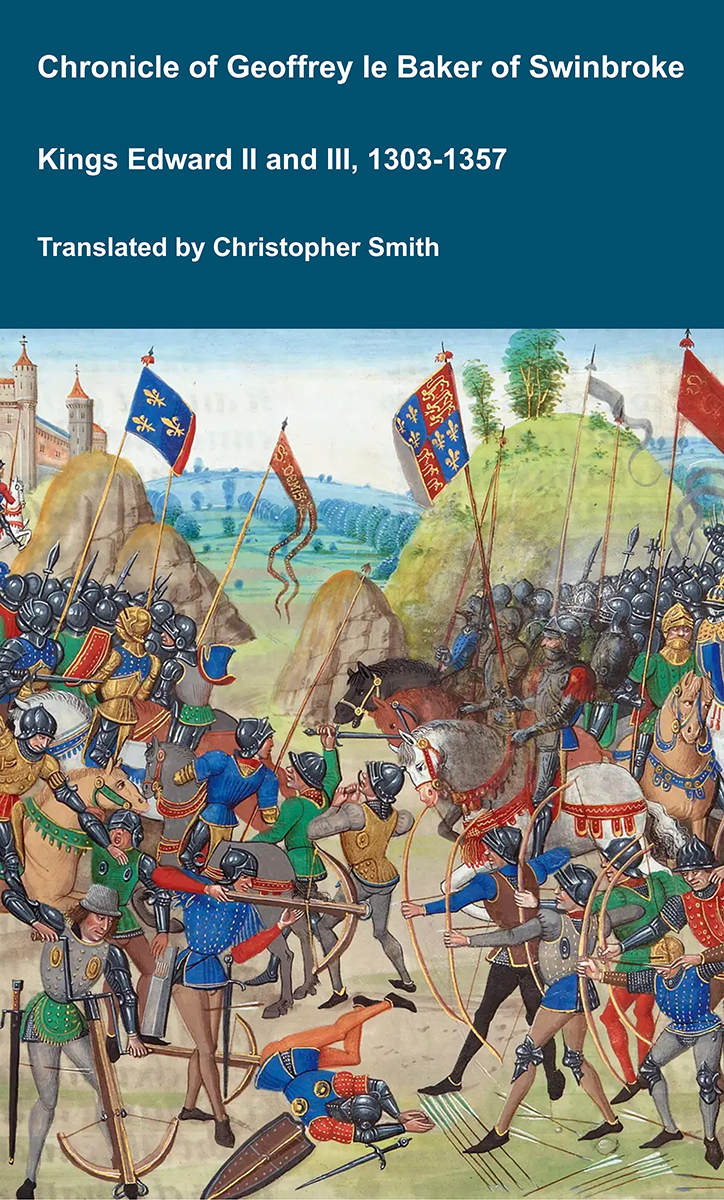
Chronicle of Geoffrey le Baker of Swinbroke
Baker was a secular clerk from Swinbroke, now Swinbrook, an Oxfordshire village two miles east of Burford. His Chronicle describes the events of the period 1303-1356: Gaveston, Bannockburn, Boroughbridge, the murder of King Edward II, the Scottish Wars, Sluys, Crécy, the Black Death, Winchelsea and Poitiers. To quote Herbert Bruce 'it possesses a vigorous and characteristic style, and its value for particular events between 1303 and 1356 has been recognised by its editor and by subsequent writers'. The book provides remarkable detail about the events it describes. Baker's text has been augmented with hundreds of notes, including extracts from other contemporary chronicles, such as the Annales Londonienses, Annales Paulini, Murimuth, Lanercost, Avesbury, Guisborough and Froissart to enrich the reader's understanding. The translation takes as its source the 'Chronicon Galfridi le Baker de Swynebroke' published in 1889, edited by Edward Maunde Thompson.
Available at Amazon in eBook and Paperback format.
31 Aug is in August.
Anglo-Saxon Chronicle. 651. This year King Oswin was slain, on the twentieth day of August; and within twelve nights afterwards died Bishop Aidan, on the thirty-first of August.
Bede. Bertwald succeeded Theodore in the archbishopric, being abbot of the monastery called Racuulfe [Map], which stands at the northern mouth of the river Genlade. He was a man learned in the Scriptures, and perfectly instructed in ecclesiastical and monastic teaching, yet in no wise to be compared to his predecessor. He was chosen bishop in the year of our Lord 692, on the first day of July, when Wictred (age 22) and Suaebhard were kings in Kent; but he was ordained the next year, on Sunday the 29th of June, by Godwin, metropolitan bishop of Gaul, and was enthroned on Sunday the 31st of August. Among the many bishops whom he ordained was Tobias, a man instructed in the Latin, Greek, and Saxon tongues, and otherwise of manifold learning, whom he consecrated in the stead of Gedmund, bishop of the Church of Rochester, who had died.
On 31st August 693 Archbishop Berhtwald was enthroned Archbishop of York.
Chronicon ex Chronicis by Florence and John of Worcester. 31st August 1057. The renowned Leofric, son of the ealdorman Leofwine, of blessed memory, died in a good old age, at his own vill of Bromley, on the second of the calends of September [31st August], and was buried with great pomp at Coventry [Map]; which monastery, among the other good deeds of his life, he and his wife, the noble countess Godiva, a worshipper of God, and devoted friend of St. Mary, Ever-a-Virgin, had founded, and amply endowing it with lands on their own patrimony, had so enriched with all kinds of ornament, that no monastery could be found in England possessed of such abundance of gold, silver, jewels, and precious stones as it contained at that time. They also enriched, with valuable ornaments, the monasteries of Leominster and Wenlock, and those at Chester dedicated to St. John the Baptist and St. Werburgh, the virgin, and the church which Eadnoth, bishop of Lincoln, had built on a remarkable spot, called in English St. Mary's Stow [Map]73, which means in Latin St. Mary's place. They also gave lands to the monastery at Worcester, and added to the buildings, ornaments, and endowments of Evesham abbey. During his whole life, this earl's sagacity was of the utmost advantage to the kings and the whole commonwealth of England. His son Algar was appointed to his earldom.
Note 73. Henry of Huntingdon describes it as "under the hill at Lincoln;" but Bishop Farmer says that "Stowe was in the bishop's manor by Trent side." The priory of Stowe, or Mary-Stowe, was annexed to Eynsham abbey, in Oxfordshire.


Flowers of History by Roger of Wendover 1057. 31st August 1057. On the thirty-first of August in the same year died Leofric earl of Chester, a man of praise-worthy life; he was buried in the monastery which he had founded at Coventry. Having founded this monastery by the advice of his wife the noble countess Godiva, he, at the prayer of a religious woman, placed monks therein, and so enriched them with lands, woods, and ornaments, that there was not found in all England a monastery with such an abundance of gold and silver, gems and costly garments.
On 31st August 1158 Sancho III King Castile (age 24) died. His son Alfonso (age 2) succeeded VIII King Castile.
On 31st August 1217 Berengaria Ivrea I Queen Castile (age 38) abdicated I King Castile. Her son Ferdinand (age 18) succeeded III King Castile.
On 31st August 1281 Eric II King Norway (age 13) and Margaret Dunkeld Queen Consort Norway (age 20) were married at Bergen. She the daughter of King Alexander III of Scotland (age 39) and Margaret Queen of Scotland. He the son of King Magnus VI of Norway and Queen Ingeborg of Norway (age 37). They were half fourth cousin once removed. She a granddaughter of King Henry III of England.
Chronicle of a Bourgeois of Valenciennes
Récits d’un bourgeois de Valenciennes aka The Chronicle of a Bourgeois of Valenciennes is a vivid 14th-century vernacular chronicle written by an anonymous urban chronicler from Valenciennes in the County of Hainaut. It survives in a manuscript that describes local and regional history from about 1253 to 1366, blending chronology, narrative episodes, and eyewitness-style accounts of political, military, and social events in medieval France, Flanders, and the Low Countries. The work begins with a chronological framework of events affecting Valenciennes and its region under rulers such as King Philip VI of France and the shifting allegiances of local nobility. It includes accounts of conflicts, sieges, diplomatic manoeuvres, and the impact of broader struggles like the Hundred Years’ War on urban life in Hainaut. Written from the perspective of a burgher (bourgeois) rather than a monastery or royal court, the chronicle offers a rare lay viewpoint on high politics and warfare, reflecting how merchants, townspeople, and civic institutions experienced the turbulence of the 13th and 14th centuries. Its narrative style combines straightforward reporting of events with moral and civic observations, making it a valuable source for readers interested in medieval urban society, regional politics, and the lived experience of war and governance in pre-modern Europe.
Available at Amazon in eBook and Paperback format.
Between 31st August 1304 or 1st September 1304 to 6th September 1304 King Edward I (age 65) stayed at Horton Castle, Northumberland [Map].
On 31st August 1398 John Valois was born to Charles "Beloved Mad" VI King France (age 29) and Isabeau Wittelsbach Queen Consort France (age 28). He married 1415 his second cousin Jacqueline Wittelsbach Duchess Brabant and Gloucester, daughter of William Wittelsbach IV Count Holland VI Count Hainaut V Count Zeeland and Margaret Valois Countess Holland.
After 31st August 1401. St Chad's Church, Longford [Map]. Monument to Nicholas III Longford (deceased). Lancastrian Esses Collar. Camail and Jupon Period. Curious helm crest which at first sight appears to be surmounted with three mushrooms but on closer inspection is a Feathered Crest; the Longford Crest.


On 31st August 1422 King Henry V of England (age 35) died at Château de Vincennes, possibly from dysentery, possibly from heatstroke. John Sutton 1st Baron Dudley (age 21) brought the body back to England. His son Henry succeeded VI King of England.
Thomas Beaufort 1st Duke Exeter (age 45) was appointed Governor to King Henry VI of England and II of France.
Chronicle of Jean de Waurin Books 3-5 [1400-1474]. 31st August 1422. Here it makes mention of the death of Henry King of England.
Life Charles VI by a Monk of St Denis [~1420]. 31st August 1422. In the year previously mentioned, on Monday, the last day of August, Henry, King of England, at the place called the Bois de Vincennes, the most delightful castle of the King of France, departed the way of all flesh. Indeed, the cause of his death was an illness of dysentery1, which is called Saint Fiacre's disease, because, as was commonly said, he had wished to transfer the precious body of the said most glorious saint from its rightful place to another, out of disordered desire, gravely offending the Creator and the said glorious saint. And, as is very likely, he had intended to bring that precious body to his kingdom of England. And because the will is considered equivalent to the deed, if one has done everything within one's power, he was therefore to be regarded as a sacrilegious person and a violator of the church.
Anno superius declarato, die autem lune ultima mensis augusti, Henricus, rex Anglie, in loco dicto le boys de Vincennes, castro regis Francie delectabilissimo, viam universe carnis est ingressus. Etenim sui decessus causa fuit infirmitas fluxus ventris, que dicitur infirmitas sancti Fiacri, eo, ut communiter ferebatur, quia preciosum corpus dicti gloriosissimi sancti a proprio loco in alterum ad sui inordinatum affectum voluerat et volebat transferre, Creatorem dictumque sanctum gloriosum grávissime offendendo, et, ut verissimile est, in se proposuerat illud corpus preciosum in suum Anglie regnum asportare. Et quia voluntas reputatur pro facto, si fecerimus quod in nobis est, ideo sacrilegus et ecclesie violator reputandus erat.
Note 1. "fluxus ventris" i.e. dysentery may be better translated as "diarrhea".
Thomas Walsingham [~1422]. 31st August 1422. The king, having suffered from prolonged illness, which he had contracted from excessive and long-lasting exertion, eventually succumbed to an acute fever accompanied by severe dysentery. This illness had so greatly weakened his strength that the doctors did not dare to administer any internal medicines to him, and they entirely despaired of his life. Seeing, therefore, that death was near, the Lord King, having summoned his dukes and others who could be present, wisely arranged matters concerning the kingdoms of both France and England, as well as the Duchy of Normandy. He made a will and designated that his debts be paid from his abundant treasures and valuables. Having received the life-giving Sacrament of the Body of the Lord and other sacraments pertaining to a Christian, in true repentance, with right faith, certain hope, and perfect charity, and with a sound mind, he bade farewell to this world and his people, and returned his soul to his Creator on the penultimate day of August, after having reigned for nine years, five months, and fourteen days. He left behind none like him among Christian kings or princes; thus, his death is rightly mourned, not only by the people of England and France but by all of Christendom.
Rex itaque diutina intemperie, quam ex nimio et diutino labore contraxerat, interim mcidit m lebrem acutam, cum dysenteria vehementi, quæ in tantum ejus vires consumpserant, quod medici eidem medicinas aliquas intrinsecas apponere non audebant, sed de ejus vita penitus desperabant. Cernens igitur Dominus Rex sibi mortem proximam imminere, convocatis suis Ducibus et aliis qui adesse poterant, pro regnis tarn Franciæ quam Angliæ, ac Ducatu Normanniæ, sapienter disposuit, testamentum confecit, et debita sua de suis thesauris et jocalibus superabundantibus solvenda constituib; sumptisque vivificis1 Corporis Dominici, et aliis [quæ]2 ad Christianum pertinent, Sacramentis, in vera pœnitentia, fide recta, spe certa, et caritate perfecta, et bona memoria, huic sæculo et suis valefaciens, animam suam suo reddidit Creatori, penultimo3 die mensis Augusti, postqnam regnasset novcm annis, quinque mensibus, et quatuordecim diebus: sibique similem inter Christianos Reges vel Principes non reliquit; unde ejus mors, non solum regnicolis Angliæ et Franciæ, verum toti Christianitati, non immerito4 est deflenda.
Note 1. vivifici in the printed texts.
Note 2. Omitted in orig.; supplied from (5) MS. Corp. Chr. vii. and the printed texts.
Note 3. Correctly, "ultimo", i.e. 31st August.
Note 4. merito in orig. and the printed texts; corrected from (5) MS. Corp. Chr. vii.
 Become a Member via our Buy Me a Coffee page to read more.
Chronicle of Enguerrand de Monstrelet [1400-1453]. 31st August 1422. Sir Hugh de Lannoy having accomplished the business he had been sent on by the duke of Burgundy, and having had some conversation with the king, returned to the duke. The king then sent for his physicians, and earnestly demanded of them how long they thought he had to live. They delayed answering the question directly; but, not to discourage hope, they said that it depended solely on the will of God whether he would be restored to health. He was dissatisfied with this answer, and repeated his request, begging of them to tell him the truth. Upon this they consulted together, and one of them, as spokesman, falling on his knees, said, "Sire, you must think on your soul; for, unless it be the will of God to decree otherwise, it is impossible that you should live more than two hours." The king, hearing this, sent for his confessor, some of his household, and his chaplains, whom he ordered to chant the seven penitential psalms. When they came to "Benigne fac, Domine," where mention is made "muri Hierusalem," he stopped them, and said aloud, that he had fully mtended, after he had wholly subdued the realm of France to his obedience, and restored it to peace, to have gone to conquer the kingdom of Jerusalem, if it had pleased his Creator to have granted him longer life. Having said this, he allowed the priests to proceed, and, shortly after, according to the prediction of his physicians, gave up the ghost the last day of August.
Journal d'un Bourgeois de Paris [~1450]. 31st August 1422. 356. Item, on the last day of August, a Sunday, King Henry of England passed away at the Bois de Vincennes1, who at that time was the regent of France, as previously mentioned; and he remained at the Bois until the Exaltation of the Holy Cross in September, to be arranged as befits such a prince. On that day after dinner, his body was carried to Saint-Denis without entering Paris, and the next day, the feast of the Octave of Our Lady, his service was held at Saint-Denis in France, and there were always a hundred torches burning along the way and at the churches.
356. Item, en ce moys d'aoust, le darrain jour, à ung dimenche, trespassa le roy d'Angleterre Henry au Boys de Vincennes1, qui pour lors estoit régent de France, comme davant est dit; et fut audit Boys tout mort, pour l'ordonner comme à tel prince affiert, jusques [au jour de] TExaltacion Saincte Croix en septembre. Et ce jour après disner fut porté à Sainct-Denis sans entrer à Paris, et le lendemain, jour des octabes Nostre Dame, fut fait son service à Sainct-Denis en France, et tousjours y avoit cent torches ardans en chemin comme aux églises.
Note 1. Henry V breathed his last at the Château de Vincennes on Monday, August 31, at two o'clock in the morning, surrounded by his brother, the Duke of Bedford, his uncle, the Duke of Exeter, and some other high dignitaries; his body was transported on September 15 to the Abbey of Saint-Denis (National Archives, Xia 1480, fol. 267, 259).
Henri V rendit le dernier soupir au château de Vincennes le lundi 3i août à deux heures du matin, entouré de son frère le duc de Bedford, de son oncle le duc d'Exeter et de quelques autres grands dignitaires; son corps fut transporté le i5 septembre en l'abbaye de Saint-Denis (Arch. nat., Xia 1480, fol. 267, 259).
Chronicle of Normandy [~1460]. When the siege was over the king left for Corbeuil, to order certain affairs, at which place, as God ordered it, he was attacked by a serious illness which afflicted him a long time. He was carried to the Bois-de-Vincennes, where he was ill about fifteen days, and then, as God ordained, he passed from this world to the other [31st August 1422]. His body, arrayed in his royal robes, was carried to Nôtre Dame at Paris, where a solemn service was performed for him, it was then carried to Rouen, where a solemn service for him was performed in the cathedral church of Nôtre Dame, thence it was transported to England and placed in a sepulchre at Westminster Abbey with his predecessors.
Chronicle of Gregory [1400-1467]. 31st August 1422. Also the same yere, the laste day of Auguste, the yere of oure Lorde MCCCCXXIJ, the good and nobylle Kyng, Harry the v aftyr the Conqueste of Inglonde, floure of chevalrye of Crystyn men, endyd hys lyffe in Fraunce, at Boys in Vincent [Map], be syde Parys, the x yere of hys raygne, to whom God graunte mercy. Amen.
Abbot John Whethamstede’s Chronicle of the Abbey of St Albans
Abbot John Whethamstede's Register aka Chronicle of his second term at the Abbey of St Albans, 1451-1461, is a remarkable text that describes his first-hand experience of the beginning of the Wars of the Roses including the First and Second Battles of St Albans, 1455 and 1461, respectively, their cause, and their consequences, not least on the Abbey itself. His text also includes Loveday, Blore Heath, Northampton, the Act of Accord, Wakefield, and Towton, and ends with the Coronation of King Edward IV. In addition to the events of the Wars of the Roses, Abbot John, or his scribes who wrote the Chronicle, include details in the life of the Abbey such as charters, letters, land exchanges, visits by legates, and disputes, which provide a rich insight into the day-to-day life of the Abbey, and the challenges faced by its Abbot.
Available at Amazon in eBook and Paperback format.
Chronicle of Edward Hall [1496-1548]. 31st August 1422. The noblemen present promised to obserue his preceptes and performe his desires, but their heartes were so pensiue & replenished with doloure that one without wepyng could not beholdc the other. Then he sayd the seven Psalmes and received the blessed Sacrament, and in saying the Psalmes of the passion completed his dayes and ended his life the last day of August, in the yere of our lord. M.CCCC.xxii.
Chronicle of Charles VII of France Volume 1 Chapter 1. 31st August 1422. On the death of King Henry of England.
De la mort du roi Henry d'Angleterre.
Note 1. The subject of this chapter can be found, though much abridged, in the following French chronicle, chapter 1. See also Religieux de Saint-Denis, book 43, chapters 2 and 3. [See History of Charles VI Book 43 Chapter 2 and History of Charles VI Book 43 Chapter 3].
La matière de ce chapitre se retrouve, mais très-abrégée, dans la chronique françoise ci-après, chapitre 1. Voyez aussi Religieux de Saint-Denis, livre XLIII, chapitres 2 et 3.
Archaeologia Volume 65 1914 Section 4 Part 1. 31st August 1422. First, as to the funeral. King Henry died on the last day of August, on the Monday next after the feast of the Beheading of St. John, in the year of our Lord 1422, between the second and the third hour after midnight, at Bois de Vincennes in the parts of France,' so runs the official record on the Close Roll1. There are at least three contemporary accounts of the funeral, in French, Latin, and English, together with a later version also in English. From these it is possible to form some idea of what must have been one of the most imposing pageants of the kind ever seen in this country.
Note 1. Close Roll, 1 Henry VI, m. 21 d.; Rymer, x, 253
Life Charles VI by a Monk of St Denis [~1420]. Death of King Henry of England.
Decessus Henrici regis Anglie.
On 31st August 1426 John St John was born to Oliver St John (age 26) and Margaret Beauchamp Duchess Somerset (age 16) at Bletsoe, Bedfordshire. He married Alice Bradshaigh and had issue.
On 31st August 1433 Peter Luxemburg I Count Saint Pol (age 43) died of plague at Rambures, Somme. His son Louis (age 15) succeeded I Count Saint Pol.
On 31st August 1470 Frederick Lorraine Count Vaudémont (age 42) died. His son René (age 19) succeeded Count Vaudémont.
Letters and Papers Foreign and Domestic Henry VIII 1517. 31st August 1517. R.O. 3657. The BP. OF WORCESTER to WOLSEY.
The Pope and cardinals have heard with great grief of the sweating sickness in England, and are glad to hear that the King and Wolsey have escaped the danger. Much laments the death of Andrew Ammonius, who was the King's faithful servant and the ornament of the Latin tongue. He had no fellow. The Pope would be glad to see the writer installed in the vacant place of collector in the same way as held by Hadrian, considering the same has been held by the family of De Gigli, and especially by John de Gigli, his uncle. Has accepted the office with pleasure, believing it would be agreeable to the King. Begs he may have the King's patent for it. Has fixed upon a person to execute the duty of collector there, who, he hopes, will be agreeable. Recommends highly Peter Vannes, Ammonius' cousin, a man of good family and education, who served under Ammonius for four years. Rome, 31 Aug. 1517. Signed. Lat., pp. 5. Add.
Letters and Papers Foreign and Domestic Henry VIII 1528. 31st August 1528. R. O. 4679. Clerk and Tayler to Wolsey.
Yesterday Francis sent us word of the death of Lautrec, and wishes us to be at court today, to prevent the inconveniences that are likely to follow. Spoke with him after dinner, with the ambassadors of Venice, Milan and Florence. His Majesty told us he had heard from the Marquis of Saluce that Lautrec died of the plague, after 24 hours' sickness. Francis greatly regrets his loss. He has ordered his captains to pay obedience to Saluce, who thinks he shall be able to take Naples. In that town there are not more than 5,000 or 6,000 foot and 300 horse, and in Lautrec's camp 10,000 foot and no horse. When we marvelled, he assured us there were not 80 horses in the camp. Francis also assured us that St. Poull should march forwards to Naples, as if that should keep Naples from rebellion. Their affairs are in some disorder. He has written to the Florentines for reinforcements, and sent Morette with ships from Marseilles. The French army in Normandy has been much beaten by weather, and he reckons it of little account. At this time of the year he thinks that Andrea Doria can do little hurt. The Venetians wish to detain part of St. Poull's army. No resolution was come to at their conference. St. Germain's, 31 Aug. Signed.
P.S. in Clerk's hand.—The Cardinal leaves Lyons today or tomorrow. "I have borrowed for him of the Pope's legate a fair well-trimmed and furnished mule, and four carriage mules; the which, with 20 horses of mine own, and four carriage mules also of mine own, and 10 horses of the Master of the Rolls, I shall send forwards tomorrow towards Orleans." St. Germain's, 31 Aug.
On 31st August 1536 James Stewart 1st Earl of Moray Regent (age 5) received a royal charter granting the lands of Tantallon and others.


Henry Machyn's Diary. 31st August 1562. The xxxj day of August was bered in Essex the good erle of Oxford (deceased), with iij haroldes of armes, master Garter (age 52), master Lancostur, master Rychmond, with a standard and a grett baner of armes, and viij baner-rolles, [helmet,] crest, targett, and sword, and cott armur, and a herse with velvett [and a] palle of velvett, and a x dosen of skochyons, [and with] mony mornars in blake, and grett mone mad for hym.
Note. P. 290. Funeral of the earl of Oxford. "This John Vere, erl of Oxford, dysseased at his castell of Hemyngham [Map] in Essex on Monday the 3. of August, in the 4. yere of the quene our soveraigne lady Elizabeth, &c. 1562, and was beryed on tewsday the 25. of August next enshewing, at the parishe churche of Hemyngham. He married firstDoraty, doughter of Raff erle of Westmerland, and had issue Kateren wyff to Edward lord Wyndesor; secondly, Margery doughter of Golding, syster to sir Thomas Goldinge, and had issue Edward erl of Oxford, and Mary." (MS. Harl. 897, f. 81.)
On 31st August 1565 George Vernon "King of the Peak" (age 57) died. He was buried at All Saint's Church, Bakewell, Derbyshire [Map]. By his will of 18th August 1565 he bequeathed six Derbyshire manors and two in Staffordshire to his wife for life. His executors were to take the profits of his manor of Kibblestone, in Staffordshire, and two Cheshire manors for 16 years after his decease to pay his debts, funeral expenses and the fulfilment of his will, which included among numerous bequests the provision of one gold chain worth £20 to his godson, Gilbert Talbot (age 12), the future 6th Earl of Shrewsbury, 'as a remembrance of my good will towards him'. His wife, his son-in-law John Manners (age 38), his brother-in-law Nicholas Longford (age 33) and his 'loving neighbours and faithful friends Thomas Sutton and Richard Wennesley were each to receive £20 for their services as executors, while his 'right worshipful friends' (Sir) John Zouche II and Francis Leke (age 55) were each to have a horse.
Monument with both his wives Margaret Tailboys and Maud aka Magdelan Longford each wearing a French Hood. Man with Two Wives.


On the left the arms of his second wife Margaret Tailboys, middle the arms of George Vernon "King of the Peak" and right the arms of his first wife Maud aka Magdelan Longford.
Jean de Waurin's Chronicle of England Volume 6 Books 3-6: The Wars of the Roses
Jean de Waurin was a French Chronicler, from the Artois region, who was born around 1400, and died around 1474. Waurin’s Chronicle of England, Volume 6, covering the period 1450 to 1471, from which we have selected and translated Chapters relating to the Wars of the Roses, provides a vivid, original, contemporary description of key events some of which he witnessed first-hand, some of which he was told by the key people involved with whom Waurin had a personal relationship.
Available at Amazon in eBook and Paperback format.
On 31st August 1568 Humphrey Llwyd aka Lluyd (age 41) died. He was buried at St Marcella's Church, Denbigh [Map]. Victorian Monument to Humphrey Llwyd 1527-1568. Prie-Dieu.


On 31st August 1636 Henry Spencer 1st Earl of Sunderland (age 15) graduated at Magdalen College, Oxford University.
John Evelyn's Diary. 31st August 1654. The Schools are very despicable, and Public Library but mean, though somewhat improved by the wainscoting and books lately added by the Bishop Bancroft's library and MSS. They showed us little of antiquity, only King James's Works, being his own gift, and kept very reverently.
John Evelyn's Diary. 31st August 1654. Catherine-Hall, though a mean structure, is yet famous for the learned Bishop Andrews, once Master. Emanuel College, that zealous house, where to the hall they have a parlor for the Fellows. The chapel is reformed, ab origine, built north and south, and meanly erected, as is the library.

John Evelyn's Diary. 31st August 1654. From Cambridge, we went to Audley-End [Map], and spent some time in seeing that goodly place built by Howard, Earl of Suffolk, once Lord Treasurer. It is a mixed fabric, between antique and modern, but observable for its being completely finished, and without comparison is one of the stateliest palaces in the kingdom. It consists of two courts, the first very large, winged with cloisters. The front had a double entrance; the hall is fair, but somewhat too small for so august a pile. The kitchen is very large, as are the cellars, arched with stone, very neat and well disposed; these offices are joined by a wing out of the way very handsomely. The gallery is the most cheerful and I think one of the best in England; a fair dining-room, and the rest of the lodgings answerable, with a pretty chapel. The gardens are not in order, though well inclosed. It has also a bowling-alley, a noble well-walled, wooded and watered park, full of fine collines and ponds: the river glides before the palace, to which is an avenue of lime trees, but all this is much diminished by its being placed in an obscure bottom. For the rest, is a perfectly uniform structure, and shows without like a diadem, by the decorations of the cupolas and other ornaments on the pavilions; instead of rails and balusters, there is a border of capital letters, as was lately also on Suffolk House, Suffolk Street, near Charing-Cross, built by the same Lord Treasurer.
John Evelyn's Diary. 31st August 1654. Peter-House [Map], formerly under the government of my worthy friend, Dr. Joseph Cosin (age 59) [Note. Joseph appears to be a mistake for John?], Dean of Peterborough; a pretty neat college, having a delicate chapel. Next to Sidney, a fine college.
John Evelyn's Diary. 31st August 1654. Trinity College [Map] is said by some to be the fairest quadrangle of any university in Europe; but in truth is far inferior to that of Christ Church, in Oxford; the hall is ample and of stone, the fountain in the quadrangle is graceful, the chapel and library fair. There they showed us the prophetic manuscript of the famous Grebner, but the passage and emblem which they would apply to our late King, is manifestly relating to the Swedish; in truth, it seems to be a mere fantastic rhapsody, however the title may bespeak strange revelations. There is an office in manuscript with fine miniatures, and some other antiquities, given by the Countess of Richmond, mother of Henry VIII, and the before-mentioned Archbishop Williams, when Bishop of Lincoln. The library is pretty well stored. The Greek Professor had me into another large quadrangle cloistered and well built, and gave us a handsome collation in his own chamber.


John Evelyn's Diary. 31st August 1654. This evening, to Cambridge; and went first to St. John's College [Map], well built of brick, and library, which I think is the fairest of that University. One Mr. Benlowes has given it all the ornaments of pietra commessa, whereof a table and one piece of perspective is very fine; other trifles there also be of no great value, besides a vast old song-book, or Service, and some fair manuscripts. There hangs in the library the picture of John Williams, Archbishop of York, sometime Lord Keeper, my kinsman, and their great benefactor.
On 31st August 1656 Margaret Russell Countess Orford was born to William Russell 1st Duke Bedford (age 40) and Anne Carr Countess of Bedford (age 40). She married November 1691 her first cousin Edward Russell 1st Earl Orford.


In August 1660 King Charles II of England Scotland and Ireland (age 30) rewarded those who supported his Restoration by awarding them Baronetcies...
On 2nd August 1660 Hugh Smithson 1st Baronet (age 62) was created 1st Baronet Smithson of Stanwick in Yorkshire.
On 10th August 1660 Peter Leicester 1st Baronet (age 46) was created 1st Baronet Leicester of Tabley in Cheshire. Elizabeth Gerard Lady Leicester by marriage Lady Leicester of Tabley in Cheshire.
On 11th August 1660 William wheler 1st Baronet 1611 1666 (age 49) was created 1st Baronet Wheler of the City of Westminster with a special remainder failing the heirs male of his body, "to Charles Wheeler (age 40) [rectius Wheler], cosin to the said Sir William and the heires males of the body of the said Sir Charles."
On 16th August 1660 Thomas Lee 1st Baronet (age 25) was created 1st Baronet Lee of Hartwell in Buckinghamshire.
On 16th August 1660 John Newton 1st Baronet (age 49) was created 1st Baronet Newton of Barrs Court.
On 16th August 1660 Thomas Smith 1st Baronet (age 38) was created 1st Baronet Smith of Hatherton in Cheshire.
On 31st August 1660 John Drake 1st Baronet (age 35) was created 1st Baronet Drake of Ashe in Devon. Dionise Strode Lady Drake by marriage Lady Drake of Ashe in Devon.


Become a Member via our Buy Me a Coffee page to read more.
Before 31st August 1660 John Drake 1st Baronet (age 35) was elected MP Bridport during the Convention Parliament.
Samuel Pepys' Diary. 31st August 1661. Thus ends the month. My maid Jane newly gone, and Pall left now to do all the work till another maid comes, which shall not be till she goes away into the country with my mother. Myself and wife in good health. My Lord Sandwich (age 36) in the Straits and newly recovered of a great sickness at Alicante. My father gone to settle at Brampton, and myself under much business and trouble for to settle things in the estate to our content. But what is worst, I find myself lately too much given to seeing of plays, and expense, and pleasure, which makes me forget my business, which I must labour to amend. No money comes in, so that I have been forced to borrow a great deal for my own expenses, and to furnish my father, to leave things in order. I have some trouble about my brother Tom (age 27), who is now left to keep my father's trade, in which I have great fears that he will miscarry for want of brains and care. At Court things are in very ill condition, there being so much emulacion, poverty, and the vices of drinking, swearing, and loose amours, that I know not what will be the end of it, but confusion. And the Clergy so high, that all people that I meet with do protest against their practice. In short, I see no content or satisfaction any where, in any one sort of people. The Benevolence1 proves so little, and an occasion of so much discontent every where; that it had better it had never been set up. I think to subscribe £20. We are at our Office quiet, only for lack of money all things go to rack. Our very bills offered to be sold upon the Exchange [Map] at 10 per cent. loss. We are upon getting Sir R. Ford's (age 47) house added to our Office. But I see so many difficulties will follow in pleasing of one another in the dividing of it, and in becoming bound personally to pay the rent of £200 per annum, that I do believe it will yet scarce come to pass. The season very sickly every where of strange and fatal fevers.
Note 1. A voluntary contribution made by the subjects to their sovereign. Upon this occasion the clergy alone gave £33,743: See May 31st, 1661.-B.


Become a Member via our Buy Me a Coffee page to read more.
Jean de Waurin's Chronicle of England Volume 6 Books 3-6: The Wars of the Roses
Jean de Waurin was a French Chronicler, from the Artois region, who was born around 1400, and died around 1474. Waurin’s Chronicle of England, Volume 6, covering the period 1450 to 1471, from which we have selected and translated Chapters relating to the Wars of the Roses, provides a vivid, original, contemporary description of key events some of which he witnessed first-hand, some of which he was told by the key people involved with whom Waurin had a personal relationship.
Available at Amazon in eBook and Paperback format.
Samuel Pepys' Diary. 31st August 1663. This noon came Jane Gentleman to serve my wife as her chamber mayde. I wish she may prove well. So ends this month, with my mind pretty well in quiett, and in good disposition of health since my drinking at home of a little wine with my beer; but no where else do I drink any wine at all. The King (age 33) and Queen (age 24) and the Court at the Bath, Somerset [Map], my Lord Sandwich (age 38) in the country newly gone.
John Evelyn's Diary. 31st August 1663. I was invited to the translation of Dr. Sheldon (age 65), Bishop of London, from that see to Canterbury, the ceremony performed at Lambeth Palace [Map]. First, went his Grace's mace bearer, steward, treasurer, comptroller, all in their gowns, and with white staves; next, the bishops in their habits, eight in number; Dr. Sweate, Dean of the Arches, Dr. Exton, Judge of the Admiralty, Sir William Merick, Judge of the Prerogative Court, with divers advocates in scarlet. After divine service in the chapel, performed with music extraordinary, Dr. French and Dr. Stradling (his Grace's chaplains) said prayers. The Archbishop in a private room looking into the chapel, the bishops, who were commissioners, went up to a table placed before the altar, and sat round it in chairs. Then Dr. Chaworth presented the commission under the broad seal to the Bishop of Winchester (age 65), and it was read by Dr. Sweate. After which, the Vicar-General went to the vestry, and brought his Grace into the chapel, his other officers marching before. He being presented to the Commissioners, was seated in a great armchair at one end of the table, when the definitive sentence was read by the Bishop of Winchester, and subscribed by all the bishops, and proclamation was three times made at the chapel door, which was then set open for any to enter, and give their exceptions; if any they had. This done, we all went to dinner in the great hall to a mighty feast. There were present all the nobility in town, the Lord Mayor of London, Sheriffs, Duke of Albemarle (age 54), etc. My Lord Archbishop did in particular most civilly welcome me. So going to visit my Lady Needham, who lived at Lambeth, I went over to London.

Samuel Pepys' Diary. 31st August 1665. Our fleete gone out to find the Dutch, we having about 100 sail in our fleete, and in them the Soveraigne one; so that it is a better fleete than the former with the Duke (age 31) was. All our fear is that the Dutch should be got in before them; which would be a very great sorrow to the publick, and to me particularly, for my Lord Sandwich's (age 40) sake. A great deal of money being spent, and the Kingdom not in a condition to spare, nor a parliament without much difficulty to meet to give more. And to that; to have it said, what hath been done by our late fleetes? As to myself I am very well, only in fear of the plague, and as much of an ague by being forced to go early and late to Woolwich, Kent [Map], and my family to lie there continually. My late gettings have been very great to my great content, and am likely to have yet a few more profitable jobbs in a little while; for which Tangier [Map], and Sir W. Warren I am wholly obliged to.
Samuel Pepys' Diary. 31st August 1665. Up and, after putting several things in order to my removal, to Woolwich, Kent [Map]; the plague having a great encrease this week, beyond all expectation of almost 2,000, making the general Bill 7,000, odd 100; and the plague above 6,000.
Samuel Pepys' Diary. 31st August 1667. When we arose I took a turn with Lord Bruncker (age 47) in the garden, and he tells me that he hath of late discoursed about this business with Sir W. Coventry (age 39), who he finds is the great man in the doing this business of the Chancellor's (age 58), and that he do persevere in it, though against the Duke of York's (age 33) opinion, to which he says that the Duke of York was once of the same mind, and if he hath thought fit since, for any reason, to alter his mind, he hath not found any to alter his own, and so desires to be excused, for it is for the King's and kingdom's good.


Samuel Pepys' Diary. 31st August 1667. After having wrote my letters at the office in the afternoon, I in the evening to White Hall to see how matters go, and there I met with Mr. Ball, of the Excise-office, and he tells me that the Seal is delivered to Sir Orlando Bridgeman (age 61); the man of the whole nation that is the best spoken of, and will please most people; and therefore I am mighty glad of it. He was then at my Lord Arlington's (age 49), whither I went, expecting to see him come out; but staid so long, and Sir W. Coventry (age 39) coming thither, whom I had not a mind should see me there idle upon a post-night, I went home without seeing him; but he is there with his Seal in his hand. So I home, took up my wife, whom I left at Unthanke's, and so home, and after signing my letters to bed. This day, being dissatisfied with my wife's learning so few songs of Goodgroome, I did come to a new bargain with him to teach her songs at so much, viz.; 10s. a song, which he accepts of, and will teach her.


Samuel Pepys' Diary. 31st August 1667. At the office all the morning; where, by Sir W. Pen (age 46), I do hear that the Seal was fetched away to the King (age 37) yesterday from the Chancellor (age 58) by Secretary Morrice (age 64); which puts me into a great horror, to have it done after so much debate and confidence that it would not be done at last.

John Evelyn's Diary. 31st August 1679. After evening service, to see a neighbour, one Mr. Bohun, related to my son's (age 24) late tutor of that name, a rich Spanish merchant, living in a neat place, which he has adorned with many curiosities, especially several carvings of Mr. Gibbons (age 31), and some pictures by Streeter.
John Evelyn's Diary. 31st August 1684. Mr. Sidney Godolphin (age 39) was made Baron Godolphin of Rialton in Cornwall.
After 31st August 1687 Monument to Richard Legh (deceased) and Elizabeth Chicheley. Unsigned; possibly sculpted by Grinling Gibbons (age 39). St Oswald's Church, Winwick [Map].
Richard Legh: On 7th May 1634 he was born to Reverend Thomas Legh. On or after 31st December 1660 Richard Legh and Elizabeth Chicheley were married. In March 1679 Andrew Fountaine was elected MP Newton. His wife's brother-in-law Richard Legh controlled the Newton constituency and paid for his election expenses. On 31st August 1687 Richard Legh died.
Elizabeth Chicheley: she was born to Thomas Chicheley of Wimpole and Sarah Russell. In 1728 she died.


On 31st August 1702 Louis Francois Roubiliac was born in Lyon, France [Map]. He married (1) 1735 Caroline Magdalene Hélot (2) January 1752 Elizabeth Crosby of Deptford (3) before 11th January 1762 Nicole Céleste Regnier.
Chronicle of a Bourgeois of Valenciennes
Récits d’un bourgeois de Valenciennes aka The Chronicle of a Bourgeois of Valenciennes is a vivid 14th-century vernacular chronicle written by an anonymous urban chronicler from Valenciennes in the County of Hainaut. It survives in a manuscript that describes local and regional history from about 1253 to 1366, blending chronology, narrative episodes, and eyewitness-style accounts of political, military, and social events in medieval France, Flanders, and the Low Countries. The work begins with a chronological framework of events affecting Valenciennes and its region under rulers such as King Philip VI of France and the shifting allegiances of local nobility. It includes accounts of conflicts, sieges, diplomatic manoeuvres, and the impact of broader struggles like the Hundred Years’ War on urban life in Hainaut. Written from the perspective of a burgher (bourgeois) rather than a monastery or royal court, the chronicle offers a rare lay viewpoint on high politics and warfare, reflecting how merchants, townspeople, and civic institutions experienced the turbulence of the 13th and 14th centuries. Its narrative style combines straightforward reporting of events with moral and civic observations, making it a valuable source for readers interested in medieval urban society, regional politics, and the lived experience of war and governance in pre-modern Europe.
Available at Amazon in eBook and Paperback format.
On 31st August 1724 Louis I King Spain (age 17) died of smallpox. He was buried at the El Escorial Palace. Philippe V King Spain (age 40) returned to the Spanish throne.


On 20th April 1759 Thomas William Coke 1st Earl of Leicester (age 61) died. Earl of Leicester and Baron Lovel of Minster Lovell extinct. Wenman Roberts aka Coke (age 42) inherited his estates.
On 31st August 1753 Edward Coke (age 34) died.
Monument in Church of St Mary the Virgin, Tittleshall [Map] commissioned by wife and mother Margaret Tufton Countess Leicester (age 58). Erected in 1760. Sculpted by Charles Atkinson. Gadrooned sarcophagus on pedestal with a carved and painted achievement above surrounded by extravagant mantling. Flanked by pair of composite columns supporting a dentilated pediment. Carved bust figures to the sides of the Earl and Countess by Louis Francois Roubiliac (age 56).
Edward Coke: On 2nd February 1719 he was born to Thomas William Coke 1st Earl of Leicester and Margaret Tufton Countess Leicester. On 1st April 1747 Edward Coke and Mary Campbell were married. She the daughter of John Campbell 2nd Duke Argyll and Jane Warburton Duchess of Argyll. He the son of Thomas William Coke 1st Earl of Leicester and Margaret Tufton Countess Leicester.


On 31st August 1772 William Borlase (age 76) died.
On 31st August 1774 Charles Turner was born in Woodstock, Oxfordshire [Map].
On 31st August 1786 Charles Howard 10th Duke of Norfolk (age 65) died. His son Charles (age 40) succeeded 11th Duke Norfolk, 22nd or 29th Earl Arundel, 12th Earl Surrey, 9th Earl Norfolk, 19th Baron Maltravers, 19th Baron Arundel. Frances Scudamore Duchess Norfolk (age 36) by marriage Duchess Norfolk.
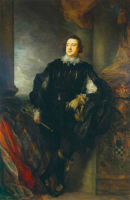


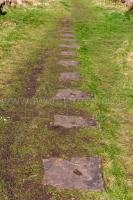
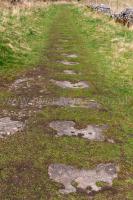
The Peak Forest Tramway was an early horse- and gravity-powered industrial railway (or tramway) system in Derbyshire, England. Opened for trade on 31 August 1796, it remained in operation until the 1920s.
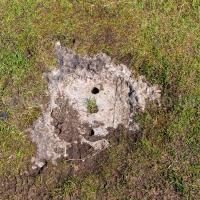
The sleepers for the tramway are reported to have been sourced from the nearby Bull Ring Henge [Map] although the source of this information is unknown?

On 31st August 1807 Coulson Wallop (age 32) died of apoplexy whilst imprisoned at Verdun.
On 31st August 1819 Edouard Dubufe was born.
Diary of a Dean by Merewether. 31st August 1849. On Tuesday morning, the 31st, having reached Marlborough from Salisbury on the Monday night, I returned to Silbury, visiting on our way the Cromlech [Map] at Clatford Bottom, the Roman road on Overton Hill, and the termination (that which had been) of the South-eastern Avenue of Avebury, on Hacpen Hill, with its neighbouring tumuli, and then the eight remaining detached stones of the avenue on the road from Kennett to Avebury, where I remember six to have stood in their relative positions opposite to each other.
Ten Years' Digging. August 31st — On the summit of a hill, south-west of Elkstone, are two barrows [Elkstones Barrow 1 [Map] and Elkstones Barrow 2 [Map]], near each other, both of which were examined on the same day. The first, sixteen yards diameter and one yard in central height, was opened by a section through the middle, three yards long and one wide, cut through stiff earth and clay, mixed near the surface with stone. The trench was afterwards enlarged by cutting about a yard more from one side, when a few burnt bones and two small flints were found. Continuing this extension down to the natural surface, we found a full-grown skeleton, with the legs drawn up, lying on its right side, with the head to the north-west. The bones, which were much decayed, had become embedded in clayey earth whilst sound, and now appeared more like a cast or impression than a real skeleton. It had been laid on the floor of the barrow, on which was a thin coat of ashes, causing the superincumbent earth to separate so perfectly as to leave a level surface round the bones, thus aiding the illusion. A stone placed lengthway at each side afforded the only protection, and in the earth above we found a bronze awl, lather thicker than usual, a few instruments of flint, two animal teeth, pieces of human bone in calcined and natural state, and rats' bones in small quantity. The second barrow is twenty yards across and only one foot high. In the centre was a large rubbing-post for cattle, which had been set up in the midst of a deposit of calcined bones buried about a foot beneatb the surface. They were spread over a space a yard long by about a foot wide, from whence a great many were collected, though some were left closely imbedded in claj, forming a light-coloured seam about an inch and a half thick, out of which they were with difficulty to be taken. They were accompanied by part of a very beautifully ornamented vase, which had been destroyed by the rubbing-post, and a few pieces of calcined flint, three only of which can be called instruments. A little lower, and to the side, were the decayed remains of a young person, accompanied by a large boar's tusk and some important flints. Underneath we found a large grave, cut four feet deep in the rock and filled with stones, which were emptied out for the length of three yards, without showing either end of the grave; its least width was four feet, but it appeared to increase the further we went. On the rocky bottom lay a skeleton in a contracted posture, with the head to the north-west, much in the same manner as that in the other barrow. The closest scrutiny failed to reveal any thing beyond rats' bones as an accompaniment. The femur measures 18½ inches. A large sandstone, with a small bowl-shaped cavity worked in it, was found near the burnt bones. A similar stone was found at Stanton, Staffordshire, and other examples will occur in the course of the volume.
Become a Member via our Buy Me a Coffee page to read more.
Chronicle of Geoffrey le Baker of Swinbroke
Baker was a secular clerk from Swinbroke, now Swinbrook, an Oxfordshire village two miles east of Burford. His Chronicle describes the events of the period 1303-1356: Gaveston, Bannockburn, Boroughbridge, the murder of King Edward II, the Scottish Wars, Sluys, Crécy, the Black Death, Winchelsea and Poitiers. To quote Herbert Bruce 'it possesses a vigorous and characteristic style, and its value for particular events between 1303 and 1356 has been recognised by its editor and by subsequent writers'. The book provides remarkable detail about the events it describes. Baker's text has been augmented with hundreds of notes, including extracts from other contemporary chronicles, such as the Annales Londonienses, Annales Paulini, Murimuth, Lanercost, Avesbury, Guisborough and Froissart to enrich the reader's understanding. The translation takes as its source the 'Chronicon Galfridi le Baker de Swynebroke' published in 1889, edited by Edward Maunde Thompson.
Available at Amazon in eBook and Paperback format.
Ten Years' Digging. On the 31st of August we opened a barrow near Stanshope, about 300 yards from Longlow, which covers a considerable surface, the boundary of which is ill-defined. We began by digging a wide trench from the south-west side, through earth mixed with stones, until we came to a well-built wall of flat stones, that presented so regular a front to the exterior of the moimd that we at first mistook it for a cist. The excavation was continued straight forward for eight yards, and was then turned round so as to form another parallel trench. As far as we uncovered the level on which the barrow was raised there was no indication of interment, though a pavement of flat stones had been carefuly laid down, on which was reared the core or nucleus of the moimd, composed of flat stones, placed on edge, with an inclination towards the centre. Above these the material, consisting of earth and stone, was heaped up without care. Amongst the latter, and occurring from the top to about half way down, we found number of rats' bones, pieces of human skull, and other bones (some calcined); fragments of two or three urns, including one of very hard black ware, and another of red pottery; two small pieces of bronze, ¥rarped bj heat; an iron awl, three inches long, which has been fixed in a wooden handle, like many others that we have found in the tumuli; and a piece of a very thick cup or bason of green glass, in an iridescent state, like the Saxon tumbler found at Cow Low in 1846 (Vestiges, p. 94), here reproduced.
On 31st August 1859 Marie Wilhelmine Luise Glücksburg was born to Friedrich Glücksburg Duke Schleswig Holstein Sonderburg Glücksburg (age 44) and Adelheid Schasumburg Lippe Duchess Schleswig Holstein Sonderburg Glücksburg. She a great x 3 granddaughter of King George II of Great Britain and Ireland.

On 31st August 1866 George William Montagu-Douglas-Scott was born to William Scott 6th Duke Buccleuch 8th Duke Queensberry (age 34) and Louisa Jane Hamilton Duchess Buccleuch and Queensbury (age 30). He married 30th April 1903 his fourth cousin once removed Elizabeth Emily Manners, daughter of John Manners 7th Duke Rutland and Janetta Hughan Duchess Rutland.
Life's Ebb And Flow Chapter IV. In August 1886, my [Frances Evelyn "Daisy" Maynard Countess Warwick (age 24)] sister Blanche (age 22) married the Duke of Richmond's (age 68) son, Lord Algernon Gordon-Lennox (age 38), in Little Easton church [Map], the Bishop of St. Albans [Map] performing the service, and a family party assembling. The only child of this marriage is my niece, Ivy, Marchioness of Titchfield, who married the eldest son [William Arthur Henry Cavendish-Bentinck 7th Duke Portland] of the present Duke (age 28) and Duchess (age 22) of Portland.


On 31st August 1945 William Acton (age 39) died.
On 31st August 1971 Mona Stapleton 11th Baroness Beaumont and Baroness Howard (age 77) died. Her son Miles (age 56) succeeded 12th Baron Beaumont.
On 31st August 1997 Diana Spencer Princess Wales (age 36) died at Pitié-Salpetrière Hospital. She was buried at Althorp House, Northamptonshire [Map].
On 31st August 1398 John Valois was born to Charles "Beloved Mad" VI King France (age 29) and Isabeau Wittelsbach Queen Consort France (age 28). He married 1415 his second cousin Jacqueline Wittelsbach Duchess Brabant and Gloucester, daughter of William Wittelsbach IV Count Holland VI Count Hainaut V Count Zeeland and Margaret Valois Countess Holland.
On 31st August 1426 John St John was born to Oliver St John (age 26) and Margaret Beauchamp Duchess Somerset (age 16) at Bletsoe, Bedfordshire. He married Alice Bradshaigh and had issue.
On 31st August 1647 Mary Scott 3rd Countess Buccleuch was born to Francis Scott 2nd Earl Buccleuch (age 20) and Margaret Leslie Countess Buccleuch and Wemyss (age 27).
On 31st August 1656 Margaret Russell Countess Orford was born to William Russell 1st Duke Bedford (age 40) and Anne Carr Countess of Bedford (age 40). She married November 1691 her first cousin Edward Russell 1st Earl Orford.
On 31st August 1661 Charles Granville 2nd Earl Bath was born to John Granville 1st Earl Bath (age 33) and Jane Wyche. He married (1) 22nd May 1678 Martha Osborne, daughter of Thomas Osborne 1st Duke Leeds and Bridget Bertie Duchess Leeds (2) 10th March 1691 Isabella van Nassau and had issue.
On 31st August 1701 Edward Henry Calvert was born to Benedict Calvert 4th Baron Baltimore (age 22) and Charlotte Lee Baroness Baltimore (age 22) at Epsom, Surrey. He a great grandson of King Charles II of England Scotland and Ireland. He married 30th November 1725 Margaret Meynell.
On 31st August 1702 Louis Francois Roubiliac was born in Lyon, France [Map]. He married (1) 1735 Caroline Magdalene Hélot (2) January 1752 Elizabeth Crosby of Deptford (3) before 11th January 1762 Nicole Céleste Regnier.
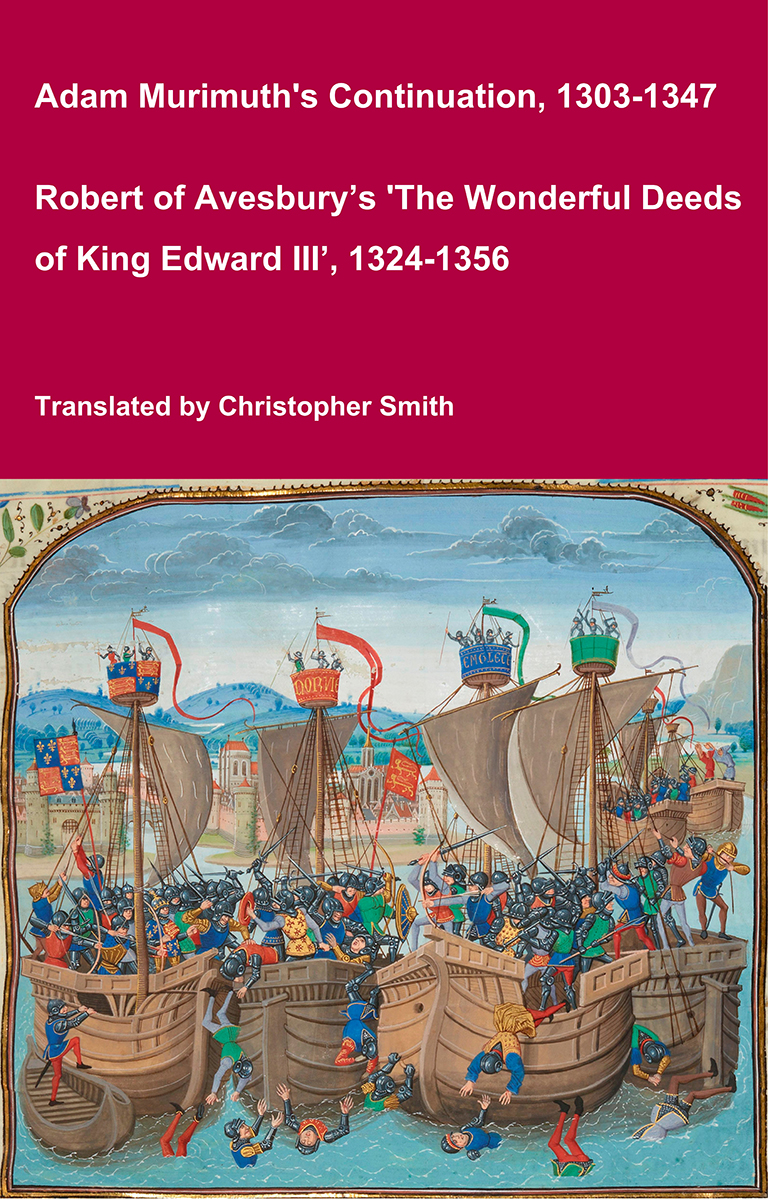
Adam Murimuth's Continuation and Robert of Avesbury’s 'The Wonderful Deeds of King Edward III'
This volume brings together two of the most important contemporary chronicles for the reign of Edward III and the opening phases of the Hundred Years’ War. Written in Latin by English clerical observers, these texts provide a vivid and authoritative window into the political, diplomatic, and military history of fourteenth-century England and its continental ambitions. Adam Murimuth Continuatio's Chronicarum continues an earlier chronicle into the mid-fourteenth century, offering concise but valuable notices on royal policy, foreign relations, and ecclesiastical affairs. Its annalistic structure makes it especially useful for establishing chronology and tracing the development of events year by year. Complementing it, Robert of Avesbury’s De gestis mirabilibus regis Edwardi tertii is a rich documentary chronicle preserving letters, treaties, and official records alongside narrative passages. It is an indispensable source for understanding Edward III’s claim to the French crown, the conduct of war, and the mechanisms of medieval diplomacy. Together, these works offer scholars, students, and enthusiasts a reliable and unembellished account of a transformative period in English and European history. Essential for anyone interested in medieval chronicles, the Hundred Years’ War, or the reign of Edward III.
Available at Amazon in eBook and Paperback format.
On 31st August 1708 John Rogers 3rd Baronet was born to John Rogers 2nd Baronet (age 32) and Mary Henley Lady Rogers. He married 24th October 1742 Hannah Trefusis.
On 31st August 1726 Winifrede Howard Baroness Stourton was born to Philip Howard (age 38) and Winifrede Stonor. She married 11th October 1749 her fourth cousin William Stourton 16th Baron Stourton and had issue.
On 31st August 1764 Bernard Astley was born to Edward Astley 4th Baronet (age 34) and Anne Milles. He married 1787 Anne Hase.


On 31st August 1774 Charles Turner was born in Woodstock, Oxfordshire [Map].

On 31st August 1776 Peter King 7th Baron King was born to Peter King 6th Baron King (age 40). He married 26th May 1804 Hester Fortescue Baroness King, daughter of Hugh Fortescue 1st Earl Fortescue and Hester Granville Countess Fortescue, and had issue.
On 31st August 1776 Thomas Reynolds-Moreton 1st Earl Ducie was born to Francis Reynolds-Moreton 3rd Baron Ducie (age 37). He married 6th December 1797 Frances Herbert Baroness Ducie Tortworth, daughter of Henry Herbert 1st Earl Carnarvon and Elizabeth Alicia Maria Wyndham Countess Carnarvon, and had issue.
On 31st August 1781 John Ponsonby 4th Earl Bessborough was born to Frederick Ponsonby 3rd Earl Bessborough (age 23) and Henrietta Frances Spencer Countess Bessborough (age 20). He married 16th November 1805 Maria Fane, daughter of John Fane 10th Earl of Westmoreland and Sarah Anne Child Countess of Westmoreland, and had issue.


On 31st August 1789 Catherine Sophia Dallas was born to George Dallas 1st Baronet (age 31) and Margaret Catherine Blackwood Lady Dallas. She married 9th December 1811 George Paulett, son of John Paulett 4th Earl Paulett, and had issue.
On 31st August 1801 Reverend William Marriott Smith-Marriott 4th Baronet was born to John Wyldbore Smith 2nd Baronet (age 31) and Elizabeth Anne Marriot Lady Smith (age 34)
On 20th July 1807 Charles Vincent Loraine 7th Baronet was born to Charles Loraine 5th Baronet (age 28) and Elizabeth Campart Lady Loraine (age 28). He was baptised on 31st August 1807 at St Wilfrid's Church, Kirkharle [Map].
On 31st August 1817 Emily Julia Thellusson Baroness Walsingham was born to John Thellusson 2nd Baron Rendlesham (age 32). She married 25th October 1847 Thomas Grey 5th Baron Walsingham, son of Thomas Grey 4th Baron Walsingham and Elizabeth North Baroness Walsingham, and had issue.
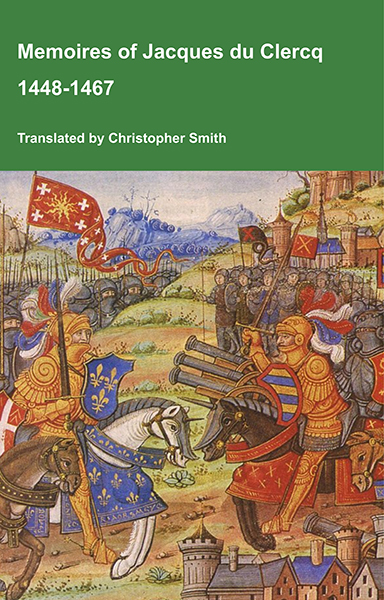
This is a translation of the 'Memoires of Jacques du Clercq', published in 1823 in two volumes, edited by Frederic, Baron de Reissenberg. In his introduction Reissenberg writes: 'Jacques du Clercq tells us that he was born in 1424, and that he was a licentiate in law and a counsellor to Philip the Good, Duke of Burgundy, in the castellany of Douai, Lille, and Orchies. It appears that he established his residence at Arras. In 1446, he married the daughter of Baldwin de la Lacherie, a gentleman who lived in Lille. We read in the fifth book of his Memoirs that his father, also named Jacques du Clercq, had married a lady of the Le Camelin family, from Compiègne. His ancestors, always attached to the counts of Flanders, had constantly served them, whether in their councils or in their armies.' The Memoires cover a period of nineteen years beginning in in 1448, ending in in 1467. It appears that the author had intended to extend the Memoirs beyond that date; no doubt illness or death prevented him from carrying out this plan. As Reissenberg writes the 'merit of this work lies in the simplicity of its narrative, in its tone of good faith, and in a certain air of frankness which naturally wins the reader’s confidence.' Du Clercq ranges from events of national and international importance, including events of the Wars of the Roses in England, to simple, everyday local events such as marriages, robberies, murders, trials and deaths, including that of his own father in Book 5; one of his last entries.
Available at Amazon in eBook and Paperback format.
On 31st August 1819 Edouard Dubufe was born.
On 31st August 1819 Henry Hucks Gibbs 1st Baron Aldenham was born to George Henry Gibbs of Aldenham (age 34). He married before 23rd April 1846 Louisa Anne Adams Baroness Aldenham and had issue.
On 31st August 1834 Ambrose Syned Cave-Browne-Cave was born to John Robert Cave-Browne-Cave 10th Baronet (age 36).
On 31st August 1848 John Shelley 9th Baronet was born to Frederick Shelley 8th Baronet (age 39).
On 31st August 1850 John Stephen Barrington Simeon 4th Baronet was born to John Simeon 3rd Baronet (age 35) and Jane Maria Baker Lady Simeon (age 31). Coefficient of inbreeding 6.25%. He married 18th June 1872 Isabella Mary Dutton.
On 31st August 1851 Charles Claude Bertie was born to Montagu Bertie 6th Earl of Abingdon (age 43) and Elizabeth Lavinia Harcourt Countess Abingdon.
On 31st August 1853 John William Plunkett 17th Baron Dunsany was born to Edward Plunkett 16th Baron Dunsany (age 44) and Anne Constance Dutton Baroness Dunsany (age 36). He married 3rd April 1877 his second cousin Ernle Elizabeth Louisa Maria Grosvenor Burton.
On 31st August 1859 Marie Wilhelmine Luise Glücksburg was born to Friedrich Glücksburg Duke Schleswig Holstein Sonderburg Glücksburg (age 44) and Adelheid Schasumburg Lippe Duchess Schleswig Holstein Sonderburg Glücksburg. She a great x 3 granddaughter of King George II of Great Britain and Ireland.
On 31st August 1866 George William Montagu-Douglas-Scott was born to William Scott 6th Duke Buccleuch 8th Duke Queensberry (age 34) and Louisa Jane Hamilton Duchess Buccleuch and Queensbury (age 30). He married 30th April 1903 his fourth cousin once removed Elizabeth Emily Manners, daughter of John Manners 7th Duke Rutland and Janetta Hughan Duchess Rutland.
On 31st August 1867 Balthazar Stephen Sargant Foster 2nd Baron Ilkeston was born to Balthazar Walter Foster 1st Baron Ilkeston (age 27) and Emily Martha Sargant. He married 20th December 1901 Mildred Charlotte Cobb.
On 31st August 1869 Anthony Ashley-Cooper 9th Earl of Shaftesbury was born to Anthony Ashley-Cooper 8th Earl Shaftesbury (age 38) and Harriet Augusta Anna Seymourina Chichester Countess Shaftesbury. He married 15th July 1899 his fifth cousin Constance Grosvenor Countess of Shaftesbury and had issue.
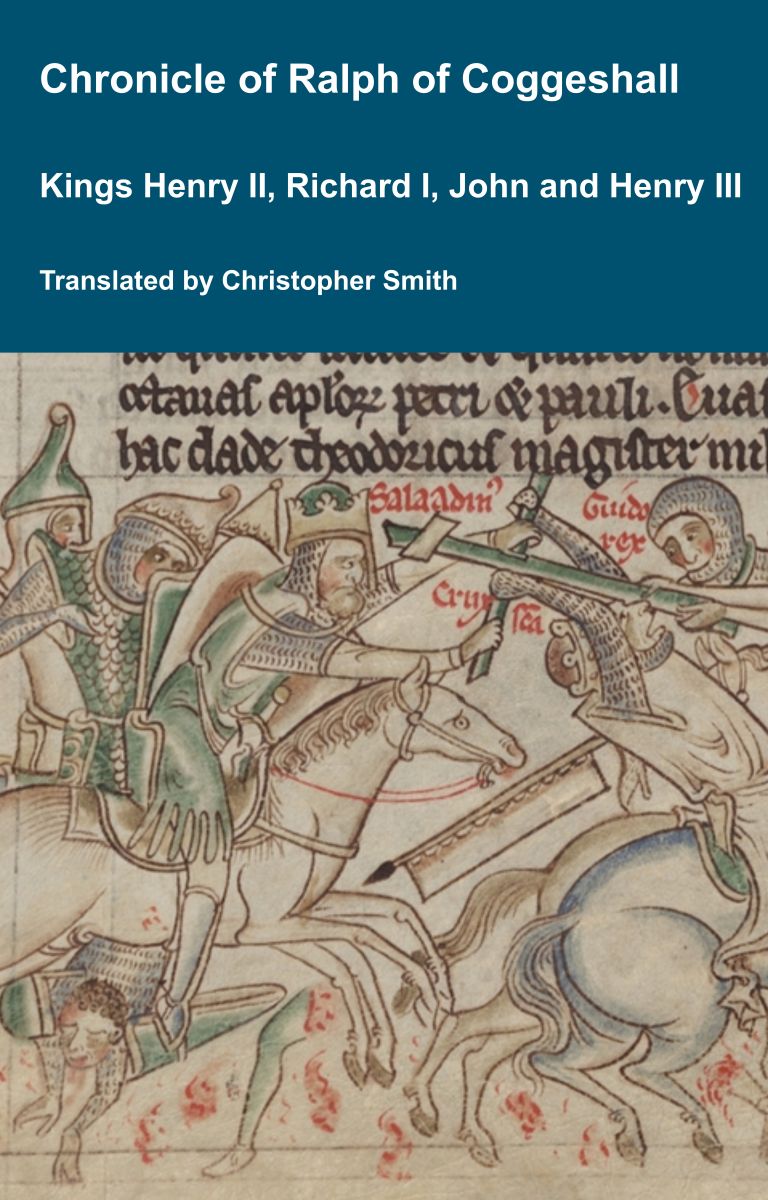
Chronicle of Abbot Ralph of Coggeshall
The Chronicle of Abbot Ralph of Coggeshall (Chronicon Anglicanum) is an indispensable medieval history that brings to life centuries of English and European affairs through the eyes of a learned Cistercian monk. Ralph of Coggeshall, abbot of the Abbey of Coggeshall in Essex in the early 13th century, continued and expanded his community’s chronicle, documenting events from the Norman Conquest of 1066 into the tumultuous reign of King Henry III. Blending eyewitness testimony, careful compilation, and the monastic commitment to record-keeping, this chronicle offers a rare narrative of political intrigue, royal power struggles, and social upheaval in England and beyond. Ralph’s work captures the reigns of pivotal figures such as Richard I and King John, providing invaluable insights into their characters, decisions, and the forces that shaped medieval rule. More than a simple annal, Chronicon Anglicanum conveys the texture of medieval life and governance, making it a rich source for scholars and readers fascinated by English history, monastic authorship, and the shaping of the medieval world.
Available at Amazon in eBook and Paperback format.
On 31st August 1875 Frederick Leslie Courtenay 16th Earl of Devon was born to Henry Reginald Courtenay (age 39).
On 31st August 1894 Rudolph de Trafford 5th Baronet was born to Humphrey Francis de Trafford 3rd Baronet (age 32) and Violet Franklin Lady de Trafford.
On 31st August 1895 William Stourton 22nd Baron Stourton 24th Baron Segrave 23rd Baron Mowbray was born to Charles Botolph Joseph Stourton 21st Baron Stourton 23rd Baron Segrave 22nd Baron Mowbray (age 28) and Mary Constable Baroness Stourton, Segrave and Mowbray (age 25).
On 31st August 1904 Mary Freya Sykes was born to Mark Sykes 6th Baronet (age 25) and Edith Violet Gorst (age 32). She married before 29th February 1928 Richard Everard Augustine Elwes.
On 31st August 1945 Anthony Simon Trollope 17th Baronet was born to Anthony Owen Clavering Trollope 16th Baronet (age 28).
On 31st August 1281 Eric II King Norway (age 13) and Margaret Dunkeld Queen Consort Norway (age 20) were married at Bergen. She the daughter of King Alexander III of Scotland (age 39) and Margaret Queen of Scotland. He the son of King Magnus VI of Norway and Queen Ingeborg of Norway (age 37). They were half fourth cousin once removed. She a granddaughter of King Henry III of England.
On 31st August 1676 Richard Onslow 1st Baron Onslow (age 22) and Elizabeth Tulse (age 15) were married.


On 31st August 1676 Thomas Bruce 3rd Earl Elgin 2nd Earl Ailesbury (age 20) and Elizabeth Seymour Countess Elgin and Ailesbury (age 21) were married. She the daughter of Henry Seymour and Mary Capell Duchess Beaufort (age 45). He the son of Robert Bruce 2nd Earl Elgin 1st Earl Ailesbury (age 50). They were fourth cousins. She a great x 5 granddaughter of King Henry VII of England and Ireland.
On 31st August 1699 Charles Hope 1st Earl Hopetoun (age 18) and Henrietta Johnstone (age 16) were married.
On 31st August 1713 Edward Harley 2nd Earl of Oxford and Earl Mortimer (age 24) and Henrietta Cavendish Holles Countess of Oxford and Mortimer (age 19) were married. She the daughter of John Holles 1st Duke Newcastle upon Tyne and Margaret Cavendish Duchess Newcastle upon Tyne (age 51). He the son of Robert Harley 1st Earl of Oxford and Earl Mortimer (age 51) and Elizabeth Foley Countess of Oxford and Mortimer.


On 31st August 1822 Charles Rowley 2nd Baronet (age 21) and Frances Evelyn were married.
On 31st August 1850 John Stuart Bligh 6th Earl Darnley (age 23) and Harriet Mary Pelham Countess Darnley (age 21) were married. She the daughter of Henry Pelham 3rd Earl Chichester (age 46) and Mary Brudenell Countess Chichester (age 44). He the son of Edward Bligh 5th Earl Darnley and Emma Jane Parnell Countess Darnley. They were sixth cousins.
On 31st August 1865 William Hare 3rd Earl of Listowel (age 32) and Ernestine Mary Brudenell-Bruce Countess Listowell (age 18) were married. She by marriage Countess Listowel in County Kerry. She the daughter of Ernest Brudenell-Bruce 3rd Marquess Ailesbury (age 54) and Louisa Elizabeth Horsley Beresford Marchioness Ailesbury (age 51). He the son of William Hare 2nd Earl Listowel and Maria Augusta Windham Countess Listowel (age 60).
On 31st August 1865 George Augustus Hamilton Chichester 5th Marquess Donegal (age 43) and Mary Cobb Marchioness Donegal were married. He the son of Edward Chichester 4th Marquess Donegal (age 66) and Amelia Ogrady Marchioness County Donegal.
On 31st August 1949 Michael Henley aka Eden 7th Baron Henley 5th Baron Northington (age 35) and Nancy Mary Walton Baroness Henley and Northington (age 21) were married.
Jean de Waurin's Chronicle of England Volume 6 Books 3-6: The Wars of the Roses
Jean de Waurin was a French Chronicler, from the Artois region, who was born around 1400, and died around 1474. Waurin’s Chronicle of England, Volume 6, covering the period 1450 to 1471, from which we have selected and translated Chapters relating to the Wars of the Roses, provides a vivid, original, contemporary description of key events some of which he witnessed first-hand, some of which he was told by the key people involved with whom Waurin had a personal relationship.
Available at Amazon in eBook and Paperback format.
On 31st August 1158 Sancho III King Castile (age 24) died. His son Alfonso (age 2) succeeded VIII King Castile.
On 31st August 1166 Bishop Robert of Lewes died. He was buried at Bath Abbey [Map] before the high altar.
On 31st August 1330 John Mohun 1st Baron Dunster (age 61) died. His grandson John (age 10) succeeded 2nd Baron Mohun of Dunster. Given his young age he became a ward of the King who sold his wardship and marriage to Bishop Henry Burghesh (age 38) who then married him to his niece Joan Burghesh Baroness Dunster (age 11), daugher of his brother Bartholomew "The Elder" Burghesh 1st Baron Burghesh (age 43).
On 31st August 1372 Ralph Stafford 1st Earl Stafford (age 70) died. His son Hugh (age 36) succeeded 2nd Earl Stafford, 3rd Baron Stafford. Philippa Beauchamp Countess Stafford (age 38) by marriage Countess Stafford.
On 31st August 1404 Thomas Montagu died.
On 31st August 1422 King Henry V of England (age 35) died at Château de Vincennes, possibly from dysentery, possibly from heatstroke. John Sutton 1st Baron Dudley (age 21) brought the body back to England. His son Henry succeeded VI King of England.
Thomas Beaufort 1st Duke Exeter (age 45) was appointed Governor to King Henry VI of England and II of France.
On 31st August 1433 Peter Luxemburg I Count Saint Pol (age 43) died of plague at Rambures, Somme. His son Louis (age 15) succeeded I Count Saint Pol.
On 31st August 1470 Frederick Lorraine Count Vaudémont (age 42) died. His son René (age 19) succeeded Count Vaudémont.
On 31st August 1565 George Vernon "King of the Peak" (age 57) died. He was buried at All Saint's Church, Bakewell, Derbyshire [Map]. By his will of 18th August 1565 he bequeathed six Derbyshire manors and two in Staffordshire to his wife for life. His executors were to take the profits of his manor of Kibblestone, in Staffordshire, and two Cheshire manors for 16 years after his decease to pay his debts, funeral expenses and the fulfilment of his will, which included among numerous bequests the provision of one gold chain worth £20 to his godson, Gilbert Talbot (age 12), the future 6th Earl of Shrewsbury, 'as a remembrance of my good will towards him'. His wife, his son-in-law John Manners (age 38), his brother-in-law Nicholas Longford (age 33) and his 'loving neighbours and faithful friends Thomas Sutton and Richard Wennesley were each to receive £20 for their services as executors, while his 'right worshipful friends' (Sir) John Zouche II and Francis Leke (age 55) were each to have a horse.
Monument with both his wives Margaret Tailboys and Maud aka Magdelan Longford each wearing a French Hood. Man with Two Wives.
On the left the arms of his second wife Margaret Tailboys, middle the arms of George Vernon "King of the Peak" and right the arms of his first wife Maud aka Magdelan Longford.
On 31st August 1669 John Hamilton 4th Earl Haddington (age 43) died in Tyninghame House [Map]. His son Charles (age 19) succeeded 5th Earl Haddington.
On 31st August 1699 John Newton 2nd Baronet (age 73) died. His son John (age 48) succeeded 3rd Baronet Newton of Barrs Court. Susanna Wharton Lady Newton (age 48) by marriage Lady Newton of Barrs Court.
On 31st August 1700 William Savile 2nd Marquess Halifax (age 35) died without male issue. Marquess Halifax, Earl Halifax, Viscount Halifax and Baron Savile of Elland extinct. His first cousin twice removed John (age 50) succeeded 6th Baronet Savile of Thornhill
Adam Murimuth's Continuation and Robert of Avesbury’s 'The Wonderful Deeds of King Edward III'
This volume brings together two of the most important contemporary chronicles for the reign of Edward III and the opening phases of the Hundred Years’ War. Written in Latin by English clerical observers, these texts provide a vivid and authoritative window into the political, diplomatic, and military history of fourteenth-century England and its continental ambitions. Adam Murimuth Continuatio's Chronicarum continues an earlier chronicle into the mid-fourteenth century, offering concise but valuable notices on royal policy, foreign relations, and ecclesiastical affairs. Its annalistic structure makes it especially useful for establishing chronology and tracing the development of events year by year. Complementing it, Robert of Avesbury’s De gestis mirabilibus regis Edwardi tertii is a rich documentary chronicle preserving letters, treaties, and official records alongside narrative passages. It is an indispensable source for understanding Edward III’s claim to the French crown, the conduct of war, and the mechanisms of medieval diplomacy. Together, these works offer scholars, students, and enthusiasts a reliable and unembellished account of a transformative period in English and European history. Essential for anyone interested in medieval chronicles, the Hundred Years’ War, or the reign of Edward III.
Available at Amazon in eBook and Paperback format.
On 31st August 1709 John Leveson-Gower 1st Baron Gower (age 34) died. His son John (age 15) succeeded 2nd Baron Gower, 6th Baronet Gower of Stittenham in Yorkshire.
On 31st August 1724 Louis I King Spain (age 17) died of smallpox. He was buried at the El Escorial Palace. Philippe V King Spain (age 40) returned to the Spanish throne.
On 20th April 1759 Thomas William Coke 1st Earl of Leicester (age 61) died. Earl of Leicester and Baron Lovel of Minster Lovell extinct. Wenman Roberts aka Coke (age 42) inherited his estates.
On 31st August 1753 Edward Coke (age 34) died.
Monument in Church of St Mary the Virgin, Tittleshall [Map] commissioned by wife and mother Margaret Tufton Countess Leicester (age 58). Erected in 1760. Sculpted by Charles Atkinson. Gadrooned sarcophagus on pedestal with a carved and painted achievement above surrounded by extravagant mantling. Flanked by pair of composite columns supporting a dentilated pediment. Carved bust figures to the sides of the Earl and Countess by Louis Francois Roubiliac (age 56).
Edward Coke: On 2nd February 1719 he was born to Thomas William Coke 1st Earl of Leicester and Margaret Tufton Countess Leicester. On 1st April 1747 Edward Coke and Mary Campbell were married. She the daughter of John Campbell 2nd Duke Argyll and Jane Warburton Duchess of Argyll. He the son of Thomas William Coke 1st Earl of Leicester and Margaret Tufton Countess Leicester.
On 31st August 1765 John Robinson 4th Baronet (age 60) died. His son George (age 35) succeeded 5th Baronet Robinson of London. Dorothea Chester Lady Robinson by marriage Lady Robinson of London.
On 31st August 1768 Henrietta Pelham Baroness Bergavenny (age 38) died.
On 31st August 1769 Charles Mathew Goring 5th Baronet (age 63) died. His son Harry (age 30) succeeded 6th Baronet Bowyer aka Goring of Highden in Sussex.
On 31st August 1772 William Borlase (age 76) died.
On 31st August 1779 Margaret Wemyss Countess Moray (age 60) died.
On 31st August 1786 Charles Howard 10th Duke of Norfolk (age 65) died. His son Charles (age 40) succeeded 11th Duke Norfolk, 22nd or 29th Earl Arundel, 12th Earl Surrey, 9th Earl Norfolk, 19th Baron Maltravers, 19th Baron Arundel. Frances Scudamore Duchess Norfolk (age 36) by marriage Duchess Norfolk.
On 31st August 1817 John Thomas Duckworth 1st Baronet (age 70) died. His son John (age 8) succeeded 2nd Baronet Duckworth of Topsham in Devon.
On 31st August 1822 Clementia Elphinstone Countess Perth (age 73) died.
The Deeds of the Dukes of Normandy
The Gesta Normannorum Ducum [The Deeds of the Dukes of Normandy] is a landmark medieval chronicle tracing the rise and fall of the Norman dynasty from its early roots through the pivotal events surrounding the Norman Conquest of England. Originally penned in Latin by the monk William of Jumièges shortly before 1060 and later expanded at the behest of William the Conqueror, the work chronicles the deeds, politics, battles, and leadership of the Norman dukes, especially William’s own claim to the English throne. The narrative combines earlier historical sources with firsthand information and oral testimony to present an authoritative account of Normandy’s transformation from a Viking settlement into one of medieval Europe’s most powerful realms. William’s history emphasizes the legitimacy, military prowess, and governance of the Norman line, framing their expansion, including the conquest of England, as both divinely sanctioned and noble in purpose. Later chroniclers such as Orderic Vitalis and Robert of Torigni continued the history, extending the coverage into the 12th century, providing broader context on ducal rule and its impact. Today this classic work remains a foundational source for understanding Norman identity, medieval statesmanship, and the historical forces that reshaped England and Western Europe between 800AD and 1100AD.
Available at Amazon in eBook and Paperback format.
On 31st August 1832 Mary Tyrrell 3rd Countess Arran (age 65) died.
On 31st August 1869 Charles Young (age 74) died at his home in Prince's Terrace Hyde Park.
On 31st August 1883 Maria Charlotte Ridley-Colborne Lady Nugent died.
On 31st August 1900 Lionel Dawson-Damer 5th Earl of Portarlington (age 42) died. His son Lionel (age 17) succeeded 6th Earl Portarlington.
On 31st August 1945 William Acton (age 39) died.
On 31st August 1971 Mona Stapleton 11th Baroness Beaumont and Baroness Howard (age 77) died. Her son Miles (age 56) succeeded 12th Baron Beaumont.
On 31st August 1989 Ruth Alice Hannah Mary Primrose Countess Halifax (age 73) died.
On 31st August 1997 Diana Spencer Princess Wales (age 36) died at Pitié-Salpetrière Hospital. She was buried at Althorp House, Northamptonshire [Map].
On 31st August 2003 Anne Winifred Sullivan Marchioness Westminster (age 88) died.
On 31st August 2006 David William Anthony Blyth Macpherson 2nd Baron Strathcarron (age 82) died.
On 31st August 2015 Edward Douglas-Scott-Montagu 3rd Baron Montagu (age 88) died. His son Ralph (age 54) succeeded 4th Baron Montagu of Beaulieu.