

Jean de Waurin's Chronicle of England Volume 6 Books 3-6: The Wars of the Roses
Jean de Waurin was a French Chronicler, from the Artois region, who was born around 1400, and died around 1474. Waurin’s Chronicle of England, Volume 6, covering the period 1450 to 1471, from which we have selected and translated Chapters relating to the Wars of the Roses, provides a vivid, original, contemporary description of key events some of which he witnessed first-hand, some of which he was told by the key people involved with whom Waurin had a personal relationship.
Available at Amazon in eBook and Paperback format.
1310-1319 Piers Gaveston is in 14th Century Events.
Around 19th March 1311 the nobility attempt to constrain King Edward II of England [aged 26] by imposing a Council of Ordainers upon him. The Council included twenty-one signatories including:
Guy Beauchamp 10th Earl Warwick [aged 39].
Robert Clifford 1st Baron Clifford [aged 36].
Thomas Plantagenet 2nd Earl of Leicester, 2nd Earl Lancaster, Earl of Salisbury and Lincoln [aged 33].
Gilbert de Clare 8th Earl Gloucester 7th Earl Hertford [aged 19].
Henry Lacy 4th Earl Lincoln, Earl Salisbury.
John Capet 4th Earl Richmond [aged 45].
William Marshal 1st Baron Marshal [aged 33], and.
Aymer de Valence 2nd Earl Pembroke [aged 36].
In April 1311 Parliament exiled Piers Gaveston 1st Earl Cornwall [aged 27]. Piers Gaveston 1st Earl Cornwall was appointed Lord Lieutenant of Ireland by King Edward II of England [aged 26] who immediately started to plot for his return.
On 13th January 1312 King Edward II of England [aged 27] and Piers Gaveston 1st Earl Cornwall [aged 28] were reunited at Knaresborough Castle [Map].
On 4th May 1312 King Edward II of England [aged 28] and Piers Gaveston 1st Earl Cornwall [aged 28] were at Newcastle upon Tyne Castle where they barely escaped a force led by Thomas Plantagenet 2nd Earl of Leicester, 2nd Earl Lancaster, Earl of Salisbury and Lincoln [aged 34], Henry Percy 9th and 1st Baron Percy [aged 39] and Robert Clifford 1st Baron Clifford [aged 38]. Piers Gaveston 1st Earl Cornwall escaped to Scarborough, North Yorkshire [Map], King Edward II of England to York [Map].
On 19th May 1312 Piers Gaveston 1st Earl Cornwall [aged 28] surrendered to Aymer de Valence 2nd Earl Pembroke [aged 37], John Warenne 7th Earl of Surrey [aged 25], Henry Percy 9th and 1st Baron Percy [aged 39] and Piers Gaveston 1st Earl Cornwall who were besieging the castle. The terms of the surrender were that Pembroke, Warenne and Percy would take Gaveston to York, where the barons would negotiate with the king.
On 9th June 1312 Piers Gaveston 1st Earl Cornwall [aged 28], under the protection of Aymer de Valence 2nd Earl Pembroke [aged 37], stayed at The Rectory, Deddington whilst en route south. Aymer de Valence 2nd Earl Pembroke left Piers Gaveston 1st Earl Cornwall there whilst he left to visit his wife. The following morning Guy Beauchamp 10th Earl Warwick [aged 40], with Edmund Fitzalan 2nd or 9th Earl of Arundel [aged 27], Humphrey Bohun 4th Earl Hereford 3rd Earl Essex [aged 36] and John Botetort 1st Baron Botetort [aged 47] arrested Piers Gaveston 1st Earl Cornwall and took him to Warwick Castle [Map].
Around 15th June 1312 Piers Gaveston 1st Earl Cornwall [aged 28] was tried at Warwick Castle [Map] by Guy Beauchamp 10th Earl Warwick [aged 40], Humphrey Bohun 4th Earl Hereford 3rd Earl Essex [aged 36], Thomas Plantagenet 2nd Earl of Leicester, 2nd Earl Lancaster, Earl of Salisbury and Lincoln [aged 34] and Edmund Fitzalan 2nd or 9th Earl of Arundel [aged 27]. He was condemned to death.
On 19th June 1312 Piers Gaveston 1st Earl Cornwall [aged 28] was taken to Blacklow Hill, Warwickshire [Map] where he was beheaded. Earl Cornwall extinct. Blacklow Hill, Warwickshire [Map] being outside of the lands of Guy Beauchamp 10th Earl of Warwick [aged 40]. Gaveston's body was left where it lay eventually being recovered by Dominican friars who took it to King's Langley Priory, Hertfordshire [Map].
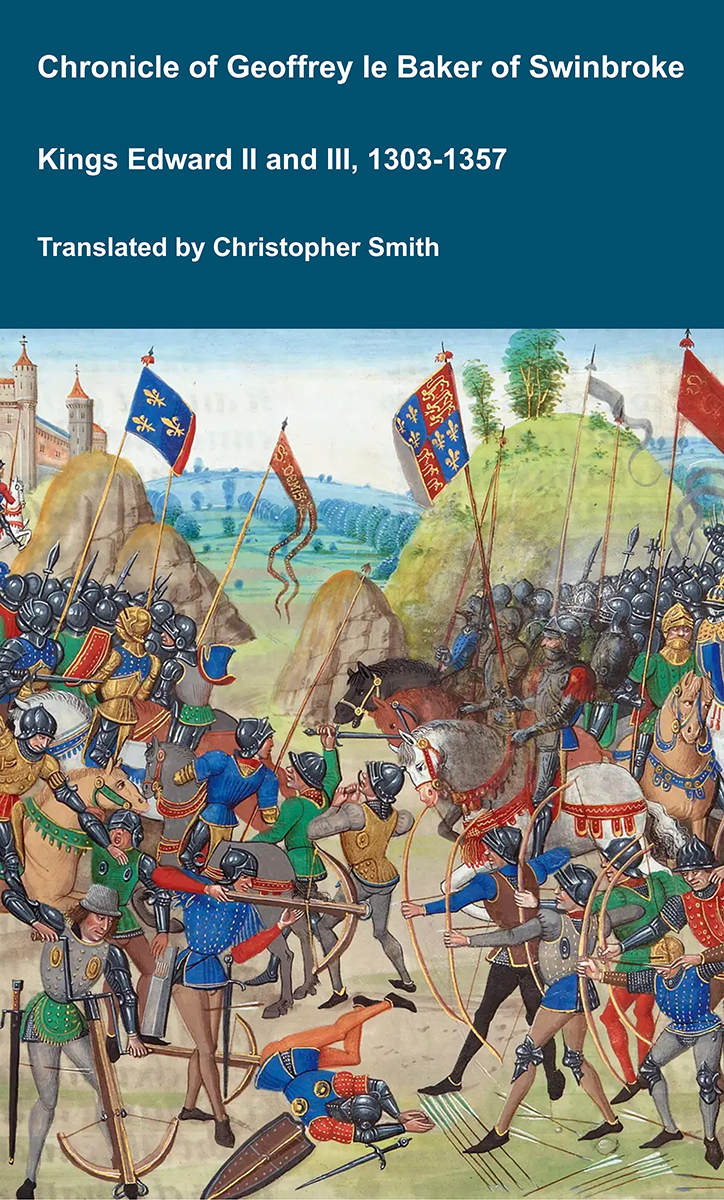 Chronicle of Geoffrey le Baker of Swinbroke. In the year of Christ 1312,1 around the Feast of the Nativity of St. John the Baptist [24th June], for the defence of Piers Gaveston, he was removed from Bamburgh Castle [Map] and placed under the custody of Aymer de Valence [aged 37], Earl of Pembroke. The Earl had sworn before the King, having taken the most sacred oath upon the altar, that he would protect Gaveston from all his enemies for a certain period, within which the King intended to reconcile him with the barons. However, envy, which corrupts even the greatest loyalties, and the desire to please Gaveston's enemies, led his guardian to abandon his oath through negligence. Eventually, Gaveston was taken against his will by one of his familiar enemies and delivered into the hands of his foes at Deddington Manor, located between Oxford and Warwick. There, neither natural hiding places nor fortifications could shield him from the proximity of the Earl of Warwick. That night, Pembroke departed from Gaveston, and at dawn, Guy de Beauchamp [aged 40], Earl of Warwick, accompanied by a small force and great commotion, arrived. Gaveston was then taken to Warwick Castle, where, after deliberation with Thomas, Earl of Lancaster, and Humphrey, Earl of Hereford, he was executed in their presence at a place called Blacklow Hill [Map] on the 19th June 1312. His body was entrusted to an honourable burial2 in the Dominican friary at Langley [Map] by order of the King.
Anno Christi MCCCXJ, circa festum Nativitatis Ioannis Baptiste, pro defensione Petri, Petrus revocatus a castro de Bamborgh committitur custodie Adomari de Valence, comitis Penbrochie, adiurati coram rege, inspecto sancto sanctorum sacramento altaris, quod ipsum indempnem quatenus posset contra omnes adversarios suos custodiret ad certum tempus, citra quod intendebat rex alico modo Petrum regni proceribus reconciliasse. Set fidem invidia inter summa lacescens et amor placendi inimicis Petri tutorem ipsius contra iuramentum in negligenciam abduxerunt. Ducitur tandem Petrus quo non vellet per familiarem inimicum in mediam potestatem inimicorum, in manerium videlicet Dathintone, que est inter Oxoniam et Warewyc, ubi nec latibulum naturale nec castrum aut munimentum aliquod artificiale posset a vicinitate comitis Warewyc Petrum sequestrare, Adomarus nocte ab ipso Petro recessit, et in aurora Guido Warewyc cum comitiva mediocri et cum hutesio accessit. Petrum quoque ductum ad castrum Warewyk, habita deliberacione cum Thoma comite Lancastrie et comite Herefordie, in ipsorum conspectu in loco qui dicitur Caveresich XIX die mensis Iunii fecit decapitari; cuius corpus in ecclesia fratrum ordinis Predicatorum de Langliþe rex honourifice commisit sepulture.
Note 1. Baker has entirely omitted Gaveston's movements in 1311-12. He seems to have confused Bamburgh and Scarborough. By the Ordinances, Gaveston was again banished 1st November 1311. He went to Flanders, but returned almost immediately, and rejoined Edward at York at the beginning of the new year; the king's writ declaring his banishment illegal bearing date the 18th January 1312. Rymer's Fœdera 2.153; Annales Londonienses 203.
On the approach of the confederate lords Gaveston fled from Newcastle and took refuge in Scarborough early in May; was besieged, and surrendered, 19th May, to the earl of Pembroke. Annales Londonienses 204.
The Chronicle of Lanercost 217.
The story of his surrender and subsequent capture by Warwick is told by the Monk of Malmesbury, Vita Edward II, 177.
Warwick made Gaveston his prisoner at Deddington on the 10th June, Annales Londonienses 206.
He gave him over to Lancaster, who with his confederates led him out to execution, the earl of Warwick remaining in his castle. Murimuth (Rolls Series), p. 17, is evidently wrong in stating that Warwick dismissed him and that he was afterwards made prisoner again. In the following extract from the Annales Londonienses 207.
The nicknames which Gaveston gave, with such deadly offence, to certain lords are noticed by several of the chroniclers. All does not appear to have been properly explained. The Chronicle of Lanercost 216.
The prose Brute chronicle has also some interesting particulars on this point. This chronicle is extant in both a French and an English version. Of the French version there are two editions, both compiled in the reign of Edward III, and ending with the account of the battle of Halidon Hill in 1333. From the second edition of this French version the English version was translated; and to this translation further additions were subsequently made. The names of the writers are unknown, but it appears that one of the later editions of the English version is due to John Maundeville, rector of Burnham Thorp, co. Norfolk, 1427-1441 (Notes and Queries, 1856, p. 1.) To the authorship of the second edition of the French version perhaps a clue may be found in certain extracts, or rather translations, from a French chronicle, which are printed in Leland's Collectanea, 1.454. Many of these extracts prove that much of Pakington's chronicle must have been word for word the same as the revised edition of the French Brute. The English Brute chronicle was printed by Caxton in 1480, with the title Chronicles of England.
Caxton's Chronicles do not appear to have had the attention of modern historians as much as they deserve. Barnes, the writer of the History of Edward III, 1688, did not know the book; but he found in the library of Corpus Christi College, Cambridge, a MS. of the English Brute chronicle, and made ample use of it, referring to it as MS. Vet. Angl. in C.C.C. Cantab. Barnes's quotations have been cited by later writers, who have failed to recognize in them the text of Caxton. In the following notes I have printed some interesting passages from the English Brute, making use of Harley MS. 2279 and Egerton MS. 650.
Gaveston's nicknames for the barons are thus described: "Kyng Edward lovede Piers of Gavastone so moche that he mygte nougte forlete his companye; and so moche the kyng yaf and behigte to the peple of Engelonde that the exiling of the forsaide Piers shulde bene revokede atte Staunford thurj hem that him exilede. Wherfore Peris of Gavastone come ayen into Engelonde, and, when he was come ayen into this lande, he despisede the gretteste lordes of this lande, and callede sire Robert of Clare, erle of Gloucestre, horeson; and the erle of Nicole, sire Henry Lacy, brust bely; and sir Guy, erle of Warwyke, blak hounde of Arderne; and also he callede the noble erle and gentil Thomas of Lancastre cherle; and meny other scornes and shame hem saide, and by many other grete lordes of Engelonde. Wherfor thei were towardis him ful angry and sore annoyede." The terms for these names in the French version (Royal Ms. 20 A. 3) are 'filz a puteyne', 'boele crevee,' 'noir chien de Ardene,' and 'vielers.' This last word the English translator has not understood. In the extract in Leland's Collectanea there are additional words: 'vielers, porceo quil est greles et de bel entaille.' Misunderstanding the first two words of this sentence, Lingard has made out that Lancaster was called 'Old Hog.' But the words mean: 'Fiddler, because he is slim and tall.' This seems to be confirmed by Walsingham (Historia Anglicana, 1.115) who says that Gaveston called Lancaster 'histrionem,' and further that Pembroke was nicknamed 'Joseph the Jew,' the reason being 'quod pallidus erat et longus [because he was pale and tall].' The 'pallidus' and 'longus,' which do not appear to be specially descriptive of a Jew, would perhaps belong better to the 'Play-actor,' just as 'greles' and 'de bel entaille' are applied to the 'Fiddler.'
Note 2. Gaveston's body lay for two years at Oxford, Vita Edward II, 209: "A few days after Christmas, the lord King Edward had the body of Piers Gaveston, his former special friend, transferred from Oxford to Langley. For now more than two years had passed since Peter's beheading, and until this time he had lain unburied among the friars at Oxford. It is said that the king had intended first to avenge Peter's death, and only afterward to commit his body to burial. But now those from whom the king had once sought vengeance had been reconciled with him in friendship. So the king, at Langley, where he had previously established a house for the Dominican friars, had the body of his Peter buried with great honour.
See also Knighton 2533, Annales Londonienses 232 and Annales Paulini 273.
Lanercost Chronicle. 19th June 1312. Having surrendered, he [Piers Gaveston 1st Earl Cornwall [aged 28]] was committed to the custody of Sir Aymer de Valence [aged 37], Earl of Pembroke, who had ever before been his chief enemy, and about the feast of the nativity of John the Baptist, in the absence of Aymer de Valence, he was beheaded on the high road [Map] near the town of Warwick by command of the Earl of Lancaster [aged 34] and the Earl of Warwick [aged 40].
Chronicle of a Bourgeois of Valenciennes
Récits d’un bourgeois de Valenciennes aka The Chronicle of a Bourgeois of Valenciennes is a vivid 14th-century vernacular chronicle written by an anonymous urban chronicler from Valenciennes in the County of Hainaut. It survives in a manuscript that describes local and regional history from about 1253 to 1366, blending chronology, narrative episodes, and eyewitness-style accounts of political, military, and social events in medieval France, Flanders, and the Low Countries. The work begins with a chronological framework of events affecting Valenciennes and its region under rulers such as King Philip VI of France and the shifting allegiances of local nobility. It includes accounts of conflicts, sieges, diplomatic manoeuvres, and the impact of broader struggles like the Hundred Years’ War on urban life in Hainaut. Written from the perspective of a burgher (bourgeois) rather than a monastery or royal court, the chronicle offers a rare lay viewpoint on high politics and warfare, reflecting how merchants, townspeople, and civic institutions experienced the turbulence of the 13th and 14th centuries. Its narrative style combines straightforward reporting of events with moral and civic observations, making it a valuable source for readers interested in medieval urban society, regional politics, and the lived experience of war and governance in pre-modern Europe.
Available at Amazon in eBook and Paperback format.
Annals Londonienses. On the Monday immediately before the feast of Saint John the Baptist, in the aforementioned year, that is, on the 19th day of June, the aforesaid counts came to Warwick with their men and requested the body of the said Peter from the aforementioned Earl of Warwick; the aforementioned Earl of Warwick delivered the body to the said counts, safe and sound; and they had the body of the said Peter taken out of the town of Warwick, and out of the fief of the said Earl of Warwick to Gaversweche [Map], between Warwick and Kenilworth, in the fief of the Earl of Lancaster, and there he was beheaded, around noon, by the hands of a certain Breton, in front of all the people assembled there. And thus each returned to his own place, leaving the body of the said Peter in the area where he was beheaded. Then four cobblers from Warwick placed the body of the deceased on a ladder, carrying it back towards Warwick, there to be buried; but the Earl of Warwick, who had not left the castle throughout the time of the beheading, had the body taken back to the same place where he was first beheaded, outside his fief; and behold, the Dominican friars led his body to Oxford, where it is kept with much honor: hence, they are greatly hated by the aforementioned counts.
Die ergo Lunæ proxima ante festum Sancti Johannis Baptistæ, anno prædicto, videlicet xix die Junii, prædicti comites cum suis venerunt apud Warwyke et petierunt corpus dicti Petri a prædicto comite Warwiciæ; quem prædictus comes Warwiciæ dictis comitibus tradidit corpus ejus sanum et salvum; at ipsi fecerunt conduci corpus dicti Petri extra villam Warwiciæ, et extra feodum dicti comitis Warwiciæ ad Gaverissweche, inter Warwyk et Kilneworthe, in feodo comitis Lancastriæ, et ibidem fuit decollatus, circa horam meridiei, per manus cujusdam Britonis, coram omni populo ibidemn coadunato. Et sic recesserunt unusquisque ad propria, relinquentes corpus dicti Petri in area ubi ipse decollatus est. Tunc quatuor sutores de Warwick posuerunt corpus mortui super scalam, reportantes versus Warwyk, ibidem sepeliendum; sed et comes Warwiciæ, qui toto tempore decollationis non exivit de castro, fecit corpus reportare ad ecundem locum, ubi prius decollatus fuit extra feodum suum; et ecce fratres Jacobini conduxerunt corpus ejus apud Oxoniam, ubi multum honorifice custoditur: unde multum sunt in odio de comitibus prædietis.
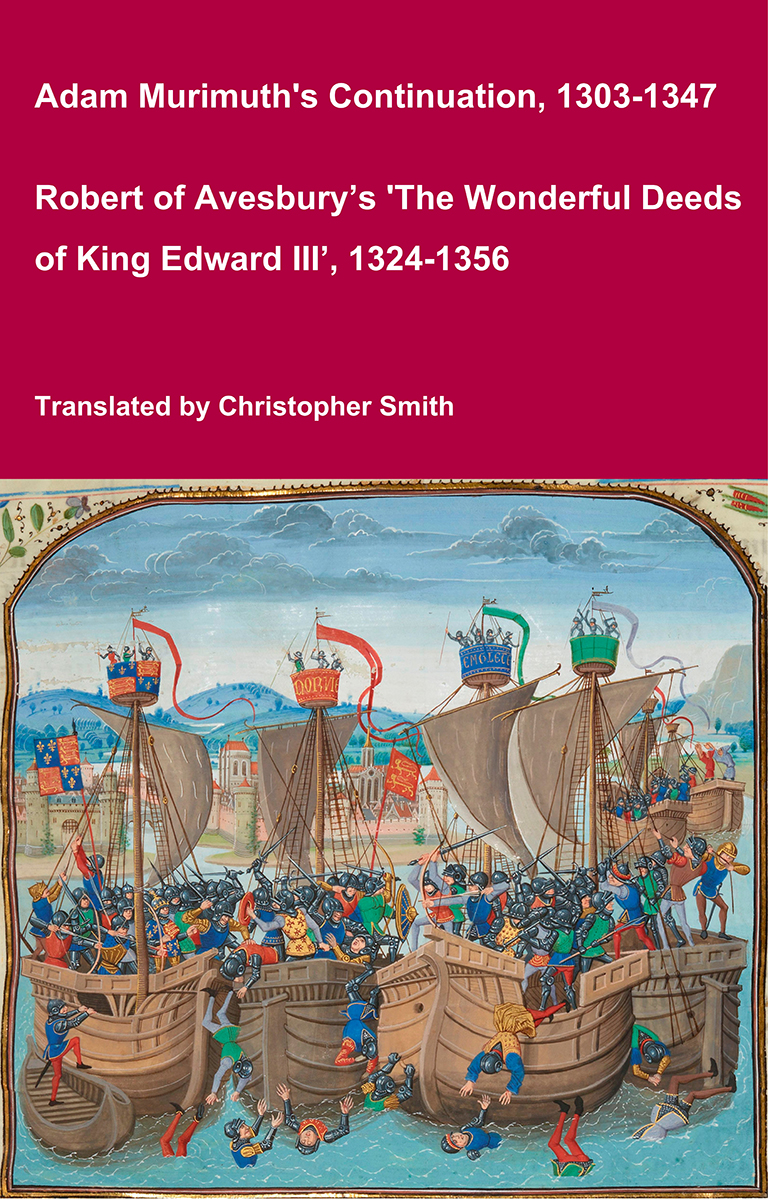 Adam Murimuth Continuation. In this year, around the feast of Saint John the Baptist [24th June 1312], the king wished that Piers de Gaveston should be brought to him by Lord Aymer de Valence, earl of Pembroke, for his safety. When they were at Deddington near Banbury, the earl left him there during the night and went nearby to another place for some business. At dawn the next day Guy, earl of Warwick, arrived with a moderate retinue and with a hue and cry. He roused the said Piers and carried him off to his castle of Warwick. Afterwards, having taken counsel with the leading men of the realm, and especially with Thomas, earl of Lancaster, he at last released him from prison to go wherever he wished. And when he left the town of Warwick and reached a place called, as if prophetically, Gaveston, he found many people raising a hue and cry against him with shouts and horns, as against an enemy of the king and of the realm who had been lawfully outlawed or exiled. At length, on the nineteenth day of the month of June [1312], they beheaded him as such. His head was carried by a certain friar of the Order of Preachers in his hood; and afterwards friars of the same order sought out his body and kept it at Oxford with solemn vigils for a year and more. Finally he was buried at Langley, where the king established a solemn convent of the Friars Preachers for the good of his soul, placing there a large number of student friars and providing them with suitable maintenance from his treasury in London.
Hoc anno, circa festum sancti Johannis baptiste, voluit rex Petrum de Gaverstone sibi adduci per dominum Adomarum de Valence, comitem Penbrokim, securitatis causa; et, cum essent apud Danyntone juxta Bannebury, idem comes dimisit eum in nocte, et ivit prope ad unum locum ex causa Et in crastino in aurora venit Guido, comes Warewykiæ, cum comitiva mediocri et hutesio, et ipsum Petrum evigilavit et ad castrum suum de Warewyk secum duxit; et, habita postmodum deliberatione cum majoribus regni, et t.. precipue cum Thoma comite Lancastriæ, finaliter dimisit eum de carcere, ire quo vellet. Et, quando exivit villam de Warewyk usque ad locum qui dicitur, quasi prophetice, Gaveressich invenit ibi multos homines facientes hutesium super eum vocibus et cornibus, sicut super inimicum regis et regni legitime utlagatum sive exulatum; et finaliter ipsum, sicut talem, XIX die mensis Junii decapitaverunt. Cujus caput quidam frater Predicatorum portavit in capucio suo, et post corpus fratres ejusdem ordinis quæsiverunt et apud Oxoniam cum solempnibus vigiliis per annum et amplius tenuerunt Sed finaliter sepultus fuit apud Langeley, ubi idem rex solempnem conventum Predicatorum pro anima ipsius statuit; ibi magnum numerum fratrum studentium constituens, eis de rario suo Londoniis congruam exhibuit sustentationem.
Bourgeois de Valenciennes. That King Charles took as his wife Blanche1, daughter of Mahaut, Countess of Artois. This Blanche died in prison for misconduct of her body, of which she was accused, along with others of the kingdom of France. And so too did the wife [Margaret] of King Louis, his elder brother; for two knightly brothers, sons of the lord of Aunay, were flayed at Pontoise in the time of the fair King Philip. And likewise the wife of King Philip [Joan], the middle of the three brothers, was accused and named in the matter; but he would not believe it, rather saying that he held her to be a good lady and a virtuous woman in her conduct.
Celuy roy Charles eult à femme Blance fille Mehault contesse d'Artois, laquele Blance morut en prison pour male fachon de son corps qu’on luy ametoit, et pluseurs du royalme de France. Et ossy fist la femme du roy Loys son aisné frère, dont II frères chevaliers, fils du seigneur d’Aunay, en furent escorchiés à Pontoise du tamps du beau roy Philippe. Et encore en fut notée et nommée la femme du roy Philippe le moyen des III frères; mais il ne le veult mye croire, ains dit qu’il la tenoit à bonne dame et à preude femme de son corps.
Note 1. King Charles IV of France and Blanche of Burgundy married in 1308. In 1314 the 'Tour de Nesle Affair' emerged in which Blanche and her sister Joan, wife of Philip, Count of Poitiers, later King Philip V of France, and sister-in-law Margaret of Burgundy, wife of King Louis X of France, were accused of adultery with knights. Joan was acquitted. Chronicle of Nangis Continuation: "Margaret, the young queen of Navarre, and Blanche, wife of Charles, the king of Navarre’s younger brother, for the adultery most shamefully committed and frequently practiced by them with the knight brothers Philip and Walter of Aunay, the former [Margaret] with Philip, the latter [Blanche] with Walter, as their crimes demanded, were repudiated by their own husbands, deprived, not undeservedly, of all temporal honour, and committed to prisons, so that there under strict guard, deprived of all human comfort, they might pass their lives unhappily and end them miserably. The aforesaid two knights, who were not only wicked adulterers but also most vile violators of their lords’ marriages, though those lords had placed especial trust in them as highly intimate members of their household, and they were reckoned among their garments and family in full confidence, and who were the worst of traitors; and who were much more culpable in the deed, since they had enticed those young women, still of tender age and of the weaker sex, by their seductions and flatteries. At Pontoise, on the Friday after Quasimodo Sunday, confessed that they had carried on this crime for nearly three years, in many places and sometimes even at sacred seasons. And for the commission of so great a crime, paying the penalty and manner of an ignominious death, in the common square of the Martroi, in the sight of all, they were flayed alive; their virile members together with their genitals were cut off; and, their heads struck off, they were dragged to the common gallows. Completely stripped of skin, they were hanged by the shoulder blades and joints of their arms. Afterwards, near them, a certain doorkeeper, as one who seemed rightly to have been an accomplice and privy to the aforesaid crime, and many others as well, both noble and ignoble, of either sex, who appeared to have consented to or known of the said offense, were subjected to torture; some were drowned in swift waters; many perished by secret deaths; yet several, found innocent, escaped entirely. Among these especially was a certain Dominican friar, called the Bishop of Saint George, who was said to have been a collaborator and accomplice in the aforesaid crime, whether by sorceries that incited people to illicit acts. Some said he was detained in prison at Paris among the Dominican friars; others that, since the apostolic see was then vacant, he had been sent to the cardinals and left to their judgment. Moreover, although Joan, sister of the said Blanche and wife of Philip, Count of Poitiers, was at first strongly regarded as suspect in the matter and was for some time separated from her husband and kept under guard in the castle of Dourdan, nevertheless, after an inquiry made on this account, she was cleared of the said suspicion and judged blameless and entirely innocent in the Parliament at Paris, in the presence of the Count of Valois, the Count of Évreux, and many other nobles. And thus, before a year had passed, she deserved to be reconciled to her husband, the count."
And the Matrical Chronicle of Godefroy de Paris, Lines 6222-6271:
In that year then, in May,
A time full of joy
Was turned into adversity
For the kingdom, of which men will speak
As long as the world shall endure.
All song and mirth and gladness
Were turned to great distress,
By the event that then in France befell;
For which it was fitting to flay
Two knights, handsome and gay,
Gautier and Philippe d’Aunay.
Of father and mother they were brothers.
It was because they maintained,
The one, the sister of the Duke of Burgundy,
Bringing upon her great shame;
The other brother dishonoured the daughter
Of Burgundy, of whom France is ashamed.
Wrongly the matter runs everywhere.
The count’s daughter indeed had
A sister who knew nothing
Of the queen and of her sister,
For she was not of their inner circle,
Nor called to the secret counsel.
Thus she saw on many a day
Many a sign that displeased her;
But of this she dared not speak,
For the shame of her lineage,
And to avoid anger and harm;
For he who keeps all silent
Has peace with all, and pleases none.
But there is no fire without smoke.
Thus the matter went its course.
The deed was discovered and proved,
Which had long lain hidden;
And it was openly known
Of Philippe, that he had lain
Many times, with her consent,
And without force or resistance,
With the Queen of Navarre;
And all that he wished to ask of her
He had entirely.
I know not by what nor how
Thus those two came to agreement,
But in many ways did people speak of it;
Some commonly said
They agreed by enchantment;
Others said
They did it without enchantment.
Believe whichever you will,
But not all that you hear.
| En celle année adonc, en may, | In that year then, in May 1314, | |
| Un temps plain de jolieté | A time full of joy | |
| l'u tornée en adversité | Was turned into adversity | |
| Au royaume, dont l'en parlera | For the kingdom, of which men will speak | 6225 |
| Tant com le monde durera. | As long as the world shall endure. | |
| Tout chant et baudor et léesce | All song and mirth and gladness | |
| Torné fussent à grant destréce, | Were turned to great distress, | |
| Du cas qui lors en France avint ; | By the event that then in France befell; | |
| Dont escorcher il en convint | For which it was fitting to flay | 6230 |
| Deux chevalier, joli et gai, | Two knights, handsome and gay, | |
| Gautier et Phelippe d'Aunay. | Gautier and Philippe d’Aunay. | |
| De pere, de mere, frere estoient. | Of father and mother they were brothers. | |
| Ce fu por ce qu'il maintenoient , | It was because they maintained, | |
| L'un la seur du duc de Bourgoingne , | The one, the sister of the Duke of Burgundy, | 6235 |
| Dont il faisoit sa grant vergoingne ; | Bringing upon her great shame; | |
| L'autre frere la fille avonte | The other brother dishonoured the daughter | |
| De Bourgoingne , dont France a honte. | Of Burgundy, of whom France is ashamed. | |
| A tort partout la ehose en court. | Wrongly the matter runs everywhere. | |
| La fille au conte si avoit | The count’s daughter indeed had | 6240 |
| Une suer qui riens ne savoit | A sister who knew nothing | |
| De la royne et de sa suer, | Of the queen and of her sister, | |
| Car el n'estoit pas de leur cuer, | For she was not of their inner circle, | |
| N'au segré conseil appelée. | Nor called to the secret counsel. | |
| Si vit ele mainte Jornée, | Thus she saw on many a day | 6245 |
| Maint semblant qui li desplaisoit ; | Many a sign that displeased her; | |
| Mes de ce pas parler n'osoit , | But of this she dared not speak, | |
| Por la honte de son lignage, | For the shame of her lineage, | |
| Et por corrous et pour damage, | And to avoid anger and harm; | |
| Eschiver : car qui le tout taist , | For he who keeps all silent | 6250 |
| Vers tous a pais, vers nul n'a plaist. | Has peace with all, and pleases none. | |
| Mes il il n'est nul feu sans fumée. | But there is no fire without smoke. | |
| Lors est la chose ainsi alée. | Thus the matter went its course. | |
| Le fet fu ataint et prouvé, | The deed was discovered and proved, | |
| Qui jà grant piece avoit couvé ; | Which had long lain hidden; | 6255 |
| Et en appert fu congnéu | And it was openly known | |
| De Phelippe, que il géu | Of Philippe, that he had lain | |
| Ot plusors fois, à sa vaillence, | Many times, with her consent, | |
| Et saus force et sans contrestance , | And without force or resistance, | |
| A la royne de Navarre ; | With the Queen of Navarre; | 6260 |
| Et tout ce que de lui requerre | And all that he wished to ask of her | |
| Vouloit, avoit entierement. | He had entirely. | |
| Je ne sai par quoi ne comment | I know not by what nor how | |
| Ainsi entr'elz deux accordérent, | Thus those two came to agreement, | |
| Més en mainte guise en parlerent | But in many ways did people speak of it; | 6265 |
| Les gens; li uns communément | Some commonly said | |
| Distrent que par enchantement | They agreed by enchantment; | |
| Acorderent ; li autre dirent | Others said | |
| Que sans enchantement le firent. | They did it without enchantment. | |
| Créez lequel que vous voudrez, | Believe whichever you will, | 6270 |
| Et non pas tout ce qu'en orrez. | But not all that you hear. |
Chronicle of William Nangis, -1300. Margaret, the young queen of Navarre, and Blanche, wife of Charles, the king of Navarre’s younger brother, for the adultery most shamefully committed and frequently practiced by them with the knight brothers Philip and Walter of Aunay, the former [Margaret] with Philip, the latter [Blanche] with Walter, as their crimes demanded, were repudiated by their own husbands, deprived, not undeservedly, of all temporal honour, and committed to prisons, so that there under strict guard, deprived of all human comfort, they might pass their lives unhappily and end them miserably. The aforesaid two knights, who were not only wicked adulterers but also most vile violators of their lords’ marriages, though those lords had placed especial trust in them as highly intimate members of their household, and they were reckoned among their garments and family in full confidence, and who were the worst of traitors; and who were much more culpable in the deed, since they had enticed those young women, still of tender age and of the weaker sex, by their seductions and flatteries. At Pontoise, on the Friday after Quasimodo Sunday, confessed that they had carried on this crime for nearly three years, in many places and sometimes even at sacred seasons. And for the commission of so great a crime, paying the penalty and manner of an ignominious death, in the common square of the Martroi, in the sight of all, they were flayed alive; their virile members together with their genitals were cut off; and, their heads struck off, they were dragged to the common gallows. Completely stripped of skin, they were hanged by the shoulder blades and joints of their arms. Afterwards, near them, a certain doorkeeper, as one who seemed rightly to have been an accomplice and privy to the aforesaid crime, and many others as well, both noble and ignoble, of either sex, who appeared to have consented to or known of the said offense, were subjected to torture; some were drowned in swift waters; many perished by secret deaths; yet several, found innocent, escaped entirely. Among these especially was a certain Dominican friar, called the Bishop of Saint George, who was said to have been a collaborator and accomplice in the aforesaid crime, whether by sorceries that incited people to illicit acts. Some said he was detained in prison at Paris among the Dominican friars; others that, since the apostolic see was then vacant, he had been sent to the cardinals and left to their judgment. Moreover, although Joan, sister of the said Blanche and wife of Philip, Count of Poitiers, was at first strongly regarded as suspect in the matter and was for some time separated from her husband and kept under guard in the castle of Dourdan, nevertheless, after an inquiry made on this account, she was cleared of the said suspicion and judged blameless and entirely innocent in the Parliament at Paris, in the presence of the Count of Valois, the Count of Évreux, and many other nobles. And thus, before a year had passed, she deserved to be reconciled to her husband, the count.
Margareta Navarræ regina juvencula, et Blancha regis Navarrse Karoli fratris junioris uxor, pro adulterio ab eis lurpissime frequentato et perpetrato cum Philippo et Galterode Alncto fralribus militibus, a prima videlicet cum Philippo et altera cum Galtero, suis exigentibus culpis, a propriis repudiatæ conjugibus, omni non immerito honore temporali privatee, deputantur carceribus, ut ibi sub arcta custodia, omni humano destitutæ solatio, infeliciter agerent vitara , et miserabiliter finirent. Duo vero præfati milites cum iion solum iiequam adulteri, sed et dominorum suorum conjugii violatores nequissimi , qui de ipsis , tamquam familiaribus nimis domesticis, prsecipuam gerebant fiduciam, cumque de eorum vestibus et familia reputarentur vera scientia , et erant pessimi proditores, necnon mulierculis ipsis, adhuc setate juvenculis , quas , prosexu fragili , suis lenociniis et blandimentis illexerant, raulto raagis in facto culpabiles; apudPontisaram, die veneris post Quasimodo , confessi sunt hoc scelus quasi per triennium frequentasse , pluribus locis et quandoque temporibus sacrosanclis. Proque tanti perpetratione flagitii ignominiosæ mortis genus et poenam luentes, in communi platea Martrei , cunctis videnlibus, vivi excoriati , eisquc virilibus una cum genitalibus amputatis, cæsisque capitibusad commune patibulum Iracti , cunctisque omnino corio denudatls , per spatulas et brachiorum compagines suspenduntur. Postmodum juxta eos ostiarius, quasi qui fautor et conscius prædicti sceleris merito videbatur, multi etiam tamnobiliumquam ignobilium utriusque sexus, qui præfati facinoris consentientes videbantur aut conscii, plerique tormentis quæstionati fuerunt, aliqui vero in aquis vehementibus submersi, plurimi vero occultis mortibus perierunt; plerlque innocentes reperti penitus evaserunt, inter quos præcipue quidam frater Prsedicator, dictus episcopus sancti Georgii , qui aut sorlilegiis qui homines provocabant ad illi- cita, cooperator et conscius meraorati flagitii dicebatur, quem aliqui dixerunt Parisius apud fratres Prædicatores carcere fuisse detentum , alii vero cardinalibus, cum jam vacaret sedes apostolica , destinatum , et eorum judicio derelictum. Porro etsi Johanna , dictæ Blanchæ soror, sponsa Philippi comitis Pictavensis, vehementer in casu habita fuerit in principio pro suspecta , et a viro suo aliquamdiu separata, et apud Durdanum castrum sub carcerali custodia reservata, post inqutestam nihilominus ob hoc factam, a prædicta suspicione purgata, inculpabilis et omnino innoxia in parlamento Parisius, præsentibus comile Valesii et comite Ebroicensi multisque nobilibus aliis, judicatur, et sic, anno minime revoluto, reconciliari promeruit comiti sponso suo.
Adam Murimuth Continuation. In the year of our Lord 1314, while the apostolic see was vacant, the year always being reckoned from the feast of Saint Michael [29th September], and in the eighth year of the reign of the same Edward of Caernarfon, around the feast of Saint Nicholas King Philip of France, called the Fair, died1. He was succeeded by his son Louis, who had previously been king of Navarre. He was guided by the counsel of his uncle Charles [aged 44]. By that counsel, soon after Easter, Enguerrand de Marigny [aged 54], who had been the principal counsellor of Philip, father of the said King Louis, was hanged. Also the queen of Navarre [aged 24], the wife of the said Lord Louis [aged 25] and daughter of the count of Burgundy, was suffocated2 on account of adultery alleged against her with Lord Philip d'Aunay. That same Louis, later in that same year, took in marriage the daughter of the king of Hungary, named Clemence, both in name and, as was said, in reality.
Anno Domini millesimo CCCXIIII, apostolica sede vacante, semper in festo sancti Michaelis incipiendo, et ipsius regis Edwardi de Carnervans VIIJ, circa festum sancti Nicholai, fuit mortuus rex Franciæ, Philippus, dictus le Bel, et successit sibi Lodowycus filius suus, qui fuit prius rex Navvarræ; qui ducebatur consilio Karoli avunculi sui. Cujus consilio cito post Pascha suspensus fuit Ingeramus de Maremy, qui fuit principalis consiliarius Philippi, patris ipsius regis Lodowyci. ltem regina Navvarræ, uxor ipsius domini Lodowyci et, filia comitis Burgundiæ, propter adulterium sibi impositum cura domino Philippo Daune, fuit suffocata. Qui quidem Lodowycus, eodem anno, postmodum duxit in uxorem filiam regis Hungariæ, Clemenciam nomine et re, ut dicebatur.
Note 1. King Philip IV of France died on 29th November 1314.
Note 2. The Tour de Nesle Affair in the three daughters-in-law of King Philip IV, Margaret and sisters Blanche and Joan were accused of adultery. Chronicle of William Nangis: "Margaret, the young queen of Navarre, and Blanche, wife of Charles, the king of Navarre's younger brother, for the adultery most shamefully committed and frequently practiced by them with the knight brothers Philip and Walter of Aunay, the former [Margaret] with Philip, the latter [Blanche] with Walter, as their crimes demanded, were repudiated by their own husbands, deprived, not undeservedly, of all temporal honour, and committed to prisons, so that there under strict guard, deprived of all human comfort, they might pass their lives unhappily and end them miserably. The aforesaid two knights, who were not only wicked adulterers but also most vile violators of their lords' marriages, though those lords had placed especial trust in them as highly intimate members of their household, and they were reckoned among their garments and family in full confidence, and who were the worst of traitors; and who were much more culpable in the deed, since they had enticed those young women, still of tender age and of the weaker sex, by their seductions and flatteries. At Pontoise, on the Friday after Quasimodo Sunday, confessed that they had carried on this crime for nearly three years, in many places and sometimes even at sacred seasons. And for the commission of so great a crime, paying the penalty and manner of an ignominious death, in the common square of the Martroi, in the sight of all, they were flayed alive; their virile members together with their genitals were cut off; and, their heads struck off, they were dragged to the common gallows. Completely stripped of skin, they were hanged by the shoulder blades and joints of their arms. Afterwards, near them, a certain doorkeeper, as one who seemed rightly to have been an accomplice and privy to the aforesaid crime, and many others as well, both noble and ignoble, of either sex, who appeared to have consented to or known of the said offense, were subjected to torture; some were drowned in swift waters; many perished by secret deaths; yet several, found innocent, escaped entirely. Among these especially was a certain Dominican friar, called the Bishop of Saint George, who was said to have been a collaborator and accomplice in the aforesaid crime, whether by sorceries that incited people to illicit acts. Some said he was detained in prison at Paris among the Dominican friars; others that, since the apostolic see was then vacant, he had been sent to the cardinals and left to their judgment. Moreover, although Joan, sister of the said Blanche and wife of Philip, Count of Poitiers, was at first strongly regarded as suspect in the matter and was for some time separated from her husband and kept under guard in the castle of Dourdan, nevertheless, after an inquiry made on this account, she was cleared of the said suspicion and judged blameless and entirely innocent in the Parliament at Paris, in the presence of the Count of Valois, the Count of Évreux, and many other nobles. And thus, before a year had passed, she deserved to be reconciled to her husband, the count."
On 2nd January 1315 Piers Gaveston 1st Earl Cornwall was buried at King's Langley Priory, Hertfordshire [Map] some two and a half years after his murder. The ceremony was attended by King Edward II of England [aged 30] and his wife Isabella of France Queen Consort England [aged 20] as well as Humphrey Bohun 4th Earl Hereford 3rd Earl Essex [aged 39], Aymer de Valence 2nd Earl Pembroke [aged 40], Thomas of Brotherton 1st Earl Norfolk [aged 14], Bartholomew Badlesmere 1st Baron Badlesmere [aged 39], Hugh Despencer 1st Baron Despencer [aged 7] and his son Hugh "Younger" Despencer 1st Baron Despencer [aged 29].
Annals Londonienses. [2nd January 1315] In the same year, Piers Gaveston, Earl of Cornwall, who had been killed and had not yet been buried but lay unburied at Oxford with the Friars Preachers, was now committed to the earth at Langley [Map] with great honour. For this, the king constructed a church of the Friars Preachers at that place.
Eodem anno Petrus de Gavastone, comes Cornubiæ, interfectus, et qui non fuit adhue humatus, sed apud Oxoniam jacuit inhumatus ad Fratres Prædicatores, nunc terre traditur apud Langeleie, cum maximo honore; pro quo rex construxit ecclesiam Fratrum Prædicatorum ibidem.
Life of Edward II by a Monk of Malmesbury. A few days after Christmas [2nd January 1315], the lord King Edward had the body of Piers de Gaveston—formerly his special friend—transferred from Oxford to Langley. For now more than two years had passed since his beheading, and until this time, he had lain unburied among the friars at Oxford. It is said that the king had intended first to avenge Peter's death, and only afterward to commit his body to burial. But now, those from whom the king had once sought vengeance had been reconciled with him in friendship. At Langley, where the king had already built a house for the Dominican Friars, he honourably buried his Peter's body.
Post Natale Domini paucis evolutis diebus dominus Bmrilot o rex corpus Petri de Gavestone, sui quondam specialis amici, ab Oxonia ad Langeleye fecit transferri. Jam enim de capitatione ipsius biennium transivit et amplius, et usque nune apud fratres Oxonim jacuit inhumatus. Proposuerat namque rex, ut dicitur, prius mortem Petri vindieasse, deinde corpus ejus sepulture tradidisse. Sed jam revocati in amicitiam sunt ex quibus videbatur rex petere vindictam. Rex apud Langeleye, ubi fratribus Prædicatoribus jam pridem domum construxit, corpus sui Petri honorifice sepelivit.
On 14th February 1318 Margaret of France Queen Consort England [aged 39] died at Marlborough Castle [Map]. She was buried at Christ Church, Greyfriars [Map]. Her tomb was destroyed during the Reformation.