

Abbot John Whethamstede’s Chronicle of the Abbey of St Albans
Abbot John Whethamstede's Register aka Chronicle of his second term at the Abbey of St Albans, 1451-1461, is a remarkable text that describes his first-hand experience of the beginning of the Wars of the Roses including the First and Second Battles of St Albans, 1455 and 1461, respectively, their cause, and their consequences, not least on the Abbey itself. His text also includes Loveday, Blore Heath, Northampton, the Act of Accord, Wakefield, and Towton, and ends with the Coronation of King Edward IV. In addition to the events of the Wars of the Roses, Abbot John, or his scribes who wrote the Chronicle, include details in the life of the Abbey such as charters, letters, land exchanges, visits by legates, and disputes, which provide a rich insight into the day-to-day life of the Abbey, and the challenges faced by its Abbot.
Available at Amazon in eBook and Paperback format.
 Neville-Percy Feud
 Henry VI's First Illness
 Birth of Edward of Westminster
 1454 Battle of Stamford Bridge
 Battle of Arkinholm
 First Battle of St Albans
 Battle of Clyst Heath
 Birth of King Henry VII
 John Neville married Isabel Ingaldsthorpe
 Margaret Beaufort marries Henry Stafford
 Loveday
1453-1458 Wars of the Roses: First War is in 15th Century Events.
By 27th July 1453, says Griffiths, the situation in the north had deteriorated so badly that the crown effectively abrogated its authority in the region, by writing directly to the two earls [Note Henry Percy 2nd Earl of Northumberland [aged 60] and Richard Neville Earl Salisbury [aged 53]], laying responsibility for ending the dispute on them, and instructing them to keep their sons in order. It was at this point too, that the commission of oyer and terminer of 12 July was re-issued.
On or before 24th August 1453 Thomas Neville [aged 23] and Maud Stanhope 4th Baroness Cromwell Baroness Willoughby of Eresby were married. Maud Stanhope 4th Baroness Cromwell Baroness Willoughby of Eresby was the niece and heiress of Ralph Cromwell 3rd Baron Cromwell [aged 50] meaning traditional Percy lands would become Neville lands. The Percy's, being the older family, especially Thomas Percy 1st Baron Egremont [aged 30], took umbrage with the ensuing two year feud known as the Neville-Percy Feud. He the son of Richard Neville Earl Salisbury [aged 53] and Alice Montagu 5th Countess of Salisbury [aged 46].
On 24th August 1453 John Neville 1st Marquess Montagu [aged 22] was ambushed at Heworth Moor York by Thomas Percy 1st Baron Egremont [aged 30] leading a force of 700 or more men when returning with his brother's wedding party from Tattershall Castle [Map] to Sheriff Hutton [Map]; sometimes decribed as the Battle of Heworth Moor.
Around 10th August 1453 John Neville 1st Marquess Montagu [aged 22] summoned with Thomas Percy 1st Baron Egremont [aged 30] to appear before a Royal Council; he ignored it.
In September 1453 John Neville 1st Marquess Montagu [aged 22] ransacked the manor of Thomas Percy 1st Baron Egremont [aged 30] breaking windows and tiles.
On 20th October 1453 John Neville 1st Marquess Montagu [aged 22], and his brothers Thomas Neville [aged 23] and Richard "Kingmaker" Neville Earl Warwick, 6th Earl Salisbury [aged 24], met with Henry Percy 2nd Earl of Northumberland [aged 60] to negotiate peace.
On 20th October 1454 both the Neville and Percy families summoned their retainers to their respective castles: Percy to Topcliffe Castle [Map], Neville to Sheriff Hutton Castle [Map] separated by a distance of around four miles.
On 31st October 1454 or 1st November 1454 John Neville 1st Marquess Montagu [aged 23] and Thomas Neville [aged 24] captured Thomas Percy 1st Baron Egremont [aged 31] and Richard Percy [aged 28] in a skirmish known as the Battle of Stamford Bridge. [Note. The second battle at Stamford Bridge [Map] with the first being in 1066]. The brothers were taken to Middleham Castle [Map]. Thomas Percy 1st Baron Egremont was subsequently fined £11,200 in damages which, with an income of £100, he was unlikely to ever pay. He was, therefore, taken to Newgate Prison, London [Map] in which he stayed until he escaped in 1456.
On 1st May 1455 the Douglas rebellion was brought to an end at the Battle of Arkinholm near Langholm. Archibald Douglas Earl of Moray [aged 29] was killed. Hugh Douglas 1st Earl Ormonde was executed. John Douglas [aged 22] escaped.
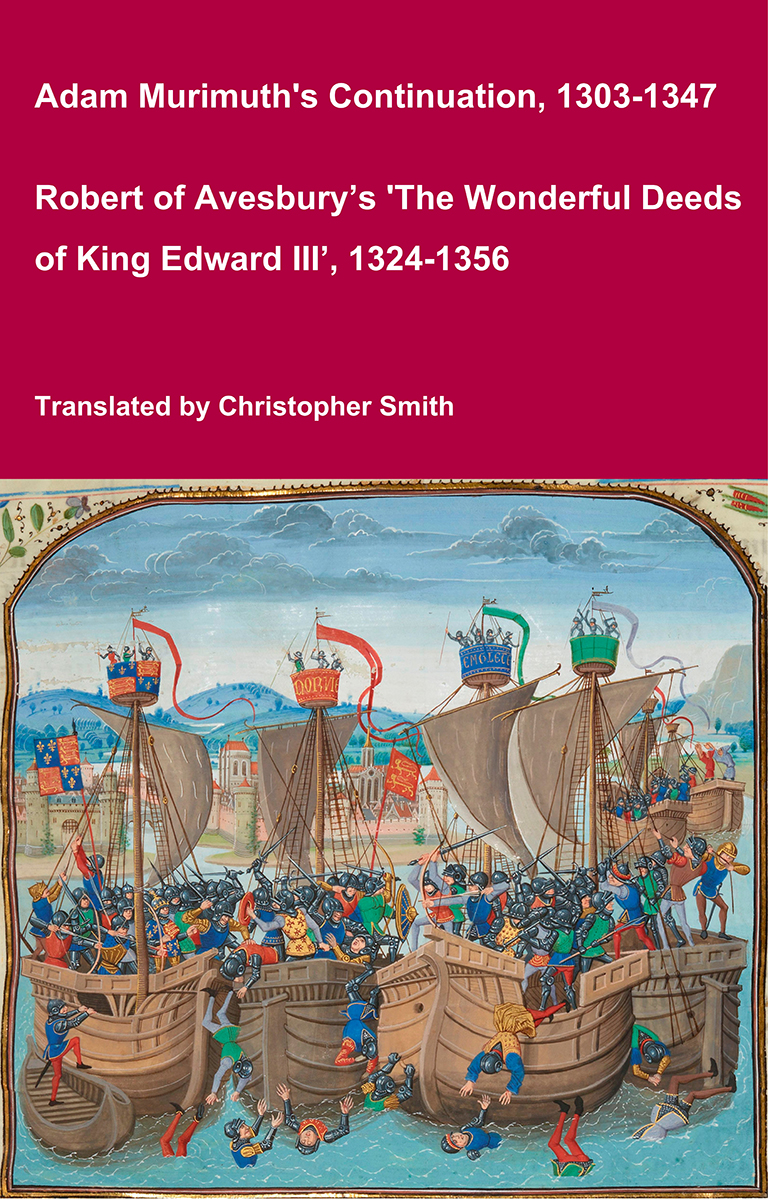
Adam Murimuth's Continuation and Robert of Avesbury’s 'The Wonderful Deeds of King Edward III'
This volume brings together two of the most important contemporary chronicles for the reign of Edward III and the opening phases of the Hundred Years’ War. Written in Latin by English clerical observers, these texts provide a vivid and authoritative window into the political, diplomatic, and military history of fourteenth-century England and its continental ambitions. Adam Murimuth Continuatio's Chronicarum continues an earlier chronicle into the mid-fourteenth century, offering concise but valuable notices on royal policy, foreign relations, and ecclesiastical affairs. Its annalistic structure makes it especially useful for establishing chronology and tracing the development of events year by year. Complementing it, Robert of Avesbury’s De gestis mirabilibus regis Edwardi tertii is a rich documentary chronicle preserving letters, treaties, and official records alongside narrative passages. It is an indispensable source for understanding Edward III’s claim to the French crown, the conduct of war, and the mechanisms of medieval diplomacy. Together, these works offer scholars, students, and enthusiasts a reliable and unembellished account of a transformative period in English and European history. Essential for anyone interested in medieval chronicles, the Hundred Years’ War, or the reign of Edward III.
Available at Amazon in eBook and Paperback format.
Paston Letters Volume 3 303. James Gresham To John Paston.48.1
To my right worshipfull maister, John Paston, at Norwiche, be this delyvred. 28th October 1455
Please it your maistership to wete48.2 ....
Here be many marvaylos tales of thynggs that shall falle this next moneth, as it is seyd; for it is talked that oon Doktor Grene, a preest, hath kalked [calculated ?] and reporteth, that by fore Seynt Andreu day next comyng shall be the grettest bataill that was sith the bataill of Shrewisbury,48.3 and it shall falle bytwene the Bisshoppes Inne of Salesbury and Westminster Barres, and there shall deye vij. Lords, whereof iij. shuld be bisshoppes. Althis and meche more is talked and reported. I trust to God it shall not falle so.
Also there is gret varyance bytwene the Erll of Devenshire and the Lord Bonvyle, as hath be many day, and meche debat is like to growe therby; for on Thursday at nyght last passed, the Erll of Denshyres sone and heir come with lx. men of armes to Radford's49.1 place in Devenshire, whiche was of counseil with my Lord Bonvyle; and they sette an hous on fyer at Radfords gate, and cryed and mad an noyse as though they had be sory for the fyer; and by that cause Radfords men set opyn the gats and yede owt to se the fyer; and for with th'erll sone forseid entred into the place and intreted Radford to come doun of his chambre to sp[e]ke with them, promyttyng hym that he shuld no bodyly harm have; up on whiche promysse he come doun, and spak with the seid Erll sone.
In the mene tyme his menye robbe his chambre, and ryfled his huches,49.2 and trussed suyche as they coude gete to gydder, and caryed it awey on his own hors. Thanne th'erll sone seid, 'Radford, thou must come to my lord my fadir.' He seid he wold, and bad oon of his men make redy his hors to ride with hem, whiche answerd hym that alle his hors wern take awey; thanne he seid to th'erll sone, 'Sir, your men have robbed my chambre, and thei have myn hors, that I may not ride with you to my lord your fadir, wherfor, I pray you, lete me ride, for I am old, and may not go.'
It was answerid hym ageyn, that he shuld walke forth with them on his feete; and so he dede till he was a flyte49.3 shote or more from his place, and thanne he was ..... softly, for cawse he myght not go fast. And whanne thei were thus departed, he turned .... oon; forwith come ix. men ageyn up on hym, and smot hym in the hed, and fellid .... of them kyt his throte.
This was told to my Lord Chaunceler49.4 this fornoon .... messengers as come of purpos owt of the same cuntre. This matier is take gretly .... passed at ij. after mydnyght rod owt of London, as it is seid, more thanne .... the best wyse. Summe seyne it was to ride toward my Lord of York, and summe .... k, so meche rumor is here; what it menyth I wot not, God turne it .... at Hertford,50.1 and summe men ar a ferd that he [King Henry VI of England and II of France [aged 33]] is seek ageyn. I pray God .... my Lords of York, Warwyk, Salesbury and other arn in purpos to conveye hym ....... &c. The seid N. Crome, berer her of, shall telle you suche tydynggs ....... in hast, at London, on Seint Simon day and Jude.Yowr poerJ. Gr.
Note 48.1. [From Fenn, i. 114.] This letter was written in 1455, at the time of the King's second attack of illness, which happened while he was under the control of the Duke of York and the Earls of Warwick and Salisbury, as mentioned at the end of the letter. In the latter part of the letter some words are lost by the decay of the original MS.
Note 48.2. Here, says Fenn, follows an account of some law business, etc.
Note 48.3. Fought in 1403 between King Henry IV. and the rebel Percies.
Note 49.1. 'Nicolas Radford,' says Fenn in a note, 'was an eminent lawyer, and resided at Poghill, near Kyrton.' In Pole's Description of Devonshire, p. 219, we find that one Nicolas Radford dwelled at Upcot in Henry VI's time, 'after whose death controversy arose betwixt John Radford of Okeford and Thomazin, sister of the said Nicholas,' who had married Roger Prous.
Note 49.2. A hutch was a coffer or chest standing on legs.
Note 49.3. A flight was 'a light arrow formed for very long and straight shots.'—Halliwell.
Note 49.4. Archbishop Bourchier.
Note 50.1. The King was at Hertford, as appears by the Privy Seals, in August and September 1455, and not improbably in October also.
 Become a Member via our Buy Me a Coffee page to read more.
On 15th December 1455 the Courtenay family, Earls of Devon since 1355, and Bonville family resolved their differences at the Battle of Clyst Heath near Exeter [Map]. Thomas Courtenay 5th or 13th Earl Devon [aged 41] defeated William Bonville 1st Baron Bonville [aged 63]. Battle something of an over-statement; the number of dead reported by one chronicler as being twelve. Following the battle the victorious Courtenay's attacked Bonville's Shute Manor.
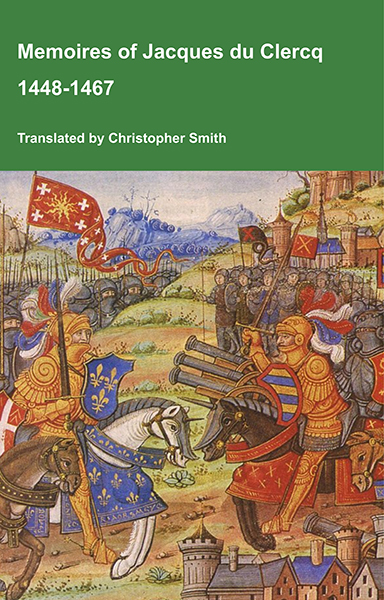 Memoires Jacques du Clercq. By the counsel of the wise and valiant knight, Sir Guillaume Blanc, mighty in arms, a great multitude of Turks were driven out of the city of Belgrade, and all were slain, up to the number of 15,000, with not a single man escaping. The next day, large companies of Turks came before the city with a great army. That day, the Christians fought them so fiercely that another 100,000 Turks were killed between sunrise and sunset. There was present in person the Sultan of Persia, chief commander of all these Turks, who, seeing such a defeat among his forces, fled with a small number of men to a city called Berbe, and from there into Greece. After this, the said knight Guillaume Blanc and all his company advanced to the city of Berbe, which, continuing their good fortune and with the help of God, they captured, killing 2,000 Turks. Continuing their success, again with God's help, they captured several cities and castles: Bastillianne, Vulgara, Fascigia, Evere and another very fine city called Augusta, where 15,000 Turks were killed In that same campaign, 6,000 Christians also died. After this, the Christians captured Saint Vincent and the city of Valence with its castle, and advanced so far that all was converted to the Catholic faith. Then, seeking further gains, they marched against the castle of Flagis, which they took, along with: Gavandalo, Perons, Havengets, and Chastomem. There, 4,000 Turks were killed and the city taken, though 100 Christians also died. Soon after, the entire Christian force entered the land of Greece, where they captured a great city called Glotuasse, killing 2,000 Turks. From there, the Turks fled, abandoning all castles, villages, towns, and fortresses in those regions, retreating into the province of Galdée, near Constantinople. Thus, the Christians gained control of the land, its people, and a large part of western Greece. Further victories followed: the cities of Latheris and Glaunis were taken, along with castles and many other strongholds and villages. In this great defeat, it was counted that 200,000 Turks had been killed by the Christians, and 80 walled cities and towns, as well as four castles and other fortresses, had been captured. This conquest was recorded in France, in the church of Saint-Denis, from which this account is drawn. These events were sworn to be true upon the Holy Gospels by: Sir Jean Balate, priest, Sir Patrice Cormaille, priest, Andreu Vallate, layman. All three, from the diocese of Emblem in Dacia, declared under oath that they had personally been present in all the battles, fighting and facing great danger of death. Because of these dangers, they had vowed themselves to Saint Denis and to undertake several pilgrimages before returning to their homeland. They further stated that in the first battle, Sir Guillaume Blanc was grievously wounded by a lance and was forced to withdraw to the city of Augusta, where he later died. Likewise, the Turkish leader was severely wounded and withdrew to Constantinople, where he remained ill for some time before recovering and returning to his country.
Et par le conseil du sage et valliant chevallier, messire Guillaume Blanc, puissant en armes, par lequel feurent bouttés hors de la cité de Belgrado grande multitude de Turcs, lesquels feurent touts occis jusques au nombre de quinze mille, et n'eschappa oncques hommes, ceste entreprinse faite; le lendemain vindrent grandes compagnies de Turcs devant icelle cité en grand ost, lesquels icelluy jour feurent par les chrestiens tellement combattus qu'il y mourut derechief cent mille Turcs, entre soleil levant et soleil couchant; et la estoit en personne le soudain de Perse, principal capitaine de touts lesdits Turcs, lequel voyant telle desconfiture estre sur ses gens, s'enffuit avec ung peu de ses gens en une cité nommée Berbe, et de la en la terre de Grece. Après ce, se transporterent ledit chevallier, nommé le chevallier Blanc, et toute sa compagnie devant la cité de Berbe, laquelle en ensuivant leur bonne fortune, par l'ayde de Dicu, gagnerent et meirent a mort deux mille Turcs; après ce, en ensuivant aussy leur bonne fortune, par l'ayde de Dieu gagnerent plusieurs villes et chasteaux; c'est a sçavoir: la cité de Bastillianne, Vulgara, Fascigia, Evere et une aultre cité nommée Augusta, qui estoit moult belle cité, en laquelle moururent et feurent destruits quinze mille Turcs, et a celle journée moururent vjm chrestiens: depuis lesdits chrestiens prindrent Saint Vincent et la ville de Valence avecq le chasteau, et tellement besoignerent que tout fust converty a la foy catholique; ce fait les chrestiens, pour gagner de plus en plus, allerent devant le chasteau de Flagis, lequel ils prindrent et se prindrent Gavandalo, Perons, Havengets et Chastomem, et la feurent destruicts iiijm Turcs et la cité gagniée; mais il y morut cent chrestiens, et tautost après entra toute la compagnie d'iceulx chrestiens en la terre de Grece, et la gaignerent une grande cité nommée Glotuasse, ou ils occirent deux mille Turcs, et de la s'enffuirent et delaisserent touts les chasteaux, villaiges, villes closes et aultres fortresses estant en icelles marches, et s'en allerent en la province de Galdée qui est emprès de Constantinople, et ainsy leur demoura la terre, le peuple et grande partie du pays de Grece vers occident. Après encoires feurent prinses sur les Turcs la cité de Latheris et celle de Glaunis, et le chasteau avecq plusieurs aultres fortresses et villaiges. En la desconfiture cy devant dite des Turcs, feurent nombrés les Turcs qui y avoient esté occis par les chrestiens deux cent mille, et huict vingt cités et villes murées prinses, et iiij chasteaux et aultres fortresses, et fust ceste conqueste et chroni que de Franche en l'eglise de saint Denys, desquelles ce que dit est cy dessus touchant icelle conqueste est extraict, lesquelles choses affermerent estre vrayes sur saintes esvangiles de Dieu et sur le voeu de prestrise venerables personnes, messire Jehan Balate, prestre, messire Patrice Cormaille, prestre, et Andreu Vallate, homme lay, touts trois estant du diocese du Emblem en Dachaie; lesquels dessus nommés, par le serment que dit est, feurent interrogiés, comme ils sçavoient les dessusdites choses estre vrayes, lesquels deposerent qu'ils avoient esté et assisté personnellement en toutes les batailles en armes a combattre, et pour leurs grands perils de mort ou ils avoient esté, s'estoient voués a monsieur Saint Denys, et en plusieurs, aultres pellerinages qu'ils avoient intention d'accomplir, avant que jamais ils retournassent en leurs pays, et oultre plus affirmerent que en la premiere bataille qui fust faite, le chevallier Blanc fust grievement navré d'une lanche, et tant que necessité le constraindit de soy retraire en la cité d'Auguste ou il mourut; et en icelle menée fust pareillement fort navré le Turc, lequel se retraict Constantinople ou il fust malade une espace de temps, et lui gueri retourna en son pays. Audit an cinquante six, le duc de Savoye et sa femme vindrent devers le roy de Franche, et accoucha la femme du prince de Piemont aisné, fils du duc de Savoye, laquelle estoit fille du roy de Franche, d'un fils. En ce temps vint en ambassade d'Espaigne pour confermer l'allianche du roy de Franche et du roy d'Espaigne. En ce temps aussy, le roy de Navarre vint devers le roy de Franche demander la duchié de Nemours. En ce temps encoires retourna le cardinal d'Avignon du pays de Bretaigne, ou il avoit canonisé saint Vincent de l'ordre des Jacobins, en la cité de Vennes; et assés tost après icelluy cardinal alla devers le roy de Franche, pour avoir ung dixiesme sur les gens d'Église de son royaume, pour aller combattre les Turcs comme il disoit. Audit an feurent grande abbondance de pluyes.
Become a Member via our Buy Me a Coffee page to read more.
On 28th January 1457 King Henry VII of England and Ireland was born to the late Edmund Tudor 1st Earl Richmond and Margaret Beaufort Countess Richmond [aged 13] at Pembroke Castle [Map]. He a great x 3 grandson of King Edward III of England. He married 18th January 1486 his third cousin Elizabeth York Queen Consort England, daughter of King Edward IV of England and Elizabeth Woodville Queen Consort England, and had issue.


Historia Regis Henrici Septimi by Bernado Andrea. King Henry the Seventh was born, with Calixtus the Third as Roman pontiff and Henry the Sixth reigning in this realm with the highest favour of virtue and probity, to such a degree that even to the present day that blessed king, on account of the many miracles which God daily shows through his merits, is proclaimed far and wide by all; in the month of January, and on the seventeenth day before the Kalends of February [16th January 1457], indeed on the most auspicious day of the Second Feast Day of Saint Agnes1, and at the hour …
Natus est Henricus Rex Septimus [Calixto Tertio] Romano pontifice et Henrico Sexto regnante in hoc regno summa cum virtutis et probitatis gratia, usque adeo ut in hodiernum usque diem beatus ille rex ob multa quæ indies ejus meritis Deus ostendit miracula ab omnibus longe lateque prædicetur: mense vero Januarii, et Februarii kalend. decimoseptimo, die quidem Sanctæ Agnetis Secundæ faustissima, hora vero ....
Note 1. The Second Feast Day of St Agnes [Sanctæ Agnetis Secundæ] is the 28th of January. Possibly an error by the author, possibly by the transriber. The 'seventeenth day before the Ides of February' is the 28th of January.
On 25th April 1457 John Neville 1st Marquess Montagu [aged 26] and Isabel Ingaldsthorpe [aged 16] were married by Cardinal Thomas Bourchier [aged 39] at Canterbury Cathedral [Map]. She the heir of her father Edmund Ingaldsthorpe who had died the previous year. Eight manors were settled on them in jointure. He the son of Richard Neville Earl Salisbury [aged 57] and Alice Montagu 5th Countess of Salisbury [aged 50]. They were second cousin once removed. He a great x 2 grandson of King Edward III of England. She a great x 5 granddaughter of King Edward I of England.
In 1460 a petition noted "The Nevilles state that Isabel was found to be Ingoldisthorpe's daughter and heir. When they requested livery of the estates from the chancellor in Chancery, he refused on the grounds that the king had granted the marriage and wardship to the queen [aged 29]. The Nevilles disputed this as Isabel was 14, and not a minor at common law. John Neville made recognizances in £1,000 to the queen on the understanding that if it was found that such a grant to the queen was not available, then she would not take any money from Neville. The Nevilles are unable to have a day in their law, and the queen has still levied part of the £1,000, and they are forced to sue a special livery at great expense. They request that the recognizances by annulled, and that women of the age of 14 when their ancestors die should have no problem of obtaining livery of their lands and tenements." See National Archives UK John Nevyll (Neville), knight; Isabel Neville, wife of John Neville, knight. SC 8/28/1398 1460.
On 3rd January 1458 Henry Stafford [aged 33] and Margaret Beaufort Countess Richmond [aged 14] were married probably at Maxstoke Castle [Map]. Her third marriage (second if you don't include the one annulled) aged fourteen and already the mother of the future King Henry VII. She had no further issue. She the daughter of John Beaufort 1st Duke of Somerset and Margaret Beauchamp Duchess Somerset [aged 48]. He the son of Humphrey Stafford 1st Duke of Buckingham [aged 55] and Anne Neville Duchess Buckingham [aged 50]. They were second cousins. He a great x 2 grandson of King Edward III of England. She a great x 2 granddaughter of King Edward III of England.