

The History of William Marshal was commissioned by his son shortly after William’s death in 1219 to celebrate the Marshal’s remarkable life; it is an authentic, contemporary voice. The manuscript was discovered in 1861 by French historian Paul Meyer. Meyer published the manuscript in its original Anglo-French in 1891 in two books. This book is a line by line translation of the first of Meyer’s books; lines 1-10152. Book 1 of the History begins in 1139 and ends in 1194. It describes the events of the Anarchy, the role of William’s father John, John’s marriages, William’s childhood, his role as a hostage at the siege of Newbury, his injury and imprisonment in Poitou where he met Eleanor of Aquitaine and his life as a knight errant. It continues with the accusation against him of an improper relationship with Margaret, wife of Henry the Young King, his exile, and return, the death of Henry the Young King, the rebellion of Richard, the future King Richard I, war with France, the death of King Henry II, and the capture of King Richard, and the rebellion of John, the future King John. It ends with the release of King Richard and the death of John Marshal.
Available at Amazon in eBook and Paperback format.
1500-1509 Death of Prince Arthur and Henry VII is in 16th Century Events.
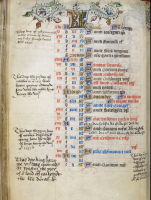
On 2nd November 1501 Catherine of Aragon [aged 15] arrived at Plymouth. Her arrival is noted by Arthur's grandmother Margaret Beaufort [aged 58] in her Book of Hours, top left.


On 12th November 1501 Catherine of Aragon [aged 15] processed from St George's Field over London Bridge. She was warmly welcomed by the people of London. The streets were hung with tapestries and she was greeted along the way by pageants.
George Manners 11th Baron Ros Helmsley [aged 31] attended on her.
The Receyt of the Ladie Kateryne Book 1 Chapter 1. Whan that after the prefixed promyses bitwene the noble kinges of the roiall realmes of Englond and of Hispayne, the doughtr and princesse [aged 15] of the said King of Hispayne, for th' entente of matrymonie legallie to be fynesshid and concludid, to her prepaired navye of shippes with the right sufficiaunt gardie and companye of Noblis of that contreth to her assistentes lymyted and assigned theymself shold brefly order and condute. Th' mpacient wiendes of that coostis shold seme to have ben greatly aggreved and not peasably to suffer the before desyred passage of the said Princesse to the coostes of Englond, fatally ordynate and predestinate, the giest and also the dowrie of soo goodlie a ladie and princesse. Wherupon they cruelly with right great hudgenés of storm and tempest oppresed with their oultragious blastes the clothis of the said shippes; enhaunced their mastes owte of their sokettes, disrobbed their taklyng and all their hool remyge. The perilous seas with waves soo fearfully wrought and arrered that unto the rulers and craftie maryners was, moost to th' enfreight persones to be saveguarded, expediently thought to som of their owne lately forsaken havens they shold retourne their course; Where within short seasons it contentid Almyghtie God that more plesant wiends shold goodlie rule the journeis of the cleer eires above, thrugh whoes help and aide, unto th' Englisshe parties they were right shortly conveied, and fortunatly they [Catherine of Aragon] arryved at Plymmouthe [Map] [2nd October 1501], fer in the contreth of the west.
Calendar of State Papers of Spain. 4th October 1501. Voyage of the Princess of Wales [Catherine of Aragon [aged 15]], and arrival in England. 305. The Licentiate Alcares to Queen Isabella [aged 50].
The Princess of Wales embarked1 on Monday the 27th of September. At five o'clock in the afteroon the ship weighed anchor, and set sail. The weather was favourable at first, but changed after midnight. Continued their voyage until they were off Ushant [Map], without any great inconvenience. The winds were variable, but the sea was not rough. When they had passed Ushant [Map], however, they were overtaken by a most furious vendabal2, thunderstorms, and immense waves. Had a thunderstorm every four or five hours during the rest of the voyage. "It was impossible not to be frightened."
The following Saturday [2nd October 1501], at 3 o'clock in the afternoon, the Princess entered the harbour of Plymouth [Map], which is the first on the coast of England. "She could not have been received with greater rejoicings, if she had been the Saviour of the world." As soon as she left the boat, she went in procession to the church [Plymouth Monastery [Map]], where, it is to be hoped, God gave her the possession of all these realms for such a period as would be long enough to enable her to enjoy life, and to leave heirs to the throne.—4th of October.
Addressed: "To the very powerful Queen of Spain, our excellent Lady." Spanish. Holograph, pp. 2.
Note 2. "Viento de abajo" (wind from below), that is, according to Castilian phraseology, south wind.
The Receyt of the Ladie Kateryne Book 1 Chapter 4. [6th November 1501]. Chapter 1.4. Of the demeanure of the King and of the Princesse [aged 15] in their furst metynge.
Thus His Highnes avaunced hymself, levyng the Pryns behynde upon the playne, and in the tyme of II or III of the clok at after none, His Grace entred into the towne of Dogmersfeld, where the Pryncesse was II or III owres before his said comyng right well accompanyed, and right richely beseyn, so as hertofor have be seyn none like her, havyng with her an Archbusshop, a Busshop, and an Erl, with meny other noblis of Hispayne, and meny ladies and gentilwomen of the same contreth to the nombre of thre score; and ladies and gentilwomen of this region right nygh as meny. And assone as the Princesse servauntes were asserteyned of the commyng of the Kyng, as ther archebusshoppe, the Busshoppe, with other of her retynnue & cowncell they shewed hym that the Princesse was in her vest, whom he aunswerd in such forme, that if she were in her bed, he wold se and commone with her, for that was the mynd and th' entent of his comyng; and thus convenyent leisure to her respited, she gave hym an honorable metyng in her third chambre, where were perused the mooste goodly wordes and uttred of the langueges of bothe parties to as great joye and gladnes as in eny persones myght ever covenably have ben had.
The Receyt of the Ladie Kateryne Book 2 Chapter 1. The furste Chaptre of the secunde Booke; what solempnyte was used in hir receyte in the Cytie of London1.
NOW it is that we be comyn into the moost joyefull and longest desired and acceptable season, the Fryday the XII day of the moneth of Novembre; uppon whom this great Princes of Hispayne, aftr that she had dyned at her lodgyng of Lambeth, at oure Sovrayn his will pleasure and myend of Englond, she shulde make her entres. Assemblyng first her owne retynue of the contreth of Spayne, and then proceded forth into Seint George's Feld, where were redy present upon horsbak a right semely company, by the Kinge's Grace assigned for the ryall and solempne inducyng of this noble estate, adjoyning nyghly to her seid lodgyng. Furst, there was, for the spiritualls2 of Englond, the Archebushop of York, with other Bushoppes, the Deane of York, with other Prelats of the Churche; For the tempalls, the Duke of York, the Duke of Bokyngham, the Erl of Northumblond, th Erl of Surrey, the Erl of Essex, the Erl of Kent, the Lord Henry of Bokyngham, the Lord Burgevany, the Lord Straunge, the Lord Barners, the Lord Suche, the Lord Willughby, and other Lords, right weel horsed and richely beseen; with many knights and esquyers to a great nombre, lyke wise well horsid and beseen.
Note 1. The titles of this and the succeeding chapter seem to have been accidentally transposed, by the negligence of the transcriber.
Note 2. Spirituals; Bishops, and other dignified clergy.
On 14th November 1501 Arthur Prince of Wales [aged 15] and Catherine of Aragon [aged 15] were married at St Paul's Cathedral [Map] by Archbishop Henry Deane assisted by William Warham Bishop of London [aged 51] and a further eighteen bishops. She wore a white satin dress with a farthingale and over her head wore a veil of fine silk trimmed with gold and pearls. She would, eight years later, marry his younger brother King Henry VIII of England and Ireland [aged 10] - see Marriage and Coronation of Henry VIII and Catherine of Aragon. She the daughter of Ferdinand II King Aragon [aged 49] and Isabella Queen Castile [aged 50]. He the son of King Henry VII of England and Ireland [aged 44] and Elizabeth York Queen Consort England [aged 35]. They were half third cousin once removed. She a great x 3 granddaughter of King Edward III of England.
Prince Henry who escorted her up the aisle and gave her away.
Cecily York Viscountess Welles [aged 32] bore the train, Thomas Grey 2nd Marquess Dorset [aged 24] was Chief Answerer.
Robert Radclyffe 1st Earl of Sussex [aged 18] and Edward Stafford 3rd Duke of Buckingham [aged 23] attended.
Thomas Englefield was appointed Knight of the Bath.
Immediately after their marriage Arthur Prince of Wales and Catherine of Aragon resided at Tickenhill Manor, Bewdley [Map] for a month. Thereafter they travelled to Ludlow, Shropshire [Map].


The Traduction and Marriage of the Princess Pynsson. A rēmemembraūce for the traduction of the Princesse Kateryne doughter to the right high and right myghty Prince the kinge and quene of Spayne as here in articles it dothe ensue.
Wriothesley's Chronicle [1508-1562]. 14th November 1501. This yeare, the 14th day of November, Prince Arthure [aged 15] was marriedg at Paules Churche [Map], in London, to the Kinge of Spaynes [aged 49] third daughter, named Katheryne [aged 15].a
Note g. At the age of fifteen, his bride being seventeen. The commission and marriage articles may be seen in MS. Harleian. Cod. 6, 220, Art. 1.
The Receyt of the Ladie Kateryne Book 2 Chapter 9. [14th November 1501] Chapter 3.1. Of the ordryng of the Church of Powles.
The Cathedrall Chirch of Seint Poulys within the citie of London was ennournyd in all behalvys, bothe autier and quere, and also the body of the Chirche, with the most excellent ornements apperteynyng unto the worship of God, and honour of this joyeful maryage and unyon of the moost revrent Prince and Pnces. First, the auters with their plats, jowalx, and relikks, of wondrefull riche and cyousnes; with copys1 and vestments, in their sortes, honourably to the mynystres abehovabill, of full great valoure: The quere also enhaunged with clothis of Aras; and from the quere doore, the which is of XII or XIII foote enhight from the pavment, extended a weye and passage callid a levy, like unto a brydge of tymbre, byllyd and arrayid upon great and meny posts, roulyd upon bothe the sidds with red say, nailyd and cov'ed upon the seid reylys all the lengeth of the body of the chirch unto the nyghyngys and approximacion of the west doore, the whiche is of VI or VII hundreth foote of lengeth: And nere unto the lougher end of thys levy there was enhaunsed a certayne porcon of V or VI.... like a stage, rownde in compasse, covred with red say, takyd fast with gilte nailys, uppon the which the Prince, Princes, and mynysters of the sacrement of matrimony might conveniently stond; and in object annempst this place, where as the courte and consistory is usyd to be kept, above in the vaute, there was a closet, made pperly woth latés wyndowes, enclosed, within which closett the King's Grace and the Quene's might stond secreatly to se and appceyve the forme and manor of the mynystracon. The wallys also of the body of the Chirch, conteynyng the lengeth of the levy, of a great hight and brede were hangyd with costely and riche clothis of Arras, whoes works and texturys represented the noble and valiaunt acts, storis, and gests, that for the moost ptie poets and oratours writt and remembre in their comments, boks, and scripture; as well the besegyng of noble cities as other batalls, turneis, their horsis, and persons, after the moost goodly pontinge, shapp, and fachyon, with the endevor and practis of the maker his reason and imaginacion.
Note 1. Copes.
Chronicle of a Bourgeois of Valenciennes
Récits d’un bourgeois de Valenciennes aka The Chronicle of a Bourgeois of Valenciennes is a vivid 14th-century vernacular chronicle written by an anonymous urban chronicler from Valenciennes in the County of Hainaut. It survives in a manuscript that describes local and regional history from about 1253 to 1366, blending chronology, narrative episodes, and eyewitness-style accounts of political, military, and social events in medieval France, Flanders, and the Low Countries. The work begins with a chronological framework of events affecting Valenciennes and its region under rulers such as King Philip VI of France and the shifting allegiances of local nobility. It includes accounts of conflicts, sieges, diplomatic manoeuvres, and the impact of broader struggles like the Hundred Years’ War on urban life in Hainaut. Written from the perspective of a burgher (bourgeois) rather than a monastery or royal court, the chronicle offers a rare lay viewpoint on high politics and warfare, reflecting how merchants, townspeople, and civic institutions experienced the turbulence of the 13th and 14th centuries. Its narrative style combines straightforward reporting of events with moral and civic observations, making it a valuable source for readers interested in medieval urban society, regional politics, and the lived experience of war and governance in pre-modern Europe.
Available at Amazon in eBook and Paperback format.
Letters and Papers Foreign and Domestic Henry VIII 1529. After 28th June 1529. Vit. B. XII. 70. B. M. 5774. Catharine of Arragon.
A set of depositions as to Catharine's marriage with Prince Arthur.
1. of George Earl of Shrewsbury [aged 61], seneschal of the King's household, at the Coldherbar, on Monday, 28 June 1529. Is 59 years of age. Was present at the marriage of Henry VII. at Westminster, and at the creation of Arthur prince of Wales and Henry Duke of York [aged 38]. They were always considered as brothers, and he never heard it contradicted. Was present at the marriage of Prince Arthur with Catharine, now Queen, at St. Paul's, in Nov. 17 Henry VII. 1521 (sic). Believes that Arthur was then 14 or more. Saw the Queen Elizabeth and him a month after his birth, at Winchester [Map], in 2 Henry VII. Believes that Catharine was more than 14. Thinks that Arthur must have been nearer 15 than 14. At night, with the Lord of Oxford [aged 58] and others, conducted Prince Arthur to the lady Catharine's [aged 43] bedchamber, and left him there. Supposes that the Prince consummated the marriage, as he did so, being only 15 years when he was married. They were always considered lawfully married during the life of Prince Arthur. Saw the funeral of Prince Arthur at Worcester, and the marriage of the King and Queen at Greenwich. Cannot answer the 6th and 7th articles, but leaves them to the laws. Never heard what is contained in the 8th article. As to the 9th, knows that the King and Queen cohabited and treated each other as husband and wife, but cannot say whether lawfully or not. Can say nothing from his own knowledge as to the 10th, 11th, and 12th articles. Has made this deposition without being instructed or corrupted in any way, only for the sake of truth.
Vit. B. XII. 80. B. M.
2. of Thomas marquis of Dorset [aged 52]. Is 52 years of age. The 1st and 2nd articles contain the truth. Was present at the baptism of Arthur and Henry, the former at Winchester, and the latter at Greenwich. Was present at the marriage of Prince Arthur with Catharine, now Queen, at St Paul's, on a Sunday in Nov. 1501, 17 Henry VII. Believes Arthur was about 15, for he has seen in the book in which are written the births of the King's children that he was born 20 Sept. 1486. Was present when Prince Arthur went to bed after his marriage, where the lady Catharine lay under the coverlet, "as the manner is of Queens in that behalf." Thinks that he used the princess as his wife, for he was of a good and sanguine complexion, and they were commonly reputed as man and wife during Prince Arthur's life. As to the 5th article, he can depose nothing to the first part, as he was then prisoner at Calais; but the remainder, touching cohabitation and reputation, is true. Can say nothing to the 6th, 7th, and 8th. The 9th, 10th, 11th, and 12th contain the truth, as he believes.
Vit. B. XII. 85. B. M.
3. of Sir Antony Willoughby. Has lived 15 years in Hampshire, for 12 years previously in Wiltshire. Was five years in the service of Prince Arthur, for five years before that in the service of the Bishop of Durham, and before that time in his father's household. Believes the 1st and 2nd articles to be true. To the 3rd and 4th, was present at the marriage of Prince Arthur and lady Catharine. By favour of his father, Lord Broke, steward of the King's household, was present when Prince Arthur went to bed on his marriage night in the palace of the Bishop of London. In the morning the prince, in the presence of Mores St. John, Mr. Cromer, Mr. William Woddall, Mr. Griffith Rice, and others, said to him, "Willoughby, bring me a cup of ale, for I have been this night in the midst of Spain;" and afterward said openly, "Masters, it is good pastime to have a wife." He, therefore, supposes that the marriage was consummated; and he heard that they lay together the Shrovetide following at Ludlow.
Knows that they lived together as man and wife during the remainder of the Prince's life.
Believes the 5th article to be true. Can depose nothing to the 6th, 7th and 8th. Believes the 9th, 10th and 11th to be true. The 12th contains law; to which he is not bound to reply. To the second additional interrogatory he replies, that it contains the truth, for he has been present twenty times at the solemnization of marriage, and the said form of words is always used.


Letters and Papers Foreign and Domestic Henry VIII 1529. After 28th June 1529. Vit. B. XII. 70. B. M. 5774. Catharine of Arragon.
Cott. App. XXVII. 135. B. M.
9. Deposition of Robert Viscount Fitzwater [aged 46]. Is 46 years of age, or thereabouts. To the 1st and 2nd articles, agrees with Thomas marquis of Dorset. Was in the service of Henry VII. from the death of Prince Arthur to the death of the King. Princes Arthur and Henry were always considered as the natural and lawful sons of Henry and Elizabeth. Was assigned by the King to the service of Arthur as his eldest son, and served him till his death.
To the 3rd and 4th articles, was present at the marriage of Prince Arthur and lady Catharine. Believes Arthur was then 15 years of age, as he heard from credible witnesses, and that Catharine was older. Was with the earls of Oxford [aged 58] and Shrewsbury [aged 61], and others, at the Bishop of London's palace, waiting on Prince Arthur going from his own chamber to that of the Princess, and left him in the bed, where, he believeth surely, the Princess lay. They dwelled together at Ludlow till the Prince's death. As to public report, agrees with the Earl of Shrewsbury. To the 5th article, cannot depose, except as to reputation, cohabitation, and offspring, in which he agrees with the marquis of Dorset. To the 6th, 7th and 8th, cannot depose. The 9th contains the truth. Believes the 10th, 11th and 12th to be true. Has not been influenced by force, fear, or the like.
Letters and Papers Foreign and Domestic Henry VIII 1529. After 28th June 1529. Cott. App. XXVII. 141. B. M. 5774. Catharine of Arragon.
11. Deposition of William Lord Mountjoy [aged 51].
Is 52 years of age or thereabout.
To the 1st and 2nd articles, agrees with Lord Darcy. To the 3rd and 4th, was present at the marriage of Arthur and Catharine, at St. Paul's. Believes Arthur was more than 14 years of age. Knows nothing of Catharine's age, nor of the consummation, except from report. To the 5th, agrees with Thomas marquis of Dorset as to cohabitation, offspring, and reputation, but cannot depose about the marriage. To the 6th and 7th, cannot depose. To the 8th, never heard of any great murmur or scandal in consequence of this marriage, among either the clergy or laity. The 9th contains the truth. To the 10th, 11th and 12th, cannot depose. Is not influenced by fear, &c.
Letters and Papers Foreign and Domestic Henry VIII 1529. After 12th July 1529. Vit. B. XII. 70. B. M. 5774. Catharine of Arragon.
Vit. B. XII. 130. B. M.
6. Deposition of Nicholas Bishop of Ely [aged 68].
Is 68 years of age.
Princes Arthur and Henry were legitimate sons of Henry VII. and his Queen Elizabeth. Was present at the marriage of Prince Arthur, but can say nothing as to the words used, on account of the tumult and multitude of people there. Can say nothing as to the consummation, but he doubts of it, because the Queen has often told him, on the testimony of her conscience, "quod [non] fuit carnaliter a dicto Arthuro cognita," [Translation. That she had not known Arthur conjugally] but they were both of sufficient age. As to the 5th article, believes the marriage was contracted both de facto and de jure, by reason of the dispensation; but he cannot depose to the time mentioned in the article. To the 6th article, has always believed that it is true as to jus divinum, and believes that it is also true as to jus ecclesiasticum. The 7th article would be true if there had not been a legitimate dispensation. Can depose nothing to the 8th article. Has heard the archbishop of Canterbury say that he had a dispute with the late Bishop of Winchester on the subject. To the 9th, the present King and Queen were lawfully married, as he believes. Believes the 10th to be true, as the Pope affirms it in a rescript. Believes the 11th to be true. To the 12th, does not consider that the legates are competent judges, as an appeal has been made.
On 2nd May 1502 James Tyrrell [aged 47] confessed to the murder of the Princes in the Tower at Guildhall [Map] during the Trial and Execution of James Tyrrell attended by King Henry VII of England and Ireland [aged 45] and Elizabeth York Queen Consort England [aged 36].
On 6th May 1502 James Tyrrell [aged 47] was beheaded. He was buried at Austin Friars.

Collectanea by John Leland [1502-1552]. On St. Pauls Day in January in the Year of our Lord God 1503 [25th January 1503], in the Kings Royal Manor of Richmond, wer the Fyancells of the right Highe and Mighty and right Excellent Prlnce and Princese James King of Scotts and Margaret eldest Daughter of our Soveraigne Lord Henry the Seventh, by the Grace of God King of England and of Fraunce, and Lord of Ireland, as esueth.
After long and deliberate Communicacion and Conclusion had, accorded, and concluded betwene the Two Kings, theyr Councells, Ambassadours, and Commissioners, King Henry sent for the Substance of the Lords, both Spiritual and Temporall, that were neare to London, to be present at the said intended Solempnitye.
On St. Pauls Day aforesaide the King and Queen with their noble Children, except the Prince, heard High Masse, and after that a notable Sermon made by the Reverend Fader the Lorde Richard Fitz James, Bishop of Chichester, at wich Tyme the saide King and Queen wer accompaynyed with: the Duke of York, the Kings Second Son, the Lady Mary, the Kiogs Second Daughter, The Popes Orator, Don Peter de Yaule, Embassador of Spayne, the Archbishop of Glasco, the Earl of Bothwell [aged 51], the Elect of Murray, [the last three being the] Ambassadors and Commisioners of Scotland, with many other Knights and Esquiers, the Embassador of Venice, called Messire Francisco de Capello, Knight, a Gent. of the French Kings, called L'Esquier Poland, The Popes Collector, with diverse other Strangiers.
Lords Spirituall of this Realme. The Lord Henry Den, Archbishop of Canterbery, the Lord Thomas Savage, Archbishop of Yorke [aged 54], the Lord Rich. Fox, Bishop of Winchester, the Lord John Arundell, Bishop of Chester, the Lord Rich. Fitz James, Bishop of Rochester, the Lord Rich. Nikk, Bishop of Norwiche.
Lords Temporal: the Duke of Buckingham Edward, the Marquis of Dorset [aged 25] Thomas, the Earle of Arundell Thomas, the Earle of Northumberland [aged 25] Henry, the Earle of Derby Thomas, High Constable of England, the Earle of Surrey Thomas, Trezerer of England the Earle of Essex Henry, the Earle of Ormond Thomas, the Lord Maltravers, the Lo. Strange, the Lo. William of Devonshire, the Lo. Howard, the Lo. Dawbeney, the Kings Chamberlyn, the Lo. Brooke, Steward of the Kings House, the Lord of Bergavenny, the Lo. Mountjoy, the Lo. Dacre of the North, the Lo. William of Suffolke, the Lo. Lawarre, Sir Thomas Stanly.
Ladyes: the Lady Mary [aged 6], the Kings Daughter, the Duchesse of Norfolke, the Lady Katheren the Q. Sister, the Lady Marques of Dorset, the Countes of Essex [aged 29], the Vicountesse Lisle, the Lady Herberd, the Lady Grey of Wilton, the Lady Ann Percye, the Lady Katherin Gourdon, the Lady of Burgavenny, the Lady Stourton, the Lady Dawbeney, the Lady Fitz Walter, the Lady Bray, the Lady Verney, the Lady Guildford, the Lady Capell, the Lady Petche.
Banneretts and Knights. Sir Edward Stanley, Sir Richard Guilford, Sir Thomas Lovell, Sir Richard Lews, Sir David Owen, Sir Walter Hungerford, Sir John Wingfeild, Sir Thomas Brandon, Sir William Tyler, Sir Edward Hungerford, Sir John Longford, Sir Gyles a Bruges, Sir Edward Stanhop, Sir John Digby, Sir John Petche, Sir William Vampage, Sir Rauf Verney, Sir William Seymour, Sir Robert Litton, Sir John Hufe, Sir Rowland Veilevyle, Sir William Rede, Sir Richard Cholmeley, Sir Rich. Andeborough, Sir Henry Roos, Sir Robert Clifford, Sir Richard Carew, Sir John Riseley.
On 2nd February 1503 Katherine Tudor was born to King Henry VII of England and Ireland [aged 46] and Elizabeth York Queen Consort England [aged 36] at the Tower of London [Map]. She died eight days later on 11th February 1503.
On 11th February 1503 (her birthday) Elizabeth York Queen Consort England died from childbirth.
On 23rd February 1503 Elizabeth York Queen Consort England [deceased] was buried in the King Henry VII Chapel, Westminster Abbey [Map]. Her sister Catherine York Countess Devon [aged 23] waschief mourner.
The Antiquarian Repertory. 11th February 1503. Remembrance for the enterment of the right high right excellent and most Christen Princese Elizabeth Queene of England and of France Lady of Ireland [aged 37] and the Eldest daughter of king Edward the fourth wife to the most hygh most puyssant and most victorious king Henry the viith [aged 46] our most dread Souveraigne Lord the which deceased in childbed in the Tower of London [Map] the xith day of Februarye which was upon Saturday and the xviiith yeare of the reigne of our said Soveraigne Lord the king her most dearest husband whose departing was as heveye and dolorous to the kings highuess as hath been sene or heard of. And also in likeyse to all the Estates of this Realme as well Citizens as Comnyns for she was one of the most gracious and best, beloved princesses in the world in her tyme beinge.
Then the king of his wisdom ordeyned certaine of his Counsell for the ordering of her buryall to be at Westminster. That is to say The Erle of Surry [aged 60] Treasurer of England and Sr Richard Guilford [aged 53] Comptrowler of his noble household And himselfe tooke with him certain of his secretest and prevely departed to a solitary place to passe his sorrows and would no man should resort to him but such his grace appointed untill such tyme it should please him to showe his pleasure and over yt every Officer to give their Attendance upon the said Councellours And over yt in his Departing ordeyned Incontinent the next day following for vi [6] Hundredth and xxxvi hole masses said in London and by Sr Charles Somerset [aged 43] and Sr Richard Guilford sent the best comfort to all the Queens servants that hath bene sene of a soveraigne Lord with as good words.
Also then were ronngen the bells of London everye one and after that through out the Realme with solomne Dyrgies and Masses of Requiems and everye Religious place collegs and Churches.
William of Worcester's Chronicle of England
William of Worcester, born around 1415, and died around 1482 was secretary to John Fastolf, the renowned soldier of the Hundred Years War, during which time he collected documents, letters, and wrote a record of events. Following their return to England in 1440 William was witness to major events. Twice in his chronicle he uses the first person: 1. when writing about the murder of Thomas, 7th Baron Scales, in 1460, he writes '… and I saw him lying naked in the cemetery near the porch of the church of St. Mary Overie in Southwark …' and 2. describing King Edward IV's entry into London in 1461 he writes '… proclaimed that all the people themselves were to recognize and acknowledge Edward as king. I was present and heard this, and immediately went down with them into the city'. William’s Chronicle is rich in detail. It is the source of much information about the Wars of the Roses, including the term 'Diabolical Marriage' to describe the marriage of Queen Elizabeth Woodville’s brother John’s marriage to Katherine, Dowager Duchess of Norfolk, he aged twenty, she sixty-five or more, and the story about a paper crown being placed in mockery on the severed head of Richard, 3rd Duke of York.
Available at Amazon in eBook and Paperback format.
The Antiquarian Repertory. The Sunday [12th February 1503] next following the corps [deceased] was removed from her Chamber to the Chappell [Map] in manner that followeth.
First there was The Abbott of Westminster [aged 39] in pontificalibus with the Dean of the kings Chappell [aged 63] and the whole company of the same fowr knights bearing the Canapye with great Number of Gentlemen which went two and two together on every syde of the prossion great Number of torches brening borne by the Kings and the Queens servants after them the Officers of Armes and the Greatest estates and other Lords their present layd their hands to the Corps the Lady Elizabeth Stafford [aged 24] was that day principall Mourner and all the other Laides followed her two and two together in such most sadd and simplest Clothing that they had on their heads thredden kierchiefs hanging on their shoulders and close under their Chins and this daily until their slopps mantells hoodes and paris were made and Ordyned. And when the Corps was sett under the hearse in the Chapell [Map] Coverd with a rich Cloth of black velvet with a Crosse of Cloth of Gold. And an Officer of Armes in an high voice said for Queen EHzebeth soule and all Xtn souls Pater noster and every ...... and atoremus before the Collect Aminabus inlykewise.
That night and every Night following was ordyned a goodly watch both of men and Gentlewomen at the lest iiij gentlewomen ij [2] officers of Armes and vij yeomen and grooms. The gentlewomen were relieved with vj [6] ladies which continually did knele about the Corps.
Then the kings Chaplin began and Redd the sawter that done to the laudes and Commendations.
After that the Deane of the kings Chappell all the nobles officers of Armes other gentle and honest persons went to the great chamber for the Ladys to the Masse of Requiem.
Then was the Lady Catherin [aged 23] sister of the noble Queene Cheif mourner led by the Earle of Surry [aged 60] and Earle of Essex her train borne by the Lady Elizabeth Stafford accompanied also with all the other Laidies and Gentlewomen of the Court And when they were comen to the quier the foresaid vj Laides gave roome to there betters in tyme masse was done after which they continued their watch.
The Cheif Mourner kneled at the heade alone then an officer of Arms began for the Queene &c And so began the masse songen by the Abbot of Westminster at the Offringe the Lady was led by ij [2] of the greatest Estates there present and the lest gave her the offring having before her the Chamberlain and the Officers of Arms passing always by the Corps did their obeysance as before.
Then offered the other six Laides before any Estate ij [2] and ij [2] together then the greatest estates and all the Laides and Gentlewomen then all the other Laides and knights and squires with other Gentlemen. So this order as before was dayly kept as long as she was in the Tower every day in pontificalibus by a Bishop or an Abbott at the least as the next day by the Abbott of Barmsey The iij [3] by the Abbott Albones The iiijth by the Abbott of Winchcomb The vth by the Abbott of Towerhill The vjth by the Abbott of Stratford The vijth day there was iij [3] solempne masses. The first of our lady sungen by the Abbott of Redyng att that masse offered a piece of Gold of xld for the masse pennye the principle Mourner and no other person The second masse songen by the bishop Landaffe and likewise at the masse none offered but she and then offered a piece of Gold of 5s. The iijd Masse songen by the bishop of Norwigge and att that Masse she offered a Noble Then offered the Laides and the Nobles as before The viijth day the service was done by the Bishop of Bangor The ixth day by the Bishop of Exeter the xii day by the Bishop of Lincolne.
The Antiquarian Repertory. The Sunday [22nd February 1503]. That Masse done the Lords and Laides went to breakfast and in meane tyme the Corps was conveyd into the Chaire which was eniparralled as followeth:
First all the bayles sydes and Coffers were covered with black velvett and over all along of a prety depnes a Cloth of black velvett with a Crosse of White Cloth of gould well frindged drawn with vi [6] horses traped with black velvett and all the draught of the same.
And when the Corps was in the Chest there was Ordeyned an Image or a personage like a Queene Clothed in the very Roabes of Estate of the Queene having her very rich Crowne on her Head her heire about her shoulders her septer in her right Hand and her fingers well garnished with Gould and precious Stones.
And on every end of the Chair on the Coffer kneeled a Gentleman Usher by all the way to Westminster.
On the fore horse and the tyller ij [2] charriott men and on the other vij [7] horses iiij [4] henchmen in black gowns and mourning hood over their heads every horse having iiij [4] lozengs of the quenes Armes beaten in oyle rolled upon sarcenett with fine Gould and the fore horse having one on his forehead and none but he.
And by every horse there was a man of honour a foot with mourning hoods over their heads and at every corner of the Chaire a White banner of our Lady borne by a knight the banners were all White in token that she dyed in Childbed their wereordeyned and appoynted.
Certain knights and Esquires to go by the Chaire and the horse to beare the banner and every each to assist other whose names followeth Sr Edward Haward [aged 27] Sr Henery Wylongby [aged 52] Sr Thomas West [aged 46] sonne and heir of the Lord Lavarres Sr Edward Darell [aged 37] Sr John Petche [aged 53] Sr George Manners [aged 33] Sr Richard Carew [aged 34] Sr Edward Wingfield Sr William Sands [aged 49] Srr Raufe Verney [aged 48].
Sir John Hodelston Sr John Rainsford William Denton Richard Wingfuld Raphe Dacre Xtofer Wylongby [aged 22] Edward Guilford [aged 29] William West John Gawge [aged 23]
Also their were ordyned viij [8] palferys saddled traped and empelled with black velvett for the viij Laidesof honour to follow the Chaire that is to say the Lady Katherine [aged 23] The Lady Elizebeth Stafford [aged 24] The Countess of Essex [Note. Possibly Mary Saye Countess Essex and Eu [aged 29] although she is believed to have married the Earl in 1512. The previous Countess of Essex Isabel York Countess Eu and Essex died in 1484.] The Lady Harbert [aged 27] The Lady Lucey of Mountagne The Lady Anne Percy [aged 17] The Lady Lisle The Lady Scrope of Upsall.
All these Laides Roode alone in their slopps and mantles every horse led with a man a foote without hood in a demy black gowne The ij [2] Chaire drawn with vi [6] horses trapped with Black Cloth and also covered with the same having iij [3] Charriott men in that Chaire was the Lady Anne The Lady Marquesse The Lady Daubeny and the Lady Clifford following the Chaire the horses empelled with black Cloth The Lady Dacres The Lady Verney The Lady Guilford The Lady Darell The Lady Egrernonnt The Lady Risseley The Lady Petche The Lady Bryan and in like manner the iij [3] Chaire in which was the Lady Gordon The Lady Fitzwater The Lady Monjoy and the Lady Bray following that Chaire Mrs Cromer Mrs Burn Mrs, Stafford Mrs Belknappe Mrs Weston Mrs Anne Browne Mrs Brent Mrs Yon Then iiijth Chaire emparelled as before in the which, was The Lady Pudsey Mrs Catesby Mrs Lary Mrs Tendringe Mrs Florence Bruges Mrs Balstrod Mrs Ffog Mrs Fitzharbert and Mrs Jones in the lyke manner as before was the vtb Chaire apperrelled in the Avhich was Mrs Dany Mrs Skilling Mrs Elizebeth Mrs. ITrancs.
Then after them the honest persons citizens of London on horseback in a great number after them the kings servants after them the Lords Servants in great number And from the foremost horse backward they were C of the Kings servants as Marshells servants yeomen and gromes with mourning hoods over their heads bearing a hundred of staffe torches of pure wax.
Here followeth the ordering before the Chaire through London to Westminster.
First next before the foremost horse of the first Chaire The Earle of Derby Constable of England Before him Garter andthe Maior of London The Queenes Chamberlain in manner between the Maior and the Lord Constable before them the Queens Confessor and Aumnoer and before them in manner as ensueth on the left syde the pression of London Also first next to the Corps the kings Chappell before them the quier of Poules and so forth on the same syde the generall pression of London in their ould Custome that is to say the Crossed fryers the white the Augustines and the black and in the middes as farr fourth as they might strydeing the cannells one after another in mourning habitt ijC poore men ewych bearing a weyghty torch.
The manner of the right syde next before the Confessor and aulmoner all the great Lords after there Estate ij [2] and ij [2] together and next before them ij [2] of the Cheif Judges and Mtr of the Rovvles before them knights of the Garter not lords before them the great Chapleines that be of dignitye as the secretary to the king almoner the Deane of York The archdeacon of Richmond The Dean of Windsor and such other Before them the Aldermen of London Before them all knights before them the squires for the Body before them Chapleines of dignitye before them gentlemen and squires before them The Esterlings before them the frenchmen before them the portingalls before them the Venetians before them the Jannayes before them the Lewknors before them the trumppetts and mynsterells on horseback without their instruments before them the messengers.
From Mark lane to Temple bar by estimation were beyond iiij or v thousand torches set all the street along of the parish Churches in there best manner with Crosses pressions and singing antam.es and orasons envyroned the Corps.
Att fanchers were set xxxvij [37] Virgins all in White linnen having Chappletts of white and grene on their heads eiiych houlding a breningtap of wax in the honour of our Lady and that the foresaid good quene was in xxxvijth [37th] year.
The Antiquarian Repertory. 23rd February 1503. On the morne anon after vi [6] of the Clock began the laudes Sungen by the kings Chappell. Then the Deane and the other laides which were redy by vii [7] of the Clock.
Then began our lady Masse Songen by the Byshopp of Lincolne, th' Abbott of Winchcombe gospeller and doctor Hatton Epistoler in the absence of the priour of Crychurch alt that Masse the lady Katherine [aged 23] accompanied as before led by the Marquis and th' Earle of Darby [aged 68]. And the lady Marquisse the Elder bare her traine and all th' other ladies accompanied her and none offred but she alone at that Masse a piece of iijs iiijd in gold.
The Antiquarian Repertory. And after that the corps was could the Serjeant of the Chandry with such officers that belong to that Office had the Charge of baumeing with other serimonies theirto belonging and were allowed xl [40] ells of lynning holland Cloth of Ell bredth with there gomes baumes Spices sweet wines and other as thereto belongeth and was thereto according.
Item after that she was sered by the Kings Plumer Closed her in lead with an Epitaph of lead what she was and then all that was Chested in borcle sufficiently Coverd for bearing of the same which was covered with white and black velvet with a Crosse of white damaske.
Item in the quire of the Chappell of the Tower [Map] was ordeyned a hearse of fine prncipills with Renninge lights about the Church and all the windowes rayled about a good heighte furnish'd with burninge tapers and also hanged with black Cloth furnish'd with scochins of her Armes.
Grafton's Chronicle [1507-1573]. The next yere after Queene Elizabeth, livng within the Tower of London [Map], was brought abed of a fayre daughter on Candlemasse day, which was there christened and named Katheryn, and the xj [11] day of the same moneth, the sayde most vertuous Princes and gracious Queene there deceassed, and was with all funerall pompe caryed through the Citie of London to Westminster, and there buried, whose daughter also taryed but a small season after her mother.
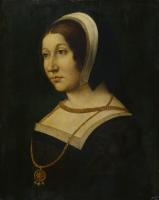
On 8th August 1503 King James IV of Scotland [aged 30] and Margaret Tudor [aged 13] were married at Holyrood Abbey [Map]. She by marriage Queen Consort Scotland. Thomas Howard 2nd Duke of Norfolk [aged 60] and James Hamilton 1st Earl Arran [aged 28] were present. She the daughter of King Henry VII of England and Ireland [aged 46] and Elizabeth York Queen Consort England. He the son of King James III of Scotland and Margaret Oldenburg Queen Consort Scotland. They were third cousins. He a great x 4 grandson of King Edward III of England.
Cuthbert Cunningham 3rd Earl Glencairn [aged 27] was restored 3rd Earl Glencairn.
Collectanea by John Leland [1502-1552]. The VIIIth Day of the said Monneth [8th August 1503] every Man apoynted hymselfe rychly, for the Honor of the noble Maryage. Bet twyx VIII and IX oth Clock everychon was rady, nobly apperyld; and the Ladyes abouffe said came rychly arayd, sum in Gownys of Cloth of Gold, the others of Cremsyn Velvet and Blak. Others of Satyn and of Tynsell, of Damaske, and of Chamlet of many Colours, Hoods, Chaynnes and Collers apon ther Neks, acompayned of ther Gentylwomen arayd honnestly after ther Gyle, for to hold Company to the sayd Qwene.
After cam the Byschop of Morrey [aged 38], to fetche my Lordes th Archbyschop of York [aged 54] and the Byschop of Durham; the wiche war varey honnestly arayd in ther Estat; as also the Erle of Surrey [aged 60], who was rychely arayde in a longe Gowne of Clothe of Gold, with his ryche Coller of the Gartere, acompayned of many Lordes, as the Lords Gray, Latemer, Dacres, and Scrop, honourably arayd; with many noble Knyghts, as Syr Richard Poulle, Knyght of the Garter, rychly arayd in his Coller, Syr Davy Owen, waring a varey riche Channe, Syr William Conyars, arayd in a Gowne of Clothe of Goid, Syr Thomas Darcy in another, with riches Chaynnes, Syr John Huse, and many other Knyghts and Gentylmen rychly and honnestly arayd and in lyk wys waring goods Chainnes.
In that Mannere the said Lords war brought by the said Byschop of Morrey to the Kynge, the wiche was within his grett Chammer, apon hys Feet; and at the Commyng of the said Lordes maid Reverence to every Man, hys Bonnet allway in hys Haunde. The Kynge then caused them to sitt apon a Form before hym, agenst hymselfe, and desyred them to couver ther Heds. The said Archbyschop was placed at the Right Haund, and the Erle of Surrey at the Lefte Haund. The Kynge sit in a Chayre of Cramsyn Velvett, the Pannells of that sam gylte, under hys Cloth of Astat, of Blew Velvet fygured of Gold.
He was acompayned on his Right Haund by the Right Reverend Father in God the Archbishop of Saunt Andrew [aged 27], hys Brother, and by ali the Prelats, as on the Day precedent, as likewise by the Prior of Saunt John, and many notables Personnes, as wel Ecclesiastiks as Seculers, all setting. On the Lefte Syde war the Lordes and Erles before named, with others grett Lordes, noble Knyghts, and Gentylmen, of the Two Partes. So that it was a noble Thynge to se the the sayd Chammer so nobly fournyshed. Ther war also the Officers of Armes of Inglaund in their Cotes, and non of Scotlaund for that sam Hour.
After Scylence maid, and everychon sit in Ordre, the Doftor Raulins, Doctor in Divynite, began the Preposicyon, who well and wisely, and with good Maner, demeanyd him in hys Utteraunce of the same, and at every Worde requysitt made honorable Reverence. Thys doon, the Kyng comaunded Maister Doctor Moreched, hvs Secretary, to gyffe short Answar. The wiche Thynge he did varey reverently, in bryeff Conclusyon.
After thos Preposicyons doon, every Man dyd Reverence to the Kyng, as did the said Kyng lyke wys to them in his drawynged into hys awn Chammer. And then the said Archbyschop hys Brother, and the Byschop of Abberdeen conveyed the beforesaid Lords and Company ageyn to the Lodgynge of the Qwene.
A lytyll after, the Qwene was by the said Lords and Company brought from her Chammer to the Church, cronned with a varey ryche Cronne of Gold garnished with Pierrery and Perles. Sche was led on the Right Hand by th Archbyschop of York, and on the Left Hand by the Erle of Surrey. Hyr Trayne was born by the Contesse of Surrey [aged 26], a Gentylman Huscher helpyng hyr. The said Qwene was nobiy acompeyned with her Ladyes rychly arayd; that is to weytt, the said Contesse of Surrey arayd in a rych Robbe, of Cloth of Gold; the Two Ladyes Nevill, the Lady Liile, the Lady Stanneley, and the Lady Guiileford, in riche Apparell; and all the others followynge had ryche Collers and Channes apon ther neks; and good Juells. It was ordonned by the said Erle of Surrey, That Two of the grettest Ladyes of Ingland goinge togeders shold take with thaim Two of the grettest Ladyes of Scotland, and so all Foure to go togeder on a Row: And so sewingly alwais Two of the best Ladyes and Gentylwomen of Ingland and Two of Scotland to goe togeder as before, wher they had rome so to do: And thus they dede dayly.
Thus the fayde Qwene was conveyde to the sayde Churche [Map], and placed neere to the Font; Maistresse Denton, hyr Maistresse, being allwayes ny hyr; and ali hyr noble Company standing in Ordre on the Left Syd of the Churche. Incontynent cam the Right Reverend Father in God my Lord th Archbyschop of Glasco, acompayned with the Prelats, ali in Pontificalis, and other notables Folks of the Churche.
Then the Kynge was brought by a varey fayre Company, consisting of hys said Brother and of the Lordes abouffe said, hys Steward, Chammerlayn, the Constable, and the Marischall, with all their Staffs of their Offices, and other Nobles, Knyghts, Squyers, and Gentylmen, richely and honnestly arayd and with good Chaynnes. The Lord of Hamylton barre his Swerde before hym. His Officers of Armes war in their Cotts, and all his Nobles Rode in Ordre on the Right Syd of the Church.
Then the Kyng commyn neere to the Qwene, maid Reverence, and she to hym varey humbly. The Kyng was in a Gowne of Whit Damaske, figured with Gold and lynned with Sarfenet. He had on a Jakette with Slyffs of Cramsyn Satyn, the Lists of Blak Velvett, under that sam a Dowblet of Cioth of Gold, and a Payre of Scarlatte Hosys. Hys Shurt broded with Thred of Gold, hys Bonnet Blak, with a ryche Balay, and hys Swerd about hym.
The Qwene was arayd in a rich Robbe, lyke Hymselfe, borded of Cramsyn Velvet, and lyned of the self. Sche had a varey riche Coiler of Gold, of Pyerrery and Perles, ronnd her Neck, and the Cronne apon hyr Hed: Her Hayre hangyng. Betwyx the said Cronne and the Hayres was a varey riche Coyfe hangyng downe behynde the whole Length of the Body.
Then the noble Maryage was performed by the said Arch Byschop of Glasco; and th' Arch Byschop of York, in Presence of ali, red the Bulles of our Holly Father the Pope of Rom, consentynge thereto.
Thys doon, the Trompetts blew for Joy; and the King, being bareheded and holdyng her by the Ryght Haund, was conveyd through the said Company to the Hygh Awter. Before the wich was drest a Place for them Two to knell apon ryches Cuschyns of Cloth of Gold. But this the Kyng wold never doe, previously paying her the most grett Humilitie and Reverence, as possible might be. After ther Oraysons doon, and lastyng the Letany, wich was songe and said by the Arch Byschop, the Kynge withdrew himself to his Travers, of Blew and Red fraunged, wich stod on the Left Syde, and ther setted himself in a ryche Chayre. In such wys, the Qwene into her awne Travers of Black, wich was on the Right Side, and satt downe in a ryche Chayre also. The Letany ended, the sayd Arch Byschop beganne the Masse; and so they retourned into the Place wher they war before, abydynge there during the Tyme of the Masse.
At the Gospell they maid their Offryng, and before the Saunt Canon she was anoynted. After wich the Kynge gaffe hyr the Septre in hyr Haund. Then was songen Te Deum Laudamus, &c. and two Prelatts helde the Cloth apon them duryng the Remanent of the Masse. That and all the Ceremonyes accomplysched, ther was brought by the Lordes, Bred and Wyn in ryche Potts and ryche Cupps.
After the Collacyon, ychon was putt in Ordre according to his Birth. And the Kynge lydyng the Qwene, as before, conveyd hyr to hyr Chammer, and then departed from her, and went to hys Awne, where he helded Astat Royal for that Day.
Collectanea by John Leland [1502-1552]. [8th August 1503] At Dynner the Qwene was served before the Kyng, with all th' Onner that myght be doon, the Officers of Armes, and the Sergants at Armes, proceeding before the Meys. On that Day Syr John Villars was Sewar, Syr Davye Owen Kerver, and Syr Edward Stanneley Cupbarrer; and with hyr dynned the said Archbyschop of Glasco. The Chammer in wich she dined was rychly drest, and the Cloth of Estat wher she satt, was of Clothe of Golde varey riche.
At the furst Course, sche was served of a wyld Borres Hed gylt, within a fayr Platter, then with a fayr Pece of Brane, and in the thyrd Place with a Gambon, wich wer followed by divers other Dyshys, to the Nombre of XII, of many Sortes, in fayre and ryche Vesselle.
After this the Kyng was served in Vesselle gylt as the Qwene. Hys Panneters wer my Lord the Son of the Erle of Bothwells Brother, and my Lord Grayes Son; and his Cupberrer was the Lord of Hamylton. Th Archbyschops of Saunt Andrew [aged 27] and of York [aged 54], the Byschop of Durham, and the Erle of Surrey [aged 60] dyned with hym. The Chammer was haunged of red and of blew, and in it was a Cyll of a State of Cloth of Gold; bot the King was not under for that sam Day. Ther wer also in the sam Chammer a riche Bed of Astat, and a riche Dressor after the Guyse of the Countre, and the Lord Grays the Father served the King with Water for to wash, and the Erle of Hunteley berred the Towaylle.
At the second Service, the Qwene was served very honourably of XL or L Meys. The Kyng was likewys served of many Vyaunds; after wich the Officers of Armes presented themselves for to crye Largesse. Whereupon the Kinge comaunded Marchemont, Pryncipall Herauld — Goo ye, Cry toward the Qwene fyrst, that is to weytt, Largesse, To the high and mighty Princesse Margarete, by the Grace of God, Qwene of Scotlaund, and fyrst Daughter engendred of the varey hygh and varey mighty Prince Henry the VIJth, by that sam selfe Grace, Kynge of Inglaund. In the Largesse of the Gyft of the Kynge ther wer XL Crounes of lyght Gold. And because there was noe more then three Cotts of Armes of Inglaund, the Kyng wold not suffer more thenne thre of his awne.
The sam was cryed thre Tymes in the Kings Chammer, in the grett Chammer, that is ny, and in the Halle of the Kyng and of the Qwene; but he would not have his Largesse cryed, ne intituled, saying, that it souffysed [sufficed] to cry hers.
In the grett Chammer, ther satt the Ladyes of the sayd Qwene, togeder the other Ladyes of the Countrey. At the next Bord satt my Lord the Qwenes Chammerlayn, acompayned of many Nobles and Knyghts. In the thyrd satt other Ladyes and Gentylwomen. And the IIIJth was filled with Gentylmen, varey well served. The Hangynge of this Chamer represented the Ystory of Troy Towne, and in the Glassys Wyndowes wer the Armes of Scotland and of Inglaund byperted, with the Differences before sayd, to which, a Chardon [thistle], and a Rosse interlassed thorough a Crowne was added.
The Kings grett Chammer had one Table, wher was satt hys Chammerlayn, the grett Sqyer, and many others, well served, the wich Chammer was haunged about with the Story of Hercules, togeder with other Ystorys.
In the Kings Hall war thre Rowes of Tables, and one abouff in the Front, wher was satt the Prelatts, and conseqwantly the grett Lordes, Nobles, Knyghts, Squyers, Gentylmen, and other honorable Personnes, at double Dynner. This sam Chammer was haunged of th Ystory of the old Troy. Six grett Syerges of Wax wer haunged in the same Halle for to lyght at Even, and there was a riche Dressor, and welle served.
In the Hall wher the Qwene's Company wer satt in lyke as in the other, and wich was haunged of the Hislory of Hercules, wer old Syerges, for to lyght at Even, a ryche Dressor, good Chere, and good Wyn.
The Trompetts as well of the Kynge as of the Qwene, theyr Mynstrells of many Sortes, and Johannes and his Company dyd their Devoir for that Day, as well in the Mornynge, as at the Dynnar, and after at the Soupper, and also on the Dayes followwyng.
After Dynnar the Mynstrells played, and the Kynge and the Qwene, the Ladyes, Knyghts, Gentylmen, and Gentylwornen daunced; also some good bodys maid Games of Passe Passe, and dyd varey well.
At the Hour of Even Songe, the Kynge acompayned of hys Noblesse, and those of the Qwene, but without hyr, war conveyd to the Churche, wher the Abbot of the Place did the Service. When they retourned agayn, they wer served as at the Dinner, bott the Qwene the furst, and the Personnages abouffe sayd ageyn held ther Places. The King, before that he satt down, sent hys Gowne of Marriage to the Officers of Armes of Englaunde, and put on another of blak Velvet, long and fourred of Martens, the wich Robbe Somerset Herauld acompayned of his Companions, bore the next Day in Court, and for the wich they thanked the Kynge.
After the Soupper, the Nyght approched therefor ychon withdrew hym to his Lodgyng for to take hys Rest, and the Kinge had the Quene [aged 13] aparte, and they went togeder. God by his Grace will hold them in long Prosperitye. At Even grett Numbre of Fyers wer maid thorough the Towne of Edenbowrgh.
Collectanea by John Leland [1502-1552]. The IXth Day of the Monneth [9th August 1503] everie Lord, Knyght, Ladye, and Gentylwoman cam to the Pallais. Toward Xen of the Clok, the Kyng went his Way to Masse in the grett Church, acompayned of his Lordes and Nobles as the Day before; and was arayd of a riche Robbe of Cloth of Gold faurred of fyne blak Bougye, his Doublett of cramsyn Satyn, blak Hosys couved abouff, of Cloth of Gold, a blak Bonnet, a Saunt George of Gold, apon the Dragon a Ruby, a cramsyn Hat, a Payre of gold Beads haungyng to his Gyrdle, to the Nombre of XIIJ more or lesse, and a Dagar before him. The Lord of Honteley bar the Swerde before him, an I Hussher of his Chammer bore his Train, hys Maister d'Hostell, his Chamberlayn, his Constable, the Marshall, and the Officers of Armes and the Trumpets went before him after the Custome of the Countre.
The Masse being doon by hys Chappelle, and one of the Religyous, he retourned ageyn. Duryng the Masse the Erle of Surrey [aged 60] and his Company cam to convey him, for the wich Kindnesses he at the Retornynge tuke him by the Armes, tyll he cam into his Chamber.
Hys Dinnar was brought and served in Silver Vessels by the Officers and Personnaiges in suche Manere as the Day before. After Dynnar a young Man, an Italyen, playedj before the King on a Corde varey well. Ny to him at the Windows wer my Lord of York [aged 54], the Erle of Surrey, the ArchByschop of Saunt Andrew [aged 27], the Byschop of Durham and many other Lords. The Ladyes, acompayned of Lordes and Knyghts, wer at the Windows toward the Qwenes Qvarters. And after the Game was doon, they begon to daunce. Touchynge the Qwene I say nothinge, for that sam Day I saw her not, bot I undendond that sche was in good Helth and Mere.
As for the Soupper, notwithstanding it was Fastyng Day, Baunketts of many Metts war not forgotten; after wich every Man drew to his Lodgynge. That Even the Qwene delivered hyr Robbe of Maryage to the Officers of Scotlaund the wiche the next Day followyng Marchmont Herawld barred in Cowrt in Escharpe, he and hys Companyons thaunking the King and Qwene therfor. But on the Morow she gaffe them the Somme of XL Nobles for Largesse, and they brought ageyn the said Robbe into the Warderobe ot the sayd Qwene, as she desyred in hyr Recompensing.
Collectanea by John Leland [1502-1552]. The Xth Day of the sayd Moneth [10th August 1503], being Saunt Lawrens Day, the Qwene was led to the Hyghe Churche, acompayned of hyr noble Trayn, and of the Ladyes of the Countre honnestly appoynted. The said Qwene was varey well delibered, and arayd of a nche Robbe of Cloth of Gold with a ryche Coller, and was put within hyr Courtayne, of red, blew, and grene. Before hyr was prepared an Awter rychely enorned with vary ryches Ymaiges.
After hyr cam the Kynge, varey honnestly acompayned of hys Lords, varey noble arrayed as in the Dayes before. The Officers of Armes, the Sergents at Maces, and the Trompetts wer in fayr Ordre, the Lord Honteley berrynge the Swerde. The Kynge was arayd of a Gowne of cramsyn fygured Velvett fourred of Yenetts, a Dowblett of blak Satyn, Hosys of Scarlatte, the Bonnett of the Day before, and hys Beerde kyted of Shers. Whan he was arrived within hys Cortyne, he maid humble Reverence to the Qwene, and so sche did in lyke wys to hym. Incontynent the Masse begon to be synge by one of the Religyous of the Place, and by the Syngers. At the Offring the King and Qwene both offred togeder.
The Masse doon, the Kynge, for the Luffe of the present Qwene and hyr Ladyes, did make XLI [41] Knyghts. After the Othe sworne and taken, the Erle Bothweil chaussed them the gylt Spourreys, and the Kynge gaffe them the Stroke of his Swerde, wich was born before hym. This doon, he sayed to the Qwene, and Lady — These are your Knyghts, and taking hyr by the Haund, led hyr to the Doore of hyr Chammer, when they war well and honnestly served, as was also all the Felischyp with Plenty of Ypocras.
After the Dynnar begon, Jousts war apoynted in the basse Courte before the Wyndowes. The Place was without Barreres, and only the Tyllt. The Challengers war my Lord of Kylmars, and my Lord Treithoun. Ther Aids wer Syr Alexandre Seytoun, the Maister of Mewgumery, Syr Patryk Hamylton, and Syr John of Treytom, to all the Comers duryng the Jousts.
The Deffenders for that Day wer my Lord of Hamilton, Cosin of the Kynge, dressed in red Satyn, my Lord Roos, Syre Davy Hume, William of Cokbwrn of Langtown, Patryck Synklars, in Jackets borded of blak Velvett, and Henry Brws. Ychon of them tuke a Corse of a Spere, and a Swerde with the Poynte broken, sum brak Speres, the others not. At the Wyndowes was the Kynge acompayned of th Archebyschops of Saunt Andrew [aged 27] and York [aged 54], and of the Byshop of Durham, and of other Prelatts, the said Wyndows being well apoynted. The Qwene was at the Windowes of hyr grett Chammer, acompayned of hyr Ladyes, and of the others of the Reyme, with my Lord hyr chyf Chamberlaine. The said Wyndowes wer arayd in like wise, and more rychly. Ageynst them was a Scarfawld, wheron was my Lord of Surrey [aged 60], and the Erle Bothweil only; my Lord Morley the Constable, the Officers of Armes, and many other Officers and Trompetts stood by the Feild.
After the Courses and Tornay, the Kyng and the Qwene went to Soupper, the wiche war varey well served, according to the Custome of the Dayes before, and after that daunced, and then every Men went to hys Lodgyng.
The sam Day my Lord Archbyshop of Yorke, the Byschop of Durham, and many others tuked Licence of the Kinge and of the Qwene, and departed the next Morning.
Collectanea by John Leland [1502-1552]. The XIth Day of the sayd Monneth [11th August 1503] the King, as accustomed, went to the Chnrch accompanyed by his noble Company, in Manere as before, and was vested in a long Gowne of blak Velvett fourred of Mertes, a Rebras Doublett of blak Satin, and blak Hosys. After the Messe doon, he was layd ageyne to hys Chammer, wher he was served as before. The Lord of Hamilton bar the Swerd.
The Qwene was not that Day at the Masse, bot kept hyr Chammer. After Dinnar they daunced togeder, and past the Tym merveillously in Mirthe and Gladnesse. The sam Day war sum Jousts, as the Day before, performed by six Persons, the wiche brake many Speares, at theyr Plaisur. Also two other Persons fawght, the one agenst the tother on Fowt, armed with halfe Spers, and Swerds.
The Kynge was at the Wyndowes, and with hym the Erle of Surrey [aged 60]y, and many others, Prelatts and Lordes. All doon, the Kynge went to hys Soupper, and with hym the said Erle of Surrey, and many others. The Qwene was in lyk wys at the Wyndowes of hyr Lodgyng, acompayned of the Ladyes of the Countre, and others of hyr Company.
After Soupper, the Kynge and the Qwene being togeder in hyr grett Chamber, John Inglish and hys Companyons playd, and then ichon went his Way.
That Day Syre Richard Poulle, Syr Davy Owen, John Huse, Syre Edward Stanneley, and many others, tuke theyr Conge of the King, and of the Qwene, and went theyr Way.
Chronicle of Geoffrey le Baker of Swinbroke
Baker was a secular clerk from Swinbroke, now Swinbrook, an Oxfordshire village two miles east of Burford. His Chronicle describes the events of the period 1303-1356: Gaveston, Bannockburn, Boroughbridge, the murder of King Edward II, the Scottish Wars, Sluys, Crécy, the Black Death, Winchelsea and Poitiers. To quote Herbert Bruce 'it possesses a vigorous and characteristic style, and its value for particular events between 1303 and 1356 has been recognised by its editor and by subsequent writers'. The book provides remarkable detail about the events it describes. Baker's text has been augmented with hundreds of notes, including extracts from other contemporary chronicles, such as the Annales Londonienses, Annales Paulini, Murimuth, Lanercost, Avesbury, Guisborough and Froissart to enrich the reader's understanding. The translation takes as its source the 'Chronicon Galfridi le Baker de Swynebroke' published in 1889, edited by Edward Maunde Thompson.
Available at Amazon in eBook and Paperback format.
Collectanea by John Leland [1502-1552]. The XIIth Day of the said Monneth [12th August 1503], at the Hour customed, the Ladies of the Countrey cam toward the Qwene, as the Dayes before, and the Kynge went to the Church nobly acompayned, after the Manere of the precedent Dayes, and was arayd in a long Gowne of sandysch Velvett fourred of Mertes. The Masse doon, he was brought ageyn to hys Chammer, and served of hys Dinnar, after the Custome before said.
After Dynnar Jousts wer ageyn maid by Fore of them who jousted belore, and they brak sum Speyres in the Presence of the Kyng and the Qwene, who war at the Yvyndowes; and thys doon, they went to their Souper.
Collectanea by John Leland [1502-1552]. The XIIIth Day of the said Monneth [13th August 1503], being Sonday, the Qwene was led to the Churche acompayned by the Prelats, the Erle of Surrey [aged 60], the Lord Chamberlayne, and the Ladyes rychely arayd. She was arayed in a Gowne of Porple fygured Velvert, brothed of Thred of Gold fourred with Ermynes, a grett Rebras beneath, and had on a ryche Coller of Pyerrery, and a ryche Gyrdle. The Lady Surrey bar her Trayn, assisted by Syre John Hume.
After hyr cam the Kynge, in the Manere of the Dayes before said, arayd in a Gowne of Cloth of Gold, rychly fourred of Mertes, a Doublett of cramsyn Satyn sawted, and within doubled of Cloth of Gold. To hys Bonnett hung a ryche Bagge, and hys Churte was borderd of fyne Pierrery and Pearles. When he arryved at his Cortyne, he maid an humble Cortaisy to the Qwene, as she also did to hym.
At the Offrvnge wer assembled three noble Lords to be maid Erles in the Qwenes Presence, and when the Masse was done, they wer presented to the King by Marchmont, Herawld. Fyrft, they promysed to hold ther Othes, and then the Kinge gyrdled them with the Swerd abouffe their Schoulder, and gaffe them their Lordschips to them and to their Heires.
Then Merchemont, Herauld, togeder with his Companlons, cryed Largesse in the self Place, and fyrst Largesse.
Jamys Darene, Lord of Hamylton, Baron, Banereit, and Lord of Parlement.
2dly. Largesse. William Conte de Montros, Lord of Granne, Baron, Banerett, and Lord of Parlement.
3dly. Largesse. Cuthberd Conte de Glencarne, Lord de Kyirharres, Baron, Banerett, and Lord of Pariement.
After this doone, the Kynge tuke the Qwene, and layd hyr to the Company, but for Cause that it renned, she passed thorough the Kings Chamber for to go in hyr awne, and all the Ladyes war served. The Erle of Surrey and other Lords dynned with him. After Dynnar, a Moralite was played by the said Master Inglish and hys Companyons, in the Presence of the Kyng and Qwene, and then Daunces war daunced.
At the Hour customed the Kyng and the Company beforesaid went to Even Song, and sum Knights, to the Nombre of XXVI, should have been maid bot for that; that the Qwene was not there, they wer put off to the next Day for the Luffe of hyr.
The Even Song sayd, the King was brought ageyn into his Chambre, and was served at the Soupper. And that doon, every Man went his Way.
On 18th February 1504 Henry VIII [aged 12] was created Prince of Wales and 1st Earl Chester. John Mordaunt 1st Baron Mordaunt [aged 24] was created Knight of the Bath. Richard Empson [aged 54] was knighted.
Grafton's Chronicle [1507-1573]. 18th February 1504. In which yeare the eighteenth day of February, the King [aged 47] at his Palace of Westminster, with all solemnity created his only son Henry Prince of Wales [aged 12], Earl of Chester, &c. which noble youngling succeded his father, not only in the inheritance and regality, but also was to him equal in honour, fame, learning and policy.

Around February 1506 Philip "Handsome Fair" King Castile [aged 27] was blown off course whilst travelling to Castile to claim his inheritance. He landed in England where he became the guest of King Henry VII of England and Ireland [aged 49] who negociated the Malus Intercursus Treaty as part of the conditions of his release. The Treaty include favourable commercial terms by removing all duties on English exports, and the marriage of King Henry VII of England and Ireland with Philip's sister Margaret of Austria Princess Asturias [aged 26] (which didn't take place). Most importantly it secured the return of Edmund Pole 3rd Duke of Suffolk [aged 35] who was Philip's prisoner with the condition that he, Edmund, not be executed by King Henryu VII. Edmund Pole was immediately imprisoned in the Tower of London [Map] and executed seven years later by King Henry VIII in line with an instruction in King Henry VII's will; an act which attracted the criticism of Montaigne in Chapter 7 of his Essays
Chronicle of Edward Hall [1496-1548]. 1506. After this, the King having peace as well with foreign princes, for the terme of three years, as disburdened and purified of all domestic sedition, began to be diseased with a certain infirmity and weakeness of body, which thrice in the year, but especially in the spring time sore vexed & tormented him. And because for the most part, the harm and evil that chanced to the prince, is parted and communicate to his subjectes and people, the olde sweating whereof you heard before amongst the commons of the realm, came again, howbeit by the reason of the remedy that was invented by the death of many a creature in the beginning, it did less hurt and displeasure to the people at this time than it did before. But now the thirde plague equal with the pestilence ensued by the working of the masters of the forfeitureres by the King appointed as I shewed you before.
Grafton's Chronicle [1507-1573]. 1506. After this, the King having peace aswell with foreign Princes, for the term of three years, as disburdened and purified of all domestic sedicion, began to be diseased with a certeine infirmity and weakenesse of body, which arose in the yere, but specially in sickness came the spring time sore vexed and tormented him. And because for the most part the harm and evil that chanced to the Prince, is parted and communicate to his subiects and people, the old sweatyng disease whereof you heard before amongst the Commons of the realm, came again. Howbeit by the reason of the remedy that was invented by the death of many a creature in the beginning, it did less hurt and displeasure to the people at this time then it did before. But now the third plague equal with the pestilence ensued by the working of the Masters of the forfeitures, by the king appointed as I showed you before. By whose means many a rich and wealthy person, by the extremity of the lawes of the realme, were condemned and brought to misery.
Chronicle of John Harding [~1460]. 1506. After this, the King had peace, aswell with foreign princes as also of civil battle for the space of three years, but then the King being diseased with a certain infirmity and weakness of body, thrice every year about the spring tide, was again stirred up by the reason of a great plague of the sweate that reigned through the whole realm, howbeit by of reason of the remedy that was invented for it the last time before it did the less hurt.
On 21st April 1509 King Henry VII of England and Ireland [aged 52] died of tuberculosis at Richmond Palace [Map]. His son Henry VIII [aged 17] succeeded VIII King of England. Duke York and Earl Chester merged with the Crown.

After 21st April 1509 Thomas Wriothesley [aged 21], who wasn't present, made a drawing of the death of Henry VII [deceased]. The drawing shows those present and in some cases provides their arms by which they can be identified. From top left clockwise:
Bishop Richard Foxe [aged 61].
Two tonsured clerics.
George Hastings 1st Earl Huntingdon [aged 22].
Richard Weston of Sutton Place [aged 44].
Richard Clement of Ightham Mote [aged 27].
Matthew Baker.
John Sharpe of Coggleshall in Essex.
Physician holding urine bottle.
William Tyler.
Hugh Denys.
William Fitzwilliam 1st Earl of Southampton [aged 19] closing the King's eyes. There is doubt as to whether the person shown is William Fitzwilliam 1st Earl of Southampton given his age of around nineteen at the King's death. He appears to be holding a Staff of Office although sources state he wasn't appointed Gentleman Usher, in which role he would have a Staff of Office, until Henry VIII's Coronation in Jun 1509.
The Arms below him are Quarterly 1 Lozengy argent & gules (FitzWilliam); 2 Arms of John Neville 1st Marquess Montagu 3 Quartered 1 possibly Plantagenet with white border ie Holland 2&3 Tibetot, 4 Unknown, overall a star for difference indicating third son. William Fitzwilliam 1st Earl of Southampton was his father's third son, and his mother was Lucy Neville [aged 41] daughter of John Neville 1st Marquess Montagu. It appears correct that the person represented is William Fitzwilliam 1st Earl of Southampton. William Fitzwilliam 1st Earl of Southampton was the childhood companion of Henry VIII [aged 17].
Physician holding urine bottle.
Richard Weston of Sutton Place: he and Anne Sandys were married. In 1465 he was born. In 1541 he died.
Matthew Baker: From 1486 he was appointed Governor of Jersey. In May 1513 he died in Bermondsey Abbey [Map].
Chronicle of a Bourgeois of Valenciennes
Récits d’un bourgeois de Valenciennes aka The Chronicle of a Bourgeois of Valenciennes is a vivid 14th-century vernacular chronicle written by an anonymous urban chronicler from Valenciennes in the County of Hainaut. It survives in a manuscript that describes local and regional history from about 1253 to 1366, blending chronology, narrative episodes, and eyewitness-style accounts of political, military, and social events in medieval France, Flanders, and the Low Countries. The work begins with a chronological framework of events affecting Valenciennes and its region under rulers such as King Philip VI of France and the shifting allegiances of local nobility. It includes accounts of conflicts, sieges, diplomatic manoeuvres, and the impact of broader struggles like the Hundred Years’ War on urban life in Hainaut. Written from the perspective of a burgher (bourgeois) rather than a monastery or royal court, the chronicle offers a rare lay viewpoint on high politics and warfare, reflecting how merchants, townspeople, and civic institutions experienced the turbulence of the 13th and 14th centuries. Its narrative style combines straightforward reporting of events with moral and civic observations, making it a valuable source for readers interested in medieval urban society, regional politics, and the lived experience of war and governance in pre-modern Europe.
Available at Amazon in eBook and Paperback format.
Wriothesley's Chronicle [1508-1562]. 21st April 1509. This yeare, in Aprill, died King Henry the Vllth [aged 52] at Richmond [Map] and his Sonne King Henry the VIII [aged 17] was proclaymed Kinge on St Georges dayeg 1508 [1509], in the same moneth.
Note g. We should here read St George's Eve, 22nd April, 1509, from which day Henry Vlll reckoned his regnal years. Stow, however, says that Henry was not proclaimed till the 24th.
Collectanea by John Leland [1502-1552]. The Manner of bringinge of Kynge Henrie the VII's [deceased] Corps frome Richmonde, where he departed to God the 21st Day of Aprili, the XXIIIJth Yeare of his Raigne, unto St. Powles Churche in London: And also of his Conveyance frome thence to the Abbie of Westminster; where he, a Prince most Royall, was solempnly enterred, which was the Tenth Day of May [10th May 1509], the First Yeare of the Raigne of Kynge Henry the Eight, 1485.
[From a Manuscript in the Harleian Library, N° 3504.]
Collectanea by John Leland [1502-1552]. [10th May 1509] First there came rydinge throughe the Cittie of Lon don the Swerdebearer of London, and the Vice-Chamberleyne of the same, with Twoe of the Masters of the Brugehowse, to sett the Crafts in theire Order and Arraye. Then came Rydinge the Kyngs Messengers, twoe and twoe, with theire Boxes on theire Brests. Then the Kyngs Trumpeters; and after them the Kyngs still Minstrells. Then the Florentines, the Venetians, the Portingalls, the Spaniards, the Frenchmen, the Esterlings, the Gentlemen Ushers, the Kyngs Chapleyns havinge no Dignitye. The Squyers for the Boddie. The Aldermen of London. The Shreves, havinge in theire Hands Twoe Whyte Roddes. Then came there rydinge Twoe Herauds of Armes, in Twoe Cote Armurs; and after them came rydinge a noble Knyght, Mourner, uppon a goodlie Courser, trapped with Black Velvet, bearinge the Kyngs Stonderd, whose Name is Sir Edward Darrell [aged 43]; after whome came Knights. Then came the Chapleyns of Dignitie, as Deanes and suche other. Then the Kyng's Counsell, and Knights of the Garter beinge no Lords. Then the Chiefe Justice of the Common Place, and the Chiefe Baron of the Kyngs Exchequer: Then the Chiefe Justice of the Kings Bench, and the Master of the Rolles. Then came the Crowched Fryers on Foote, and all the Foure Orders of Fryers followinge, singinge. Then the Chanons of ali the Places in London, in like wisse singinge. Then the Kyngs Chappell, in theire Surpleses and Grey Ameses, singinge. Then came rydinge all the Temporall Lords and Barrons, on the Left Hand; and all Abbotts and Bishopps, on the Right Hand. Then rode Sir Davie Owen [aged 50], bearinge an Helmet of Steele, crowned with a rich Crowne of Golde. Then rode Sir Edward Howard [aged 33], the Second Sonne of the Erle of Surrey [aged 66], Treasorer of England, armed complete, with the Kyngs Harnes, his Face discovered, bearinge in his Hand the Kings Battel Axe, the Heade downewarde, restnge on his Foote. Then followed him a Knyght called Sir Thomas Fyes, bearinge a riche Armour, embrodered with the Armes of England. Then came the Maior of London ymediately before the Charett, bearinge his Mace in his Hand. Then came the Charett wherein the Kyngs Corps lay. Upon the which lay a Picture resemblinge his Person crowned and richly apparreled in his Parliament Roobe, bearinge in his Right Hand a Scepter, and in his Left Hand a Ball of Golde, over whome there was hanginge a riche Cloth of Golde pitched upon Fowre Staves, which were sett at the Fowre Corners of the saide Charett, wich Charett was drawen with Seaven great Coursers, trapped in Black Velvett, with the Armes of England on everie Courser set on bothe Sydes, and on every Side of everie Courer, a Knight goinge on Foote, bearing a Banner in his Hand; and at everie Corner of the saide Charett a Baron goinge on Foote, bearing a Banner, in like Manner; wich IIIJor Banners were the Kyngs Avowries; whereof the First was of the Trinitie, the Second of our Ladie, the Third of St. George, the fourth of.... And in the said Charett there were sittinge Twoe Gentlemen. Usshers of the Kyngs Chamber, One at the Heade of the Kynge and the other at the Feete, mourninge. Then followed the said Charett the Duke of Buckingham [aged 31], the Earle of Arondell [aged 59], the Earle of Northumberland [aged 31], the Earle of Shrewsberie [aged 41], the Earle of Surrey, the Earle of Essex, and other, to the Nomber of Nyne, beinge Knyghts of the Garter, in a Range one after another, as they were in Degree. Then followed them IX of the Kyngs Henchemen, ridinge on goodlie Coursers, trapped in Black Velvett, of the wich the three foremost did beare three Capps of Maintenances, wich three Popes had sent the Kynge duringe the Tyme of his Raigne. The next three Henchmen did beare three riche Swordes the Points downward, the seaventh bare a Target of the Armes of England, otherwise called a Sheild crowned, the eight bare an Helmet with a Lyon of Golde upon it. The IXth bare a Speare covered with Black Velvett. Then followed the Master of the Horses called Sir Thomas Brandon, leadinge in his Hande a goodlie Courser trapped with Black Velvett, richely embrodered with the Armes of England; whome followed the Lord Darcy [aged 42], beinge Captayn of the Garde. After whome came the Garde, and many other Gentlemen. Then the worshipfull Men of the Crafts of London, which were appointed by theire Fellowship to set in the said Corps. Then Lords Servaunts followed, beinge a great Nomber.
Collectanea by John Leland [1502-1552]. [10th May 1509] And on the Morrowe the said Duke and Earles, with the other Lords, beinge in the Churche before Six of the Clock, there were Three Solempne Masses, songe in theire dewe Order. Of the which Masses the Abbott of Westminster sange the First of our Ladie, which was done before Seaven of the Clock, and incontinente the Bisshop of Winchester sange the Second of the Trinitie, th Abbott of St. Albones beinge his Deacon, and th Abbott of Readinge beinge his Subdeacon: Which done th Archeb. of Canterbury, beinge accompained with the Nomber of XVIII Bisshops and Abbotts, revested and mytred, came unto the Alter, to singe the solempn Masse of Requiem. To whome was Deacon the Bisshop of Lincoln, and Subdeacon the Bisshop of Norwiche. And when the said Bisshops and Abbotts had brought him to the Altar, they went into the Queire, and there stayred unto the Offieringe Tyme, except the Deacon and Subdeacon, which gave theire Attendance. And at the Offieringe Tyme the said Bisshop anci Abbotts came agnine to the Alter, and gave their dewe Attendance upon the Archeb. of Canterbury, comminge frome the Alter unto the Second Step of the said Alter, where he received the Offeringe in this manner followinge.
Collectanea by John Leland [1502-1552]. [11th May 1509] Thus and in this Manner was the said Corps of Kynge Henry the VIIth brought throughe the Cittie of London, with Torches innumerable, unto the West Dore of St. Powles [Map], where the Bisschop of London, revested and mytred, received the said Corps; which, after they had encensed it, was taken out of the Charett, the said Picture lyinge upon it, and borne by XII Persons of the Garde, because of the great Waight thereof. The Duke of Buckingham [aged 31] with the said Earles goinge by, and puttinge theire Hands unto it. Over the which Corpes was borne a goodlie riche Canopie of Cloth of Golde by Fower Barrons, frome the Tyme that it was taken out of the Charet unto the Tyme that the said Corps was brought before the Highe Alter, where was sett a goodlie curious Light of Nine Branches; under the which Light this Corps was sett, there havinge a solempne Dirige; in the which my Lord of London was Executor Officii, and Attendant upon him the Abbott of St. Albones and the Abbott of Readinge, revested and mytred. This done, the Lords departed frome Powles, and went unto the Bishops Palice; the said Corps beinge watched with divers Knights and Herauds appointed thereunto. And on the Morrowe when the Lords were come unto the Herse againe, there were songe Three solempne Masses; of the which Three Masses the Deane of Powles sange the Firft of our Ladie, the Bisschop of Lincoln [aged 49] sange the Second of the Trinitie, and the Bisschop of London sange the Third of Requiem. After the which Masses done the Bisschop of Rochester [aged 39] made a notable Sermon; which done everie Man departed unto theire Dynner. And at theire Returne made, which was before One of the Clock, the said Corps was solempnly borne throughe the Churche of St. Powle to the West Dore, with the foresaid Canape borne over it, goinge before it the whole Queire or Powles and allso the Kyngs Chappell, whome followed the Bisshop of London, being revested and mytred, and the said Duke and Earles followinge; where the said Corps was againe laide into the Charet, and appointed in like Manner as is aforesaid. Which done everie Man in like Order as is afore exprested, accompained the said Corps, which was frome thence conveyed throughe Fleete Streete unto Charinge Crosse, where the Abbott of Westminfter, th' Abbott of St. Albones, th Abbott of Readinge, and th' Abbott of Winchombe, all IIJor Abbotts, revested and mytred, with the whole Convent of th' Abbey of Westminster, in Albes and Coops, received the said Corps, and there encensed it. Which done they with Procession solempnly conveyed it unto the West Doore of the said Abbey of Westminfter: Where the Archebishop of Canterbery [aged 59] and the Archeb. of Yorke [aged 45], revested and mytred, solempnly received the Corps, and in like Manner incensed it; which after was conveyed out of the said Charet into the Abbey, in like Manner as it was conveyed into Powles. Where was sett the moft costly and curious Light possibly to be made by Mans Hand, which was of XIII principal Stonderds, rihly decked with Banners, and all other Things convenient to the same. Here he had his Dirige solempnly, th' Archbissiopp of Canterbury beinge Execut. Officii, upon whom was attendinge the Nomber of XVIII Bisshiops and Abbotts, revested and mytred, duringe the Tyme of the said Dirige. At the which Dirige the Bissiopp of Norwiche redd the First Lesson, the Bisschop of Lincoln the Second Lesson, the Archebishiop of Canterbury the Third Lesson. And after the said Dirige done, the saide Duke and Earles with the other Lords departed unto the Kings Palice; except certen Knights, which were appointed to watch the Corps, in like as they did at Powles.
Collectanea by John Leland [1502-1552]. [11th May 1509] First there came Twoe Herauds in their Cotearmours unto the Duke of Buckingham [aged 31], beinge Chiefe Mourner, kneelinge at the West End of the Herse, goinge before him, frome the Herse unto the Place where the Archeb. stoode to take the Offeringe; where he, representinge the Kyngs Person, offered a Testiament of Golde: Which done the said Herauds conveyed him againe to the Place he came frome. Then the said Herauds came in like Manner unto the Earle of Arondell [aged 59] and unto the Earle of Northumberland [aged 31], and conveyed them unto a Knight which stoode before the Herse, holdinge the Kyngs Cotearmoure. Of whom the said Herauds received the said Cotearmour, and delivered it to the said Twoe Earles; which solempnly bearinge the said Cotearmour betwene them offered it up unto the said Archeb. with great Reverence; the which he received and delivered unto a Bisshop, which delivered it over unto an Heraude standinge even by them on the South Side of the Church; which done the said Herauds conveyed the Twoe Earles againe unto theire Places. Then the said Herauds came in likewise unto the Earle of Shrewssberie [aged 41] and unto the Earle of Surrey [aged 66], and conveyed them unto a Knight which stoode before the said Herse, holdinge the Kyngs Sheild crowned; of whome the said Herauds received the said Shielde, and delivered it unto the said Earles; which solempnly bearinge it betwene them offered it in lyke Manner unto the ArcheBisshop; the which he received and delivered it to a Bisshop, by whome it was delivered unto an Heraude, there standinge on the South Syde beneath the other Herauds which helde the Cotearmour: And then the said Herauds conveyed the said Earles againe unto their Places. After this they went unto the Earle of Essex and to the Earle of Kent [aged 28], and conveyed them unto a Knight holdinge a goodlie riche Sworde before the Herse, which the said Herauds received of the said Knyght and delivered unto the said Earles: And soe they holdinge the said Sworde betwene them, offered it up unto the ArcheBisshop in like Manner; which was also delivered unto an other Heraude standinge in Order beneath the other Twoe Herauds which helde the Cotearmour and the Shielde. Which, done the said Herauds convey'd the said Twoe Earles into theire owne Places. And then the said Twoe Herauds came unto the Earle of Derbie [aged 24] and unto the Earle of Arran [aged 34], otherwise called the Scottishe Lorde, which in like Manner conveyed them unto a Knight holdinge the Kings Helmett crowned, to whome was made like deliverie; which they offered in like Manner, and was delivered to another Heraude, and they conveyed unto theire owne Places againe. After this there came ryding the Second Son of th Earle of Surrey, called Sir Edward Howarde [aged 33], armed in complete Harnes (his Helmet except) upon a goodlie Courser, trapped in Black Velvet, with the Armes of England embrothered upon the same, which rode unto the Railes of the said Herse, where he did alight; whome the said Herauds incontinent received; whose Horse was ymediatly delivered unto a Servant of the Abbotts of Westminfter. And the said Knight going betwene the Earle of Essex and the Earle of Kent was presented unto the Archebisshop: Which done, the said Knight was conveyed by Twoe Monkes of the said Abbey into the Revestrie, where he was unarmed, and the said Two Earles again conveyed into theire owne Places. And afrer the said Knight came in a Black Gowne, and offered amonge the other Knights. This done the said Two Herauds came againe unto the Duke of Buck. goinge before him to the Archebishop, where he offered againe for himselfe. After whome the other Earles offered in theire Order. Then came the Bisshops and Abbotts, and offered in theire Order; the Bisshops goinge unto the Alter, and there makinge theire Offeringe, and the Abbotts goinge unto the Archeb. kissinge his Hande, and takinge his Blessinge. After whome came the Lords and Barrons, makinge their Offeringe everie Man in Degree. And in the meane while Twoe Herauds came againe unto the said Duke of Buck. and to the Earles, and conveyed them into the Revestrie, where they did receive certen Palles, which everie of them did bringe solempnly betwene theire Hands, and comminge in Order one before another, as they were in Degree, unto the said Herse, they kissed theire said Palles, and delivered them unto the said Heraudes, which lalde them uppon the Kyngs Corps, in this Manner: The Palle which was first offered by the Duke of Buck. was laid on length on the said Corps, and the Residewe were laid acrosse, as thick as they might lie. Which Palles were offered in the Manner aforesaid, in Token of their Homage which they of Dutie ought to doe unto the Kinge. And after the saide Lords and Barrons had made theire Offeringe, then foliowed the Chapleins of Dignitie and the Grey Amezes of the Kinges Chappell, whome foliowed Knights and Gentlemen, everie Man in his Degree. After the which Offeringe and the said Masse ended, a Knight called Edmond Carewe [aged 43] came unto the Second Stepp of the Highe Alter, bearinge in his Hand the Kings great Banner, which he offered up unto the Archebisshop, and Sir Edward Darrece [aged 43] his Standerd. Which done, the Bisshop of London inade a noble Sermon. And after the said Sermon ended, incontinente the Archebisshopps, Bisshopps, and Abbotts went unto the Herse. At whose Coomminge the Palles and the iiij Banners of the Kings Avowries were carried away by Twoe Monks. Which done, the Picture was taken from the Herse, and borne unto Sr. Edwards Shrine, the Kyngs Chappell, singinge this Anthem, Circum dederunt me genitus mortis [The sorrows of death have compassed me, Psalm 17, 5-6]. And then the said Corps was incensed, and ali the Royal Ornaments taken fome the said Corps, soe that everie Man might see the said Corps cofferd in a Coffin of Bordes, which was covered over with Black Velvett, havinge a Crosse of Whyte Satten from the one End of the said Coffyn unto the other; within the which Coffiyn the verie Corps of the Kynge lay enclosed in Lead. Upon the which Lead was written, in great Lettres chafed, Hic jacet Rex Henricns Septimus [Here lies King Henry VII]. And soe the said Corps was laid into the Vaught with great reverence by the noble Queen Elizabeth his Wyfe; whome incontinent ali the Archebishops, Bisshops, and Abbotts settinge theire Crosses upon the said Corps assoiled, in most solempn Manner sayinge this Collett (Absolvimus). Which done the said Archebishop did cast Earth uppon the said Corps. And then my Lord Treasorer and my Loyd Steward did breake theire Staves, and did cast them into the Vaught; and the other Hed Officers did cast theire Staves in, all whole. Which done the Vaught was closed, and a goodlie riche Pall of Clothe of Golde laide upon the saide Herse. And incontinent ali the Herauds did of theire Cotearmour, and did hange them uppon the Rayles of the Herse; cryinge lamentably in French, The noble King Henry the Seaventh is deade. And as soone as they had so done, everie Heraud putt on his Cotearmour againe, and cryed with a loude Voyce, Vive le noble Roy Henry le VIIIth; which is to say in Englishe Tonge, God send the noble Kynge Henry the Eight longe Lyfe. Amen.
On 11th May 1509 King Henry VII of England and Ireland [deceased] was buried in the King Henry VII Chapel, Westminster Abbey [Map]. Henry Willoughby [aged 58] and Anthony Wingfield [aged 22] attended. The ladies given mantelets and kerchiefs were as follows:
Household of Mary Tudor:
Mary Tudor Queen Consort France [aged 13].
Catherine York Countess Devon [aged 29].
Elizabeth Stafford Countess Sussex [aged 30]. Possibly Margaret Whetehill.
Anne Percy [aged 65] or Anne Percy Countess Arundel [aged 23].
Elizabeth Hussey Countess Kent.
Eleanor Pole [aged 47].
Elizabeth Empson.
Mary Scrope [aged 33].
Jane Popincourt.
Household of the Princess of Wales Catherine of Aragon:
Catherine of Aragon [aged 23].
Agnes or Inez Vanegas.
Maria de Salinas Baroness Willoughby [aged 19].
Household of Margaret Beaufort the King's Mother:
Margaret Beaufort Countess Richmond [aged 65].
Joan Vaux "Mother Guildford" [aged 46].
Mary Hussey Baroness Willoughby of Eresby [aged 25].

Letters and Papers Foreign and Domestic Henry VIII 1509. 11th May 1509. 20. Henry VII.'s Funeral.
"Th'entierment of the moost excellent prynce King Henry the vijth."
A book beginning with a long list of lengths and prices of black cloth bought from 56 merchants (named). Then follow the prices of "manteletts" and "kercheffes" allowed to the Princess of Castell, Lady Kateryne, Lady Fytzwater, Lady Anne Percy, the lady of Kent, Lady Gordon, Lady Verney, Lady Marzen, Mrs. Redyng, Mrs. Catysby, Mrs. Denes (or Denyse), Mrs. Weston, Mrs. Jarnyngham, Mrs. Bucknam, Mrs. Popyncourt, Mrs. Kateryn and Mrs. Sapcott, and their gentlewomen; to the Princess of Wales and her two ladies, Dame Agnes Vanegas and Dame Maria de Gavara, four gentlewomen, Katerina Fortes, Maria Saleinas, John de Quero's wife and Kateryn Montaya, and two chamberers, Kateryn de Gavara and Esabell de Vanegas; to the King's "grauntdame," Lady Jane, Lady Wylloughby, Mrs. Clyfford, Mrs. Parker, Mrs. Fowler, Mrs. Stanhop, Mrs. Jane, Mrs. Ratclyff, to the two gentlewomen of these ladies and to Perott Doren and Jane Walter, chamberers of the King's granddame. Next come payments to goldsmiths, tailors, &c., for hearse covering, palls, robes, coffin cloths, gowns "for 9 henxmen and the M." (master) and for many poor men, the carriage of stuff to Richmond, and provision of hangings there. Then come payments amounting to £25, mainly for saddlery for the Princesses of Wales and Castell, headed as made by warrant dated 15 May 1 Henry VIII. and some further payments for hearses at St. Paul's and Westminster and for a cloth of estate for the high altar at Greenwich; followed by "The Boke of Peynters," showing payments for "scochyns," coats of arms, banners, "banerolles," "pencelles," "magesties," "rachementes" and borders, made by Mr. Broun, Rogecrosse, William Whytyng, John Wolff, John Wanlesse, Thomas Grene, Richard Rowanger and others (named). Then come expenses at Richmond, St. Paul's and Westminster showing amount and cost of material, names and wages of workmen &c. (£1,557s. of Poleyn wax was used on the hearse at Pawles and £3,606s. at Westminster), and bills of the purchase of torches (weights given) and expenses in the Stable.
Next (at f. 112b.) in an account of "Almose yeven by dyverse doctours," viz.:—Dr. Ednam: alms by the way from Richmond to London by the hands of Dr. Hobbys and the Under-almoner, £22; alms to King's chaplains, £23; and other payments for alms distributed betweene Paules and Westminster, given to 60 country churches, wages of torchbearers and £10 each to the choirs of Paules and Westminster; total, £102 Dr. Bekensawe: distributed to poor people at the Clynke 28 and 29 April and 9, 10 and 11 May and to impotent people of the city and suburbs nominated by their curates, total £447 9s. 8d. Similar distributions by Dr. Rawlyns, £463 16d., and Dr. Honywood, £520 at Ledon Hall and Seynt Mary Spetyll; by Dr. Lupton, at Westminster, £386 5s. 4d.; and on 5 May, by Dr. Lupton, to 39 prisoners delivered out of Newgate, Ludgate, Counter in the Pultrye, Counter in Bredestrete and the King's Bench, £34 3s.
At f. 114 begins an account of expenditure of provisions at the Bishop of London's palace and at Westminster by the various departments of the Household.
Then, after specifying the mourning clothing allowed to ladies and lords of every degree, at f. 119 comes:—
f. 119. "Livery given as well to archbishops, dukes, bishops, earls, lords, knights, chaplains, squires, gentlemen, yeomen, grooms and pages and other officers as to the King's grauntdame, the princesses of Walis and Castell, the Queen's sister, 'merqueses,' Countesses, Viscountesses, baronesses, knights' wives, gentlewomen, chamberers, with their servants as well men as women, against the interment of" &c. Henry VII., who died 21 April in the 24th year of his reign and was buried at Westminster 11 May following.
[The amount of cloth allowed to themselves and their servants is in each case given, the total length being 18,311¾ yds.]
f. 119b.
Bishops: York, Winchester,* London. Earls: Treasurer,* Essex, Kent, Derbie. Barons: Harry Stafford, John Grey, Richard Grey, Anthony Grey, Delaware, Willoughby, Dacres of the South, Ferrers, Barnes, Dacres of the North, Chamberlain*, Darcy, Sir John Huse, Comptroller of the King's House. Knights: Sir David Owyn, Sir Edward Stanley, Sir Henry Willoughby, Sir Matthew Broun, Sir Richard Lewys, Sir John Huddilston, Sir Rob. Sheffeld, Sir Th. Bryan, Sir William Vampage, Sir Edward Darell, Sir Rob. Southwell, Sir John Bothe, Sir Walter Hungerford. Gentlemen-ushers: Rob. Knolles, Henry Wentworth, Francis Barnard, (blank) Kermynow.
f. 120. Bishops: Chichester, Chester, Rochester. Lords: Howard, Fitzwater, Mr. Secretary*, Lord Clynton. Knights: Sir Th. Tirrell, Sir Hugh Vaghan, Sir Rol. Veilvyle, Sir Adrian Fortescu, Sir Richard Fowler. Sir Rob. Peyton, Sir John Seymore, Sir Th. Fynes, Sir Jhon Devynnysshe. Squyers for the Bodie: Henry Wyott, Master of the King's Jewelhouse, Mr. Arthur, Edward Hungerford, Th. Knevett, Ant. Wyngfeld, John Veer, William Parr, John Geynesford, Th. Tirrell, Edward Nevell, Ch. Brandon, Giles Capell, Hugh Denyse, Wistan Broun, Edward Guylford, John Dyve, John Hampden, John Melton, Richard Weston, Th. Stoner, Richard Chombley. Gentlemen-ushers: John Russell, John Moreton, John Clerk, Edward Ap Rees, Edward Doon, Jasper Fyloll, George Kene, Richard Fyssher, John Mershall, William Kyngeston, Rob. Jones, John Leventhorp, John Roy. Sewers of the Chamber: Francis Buddes, Th. Ap Rees, Th. Ap Morgan, Richard Whitehill, Chr. Villers, Griffith Doon, John Salysbury, Nicholas Hyde, John Clon, Hugh Walden, John Verney, John Hyghfeld, Melchior Astolo, Edward Swenerton, Rob. Ardern, William Lyngen. Serjeants of arms: Rob. Wesshyngton, Edward Griffith, James Conyers, John Roydon, Gilb. Mawdesley, John Hamerton, William Butler, Mores Butler, Lionel Crowford, Hugh Chomley, Th. Russhe, Th. Twyseaday, Rob. Marleton, John Harper. Officers at Arms: Garter King at Arms, Richemont King at Arms, Norrey King at Arms, Wyndesore and Somerset heralds, and Rougecrosse, Blewmantill, Barwyke, Rougedragon, Guynes, Hammes, Caleis, Mount Orgeil and Kyldare pursuivants. Grooms of the Chamber: Piers Barbour, Richard Clement, James Worseley, Rob. Hesulrygge, John Pate, John Bygge, William Dalborn, Peter Malvesey, John Pultney, Rob. Hert, John Floid, William Hylton, David Ap Rees, — Forster, Th. Gardygon, Th. Musgrave, Th. Vowell, — Shevall, Rob. Barbour, George Sutton, John Burton, William Coke, William Wynslowe, Henry Ardern, John Davyd, Petie Roy, Nicholas Taylour, Rob. Troughton, Bart. Overton, Janken Vaghan, Nicholas Baker. Pages of the Chamber: John Copenger, John Catchmay, Th. Carvanell, Henry Kemyas, Massy Velyarde, Peter Champney.
f. 122. The King's Grandame. Ladies: Lady Jane, Lady Wylloughby. Gentlewomen: Mrs. Clyfford, Parker, Fowler, Stanhop, Jane and Ratclyffe. Chamberers: Perott Doren, Jane Walter. Counsellors: Mr. Chaunceler, Mr. Chamberleyn, Mr. Steward, Mr. Morgan. Chaplains: Mr. Confessor, Mr. Almoner, Mr. Pexall. Gentlemen: Mr. Parker, George Henyngham, George Frauncesse, Rob. Fernyngham, Rog. Ratclyff, John Lee. Yeomen: Rob. Merbury. William Hylmer, Nicholas Aughton, Richard Aderston, John Merycoke, Rob. Nessewyke, Rob. Hylton, John Madyson, William Love. Grooms: Hugh Carr, Henry Abney, Hugh Worsley, John Hasylby, Rob. Clyff.
122b. The King's Guard: William Kebe, Nicholas Downes, Nicholas Pounser, Humph. Baryngton, Richard Phyllypp and 119 others named.
Mr. John Baptista, Mr. William Lynche, Mr. John Chambre. Squire for the Body: Henry Milborn. Gentleman-ushers: John Sherp, William Tyler. Groom of the Chamber: Th. Wolbaston.
124. Doctor Lacy, Ralph Egerton. Sewers: Henry Pynago, William Norres, Ant. Cotton. Clerk Comptroller: Edward Hatclyff. Yeomen: Rob. Ryssheton, John Nevell, William Royt, John Braban, William Poole, Th. Woderoff, Edward Addeley, George Brocas, Th. Bella, John Gaso, John Dey, William Vaghan, John Prynce. Footman: David Phyllypp. Grooms of the Chamber: William Thomas, William Compton, William Gower, Walter Badham, Chr. Rochestre. Grooms Officers: Alex. Staveley, John Versyn, Rob. Lyttle, John Smythe, Richard Bendon, William Hoxeson, Roger Bedill, James Derham, John Colynson, John Spokesman, William Roodes, Th. Sawcy, John Naples, Th. Wheteley, Th. Peper, John Janyns. Pages officers: John Dowener, William Seynt. Sewer for the Board: John Cornewale. Yeomen: John Grey, William Leygh, Hugh Sterkey, Chr. Roper, Th. Maxson, Th. Dec, John Passy, Rob. Maunger. Minstrels: Hakenett de Lewys, Stephen de Lalaunde. Grooms: Richard Amere, Richard Hert, William Atkynson, John Jely. Pages: Rob. Bowyngton, John Procter, Petie John.
Knight: Sir Henry Merney. Cupbearers: Josselyn Percy, Henry Clyfford. Chaplains: Dr. Rawson, Mr. Geoffrey Wrenne.
Henry Guylford, Th. Lucy, John Moreton.
125. Lords: my Lord Steward, my Lord of Oxford [aged 9], my Lord MountJoye, Mr. Treasurer [aged 19], the Master of the Wardrobe, Sir John Cutte, Undertreasurer*. Knights: Sirs Edward Poynynges, John Reynesford, John Peche, John Carewe, William Saundes, Th. West, Edward Haward and George Maners. Cupbearer: Richard Hastynges. Squires for the Body: Th. Parr, Ant. Fetipace, John Carr, Th. Bolan, Matth. Baker. Gentlemen-ushers: John Whytyng. Chr. Garnysshe.
The King's chaplains: Mr. Hobbys, Mr. Cosyn, Mr. Vaghan, Mr. Lupton, Mr. Lychfeld, Mr. Honywood, Mr. West, brother to the Lord Dalaware, Mr. Wolsey, Mr. Oxenbrygge, Mr. Esterfeld, Mr. Fyssher, Mr. Rawlyns, Mr. Teylour, Mr. Hatton "profyce of Cambryge," Mr Petir of ye Closet.
126. Lords: The Earl of Aren, the Earl of Ormond, the Lord Hastynges. Knight: Sir Rob. Brandon. Squires for the Body: John Marney, Symken Dyghby. Bishops with lords: the Bishop of Lincoln, my Lord Matravers, the Bishop of Worcester, the Bishop of Carlisle. Minstrels of the Chamber: Gyles, Buntanes, Babram, "Seykebudes" (sackbuts) and shalmeys: Johannes, Guyllam Borrow, Edward Johannes, Alex. Massu. The King's trumpets: Jakett, Petir, Domynyk, John Cecile, Frank, Christopher, Adryan, John Broun, John Blank. The King's falconers: Francis, Peter, Patrick, Mate, Hugh. Keeper of the King's "librally": Sir William Faques, priest. Clerk of the Counseill: William Bellouse.
127. Duke: Buckingham. Lords: The Bishop of Norwich, Lord Broke, Lord Scrope, Lord Fitzhugh, Lord of Seynt Jones, Lord Grey of Wylton. Knights: Sirs William Rede, Th. Bousher, Th. Trenchard, John Ryseley, George Holford, Everard Fyldyng, Nicholas Griffythe, Giles Brygges, John Longford, Rob. Dymmok. Squires for the Body: Piers Champion, John Fortescu, Edward Chamberleyn, Francis Cheny, John Cheny, Th. Cheny, Richard Norres, Edward Ratclyff, William Morgan, Edward Bealknapp, Adam Penyngton, Richard Welden, Edward Bulstrode, Th. Pekeryng, Edm. Breknell, Edward Wadham, William West, Richard Wentworth, Mr. Mewtas. Gentlemen-ushers: William Fitzwilliam, Roger Chomley, Edward Benstede, Walter Frost, Godderd Oxenbrygge, George Hervy, Frowyk of Barnett, John Norton, William Penyngton, James Metcalff, Henry Brugges, Edward Jernyngham, John Pooll, Richard Saundes. Sewers of the Chamber: Walron Coughan, John Souche, Francis Harecourt, Rob. Blount.
Counsellors and chaplains: Mr. Chr. Ursewyke, Mr. Simon Stalworth, Mr. Nicholas West. Earls: Arundale, Northumberlond. Knights and justices: Sir John Fyneux, Chief Justice of Ingeland, Robert Rede, Chief Justice of the Common Place, William Hody, Chief Baron. Knights: Sir Th. Dygby, Sir John Dyghby, Sir James Hoberd, the Master of the Rolls, Sir Edm. Carewe, Sir William Filoll, Sir Rob. Drewre, Sir John Savage. Esquires: Maurice Barkeley, William Denes, John Villers, Th. Denham, William Gascoign, William Cromer, "Henry Grey my Lord of Kent brother." Gentlemen-ushers: James Barkley, John Cromer, Rob. Turges, John Bairley, Henry Wodall, James Loder, Ralph Bukberd, Francis Haselden. Grooms: Hugh Edwardes, John Vavasour.
128. Knight: Sir Richard Chomley. (Not described): Oliver Turnour, John Whytyngton, porter, the Under-porter, John Freynce, Rob. Hirdelston, John Williams, Richard Birton, Henry Hopkyns, Cadwalader John, Davy Jones, Richard Babsey, John Auteknapp, Rob. Auler, William Maddokkes, John Brokwall, George Todd, gaoler. Officers of the King's Ordynance: William Huxley, Elys Hylton, John Yong. Grooms: Richard Fawconer, Rob. Fyssher, John Wystowe, Humphrey Walker, Blace Billard, Pace Reynold, Henry Cramer, Wymond Godfrey, William Lacryan, Roger Hyngelych, Edward Hygges, Richard Smyth, gardener, Chr. Wodland, smith, Walter Harowe, Miles Reynold.
129. The Bishop of Ely, My Lord of Canterbury. Lord: my Lord Clyfford. Knights: Sirs John Hungerford, Rob. Plompton, Richard York, John Dunham, George Forster, Rob. Poynys, Rob. Curson. Squires for the Body: John Awdeley, Th. Nevell, William Plompton, Edm. Bray, Edward Ferrers, Th. Moreton, Roger Townesend, Richard Hungerford, Gerard Danett, George Guylford, John Gage, Chr. Willoughby, John Stanley. Gentlemen-ushers: Rob. Witell, Richard Irton, William Bulstrode, William Husse, Th. Seyntmarten, John Pauncefort, Nicholas Sterley, Ralph Worseley. Sewer: Th. Maston. Grooms: Mr. John the King's surgeon, Richard Floyd, Henry the King's godson, Jankyn Floyd, William Lambert, Richard Smythe, Stephen the King's tailor, Th. James, William Pertryche, Mr. John the King's sage French doctor, Mr. Martyn the King's fool, "For Phypp hys master" (this a separate entry), Th. Pownde, Crochett the King's armourer.
Knights: Sir John Ferrers, Sir Richard Knyghtley. Chaplains: Mr. Sydename, Mr. Alkoke, Mr. Gundesalus, Mr. John Glynne, Mr. Salysbury, Mr. Ant. Fyssher, Mr. Weldon, Mr. Derley, Mr. Creton.
Continues ...