

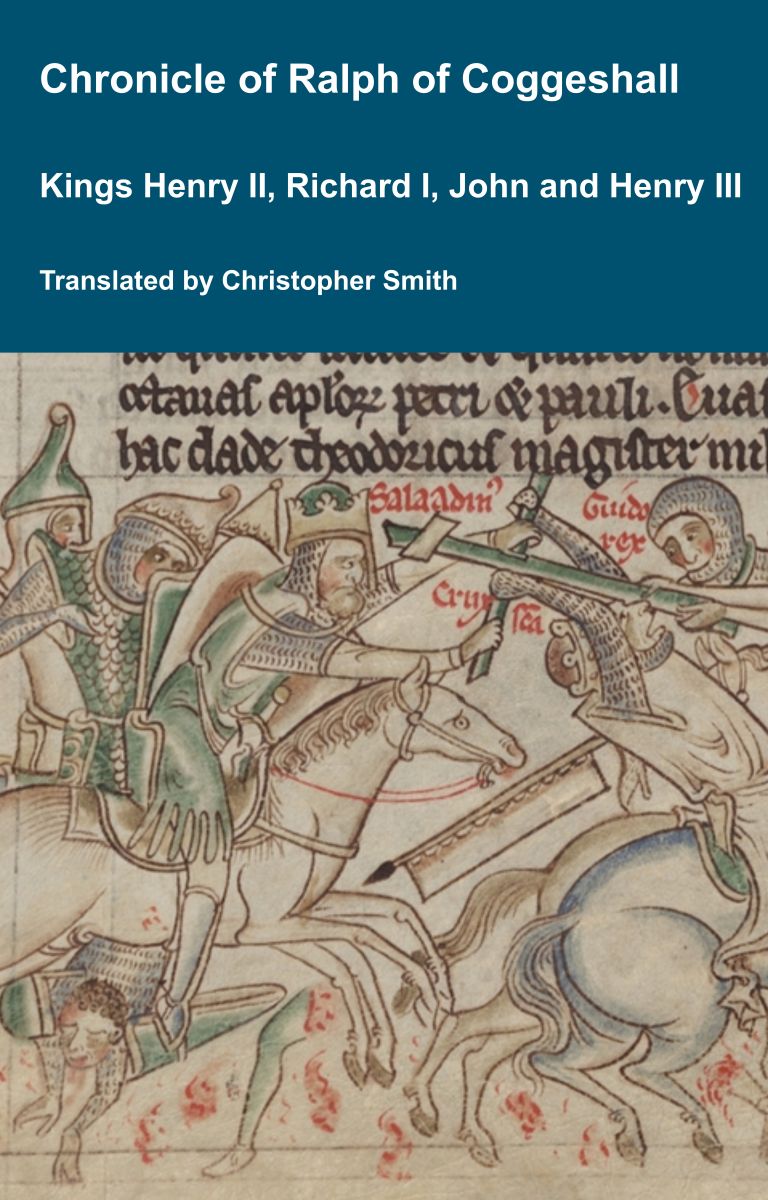
Chronicle of Abbot Ralph of Coggeshall
The Chronicle of Abbot Ralph of Coggeshall (Chronicon Anglicanum) is an indispensable medieval history that brings to life centuries of English and European affairs through the eyes of a learned Cistercian monk. Ralph of Coggeshall, abbot of the Abbey of Coggeshall in Essex in the early 13th century, continued and expanded his community’s chronicle, documenting events from the Norman Conquest of 1066 into the tumultuous reign of King Henry III. Blending eyewitness testimony, careful compilation, and the monastic commitment to record-keeping, this chronicle offers a rare narrative of political intrigue, royal power struggles, and social upheaval in England and beyond. Ralph’s work captures the reigns of pivotal figures such as Richard I and King John, providing invaluable insights into their characters, decisions, and the forces that shaped medieval rule. More than a simple annal, Chronicon Anglicanum conveys the texture of medieval life and governance, making it a rich source for scholars and readers fascinated by English history, monastic authorship, and the shaping of the medieval world.
Available at Amazon in eBook and Paperback format.
6th Century Events is in 1st Millennium Events.
Anglo-Saxon Chronicle. 552. This year Cynric fought with the Britons on the spot that is called Sarum [Map], and put them to flight. Cerdic was the father of Cynric, Cerdic was the son of Elesa, Elesa of Esla, Esla of Gewis, Gewis of Wye, Wye of Frewin, Frewin of Frithgar, Frithgar of Brand, Brand of Balday, Balday of Woden. In this year Ethelbert, the son of Ermenric, was born, who on the two and thirtieth year of his reign received the rite of baptism, the first of all the kings in Britain.
In 556 Cynric King Wessex and Ceawlin King Wessex defeated the Britons at Barbury Castle [Map] during the Battle of Beran Burg. Barbury Castle [Map] possibly of strategic importance since it is located on the Ridgeway with extensive views over the Thames valley.
In 560 (other sources indicate between 555 and 561) the Battle of Cúl Dreimhne, or the Battle of the Book, at north-west Ireland. Some sources describes the cause of the battle as being over the copyright of a book that Saint Columba had copied. Other sources suggest the battle was over the killing of Diarmait of Curnán (son of Áed mac Echach King Connaught), who was under Saint Columba's protection, by Diarmait mac Cerbaill High King of Ireland.
In 568 Ceawlin King Wessex and Cutha Wessex fought against King Æthelberht of Kent [aged 18] at the Battle of Wibbandun and drove him into Kent. The location of the battle is unknown.
In 577 Ceawlin King Wessex and his son Cuthwine [aged 12] won a major victory over the Britons at the Battle of Dyrham at Hinton Hill Dyrham, Gloucestershire. The victory of resulted in the capture of Gloucester [Map], Cirencester, Gloucestershire [Map] and Bath, Somerset [Map].
Coinmail Briton, Condidan Briton and Farinmail Briton were killed.
The Hwicce was a kingdom in Anglo-Saxon England established in 577 after the Battle of Dyrham. In 628 Hwicce became a sub-kingdom of Mercia after the Battle of Cirencester. Hwicce included most of Worcestershire and Gloucestershire, and the south-west part of Warwickshire.
In 584 Ceawlin King Wessex and his son Cutha Wessex defeated the Britons at the Battle of Fethan Leag which was probably fought at Stoke Lyne, Oxfordshire [Map].
In 584 Ceawlin King Wessex was defeated, probably by the Britons, possibly by Ceol King Wessex at the First Battle of Woden's Barrow which fought at Adam's Grave [Map], Pewsey, Wiltshire.
Anglo-Saxon Chronicle. 592. This year there was a great slaughter of Britons at Wanborough; Ceawlin was driven from his kingdom, and Ceolric reigned six years.
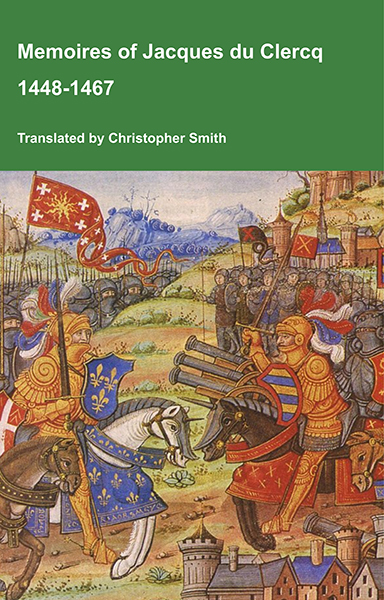
This is a translation of the 'Memoires of Jacques du Clercq', published in 1823 in two volumes, edited by Frederic, Baron de Reissenberg. In his introduction Reissenberg writes: 'Jacques du Clercq tells us that he was born in 1424, and that he was a licentiate in law and a counsellor to Philip the Good, Duke of Burgundy, in the castellany of Douai, Lille, and Orchies. It appears that he established his residence at Arras. In 1446, he married the daughter of Baldwin de la Lacherie, a gentleman who lived in Lille. We read in the fifth book of his Memoirs that his father, also named Jacques du Clercq, had married a lady of the Le Camelin family, from Compiègne. His ancestors, always attached to the counts of Flanders, had constantly served them, whether in their councils or in their armies.' The Memoires cover a period of nineteen years beginning in in 1448, ending in in 1467. It appears that the author had intended to extend the Memoirs beyond that date; no doubt illness or death prevented him from carrying out this plan. As Reissenberg writes the 'merit of this work lies in the simplicity of its narrative, in its tone of good faith, and in a certain air of frankness which naturally wins the reader’s confidence.' Du Clercq ranges from events of national and international importance, including events of the Wars of the Roses in England, to simple, everyday local events such as marriages, robberies, murders, trials and deaths, including that of his own father in Book 5; one of his last entries.
Available at Amazon in eBook and Paperback format.
In 592 Ceawlin King Wessex was killed at the Battle of Wanborough. His nephew Ceol succeeded King Wessex.