

Abbot John Whethamstede’s Chronicle of the Abbey of St Albans
Abbot John Whethamstede's Register aka Chronicle of his second term at the Abbey of St Albans, 1451-1461, is a remarkable text that describes his first-hand experience of the beginning of the Wars of the Roses including the First and Second Battles of St Albans, 1455 and 1461, respectively, their cause, and their consequences, not least on the Abbey itself. His text also includes Loveday, Blore Heath, Northampton, the Act of Accord, Wakefield, and Towton, and ends with the Coronation of King Edward IV. In addition to the events of the Wars of the Roses, Abbot John, or his scribes who wrote the Chronicle, include details in the life of the Abbey such as charters, letters, land exchanges, visits by legates, and disputes, which provide a rich insight into the day-to-day life of the Abbey, and the challenges faced by its Abbot.
Available at Amazon in eBook and Paperback format.
Battle of Orewin Bridge is in 1270-1299 Welsh and Scottish Wars.
On 11th December 1282 an English force including John Giffard 1st Baron Giffard Brimpsfield [aged 50], Gruffydd ap Gwenwynwyn Mathrafal Prince Powys Wenwynwyn [aged 71] and Owen de la Pole Mathrafal 1st Lord Powis [aged 25] defeated a Welsh force at Builth Wells [Map] during the Battle of Orewin Bridge. The Welsh leader Llywelyn "Last" Aberffraw [aged 49] was killed effectively bringing to an end the independence of Wales. His brother Dafydd [aged 44] succeeded Prince of Wales.
Annals of Dunstable. After this, Llewelyn, prince of Wales, descended securely from Snowdon into the lands which had belonged to Roger de Mortimer, to receive the homage of those men, as he had been fraudulently summoned by the sons of the said Roger. And when he had come near a certain abbey which is called Cwm-hir, those who were stationed by the king in the fortifications of Montgomery and of Builth Wells, having with them all the powerful men of that March, suddenly rushed upon him after sunset; and there they killed Prince Llewelyn, and sent his head to the king at Rhuddlan, which afterwards was carried to London and placed upon the Tower for the spectacle of the people. There were also slain with the prince three of his nobles and about two thousand foot-soldiers; but few horsemen. And this victory happened in the eleventh year of King Edward’s reign, on the tenth day of December [1282].
Post hæc Leulinus, princeps Walliæ, secure descendit Llewellyn de Snoudone in terris quæ fuerunt Rogeri de Mortimer, ad capiendum homagium hominum illorum, sicut per filios dicti Rogeri fraudulenter fuerat evocatus. Et cum venisset prope quandam abbatiam quæ vocatur Cunhyr, irruerunt in illum repente post solis occasum hi qui erant per regem in munitionibus de Muntgumery et de Blancmustor, habentes secum omnes potentes de illa Marchia; et occiderunt ibi principem Leulinum; et miserunt caput ejus ad regem apud Rothelane, quod postea Londoniam est delatum, et positum supra Turrim ad spectaculum populorum. Occisi etiam erant cum principe tres ex magnatibus suis et ad duo milia peditum; equitum vero pauci. Et contigit hæc victoria anno regni regis Edwardi undecimo, decimo die Decembris.
The Breviary of Britayne. [11th December 1282] Untill that the prince him selfe, beyng forsaken by many of his owne men: was by the men of Buelt betrayed, not far from the river Vaga, or wye, whether he came with a very few souldiers. And by one Adam Francton, whiche faught under the conduct of Helias walwin: far from the residew of his owne power beynge accompapnied with one only Page, and unarmed, with certain other noble men of that country, tolde ye same before to his enemies: was there slayne most dishonorably.
The History of Cambria. [11th December 1282] Then some of his men seeing their enemies come downe from the hill, kept the bridge called Pont Orewyn, & defended the passage manfullie, till one be declared to the Englishment where a ford was a little beneath, through which they sent a number of their men with Helias Walwyn, who suddenlie fell upon them that defended the bridge in their backs, and put them to flight. The princes esquire told the Prince (as he stood secretly abding the comming of such as promised to meete him in a little grove) that he heard great noise and crie at the bridge: and the prince asked whether his men had taben the bridge, and he said, yes. Then (said the Prince) I passe not if all the power of England were upon the other side. But suddenlie behold, the horssemen about the grove, and as he would have escaped to his men, they pursued him so hard that one Adam Francton ranne him thorough with a staffe being unarmed, and knew him not, and hiss men being but a few stood and fought boldlie, ever looking for their prince, till the Englishmen by force of archers mirt with the horssement wannte the hill and put them to flight. And as they returned, Francton went to spoiie him whome he bad slaine, and when he saw his face, he knew him verie well, and stroke off his head, and sent it to the King at the Abbie of Conwey, who received it with great joy, and caused it to be set London.
Annals of Oseney by Thomas Wykes. [11th December 1282] When he had died, lord Edmund, his first-born and heir, together with his brother—very likely, as may indeed be reasonably believed, in order to please the king’s mind—laid an ambush for the said Llewelyn. Llewelyn, who had come down from the mountains of Snowdonia to do I know not what, and was roaming the lower regions with a few adherents, was noticed in his descent by scouts; and Edmund, surrounded by no small or ignoble company, came upon him more unexpectedly than was believed, and killed him and his companions who were unable to flee, by the sword. The head also of the prince, whom he recognized among the slain, he cut off and sent to the lord king. By God’s disposition this memorable triumph of the killing of Llewelyn happened about the feast of Saint Thomas the Apostle before Christmas. The king, indeed rejoicing in the triumph, decreed that the head itself should be taken to London and set upon the Tower of London on a spear as a sign of so great a victory.
Quo defuncto dominus Edmundus, ejus primogenitus et hæres, una cum fratre suo, forte, ut sane credi poterit, ut regis animum complacaret, dicto Lewelino machinatus est insidias; cui nescio quid acturo descendenti de montibus Snowdoniæ et partes inferiores cum paucis sibi cohærentibus pervaganti, notato per exploratores ejus descensu, non modica nec ignobili comitiva stipatus, inopinatius quam credebatur occurrit, ipsumque et complices suos qui fugere non poterant, interfecit in ore gladii. Caput quoque principis, quem inter interfectos recognovit, amputatum domino regi transmisit. Contigit Deo disponente memorabilis iste triumphus interfectionis Lewelini circa festum Sancti Thomæ Apostoli ante Natale. Rex nimirum glorians de triumpho caput ipsum decrevit Londonias deportandum, et super Turrim Londoniarum super hastili in signum victoriæ tam celebris affigendum.
French Chronicle of London. In this year was Leulyn, Prince of Wales, taken and beheaded [11th December 1282], and his1 head sent to the Tower of London; and Sir Edward2, son of King Edward, was then born, upon Saint Mark's Day [25 April].
Note 1. It was carried through Chepe to the sound of trumpets, and crowned with a silver coronet; after which it was fixed on the pillory there, and then conveyed to the Tower, crowned with ivy.
Note 2. A mistake. King Edward II of England was born of 25th April 1284.
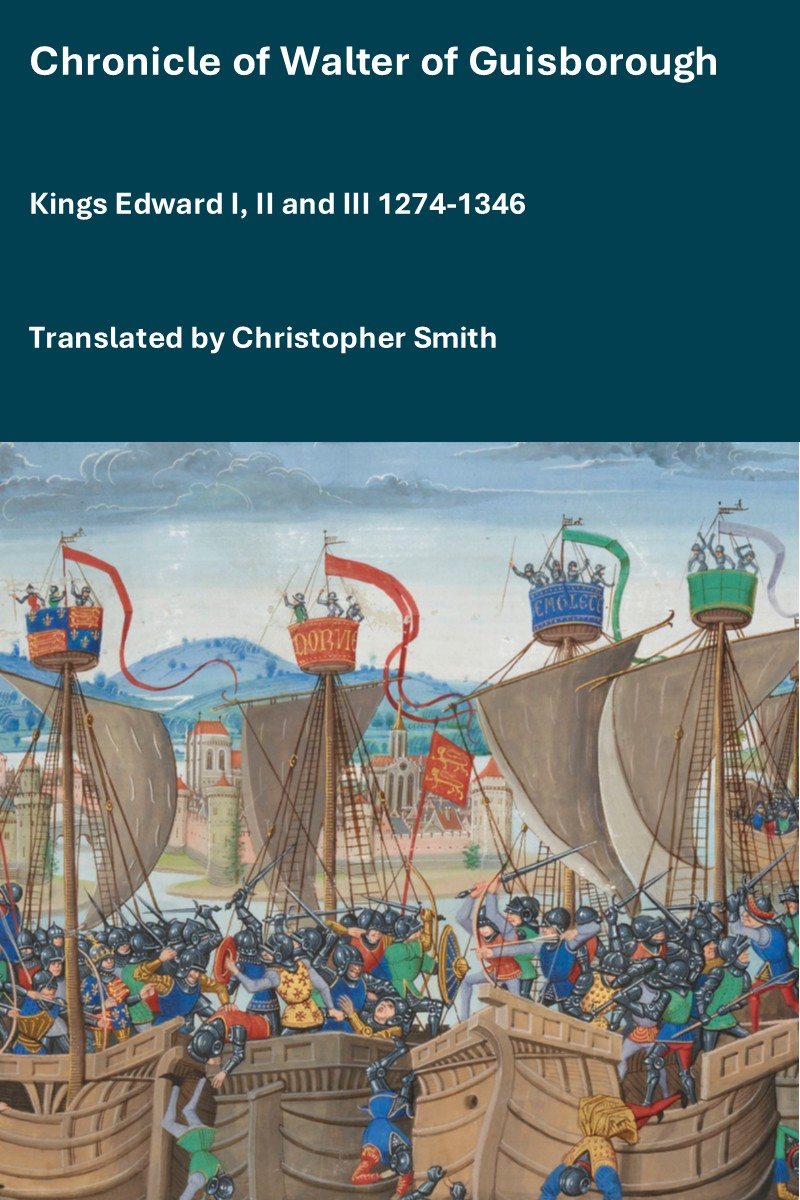 Chronicle of Walter of Guisborough. Around the next feast of Saint Nicholas1, Llywelyn descended from the mountains with only one squire, wishing to cautiously observe whether the inhabitants of the valleys remained loyal to him as before. He left his entire army on the ridge of the mountain above the river called Wye. His men took possession of the bridge of Orewin, and many Welsh remained there on his side, while on the other side were many royal troops. The king himself was that same day stationed at Rhuddlan [Map]. As the royal forces, whose leaders were Sir John Giffard and the young Sir Roger de Mortimer, saw the Welsh at the bridge and the large army on the ridge above, they discussed among themselves what ought to be done. One of them, named Elias Walwyn, replied, if we remain here, we can neither advance nor cross. But there is a certain ford not far from here and unknown to the Welsh, where we can cross, though with difficulty. Let brave men follow me, and we shall strike the Welsh from behind, those who are now at the bridge. Then the way across the bridge will be opened for the rest of our army, and from there we shall be able to press forward against the remaining enemies.
And so he did, and he crossed the ford that was unknown to others, from which the place took its name that it bears to this day, and it was called Hiliswath. After the Welsh who were stationed at the bridge were struck down, the way was opened for the rest of our army to pass through freely. When the sound of battle reached the ears of Llywelyn himself, who was hiding nearby in a barn at Thaulweyr, he said, "Are not my Welshmen holding the bridge at Orewin?" They replied to him, "Indeed, they are." And he said, "Even if all England were on the other side, I would not fear them." But as the noise of the fighting grew louder and his army on the heights began to panic when they saw the English forces approaching, Llywelyn hastened to slip away secretly with his page, for he feared for his life when he learned what had happened. He was spotted by one of our men, Stephen of Frankton, though he did not know who he was. Stephen followed him with a few others and, finding him fleeing and lightly armed, pierced him with a lance, and then quickly withdrew and returned to our army. The Welsh troops stood in their formations on the mountain ridge, waiting for their prince and lord, but in vain. As our forces advanced up the hill, the Welsh shot many arrows and bolts, and there was a brief skirmish with our archers, who were positioned among the cavalry. Many of the Welsh fell, because they had bravely held their ground in hope of their leader's return. At last, our cavalry reached the summit of the hill above them. After some were cut down, the rest were turned to swift flight. When our men returned victorious, the above-mentioned Stephen went back to see who the two individuals were whom he had struck down. Upon seeing Llywelyn's face and recognizing him, they cut off his head and brought it with joy to our king. The king then ordered it to be sent to London. A silver crown was placed upon it as a sign of his former princely title, and it was carried on a lance through the middle of Westcheap, London, by a mounted man, accompanied by a large crowd of citizens and much ceremony. Eventually, it was placed on a high turret of the royal tower, where it remained for a long time to be seen by all who passed by.
Circa vero sequens festum beati Nicolai descendit ipse Leulinus cum solo armigero de montibus, ut cautius exploraret si habitatores convallium in fide sua manerent ut prius, reliquitque totum suum exercitum in supercilio montis super aquam quæ vocatur Waye et præoccupaverunt sui pontem Grewyn, manseruntque ibi ex parte sua Wallenses plurimi et ex parte altera regales multi; rex vero eodem die apud Rotheland erat in præsidio. Dumque regales nostri, quorum duces exercitus erant dominus Johannes Giffard et dominus Rogerus de Mortimer juvenis, viderent Wallenses ad pontem et exercitum grandem in supercilio montis, loquerenturque mutuo quid esset faciendum, respondit unus cui nomen Hilias Wallayn, Si manserimus hic nec proficere nec transire poterimus, sed est vadum quoddam non longe distans et a Wallensibus incognitum, ubi transire poterimus, cum difficultate tamen; sequantur ergo me viri fortes, et percutiemus a tergo Wallenses qui modo sunt ad pontem, et sic patebit ingressus per pontem reliquo exercitui nostro, poterimusque extunc plane procedere contra reliquos hostes.
Fecitque sic et transivit vadum aliis incognitum, unde et nomen sortitum est usque in præsentem diem et vocatum est Hiliswath: percussisque Wallensibus qui erant ad pontem, liberum fecit introitum reliquo exercitui nostro. Cumque clamor ascenderet etiam ad aures ipsius Leulini qui ibi prope in grangio Thaulweyr latitabat, ait ipse Leulinus, Nonne Wallenses mei sunt ad pontem Grewyn? dicunt ei, Utique sunt. Et ait, Etiamsi tota Anglia esset in parte altera non timerem eos. Ingravescente tandem clamore et tumultuante ejus exercitu in excelsis dum exercitum Anglorum viderent properantem, festinavit ipse Leulinus cum puero suo latenter ascendere, timuit enim sibi cognito prædicto casu. Cumque videretur a quodam ex nostris, Stephano scilicet de Stephen de Franketone, nec tamen cognosceretur quis esset, secutus est eum idem Stephanus cum paucis et ipsum fugientem et leviter armatum lancea perforavit, et confestim abiit, et reversus est ad exercitum nostrum. Steterunt itaque Wallenses per turmas suas in supercilio montis expectantes principem et dominum suum, sed incassum: et ascendentibus nostris, sagittas et telas multas direxerunt, factaque concertatione aliqua per sagittarios nostros qui inter equestres innixi erant corruerunt multi, eo quod animose steterunt expectantes dominum suum: tandem vero equestres nostri ascenderunt in montem super eos, et cæsis aliquibus reliquos in velocem fugam converterunt. Revertentibus ergo nostris obtenta victoria, prædictus Stephanus perrexit ut videret quinam essent illi duo quos percusserat, et visa facie Leulini et cognita, amputaverunt caput suum, et ad regem nostrum cum gaudio detulerunt. Rex vero illud mitti jussit Londoniis, et sic apposita serta argentea in signum principis per medium Westchepe Londoniis in lancea per equestrem delatum est cum magno comitatu civium et apparatu, et super turrim excelsam turris regiæ tandem cum lancea repositum est ut a transeuntibus universis longo tempore videretur.
Note 1. The Feast Day of St Nicholas is the 6th of December. The battle of Orewin Bridge took place on 11th December 1282.
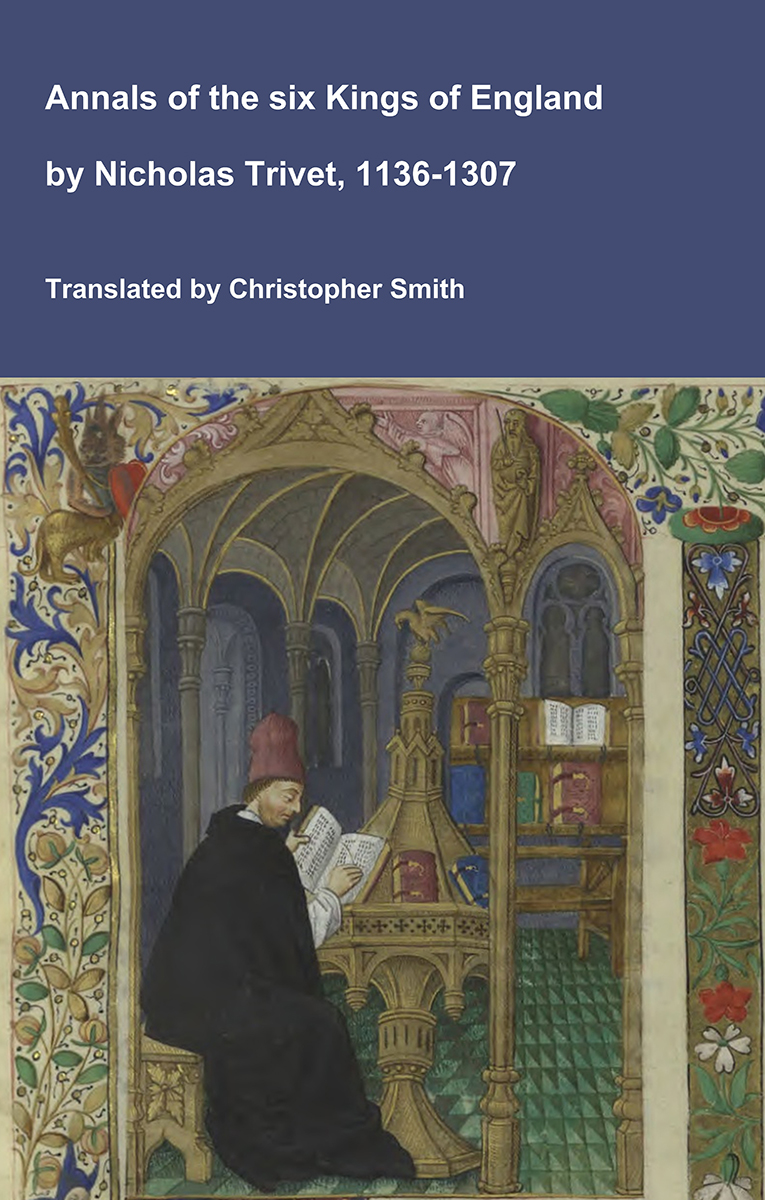 Annals of Six Kings of England by Nicholas Trivet [1258-1328]. Then the prince, advancing towards the land of Builth, separated himself with a few men from the rest of his army. Upon him came the noblemen John Giffard and Edmund de Mortimer with their retinue; suspecting nothing of the prince’s presence, they attacked him in battle and killed him1 on the Friday before the feast of St Lucy [11th December 1282]. After the prince’s death, when he had been recognised by someone who was present, his head was cut off and brought to the king; it was sent to London and set up for some time upon the Tower.
Progressus deinde princeps versus terram de Bueld, se cum paucis ab exercitu reliquo separavit; cui cum sua militia supervenientes nobiles viri Joannes Giffardi et Edmundus de Mortuo-mari, nihil suspicantes de principe, ipsum cum sociis pugna aggredientes occiderunt feria sexta ante festum beatæ Luciæ. Principis autem post mortem, a quodam qui intererat agniti, caput abscissum regi defertur, quod Londonias transmissum positum est per tempus aliquod super turrim.
Note 1.
Chronicle of Walter of Gusiborough: 'But as the noise of the fighting grew louder and his army on the heights began to panic when they saw the English forces approaching, Llywelyn hastened to slip away secretly with his page, for he feared for his life when he learned what had happened. He was spotted by one of our men, Stephen of Frankton, though he did not know who he was. Stephen followed him with a few others and, finding him fleeing and lightly armed, pierced him with a lance, and then quickly withdrew and returned to our army. The Welsh troops stood in their formations on the mountain ridge, waiting for their prince and lord, but in vain. As our forces advanced up the hill, the Welsh shot many arrows and bolts, and there was a brief skirmish with our archers, who were positioned among the cavalry. Many of the Welsh fell, because they had bravely held their ground in hope of their leader's return. At last, our cavalry reached the summit of the hill above them. After some were cut down, the rest were turned to swift flight. When our men returned victorious, the above-mentioned Stephen went back to see who the two individuals were whom he had struck down. Upon seeing Llywelyn's face and recognizing him, they cut off his head and brought it with joy to our king. The king then ordered it to be sent to London. A silver crown was placed upon it as a sign of his former princely title, and it was carried on a lance through the middle of Westcheap, London, by a mounted man, accompanied by a large crowd of citizens and much ceremony. Eventually, it was placed on a high turret of the royal tower, where it remained for a long time to be seen by all who passed by.'
Letters of Archbishop John Peckham 361. But the aforesaid Llewelyn1, prince of Wales, having spurned all the offers and forms of peace previously set forth, invaded in hostile manner the land of the lord king of England, laying it waste with fire and plunder, and moreover drawing the men of that land to himself and severing them from the good estate of the king’s peace. Yet this prince, within that same month, was the first of his army to be slain with a shameful death, by the household of lord Edmund de Mortimer, son of lord Roger de Mortimer; and all his army was either slain or put to flight in the parts of Montgomery on the Friday next before the feast of Saint Lucy, that is, the third Ides of December [11th December 1282], in the year of the Lord 1282, the tenth indiction, with Dominical Letter D then current.
Lewelinus autem princeps Walliæ prædictus, spretis omnibus oblationibus et pacis formis præscriptis, invasit hostiliter terram domini regis Angliæ, destruendo eam incendio et rapina, necnon homines terræ illius ad se trahendo et a bonitate pacis regiæ separando. Qui tamen princeps infra mensem illum ignominiosa morte primus de exercitu suo occisus est per familiam domini Eadmundi de Mortui Mari, filii domini Rogeri de Mortuo Mari, et totus exercitus suus vel occisus vel in fugam conversus, in partibus Montisgomoriæ die Veneris proxima ante festum Sanctæ Luciæ, videlicet iii. idus Decembris sub anno Domini millesimo CC. LXXXIL, indictione decima, litera Dominicali D. currente.
Note 1. The following words are appended here in the margin of A. : "Lewelinus fuit princeps Walliæ." i.e. "Llywelyn was Prince of Wales".
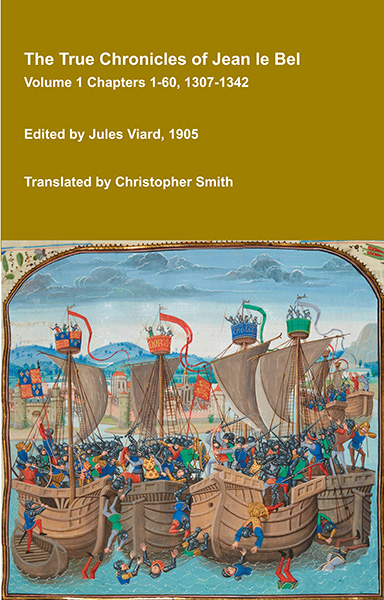
The True Chronicles of Jean le Bel Volume 1 Chapters 1-60 1307-1342
The True Chronicles of Jean le Bel offer one of the most vivid and immediate accounts of 14th-century Europe, written by a knight who lived through the events he describes, and experienced some of them first hand. Covering the early decades of the Hundred Years’ War, this remarkable chronicle follows the campaigns of Edward III of England, the politics of France and the Low Countries, and the shifting alliances that shaped medieval warfare. Unlike later historians, Jean le Bel writes with a strong sense of eyewitness authenticity, drawing on personal experience and the testimony of fellow soldiers. His narrative captures not only battles and sieges, but also the realities of military life, diplomacy, and the ideals of chivalry that governed noble society. A key source for Jean Froissart, Le Bel’s chronicle stands on its own as a compelling and insightful work, at once historical record and literary achievement. This translation builds on the 1905 edition published in French by Jules Viard, adding extensive translations from other sources Rymer's Fœdera, the Chronicles of Adam Murimuth, William Nangis, Walter of Guisborough, a Bourgeois of Valenciennes, Geoffrey le Baker of Swinbroke and Richard Lescot to enrich the original text and Viard's notes.
Available at Amazon in eBook and Paperback format.
Letters of Archbishop John Peckham 371. [After 11th December 1282]. To Maud Lungespeye [aged 48].
Friar John, by the permission of God, archbishop of Canterbury, primate of all England, to the lady of great worth, Maud Lungespeye, greeting, and the blessing of Jesus Christ. My lady, your prayer agrees with pity and reason. But know that Llewellyn, who was prince of Wales, cannot be absolved unless he showed signs of repentance at his death to amend and leave his follies. Therefore if this is certain that he was repentant at his death, and ready as far as was in his power to make amends1 to Holy Church, and this is proved before us, we will do what is right about it, for otherwise, without doing wrong, he cannot be absolved. Therefore we approve that you and his other friends should labour about this, that some of those who were at his death should come in time before us and show the signs aforesaid, for in any other manner we can do nothing.
Note 1. La asez.
Letters of Archbishop John Peckham 372. To Edward I.
To my lord the King. To his very dear lord Edward, by the grace of God king of England, lord of Ireland, duke of Aquitaine, friar John, by the permission of God, archbishop of Canterbury, primate of all England, greeting in great reverence. Sire, know that those who were at the death of found in the most secret part of his body some small things which we have seen. Among the other things there was a treasonable letter disguised by false names. And that you may be warned, we send a copy of the letter to the bishop of Bath, and the letter itself Edmund de Mortemer has, with Llewellyn’s privy seal, and these things you may have at your pleasure. And this we send to warn you, and not that any one should be troubled for it. And we pray you that no one may suffer death or mutilation in consequence of our information, and that what we send you may be secret. Besides this, sire, know that lady Maud Lungespeye [aged 48] prayed us by letter to absolve Llewellyn, that he might be buried in consecrated ground, and we sent word to her that we would do nothing if it could not be proved that he showed signs of true repentance before his death. And Edmund de Mortemer said to me that he had heard from his servants who were at the death that he asked for the priest before his death, but without sure certainty we will do nothing. Besides this, sire, know that the very day that he was killed, a white monk sang mass to him, and my lord Roger de Mortemer has the vestments. Besides this, sire, we request you to take pity on clerks, that you will suffer no one to kill them nor do them bodily injury. And know, sire, God protect you from evil, if you do not prevent it to your power, you fall into the sentence, for to suffer what one can prevent is the same as consent. And, therefore, sire, we pray you that it may please you that the clerks who are in Snowdon may go thence and seek1 better things with their property in France or elsewhere. For because we believe that Snowdon will be yours, if it happen that in conquering or afterwards, harm is done to clerks, God will accuse you of it, and your good renown will be blemished, and we shall be considered a coward. And of these things, sire, if it please you, send us your pleasure, for we will give thereto what counsel we can, either by going thither or by some other way. And know, sire, if you do not falfil our prayer, you will put us in sadness, which we shall never leave in this mortal life. Sire, God keep you, and all that belongs to you.
This letter was written at Pembridge, Thursday after St. Lucy’s day2.
Note 1. Querelur, to dispute, but is perhaps an error for querer,
Note 2. The Feast Day of St Lucy is 13th December.
Letters of Archbishop John Peckham 370. To Adam de Nanneu, a Dominican.
Brother John, etc., to his beloved son Brother Adam of Nanneu, of the Order of Preachers, greeting, grace, and blessing. Lately, with our letters, we sent you to the regions of Snowdon concerning certain matters to be explained to Lord Llewelyn, Prince of Wales, and to the other magnates of the land, for the good of the commonwealth, with the understanding that you should return to us with their replies as soon as it could conveniently be done. But you, in no way observing the time set for your return, have neither come to us nor taken care up to now to inform us concerning the replies received from the said prince and magnates. Wherefore, strictly enjoining you in virtue of obedience, we command you that, all delay and slowness set aside, you come to us with all speed, to report to us what you have received and what you have done in regard to those matters for which we sent you, so that we may clearly understand what is to be done in this affair, through which provision may wholesomely be made both for us and for them. In testimony of which matter we have caused these our letters to be sent to you. Farewell. Given at Sugwas, on the day before the Ides of December [12th December 1284], in the third year of our ordination.
Frater J[ohannes] etc., dilecto filio fratri Adze de Nanneu, ordinis Prædicatorum, salutem, gratiam et benedictionem. Nuper cum nostris literis misimus vos ad partes Snaudon’, pro quibusdam negotiis domino Lewelino principi Walliz et ceteris terrae magnatibus pro utilitate rei publicse exponendis, ita quod ad nos cum responsis eorundem quam citius commode posset fieri rediretis; vos autem tempus redditus vestri minime observantes, nec ad nos venitis nec super responsis acceptis a principe et magnatibus preedictis, curastis hactenus nos reddere certiores. Quocirca vobis in virtute obedientie firmiter injuangendo mandamus, quatenus omni dilationis tzedio cessante ad nos celerius veniatis, nobis relaturi quid receperitis et feceritis in hiis pro quibus vos duximus transmittendum, ut que agenda sunt in hac parte lucide cognoscamus, per que tam nobis quam ipsis valeat salubriter provideri. In cujus rei testimonium vobis has nostras literas duximus transmittendas. Valete. Datum apud Sugwas, i. id. Decembris, ordinationis nostree anno illl.