

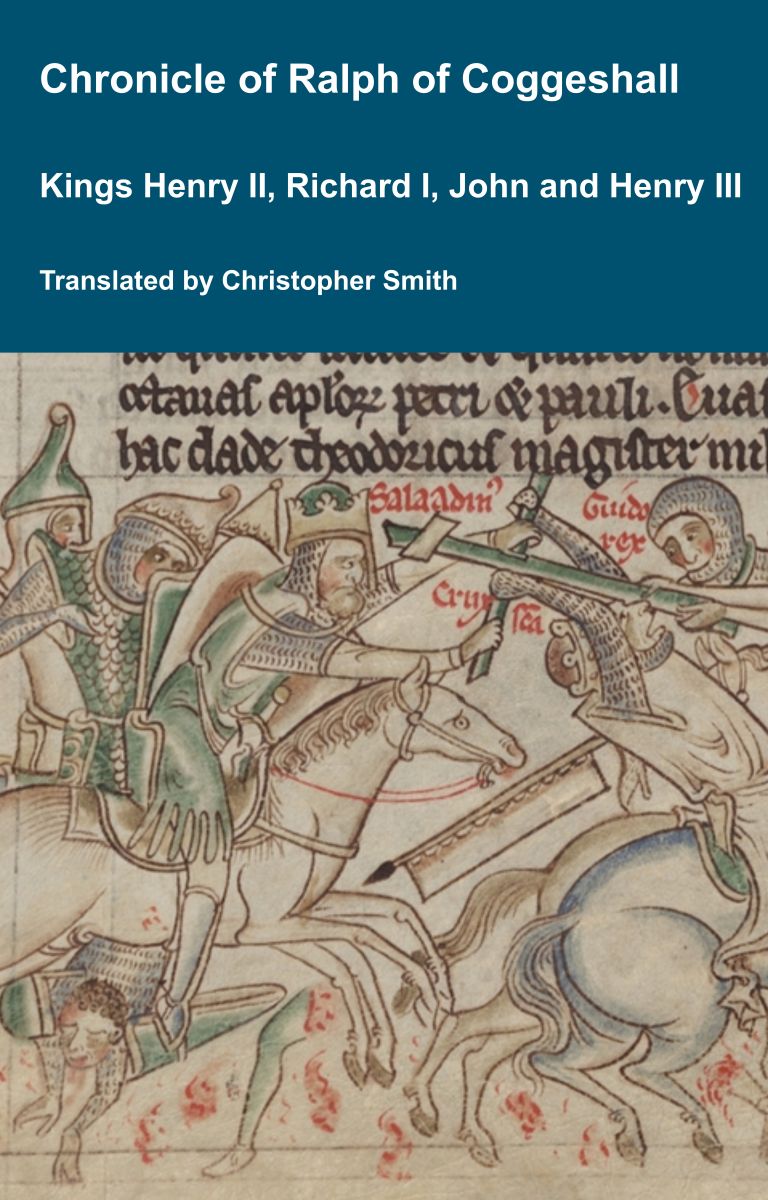
Chronicle of Abbot Ralph of Coggeshall
The Chronicle of Abbot Ralph of Coggeshall (Chronicon Anglicanum) is an indispensable medieval history that brings to life centuries of English and European affairs through the eyes of a learned Cistercian monk. Ralph of Coggeshall, abbot of the Abbey of Coggeshall in Essex in the early 13th century, continued and expanded his community’s chronicle, documenting events from the Norman Conquest of 1066 into the tumultuous reign of King Henry III. Blending eyewitness testimony, careful compilation, and the monastic commitment to record-keeping, this chronicle offers a rare narrative of political intrigue, royal power struggles, and social upheaval in England and beyond. Ralph’s work captures the reigns of pivotal figures such as Richard I and King John, providing invaluable insights into their characters, decisions, and the forces that shaped medieval rule. More than a simple annal, Chronicon Anglicanum conveys the texture of medieval life and governance, making it a rich source for scholars and readers fascinated by English history, monastic authorship, and the shaping of the medieval world.
Available at Amazon in eBook and Paperback format.
Catherine Howard Trials is in Catherine Howard Trials and Executions.
On 1st November 1541 Henry VIII [aged 50] received a warrant for Catherine Howard's [aged 18] arrest from Archbishop Thomas Cranmer [aged 52] at Chapel Royal, Hampton Court Palace [Map].


On 7th November 1541 Catherine Howard [aged 18] was first interrogated by Thomas Cranmer Archbishop of Canterbury [aged 52] and John Gresham Lord Mayor [aged 46].
On 23rd November 1541 Catherine Howard [aged 18] was stripped of her title as Queen and imprisoned at Syon Abbey [Map].
In December 1541 Francis Dereham [aged 28] and Thomas Culpepper [aged 27] were tried for adultery with Queen Catherine Howard of England [aged 18]. The former for adultery before Henry and Catherine's marriage, the latter for adultery after the marriage.
Both were found guilty and sentenced to be hanged, drawn and quartered. Both men pleaded for mercy. Culpeper, presumably because of his former closeness to the King, received a commuted sentence of beheading only.
The Remains of Thomas Cranmer Archbishop of Canterbury Volume 1 261. [7th November 1541]. It may please your Majesty to understand, that at my repair unto the Queen's Grace [aged 18]t, I found herein such lamentation and heaviness, as I never saw no creature; so that it would have pitied any man's heart in the world to have looked upon her; and in that vehement rage she continued, as they informed me which be about her, from my departure from her unto my return again; and then I found her, as I do suppose, far entered toward a frenzy, which I feared before my departure from her at my first being with her; and surely, if your Grace's comfort had not come in time, she could have continued no long time in that condition without a frenzy, which, nevertheless, I do yet much suspect to follow hereafter.
Note t. [Catharine Howard. According to the official statement sent on the 14th of Nov. to the English Ambassador in France, the Queen "was spoken withal in it by the Archbishop of Canterbury, the Lord Chancellor, the Duke of Norfolk, the Lord Great Chamberlain of England, and the Bishop of Winchester; to whom at the first she constantly denied it; but the matter being so declared unto her, that she perceived it to be wholly disclosed, the same night she disclosed the whole to the Archbishop of Canterbury, who took the confession of the same in writing, subscribed with her hand." Lord Herbert, Life of Hen. VIII. p. 534. The interview described in this Letter of Cranmer's seems to have been subsequent to her first confession, and was perhaps the same at which she signed the paper printed by Burnet, Ref. vol. iii. App. B. iii. No. 72. Much new correspondence on this subject has lately been published in the State Papers, vol. i. p. 689, & c.]
Letters and Papers Foreign and Domestic Henry VIII 1541. 7th November 1541. 1325. Cranmer [aged 52] to Henry VIII. R. O. St. P. i. 689. C.'s Letters, 409.
Describes his interview with the Queen [aged 18], whose state it would have pitied any man's heart to see. She had continued so ever since Cranmer left her. Purposed first to exaggerate her demerits, then declare the justice of the laws, and, lastly, signify the King's mercy; but, for fear she would enter into a frenzy, was fain to begin with the last. When she broke out into any "extreme braydes," told her there was some new fantasy come into her head and asked what it was. She said "this sudden mercy" made her offences seem more heinous. About six o'clock she fell into another "pange" which, she said, was "for the remembrance of the time, for about that time, as she said, Master Hennage was wont to bring her knowledge of your Grace." Lacks time to write everything and leaves it to the bearer, Sir John Dudlay, to relate. Encloses all he can get touching any communication of marriage with Derame [aged 28], which she thinks no contract, nor would it be so if carnal copulation had not followed. The reason Mr. Baynton [aged 49] sent to the King was to declare her state, and because, after Cranmer left, she began to excuse and temper the things she had said and put her hand to, for she says that what Derame did was by force. "Fro" — (blank space for date).
Hol., pp. 2. Add. Endd.
Note. See The Remains of Thomas Cranmer Archbishop of Canterbury Volume 1 261 for the full letter.
Letters and Papers Foreign and Domestic Henry VIII 1541. [8th November 1541]. Is moved to presume this because he hears that the Queen [Queen Catherine Howard of England [aged 18]] is newly accused of being entertained by a gentleman [Francis Dereham [aged 28]] while she was in the house of the old duchess of Norfolk, mother of lord William, and because physicians say she cannot bear children. The way taken is the same as with Queen Anne who was beheaded; she has taken no kind of pastime but kept in her chamber, whereas, before, she did nothing but dance and rejoice, and now when the musicians come they are told that it is no more the time to dance. Her brother [Charles Howard], gentleman of this King, is banished from Court without reason given; and Norfolk may well be vexed, seeing that she is his brother's daughter, as Queen Anne was his sister's, and he was author of this marriage. Set men to watch Hampton Court where the ladies are, and they reported that yesterday evening several persons went in post thither, including the abp. of Canterbury, who was the first to whom this affair was opened touching the familiarity of the personage abovesaid with the Queen. Is since told that the Queen's jewels are inventoried. As to whom the King will take, everyone thinks it will be the lady he has left, who has conducted herself wisely in her affliction, and is more beautiful than she was, and more regretted and commiserated (plaincte) than Queen Katharine was in like case. Besides, the King shows no inclination to any other lady, and will have some remorse of conscience, and no man in England dare suggest one of such quality as the lady in question, for fear, if she were repudiated, of falling "en quelque gros inconvenient."
The above written on the 8th.
Has since learnt that Hampton Court, where the ladies are, is closely guarded and none but officers admitted. Lady Mary has been sent to where the young Prince is still ill.
All the prelates who are not commonly heard in affairs of state, are summoned hither; which should be for some cause like marriage. A gentleman of the King's chamber says it will be concluded that the lady shall be no longer queen. But nothing is certain except that these troubles are on her account.
French. Modern transcript, pp. 7. Headed: 11 Nov. 1541.
Letters and Papers Foreign and Domestic Henry VIII 1541. 11 Nov [1541]. 1331. The Privy Council to [Cranmer, and Others]. R. O. St. P., i. 691.
The King, having considered their letters, wills them to persevere in attaining knowledge of the truth and to execute his pleasure before signified to them; foreseeing that they take not from the Queen her privy keys till they have done all the rest. She is to be removed to Syon House [Map], and there lodged moderately, as her life has deserved, without any cloth of estate, with a chamber for Mr. Baynton [aged 49] and the rest to dine in, and two for her own use, and with a mean number of servants, as in a book herewith. She shall have four gentlewomen and two chamberers at her choice, save that my lady Baynton shall be one, whose husband shall have the government of the whole house and be associated with the Almoner. The rest of her servants shall depart on Monday next. Sir John Dudley shall conduct my lady Mary to my lord Prince's, with a convenient number of the Queen's servants; and lady Margaret Douglas shall go to Keningale, in Norfolk, with my lady of Richmond, if my lord her father and she are content. Order is to be taken for the maidens to return to their friends, save Mrs. Bassett, whom the King, "in consideration of the calamity of her friends, will, at his charges, specially provide for." If any others have no home or friends, their names are to be signified, that the household may be dismissed with the satisfaction of the parties.
Tomorrow the lord Chancellor, assembling all the King's councillors, spiritual and temporal, judges and learned counsel, shall declare to them the abominable demeanour of the Queen, without calling Deram, as was intended, or mentioning any pre-contract, which might serve for her defence, but only to show the King's just cause of indignation. Also those who know the whole matter, and how and by whom it came to the King's knowledge, "and the King's sorrowful behaviour and careful proceeding in it," shall, on Sunday next, assemble all the ladies, gentlewomen, and gentlemen of "that household," and declare to them the whole matter, omitting all mention of precontract, but setting forth "such matter as might engreave and 'consome' their misdemeanour" and set forth the King's goodness. The Queen's departing to Syon shall be on Monday next or later. The ladies and others appointed to depart shall do so on Monday, and only such remain at Hampton Court as shall attend her to Syon. Mr. Controller shall understand that Mr. Weldon, master of the Household, has been spoken to, to make provision "of wine, beer, and other necessaries" at Syon. Westm., 11 Nov., at night. Signed by Norfolk, Southampton, Sussex, Russell, Sir Ant. Browne, Sir Ant. Wyngfeld, and Ralph Sadleyr.
Pp. 4. Slightly mutilated. Flyleaf, with address gone.
Letters and Papers Foreign and Domestic Henry VIII 1541. 12 Nov. 1541. 1334. The Council to [Paget, Ambassador in France]. Otho C. x. 250. B. M. Herbert, in Kennett, ii. 228. Nicolas' P.C.P., vii. 352.
Are commanded to signify to him a most miserable case lately revealed. The King, on sentence given of the [invalidity] of his marriage with Anne of Cleves, being solicited by his Council to marry again, took to wife Katharine, daughter to the late lord Edmund Howard, thinking [now in his old] age to have obtained [a jewel] for womanhood, But this joy is turned to [extreme sorrow; for] after receiving his Maker on [All Hallows Day last] and directing the bp. of Lincoln, his [ghostly father], to make prayer and give thanks with him for the good life he led and hoped to [lead with her], on All Souls Day at mass the abp. [of Canterbury] having heard that she was not a woman of [such purity] as was esteemed, sorrowfully revealed it to the King, and how it came to his knowledge.
While the King was in his progress, one John [Lossels] came to the Abp. and told him that he had been with a sister of his, married, in [Sussex], who had been servant with the old duchess of [Norfolk] who brought up the said Katharine, and he had recommended her to sue for service with [the Queen]. She said she would not, but [was very sorry for the Queen]. "Why? quoth Lossels. Marry, quoth she, for she is [light, both in living] and conditions. How so? quoth Lossels." [She replied] that one Fras. Derham had lain in bed[with her, in his doublet] and hose, between the sheets an hundr[ed nights], and a maid in the house had said she would lie no longer with her because [she knew not what ma]trimony was. Moreover [one] Mannock, a servant of the [Duchess, knew a] privy mark on her body. The Abp., being much perplexed, consulted the lord Chancellor and the [earl of Hertford], and by their advice reported the matter to the King in writing, as he had not the heart to tell it by word of mouth. The King, thinking the matter forged [called to] him the lord Privy Seal, the lord Admiral, Sir [Ant.] Brown, and Sir Thos. Wriothesley; said he could not believe it till the certainty was known; and sent the lord Privy Seal first to London to examine Lossels, the informant, who stood to his declaration, saying he had made it only for the discharge of his duty; and then into Sussex to examine the woman, making a pretence to her husband [of hunting], and to her for receiving of hunters. He also [sent] Wriothesley to London to examine Mannock and to [take Derrham] on a pretence of piracy, because [he had been] in Ireland and noted of that offence; making these pretences that no suspicion might arise. Wriothesley found from Mannock's confession that he used to feel the [secret parts] of her body before Derrham [was familiar] with her; and Derrham confessed that he had k[nown her car]nally many times, both in his doublet and [hose between] the sheets and in naked bed, alleging three women [as witnesses]. On learning this the King's heart was pierced with pe[nsiveness, so that it was long] before he could [utter his sorrow]; "and finally, with plenty [of tears, which was strange] in his courage, opened the same." [Katharine was spoken] to by the abp. of [Canterbury, the lord] Chancellor, the duke of Norfolk, [the lord Great Chamberlain], and the bp. of [Winchester]. She at first constantly denied it, but at last disclosed everything [to the abp.] of Canterbury, who took her confession [in writing] subscribed by her hand. Then [the rest of the witnesses], eight or nine men and women, were examined, and agreed in one [tale].
"[Now may you] see what was done before th[e marriage. God knoweth what] hath been done sithence, [but she had already gotten] this Derrham into her service, and trained him upon occasions, as sending of errands and writing of letters when her [secre]tary was out of the way, to come often into her [privy] chamber. And she had gotten also into her privy cham[ber] to be one of her chamberers, one of the women which [had] before lien in the bed with her and Derrham. What [this] pretended is easy to be conjectured. Thus much we know for the beginning." We will inform you of what shall further succeed.
You shall also receive enclosed a packet for Sir Hen. Knevet, the King's [ambassador with] the Emperor, to be forwarded. Westminster, [12] Nov. Signed by [Chancellor Audley, Hertford], Southampton, [Sussex], Stephen bp. of Winchester, Sir Ant. Wingfield, [and two other names which seem to have been illegible in the original even before the fire].
Pp. 5. Mutilated. Headed in modern hand: "To Mr. William Pagett, Esquier, Amb. in Franc. for Hen. 8. From the lords of [the] Councell," &c.
Anne Boleyn. Her Life as told by Lancelot de Carle's 1536 Letter.
In 1536, two weeks after the execution of Anne Boleyn, her brother George and four others, Lancelot du Carle, wrote an extraordinary letter that described Anne's life, and her trial and execution, to which he was a witness. This book presents a new translation of that letter, with additional material from other contemporary sources such as Letters, Hall's and Wriothesley's Chronicles, the pamphlets of Wynkyn the Worde, the Memorial of George Constantyne, the Portuguese Letter and the Baga de Secrets, all of which are provided in Appendices.
Available at Amazon in eBook and Paperback format.
Calendar of the Manuscripts of the Marquis of Bath. 1541, November 12. Hampton. — "The Quene [aged 18] saith that my lady Rocheford [aged 36] hath sondry tymez made instans to her to speke with Culpeper [aged 27] declaryng hym to beare her good wyll and favour, wheruppon she did at the last graunte he shuld speke with her, my lady of Rocheford affyrmyng that he desiered nothyng elles but to speke with her and that vshe durst swere uppon a booke he ment nothyng but honestye. And so he spake with hir in a litle galery at the steyer hedd at Lyncoln when it was late in the nyght about x or xj of the clok an hower and more, a nother tyme in her bedde chamber at Pomfrett and a nother tyme in my lady Rocheford chamber at York.
"Item she seith that she wold ever sey to my lady Rocheford when she moved her for hym 'alas madam this wol be spyed oon day and then we be all ondone,' wheronto my lady Rocheford wold sey 'feare not madam lett me alone I warraunt yowe.'
"Item she seith that when Culpeper was talkyng with hir my lady Rocheford wold many tymez, beyng ever by, sytt sumwhatt farre of or turn hyr bak and she wold sey to her 'For Goddes sake madam even nere us.'
'Item she saith syns the counsell cam she hath advysed hir sondry tymez in no wyse to disclose this matter sayeng ' they wold speke feire to yowe and use all weyes with yowe but and if yowe confesse yowe undo both your seleE and others. And for my parte,' seyd my lady Rocheford, 'I woll never confesse it to be tome withe wylde horsez.'
"Item she confesseth that she gaff hym oonez a cappe with aglettz and a chayne and my lady Rocheford toke a crampe ryng from her and sent hym and after had a nother of hyr to matche it and that my lady Rocheford prayed hir she myght bye sumwhat to send hym and of hir owne choyse bought a payer of brayselettz to send hym when he sent serten fesauntz.
"Item this day she badd the queue hold her own for Culpepir was yesterday mery a hawkyng and I seyd to her that I marveylled she was not examined seyeng ' it wold out, what hold your own I warraunt yowe, be yowe afrayd.'
Wriothesley's Chronicle [1508-1562]. 13th November 1541. This yeare, the 13th daye of November, Sir Thomas Wriothesly, knight, and Secretary to the Kinge, came to Hampton Court to the Quene, and called all the ladies and gentlewomen and her servauntes into the Great Chamber, and there openlye afore them declared certeine offences that she had done in misusing her bodye with certeine persons afore the Kinges tyme, wherefore he there discharged all her househould; and the morrowe after she was had to Sion, and my Lady Bainton and 2 other gentlewomen, with certeine of her servauntes to wayte on her there till the Kinges further pleasure;a and divers persons were had to the Tower of London, as my Lady Rochford [aged 36], Mr. Culpepper [aged 27], one of the Kinges Privie Chamber, with other.
Note a. A letter from the Council to Archbishop Cranmer, signifying the King's pleasure as to the remove of Qneen Katharine Howard, and the discharge of her household, is printed in State Papers, Heniy VIII. rol. i. part ii. pp. 691-8.
Holinshed's Chronicle [1525-1582]. [13th November 1541]. Whereupon, the thirteenth of Nouember, sir Thomas Wriothesleie knight the kings secretarie, came to Hampton court unto the said quéene [Queen Catherine Howard of England [aged 18]], and called all hir ladies, gentlewomen, and seruants into hir great chamber, & there openlie in presence of them all, declared hir offenses committed in abusing of hir bodie before hir mariage, & therwith he discharged hir houshold.
Holinshed's Chronicle [1525-1582]. [14th November 1541]. The morrow after she [Queen Catherine Howard of England [aged 18]] was conueied to Sion [Map], the ladie Bainton and certeine gentlewomen and some of hir seruants being appointed to wait upon hir there, till the kings pleasure might be further knowen. Culpeper [aged 27], Diram [aged 28], and others were had to the tower. Diram in his examination being charged with the familiaritie which had béene betwixt them, before she was married to the king, confessed that he and she said quéene had made a precontract togither, and that he concealed it for hir preferment in marriage to the king, after he vnderstood the king began to cast a liking towards hir.
Wriothesley's Chronicle [1508-1562]. This yeare, the fyrst daye of December [1541], was arrigned at the Guyld Hall in London Thomas Culpepper [aged 27],a one of the Gentlemen of the Kinges Pryvie Chamber, and Frauncis Dorand [aged 28], gentleman, for high treason against the Kinges Majestic in mysdemeanor with the Quene,b as appeered by thejrr inditements which they confessed,c and had their judgments to be drawne, hanged, and quartered, the Lord Mayor sitting there as cheife, the Lord Chauncellor [aged 53] on his right hand, and the Duke of Norfolke [aged 68] on his left hand, the Duke of Suffolke [aged 57], the Lord Privye Scale, the Earles of Sussex [aged 58], of Hertford [aged 41], and divers other of the Kinges Counsell, with all the judges, sittinge there also in commission the same daye.
Note a. It was alleged against Thomas Culpepper, who was a relative of the Queen, that he had on one occasion, when the Court was it Lincoln, stayed for three hours in the same room with the Queen and Lady Rochford.
Note b. Archbishop Cranmer declared to the King, on his return from his progress in the North, that he had evidence that the Queen before her marriage had been seduced by Francis Dereham, to whom she had been engaged to be married.
Note c. Francis Dereham is generally said to have confessed that he had been guilty of incontinence with the Qneen before her marriage, but, from the best evidence we possess, it seems doubtful whether Dereham confessed anything of the kind. — See State Papers, Henry VIII. vol. i.


Letters and Papers Foreign and Domestic Henry VIII 1541. 1st December 1541. R. O. 1395. Trial of Thomas Culpeper and Francis Dereham, for Treason.
File of documents in Baga de Secretis, Pouch XIII., Bundle 1 consisting of the following:—
1. Special commission for the trial of Culpeper and Derham, at the Guildhall of London, to Michael Dormer, mayor of London, lord Chancellor Audeley, the dukes of Norfolk and Suffolk, the earls of Southampton, Sussex, and Hertford, lords Russell and St. John, Sir Ant. Browne, Sir John Gage, Sir Ant. Wyngfeld, Sir Thomas Wriothesley, Sir Ralph Sadler, Sir Richard Ryche, Sir Edward Mountagu, Sir John Baldewyn, Sir Richard Lyster, Sir Walter [Luke], Edm. Mervyn, Sir William Shelley, Sir Thomas Willoughby, Sir Chr. Jenney, and Sir John Daunce. Westm., 30 Nov. 33 Henry VIII.
2. Yorkshire: Writ of venire to the sheriff for the return of a petty jury for the trial of Culpeper and Dereham before the special commissioners (named). Westm., 30 Nov. 33 Henry VIII.
3. Linc.: The like.
4. City of Lincoln: The like.
5. Midd.: The like.
6. Surr.: The like.
7. Kent: The like.
8. Justices' precept to the constable of the Tower to bring up Dereham and Culpeper at the Guildhall of London on 1 Dec. next. 30 Nov. 33 Henry VIII.
9. Yorks.: Writ of certiorari to Francis Earl of Shrewsbury, &c., for the return of indictments, &c., found in Yorkshire. Westm., 28 Nov. 33 Henry VIII.
Endd. as answered by Shrewsbury.
10. Yorks.: Indictment found at Doncaster, 24 Nov. 33 Henry VIII., before Shrewsbury and the others (named), by the grand jury (named), who find the annexed inquisition a true bill, viz.:—
That Catharine, Queen of England, formerly called Kath. Howerd, late of Lambyth, Surr., one of the daughters of lord Edmund Howard, before the marriage between the King and her, led an abominable, base, carnal, voluptuous, and vicious life, like a common harlot, with divers persons, as with Francis Derham of Lambeth and Henry Manak of Streteham, Surr., 20 and 24 May 32 Henry VIII., and at other times, maintaining however the outward appearance of chastity and honesty. That she led the King by word and gesture to love her and (he believing her to be pure and chaste and free from other matrimonial yoke) arrogantly coupled herself with him in marriage. And the said Queen and Francis, being charged by divers of the King's Council with their vicious life, could not deny it, but excused themselves by alleging that they were contracted to each other before the marriage with the King; which contract at the time of the marriage they falsely and traitorously concealed from the King, to the peril of the King and of his children to be begotten by her and the damage of the whole realm. And after the marriage, the said Queen and Francis, intending to renew their vicious life, 25 Aug. 33 Henry VIII., at Pomfret, and at other times and places, practised that the said Francis should be retained in the Queen's service; and the Queen, at Pomfret, 27 Aug. 33 Henry VIII., did so retain the said Francis, and had him in notable favour above others, and, in her secret chamber and other suspect places, spoke with him and committed secret affairs to him both by word and writing, and for the fulfilling of their wicked and traitorous purpose, gave him divers gifts and sums of money on the 27 Aug. and at other times.
Also the said Queen, not satisfied with her vicious life aforesaid, on the 29 Aug. 33 Henry VIII., at Pomfret, and at other times and places before and after, with Thomas Culpeper, late of London, one of the gentlemen of the King's privy chamber, falsely and traitorously held illicit meeting and conference to incite the said Culpeper to have carnal intercourse with her; and insinuated to him that she loved him above the King and all others. Similarly the said Culpeper incited the Queen. And the better and more secretly to pursue their carnal life they retained Jane Lady Rochford [aged 36], late wife of Sir George Boleyn late Lord Rochford, as a go-between to contrive meetings in the Queen's stole chamber and other suspect places; and so the said Jane falsely and traitorously aided and abetted them.
11. Yorks.: Commissioners' precept to the sheriff for the return of the grand jury at Doncaster on Thursday 24 Nov. next. Sheffelde, 20 Nov. 33 Henry VIII. Endd. as answered by Sir Robert Nevell, sheriff, as shown by the panel annexed.
12. Jury panel annexed, viz., Sir William Malorie, Sir John Dawneye, Sir Rog. Lassels, Sir William Fairefaxe, Sir Peter Vavasour, Sir Ralph Evers, Sir Edward Gower, Sir Henry Everingham, William Vavasour, Robert Stapleton, Thomas Marckenfelde, John Barton, William Thwates, of Merston, Edward Saltmersh, Nicholas Tempeste, Chr. Thirkelde, Hugh Wirrall, and Henry Newarke. All marked as sworn.
13. Yorks.: Special commission of oyer and terminer in Yorkshire to Francis Earl of Shrewsbury [aged 41], R. Bishop of Llandaff, lord president of the Council in the North, Sir Marm. Constable, senior, Sir William Copley, Sir John Wentworth, Sir Gervaise Clyfton, Thomas Fairfaxe, serjeant-at-law, and William Babthorp. [Westm. xvj.] Nov. 33 Henry VIII.
14. Midd.: Writ of certiorari to Sir Edward Mountagu; Sir Walt. Luke, and Edm. Mervyn, justices, commanding them to return into Chancery the indictments found before them in Middlesex against Culpeper and Derham. Westm., 28 Nov. 33 Henry VIII. Endd. as answered by Mountagu.
15. Midd.: Indictment found at Westminster on Friday in the quinzaine of St. Martin, 33 Henry VIII., before Montagu, Luke and Mervyn, by the grand jury (named), similar to that in § 10, but alleging the offences to have been committed at Hampton Court and Westminster.
16. Midd.: Commissioners' precept to the sheriff for the return of a grand jury at Westminster on Friday in the quinzaine of St. Martin next. 24 Nov. 33 Henry VIII. Endd. as answered by Roland Hyll and Henry Suckeley, sheriffs.
17. Grand jury panel annexed, viz., Richard Harryyong, William Godard,* Thomas Armerer,* John Yngland, John Elderton,* William Genyns,* John James,* Richard Smalwoode,* John Averey,* Robert Medylton,* Ph. Lentall, Robert Scharpe,* Thomas Jent, Richard Warner,* Richard Browne, Chr. Proctour,* Thomas Tayler,* Robert Graunt,* John Powell,* Nicholas Gravener,* John Daunyell,* John Averell, John Swallowe, Henry Lodysman, John Coke, John Browne, and Eustace Rypley. Those marked with the asterisk (*) sworn.
18. Midd.: Special Commission of oyer and terminer to Sir Edward Mountagu, Sir Walt. Luke, and Edm. Mervyn, justices. Westm., 22 Nov. 33 Henry VIII.
19. Linc.: Writ of certioriari to Thomas Earl of Rutland [aged 49], and others, for the return of indictments against Culpeper and Derham found before them in Lincolnshire. Westm. 28 Nov. 33 Henry VIII. Endd. as answered by Rutland.
20. Linc.: Indictment found at Lincoln Castle, 23 Nov. 33 Henry VIII., before Rutland and the others, by the grand jury (named); similar to § 10, but alleging the offences to have been committed at Gainsborough and elsewhere in Lincolnshire.
21. Linc.: Commissioners' precept to the sheriff for the return of a grand jury at Lincoln Castle, 23 Nov. next. 19 Nov. 33 Henry VIII. Endd. as answered by Robert Tyrwytt, sheriff.
22. Grand jury panel annexed, viz., Sir William Sandon of Asby, Sir John Candysshe of Butterwyk, Edward Dymmok of Skreleby, Robert Sutton of Burton, John Hennege of Haynton, Richard Bolles of Hawe, Thomas Lyttylbery of Staynsby, Henry Portyngton, of Sawclyff, Thomas Dymmok of Northcarleton, William Dalyson of Laughton, Ph. Tyrwhytt of Barton, Arthur Dymmok of Kyrkby upon Bayn, Richard Dysney of Norton Dysney, Hamo Sutton of Whasshyngburgh, Robert Dyghton of Little Sturton, William Mounson of North Ingilby, John Turney of Caneby, Godfrey Colvyle of Walcott, Thomas Hall of Colby, Thomas Kyme of Beneworth, John Bothe of Kyllyngholme, Thomas Horsman of Sleford, Robert Brokylsbye of Glentworth, William Quadryng of Irby beside Borowe. The first 18 sworn.
23. Linc.: Special commission of oyer and terminer in Lincolnshire to Thomas Earl of Rutland, Sir William Skypwith, Sir Robert Husey, Sir John Copledyke, Sir John Thymolby, Ant. Missenden, serjeant at law, John Haryngton, Edward Forsett and Vincent Grantham. Westm., 16 Nov. 33 Henry VIII.
24. City of Lincoln: Writ of certiorari to Thomas Earl of Rutland and others for the return of indictments against Culpeper and Derham found before them in the city of Lincoln. Westm., 28 Nov. 33 Henry VIII. Endd. as answered by Rutland.
25. City of Lincoln: Indictment found at the city of Lincoln 23 Nov. 33 Henry VIII. before Rutland and the others, by the grand jury (named), similar to § 10, but alleging the offences to have been committed in the city of Lincoln.
26. City of Lincoln: Commissioners' precept to the sheriffs for the return of a grand jury at Lincoln 23 Nov. next, 19 Nov. 33 Henry VIII. Endd. as answered by William Hochynson and George Portern, sheriffs.
27. Grand jury panel annexed, viz., Richard Beyvercotes, gent., William Pawfreman, Edward Smythe, Ralph Goodknappe, William Dyghton, William Sames, Robert Hurry, William Yates, William Alynson, Chr. Brampston, Thomas Wryght, and William Smythe, aldermen of the city, John Fynche, draper, John Rotheram and George Stamppe, merchants, Edm. Atkynson, William Qwheler, Nicholas Fawconer, Thomas Emunson, George Skynner, John Beyke, James Plumtre, Edward Dawson, William Mylner, Hugh Hallaley, and William Hudson. From the second to the fifteenth name sworn.
28. City of Lincoln: Special commission of oyer and terminer to Thomas Earl of Rutland and the others named in § 23. Westm., 16 Nov. 33 Henry VIII.
29. Surr.: Writ of certiorari to Sir Thomas Willoughby and others for return of indictments found against Culpeper and Derham in Surrey. Westm., 28 Nov. 33 Henry VIII. Endd. as answered by Willoughby.
30. Surr.: Indictment found at Southwark on Thursday 24 Nov. 33 Henry VIII. before Willoughby, Long, Dacre, Skynner, Curson, and Scott, by the grand jury (not named); as in § 10, but alleging the offences to have been committed at Lambeth, Otlands, and elsewhere in Surrey.
31. Surr.: Commissioners' precept to the sheriff for the return of a grand jury at Southwark, 24 Nov. next. Westm., 23 Nov. 33 Henry VIII. Endd. as answered by John Sakvyle, sheriff.
32. Grand jury panel annexed, viz., Edm. Harvye, Nicholas Lye, Hugh Nalyngherst, Robert Draper, Ralph Elyngworthe, William Saunders, John Castelton, Henry Knyght, William Grove, John Gardyner, Henry Ede, John Lyng, William Quyck, Robert Halsyter, William Fowler, Richard Thomas, John Blackford, Thomas Buxston, John Smythe, John Gardyner, Henry Harman, Thomas Luxston, John Westbroke, Robert Hall, and John Amo. The first fifteen sworn.
33. Surr.: Special commission of oyer and terminer to Sir Thomas Willoughby, Sir John Gage, Sir Richard Longe, Sir Thomas Pope, Sir Edm. Walsyngham, Sir Chr. More, Sir John Gresham, Robert Dacre, James Skynner, Robert Curson, and John Scott. Westm., 22 Nov. 33 Henry VIII.
34. Kent: Writ of certiorari to Sir Thomas Willoughby and others for return of indictments against Culpeper and Derham, found in Kent. Westm., 28 Nov. 33 Henry VIII.
35. Kent: Indictment found at Deptford, on Thursday 24 Nov. before Willoughby, Longe, Hales, Hendley, and Boyse by the grand jury (not named); as in § 10, but alleging the offences to have been committed at Greenwich and elsewhere in Kent.
36. Kent: Commissioners' precept to the sheriff for the return of a grand jury at Deptford, 24 Nov. next. Westm., 23 Nov. 33 Henry VIII. Endd. as answered by Ant. Sandes, sheriff.
37. Grand jury panel annexed, viz., John Beer,* John Lovelace,* Thomas Sybbell,* Nicholas Sybbell,* William Harmon, Thomas Hendeley,* Thomas Ferryby,* John Seliard, Robert Knight,* Robert Iden,* Robert Cheseman,* Robert Barfote, Robert Multon,* John à Children,* Thomas Skelton,* [Hugh Provest], Thomas Shepherd, John Tybbold, Steph. Parrott,* George Tomson,* Richard Hybbyng, John Romney, sen., William Knightly, Richard Froggett, Ralph Foxley, John à Court, and George Admondes. Those marked with the asterisk (*) sworn.
38. Kent: Special commission of oyer and terminer in Kent to Sir Thomas Willoughby, Sir John Gage, Sir Richard Longe, Sir Thomas Pope, Sir Edm. Walsyngham, Sir Edward Boughton, James Hales, serjeant-at-law; Walter Hendley, and John Boyse. Westm., 22 Nov. 33 Henry VIII.
39. Justices' precept to the sheriff of Yorkshire for the return of a petty jury at the Guildhall of London, this 1 Dec., of residents near Pomfret, for the trial of Derham and Culpeper. Endd. as answered by Sir Robert Nevyll, sheriff.
40. Jury panel annexed, viz., Sir Henry Savyll,* Sir Arth. Darcy,* Sir John Alen,* Sir Richard Gresham,* Sir William Halles, Sir James Foljambe,* Sir William Newnham,* Sir Nicholas Stirley,* Sir William Pykeryng,* Sir George Griffyth,* Sir Thomas Wentworth,* Sir Edward Mateson,* Thomas Holcroft, Thomas Wentworth,* Richard Chomley, Chr. Lassells, Thomas Dalaryver, Francis Askwyth, Godfrey Foljambe, John Cotes of London, Marm. Wyvell, William Hothom, Ambrose Wolleys, Roger Wentworth, Chr. Metcalff, Henry Ryder, Thomas Legh of St. Oswald's, William Blythman, John Gresham, John More, Ralph Bulmer, James Strangways. Those marked with the asterisk (*) sworn.
41. Record of pleas before Michael Dormer and others (reciting §§ 1, 2, 3, 4, 5, 6, 7, and noticing § 8), at the Guildhall of London, on Thursday, 1 Dec. 33 Henry VIII., Lord Chancellor Audeley delivered divers indictments of high treason taken against Catharine, Queen of England, and others (§§ 10, 15, 20, 25, 30, and 35 recited). Culpeper and Derham, being brought to the bar by Sir John Gage, constable of the Tower, severally plead not guilty. Venire awarded instanter and jury of Yorkshire sworn; but before they retired to consult on their verdict, and after sufficient and probable evidence had been given on the King's part, the said Culpeper and Derham severally plead guilty. The King's serjeants-at-law and attorney thereupon pray judgment.
Judgment, to be taken back to the Tower and thence drawn through London to the gallows at Tyburn, and there hanged, cut down alive, disembowelled, and (they still living) their bowels burnt, beheaded, and quartered.
Delivered of record by lord Chancellor Audeley the Monday next after the month of St. Michael 34 Henry VIII.
Latin.
Letters and Papers Foreign and Domestic Henry VIII 1541. 22nd December 1541. 1470. Trial of lord William Howard, and Others for Misprision of Treason.
File of documents in Baga de Secretis Pouch XIII., Bundle 2, consisting of three special commissions, each directed to Sir Edw. Mountagu, Sir Ric. Ryche, Sir Ric. Longe, Sir Thos. Pope, Sir Roger Cholmeley, serjeant-at-law, Ric. Pollard, Robt. Chydley, and Robt. Acton, and each dated 12 Dec. 33 Hen. VIII., to hold sessions of oyer and terminer in cos. Surrey, Midd., and Kent, respectively; with precepts, jury panels, &c., made thereupon. The indictments taken before these Commissioners, at Southwark 16 Dec., Westm. 15 Dec., and Deptford 16 Dec., all similar in effect, viz.:
That Katharine queen of England, formerly called Kath. Howard, one of the daughters of lord Edmund Howard, before her marriage with the King, led an unlawful, carnal, voluptuous, and licentious life with divers persons, in the house of Agnes duchess of Norfolk, at Lambeth, Surr. (where she was brought up), especially with Francis Derham, of Lambeth, and Henry Manak, of Streteham (instances given); which, after the marriage, the said Katharine and Francis confessed, alleging in excuse a secret contract of marriage between them; which evil life and contract they did, 31 May 32 Hen. VIII., and at other times, traitorously conceal from the King, until the said Katharine (the King believing her to be chaste and free from other matrimonial yoke), at Otelands, 28 July 32 Hen. VIII., arrogantly contracted and coupled herself in marriage with the King. And after the marriage the said Katharine traitorously retained the said Francis, and one Kath. Tylney, who was procuratrix between them and knew of their carnal life, in her service, at Otelands, 29 Nov. 32 Hen. VIII., and appointed Kath. Tylney one of her chamberers, and favoured them and gave them gifts, employing the said Francis in her secret affairs more than others.
Moreover the said Kath. Tylney, Alice wife of Ant. Restwold, Joan wife of Wm. Bulmer, Anne wife of Hen. Howard, Robt. Damporte, Malena Tylney, and Marg. wife of John Benett, knowing of the said evil and carnal life of the said Katharine with Derham and others, and also that the King intended to marry her, and that the Queen had after her marriage retained Derham in her service, falsely concealed the same.
And Agnes duchess of Norfolk, widow (with whom the said Katharine Howard was from her youth brought up), lord William Howard and Margaret his wife, Katharine wife of Henry earl of Bridgewater, Edw. Walgrave, and Wm. Asshby, knowing of the said misconduct of the Queen, falsely concealed it, and so commended her pure and honest conditions that the King believed her to be chaste.
And moreover, after the said Katharine and Derham were apprehended, and Derham and also Damporte put in the Tower, the said Duchess and Wm. Asshby broke certain coffers of the said Derham and Damporte in the Duchess's custody at Lambeth, 14 Nov. 33 Hen. VIII., and took out divers goods, writings and letters, which they detained and concealed four days.
Special commission to lord chancellor Audeley, the duke of Suffolk, the earls of Southampton, Sussex, and Hertford, lords Russell and St. John, Sir Thos. Cheyney, Sir John Gage, Sir Thos. Wriothesley, Sir Ric. Riche, Sir Edw. Mountagu, Sir John Baker, and Sir Thos. Pope; for the trial of lord William Howard, of Lambeth, uncle of Katharine, queen of England, and one of the King's councillors, Margaret Howard, his wife, Kath. Tylney, gentlewoman, Alice wife of Ant. Restwold, gent., Joan, wife of Wm. Bulmer, gent., Anne wife of Henry Howard, esq., Robt. Damporte, gent., Malena Tylney, widow, Margaret wife of John Benett, gent., Edw. Waldegrave, gent., and Wm. Assheby, gent., all described as of Lambeth, who stand indicted, before justices (named) in cos. Midd., Surr., and Kent, of misprision of treason. Westm., 21 Dec. 33 Hen. VIII.
Writs of venire, habeas corpus, &c., thereupon and —
Record of pleas at Westm., 22 Dec. 33 Hen. VIII., reciting the indictments, &c. Kath. Tylney, Alice Restwold, Joan Bulmer, Anne Howard, Malena Tylney, Marg. Benett, Marg. Howard, Edw. Waldegrave and Wm. Asshby being brought to the bar by Sir John Gage, respectively pleaded Guilty and had judgment, viz., perpetual imprisonment and loss of goods. Likewise lord Wm. Howard, and Robt. Damporte were brought to the bar, and pleaded Not Guilty. Venire awarded instanter and jury of Surrey sworn, but before they retired to consult upon their verdict and after evidence given, lord William withdrew his former plea and pleaded Guilty and the jury proceeded to the trial of Damporte, whom they found Guilty. Verdict on both as before, viz., imprisonment and loss of goods. Endd. as delivered of record by lord Chancellor Audeley, on Monday after the quinzaine of St. Michael 34 Hen. VIII.